
Sharks have patrolled Earth's oceans for more than 400 million years, which gives us a lot more to quiz than movie theme music and dorsal fins. These 120 shark trivia questions cover anatomy, senses, teeth, famous species, feeding, reproduction, migration, conservation, and the myths that make real sharks even more interesting.
The first round is friendly. The final one has teeth.
Why Sharks Make Great Trivia
There are more than 500 shark species, ranging from tiny deep-water sharks to the whale shark, the largest fish alive. Sharks have skeletons made of cartilage, specialized electrical senses, constantly replaced teeth, wildly different reproductive strategies, and ecological roles that vary from filter feeder to apex predator.
Science and conservation facts here are grounded in NOAA Fisheries rather than shark-movie mythology. Keep swimming with our oceans and marine life trivia, animal trivia, and biology trivia.
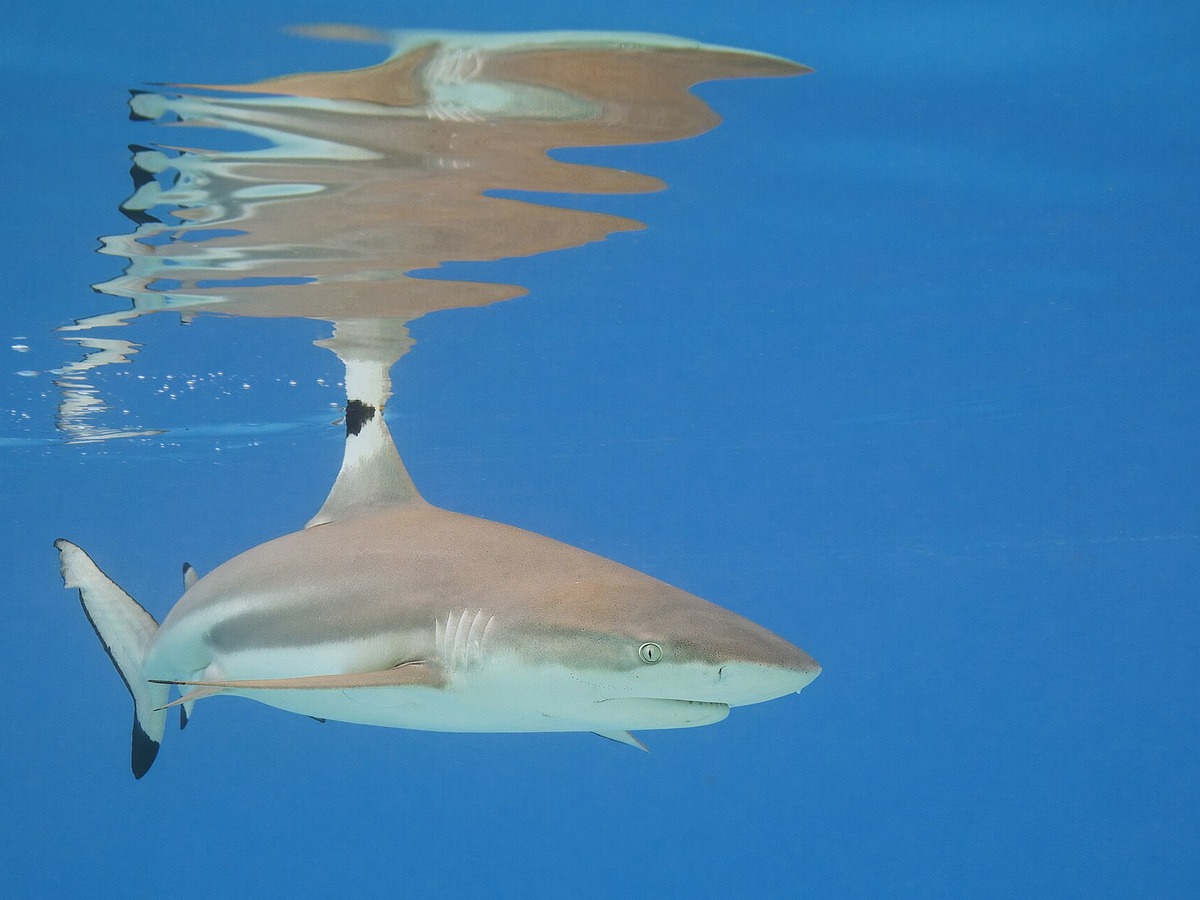
Shark Basics, Anatomy & Evolution
Q: Are sharks mammals or fish?
A: Fish.
Q: What class of fishes contains sharks, rays, and skates?
A: Chondrichthyes, the cartilaginous fishes.
Q: What is a shark's skeleton made primarily of?
A: Cartilage rather than bone.
Q: About how long have shark ancestors existed on Earth?
A: More than 400 million years.
Q: Did sharks exist before dinosaurs?
A: Yes. Sharks are far older than the first dinosaurs.
Q: Roughly how many living shark species are known?
A: More than 500 species.
Q: How many gill slits do most shark species have on each side?
A: Five.
Q: Do all sharks have exactly five pairs of gill slits?
A: No. A few groups have six or seven pairs.
Q: What large organ helps sharks with buoyancy because they lack a swim bladder?
A: An oil-rich liver.
Q: Do sharks have the gas-filled swim bladder found in many bony fishes?
A: No.
Q: What is the upper lobe of a shark's tail fin part of?
A: The caudal fin.
Q: What are the paired fins behind a shark's head called?
A: Pectoral fins.
Q: What role do pectoral fins play in many sharks?
A: They help generate lift, steer, and control movement through the water.
Q: What are spiracles on sharks that have them?
A: Small openings behind the eyes that can help draw water toward the gills.
Q: Why is fossil shark history often reconstructed from teeth rather than complete skeletons?
A: Cartilage fossilizes less readily than bone, while hard mineralized teeth preserve much more easily.
Skin, Teeth & Super Senses
Q: What tiny tooth-like structures cover shark skin?
A: Dermal denticles.
Q: What can shark skin feel like when rubbed in the direction opposite the denticles?
A: Rough, almost like sandpaper.
Q: Why are dermal denticles useful?
A: They protect the skin and can reduce drag and turbulence as a shark swims.
Q: Do sharks replace worn or lost teeth?
A: Yes. New teeth continually move forward from replacement rows.
Q: Do all shark species have identical tooth shapes?
A: No. Tooth shape varies with diet and feeding strategy.
Q: What kind of teeth help great white sharks cut large prey?
A: Broad, triangular, serrated teeth.
Q: What specialized organs let sharks detect weak electrical fields?
A: The ampullae of Lorenzini.
Q: Where are the ampullae of Lorenzini concentrated?
A: Around the head and snout.
Q: What body system detects vibrations and water movement around a shark?
A: The lateral line system.
Q: Can sharks smell chemicals dissolved in seawater?
A: Yes. Smell is an important shark sense.
Q: Is the claim that a shark can smell one drop of blood anywhere in an entire ocean accurate?
A: No. Sharks have good chemical senses, but that exaggerated claim ignores concentration, currents, distance, and species differences.
Q: Can sharks see?
A: Yes. Vision is important to many species.
Q: What reflective structure improves low-light vision in many sharks?
A: A tapetum lucidum.
Q: What is countershading?
A: A darker upper body and lighter underside that can help camouflage an animal from viewers above and below.
Q: What combination of senses makes sharks such effective hunters?
A: Vision, smell, hearing, lateral-line detection, touch, taste, and electroreception work together rather than relying on one magical sense.
Famous Shark Species
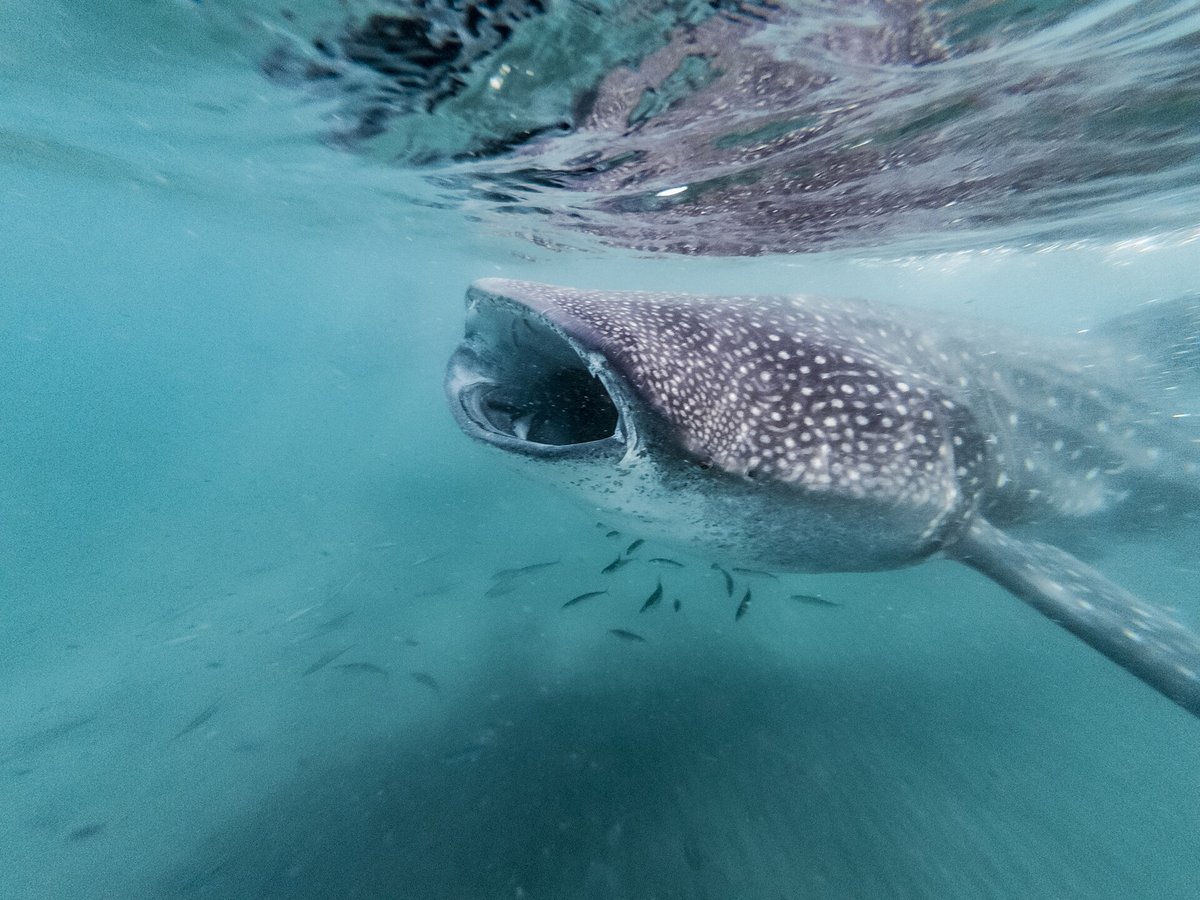
Q: What is the largest living fish species?
A: The whale shark.
Q: Is a whale shark a whale?
A: No. It is a shark and therefore a fish.
Q: What does a whale shark primarily eat?
A: Plankton and other small organisms captured by filter feeding.
Q: What other giant shark is a filter feeder?
A: The basking shark.
Q: What rare deep-water filter feeder has a huge mouth and was only discovered by science in the 20th century?
A: The megamouth shark.
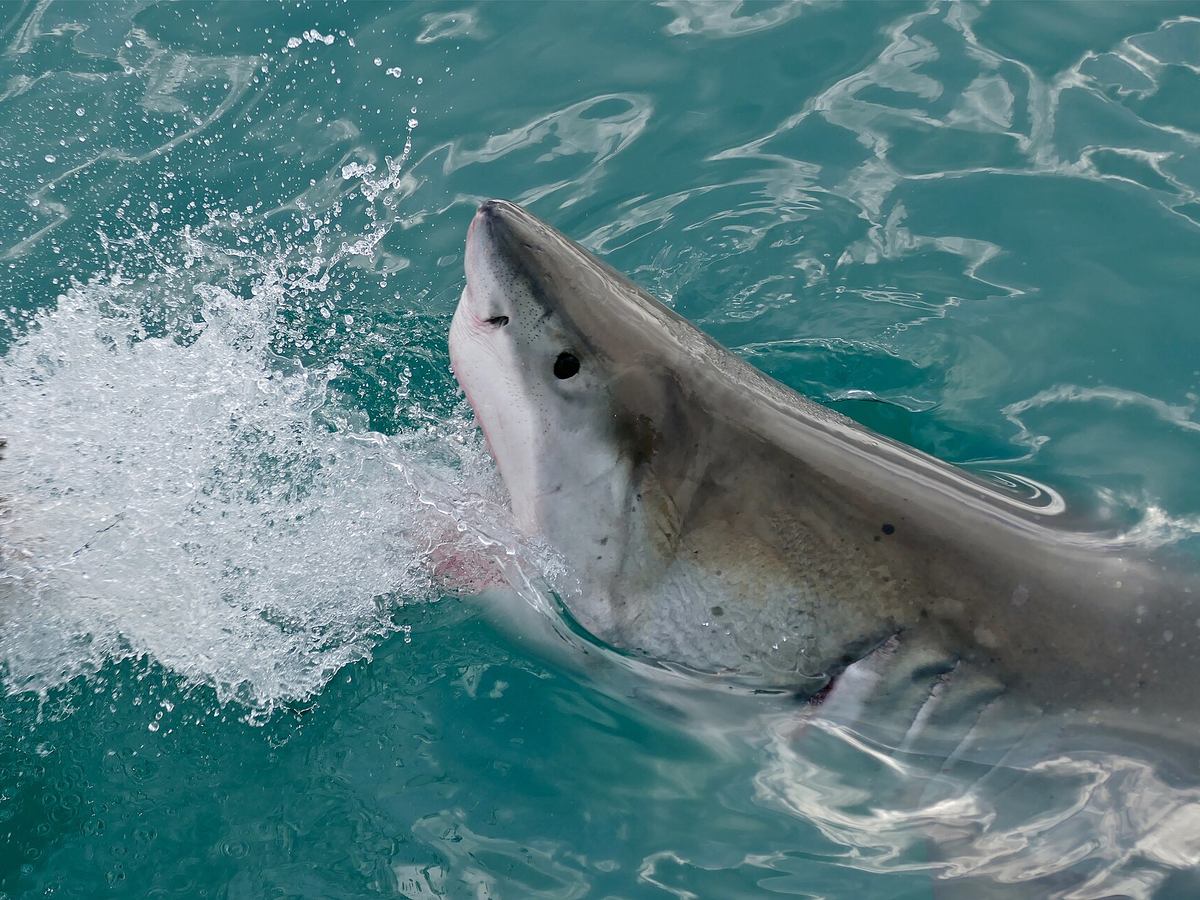
Q: What large predatory shark is famous for breaching while hunting seals?
A: The great white shark.
Q: What shark gets its name from dark vertical bars that are most noticeable in younger animals?
A: The tiger shark.
Q: Which powerful shark can tolerate freshwater better than most marine sharks?
A: The bull shark.
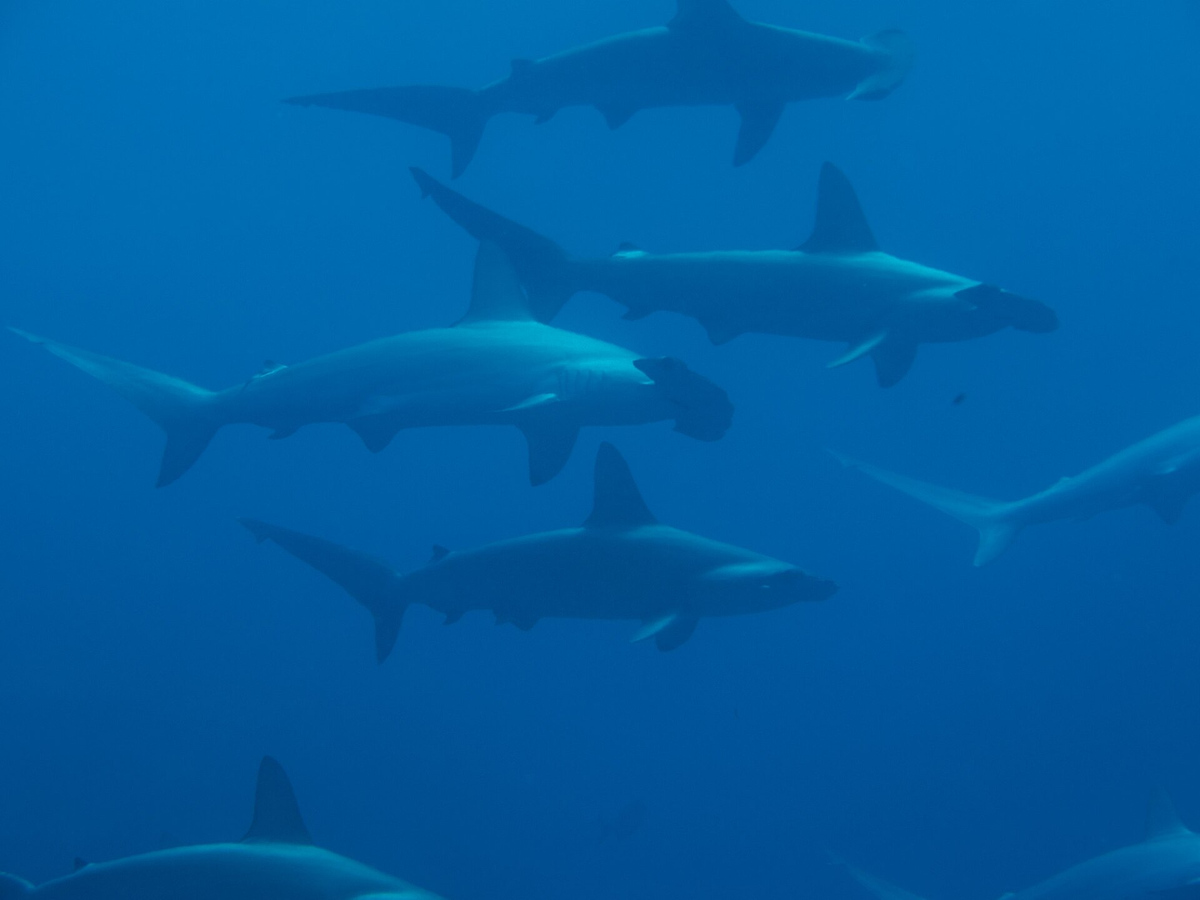
Q: What is the flattened side-to-side head of a hammerhead called?
A: A cephalofoil.
Q: Which shark is famous for an extremely long upper tail lobe used while hunting?
A: The thresher shark.
Q: Which shark is considered among the fastest swimming sharks?
A: The shortfin mako.
Q: What slender open-ocean shark is named for its blue coloration?
A: The blue shark.
Q: Which slow-moving deep-water shark is famous for exceptional longevity?
A: The Greenland shark.
Q: What bottom-associated shark is often seen resting during the day and has barbels near its mouth?
A: The nurse shark.
Q: What bizarre deep-water shark has a long flattened snout and jaws that can project dramatically forward?
A: The goblin shark.
Feeding, Hunting & Ocean Ecology
Q: Are all sharks apex predators?
A: No. Shark species occupy many ecological roles and some are prey for larger animals.
Q: Do all sharks hunt large marine mammals?
A: No. Diets range from plankton and shellfish to fish, squid, rays, turtles, and marine mammals depending on species.
Q: How does a thresher shark use its unusually long tail?
A: It can whip the tail through schools of fish to stun or disable prey.
Q: What do bonnethead sharks eat besides animal prey?
A: They can digest substantial amounts of seagrass along with crustaceans and other prey.
Q: What do whale sharks do instead of biting chunks from large prey?
A: They filter small organisms from water.
Q: Why can sharks be important to marine food webs?
A: Predatory sharks can influence prey abundance, behavior, and the balance of marine communities.
Q: What type of prey do many hammerheads specialize in finding on or near the seafloor?
A: Rays, along with fish and other animals.
Q: What does a tiger shark's broad diet earn it a reputation for?
A: Being an opportunistic feeder that consumes a wide variety of prey.
Q: Why do some sharks have crushing, flatter teeth instead of sharp cutting teeth?
A: They feed on hard-shelled prey such as crabs, mollusks, or sea urchins.
Q: What shark behavior is called breaching?
A: Launching partly or completely out of the water.
Q: Why might a white shark breach while hunting?
A: Rapid upward attacks on prey near the surface can carry the shark out of the water.
Q: Do sharks normally chew food the way humans do?
A: Many species use teeth to seize, cut, or crush prey, then swallow pieces with relatively little chewing.
Q: Can large sharks be eaten by other predators?
A: Yes. Orcas, larger sharks, and other predators can kill sharks, depending on species and size.
Q: Why can removing large predatory sharks affect more than one prey species?
A: Food webs are interconnected, so changes can influence competition, behavior, and abundance at multiple trophic levels.
Q: What makes shark feeding trivia so varied?
A: More than 500 species use filter feeding, ambush, active pursuit, suction, crushing, scavenging, tail strikes, and many other strategies.
Reproduction, Pups & Growth
Q: What are baby sharks commonly called?
A: Pups.
Q: Do all sharks lay eggs?
A: No. Shark reproductive strategies include egg laying and several forms of live birth.
Q: What term describes sharks that lay eggs outside the mother's body?
A: Oviparous.
Q: What tough covering surrounds many shark eggs?
A: An egg case.
Q: What nickname is sometimes given to washed-up skate or shark egg cases?
A: Mermaid's purses, although egg-case shape varies greatly among species.
Q: What unusual shape does a horn shark egg case have?
A: A spiral or corkscrew-like form.
Q: What are claspers?
A: Paired reproductive organs found on male sharks and other cartilaginous fishes.
Q: Can some shark species give birth to live pups?
A: Yes.
Q: Do shark mothers generally provide long-term parental care after pups are born or hatch?
A: Generally no. Pups are usually independent from the start.
Q: Why can slow reproduction make shark populations vulnerable to heavy fishing?
A: Many species mature late, grow slowly, and produce relatively few young, so depleted populations can take a long time to recover.
Q: Are all shark litters small?
A: No. Litter size varies enormously among species.
Q: Which shark is known for potentially producing very large litters exceeding 100 pups?
A: Blue sharks can produce exceptionally large litters.
Q: Can sharks reproduce without a male in rare cases?
A: Yes. Parthenogenesis has been documented in some shark species.
Q: What does parthenogenesis mean?
A: Reproduction in which an embryo develops without fertilization by a male.
Q: Why is shark reproduction difficult to summarize with one rule?
A: Different species lay eggs, retain eggs internally, use placental connections, nourish embryos in different ways, mature at different ages, and produce very different numbers of pups.
Habitats, Migration & Movement
Q: Do sharks live only near tropical coral reefs?
A: No. Sharks live from warm shallow coasts to cold polar seas and the deep ocean.
Q: What shark is famous for living in very cold Arctic and North Atlantic waters?
A: The Greenland shark.
Q: What shark can travel between saltwater and freshwater environments?
A: The bull shark.
Q: Do any sharks spend substantial time near the seafloor?
A: Yes. Nurse sharks, angel sharks, wobbegongs, and many other species are strongly bottom-associated.
Q: Do all sharks have to swim constantly or suffocate?
A: No. Some species can pump water over their gills while resting, while others depend much more on forward swimming for ventilation.
Q: What is ram ventilation?
A: Moving forward with the mouth open so water flows across the gills.
Q: What is buccal pumping?
A: Actively moving water across the gills using mouth and throat movements.
Q: Can nurse sharks rest motionless on the bottom while still breathing?
A: Yes.
Q: Why do some sharks migrate long distances?
A: They may follow food, temperature, mating opportunities, nursery habitats, or seasonal environmental changes.
Q: What technology lets scientists track tagged sharks from satellites?
A: Satellite tags and related electronic tracking systems.
Q: What are shark nursery areas?
A: Habitats where young sharks are born or spend important early life stages.
Q: Why can coastal nurseries be vulnerable to human activity?
A: Coastal development, pollution, habitat loss, fishing, and boat activity can affect shallow habitats used by juveniles.
Q: What is a pelagic shark?
A: A shark that spends much of its time in open-ocean waters away from the seafloor and coast.
Q: What is a benthic shark?
A: A shark strongly associated with the ocean bottom.
Q: What makes shark movement challenging to study?
A: Many species travel huge distances underwater, dive deeply, cross international boundaries, and spend most of their lives beyond direct human observation.
Sharks, Humans & Conservation
Q: Are humans normal prey for most shark species?
A: No.
Q: Are most shark species considered a serious threat to people?
A: No. NOAA notes that the majority of sharks are not a threat to humans.
Q: Why do highly publicized shark bites distort perceptions of shark risk?
A: Rare dramatic events receive enormous attention compared with the vast number of harmless human-shark encounters.
Q: What does shark finning mean?
A: Removing a shark's fins and discarding the rest of the animal, often at sea.
Q: Is shark finning allowed in U.S. federal waters?
A: No. Federal law prohibits shark finning.
Q: What major accidental fishing threat kills many sharks?
A: Bycatch, when sharks are caught unintentionally in fisheries targeting other species.
Q: Why is demand for shark fins a conservation concern?
A: It has contributed to fishing pressure on vulnerable shark populations.
Q: What 2010 U.S. law strengthened shark conservation requirements?
A: The Shark Conservation Act.
Q: What later U.S. law generally prohibited commercial trade in shark fins with limited exceptions?
A: The Shark Fin Sales Elimination Act.
Q: Why can international cooperation matter for shark conservation?
A: Migratory sharks cross national waters and the high seas, so protection in one country may not cover their entire range.
Q: What shark is listed as threatened in U.S. waters partly because of fishing and fin-trade pressure?
A: The oceanic whitetip shark.
Q: Why can long-lived species such as Greenland sharks be especially sensitive to exploitation?
A: Slow growth and very late maturity can make replacement of removed adults extremely slow.
Q: Does shark conservation mean every shark population has exactly the same status?
A: No. Conservation status varies widely by species, region, and population.
Q: What can consumers do to support sustainable shark conservation?
A: Follow seafood guidance, avoid illegal wildlife products, support science-based fisheries management, and learn which species and fisheries are sustainable.
Q: Why are sharks worth conserving beyond fear or fascination?
A: They are part of marine biodiversity and many species play important ecological roles built over hundreds of millions of years of evolution.
Hard Shark Challenge: Myths, Records & Weird Facts
Q: Can sharks get cancer?
A: Yes. The claim that sharks cannot get cancer is false.
Q: Are shark skeletons made of bone?
A: No. They are primarily cartilage.
Q: Is every large shark dangerous to humans?
A: No. The whale shark, the largest fish alive, is a filter feeder.
Q: Is a hammerhead's wide head simply a decorative oddity?
A: No. The cephalofoil affects sensory placement, maneuvering, and prey detection.
Q: Which shark holds the title of largest living fish?
A: The whale shark.
Q: Which shark is especially famous for extreme vertebrate longevity?
A: The Greenland shark.
Q: Which shark uses a whip-like tail as part of its hunting strategy?
A: The thresher shark.
Q: Which shark's snout contains the strikingly expanded structure called a cephalofoil?
A: A hammerhead shark.
Q: Which three giant sharks are famous filter feeders?
A: Whale shark, basking shark, and megamouth shark.
Q: Which shark can survive far upriver in freshwater and has been documented in river systems?
A: The bull shark.
Q: What sensory system can detect the tiny electrical signals produced by living animals?
A: The ampullae of Lorenzini.
Q: Why is counting growth bands in shark vertebrae not always a perfect age method?
A: Growth-band timing can vary by species and may not always represent one year per band.
Q: What common shark myth fails because nurse sharks and some other species can rest while ventilating their gills?
A: The myth that every shark must swim continuously to breathe.
Q: What common shark myth fails because more than 500 species occupy dramatically different diets and ecological roles?
A: The idea that all sharks are large, aggressive apex predators.
Q: Why are sharks unusually deep trivia material?
A: More than 500 species combine ancient evolution, cartilage skeletons, replaceable teeth, electrical senses, bizarre reproductive biology, deep-sea adaptations, long migrations, record-breaking size and longevity, and conservation challenges that are far stranger than the movie stereotypes.
How Did You Score?
If dermal denticles, cephalofoils, buccal pumping, parthenogenesis, mermaid's purses, the three filter-feeding giants, and the difference between bycatch and finning all came easily, your shark knowledge has plenty of bite.
Keep diving with our oceans and marine life trivia, animal trivia, and biology trivia.

Ellie Simons creates and edits Random Trivia. She researches trivia using primary and authoritative sources whenever possible and is currently reviewing the site's older trivia library for accuracy, clarity, and playability. Read more on the About page.
About this quiz
Site editor: Ellie Simons. Read our Trivia Methodology to learn how questions are researched and updated. Page last updated: . Report an error.