
Mountains mark borders, steer weather, feed rivers, inspire myths, and make humans ask whether the view is worth losing feeling in their toes. These 120 mountain trivia questions climb from basic geology to the world’s most famous summits.
Take the scenic route through our geography trivia, Earth science trivia, and world landmarks trivia.
Mountain Science, Shapes, and Records
Mountains look permanent until geology explains that they are rising, eroding, cracking, and occasionally erupting. I find this comforting whenever my supposedly simple hiking route turns into an argument with a contour map.
Q: What force creates many mountain ranges when tectonic plates collide?
A: Compression that folds, faults, and uplifts Earth’s crust.
Q: What type of mountain forms when blocks of crust move along faults?
A: A fault-block mountain.
Q: What type of mountain forms from folded rock layers?
A: A fold mountain.
Q: What type of mountain builds around repeated volcanic eruptions?
A: A volcanic mountain.
Q: What is the highest point of a mountain called?
A: The summit or peak.
Q: What is a low point between mountain peaks called?
A: A saddle or col.
Q: What is a mountain pass?
A: A lower route through a mountain range.
Q: What is the tree line?
A: The elevation above which trees cannot grow because conditions are too harsh.
Q: What is an alpine climate?
A: A cold, high-elevation climate above the tree line.
Q: What slowly moving mass of ice can carve mountain valleys?
A: A glacier.
Q: What U-shaped landform commonly shows that a glacier carved a valley?
A: A glacial trough.
Q: What bowl-shaped hollow can a mountain glacier erode?
A: A cirque.
Q: What sharp ridge between two glacial valleys is called?
A: An arête.
Q: What pyramid-shaped peak formed by several cirques is called?
A: A horn.
Q: What loose pile of rock at the base of a cliff is called?
A: Talus or scree.
Q: What process breaks exposed mountain rock into smaller pieces?
A: Weathering.
Q: What effect makes air cool as it rises over a mountain?
A: Adiabatic cooling.
Q: What dry region may form on the sheltered side of a mountain range?
A: A rain shadow.
Q: Which side of a mountain usually faces incoming moist air?
A: The windward side.
Q: Which side of a mountain is typically drier?
A: The leeward side.
Q: What is the world’s highest mountain above sea level?
A: Mount Everest.
Q: What is Mount Everest’s officially agreed elevation?
A: 29,032 feet above sea level.
Q: Which mountain is tallest from base to summit when measured from its submarine base?
A: Mauna Kea.
Q: Which mountain summit is farthest from Earth’s center?
A: Chimborazo in Ecuador.
Q: Why is Chimborazo’s summit farthest from Earth’s center?
A: Earth bulges at the equator, and Chimborazo stands close to it.
Q: Which range contains all 14 mountains higher than 26,000 feet?
A: The Himalaya and neighboring Karakoram.
Q: What term describes a mountain higher than 26,247 feet?
A: An eight-thousander.
Q: How many recognized eight-thousanders are there?
A: Fourteen.
Q: What condition results from too little oxygen at high elevation?
A: Altitude sickness.
Q: What device measures elevation using air pressure?
A: An altimeter.
The Himalaya, Karakoram, and Mountains of Asia
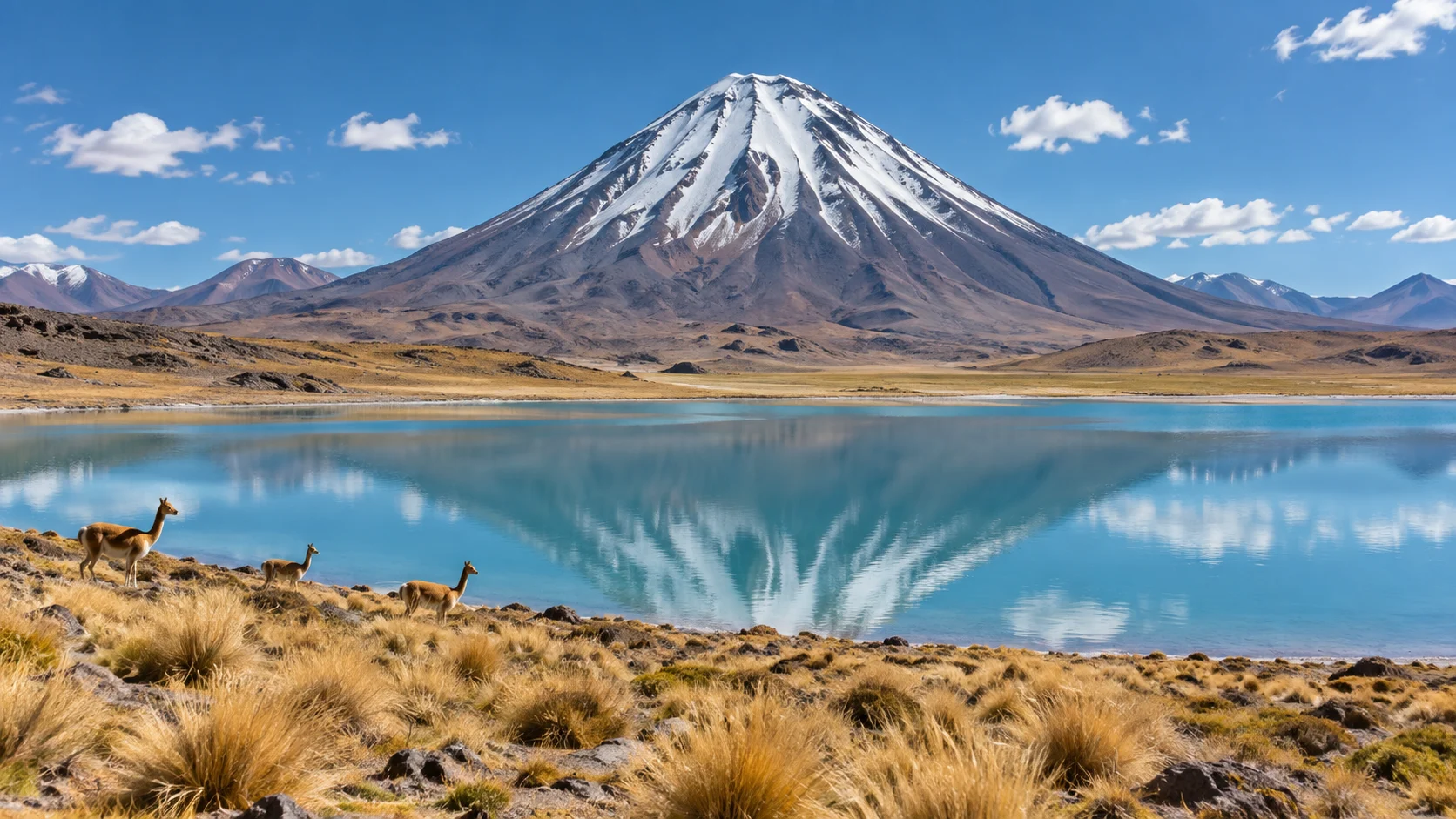
Asia owns the altitude leaderboard, but the stories here are about more than height. These peaks cross borders, shape monsoons, feed rivers, and attract climbers who consider frozen eyelashes part of the itinerary.
Q: Which two countries share Mount Everest?
A: Nepal and China.
Q: What is Mount Everest called in Nepali?
A: Sagarmatha.
Q: What Tibetan name is used for Mount Everest?
A: Chomolungma.
Q: Who first reached Everest’s summit in a confirmed ascent?
A: Edmund Hillary and Tenzing Norgay.
Q: When did Hillary and Norgay reach Everest’s summit?
A: May 29, 1953.
Q: Which mountain is the world’s second highest?
A: K2.
Q: Which range contains K2?
A: The Karakoram.
Q: Which two countries meet along the area containing K2?
A: Pakistan and China.
Q: Why is K2 nicknamed the Savage Mountain?
A: Its steep routes, severe weather, and technical hazards make it exceptionally dangerous.
Q: Which mountain is the world’s third highest?
A: Kangchenjunga.
Q: Which countries share Kangchenjunga?
A: Nepal and India.
Q: Which mountain was considered the world’s highest before improved surveys identified Everest?
A: Kangchenjunga.
Q: Which peak is the world’s fourth highest?
A: Lhotse.
Q: Which mountain connects to Everest at the South Col?
A: Lhotse.
Q: Which eight-thousander stands entirely within Nepal?
A: Dhaulagiri I.
Q: Which mountain was the first eight-thousander climbed?
A: Annapurna I.
Q: When was Annapurna I first climbed?
A: 1950.
Q: Which French climbers made the first ascent of Annapurna I?
A: Maurice Herzog and Louis Lachenal.
Q: Which peak is known as the Killer Mountain because of its dangerous climbing history?
A: Nanga Parbat.
Q: Which country contains Nanga Parbat?
A: Pakistan.
Q: Which Japanese mountain is an active stratovolcano and national symbol?
A: Mount Fuji.
Q: Which Japanese island contains Mount Fuji?
A: Honshu.
Q: When did Mount Fuji last erupt?
A: During the Hōei eruption of 1707 to 1708.
Q: Which Indonesian volcano overlooks the city of Yogyakarta?
A: Mount Merapi.
Q: What does the Indonesian name Merapi mean?
A: Mountain of fire.
Q: Which Philippine volcano is famous for its nearly symmetrical cone?
A: Mayon Volcano.
Q: Which Armenian cultural symbol now lies within Turkey?
A: Mount Ararat.
Q: Which mountain is traditionally associated with Noah’s Ark?
A: Mount Ararat.
Q: Which sacred mountain in Tibet is revered in Hinduism, Buddhism, Jainism, and Bon?
A: Mount Kailash.
Q: How do pilgrims traditionally honor Mount Kailash without climbing it?
A: They complete a ritual circuit around the mountain.
Mountains of the Americas
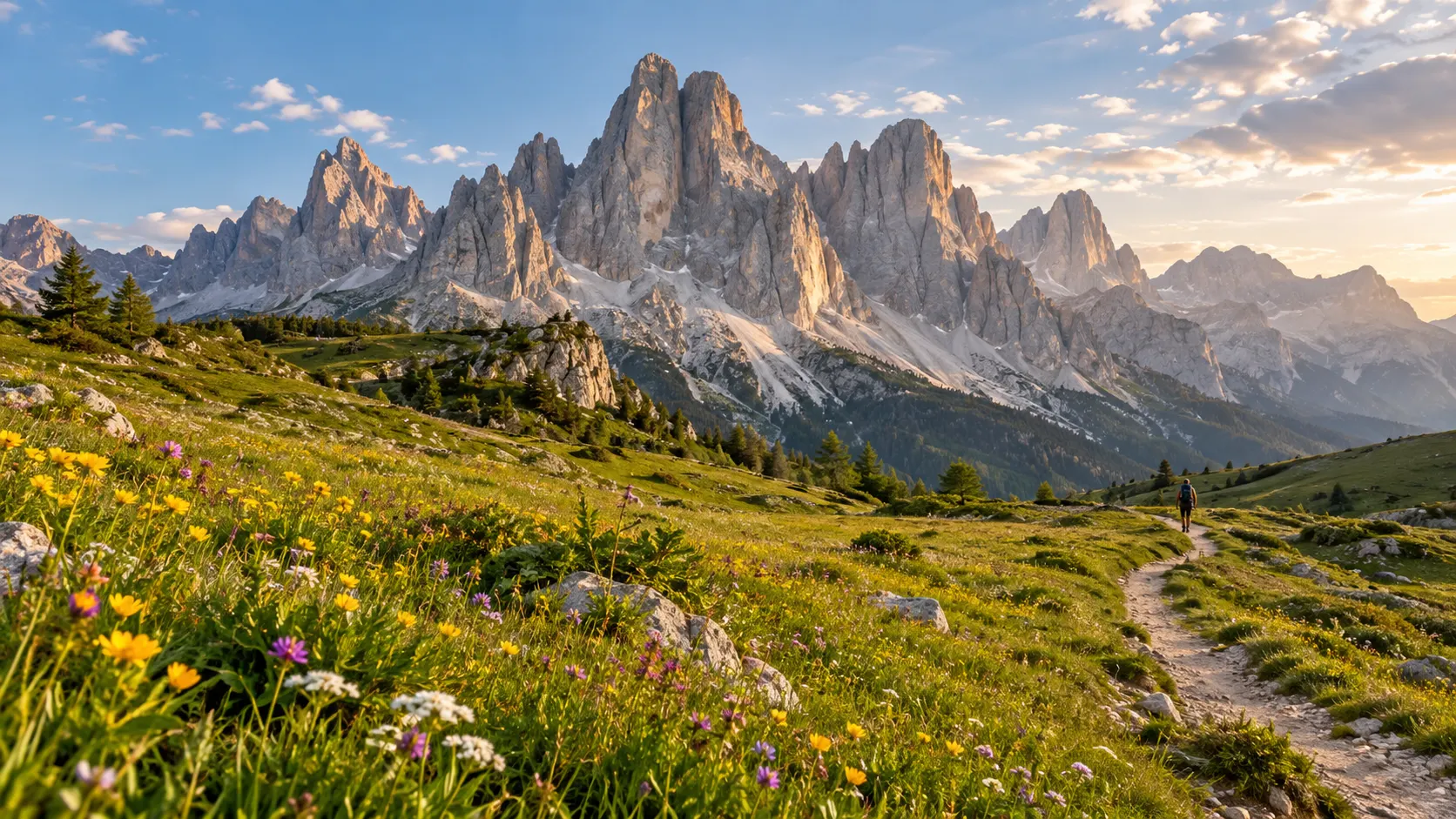
The Americas offer volcanic cones, granite walls, red-rock massifs, and a continental spine that nearly reaches pole to pole. My legs are tired just listing them, which is not how training works but feels medically plausible.
Q: Which mountain is the highest in North America?
A: Denali.
Q: Which U.S. state contains Denali?
A: Alaska.
Q: What does the Koyukon Athabascan name Denali mean?
A: The High One.
Q: Which mountain range contains Denali?
A: The Alaska Range.
Q: Which peak is the highest in the contiguous United States?
A: Mount Whitney.
Q: Which California range contains Mount Whitney?
A: The Sierra Nevada.
Q: Which mountain is the highest point in the Rocky Mountains?
A: Mount Elbert.
Q: Which state contains Mount Elbert?
A: Colorado.
Q: Which mountain gave its name to Mount Rainier National Park?
A: Mount Rainier.
Q: What type of volcano is Mount Rainier?
A: An active stratovolcano.
Q: Which 1980 eruption dramatically reshaped a Washington mountain?
A: The eruption of Mount St. Helens.
Q: What part of Mount St. Helens collapsed during its 1980 eruption?
A: Its north flank.
Q: Which collapsed volcano created Oregon’s Crater Lake?
A: Mount Mazama.
Q: What geologic landform holds Crater Lake?
A: A volcanic caldera.
Q: Which granite monolith in Yosemite is famous among rock climbers?
A: El Capitan.
Q: Which Yosemite landmark has a distinctive rounded face and sheer wall?
A: Half Dome.
Q: Which mountain in Wyoming anchors Grand Teton National Park?
A: Grand Teton.
Q: Which Appalachian peak is the highest in the eastern United States?
A: Mount Mitchell.
Q: Which state contains Mount Mitchell?
A: North Carolina.
Q: Which mountain is the highest in South America?
A: Aconcagua.
Q: Which country contains Aconcagua?
A: Argentina.
Q: Which range contains Aconcagua?
A: The Andes.
Q: Which mountain is the highest active volcano in the world?
A: Ojos del Salado.
Q: Which two countries share Ojos del Salado?
A: Chile and Argentina.
Q: Which Ecuadorian volcano has a summit farthest from Earth’s center?
A: Chimborazo.
Q: Which active Ecuadorian volcano gave its name to a province?
A: Cotopaxi.
Q: Which Peruvian mountain is associated with the source region of the Amazon’s longest tributaries?
A: Nevado Mismi.
Q: Which iconic peaks dominate Torres del Paine National Park?
A: The granite Towers of Paine.
Q: Which Brazilian mountain carries the Christ the Redeemer statue?
A: Corcovado.
Q: Which flat-topped mountain overlooks Rio de Janeiro’s harbor?
A: Sugarloaf Mountain.
Mountains of Europe, Africa, and Oceania
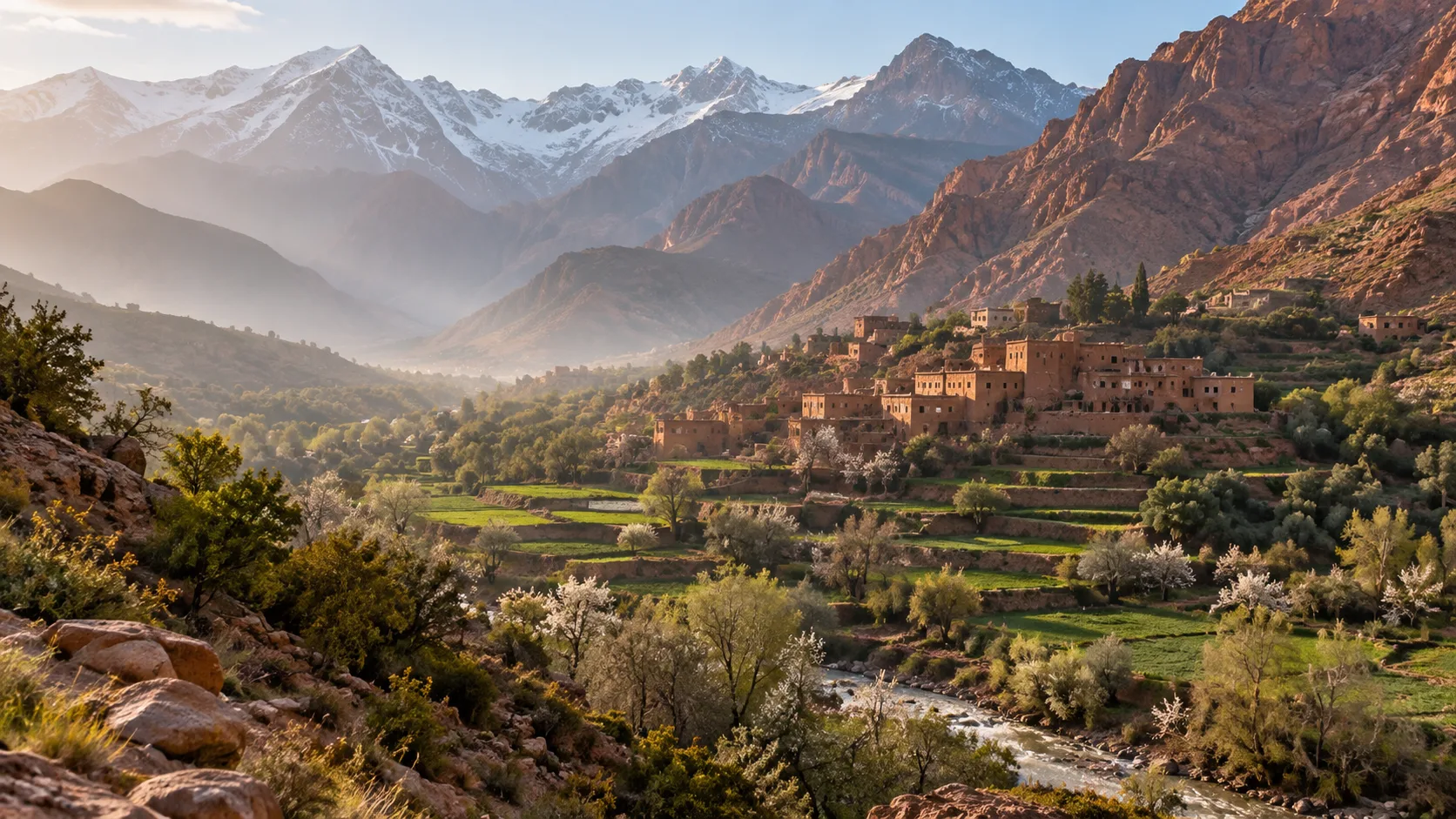
The final climb includes the Alps, ancient African volcanoes, Scottish plateaus, and Pacific peaks rising straight from the sea. I recommend answering from a chair, because trivia is the rare summit attempt that welcomes slippers.
Q: Which mountain is the highest in the Alps?
A: Mont Blanc.
Q: Which two countries share the Mont Blanc massif?
A: France and Italy.
Q: Which pyramid-shaped Alpine mountain lies on the Swiss-Italian border?
A: The Matterhorn.
Q: When was the Matterhorn first climbed?
A: 1865.
Q: Where does the Jungfrau Railway reach Europe’s highest open-air railway station?
A: Jungfraujoch.
Q: Which peak is the highest mountain entirely within Switzerland?
A: The Dom.
Q: Which mountain is the highest in Germany?
A: Zugspitze.
Q: Which mountain is the highest in the United Kingdom?
A: Ben Nevis.
Q: Which country contains Ben Nevis?
A: Scotland.
Q: Which Welsh mountain is also known by the name Yr Wyddfa?
A: Snowdon.
Q: Which mountain is the highest in Ireland?
A: Carrauntoohil.
Q: Which volcano dominates the skyline of Sicily?
A: Mount Etna.
Q: Which volcano destroyed Pompeii and Herculaneum in A.D. 79?
A: Mount Vesuvius.
Q: Which Greek mountain was the mythical home of the Olympian gods?
A: Mount Olympus.
Q: Which mountain is the highest in Africa?
A: Mount Kilimanjaro.
Q: Which country contains Mount Kilimanjaro?
A: Tanzania.
Q: What are Kilimanjaro’s three volcanic cones?
A: Kibo, Mawenzi, and Shira.
Q: Which Kilimanjaro cone contains the mountain’s highest point?
A: Kibo.
Q: Which mountain is the second highest in Africa?
A: Mount Kenya.
Q: Which country takes its name from Mount Kenya?
A: Kenya.
Q: Which Moroccan range contains Jebel Toubkal?
A: The Atlas Mountains.
Q: Which peak is the highest in the Atlas Mountains?
A: Jebel Toubkal.
Q: Which flat-topped mountain overlooks Cape Town?
A: Table Mountain.
Q: Which mountain is the highest in Australia’s mainland?
A: Mount Kosciuszko.
Q: Which mountain is the highest in New Zealand?
A: Aoraki / Mount Cook.
Q: Which island contains Aoraki / Mount Cook?
A: New Zealand’s South Island.
Q: Which Māori ancestor is honored by the name Aoraki?
A: Aoraki, a figure in Ngāi Tahu traditions.
Q: Which Indonesian mountain is the highest peak on an island?
A: Puncak Jaya in New Guinea.
Q: Which volcanic peak is the highest point in Hawaii?
A: Mauna Kea.
Q: Which active Hawaiian volcano is the largest mountain on Earth by volume?
A: Mauna Loa.
How Did You Score?
If you knew your col from your cirque, found K2 in the Karakoram, and remembered Mauna Loa’s volume record, the summit flag is yours. I am celebrating at base camp with cocoa and absolutely no blisters.

Ellie Simons creates and edits Random Trivia. She researches trivia using primary and authoritative sources whenever possible and is currently reviewing the site's older trivia library for accuracy, clarity, and playability. Read more on the About page.
About this quiz
Site editor: Ellie Simons. Read our Trivia Methodology to learn how questions are researched and updated. Page last updated: . Report an error.