
Saddle up. These 120 horse trivia questions gallop through anatomy, behavior, foals, breeds, coat colors, gaits, tack, racing, equestrian sports, domestication, hoof care, nutrition, and the little details that separate casual horse fans from true equine nerds.
The first round is friendly. The final one may have you checking whether you actually know your fetlock from your forelock.
Why Horses Make Great Trivia
Horses have shaped transportation, farming, warfare, sport, art, and human culture for thousands of years. They are also fascinating animals in their own right, with specialized hooves, sensitive hearing, herd behavior, a digestive system built for frequent forage intake, and athletic abilities that vary dramatically by breed and training.
Health and welfare facts here are aligned with equine veterinary and university Extension guidance rather than barn myths. For more animals, try our animal trivia and biology trivia.
Horse Anatomy Basics
Q: What is the scientific name commonly used for the domestic horse?
A: Equus caballus, also classified by many authorities as Equus ferus caballus.
Q: What family do horses belong to?
A: Equidae.
Q: What is the hard structure at the end of each horse leg called?
A: A hoof.
Q: How many functional toes does a modern horse have on each foot?
A: One.
Q: What is the triangular, rubbery structure on the underside of the hoof called?
A: The frog.
Q: What is the long hair growing from the top of a horse's neck called?
A: The mane.
Q: What is the tuft of hair that falls over a horse's forehead called?
A: The forelock.
Q: What joint between the cannon bone and pastern is commonly called the fetlock?
A: The fetlock joint.
Q: What part of a horse is measured to determine its height?
A: The withers, the highest point of the shoulder region.
Q: What unit traditionally measures horse height?
A: Hands.
Q: How many inches are in one hand?
A: Four inches.
Q: What is the cannon bone?
A: The long lower-limb bone between the knee or hock and the fetlock.
Q: What is the horse's knee on the front leg anatomically comparable to in humans?
A: The wrist, or carpus.
Q: What is the prominent joint on a horse's hind leg called?
A: The hock.
Q: Why is correct conformation important?
A: Body structure can influence movement, balance, athletic suitability, and how forces travel through the limbs and back.
Senses, Behavior & Herd Life
Q: Are horses naturally predators or prey animals?
A: Prey animals.
Q: Why are a horse's eyes positioned on the sides of its head?
A: The placement provides a very wide field of view that helps detect danger.
Q: Do horses have blind spots despite their wide vision?
A: Yes, particularly directly in front of the face and directly behind the body.
Q: What can a horse's ear position tell you?
A: Ears can indicate where the horse is focusing and contribute to reading its emotional state.
Q: Can horses rotate their ears independently?
A: Yes, allowing them to monitor sounds from different directions.
Q: What is the flehmen response?
A: A horse curls its upper lip to help analyze certain scents with the vomeronasal system.
Q: Are horses social animals?
A: Yes. They naturally form social groups and benefit from appropriate companionship.
Q: What is mutual grooming between horses called?
A: Allogrooming.
Q: Why do horses groom one another around the neck and withers?
A: It can strengthen social bonds and help scratch areas that are difficult to reach alone.
Q: What does cribbing involve?
A: A horse grasps a fixed surface with its upper teeth, arches its neck, pulls back, and draws in air with a characteristic sound.
Q: Is cribbing simply a sign that a horse is being naughty?
A: No. It is a repetitive behavior associated with multiple management, stress, and individual factors.
Q: What does a tightly clamped tail or tense body sometimes indicate?
A: Fear, discomfort, stress, or tension, depending on context.
Q: What does a relaxed hind leg resting on the toe often suggest?
A: The horse may be resting comfortably, though context matters.
Q: Why is it risky to approach directly from a horse's blind spot?
A: The horse may be startled and react defensively.
Q: What is the safest way to interpret horse body language?
A: Consider the whole horse, including ears, eyes, muscles, tail, posture, movement, and the situation.
Foals, Mares & Stallions
Q: What is a baby horse called?
A: A foal.
Q: What is a female horse under about four years old commonly called?
A: A filly.
Q: What is a young male horse commonly called?
A: A colt.
Q: What is an adult female horse called?
A: A mare.
Q: What is an adult uncastrated male horse called?
A: A stallion.
Q: What is a castrated male horse called?
A: A gelding.
Q: About how long is a typical horse pregnancy?
A: Roughly 11 months, commonly around 340 days.
Q: Can newborn foals stand soon after birth?
A: Yes. Healthy foals normally attempt to stand relatively quickly.
Q: Why is early nursing important for a newborn foal?
A: The mare's first milk, colostrum, provides important antibodies and nutrients.
Q: What is weaning?
A: The transition in which a foal stops relying on its mother's milk.
Q: What is a yearling?
A: A horse in the age period around one year old.
Q: What term describes a mare giving birth?
A: Foaling.
Q: Are most horse births single foals or twins?
A: Single foals are normal. Twin pregnancies are risky and uncommon as successful outcomes.
Q: What does a broodmare do?
A: She is a mare kept or used for breeding.
Q: Why is proper handling of young horses important?
A: Safe, age-appropriate handling helps build useful responses to people without replacing normal social development with other horses.
Breeds & Types
Q: What breed is famous for endurance and a refined, dished facial profile?
A: Arabian.
Q: What breed dominates modern flat racing in many countries?
A: Thoroughbred.
Q: What American breed is named for its speed over a quarter mile?
A: American Quarter Horse.
Q: What large draft breed is famous for feathering on the lower legs and association with Budweiser teams?
A: Clydesdale.
Q: What massive draft breed originated in France and is often gray or black?
A: Percheron.
Q: What powerful British draft breed is traditionally associated with heavy farm work?
A: Shire.
Q: What breed developed in the Netherlands is famous in dressage and carriage driving and is usually black?
A: Friesian.
Q: What small but sturdy breed originated in the Shetland Islands?
A: Shetland Pony.
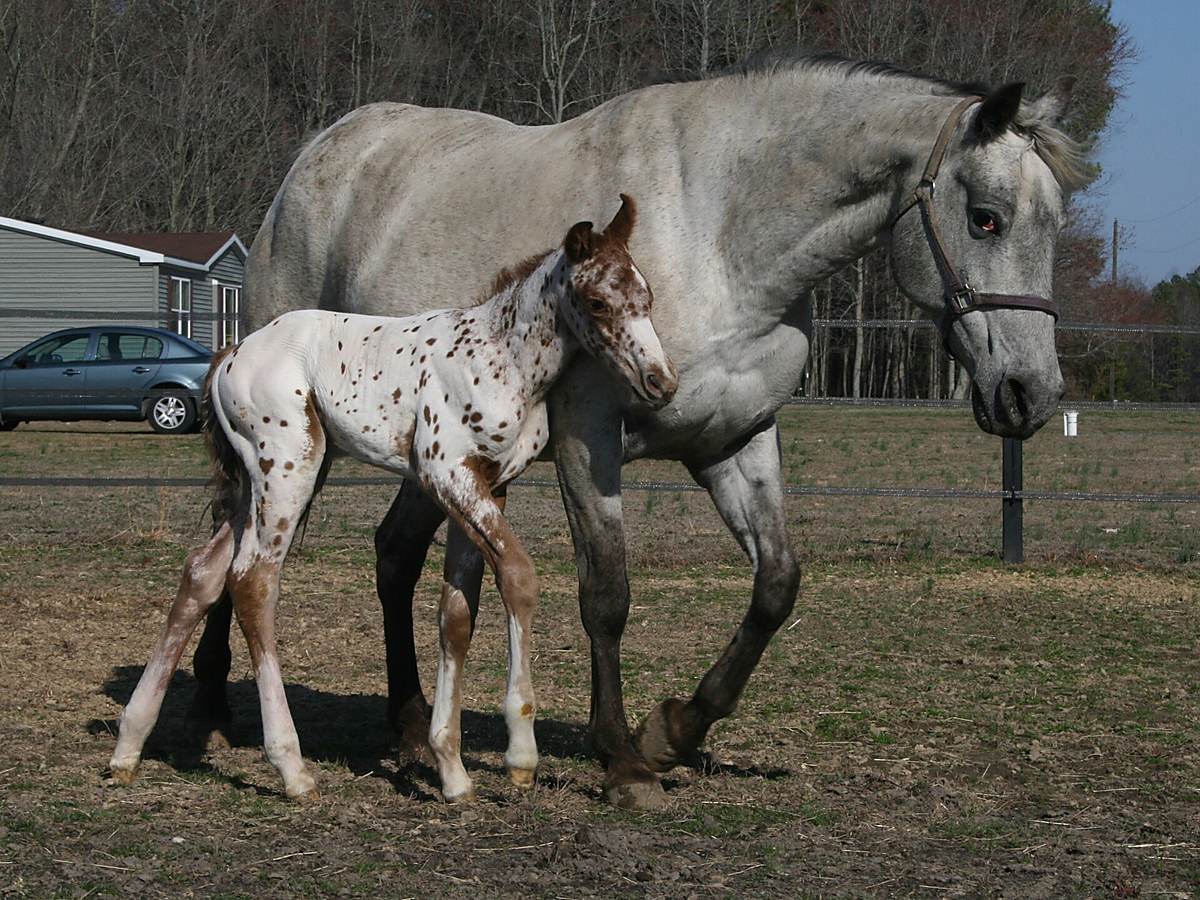
Q: What breed is strongly associated with spotted coat patterns and the Nez Perce people?
A: Appaloosa.
Q: What breed is famous for pinto coloring and a long history in the United States?
A: American Paint Horse.
Q: What gaited breed is known for the running walk?
A: Tennessee Walking Horse.
Q: What Icelandic breed is known for additional gaits including the tölt?
A: Icelandic horse.
Q: Is a pony simply a baby horse?
A: No. Pony refers to a mature equine type generally distinguished by height and build, not age.
Q: What general term describes very large, heavy horses bred historically for pulling work?
A: Draft horses.
Q: What does warmblood usually describe in modern sport-horse breeding?
A: A group of European-derived sport-horse populations developed for disciplines such as dressage and jumping, not a literal body-temperature category.
Coat Colors & Markings
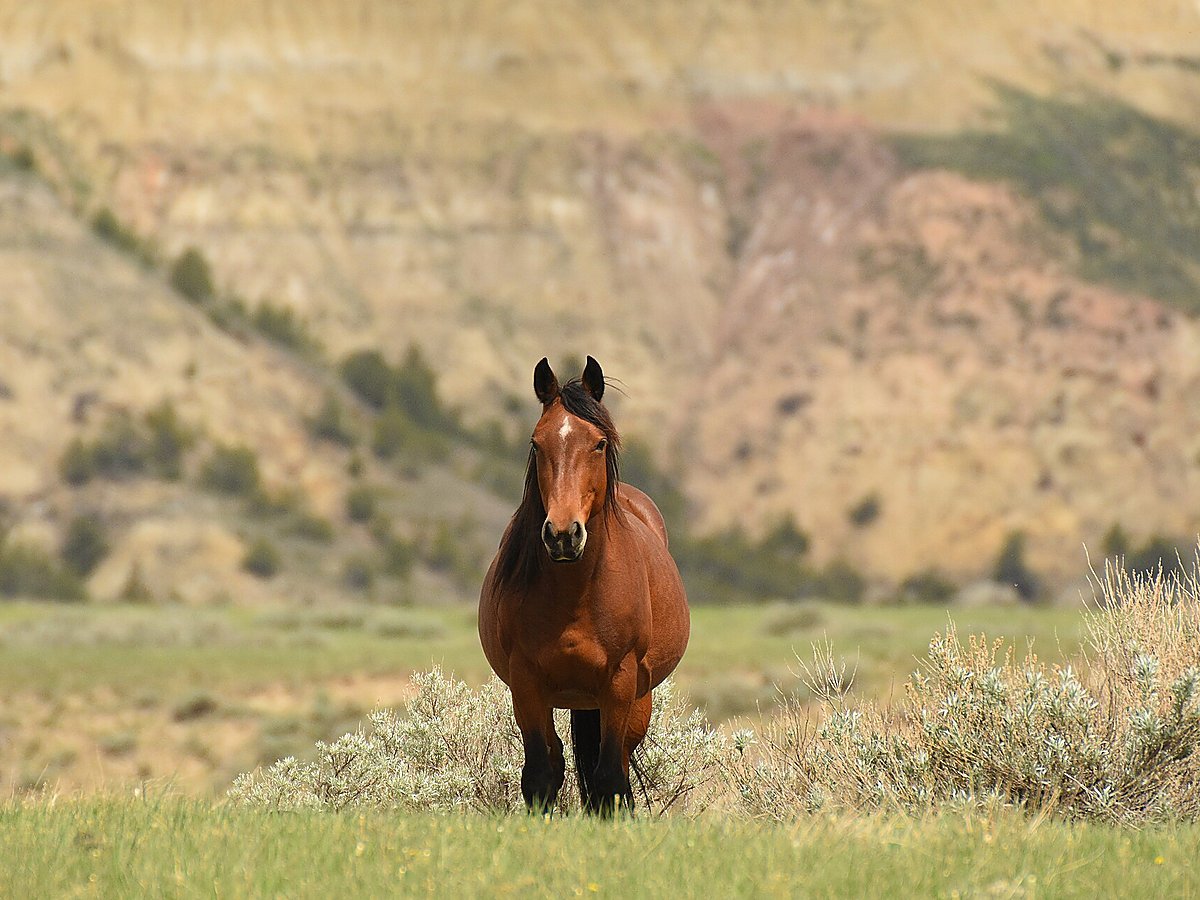
Q: What coat color has a reddish-brown body with a black mane, tail, and lower legs?
A: Bay.
Q: What coat color is reddish with no black points?
A: Chestnut or sorrel.
Q: What is a true black horse?
A: A horse with a black coat and black points that does not have a lighter brown body color.
Q: Are most gray horses born white?
A: No. Gray horses are usually born darker and progressively lighten with age.
Q: What is a palomino?
A: A horse with a golden body and typically a light cream or white mane and tail.
Q: What is a buckskin?
A: A yellow or tan body color with black mane, tail, and lower legs.
Q: What is a roan coat?
A: A mixture of white and colored hairs over much of the body while the head and lower legs often remain darker.
Q: What does pinto describe?
A: A broad category of large white and colored coat patches.
Q: Is Paint always the same thing as pinto?
A: No. Pinto describes a color pattern, while American Paint Horse is a specific registered breed.
Q: What is a blaze?
A: A broad white marking running down the face.
Q: What is a star?
A: A white marking on the forehead.
Q: What is a sock?
A: A white marking extending partway up a lower leg.
Q: What is a dorsal stripe?
A: A dark stripe running along the topline of the back, common in some primitive or dun-colored horses.
Q: What color pattern is especially associated with Appaloosas?
A: Leopard-complex spotting, which can appear in several different patterns.
Q: Why can horse color trivia get complicated?
A: Everyday color names, breed terminology, genetics, dilution genes, white patterns, and age-related changes can overlap.

Gaits, Riding & Tack
Q: What is the slowest basic horse gait?
A: The walk.
Q: What two-beat diagonal gait comes after the walk in speed?
A: The trot.
Q: What three-beat gait is called a canter in many English riding traditions?
A: The canter.
Q: What is the fastest common natural gait?
A: The gallop.
Q: What does posting mean at the trot?
A: The rider rhythmically rises and sits with the horse's motion rather than sitting every stride.
Q: What is a saddle?
A: Equipment placed on a horse's back to support a rider.
Q: Why does saddle fit matter?
A: Poor saddle fit can cause discomfort and affect the horse's back, movement, and welfare.
Q: What is a bridle?
A: Headgear used to communicate with and guide a horse, usually incorporating reins.
Q: What are reins?
A: Straps or lines held by the rider and attached to the bridle or other headgear.
Q: What is a bit?
A: A piece of tack placed in the horse's mouth as part of some bridles, though bitless systems also exist.
Q: What is a stirrup?
A: A foot support hanging from the saddle.
Q: What is a girth or cinch?
A: The strap that helps secure a saddle around the horse's barrel.
Q: What is a halter?
A: Headgear commonly used for leading and handling a horse from the ground.
Q: What is a lead rope?
A: A rope or line attached to a halter for leading and handling.
Q: What is groundwork?
A: Training and handling exercises performed with the horse from the ground rather than while riding.
Racing & Equestrian Sports
Q: What breed is used in the Kentucky Derby?
A: Thoroughbred.
Q: What three U.S. races make up the Thoroughbred Triple Crown?
A: The Kentucky Derby, Preakness Stakes, and Belmont Stakes.
Q: What surface is traditionally associated with many major flat races?
A: Dirt or turf, depending on the race and country.
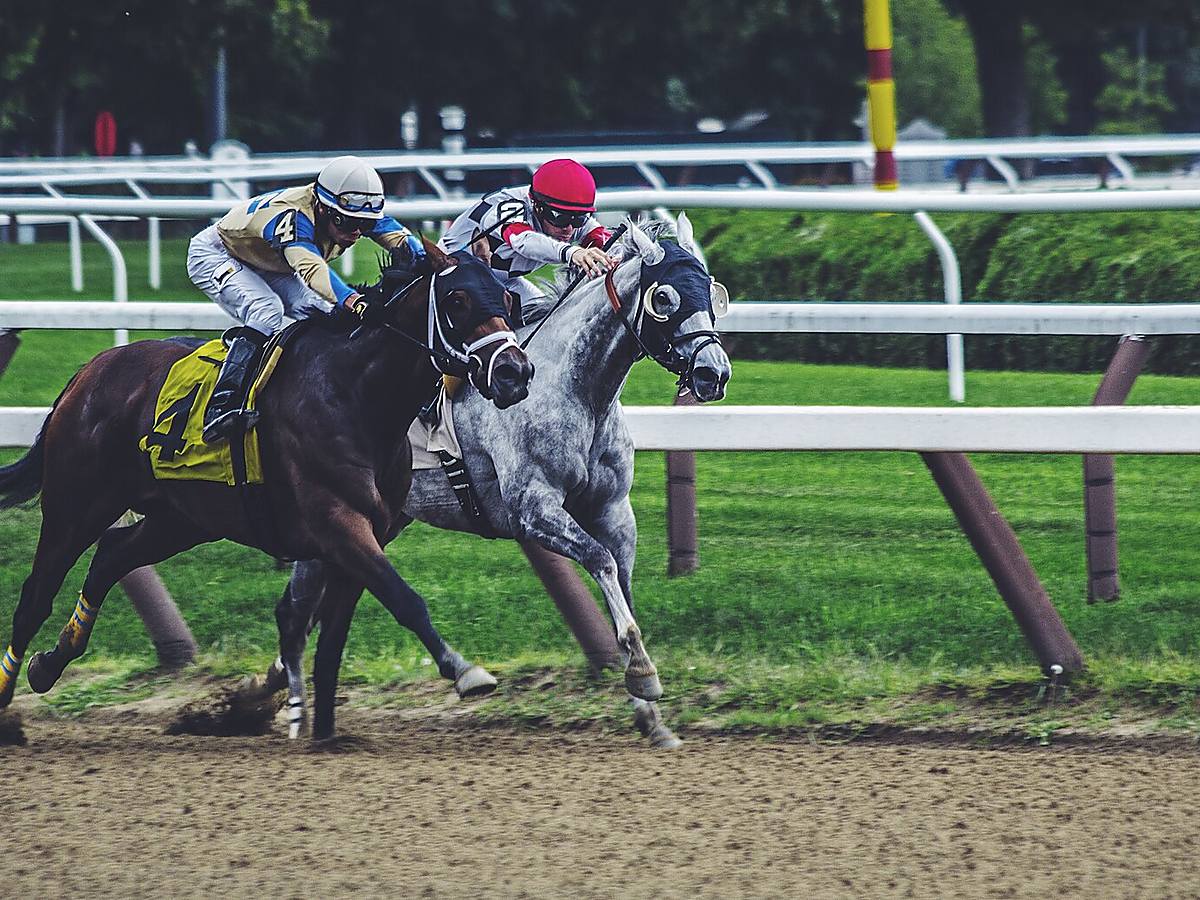
Q: What is a jockey?
A: A rider who competes in horse races.
Q: What is a steeplechase?
A: A race over obstacles such as fences and sometimes ditches.
Q: What discipline tests precise movements, balance, and communication in a rectangular arena?
A: Dressage.
Q: What discipline asks horse-and-rider pairs to jump a course of colored obstacles?
A: Show jumping.
Q: What Olympic discipline combines dressage, cross-country, and show jumping?
A: Eventing.
Q: What Western sport involves a horse and rider racing a cloverleaf pattern around barrels?
A: Barrel racing.
Q: What Western discipline includes sliding stops and controlled spins?
A: Reining.
Q: What sport is played on horseback with riders using mallets to hit a ball?
A: Polo.
Q: What equestrian activity involves driving horses pulling a carriage?
A: Carriage driving.
Q: What is endurance riding?
A: Long-distance competition that emphasizes speed, stamina, veterinary checks, and the horse's fitness to continue.
Q: What equestrian discipline emphasizes gymnastic movements performed on a moving horse?
A: Equestrian vaulting.
Q: What makes horses unusual Olympic partners?
A: Horse and human compete as an interspecies athletic team whose performance depends on both training and welfare.
History, Care & Hard Horse Challenge
Q: What broad human activity helped drive early horse domestication?
A: Horses became important for transport, herding, warfare, agriculture, and later sport, though the exact history of domestication is complex.
Q: What invention made mounted riding and transport more effective by protecting the hoof from wear in some environments?
A: Horseshoes became one important technology, though not every horse requires shoes.
Q: Who is a farrier?
A: A professional who trims and balances hooves and may apply horseshoes.
Q: Why do horse hooves need regular care?
A: Hooves continuously grow and their balance and condition influence comfort and movement.
Q: What kind of food forms the foundation of most horse diets?
A: Forage such as pasture grass and hay.
Q: Why are horses adapted to eating many small meals or grazing for long periods?
A: Their digestive system evolved around frequent intake of fibrous forage.
Q: Can horses vomit normally like humans and dogs?
A: Horses are generally unable to vomit because of the anatomy and function of their upper digestive tract.
Q: What is colic?
A: A general term for abdominal pain, which can have many causes and can become a veterinary emergency.
Q: Why is fresh water essential for horses?
A: Hydration supports digestion, temperature regulation, circulation, and normal body function.
Q: Why do horses need dental care?
A: Their teeth continually erupt for much of life and can develop sharp points, uneven wear, disease, or pain that affects eating and behavior.
Q: What does floating teeth mean?
A: A qualified professional smooths problematic sharp dental points when medically indicated.
Q: What welfare basics does AAEP emphasize for equids?
A: Appropriate food, water, handling, health care, and an environment suited to the horse's biological and behavioral needs.
Q: Is every horse naturally comfortable living completely alone?
A: No. Horses are social animals and management should account for appropriate social contact and species-typical behavior.
Q: Why can sudden changes in behavior matter medically?
A: Pain, illness, dental problems, poor tack fit, fear, or other welfare issues can change how a horse behaves.
Q: Why is horse trivia much deeper than memorizing breeds?
A: Equine science connects anatomy, social behavior, genetics, nutrition, hoof care, history, transportation, sport, language, breeding, and thousands of years of partnership with humans.
How Did You Score?
If the frog, fetlock, tölt, allogrooming, warmblood, colostrum, and why "pony" does not mean baby horse all felt easy, your equine knowledge is moving at a very respectable gallop.
Keep the animal round going with our animal trivia, dog trivia, and biology trivia.

Ellie Simons creates and edits Random Trivia. She researches trivia using primary and authoritative sources whenever possible and is currently reviewing the site's older trivia library for accuracy, clarity, and playability. Read more on the About page.
About this quiz
Site editor: Ellie Simons. Read our Trivia Methodology to learn how questions are researched and updated. Page last updated: . Report an error.