
Polar bears are excellent swimmers, patient hunters, and absolute masters of looking fluffy while being dangerous. I kept these 120 questions friendly, but I would still let the bear win every argument.
Built for Arctic Life
Q: What is the scientific name of the polar bear?
A: Ursus maritimus, meaning sea bear, is the species' scientific name.
Q: Which bear species is the largest living land carnivore?
A: The polar bear generally holds that title, though size varies by sex and individual.
Q: Where do wild polar bears live?
A: They live across the Arctic in Canada, Greenland, Norway, Russia, and Alaska.
Q: Which hemisphere is the natural home of polar bears?
A: They are native to the Northern Hemisphere around the Arctic Ocean.
Q: Where do polar bears not live in the wild?
A: They do not live naturally in Antarctica, which is penguin territory.
Q: What color is a polar bear's skin?
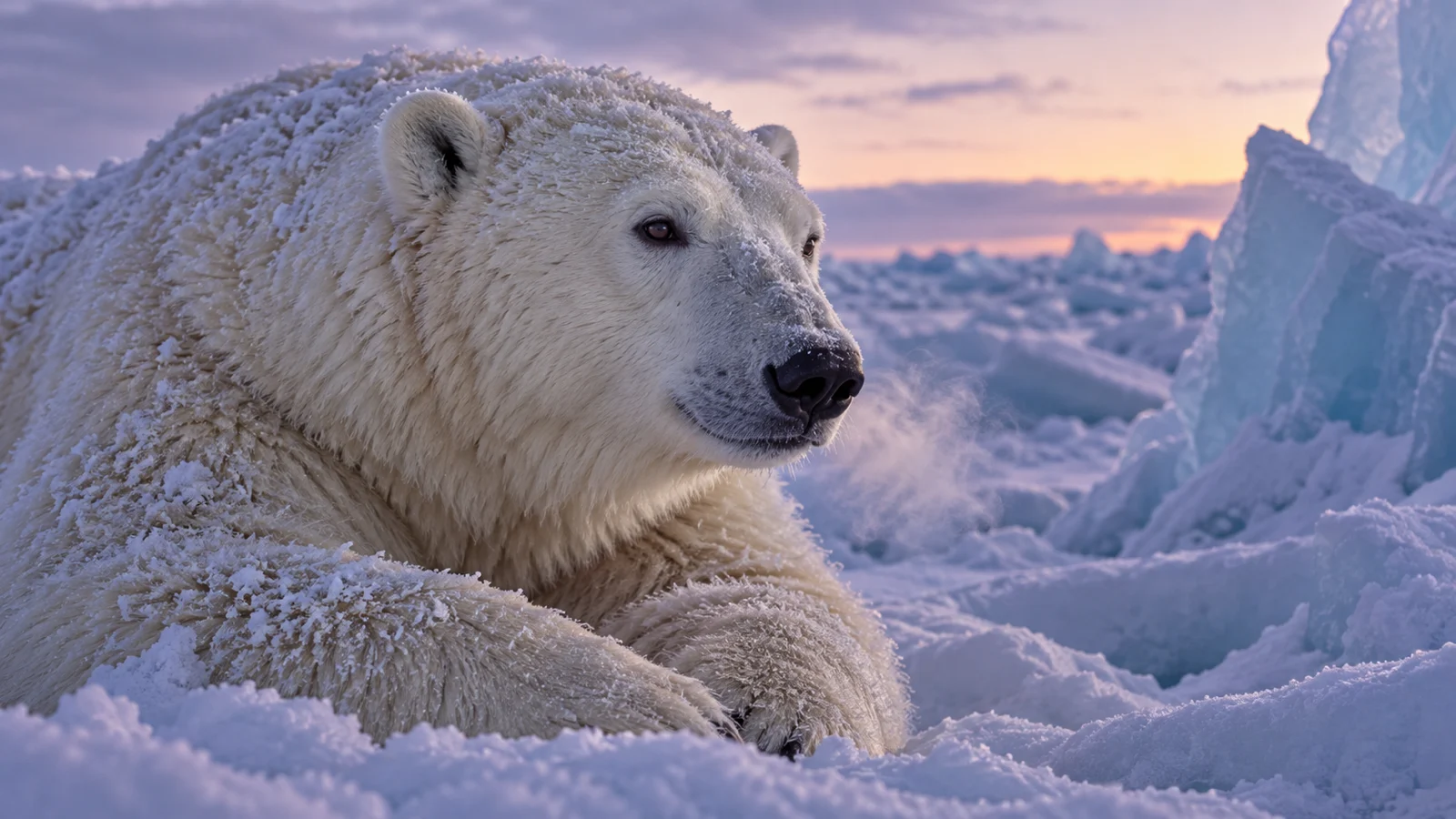
A: Its skin is black beneath the fur.
Q: What color are individual polar bear hairs?
A: Most guard hairs are transparent and hollow-looking, not truly white.
Q: Why does polar bear fur appear white?
A: The nearly colorless hairs scatter and reflect visible light.
Q: What lies beneath a polar bear's fur for insulation?
A: A thick layer of body fat reduces heat loss in frigid water and air.
Q: How many layers of fur does a polar bear have?
A: It has dense underfur beneath a layer of longer guard hairs.
Q: What body shape helps a polar bear conserve heat?
A: A compact form with small ears and a short tail limits exposed surface area.
Q: How do a polar bear's paws help on ice?
A: Broad paws spread its weight and reduce sinking into snow.
Q: How wide can an adult polar bear's front paw be?
A: A large front paw may measure roughly 12 inches across.
Q: What covers much of a polar bear's paw pads?
A: Small bumps called papillae and fur improve traction and insulation.
Q: How do polar bears use their front paws while swimming?
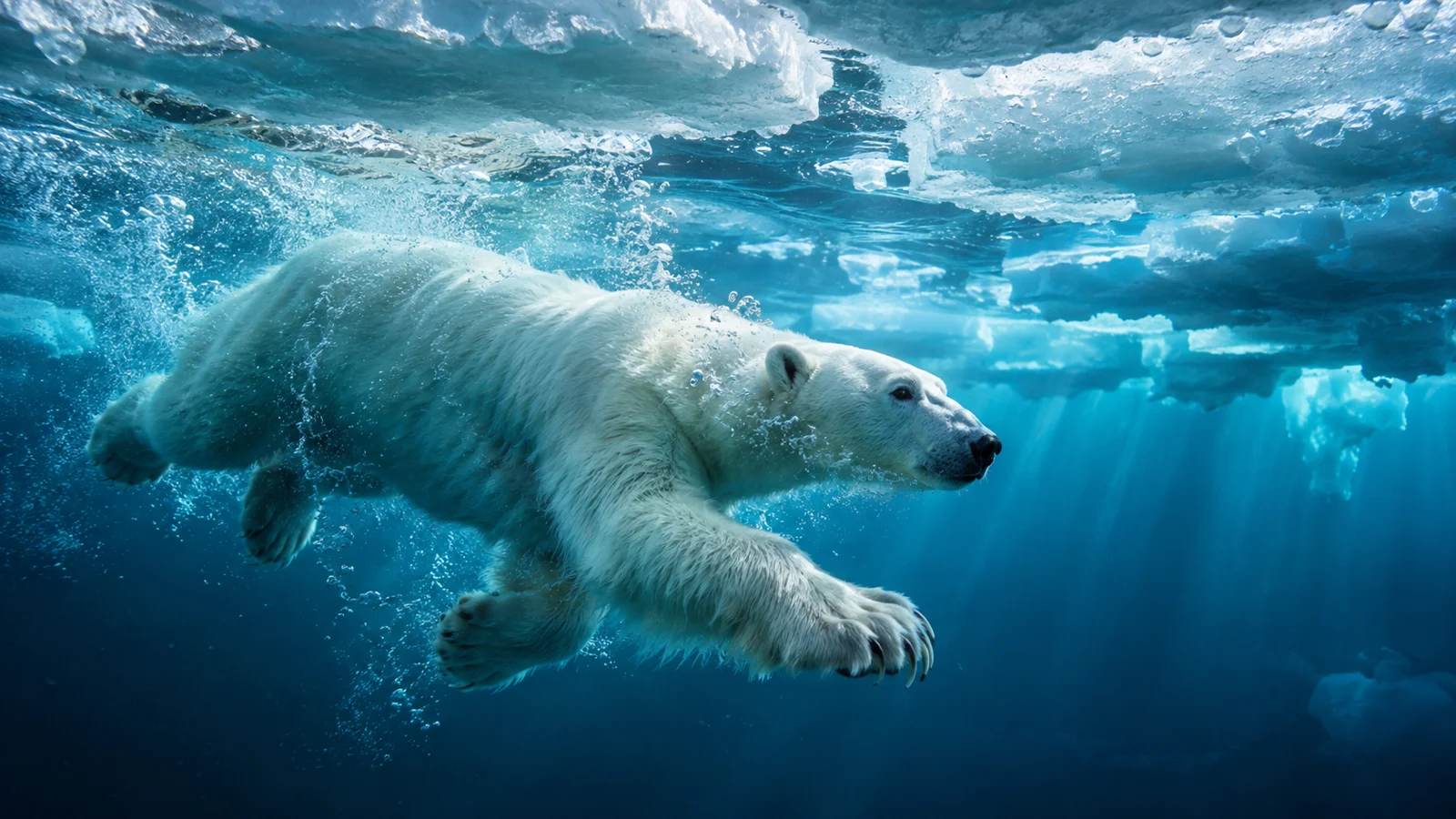
A: The large front paws paddle while the hind legs trail and steer.
Q: Why are polar bears classified as marine mammals?
A: They depend heavily on sea ice and the marine food web for survival.
Q: Which bear is the polar bear's closest living relative?
A: The brown bear is its closest living relative.
Q: How are polar bears different from albino bears?
A: They have normal dark pigment, including black skin, rather than albinism.
Q: What is the typical shape of a polar bear's head?
A: It has a relatively small head, long muzzle, and streamlined profile.
Q: Why does a polar bear have a keen sense of smell?
A: Smell helps it locate seals, carcasses, mates, and breathing holes across vast distances.
Q: How does a polar bear close its nostrils while swimming?
A: Muscles can shut the nostrils to keep water out during submersion.
Q: What protects a polar bear's eyes from Arctic glare?
A: Its eyes are adapted to bright conditions, though they lack literal built-in sunglasses.
Q: How many toes does a polar bear have on each foot?
A: It has five toes on each paw, each ending in a strong claw.
Q: How do polar bear claws differ from retractable cat claws?
A: Bear claws remain exposed and are thick, curved tools for gripping and digging.
Q: What does a polar bear use its claws for?
A: It grips ice and prey, digs dens, and tears tough hide.
Q: How can scientists estimate a polar bear's age after death?
A: They count annual growth layers in a small tooth, much like tree rings.
Q: What word describes an animal that walks on the soles of its feet?
A: Polar bears are plantigrade, placing the heel and sole on the ground.
Q: How does a polar bear usually walk?
A: It uses a steady, energy-saving gait suited to long travel across ice.
Q: How fast can a polar bear run for a short distance?
A: It can sprint around 25 miles per hour, but overheating limits endurance.
Q: Why can running be costly for a polar bear?
A: Its insulation traps heat, and heavy movement burns precious energy quickly.
Hunting, Food, and Family
Q: What is the polar bear's main prey?
A: Ringed seals provide much of the high-fat food polar bears need.
Q: Which other seal is important prey for many polar bears?
A: Bearded seals are another substantial Arctic food source.
Q: How does a polar bear hunt at a seal breathing hole?
A: It waits quietly and strikes when a seal surfaces to breathe.
Q: What is still-hunting in polar bear behavior?
A: It is patient ambush hunting beside a seal's breathing hole or ice edge.
Q: How does a polar bear find a seal den under snow?
A: Its powerful nose can detect the scent, then the bear breaks through the roof.
Q: Why is seal fat especially valuable to polar bears?
A: Fat delivers concentrated energy without requiring the bear to digest as much protein.
Q: What parts of a seal may a well-fed polar bear eat first?
A: It often favors the energy-rich skin and blubber.
Q: What happens to leftovers from a polar bear kill?
A: Foxes, gulls, ravens, and other scavengers may feed on them.
Q: What do polar bears eat when seals are unavailable?
A: They may eat carcasses, birds, eggs, vegetation, or human food, but these rarely replace seals.
Q: Why is land food usually insufficient for polar bears?
A: Most terrestrial foods are too low in calories for such a large carnivore.
Q: How long can a polar bear go without a major meal?
A: A healthy bear can fast for months, relying on stored fat when necessary.
Q: Which polar bears undergo the longest routine fast?
A: Pregnant females may fast through denning, birth, and early nursing.
Q: How far can polar bears swim?
A: They can cross many miles of open water, with exceptional swims lasting days.
Q: Why are longer swims risky for polar bear cubs?
A: Small cubs lose heat faster and have less strength and fat than adults.
Q: How do polar bears navigate a shifting seascape?
A: They combine memory, smell, landmarks, and environmental cues while following moving ice.
Q: What is a polynya?
A: It is an area of persistent open water within sea ice, often rich in wildlife.
Q: Why do polar bears patrol pressure ridges in sea ice?
A: Cracked, piled ice can create seal habitat, breathing holes, and hunting opportunities.
Q: When are many polar bears most successful at hunting?
A: Spring is crucial because seal pups and active ice-edge habitats offer rich feeding.
Q: What does hypercarnivorous mean for polar bears?
A: It means their natural diet relies overwhelmingly on animal flesh, especially marine mammals.
Q: How do polar bears avoid surprising one another around food?
A: Body posture, scent, and cautious approaches can signal intentions near a carcass.
Q: What is a nose-to-nose greeting sometimes used by polar bears?
A: A bear may approach deferentially and touch noses when seeking permission to share food.
Q: Why do polar bears sometimes play?
A: Young bears practice strength, balance, and social skills through wrestling and chasing.
Q: What do adult male polar bears do during the breeding season?
A: They travel widely, following females and competing with rival males.
Q: How can a male locate a receptive female?
A: He follows scent trails left as she moves across the ice.
Q: What is delayed implantation in polar bears?
A: A fertilized egg pauses development before attaching to the uterus months later.
Q: Why is delayed implantation useful?
A: It helps birth occur in winter dens when the mother has enough stored energy.
Q: When are polar bear cubs usually born?
A: They are generally born in maternity dens during November through January.
Q: How many cubs are most commonly born in a litter?
A: Twins are common, though singletons and triplets also occur.
Q: What are newborn polar bear cubs like?
A: They are tiny, blind, sparsely furred, and completely dependent on their mother.
Q: How rich is polar bear milk?
A: It is exceptionally high in fat, helping cubs grow rapidly inside the den.
Dens, Research, and Living Near Bears
Q: Where does a pregnant polar bear usually make her maternity den?
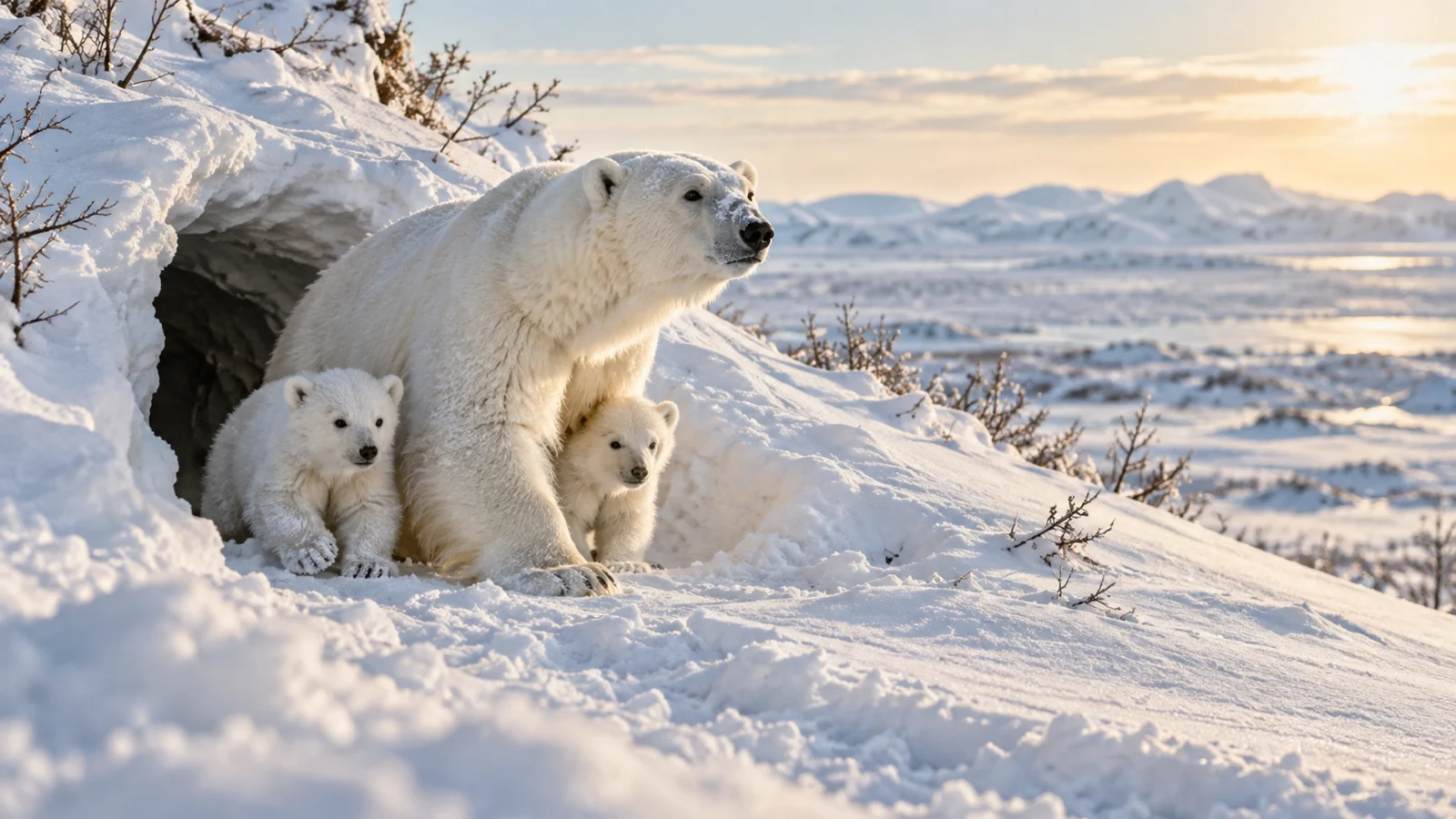
A: She digs into a snowbank on land or stable coastal ice.
Q: How does snow help a maternity den stay warm?
A: Snow traps air and insulates the chamber from much colder outside temperatures.
Q: When do mothers and cubs emerge from maternity dens?
A: They commonly emerge in early spring after several months inside.
Q: How long do polar bear cubs remain with their mother?
A: They usually stay for about two and a half years while learning survival skills.
Q: Which parent raises polar bear cubs?
A: The mother provides all routine care; adult males do not help rear them.
Q: What does a cub learn from following its mother?
A: It learns routes, hunting techniques, ice safety, swimming, and social caution.
Q: Why can adult male polar bears be dangerous to cubs?
A: Males may kill cubs, so mothers often avoid them.
Q: How does a mother defend her cubs?
A: She uses vigilance, bluff charges, attacks, and rapid retreat when possible.
Q: When do young polar bears become independent?
A: Independence usually begins after weaning in their third spring.
Q: What is the seasonal ice-free period?
A: It is the part of the year when sea ice retreats and bears may be forced ashore.
Q: What do many polar bears do while stranded on land?
A: They conserve energy, rest, and wait for sea ice to return.
Q: Why do some polar bears gather near whale remains?
A: A large carcass provides rare concentrated food that can feed many bears.
Q: Which Arctic town is famous for seasonal polar bear visitors?
A: Churchill, Manitoba, lies along a route where bears wait for Hudson Bay to freeze.
Q: Why do bears gather near Churchill in fall?
A: They are waiting for sea ice to form so seal hunting can resume.
Q: What is a polar bear jail?
A: It is Churchill's nickname for a holding facility used to manage problem bears safely.
Q: Why should people never approach a wild polar bear?
A: It is a powerful predator whose behavior can change quickly and unpredictably.
Q: What should Arctic visitors do with food and trash?
A: They should secure all attractants according to local bear-safety rules.
Q: What is a bear-resistant container?
A: It is a sturdy container designed to prevent bears from reaching food or garbage.
Q: Why are dogs risky around polar bears?
A: Dogs may attract, provoke, or be attacked by a curious or hungry bear.
Q: How do trained wildlife teams deter bears from towns?
A: They use patrols, noise makers, vehicles, and other controlled hazing methods.
Q: Why are tranquilizer darts not a casual solution?
A: Drugging carries medical risks and requires trained professionals, correct dosing, and safe conditions.
Q: How do researchers safely identify individual polar bears?
A: They use tags, tattoos, collars for suitable adults, genetics, and photo records.
Q: Why are tracking collars generally placed on adult females?
A: Adult males' necks are too wide relative to their heads to retain collars reliably.
Q: Why are collars not normally fitted to small cubs?
A: Cubs grow quickly, making a fixed collar unsafe and short-lived.
Q: What can a satellite collar reveal?
A: It records routes, habitat use, time on ice, and responses to environmental change.
Q: What can hair samples reveal about a polar bear?
A: DNA can identify individuals, sex, relatedness, and sometimes diet or contaminants.
Q: How can scientists collect polar bear hair without capture?
A: Barbed hair snares gather strands when a bear rubs past baited research stations.
Q: What can footprints tell researchers?
A: Tracks reveal presence, direction, approximate size, and sometimes a mother with cubs.
Q: Why do scientists examine body condition?
A: Fatness helps show whether bears are finding enough food to reproduce and survive.
Q: What is mark-recapture research?
A: Researchers identify bears over time to estimate survival, movement, and population size.
Conservation and Polar Bears in Culture
Q: What is the main long-term threat facing polar bears?
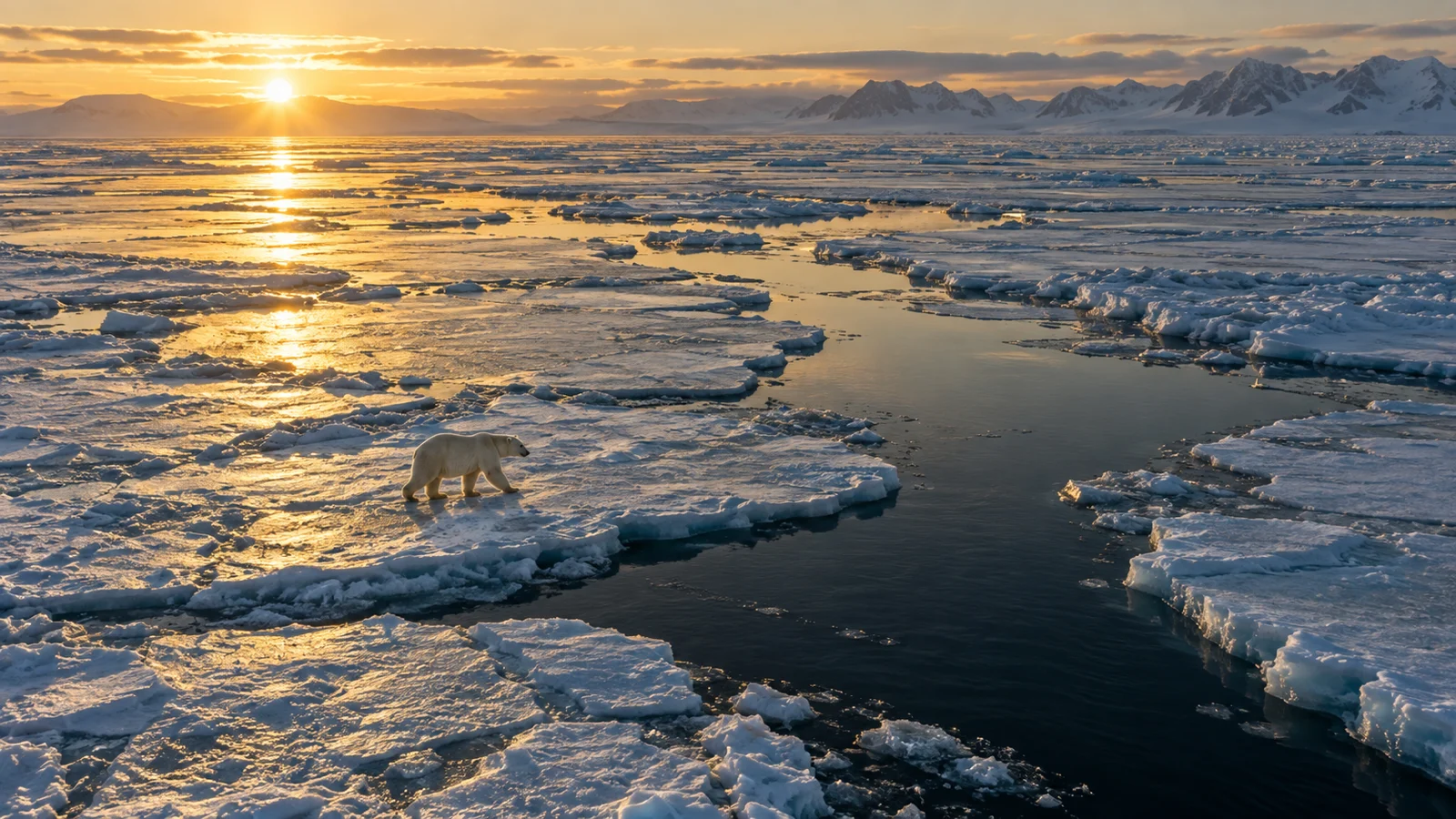
A: Human-driven climate warming is shrinking and changing their sea-ice hunting habitat.
Q: Why does earlier spring ice breakup matter?
A: It shortens the best seal-hunting season and can force bears ashore sooner.
Q: Why does later fall freeze-up matter?
A: Bears must fast longer before they can return to productive hunting grounds.
Q: How can sea-ice loss affect reproduction?
A: Poor feeding reduces body condition, litter size, cub survival, and breeding success.
Q: How can oil development threaten polar bears?
A: Spills, noise, traffic, and disturbance can damage habitat and disrupt denning bears.
Q: Why is an Arctic oil spill especially difficult to clean?
A: Cold, darkness, ice, remoteness, and rough weather severely restrict response options.
Q: How do industrial chemicals reach remote polar bears?
A: Pollutants travel through air and oceans, then concentrate up the Arctic food chain.
Q: What is biomagnification?
A: It is the increase of certain contaminant concentrations at higher levels of a food web.
Q: Why do polar bears carry high contaminant loads?
A: As top predators, they eat seals that have accumulated pollutants from smaller organisms.
Q: How can shipping growth affect polar bears?
A: More vessels bring noise, disturbance, collision risks, pollution, and easier human access.
Q: How can communities reduce human-bear conflict?
A: Secure waste, monitor bears, plan development carefully, and respond with trained teams.
Q: Why is coexistence work important for conservation?
A: Keeping people and property safe reduces pressure to kill problem bears.
Q: What does the polar bear conservation status depend on?
A: It depends on both global sea-ice trends and conditions within distinct regional populations.
Q: How many broad polar bear subpopulations are commonly recognized?
A: Scientists and managers commonly recognize 19 subpopulations across the Arctic.
Q: Which agreement coordinates international polar bear protection?
A: The five polar bear nations signed a conservation agreement in 1973.
Q: Which five nations share responsibility for wild polar bears?
A: Canada, Denmark for Greenland, Norway, Russia, and the United States.
Q: Why are Indigenous observations valuable to polar bear science?
A: Generations of close experience provide detailed knowledge of behavior, ice, and local change.
Q: What does the Inuit word nanuq refer to?
A: Nanuq is a widely known Inuit-language name for the polar bear, with spelling varying by dialect.
Q: Why should Arctic place names and bear terms be handled carefully?
A: The Arctic contains many distinct Indigenous languages and cultures, not one uniform tradition.
Q: What role do polar bears play in Arctic food webs?
A: They are top predators that connect sea-ice habitats with coastal scavenger communities.
Q: What famous beverage company popularized animated polar bears in holiday ads?
A: Coca-Cola began its well-known animated polar bear campaign in the 1990s.
Q: Which literary armored bear rules Svalbard in His Dark Materials?
A: Iorek Byrnison becomes a central ally in the fantasy series.
Q: What is Knut remembered for?
A: Knut was a hand-raised polar bear born at the Berlin Zoo in 2006.
Q: Why can a polar bear look green in some zoos?
A: Algae may grow inside or on hollow-looking hairs in warm, humid conditions.
Q: Why is feeding polar bears at zoos carefully designed?
A: Keepers balance nutrition, enrichment, dental health, and natural foraging behavior.
Q: What is behavioral enrichment for a captive polar bear?
A: It includes scents, puzzles, changing objects, pools, and feeding challenges that encourage activity.
Q: Why are polar bears difficult to keep well in captivity?
A: They range widely in nature and need space, water, stimulation, and cool conditions.
Q: What can ordinary people do to support polar bear habitat?
A: Cut climate pollution, support effective policy, and back responsible Arctic conservation.
Q: Why should polar bear photos never justify unsafe behavior?
A: A close picture is not worth stressing an animal or risking a human life.
Q: What lesson sits beneath most polar bear trivia?
A: The bear is superbly adapted to sea ice, which is exactly why losing ice matters.
How Did You Score?
If the sea-bear questions felt easy, you know your Arctic wildlife. If not, at least you now know why offering one a snack is a spectacularly bad plan.

Ellie Simons creates and edits Random Trivia. She researches trivia using primary and authoritative sources whenever possible and is currently reviewing the site's older trivia library for accuracy, clarity, and playability. Read more on the About page.
About this quiz
Site editor: Ellie Simons. Read our Trivia Methodology to learn how questions are researched and updated. Page last updated: . Report an error.