
Penguins look dressed for dinner, then spend it chasing fish underwater. I love that contradiction, so I gathered 120 questions that go well beyond the usual “they cannot fly” fact.
Penguin Bodies Built for the Water
Q: What kind of animal is a penguin?
A: A penguin is a flightless seabird built for swimming rather than flying.
Q: Which bird order contains all living penguins?
A: Penguins belong to Sphenisciformes, an order found naturally in the Southern Hemisphere.
Q: Which family contains modern penguins?
A: All living penguins belong to the family Spheniscidae.
Q: What have penguin wings evolved into?
A: Their wings became stiff, powerful flippers that drive them through water.
Q: How do penguins steer while swimming?
A: They use their feet and tail as rudders while their flippers provide thrust.
Q: What body shape helps penguins swim efficiently?
A: A streamlined, torpedo-shaped body reduces drag underwater.
Q: Why are penguin bones denser than those of many flying birds?
A: Dense bones reduce buoyancy and make diving easier.
Q: What is the dark-back, pale-belly coloring of penguins called?
A: It is countershading, camouflage against both dark depths and bright surface water.
Q: How does a penguin keep its feathers waterproof?
A: It preens carefully, spreading oil while arranging tightly overlapping feathers.
Q: Where does a penguin's preening oil come from?
A: A gland near the base of its tail produces the oil.
Q: What traps insulating air next to a penguin's skin?
A: Its dense layer of short, overlapping feathers traps a blanket of air.
Q: What is the soft insulating layer beneath penguin feathers called?
A: Down feathers help hold warm air close to the body.
Q: How do penguins handle excess salt from seawater?
A: Special salt glands above their eyes filter salt from the bloodstream.
Q: Where does filtered salt leave a penguin's body?
A: Concentrated salty fluid drains through the nostrils and is shaken or sneezed away.
Q: What is a penguin's annual rapid feather replacement called?
A: It is a catastrophic molt, dramatic wording for a perfectly normal process.
Q: Why do penguins stay ashore during their main molt?
A: Their patchy new plumage is not waterproof enough for safe feeding at sea.
Q: How do penguins prepare for a molt?
A: They eat heavily and build fat reserves before fasting on land.
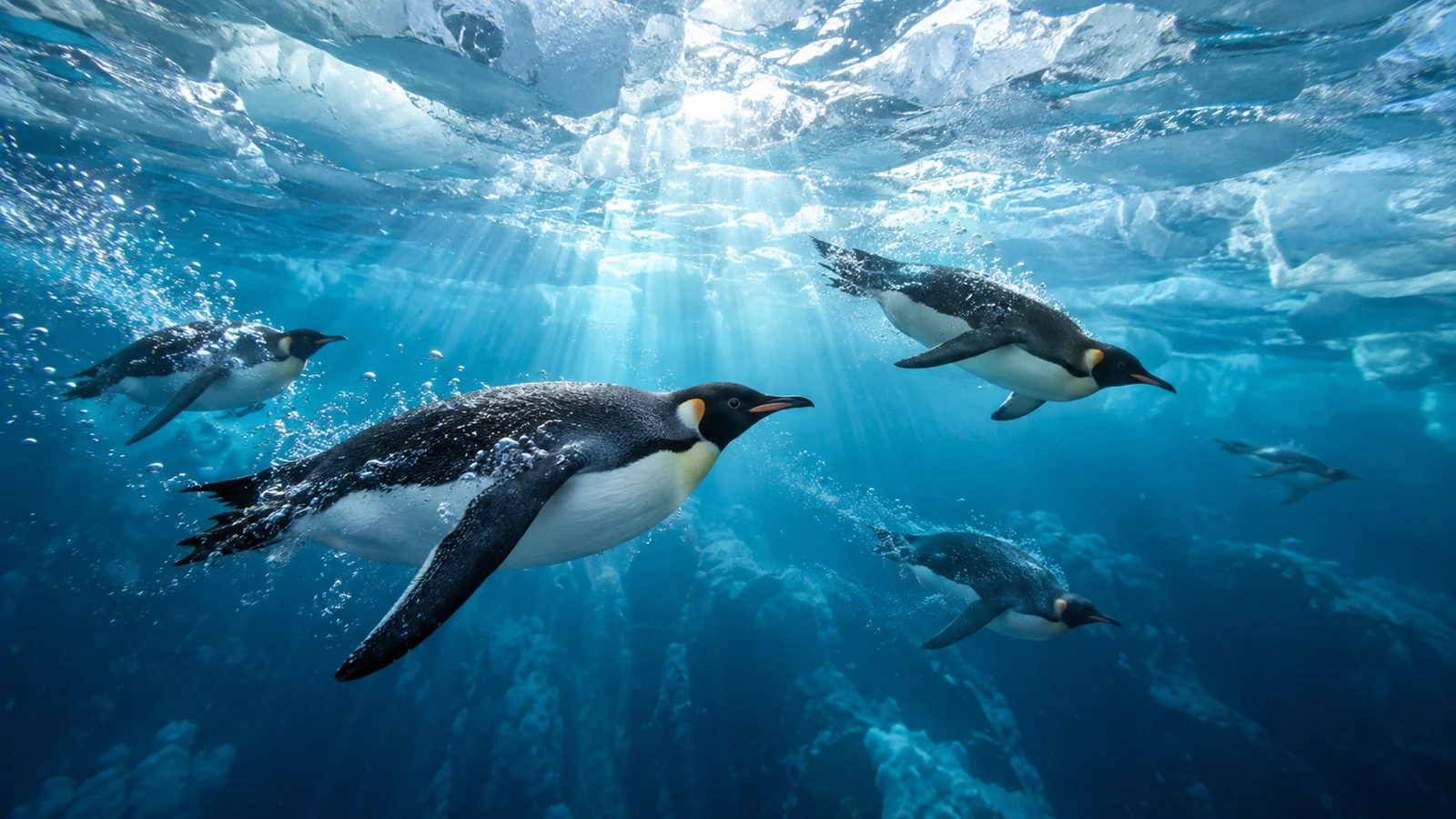
Q: What propels a penguin during underwater flight?
A: Powerful strokes of both flippers provide most of the forward force.
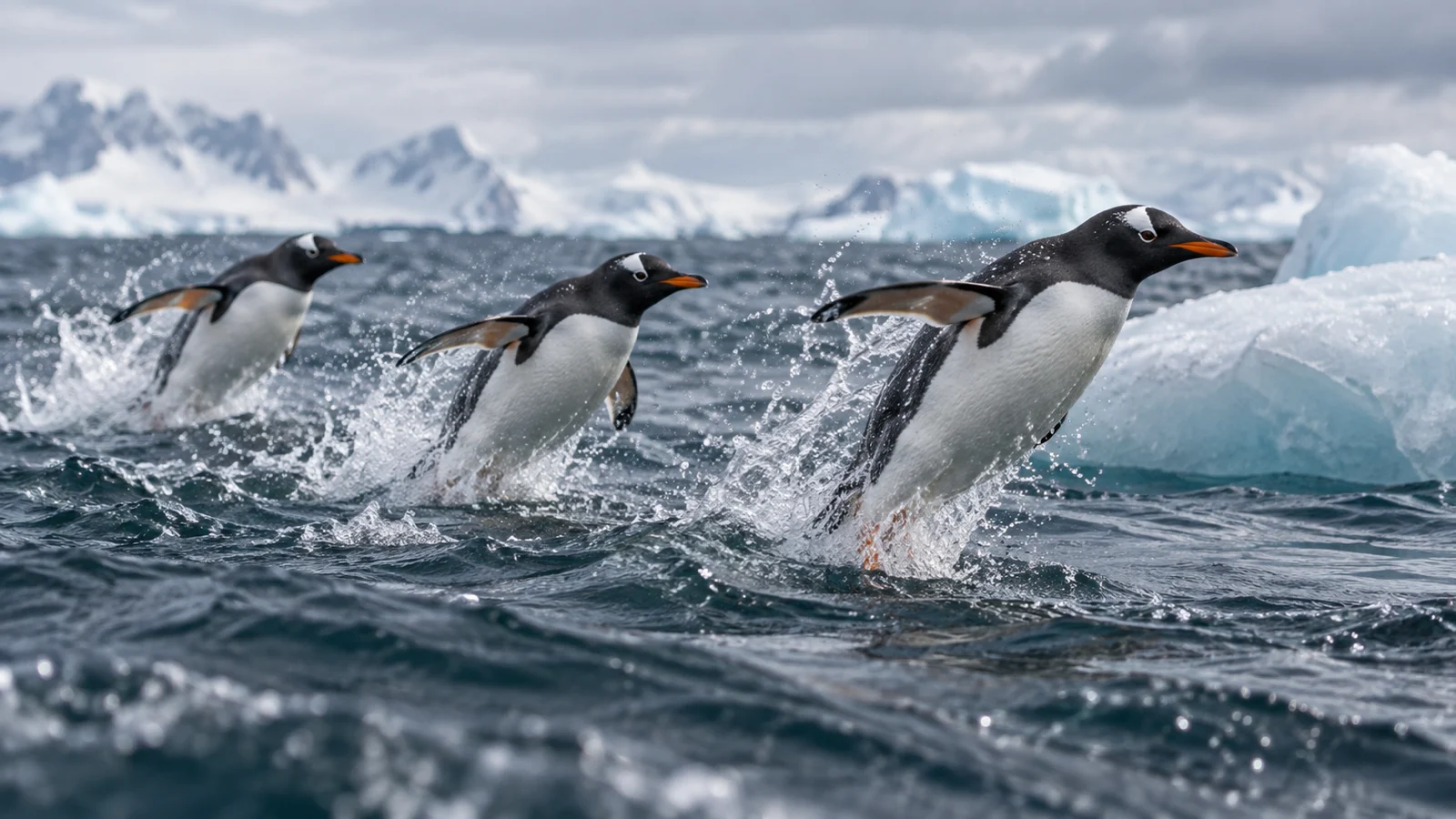
Q: What is porpoising in penguin behavior?
A: It is repeatedly leaping above the surface while traveling quickly through water.
Q: Why might penguins porpoise?
A: The behavior can aid breathing, speed, navigation, or escape from predators.
Q: How do penguin eyes cope with underwater hunting?
A: Their eyes focus well in water and function effectively in dim conditions.
Q: What covers a penguin's eye underwater for protection?
A: A translucent nictitating membrane acts like a built-in pair of goggles.
Q: How do penguins conserve heat in their flippers and feet?
A: Countercurrent blood flow transfers heat between nearby arteries and veins.
Q: Why can penguin feet remain much cooler than the body core?
A: Cooler feet lose less heat to ice while controlled circulation prevents freezing.
Q: What is a group of penguins on land often called?
A: A colony or rookery is the clearest term, though playful collective nouns abound.
Q: What is a group of penguins in the water sometimes called?
A: It is sometimes called a raft.
Q: How do most penguins move on land?
A: They walk upright with a waddle caused by their short legs and body shape.
Q: What is penguin tobogganing?
A: A penguin slides on its belly while pushing with its feet and flippers.
Q: Why is tobogganing useful on snow and ice?
A: Sliding can conserve energy and move a penguin faster than walking.
Q: Where are a penguin's knees located?
A: The knees sit inside the body outline, hidden beneath feathers and muscle.
Species, Ranges, and Very Good Eyebrows
Q: In which hemisphere do wild penguins naturally live?
A: They live naturally in the Southern Hemisphere, from Antarctica to temperate coasts.
Q: Which penguin lives farthest north?
A: The Galapagos penguin lives near the equator and sometimes crosses just north of it.
Q: Where do wild penguins not naturally occur?
A: No penguin species is native to the Arctic.
Q: Which living penguin species is tallest?
A: The emperor penguin is tallest, reaching roughly 4 feet in exceptional adults.
Q: Which living penguin species is smallest?
A: The little penguin stands only about 12 to 13 inches tall.
Q: What is another common name for the little penguin?
A: It is often called the little blue penguin because of its bluish upperparts.
Q: Which two countries are home to most little penguins?
A: They breed around Australia and New Zealand.
Q: Which penguin has a broad white stripe over the top of its head?
A: The gentoo penguin has that conspicuous white head marking.
Q: Which penguin has a narrow black line beneath its chin?
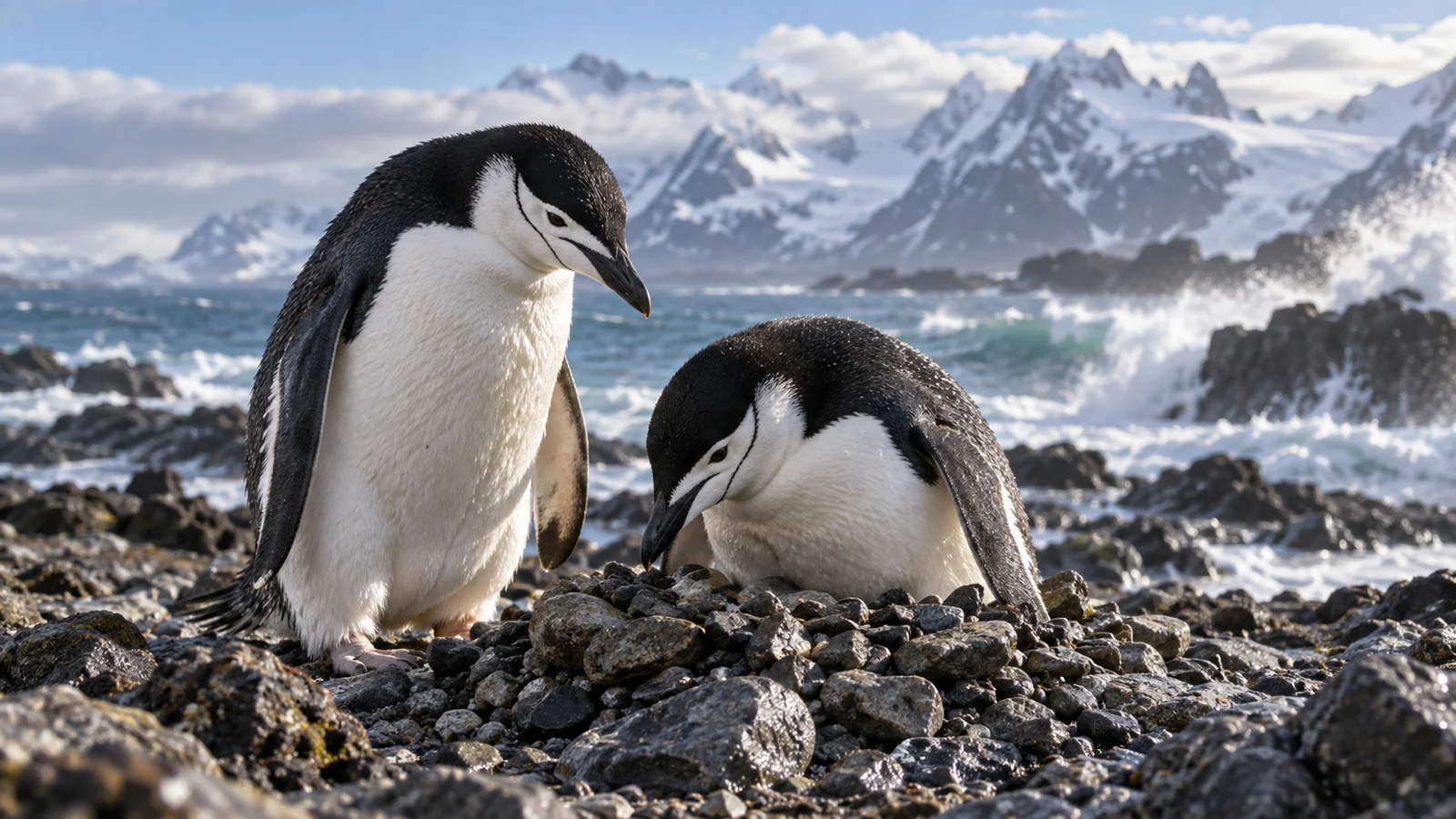
A: The chinstrap penguin looks as if someone fastened a tiny helmet strap.
Q: Which penguin is closely associated with rocky Antarctic shores and sea ice?
A: The Adelie penguin is a classic Antarctic species with a white eye ring.
Q: Which penguin has orange patches near its ears and upper chest?
A: The emperor penguin carries those yellow-orange accents.
Q: Which penguin resembles the emperor but breeds on subantarctic islands?
A: The king penguin is smaller and has bright orange markings.
Q: Which penguin is known for loud, donkey-like calls?
A: The African penguin earned the older nickname jackass penguin from its braying voice.
Q: Where does the African penguin live?
A: It breeds along the coasts and islands of South Africa and Namibia.
Q: Which penguin lives along the coasts of Peru and Chile?
A: The Humboldt penguin inhabits shores influenced by the cool Humboldt Current.
Q: Which penguin commonly breeds in southern Argentina and Chile?
A: The Magellanic penguin nests in burrows or sheltered scrapes there.
Q: Which rare penguin has pale yellow eyes?
A: New Zealand's yellow-eyed penguin has yellow eyes and a yellow head band.
Q: Which penguins are famous for bright yellow eyebrow crests?
A: Crested penguins in the genus Eudyptes wear those unruly-looking plumes.
Q: Which crested penguin has a name borrowed from flashy eighteenth-century fashion?
A: The macaroni penguin was named after the fashionable “macaroni” style.
Q: Which penguin has spiky yellow crests and a famously grumpy expression?
A: The rockhopper penguin has bold crests and hops across rocky ground.
Q: How do rockhopper penguins navigate steep colonies?
A: They hop with both feet together over rocks, ledges, and narrow paths.
Q: Where do Galapagos penguins find cool feeding water near the equator?
A: Cold, nutrient-rich currents and upwelling around the islands sustain their prey.
Q: Which continent hosts the greatest number of penguin species as visitors or breeders?
A: Antarctica hosts several species, though many more breed on subantarctic islands.
Q: Where do emperor penguins usually breed?
A: They breed on stable Antarctic sea ice during the harsh southern winter.
Q: Where do king penguins generally breed?
A: They form large colonies on ice-free subantarctic islands.
Q: Which penguin breeds in forests and coastal vegetation in New Zealand?
A: The Fiordland penguin nests amid rainforest, caves, and rocky coastal cover.
Q: Which penguin is endemic to the Snares Islands of New Zealand?
A: The Snares penguin breeds only on that small island group.
Q: What does endemic mean when describing a penguin species?
A: It means the species naturally occurs in one limited geographic area.
Q: Which current gives the Humboldt penguin its name?
A: The cold Humboldt Current flows northward along western South America.
Q: Why can penguins thrive beyond icy Antarctica?
A: Cool, productive oceans provide food even beside deserts, grasslands, and forests.
Food, Family Life, and Survival
Q: What do penguins eat?
A: Depending on species and location, they eat fish, krill, squid, and other marine prey.
Q: How do penguins catch prey?
A: They chase and seize individual animals underwater, usually swallowing them whole.
Q: Why do penguins often swallow fish headfirst?
A: Headfirst swallowing helps fins fold back and lets prey slide down more easily.
Q: What sensory system helps some penguins locate prey?
A: Vision is crucial, while hearing and other cues also support foraging and navigation.
Q: Which predator commonly hunts Antarctic penguins near ice edges?
A: Leopard seals patrol those entry points and ambush penguins in the water.
Q: Which large marine mammals sometimes prey on penguins?
A: Orcas occasionally hunt penguins, along with larger fish and sharks in some regions.
Q: Which birds often take penguin eggs or small chicks?
A: Skuas, gulls, sheathbills, and giant petrels can raid colonies.
Q: What is a penguin chick's first coat made of?
A: Soft down provides warmth but is not fully waterproof.
Q: Why must young penguins wait before entering the ocean?
A: They need juvenile waterproof feathers before they can swim and feed safely.
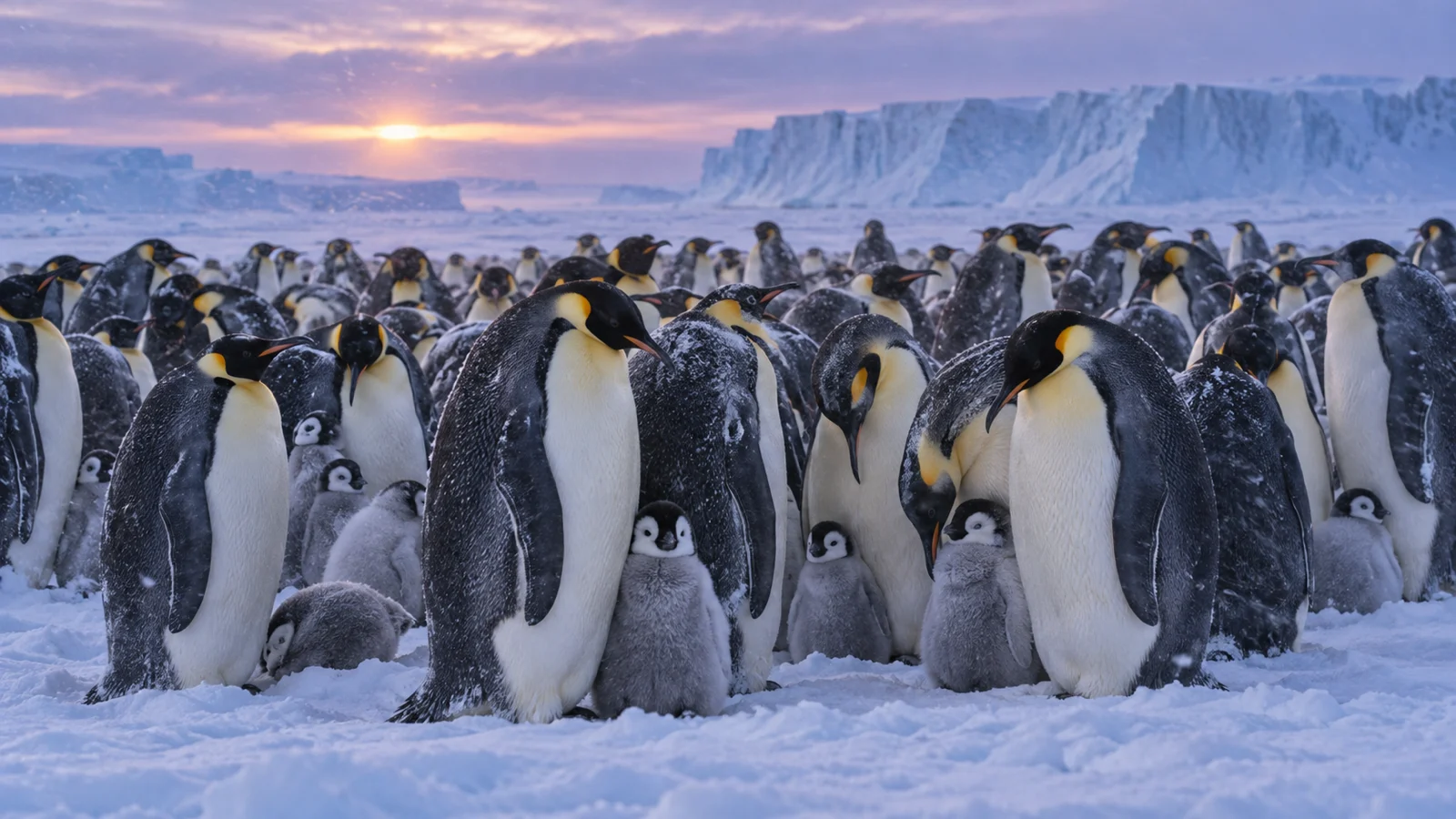
Q: What is a crèche in a penguin colony?
A: It is a group of chicks gathering together while adults forage.
Q: How many eggs do emperor penguins usually lay at a time?
A: The female lays one large egg.
Q: Which parent incubates an emperor penguin egg through winter?
A: The male balances it on his feet beneath a warm brood pouch.
Q: What happens if an emperor penguin egg rests directly on the ice too long?
A: It can chill rapidly, so transfers between parents must be quick.
Q: Why do male emperor penguins huddle?
A: The rotating huddle reduces heat loss during months of wind, darkness, and fasting.
Q: What does the female emperor penguin do after laying?
A: She travels to sea to feed, then returns with food for the chick.
Q: How do adult penguins feed chicks?
A: They regurgitate partially digested food directly into a chick's mouth.
Q: How do parents recognize family members in a packed colony?
A: Distinctive calls help mates and chicks identify one another among thousands.
Q: What do many Adelie and gentoo penguins use to build nests?
A: They arrange small stones into shallow circular nests.
Q: Why are nest pebbles valuable in a penguin colony?
A: Pebbles lift eggs above wet ground, and suitable stones may be scarce.
Q: What cheeky behavior sometimes occurs around pebble nests?
A: Penguins may steal stones from neighbors when the owner is distracted.
Q: Where do African penguins often nest?
A: They use burrows, rock crevices, vegetation, or artificial nest boxes.
Q: Why was guano historically important to some burrowing penguins?
A: Thick guano deposits offered diggable nest material before people mined much of it.
Q: What determines breeding timing in many penguin species?
A: Food supply, daylight, sea ice, temperature, and local seasons all play roles.
Q: How long may king penguin breeding take?
A: The extended cycle lasts more than a year from courtship to chick independence.
Q: Why do king penguin colonies contain chicks of different ages?
A: Their unusually long breeding cycle does not fit neatly into one calendar year.
Q: What does fledging mean for a penguin chick?
A: It means gaining juvenile plumage and becoming ready for independent life at sea.
Q: How do penguins usually drink?
A: They can drink seawater because their salt glands remove excess salt.
Q: How long can emperor penguins dive?
A: They can remain submerged for more than 20 minutes on exceptional dives.
Q: How deep can emperor penguins dive?
A: Recorded dives exceed 1,500 feet, deeper than those of any other bird.
Q: Why do penguins sometimes gather at the water's edge before entering?
A: Waiting in a group may dilute individual risk from predators lurking nearby.
Conservation, Research, and Penguin Fame
Q: What is the biggest broad threat to many penguin populations?
A: Rapid environmental change can alter prey, breeding habitat, and safe access to food.
Q: How does shrinking sea ice affect emperor penguins?
A: Poor sea-ice years can remove stable breeding platforms before chicks are ready.
Q: How can warming water affect penguins?
A: It can shift currents and prey distributions away from established colonies.
Q: How can overfishing harm penguins?
A: Fishing may reduce the fish or krill available near breeding colonies.
Q: What is penguin bycatch?
A: It is the accidental capture or drowning of penguins in fishing gear.
Q: Why are oil spills especially dangerous to penguins?
A: Oil destroys feather waterproofing, causing chilling, poisoning, and loss of buoyancy.
Q: How can introduced mammals threaten island penguins?
A: Cats, rats, dogs, and other predators may kill adults, chicks, or eggs.
Q: Why can poorly managed tourism disturb penguin colonies?
A: Close approaches and noise can interrupt nesting, feeding, or movement to the sea.
Q: What simple rule helps visitors protect wild penguins?
A: Keep the required distance, stay on marked routes, and never block their path.
Q: Why should people never feed wild penguins?
A: Human food disrupts natural behavior and may make the birds sick or dependent.
Q: How do scientists track penguin movements at sea?
A: They use small satellite tags, GPS loggers, and time-depth recorders.
Q: What does a time-depth recorder measure?
A: It records how deep and how long a penguin dives.
Q: What can penguin guano reveal from space?
A: Large stained areas can help satellites locate previously unknown colonies.
Q: How do automated cameras help penguin researchers?
A: Time-lapse images record colony size, timing, snow cover, and breeding success.
Q: What can feathers reveal about a penguin's diet?
A: Chemical signatures in feathers reflect foods and foraging areas used before molt.
Q: Why do researchers count nests or chicks?
A: Repeated counts show whether a colony is growing, stable, or declining.
Q: What unrelated northern bird was once called a penguin?
A: The extinct great auk was a flightless North Atlantic seabird, not a true penguin.
Q: What is uncertain about the origin of the word penguin?
A: Its exact etymology is disputed, with several historical explanations proposed.
Q: Which documentary follows emperor penguins through their breeding cycle?
A: March of the Penguins brought their Antarctic winter journey to enormous audiences.
Q: Who narrated the American release of March of the Penguins?
A: Morgan Freeman supplied the calm, unmistakable narration.
Q: What is Tux in computer culture?
A: Tux is the penguin mascot associated with the Linux kernel.
Q: Who created the original Tux artwork?
A: Larry Ewing drew the familiar seated penguin in 1996.
Q: Which animated penguin communicates largely through invented speech sounds?
A: Pingu, a cheerful clay penguin, speaks a playful fictional language often called Penguinese.
Q: Which sports team uses a skating penguin logo?
A: The Pittsburgh Penguins of the National Hockey League use one.
Q: Which fictional penguins became stars of the Madagascar franchise?
A: Skipper, Kowalski, Rico, and Private form the movie series' commando-like team.
Q: What makes penguins useful indicators of ocean health?
A: Their breeding success reflects changes in prey, ice, pollution, and marine conditions.
Q: Why are marine protected areas useful for penguins?
A: They can safeguard feeding grounds and reduce damaging activity near important colonies.
Q: How can nest boxes help African penguins?
A: Well-designed shelters replace lost burrows and protect eggs from heat and predators.
Q: What does captive breeding contribute to penguin conservation?
A: Carefully managed programs support research, education, and insurance populations for some species.
Q: Why is long-term monitoring especially important for penguins?
A: One bad season can mislead, while decades reveal genuine population and climate trends.
How Did You Score?
If you knew half of these, your penguin credentials are officially respectable. If you nailed all 120, I hope someone has already issued you a field parka.

Ellie Simons creates and edits Random Trivia. She researches trivia using primary and authoritative sources whenever possible and is currently reviewing the site's older trivia library for accuracy, clarity, and playability. Read more on the About page.
About this quiz
Site editor: Ellie Simons. Read our Trivia Methodology to learn how questions are researched and updated. Page last updated: . Report an error.