
Welcome to the land between the rivers. These 120 Ancient Mesopotamia trivia questions cover Sumerian cities, the invention of cuneiform, Akkadian kings, Ur, Babylon, Hammurabi, Assyria, Nineveh, ziggurats, Gilgamesh, mathematics, trade, farming, religion, and the clay tablets that let us read voices from thousands of years ago.
The first round is friendly. The last one gets properly cuneiform.
Why Ancient Mesopotamia Makes Great Trivia
Mesopotamia was not one single empire. It was a region where Sumerian, Akkadian, Babylonian, Assyrian, and other cultures created cities, kingdoms, temples, legal traditions, literature, accounting systems, astronomical records, and one of the world's earliest writing systems.
The Metropolitan Museum dates Uruk's rise as an enormous southern Mesopotamian city to the late fourth millennium BCE, while the Penn Museum preserves tens of thousands of Sumerian and Akkadian cuneiform tablets. For more ancient history, try our Ancient Egypt trivia, Ancient Greece trivia, and world history trivia.
Mesopotamia, Rivers & the First Cities
Q: What does the name Mesopotamia mean?
A: Land between the rivers.
Q: What two rivers give Mesopotamia its famous description?
A: The Tigris and Euphrates.
Q: What modern country contains much of ancient Mesopotamia's heartland?
A: Iraq.
Q: Did ancient Mesopotamia fit perfectly inside modern Iraq?
A: No. The broader region extended into parts of modern Syria, Turkey, Iran, and neighboring areas.
Q: What people created many of the earliest large city-states in southern Mesopotamia?
A: The Sumerians.
Q: What city became one of the world's largest settlements by around 3200 BCE?
A: Uruk.
Q: What is a city-state?
A: A city and its surrounding territory functioning as an independent political unit.
Q: Name three famous Sumerian city-states.
A: Uruk, Ur, and Lagash are three major examples.
Q: What major Sumerian religious center was located at Nippur?
A: A major cult center of the god Enlil.
Q: What building material was especially common in southern Mesopotamia because stone and timber were limited?
A: Mud brick.
Q: Why was irrigation essential in southern Mesopotamia?
A: Farmers needed to manage river water across a hot, dry landscape to support crops.
Q: What problem could irrigation create if water and soil salts accumulated?
A: Soil salinization could reduce agricultural productivity.
Q: What crop was particularly important in Mesopotamian farming?
A: Barley.
Q: What tree crop provided fruit, wood, fiber, and sweeteners in southern Mesopotamia?
A: The date palm.
Q: Why are early Mesopotamian cities so important to world history?
A: They show some of the earliest large-scale urban societies with temples, administrators, specialized labor, trade, writing, and organized political power.
Cuneiform, Clay Tablets & the Invention of Writing
Q: What writing system developed in ancient Mesopotamia?
A: Cuneiform.
Q: What does cuneiform refer to visually?
A: Wedge-shaped impressions pressed into clay.
Q: What tool made many cuneiform signs?
A: A reed stylus.
Q: What material was commonly used as the writing surface?
A: Wet clay tablets.
Q: What language was among the earliest written in cuneiform?
A: Sumerian.
Q: What Semitic language later became widely written in cuneiform?
A: Akkadian.
Q: Was cuneiform an alphabet?
A: No. It used combinations of word signs and syllabic signs.
Q: What were some of the earliest written records used to track?
A: Goods, labor, rations, land, livestock, and other administrative information.
Q: Did Mesopotamians use writing only for bookkeeping?
A: No. They wrote literature, law, letters, prayers, royal inscriptions, school exercises, medicine, mathematics, astronomy, and much more.
Q: What kind of school trained scribes?
A: Scribal schools, sometimes referred to by the Sumerian term edubba, or tablet house.
Q: Why did becoming a scribe require extensive training?
A: Students had to learn hundreds of signs, languages, vocabulary lists, literary texts, mathematics, and administrative conventions.
Q: What happens to clay tablets if they are accidentally or deliberately fired?
A: They harden and can survive for thousands of years.
Q: Why do archaeologists have so many Mesopotamian written records?
A: Clay was abundant, used widely for writing, and can survive burial far better than many organic writing materials.
Q: Did cuneiform remain limited to Sumer and Akkad?
A: No. It spread across much of the ancient Near East and was adapted for multiple languages.
Q: What makes cuneiform tablets unusually valuable for social history?
A: They preserve not only kings and wars but contracts, schoolwork, debts, recipes, letters, lawsuits, wages, and ordinary transactions.
Sumer, Akkad & the Third Dynasty of Ur
Q: Who founded the Akkadian Empire according to later tradition and inscriptions?
A: Sargon of Akkad.
Q: Around what period did the Akkadian Empire dominate much of Mesopotamia?
A: Roughly the 24th to 22nd centuries BCE.
Q: What city gave the Akkadian Empire its name?
A: Akkad, or Agade.
Q: Has the exact archaeological location of Akkad been securely identified?
A: No.
Q: What language did the Akkadian rulers speak?
A: Akkadian, a Semitic language.
Q: Who was Naram-Sin?
A: A powerful Akkadian king and grandson of Sargon.
Q: What title did Naram-Sin famously use that elevated royal ideology?
A: King of the Four Quarters, and he was represented with divine status in some contexts.
Q: What famous Akkadian artwork shows Naram-Sin ascending a mountain over defeated enemies?
A: The Victory Stele of Naram-Sin.
Q: What Sumerian city became the center of a powerful revival after the Akkadian period?
A: Ur.
Q: What dynasty is often called Ur III?
A: The Third Dynasty of Ur.
Q: Who founded the Third Dynasty of Ur?
A: Ur-Nammu.
Q: What famous legal text predates Hammurabi and is associated with Ur-Nammu?
A: The Law Code of Ur-Nammu.
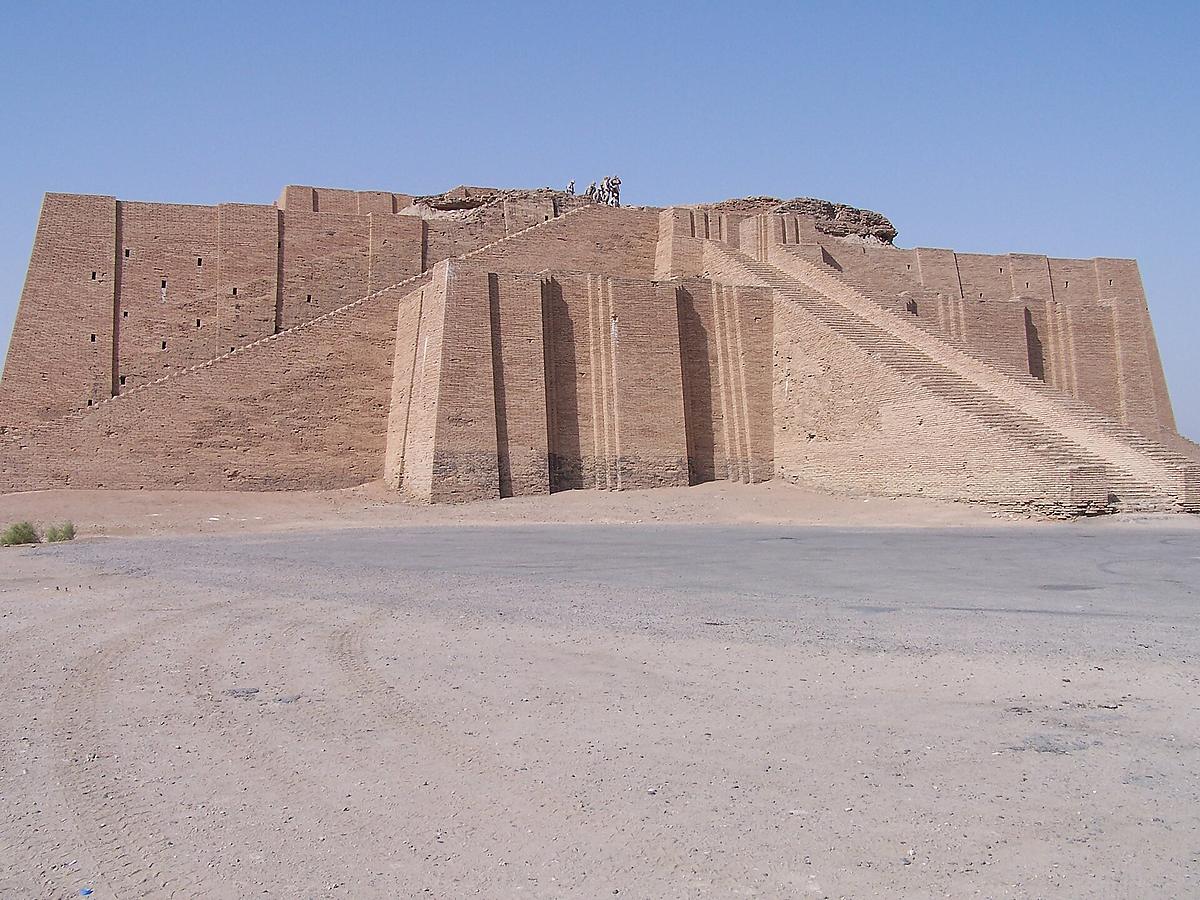
Q: What monumental temple platform dominates the archaeological image of Ur?
A: The Great Ziggurat of Ur.
Q: What royal cemetery at Ur produced spectacular burials and objects?
A: The Royal Cemetery of Ur.
Q: What high-status woman buried at Ur is famous for her rich grave goods?
A: Queen Puabi.
Babylon & Hammurabi
Q: What city became the center of the Old Babylonian kingdom?
A: Babylon.
Q: Which king made Babylon a dominant power in the 18th century BCE?
A: Hammurabi.
Q: What is Hammurabi most famous for today?
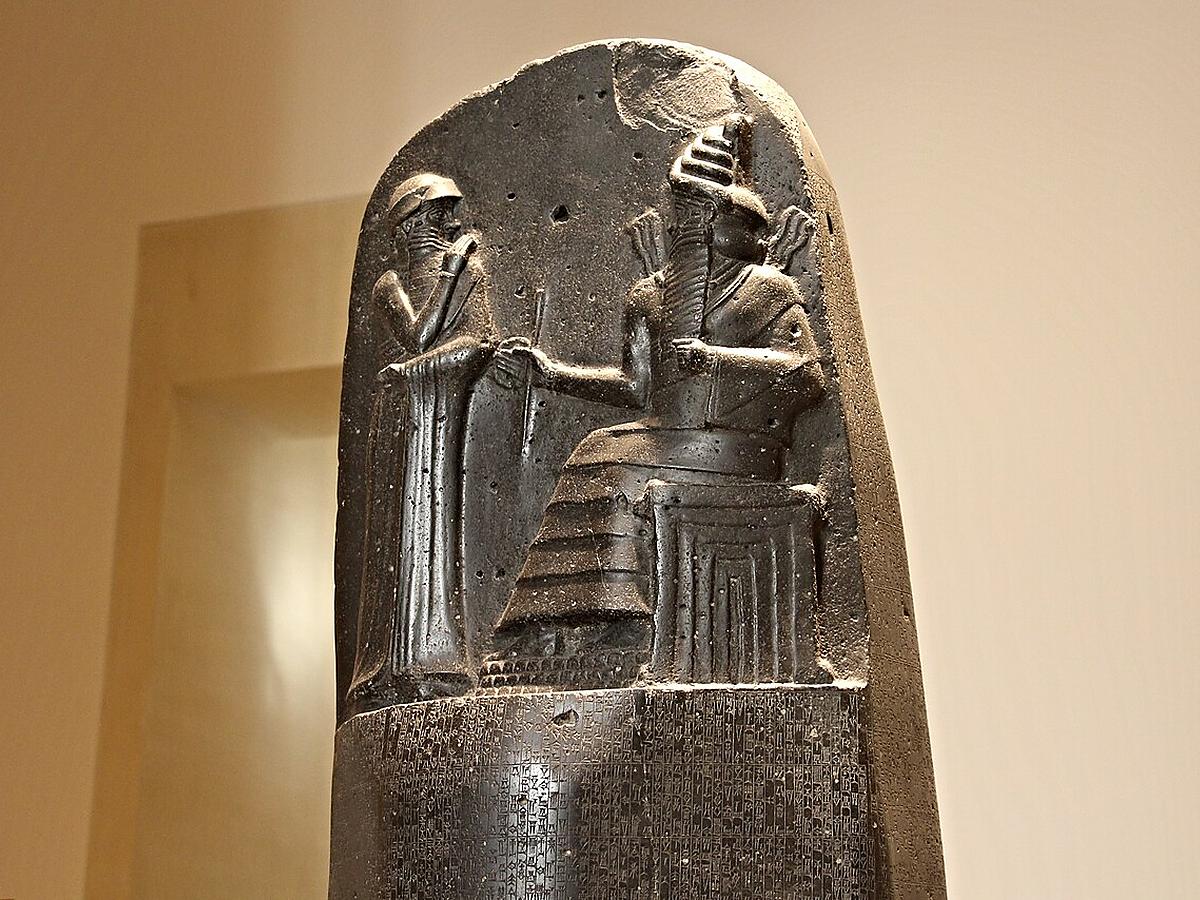
A: A long collection of legal judgments commonly called the Code of Hammurabi.
Q: Was Hammurabi's code the first law code in human history?
A: No. Earlier Mesopotamian legal collections existed.
Q: What material is the famous surviving Hammurabi law monument carved from?
A: Dark stone, specifically diorite or a related hard stone often described as basalt-like.
Q: What god is shown handing symbols of authority to Hammurabi at the top of the stele?
A: Shamash, the sun and justice god.
Q: Does the law collection impose exactly the same penalties on every social class?
A: No. Penalties often vary according to social status, gender, and circumstances.
Q: What famous principle is commonly paraphrased as an eye for an eye?
A: Lex talionis, or retaliatory justice, appears in some of Hammurabi's laws.
Q: Did Hammurabi's laws cover only violent crime?
A: No. They address marriage, property, trade, wages, loans, agriculture, injury, professional responsibility, and many other matters.
Q: What happened to Babylon around 1595 BCE according to conventional chronology?
A: A Hittite army sacked the city, marking the end of the Old Babylonian period.
Q: What later people ruled Babylonia for centuries after that disruption?
A: The Kassites.
Q: What language became increasingly common for international diplomacy across the Near East during the second millennium BCE?
A: Akkadian.
Q: What famous diplomatic archive from Egypt contains many letters written in Akkadian cuneiform?
A: The Amarna Letters.
Q: What does Babylon's repeated rebuilding tell historians?
A: The city remained a major religious and political center under many different dynasties and empires.
Q: Why is Hammurabi trivia often oversimplified?
A: He did not invent law itself, and his famous text is better understood as royal legal judgments and ideals within a much older Mesopotamian legal tradition.
Assyria, Nineveh & the Neo-Assyrian Empire
Q: What northern Mesopotamian kingdom became one of the ancient Near East's largest empires?
A: Assyria.
Q: What city gave Assyria its name?
A: Ashur, or Assur.
Q: What city became the final great capital of the Neo-Assyrian Empire?
A: Nineveh.
Q: What modern Iraqi city lies near the ruins of Nineveh?
A: Mosul.
Q: What king built a famous library at Nineveh?
A: Ashurbanipal.
Q: What did Ashurbanipal's library preserve?
A: Thousands of cuneiform tablets containing literature, scholarship, omens, medicine, rituals, and administrative texts.
Q: What famous flood story survives on a tablet from Ashurbanipal's library?
A: A version of the flood episode in the Epic of Gilgamesh.
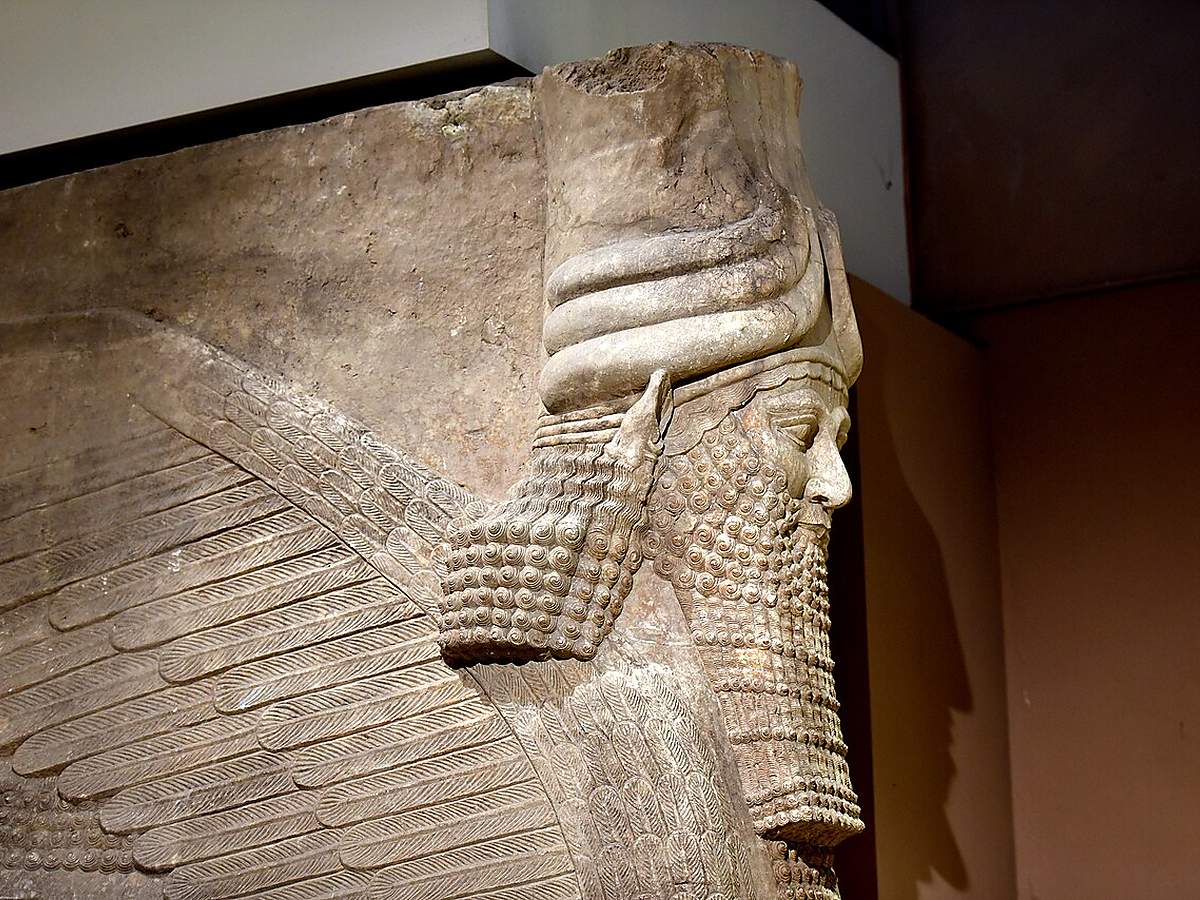
Q: What enormous hybrid guardian figures protected Assyrian palace gateways?
A: Lamassu.
Q: What animals and human features are combined in a lamassu?
A: A human head with the body of a bull or lion and wings.
Q: What type of palace art depicts Assyrian kings hunting lions?
A: Carved stone reliefs.
Q: Why did Assyrian kings depict royal lion hunts?
A: The scenes advertised royal strength, order, courage, and domination over dangerous forces.
Q: What military technology helped Assyria conduct sieges?
A: Siege engines, ramps, engineers, archers, and organized infantry were used together.
Q: What policy did Assyrian rulers use to control conquered populations?
A: Large-scale forced deportation and resettlement.
Q: In what year did Nineveh fall to a coalition of Babylonians and Medes?
A: 612 BCE.
Q: What makes Assyria important to imperial history?
A: Its rulers developed an enormous territorial state supported by armies, roads, governors, tribute, deportation, propaganda, and sophisticated administration.
Nebuchadnezzar, Neo-Babylon & Persian Conquest
Q: What dynasty rose in Babylon after Assyria's collapse?
A: The Neo-Babylonian, or Chaldean, dynasty.
Q: Which Neo-Babylonian king is especially famous for rebuilding Babylon?
A: Nebuchadnezzar II.
Q: Around what years did Nebuchadnezzar II rule?
A: Roughly 605 to 562 BCE.
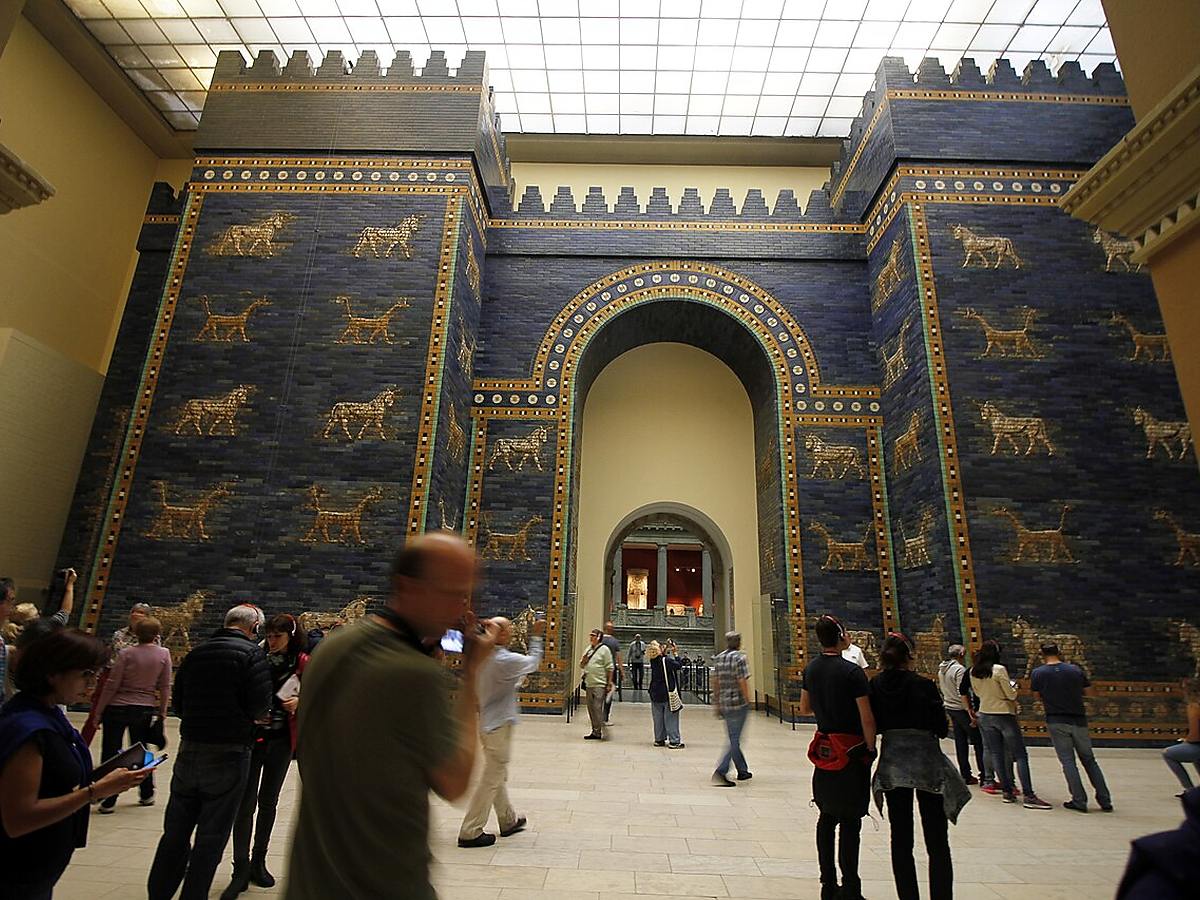
Q: What monumental blue-glazed gateway is associated with Nebuchadnezzar's Babylon?
A: The Ishtar Gate.
Q: What animals decorate reconstructions and surviving bricks from the Ishtar Gate complex?
A: Bulls and dragon-like mušḫuššu creatures.
Q: What famous processional route passed through Babylon's monumental center?
A: The Processional Way.
Q: What enormous stepped temple complex was associated with Babylon's god Marduk?
A: Etemenanki, a ziggurat later connected in tradition with the Tower of Babel story.
Q: What wonder of the ancient world is traditionally associated with Babylon but remains archaeologically debated?
A: The Hanging Gardens of Babylon.
Q: What kingdom did Nebuchadnezzar conquer when Jerusalem fell in the early sixth century BCE?
A: The Kingdom of Judah.
Q: What term describes the forced displacement of many Judeans to Babylonia?
A: The Babylonian Exile or Babylonian Captivity.
Q: What Persian king conquered Babylon in 539 BCE?
A: Cyrus the Great.
Q: What empire absorbed Babylonia after Cyrus's conquest?
A: The Achaemenid Persian Empire.
Q: Did Babylon immediately disappear after 539 BCE?
A: No. It remained an important city and center of scholarship for centuries.
Q: What subjects continued to be studied on cuneiform tablets in late Babylonian temples?
A: Mathematics, astronomy, religious scholarship, omens, and literature.
Q: Why does Babylon loom so large in later cultural memory?
A: Its wealth, monuments, biblical associations, royal building programs, scholarship, and repeated imperial importance made it a symbol far beyond its political lifetime.
Gods, Gilgamesh, Science & Daily Life
Q: What is a ziggurat?
A: A massive stepped temple platform built in ancient Mesopotamian cities.
Q: Was a ziggurat simply a royal palace?
A: No. It was primarily a monumental religious structure associated with a city's temple complex.
Q: Who was Inanna in Sumerian religion?
A: A major goddess associated with love, sexuality, war, and political power.
Q: What Akkadian and Babylonian name is closely associated with Inanna?
A: Ishtar.
Q: Who was Enlil?
A: A major Mesopotamian god associated with wind, authority, and kingship, with an important cult center at Nippur.
Q: What god became especially important as the patron deity of Babylon?
A: Marduk.
Q: Who is the hero of the Epic of Gilgamesh?
A: Gilgamesh, legendary king of Uruk.
Q: Who is Gilgamesh's close companion?
A: Enkidu.
Q: What major human problem drives Gilgamesh's later quest?
A: Fear of death and the search for immortality after Enkidu dies.
Q: What number base strongly influenced Mesopotamian mathematics?
A: Base 60, or sexagesimal mathematics.
Q: What modern measurements preserve a base-60 legacy?
A: Sixty seconds per minute, sixty minutes per hour, and 360 degrees in a circle reflect related sexagesimal traditions.
Q: What did Babylonian scholars track carefully in the sky?
A: Planetary movements, lunar cycles, eclipses, stars, and celestial omens.
Q: What did cylinder seals do?
A: Small carved cylinders were rolled across wet clay to create repeating images and could function as marks of identity or authority.
Q: What board game was discovered in the Royal Cemetery of Ur?
A: The Royal Game of Ur.
Q: Why is Mesopotamian daily life unusually well documented?
A: Clay tablets preserve contracts, debts, school exercises, business letters, marriage arrangements, legal disputes, rations, recipes, and administrative records alongside elite monuments.
Hard Mesopotamia Challenge
Q: What city does the Met describe as a true city and perhaps the world's largest settlement by around 3200 BCE?
A: Uruk.
Q: What city was a major religious center of Enlil and the source of many Penn Museum tablets?
A: Nippur.
Q: Which ruler founded the Akkadian Empire?
A: Sargon of Akkad.
Q: Which ruler founded the Third Dynasty of Ur?
A: Ur-Nammu.
Q: Which famous royal woman was buried in the Royal Cemetery at Ur?
A: Puabi.
Q: Which Old Babylonian ruler is associated with one of the most famous surviving law collections?
A: Hammurabi.
Q: Which Assyrian king assembled a famous library at Nineveh?
A: Ashurbanipal.
Q: Which Neo-Babylonian king rebuilt Babylon on a monumental scale?
A: Nebuchadnezzar II.
Q: Which Persian king captured Babylon in 539 BCE?
A: Cyrus the Great.
Q: What writing system outlived Sumerian as a spoken language by many centuries?
A: Cuneiform.
Q: What two major languages dominate many surviving Mesopotamian cuneiform collections?
A: Sumerian and Akkadian.
Q: What object from Ur is a decorated box-like artifact divided into scenes often nicknamed Peace and War?
A: The Standard of Ur.
Q: What epic preserves a Mesopotamian flood story as part of a larger tale about kingship, friendship, and mortality?
A: The Epic of Gilgamesh.
Q: Why is calling Mesopotamia one civilization misleading?
A: The region contained many cities, languages, peoples, kingdoms, and empires across thousands of years.
Q: Why is Ancient Mesopotamia especially deep trivia material?
A: Urbanization, writing, law, empire, mathematics, astronomy, mythology, farming, trade, warfare, schools, temples, board games, private letters, and thousands of surviving clay tablets allow unusually detailed questions about both kings and ordinary people.
How Did You Score?
If edubba, Nippur, Sargon, Puabi, the Ishtar Gate, lamassu, sexagesimal mathematics, and the difference between Hammurabi's law collection and the world's first law code all came easily, your Mesopotamia knowledge is written in durable clay.
Keep exploring with our Ancient Egypt trivia, Ancient Greece trivia, and world history trivia.

Ellie Simons creates and edits Random Trivia. She researches trivia using primary and authoritative sources whenever possible and is currently reviewing the site's older trivia library for accuracy, clarity, and playability. Read more on the About page.
About this quiz
Site editor: Ellie Simons. Read our Trivia Methodology to learn how questions are researched and updated. Page last updated: . Report an error.