
Forget the horned helmets. These 118 Viking trivia questions sail through Scandinavia, longships, raids, trade routes, runes, Norse religion, settlements from Iceland to North America, social classes, weapons, law, archaeology, Christianity, and the myths that have stuck around far longer than they deserve.
The first questions are friendly. The last ones may require a skald.
Why Vikings Make Great Trivia
The Viking Age was about far more than raiding. Scandinavian sailors traveled as merchants, settlers, explorers, mercenaries, craftspeople, farmers, and conquerors across Europe and the North Atlantic. Denmark's National Museum dates its Viking Age broadly from about 800 to 1050 CE and emphasizes seafaring, trade, conquest, political change, and conversion to Christianity.
That museum and Parks Canada's L'Anse aux Meadows are the factual anchors here. Keep exploring with our Norse mythology trivia, medieval history trivia, and world history trivia.
Viking Age Basics & Scandinavia
Q: What region did the people commonly called Vikings come from?
A: Scandinavia, especially areas that are now Denmark, Norway, and Sweden.
Q: About when does Denmark's National Museum date the Viking Age?
A: Roughly 800 to 1050 CE.
Q: Does the word Viking describe every Scandinavian person living during that period?
A: No. It is better associated with seaborne expeditions and people participating in them, while most Scandinavians were not constantly raiding.
Q: What language family did Old Norse belong to?
A: The North Germanic branch of the Germanic languages.
Q: What modern languages developed from Old Norse traditions?
A: Icelandic, Faroese, Norwegian, Danish, and Swedish developed from North Germanic language traditions.
Q: What year is conventionally associated with the raid on Lindisfarne?
A: 793 CE.
Q: Why is the Lindisfarne raid often used as a symbolic beginning of the Viking Age?
A: The attack on a famous Northumbrian monastery shocked Christian chroniclers and became one of the best-known early Scandinavian raids in western Europe.
Q: What year is sometimes used as a conventional end point for the Viking Age in England?
A: 1066.
Q: What battle in 1066 defeated the Norwegian king Harald Hardrada?
A: The Battle of Stamford Bridge.
Q: Did Viking activity stop everywhere instantly after 1066?
A: No. Historical period labels are approximate, and Scandinavian expansion, trade, warfare, and political influence continued in changing forms.
Q: What economic activity did many Viking-age Scandinavians practice at home?
A: Farming.
Q: What other peaceful activity was central to Viking-age travel?
A: Trade.
Q: What broad natural feature made seafaring especially important in Scandinavia?
A: Long coastlines, fjords, islands, rivers, and easy access to northern seas.
Q: Did Vikings form one unified nation throughout the entire Viking Age?
A: No. Political power was divided among local rulers, chieftains, kings, and competing Scandinavian regions.
Q: What makes the label Viking historically tricky?
A: Modern popular culture often uses it for an entire society, while historical usage is more closely connected to specific expeditionary activity.
Longships, Navigation & Seafaring
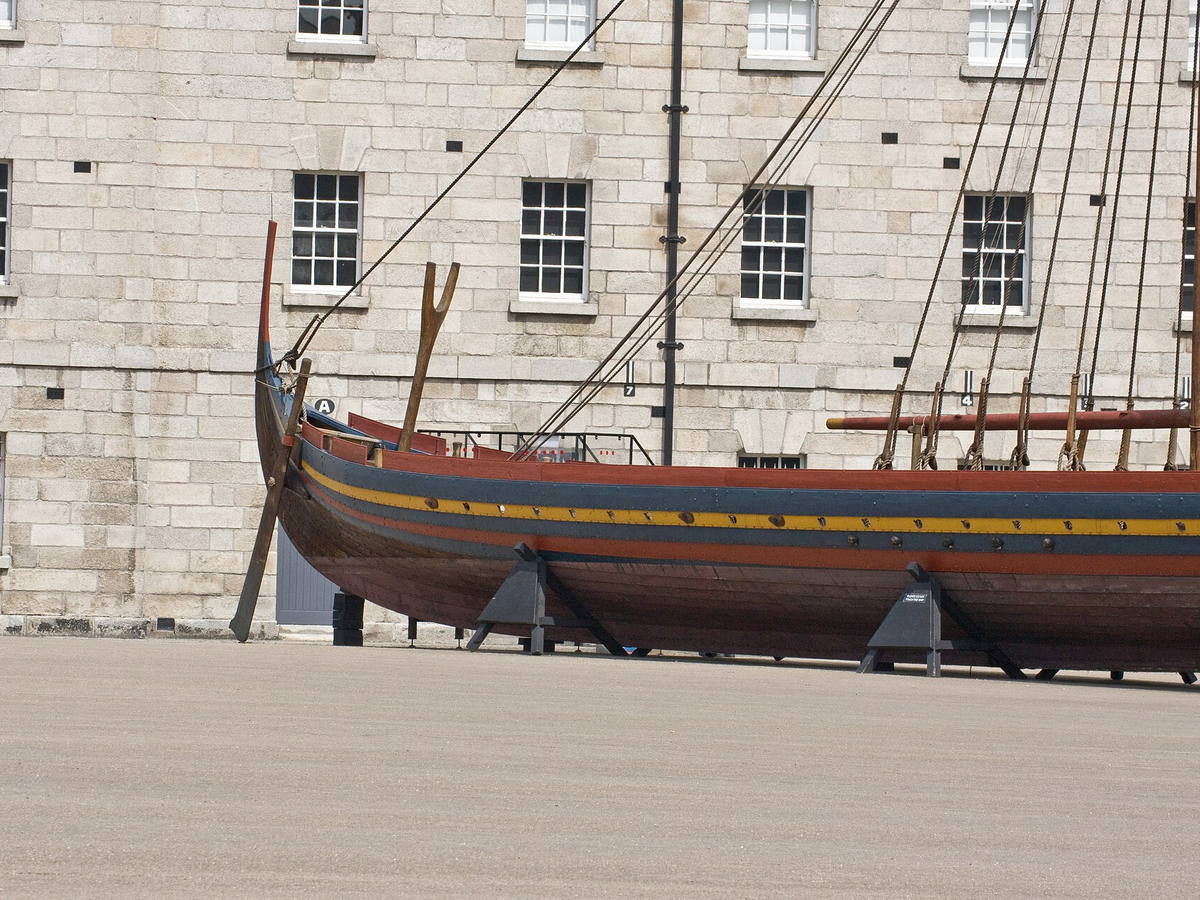
Q: What vessel is most strongly associated with Viking warfare and raiding?
A: The longship.
Q: What construction technique overlapped wooden hull planks on many Viking ships?
A: Clinker construction.
Q: What advantage did shallow-draft ships give Viking crews?
A: They could navigate shallow rivers, approach beaches, and land without deep harbors.
Q: What two main forms of propulsion did Viking ships use?
A: Oars and sails.
Q: What shape of sail is strongly associated with Viking ships?
A: A square sail.
Q: What larger cargo vessel was used heavily for trade?
A: The knarr.
Q: Were all Viking ships long, narrow warships?
A: No. Ship types were adapted for war, trade, fishing, ferrying, and local transport.
Q: Why were ships central to Viking expansion?
A: They linked seas and rivers, allowing rapid movement of people, goods, armies, livestock, and information.
Q: Did Viking navigators have modern magnetic compasses?
A: Not in the modern form commonly imagined for their main period.
Q: What natural clues could experienced sailors use for navigation?
A: Sun position, stars, coastlines, currents, winds, birds, sea conditions, and accumulated route knowledge.
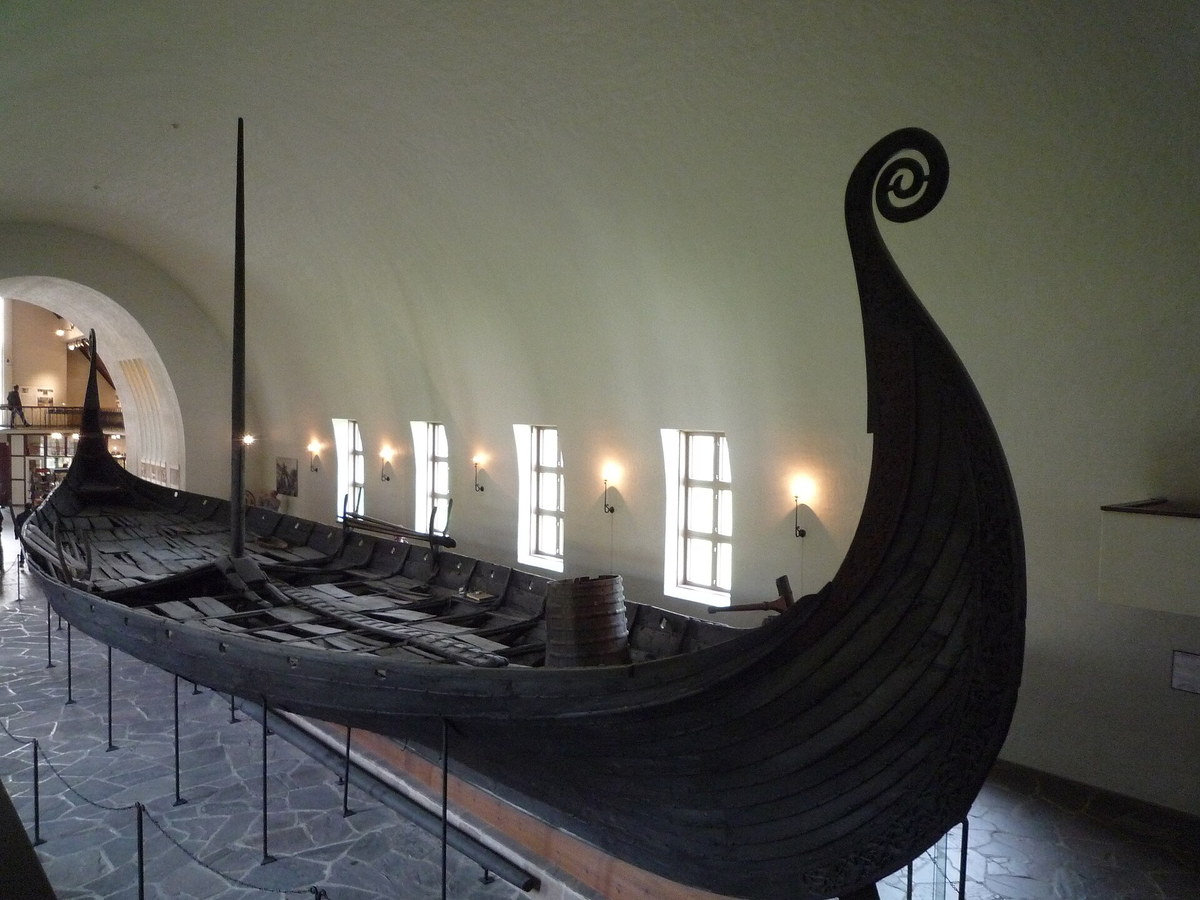
Q: What ship burials have provided archaeologists with spectacular preserved vessels?
A: Famous examples include the Oseberg and Gokstad ship burials in Norway.
Q: What was the steering device on many Viking ships positioned near?
A: The starboard side near the stern.
Q: What English nautical word may preserve the relationship between a steering board and the right side of a ship?
A: Starboard.
Q: Why were Viking sails valuable pieces of equipment?
A: Producing large woolen sails required enormous amounts of fiber, labor, weaving, and maintenance.
Q: What makes Viking shipbuilding historically important?
A: Lightweight, flexible hulls combined speed, seaworthiness, shallow draft, and access to both open seas and inland waterways.
Raids, Warfare & Conquest
Q: What English monastery was famously raided in 793?
A: Lindisfarne.
Q: Why were monasteries attractive raiding targets?
A: They could contain portable wealth and were sometimes lightly defended.
Q: What weapon is especially iconic in Viking-age imagery?
A: The axe.
Q: Did Viking warriors also use swords?
A: Yes, although high-quality swords were expensive prestige weapons.
Q: What other common battlefield weapon could be used both for thrusting and throwing?
A: The spear.
Q: What defensive equipment was widely used by warriors?
A: Shields.
Q: What shape were many Viking-age shields?
A: Round.
Q: Did ordinary Viking warriors wear horned helmets into battle?
A: No. The famous horned-helmet image is a modern myth.
Q: What large Scandinavian army invaded Anglo-Saxon kingdoms in the 860s?
A: The Great Heathen Army, as English sources call it.
Q: What English kingdom resisted Scandinavian conquest under Alfred the Great?
A: Wessex.
Q: What term describes the large area of England where Danish law and settlement became influential?
A: The Danelaw.
Q: Who was Cnut the Great?
A: A Danish king who ruled England, Denmark, and Norway at different points within a powerful North Sea realm.
Q: What warrior term is often associated with fighters described as entering an intense battle fury?
A: Berserker.
Q: Do historians know exactly what caused or characterized berserker behavior?
A: No. Literary descriptions are difficult to separate from later legend and interpretation.
Q: Why is Viking warfare best understood alongside politics and economics?
A: Raids could become tribute-taking, settlement, mercenary service, conquest, royal expansion, or control of trade routes.
Iceland, Greenland, Vinland & North America
Q: What North Atlantic island was settled by Norse migrants during the Viking Age and developed the Althing?
A: Iceland.
Q: Who is traditionally associated with founding Norse settlements in Greenland?
A: Erik the Red.
Q: Why was Erik called Erik the Red?
A: The nickname is traditionally linked to his red hair and beard.
Q: Who was Leif Erikson?
A: A Norse explorer traditionally associated with voyages from Greenland toward North America.
Q: What name do Norse sagas use for a North American region explored west of Greenland?
A: Vinland.
Q: What archaeological site provides the clearest evidence of Norse presence in North America around 1000 CE?
A: L'Anse aux Meadows.
Q: In what modern Canadian province is L'Anse aux Meadows?
A: Newfoundland and Labrador.
Q: Is L'Anse aux Meadows the same thing as a permanent European colony lasting for centuries?
A: No. Archaeology indicates a relatively short-lived Norse base used for exploration and activity in the region.
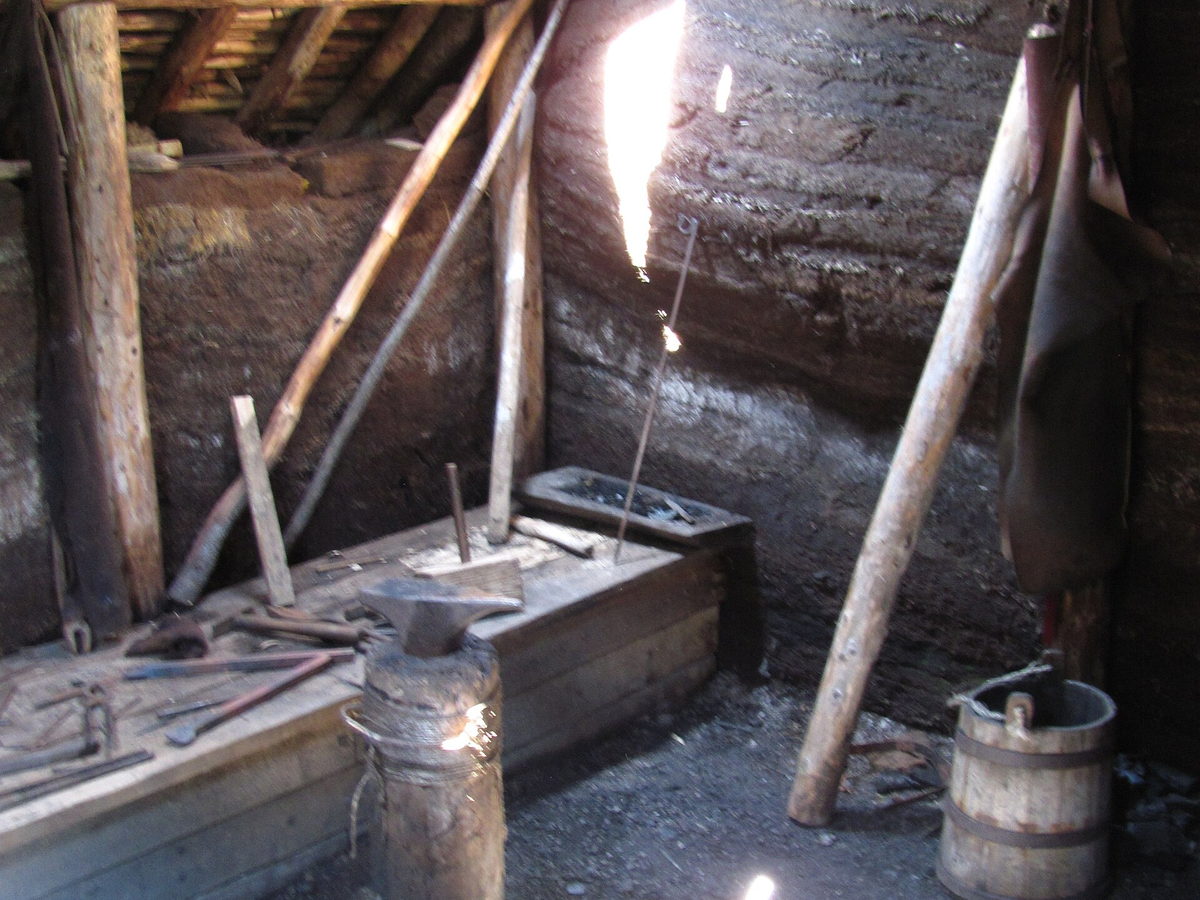
Q: What type of buildings were found at L'Anse aux Meadows?
A: Norse-style turf or sod buildings and workshops.
Q: What metalworking evidence helped identify the site as Norse?
A: Evidence of iron working and smithing.
Q: What international designation did L'Anse aux Meadows receive in 1978?
A: UNESCO World Heritage Site status.
Q: Why is L'Anse aux Meadows historically important?
A: It is the only widely accepted archaeological Norse settlement site in North America and the earliest confirmed European presence there.
Q: Did Norse explorers reach North America before Christopher Columbus's 1492 voyage?
A: Yes, by roughly five centuries.
Q: What medieval texts preserve stories of Norse voyages to Vinland?
A: The Vinland sagas, especially the Saga of the Greenlanders and the Saga of Erik the Red.
Q: Why must saga accounts be used carefully?
A: They were written down after generations of oral transmission and blend historical memory with literary storytelling.
Viking Society, Law, Women & Daily Life
Q: What assembly was used for law, dispute settlement, and political decision-making in Norse societies?
A: A thing, or þing.
Q: What famous Icelandic national assembly is among the world's oldest parliamentary institutions?
A: The Althing, or Alþingi.
Q: What were thralls?
A: Enslaved people in Viking-age society.
Q: Were Viking societies socially equal?
A: No. Wealthy magnates, free farmers, craftspeople, dependents, and enslaved people occupied very different social positions.
Q: What was a jarl?
A: A high-ranking noble or aristocratic leader.
Q: What did most Scandinavians do for food and livelihood?
A: Farming, animal husbandry, fishing, hunting, craft production, and trade were all important.
Q: What grains were common in Viking-age agriculture?
A: Barley, rye, oats, and other grains depending on region.
Q: What animals were commonly kept on farms?
A: Cattle, sheep, goats, pigs, horses, and poultry.
Q: What textile fiber was extremely important for clothing and sails?
A: Wool.
Q: What plant fiber was also used for textiles?
A: Flax, which could be processed into linen.
Q: Did Viking-age women have absolutely no legal or economic rights?
A: No. Rights varied by place and status, but free women could possess property, manage households, and in some circumstances seek divorce or inherit.
Q: Were all women in Viking-age Scandinavia shield-maidens?
A: No. Warrior women appear in literature and some burials are debated or reinterpreted, but ordinary women's lives were far more diverse than the stereotype.
Q: What craft produced decorated metal brooches, fittings, and jewelry?
A: Skilled metalworking in bronze, silver, gold, iron, and other materials.
Q: Why are buried hoards useful to archaeologists?
A: Coins, silver, jewelry, and hacked metal can reveal trade routes, wealth, chronology, and political connections.
Q: What makes household archaeology important to Viking history?
A: Farms, tools, textiles, food remains, workshops, and houses reveal the lives of people who never appear in royal chronicles or heroic sagas.
Runes, Jelling, Art & Archaeology
Q: What writing system did Viking-age Scandinavians use?
A: Runes.
Q: What rune alphabet is most closely associated with the Viking Age?
A: Younger Futhark.
Q: How many characters were in the standard Younger Futhark?
A: Sixteen.
Q: On what materials were runes carved?
A: Stone, wood, bone, metal, and other durable surfaces.
Q: What were many rune stones erected to do?
A: Memorialize deceased relatives and record family, status, achievements, or religious messages.
Q: Could rune stones honor women as well as men?
A: Yes.
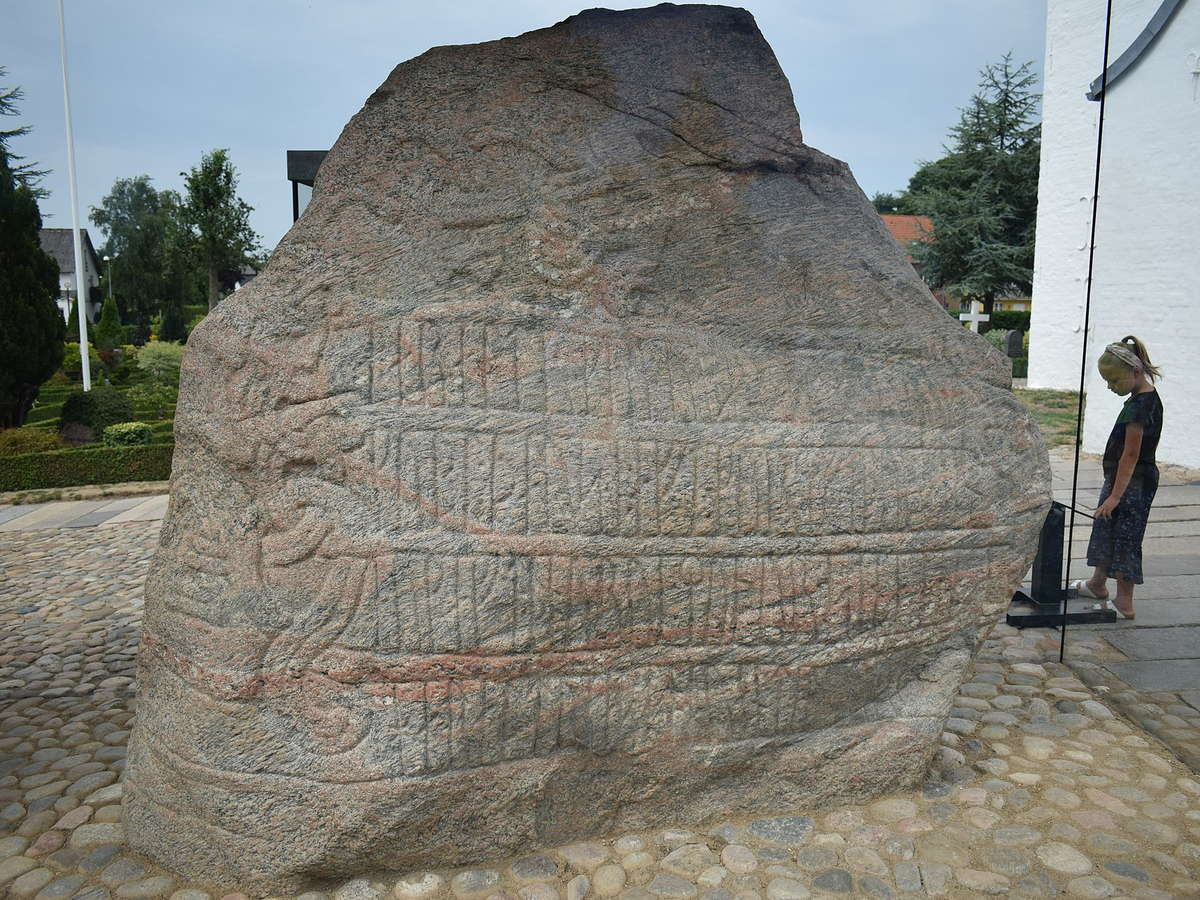
Q: What famous monuments in Denmark include enormous Viking-age rune stones?
A: The Jelling monuments.
Q: Which king commissioned the large Jelling Stone?
A: Harald Bluetooth.
Q: Why is the large Jelling Stone sometimes called Denmark's birth certificate?
A: Its inscription names Denmark and claims Harald united or ruled the Danes and promoted Christianity.
Q: Around what date was Harald Bluetooth's large Jelling Stone raised?
A: Around 965 CE.
Q: What animal-inspired interlacing is common in Viking art?
A: Stylized beasts, serpents, gripping animals, and interwoven patterns.
Q: What spectacular Norwegian burial contained an ornately carved ship and high-status grave goods associated with women?
A: The Oseberg ship burial.
Q: What English archaeological site preserves a rich early medieval ship burial often discussed beside Viking-age northern Europe?
A: Sutton Hoo, although it is Anglo-Saxon rather than a Viking burial.
Q: Why is Sutton Hoo not accurately called a Viking ship burial?
A: It belongs to Anglo-Saxon England and predates the conventional Viking Age, despite cultural connections across northern Europe.
Q: What can runic inscriptions reveal that later sagas cannot always provide?
A: Contemporary names, kinship, memorial practices, travel, status, and religious language carved during the Viking Age itself.
Norse Religion, Christianity & Famous Myths
Q: Who is the Norse god strongly associated with wisdom, poetry, and war?
A: Odin.
Q: Who is the thunder god associated with the hammer Mjolnir?
A: Thor.
Q: Who is the Norse goddess strongly associated with love, fertility, and seiðr magic?
A: Freyja.
Q: What is Valhalla in Norse tradition?
A: Odin's hall for selected slain warriors.
Q: Did every dead Viking warrior automatically go to Valhalla?
A: No. Norse ideas about the afterlife included multiple destinations and varied traditions.
Q: What was a blót?
A: A sacrificial ritual or offering connected with pre-Christian Norse religion.
Q: What religion gradually replaced traditional Norse religion across Scandinavia?
A: Christianity.
Q: Did conversion happen overnight?
A: No. Pagan and Christian practices coexisted for generations.
Q: What Danish king's Jelling inscription declares that he made the Danes Christian?
A: Harald Bluetooth.
Q: By about when does Denmark's National Museum say most Vikings were Christian?
A: By around the end of the Viking period, about 1050.
Q: Did Vikings actually wear horned helmets as standard battle gear?
A: No.
Q: Where did the horned Viking image become especially popular?
A: Much later art, costume design, nationalism, opera, illustration, and popular culture helped create the stereotype.
Q: Were Vikings unusually filthy compared with everyone around them?
A: Archaeological grooming tools such as combs suggest personal care was a normal part of life, so the filthy-barbarian stereotype is exaggerated.
Q: Were Vikings only destroyers and never traders?
A: No. Trade was fundamental to Scandinavian expansion.
Hard Viking Challenge
Q: What alphabet replaced the older 24-character Elder Futhark in most Viking-age Scandinavian inscriptions?
A: The 16-character Younger Futhark.
Q: What large Jelling Stone ruler is also the historical namesake of Bluetooth wireless technology?
A: Harald Bluetooth.
Q: Why was the technology named Bluetooth?
A: The name alludes to Harald's association with unifying Denmark, used as a metaphor for uniting communication technologies.
Q: What Norse settlement is the only widely accepted archaeological Viking-age site in North America?
A: L'Anse aux Meadows.
Q: What modern province contains L'Anse aux Meadows?
A: Newfoundland and Labrador.
Q: Which Scandinavian kingdom produced Harald Hardrada, defeated at Stamford Bridge in 1066?
A: Norway.
Q: What sea-and-river routes carried Swedish Viking-age traders east toward Rus' lands and Byzantium?
A: Baltic and eastern European river networks including routes toward the Dnieper and Volga.
Q: What name is often used for Scandinavian warriors and traders active in eastern Europe and Byzantine service?
A: Varangians.
Q: What elite Byzantine military unit famously recruited Scandinavians and other northern warriors?
A: The Varangian Guard.
Q: What broad area called the Danelaw shows long-term Scandinavian influence in England?
A: Large parts of northern and eastern England.
Q: Which famous English king fought Scandinavian armies and negotiated boundaries connected with the Danelaw?
A: Alfred the Great.
Q: What archaeological evidence shows Viking contacts stretched far beyond western Europe?
A: Arabic silver coins, imported goods, eastern jewelry, trade weights, and artifacts found across Scandinavian sites.
Q: What does the word knarr describe?
A: A broad-bellied Norse cargo ship suited to transporting goods and supplies.
Q: What does the evidence from Jelling show about Viking religion?
A: Conversion to Christianity was a political and cultural process that overlapped with older beliefs rather than replacing them instantly.
How Did You Score?
If clinker construction, Younger Futhark, the Jelling Stone, the Danelaw, knarrs, Varangians, L'Anse aux Meadows, and why Sutton Hoo is not a Viking burial all came easily, your Viking history has made landfall.
Keep exploring with our Norse mythology trivia, medieval history trivia, and world history trivia.

Ellie Simons creates and edits Random Trivia. She researches trivia using primary and authoritative sources whenever possible and is currently reviewing the site's older trivia library for accuracy, clarity, and playability. Read more on the About page.
About this quiz
Site editor: Ellie Simons. Read our Trivia Methodology to learn how questions are researched and updated. Page last updated: . Report an error.