
Pack the hiking boots and refill the water bottle. These 120 U.S. national parks trivia questions travel from Yellowstone geysers to Yosemite granite, Florida wetlands, Appalachian forests, Hawaiian volcanoes, Alaskan wilderness, desert canyons, giant trees, and the history of the National Park Service.
The first rounds are trailhead-friendly. The final ones climb a little steeper.
Why U.S. National Parks Make Great Trivia
The National Park System protects natural landscapes, historic places, battlefields, monuments, recreation areas, seashores, trails, and much more. Within that larger system, the National Park Service currently lists 63 sites specifically designated National Park.
Every factual park designation and current count below is grounded in the National Park Service. For more geography and nature, try our geography trivia, Earth trivia, and environmental science trivia.
National Park Service Basics & History
Q: How many U.S. sites are currently designated specifically as national parks?
A: 63.
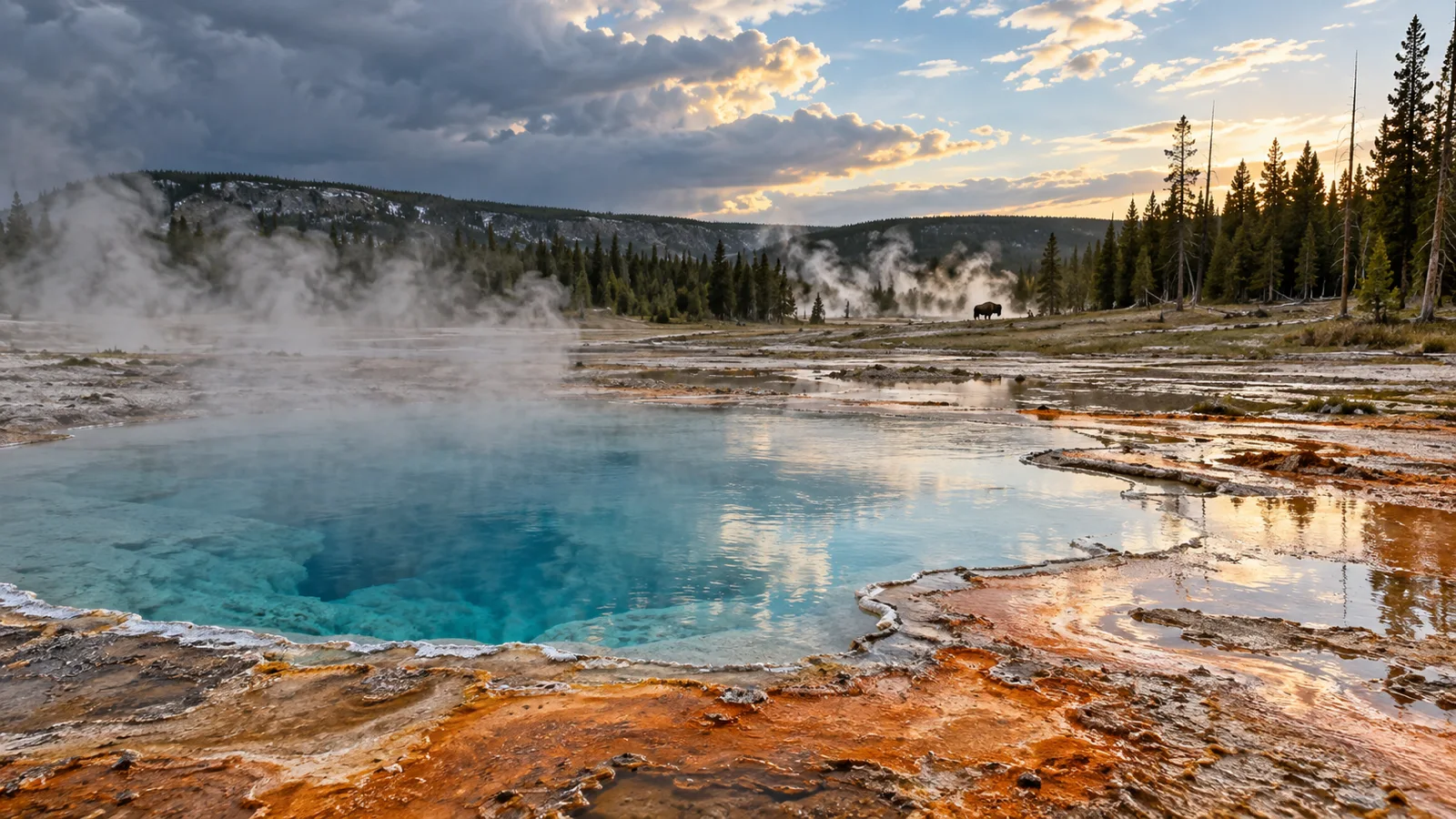
Q: What was the first national park in the world?
A: Yellowstone National Park.
Q: In what year was Yellowstone established?
A: 1872.
Q: On what date was Yellowstone established?
A: March 1, 1872.
Q: Which president signed the law creating Yellowstone?
A: Ulysses S. Grant.
Q: In what year was the National Park Service created?
A: 1916.
Q: Which president signed the National Park Service Organic Act?
A: Woodrow Wilson.
Q: What cabinet department contains the National Park Service?
A: The U.S. Department of the Interior.
Q: Does every site managed by NPS have the title National Park?
A: No. The National Park System includes many designations such as monuments, historic sites, battlefields, seashores, preserves, and recreation areas.
Q: What symbol serves as the National Park Service emblem?
A: The arrowhead.
Q: In what year was the NPS arrowhead authorized as the official emblem?
A: 1951.
Q: What tree appears on the NPS arrowhead?
A: A sequoia tree.
Q: What animal appears on the NPS arrowhead?
A: A bison.
Q: What national park designation was created most recently as of 2026?
A: New River Gorge National Park and Preserve in West Virginia, redesignated in 2020.
Q: Why is the phrase "national parks" sometimes confusing?
A: People often use it casually for the entire National Park System even though only 63 units currently carry the formal National Park designation.
Yellowstone, Grand Teton & the Greater Yellowstone Region
Q: What famous geyser is one of Yellowstone's best-known attractions?
A: Old Faithful.
Q: What three states contain portions of Yellowstone?
A: Wyoming, Montana, and Idaho.
Q: Which state contains most of Yellowstone?
A: Wyoming.
Q: What enormous volcanic feature lies beneath much of Yellowstone?
A: A volcanic caldera system.
Q: What colorful Yellowstone spring is one of the largest hot springs in the United States?
A: Grand Prismatic Spring.
Q: What large mammal is especially iconic in Yellowstone?
A: The American bison.
Q: What predator was famously reintroduced to Yellowstone in the 1990s?
A: Gray wolves.
Q: What is the name of Yellowstone's enormous lake?
A: Yellowstone Lake.
Q: What river carves the Grand Canyon of the Yellowstone?
A: The Yellowstone River.
Q: What neighboring Wyoming park is famous for a dramatic mountain range rising above Jackson Hole?
A: Grand Teton National Park.
Q: What is the tallest peak in the Teton Range?
A: Grand Teton.
Q: What town lies just south of Grand Teton and is a major gateway to the region?
A: Jackson, Wyoming.
Q: Are Yellowstone's hydrothermal features safe for walking off designated boardwalks?
A: No. Thin crust and dangerously hot water make marked trails and boardwalks essential.
Q: Why do Yellowstone's hot springs show vivid colors?
A: Heat-loving microorganisms and mineral chemistry create colorful bands in different temperature zones.
Q: What makes Yellowstone historically unique among national parks?
A: Its 1872 establishment created the model that inspired national park movements around the world.
Yosemite, Sequoia, Kings Canyon & California Giants
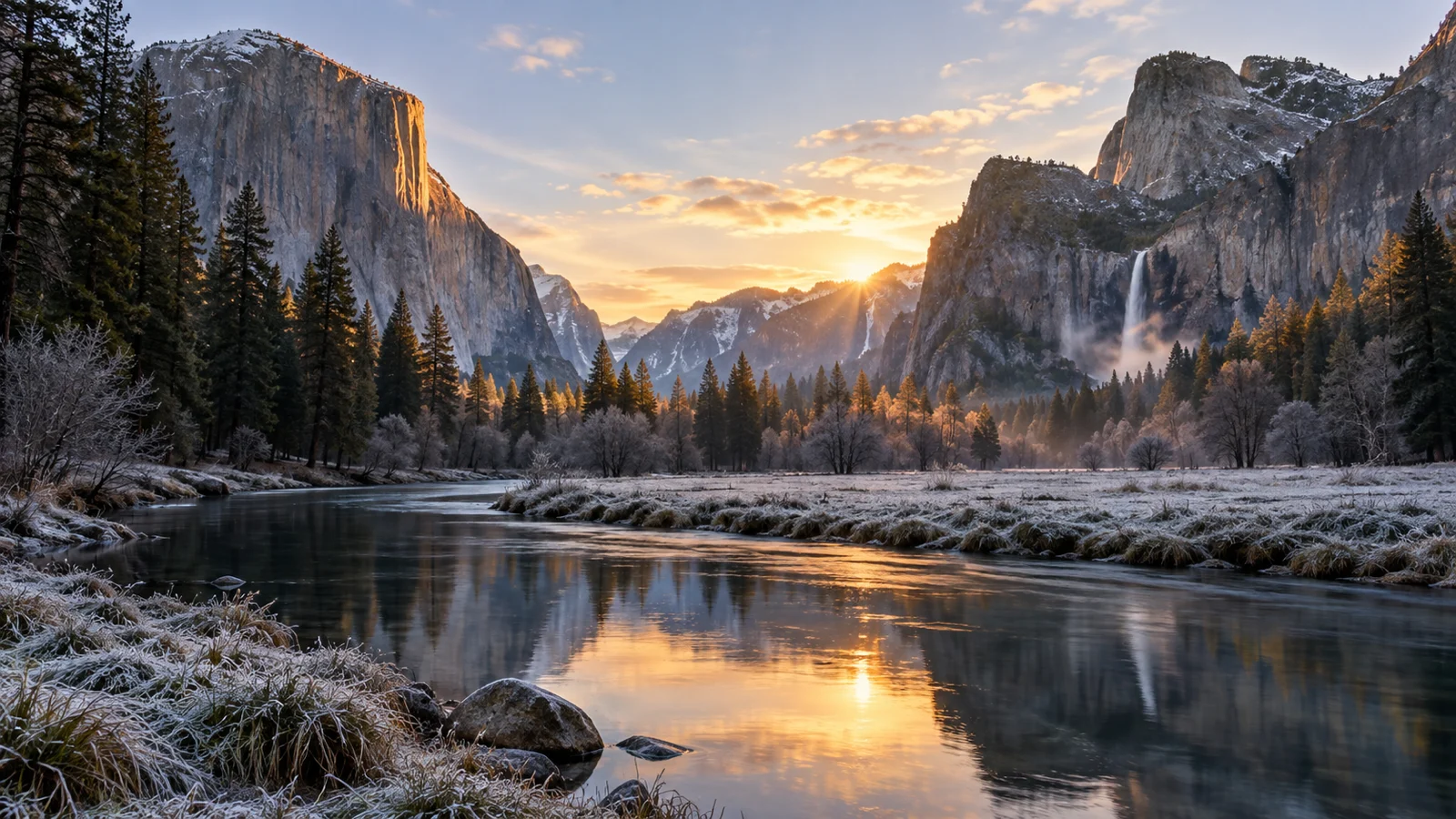
Q: In what year did Yosemite become a national park?
A: 1890.
Q: What mountain range contains Yosemite?
A: The Sierra Nevada.
Q: What granite monolith rises dramatically above Yosemite Valley and is famous with climbers?
A: El Capitan.
Q: What granite formation has a distinctive sliced-dome appearance?
A: Half Dome.
Q: What famous waterfall drops into Yosemite Valley in multiple sections?
A: Yosemite Falls.
Q: What grove contains Yosemite's giant sequoias?
A: Mariposa Grove.
Q: Which national park protects the General Sherman tree?
A: Sequoia National Park.
Q: What kind of tree is General Sherman?
A: A giant sequoia.
Q: Is General Sherman the world's tallest tree?
A: No. It is famous as the largest known living single-stem tree by volume.
Q: What California national park lies directly north of Sequoia and is jointly administered with it?
A: Kings Canyon National Park.
Q: What park protects giant coast redwoods along northern California?
A: Redwood National and State Parks.
Q: What is the main difference between giant sequoias and coast redwoods in record terms?
A: Giant sequoias are the most massive trees by volume, while coast redwoods can grow taller.
Q: What California desert park is named for a distinctive branching yucca?
A: Joshua Tree National Park.
Q: What California park contains some of the lowest, hottest terrain in North America?
A: Death Valley National Park.
Q: What makes California unusual in national park trivia?
A: It has nine national parks, spanning ocean islands, deserts, volcanoes, redwoods, sequoias, mountain valleys, and caves.
Grand Canyon, Zion & the Desert Southwest
Q: What river carved the Grand Canyon?
A: The Colorado River.
Q: What state contains Grand Canyon National Park?
A: Arizona.
Q: What two major rims are commonly visited at Grand Canyon?
A: The South Rim and North Rim.
Q: What Utah national park is famous for Zion Canyon?
A: Zion National Park.
Q: What narrow slot-canyon hike follows the Virgin River in Zion?
A: The Narrows.
Q: What famous Zion trail climbs toward a narrow ridge with chains?
A: Angels Landing.
Q: What Utah park is famous for thousands of natural stone arches?
A: Arches National Park.
Q: What arch is so famous that it appears on Utah license plates?
A: Delicate Arch.
Q: What Utah park is known for hoodoos packed into amphitheaters?
A: Bryce Canyon National Park.
Q: Are Bryce Canyon's hoodoos formed inside one enormous river canyon?
A: No. The park is famous for erosional amphitheaters filled with rock spires.
Q: What Utah park contains districts called Island in the Sky, The Needles, and The Maze?
A: Canyonlands National Park.
Q: What Utah park protects a huge wrinkle in Earth's crust called the Waterpocket Fold?
A: Capitol Reef National Park.
Q: What New Mexico park protects vast white gypsum dunes?
A: White Sands National Park.
Q: What New Mexico park protects a huge system of caves?
A: Carlsbad Caverns National Park.
Q: What makes Utah especially famous among national park fans?
A: Its five parks, often called the Mighty Five, showcase arches, canyons, hoodoos, cliffs, domes, and desert plateaus.
Rocky Mountains, Glacier & the Interior West
Q: What Colorado park protects high-elevation landscapes of the Continental Divide?
A: Rocky Mountain National Park.
Q: What famous scenic road crosses high alpine terrain in Rocky Mountain National Park?
A: Trail Ridge Road.
Q: What Montana park borders Canada's Waterton Lakes National Park?
A: Glacier National Park.
Q: What international designation combines Glacier and Waterton Lakes?
A: Waterton-Glacier International Peace Park.
Q: What spectacular Montana road crosses Glacier National Park?
A: Going-to-the-Sun Road.
Q: What Colorado park contains the tallest sand dunes in North America?
A: Great Sand Dunes National Park and Preserve.
Q: What Colorado park protects Ancestral Pueblo cliff dwellings?
A: Mesa Verde National Park.
Q: What Wyoming park contains Grand Teton and Jenny Lake?
A: Grand Teton National Park.
Q: What South Dakota park protects eroded formations and mixed-grass prairie?
A: Badlands National Park.
Q: What South Dakota park contains one of the world's longest known cave systems?
A: Wind Cave National Park.
Q: What Kentucky park protects the world's longest known cave system?
A: Mammoth Cave National Park.
Q: What Washington park contains an active stratovolcano covered in glaciers?
A: Mount Rainier National Park.
Q: What Washington park combines temperate rainforest, mountains, and Pacific coastline?
A: Olympic National Park.
Q: What Oregon park centers on a deep lake filling a collapsed volcano?
A: Crater Lake National Park.
Q: What makes the western parks especially geologically diverse?
A: Volcanoes, glaciers, caves, faulting, uplift, deserts, dunes, canyons, and massive mountain ranges all appear across the region.
Eastern Parks, the Smokies & Wetlands
Q: What park is consistently the most visited national park in the United States?
A: Great Smoky Mountains National Park.
Q: What two states share Great Smoky Mountains National Park?
A: Tennessee and North Carolina.
Q: What mountain chain contains the Great Smoky Mountains?
A: The Appalachian Mountains.
Q: What Maine park protects mountains, forests, rocky coast, and much of Mount Desert Island?
A: Acadia National Park.
Q: What mountain is a famous sunrise viewpoint in Acadia?
A: Cadillac Mountain.
Q: What Florida park protects an enormous subtropical wetland ecosystem?
A: Everglades National Park.
Q: What famous reptile lives in the Everglades?
A: American alligators.
Q: What other large crocodilian also lives in South Florida?
A: The American crocodile.
Q: What Virginia park protects a long section of the Blue Ridge Mountains?
A: Shenandoah National Park.
Q: What scenic road runs through Shenandoah?
A: Skyline Drive.
Q: What West Virginia site became a national park and preserve in 2020?
A: New River Gorge National Park and Preserve.
Q: What activity is especially famous in New River Gorge because of its cliffs?
A: Rock climbing, along with hiking and whitewater recreation.
Q: What Ohio park protects forest, waterfalls, and the Cuyahoga River between major cities?
A: Cuyahoga Valley National Park.
Q: What South Carolina park protects one of the largest remaining tracts of old-growth bottomland hardwood forest in the Southeast?
A: Congaree National Park.
Q: Why are eastern national parks not simply smaller versions of western mountain parks?
A: They protect wetlands, caves, forests, cultural landscapes, rivers, coasts, biodiversity, and deeply layered human history.
Alaska, Hawaii & Island Parks
Q: What Alaska park contains Denali, North America's highest mountain?
A: Denali National Park and Preserve.
Q: What was Denali's mountain long known as federally before its traditional name was restored?
A: Mount McKinley.
Q: What enormous Alaska park is the largest national park in the United States?
A: Wrangell-St. Elias National Park and Preserve.
Q: What Alaska park has no roads or established trails running through much of its vast wilderness?
A: Gates of the Arctic National Park and Preserve.
Q: What Alaska park is famous for brown bears fishing at Brooks Falls?
A: Katmai National Park and Preserve.
Q: What Alaska park protects fjords, glaciers, and coastal mountains near Seward?
A: Kenai Fjords National Park.
Q: What Hawaii park protects Kīlauea and Mauna Loa?
A: Hawaiʻi Volcanoes National Park.
Q: What island contains Hawaiʻi Volcanoes National Park?
A: The island of Hawaiʻi, often called the Big Island.
Q: What Maui park is famous for the summit landscape of a huge shield volcano?
A: Haleakalā National Park.
Q: What national park lies in the U.S. territory of American Samoa?
A: National Park of American Samoa.
Q: What Caribbean U.S. territory contains Virgin Islands National Park?
A: The U.S. Virgin Islands.
Q: What Alaska park protects Glacier Bay and vast tidewater glaciers?
A: Glacier Bay National Park and Preserve.
Q: What Alaska park protects the Kobuk River and Great Kobuk Sand Dunes?
A: Kobuk Valley National Park.
Q: What Alaska park protects volcanoes, tundra, lakes, and a huge wilderness west of Cook Inlet?
A: Lake Clark National Park and Preserve.
Q: Why are Alaska's national parks especially challenging trivia material?
A: Many combine national park and preserve designations, immense roadless landscapes, remote access, glaciers, active volcanoes, Arctic ecosystems, and Indigenous homelands.
Hard National Parks Challenge
Q: Which came first, Yellowstone National Park or the National Park Service?
A: Yellowstone. It was established in 1872, while NPS was created in 1916.
Q: Which park did NPS identify as the world's first national park?
A: Yellowstone.
Q: What California park became the nation's third national park in 1890?
A: Yosemite.
Q: What current national park designation dates most recently from December 2020?
A: New River Gorge National Park and Preserve.
Q: Which park is consistently America's most visited national park?
A: Great Smoky Mountains.
Q: What three states share Yellowstone?
A: Wyoming, Montana, and Idaho.
Q: Which two states share Great Smoky Mountains?
A: Tennessee and North Carolina.
Q: Which park protects the General Sherman giant sequoia?
A: Sequoia National Park.
Q: Which park contains Delicate Arch?
A: Arches National Park.
Q: Which park contains the Grand Canyon of the Yellowstone?
A: Yellowstone National Park.
Q: Which park contains the Grand Canyon carved by the Colorado River?
A: Grand Canyon National Park.
Q: Which park protects the Waterpocket Fold?
A: Capitol Reef National Park.
Q: Which park contains both redwoods and cooperative state-park lands in its name?
A: Redwood National and State Parks.
Q: What four ideas are commonly represented on the NPS arrowhead?
A: Wildlife, vegetation, scenery and recreation, plus historical and archeological values.
Q: Why is U.S. national park trivia deeper than memorizing 63 names?
A: Park history, Indigenous homelands, geology, wildlife, climate, architecture, conservation, recreation, federal law, human communities, and multiple official designation types overlap across the National Park System.
How Did You Score?
If the Waterpocket Fold, Great Kobuk Sand Dunes, the 1916 Organic Act, Yellowstone's three states, the newest designation, and the difference between the 63 national parks and the larger National Park System all came easily, your ranger-trivia badge is looking earned.
Keep exploring with our geography trivia, Earth trivia, and environmental science trivia.

Ellie Simons creates and edits Random Trivia. She researches trivia using primary and authoritative sources whenever possible and is currently reviewing the site's older trivia library for accuracy, clarity, and playability. Read more on the About page.
About this quiz
Site editor: Ellie Simons. Read our Trivia Methodology to learn how questions are researched and updated. Page last updated: . Report an error.