
From a financial crisis at Versailles to the Bastille, a new republic, the guillotine, the Reign of Terror, and Napoleon's rise, the French Revolution changed faster than most trivia teams can keep a timeline straight.
These 120 questions cover the major events, people, documents, factions, symbols, and turning points from 1789 through 1799.
Why the French Revolution Makes Great Trivia
The French Revolution transformed government, law, political language, citizenship, religion, warfare, and social hierarchy while cycling through monarchy, constitutional monarchy, republic, revolutionary dictatorship, and the Directory in only a decade.
The Château de Versailles dates the opening of the Estates-General to May 5, 1789, while France's National Assembly and presidency preserve the constitutional legacy of the 1789 Declaration of the Rights of Man and of the Citizen. For more history, try our world history trivia, American Revolution trivia, and Renaissance trivia.
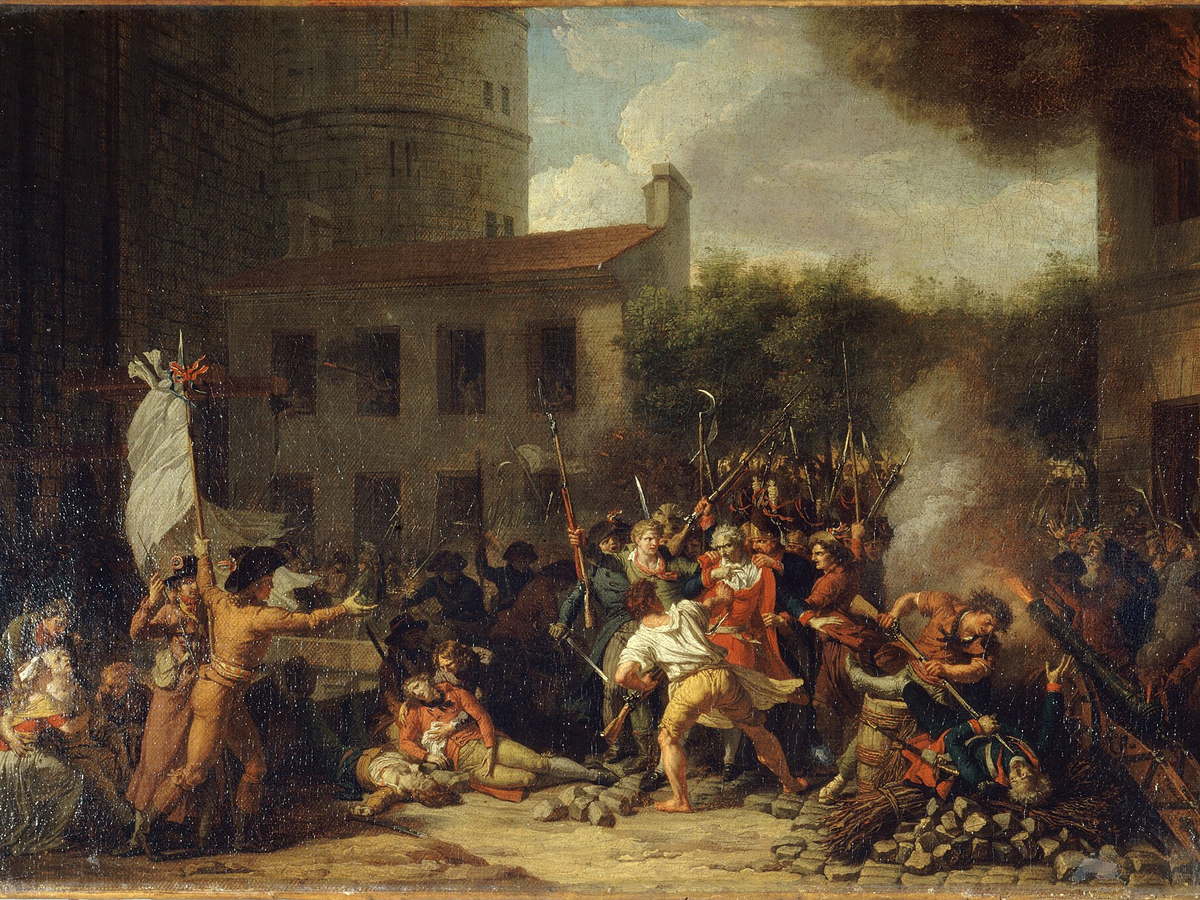
France Before the Revolution & the Three Estates
Q: Who was king of France when the Revolution began?
A: Louis XVI.
Q: Who was Louis XVI's queen?
A: Marie Antoinette.
Q: What royal palace was the center of court life before the royal family moved to Paris in 1789?
A: Versailles.
Q: What term describes the political and social order of France before the Revolution?
A: The Ancien Régime, or Old Regime.
Q: What were the three traditional estates of French society?
A: Clergy, nobility, and the Third Estate.
Q: What was the First Estate?
A: The clergy.
Q: What was the Second Estate?
A: The nobility.
Q: Who made up the Third Estate?
A: The vast majority of people outside the clergy and nobility, including bourgeois professionals, urban workers, and peasants.
Q: What severe government problem helped force Louis XVI to call the Estates-General?
A: A major financial crisis and state debt.
Q: What costly foreign conflict had France supported shortly before its own Revolution?
A: The American Revolution.
Q: What everyday food shortage became especially politically explosive in 1788 and 1789?
A: Bread shortages and very high bread prices.
Q: What intellectual movement challenged traditional authority and influenced revolutionary political ideas?
A: The Enlightenment.
Q: What French thinker wrote The Social Contract and emphasized popular sovereignty?
A: Jean-Jacques Rousseau.
Q: What writer argued for separation of governmental powers?
A: Montesquieu.
Q: Why was the old voting procedure at the Estates-General controversial?
A: Voting by estate could let the clergy and nobility outvote the far more numerous Third Estate two orders to one.
The Estates-General, National Assembly & Bastille
Q: On what date did the Estates-General open at Versailles?
A: May 5, 1789.
Q: About how long had it been since the Estates-General last met?
A: It had not met since 1614.
Q: What did Third Estate deputies declare themselves on June 17, 1789?
A: The National Assembly.
Q: What oath did deputies take on June 20, 1789?
A: The Tennis Court Oath.
Q: Why is it called the Tennis Court Oath?
A: Deputies met in an indoor court used for jeu de paume, an ancestor of modern tennis.
Q: What did the deputies promise in the Tennis Court Oath?
A: Not to separate until France had a constitution.
Q: What Paris fortress-prison was stormed on July 14, 1789?
A: The Bastille.
Q: Why did Paris crowds target the Bastille?
A: It symbolized royal authority and contained gunpowder needed by armed Parisians.
Q: How many prisoners were in the Bastille when it fell?
A: Seven.
Q: What happened to the Bastille soon after its capture?
A: Its demolition began almost immediately.
Q: What modern French national holiday is celebrated on July 14?
A: Bastille Day, known in France as le 14 juillet.
Q: What rural panic swept France in the summer of 1789?
A: The Great Fear.
Q: What happened on the Night of August 4, 1789?
A: The National Assembly moved to abolish many feudal privileges and dues.
Q: What major rights document was adopted on August 26, 1789?
A: The Declaration of the Rights of Man and of the Citizen.
Q: What idea does the Declaration place at the heart of political authority?
A: Sovereignty resides in the nation rather than in an absolute monarch.
The Declaration of Rights & Constitutional Monarchy
Q: What famous principle opens Article 1 of the Declaration of the Rights of Man and of the Citizen?
A: Men are born and remain free and equal in rights.
Q: What two earlier intellectual sources influenced the Declaration?
A: Enlightenment philosophy and Atlantic revolutionary documents, including the American Declaration of Independence.
Q: Did the 1789 Declaration immediately grant equal political rights to women?
A: No.
Q: Who later wrote the Declaration of the Rights of Woman and of the Female Citizen?
A: Olympe de Gouges.
Q: What October 1789 protest brought thousands of women from Paris to Versailles?
A: The Women's March on Versailles.
Q: What basic economic grievance helped drive that march?
A: The high price and scarcity of bread.
Q: What happened to Louis XVI and the royal family after the October march?
A: They were brought from Versailles to Paris.
Q: Where did the royal family live in Paris after leaving Versailles?
A: The Tuileries Palace.
Q: What happened to church lands during the Revolution?
A: The state nationalized large amounts of church property.
Q: What 1790 law reorganized the Catholic Church in France?
A: The Civil Constitution of the Clergy.
Q: Why did the Civil Constitution of the Clergy divide France?
A: It required clergy to accept state control and swear loyalty, creating deep religious and political conflict.
Q: What did France's Constitution of 1791 establish?
A: A constitutional monarchy with a legislative assembly.
Q: Did the 1791 constitution make France a republic?
A: No. Louis XVI remained king under constitutional limits.
Q: What voting distinction excluded many men from full political participation under the 1791 system?
A: The distinction between active and passive citizens based partly on property and tax qualifications.
Q: What fundamental change had nevertheless occurred by 1791?
A: Royal sovereignty had been replaced by a constitutional system claiming authority from the nation.
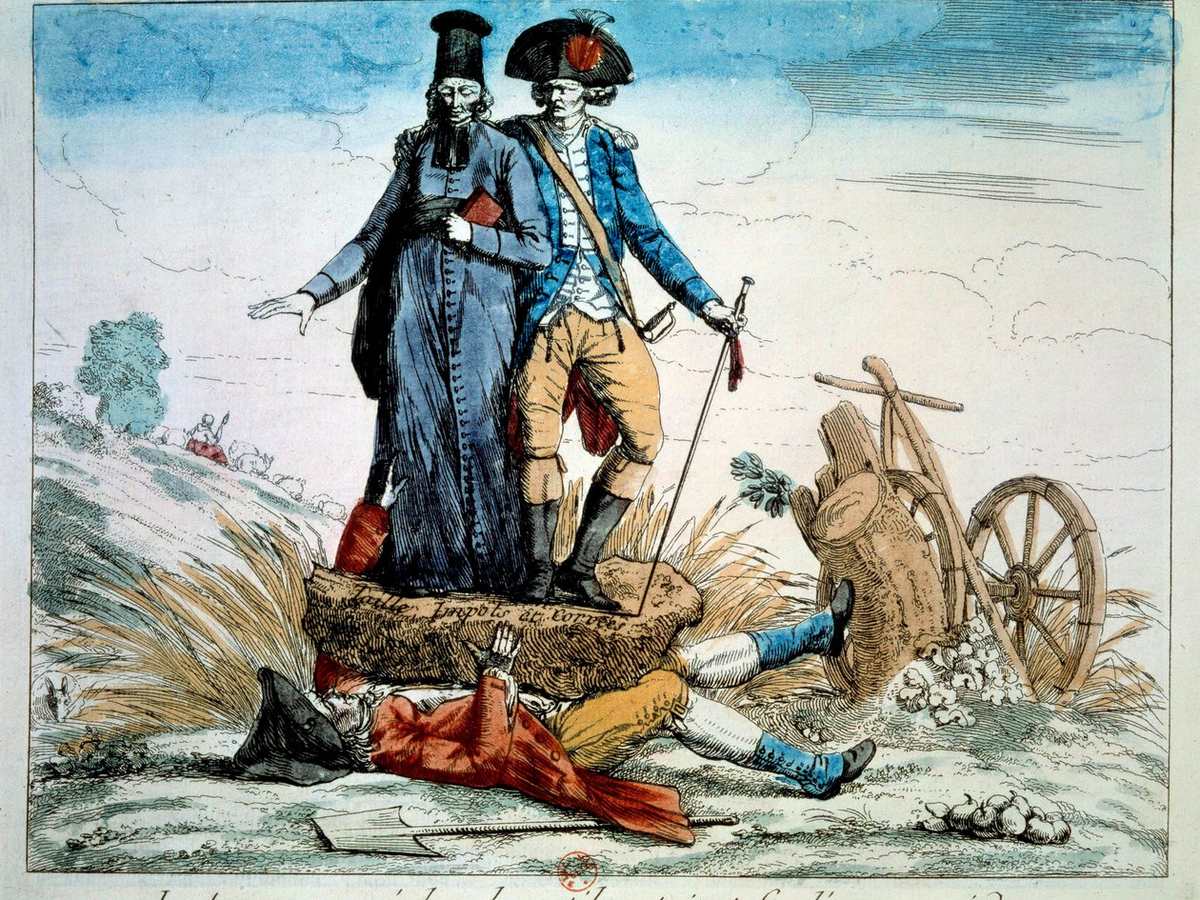
Flight to Varennes, War & the Fall of the Monarchy
Q: What failed royal escape attempt took place in June 1791?
A: The Flight to Varennes.
Q: Where was the royal family stopped during the attempted escape?
A: Varennes.
Q: What did the Flight to Varennes do to public trust in Louis XVI?
A: It badly damaged confidence that the king genuinely supported the Revolution.
Q: What European monarchy did revolutionary France declare war on in April 1792?
A: Austria.
Q: What other major power soon joined the war against revolutionary France?
A: Prussia.
Q: What threatening proclamation warned Paris against harming the royal family?
A: The Brunswick Manifesto.
Q: What palace was attacked on August 10, 1792?
A: The Tuileries Palace.
Q: What royal guard suffered devastating losses during the Tuileries attack?
A: The Swiss Guards.
Q: What happened to Louis XVI's authority after August 10?
A: The monarchy was suspended and the king was imprisoned.
Q: What wave of killings occurred in Paris prisons in early September 1792?
A: The September Massacres.
Q: What new assembly replaced the Legislative Assembly?
A: The National Convention.
Q: What political system did the Convention abolish in September 1792?
A: The monarchy.
Q: What form of government did France become?
A: A republic.
Q: What military victory on September 20, 1792 boosted revolutionary confidence?
A: The Battle of Valmy.
Q: What symbolic dating change followed the declaration of the Republic?
A: Revolutionary authorities later introduced a new Republican calendar dating Year I from the Republic.
Louis XVI, the Republic & Revolutionary Factions
Q: What name was Louis XVI commonly called during his trial as a citizen?
A: Louis Capet.
Q: What charge was central to Louis XVI's trial?
A: Treason and conspiracy against the liberty and security of the nation.
Q: On what date was Louis XVI executed?
A: January 21, 1793.
Q: How was Louis XVI executed?
A: By guillotine.
Q: Where was Louis XVI executed?
A: Place de la Révolution in Paris, now Place de la Concorde.
Q: What two major factions competed within the National Convention?
A: The Girondins and the Montagnards, or Mountain.
Q: Which faction became more closely associated with radical Jacobin leadership?
A: The Montagnards.
Q: What Paris political club became synonymous with radical revolutionary politics?
A: The Jacobin Club.
Q: What term described militant working-class and lower-middle-class revolutionaries in Paris?
A: Sans-culottes.
Q: What does sans-culottes literally refer to?
A: People without the fashionable knee-breeches associated with aristocratic dress.
Q: Who was Jean-Paul Marat?
A: A radical journalist and revolutionary politician.
Q: Who assassinated Marat in 1793?
A: Charlotte Corday.
Q: Where was Marat when Corday killed him?
A: In his bath.
Q: What famous painting by Jacques-Louis David memorialized Marat?
A: The Death of Marat.
Q: What happened to the Girondin leaders in 1793?
A: They were pushed from power, and many were later arrested and executed.
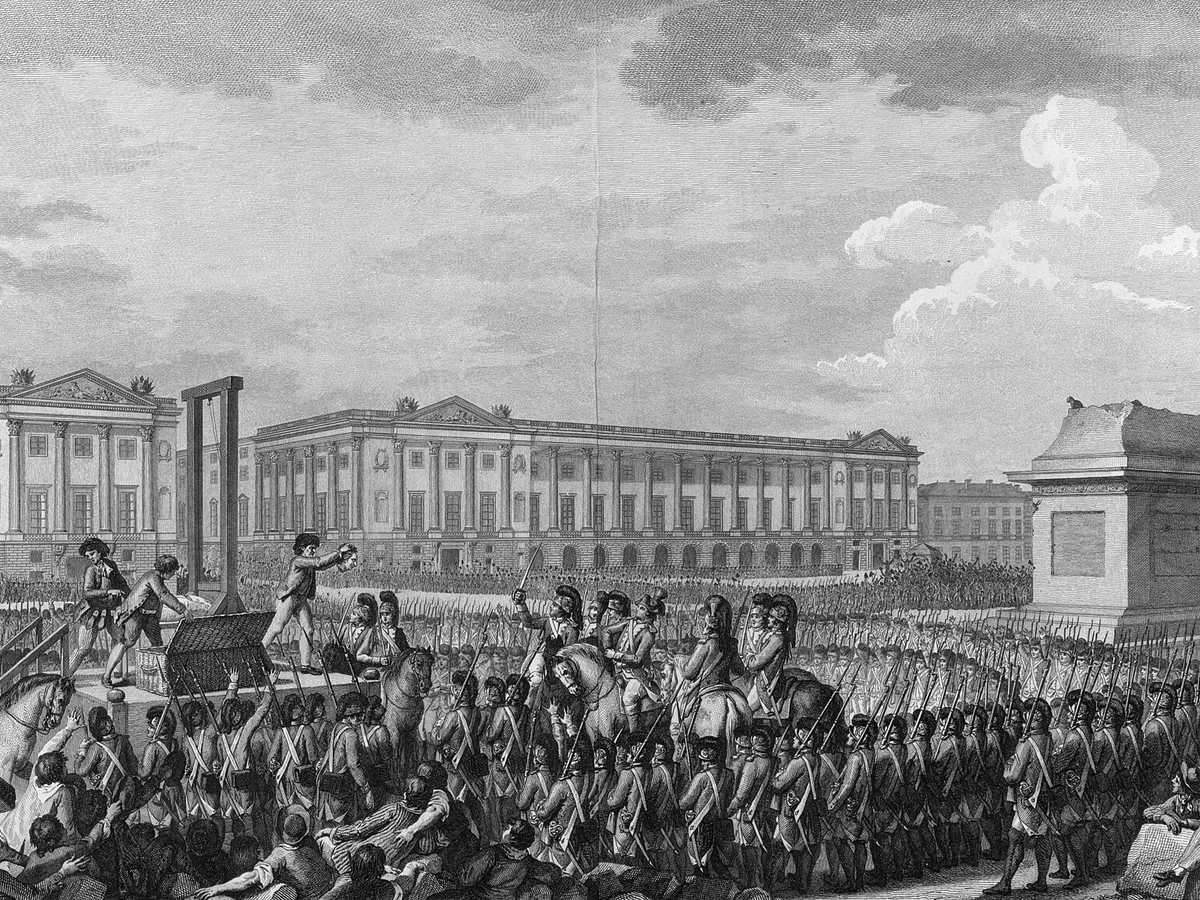
Robespierre & the Reign of Terror
Q: What emergency governing body became extremely powerful during the Terror?
A: The Committee of Public Safety.
Q: Which lawyer and Jacobin became the figure most associated with the Reign of Terror?
A: Maximilien Robespierre.
Q: What broad years contain the Reign of Terror?
A: Primarily 1793 to 1794.
Q: What tribunal prosecuted alleged enemies of the Revolution?
A: The Revolutionary Tribunal.
Q: What execution machine became a symbol of the Terror?
A: The guillotine.
Q: Was the guillotine invented specifically as an instrument of political terror?
A: No. It was promoted as a standardized and supposedly more humane form of execution before becoming infamous during the Revolution.
Q: Who was Dr. Joseph-Ignace Guillotin?
A: A physician and politician who advocated a uniform mechanical method of execution, though he did not personally invent the machine bearing his name.
Q: On what date was Marie Antoinette executed?
A: October 16, 1793.
Q: What revolutionary leader pushed dechristianization farther than Robespierre preferred?
A: Radical factions including the Hébertists promoted aggressive dechristianization.
Q: What civic religious festival did Robespierre promote in 1794?
A: The Festival of the Supreme Being.
Q: What economic policy tried to control prices during wartime shortages?
A: The General Maximum.
Q: What mass military mobilization helped revolutionary France fight multiple enemies?
A: The levée en masse.
Q: What name is given to the overthrow of Robespierre in July 1794?
A: The Thermidorian Reaction.
Q: What happened to Robespierre after his arrest?
A: He was guillotined with allies on July 28, 1794.
Q: What did Robespierre's fall broadly signal?
A: The end of the most intense phase of the Terror and a political reaction against Jacobin rule.
Women, Symbols, Calendar & Revolutionary Culture
Q: Who wrote the Declaration of the Rights of Woman and of the Female Citizen in 1791?
A: Olympe de Gouges.
Q: What happened to Olympe de Gouges during the Terror?
A: She was guillotined in 1793.
Q: Who was Théroigne de Méricourt?
A: A politically active woman who became a famous and often mythologized figure of the Revolution.
Q: What headwear became a symbol of liberty?
A: The red Phrygian cap, or liberty cap.
Q: What female personification became a symbol of the French Republic?
A: Marianne.
Q: What three colors became France's revolutionary national colors?
A: Blue, white, and red.
Q: What national flag uses those three colors vertically?
A: The French tricolor.
Q: What revolutionary song became France's national anthem?
A: La Marseillaise.
Q: Why is it called La Marseillaise even though it was written in Strasbourg?
A: Volunteers from Marseille popularized it while marching to Paris.
Q: What calendar replaced traditional month names with names linked to seasons and weather?
A: The French Republican calendar.
Q: What month name means roughly "heat" and fell during part of summer?
A: Thermidor.
Q: What month gave its name to Robespierre's overthrow?
A: Thermidor.
Q: What measurement reform emerged from revolutionary-era France and later spread internationally?
A: The metric system.
Q: What old institutions did revolutionaries frequently rename or reorganize?
A: Streets, administrative divisions, religious institutions, calendars, titles, and public ceremonies were transformed to reflect new political ideals.
Q: Why are revolutionary symbols especially useful in trivia?
A: Caps, flags, songs, slogans, festivals, calendars, and personifications condensed complex political ideas into memorable public imagery.
The Directory, Napoleon & Hard Revolution Challenge
Q: What constitution established the Directory in 1795?
A: The Constitution of Year III.
Q: How many directors made up the executive Directory?
A: Five.
Q: What years did the Directory govern France?
A: 1795 to 1799.
Q: Was the Directory a restoration of absolute monarchy?
A: No. It was a republican government.
Q: What young general gained enormous fame through campaigns in Italy?
A: Napoleon Bonaparte.
Q: What overseas expedition did Napoleon launch in 1798?
A: The French expedition to Egypt.
Q: What famous ancient artifact was discovered by French soldiers during the Egypt campaign?
A: The Rosetta Stone.
Q: What coup overthrew the Directory in 1799?
A: The Coup of 18 Brumaire.
Q: Who emerged as the dominant political figure after 18 Brumaire?
A: Napoleon Bonaparte.
Q: What government replaced the Directory?
A: The Consulate.
Q: What date conventionally marks the end of the French Revolution in many historical surveys?
A: 1799, with Napoleon's coup of 18 Brumaire.
Q: Which happened first, the Tennis Court Oath or the Storming of the Bastille?
A: The Tennis Court Oath, on June 20, 1789.
Q: Which happened first, Louis XVI's execution or Marie Antoinette's?
A: Louis XVI's execution in January 1793.
Q: Which government came first, the National Convention or the Directory?
A: The National Convention.
Q: Why is French Revolution trivia especially challenging?
A: Governments, constitutions, factions, calendars, alliances, leaders, laws, and political labels changed rapidly, so a fact accurate for 1789 may be completely wrong for 1793 or 1797.
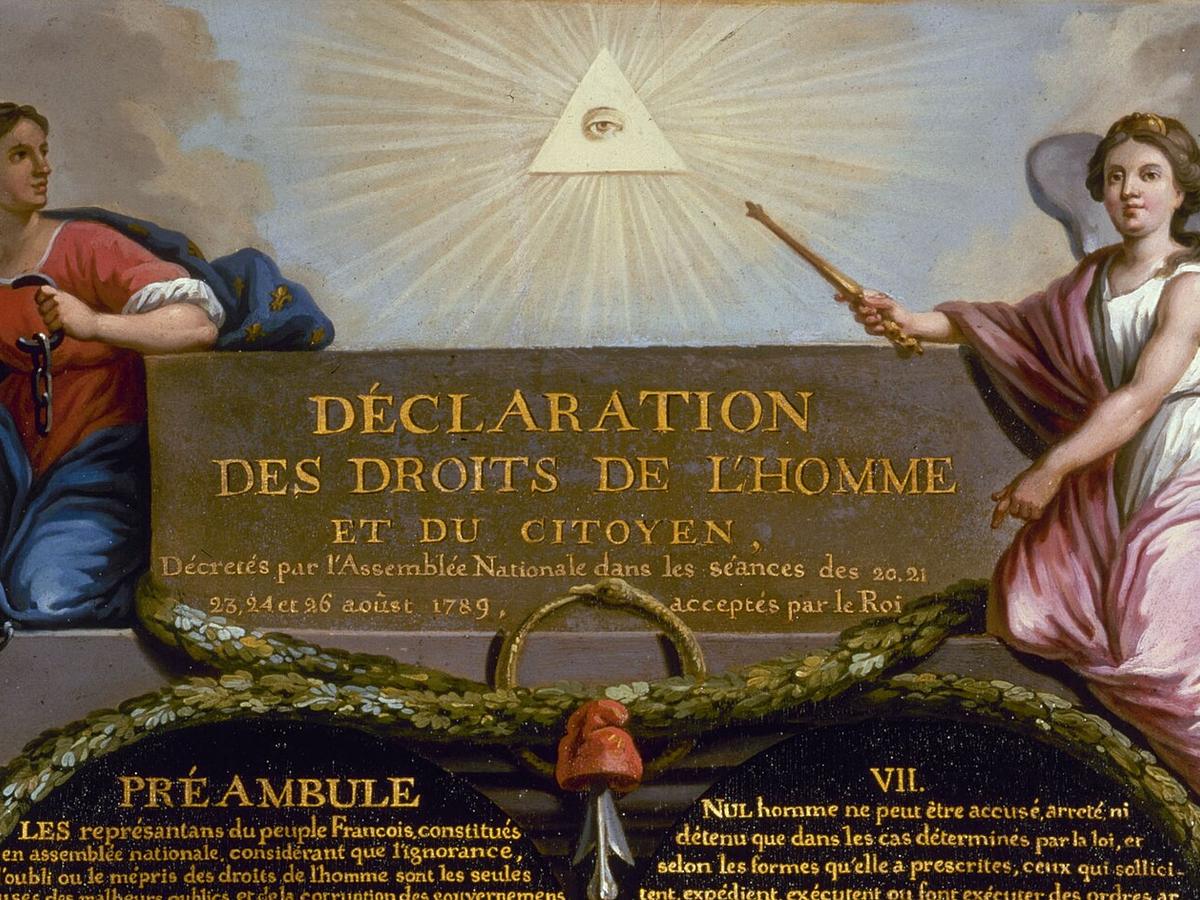
How Did You Score?
If the Three Estates, Tennis Court Oath, Varennes, Valmy, Girondins, General Maximum, Thermidor, and 18 Brumaire all landed in the right order, your revolutionary timeline survived the guillotine.
Keep going with our world history trivia, American Revolution trivia, and Renaissance trivia.
Sources and further reading
For a French National Archives resource on the political changes of 1789, see French National Archives: the political order of 1789.

Ellie Simons creates and edits Random Trivia. She researches trivia using primary and authoritative sources whenever possible and is currently reviewing the site's older trivia library for accuracy, clarity, and playability. Read more on the About page.
About this quiz
Site editor: Ellie Simons. Read our Trivia Methodology to learn how questions are researched and updated. Page last updated: . Report an error.