
Ready to see how deep your Revolutionary War knowledge goes?
This mega-pack moves from friendly warm-ups to real stumpers, covering causes, campaigns, founders, spies, allies, the home front, and the symbols we still recognize today.
Perfect for classrooms, pub nights, or solo study. Saddle up, patriot!
Road to Revolution: Causes & Early Sparks
Q: What rallying cry protested taxes without colonial seats in Parliament?
A: “No taxation without representation.”
Q: Which 1765 law taxed newspapers, legal papers, and playing cards?
A: The Stamp Act.
Q: What 1770 street clash in Boston left five colonists dead?
A: The Boston Massacre.
Q: Which 1773 protest saw tea dumped into Boston Harbor?
A: The Boston Tea Party.
Q: What punitive laws colonists called “Intolerable Acts” followed the Tea Party?
A: The Coercive Acts.
Q: What 1774 gathering coordinated a colony-wide response to Britain?
A: The First Continental Congress.
Q: Which colony’s militia famously trained as “Minutemen”?
A: Massachusetts.
Q: Where did the war’s first shots crack on April 19, 1775?
A: Lexington and Concord.
Q: Whose midnight ride is most famously remembered from April 1775?
A: Paul Revere’s (among several riders).
Q: What 1775 petition sought reconciliation with George III?
A: The Olive Branch Petition.
Q: Which December 1775 act cut off American trade and royal protection?
A: The Prohibitory Act.
Q: What January 1776 pamphlet urged independence in plain language?
A: Thomas Paine’s Common Sense.
Q: Which 1763 royal order limited westward settlement beyond the Appalachians?
A: The Proclamation of 1763.
Q: What 1767 duties taxed glass, lead, paint, paper, and tea?
A: The Townshend Acts.
Q: What colonial networks spread news and coordinated boycotts?
A: Committees of Correspondence.
Q: What broad search warrants angered merchants and lawyers?
A: Writs of assistance.
Q: Which 1766 law asserted Parliament’s right to legislate for the colonies “in all cases”?
A: The Declaratory Act.
Q: What 1774 law enlarged Quebec and alarmed Protestant colonists?
A: The Quebec Act.
Q: What 1772 Rhode Island incident burned a British customs schooner?
A: The Gaspee Affair.
Q: What 1774 pact pledged non-importation and non-consumption?
A: The Continental Association.
Q: Which militia seized Fort Ticonderoga in May 1775?
A: Ethan Allen’s Green Mountain Boys (with Benedict Arnold).
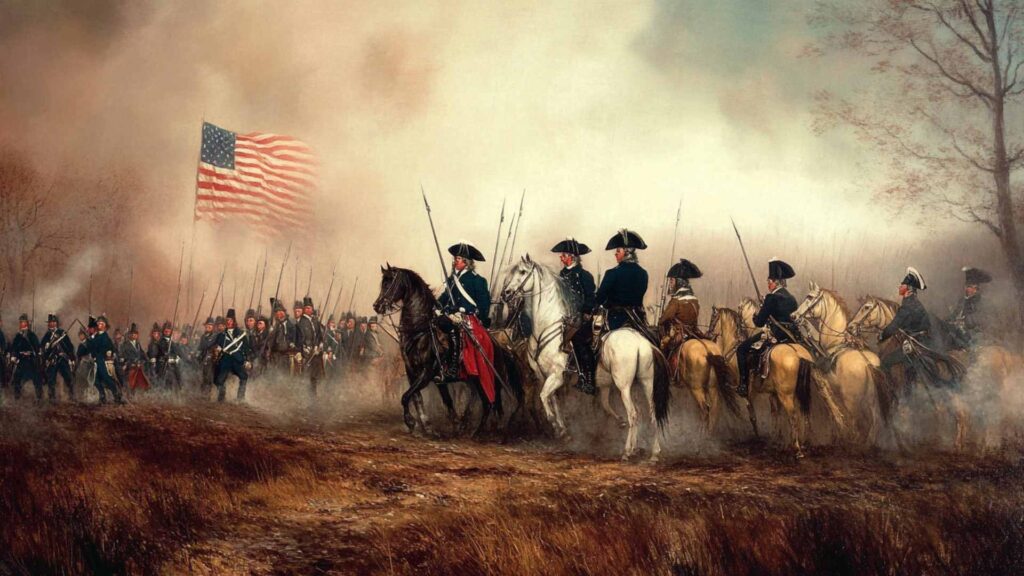
Battles & Campaigns: From Lexington to Yorktown
Q: What June 1775 fight, mostly on Breed’s Hill, bloodied the British?
A: The Battle of Bunker Hill.
Q: Who was appointed commander in chief of the Continental Army?
A: George Washington.
Q: What March 1776 event forced the British to evacuate Boston?
A: Dorchester Heights cannon, ending the siege.
Q: What surprise struck Hessians the morning of December 26, 1776?
A: Washington’s victory at Trenton.
Q: What follow-up American win came on January 3, 1777?
A: The Battle of Princeton.
Q: Which 1777 surrender is often called the war’s turning point?
A: Saratoga.
Q: Where did the army endure the winter of 1777–1778?
A: Valley Forge.
Q: What June 1778 New Jersey battle was fought in extreme heat?
A: Monmouth.
Q: Which American captain declared, “I have not yet begun to fight”?
A: John Paul Jones.
Q: What August 1780 battle was a disaster for the Americans?
A: Camden.
Q: Which October 1780 backcountry victory broke Loyalist momentum?
A: King’s Mountain.
Q: What January 1781 win used a feigned retreat to trap the British?
A: Cowpens.
Q: What March 1781 clash bloodied Cornwallis in North Carolina?
A: Guilford Courthouse.
Q: What October 1781 siege effectively ended major fighting?
A: Yorktown.
Q: What December 1775 assault failed in a snowstorm in Canada?
A: The Battle of Quebec.
Q: Which 1779 Franco-American siege in Georgia failed to take the city?
A: Savannah.
Q: What 1779 Maine operation became a catastrophic American naval defeat?
A: The Penobscot Expedition.
Q: What June 1776 palmetto-log fort repelled a British attack?
A: Fort Sullivan (later Fort Moultrie), Charleston.
Q: Which October 1777 attack nearly succeeded despite heavy fog?
A: Germantown.
Q: Who captured Kaskaskia and Vincennes in the western theater?
A: George Rogers Clark.
Q: What October 1776 lake fight delayed a British thrust from Canada?
A: Valcour Island on Lake Champlain.

Founding Documents, Ideas & Politics
Q: On what date did Congress adopt the Declaration of Independence?
A: July 4, 1776.
Q: Who drafted most of the Declaration’s text?
A: Thomas Jefferson.
Q: Which body adopted the Declaration?
A: The Second Continental Congress.
Q: What famous phrase lists inherent rights in the preamble?
A: “Life, Liberty, and the pursuit of Happiness.”
Q: What 1777–1781 charter served as America’s first national constitution?
A: The Articles of Confederation.
Q: Who wrote the 1776 Virginia Declaration of Rights?
A: George Mason.
Q: What June 1776 motion formally proposed independence in Congress?
A: The Lee Resolution.
Q: What 1774 Massachusetts-backed statement urged resistance to the Coercive Acts?
A: The Suffolk Resolves.
Q: Which philosopher’s natural-rights ideas heavily influenced colonial leaders?
A: John Locke.
Q: What section occupies most of the Declaration’s text?
A: The list of grievances against the king.
Q: What Virginia law (enacted 1786) disestablished religion and guaranteed free exercise?
A: The Virginia Statute for Religious Freedom.
Q: What 1783 agreement recognized American independence and set boundaries?
A: The Treaty of Paris.
Q: What 1775 manifesto justified taking up arms against Britain?
A: The Declaration on the Causes and Necessity of Taking Up Arms.
Q: Who presided over Congress when the Declaration was signed?
A: John Hancock.
Q: Which colony abstained on independence on July 2, 1776?
A: New York.
Q: Under the Articles, what national body coordinated the war?
A: The Confederation Congress.
Q: What key fiscal power did the Articles of Confederation lack?
A: The power to levy taxes.
Q: What was the “Committee of Five” in June 1776?
A: The Declaration’s drafting committee.
Q: Which British political faction often sympathized with American grievances?
A: The (Rockingham) Whigs.
Q: What 1764 law tightened customs enforcement and molasses duties?
A: The Sugar Act.
Q: What wartime institution chartered in 1781 stabilized public credit?
A: The Bank of North America.
People of the Revolution: Patriots & Loyalists
Q: Which French aristocrat became Washington’s trusted “adopted son”?
A: Marquis de Lafayette.
Q: Which Prussian officer drilled the army at Valley Forge?
A: Baron von Steuben.
Q: Which American secured crucial French support in Paris?
A: Benjamin Franklin.
Q: Who plotted to surrender West Point to the British?
A: Benedict Arnold.
Q: Which lawyer later president defended the Boston Massacre soldiers?
A: John Adams.
Q: Who thundered, “Give me liberty, or give me death!”?
A: Patrick Henry.
Q: Which envoy won Dutch recognition and loans in 1782?
A: John Adams.
Q: Which enslaved double agent aided Lafayette before Yorktown?
A: James Armistead (later James Armistead Lafayette).
Q: Which Mohawk leader fought as a British ally?
A: Joseph Brant (Thayendanegea).
Q: Which Spanish governor seized Baton Rouge, Mobile, and Pensacola?
A: Bernardo de Gálvez.
Q: Which Polish cavalry officer died of wounds at Savannah?
A: Casimir Pulaski.
Q: Which Polish engineer fortified West Point for the Americans?
A: Tadeusz Kościuszko.
Q: Which American captain captured HMS Serapis in 1779?
A: John Paul Jones.
Q: Which playwright-pamphleteer skewered Loyalists and later wrote a history?
A: Mercy Otis Warren.
Q: Which Massachusetts woman fought disguised as “Robert Shurtliff”?
A: Deborah Sampson.
Q: Who was nicknamed “Financier of the Revolution”?
A: Robert Morris.
Q: Which Loyalist commanded the Queen’s Rangers and later governed Upper Canada?
A: John Graves Simcoe.
Q: Which Boston poet, enslaved and later freed, published in 1773?
A: Phillis Wheatley.
Q: Which prime minister steered Britain during the Intolerable Acts period?
A: Lord North.
Q: Which colonial governor and Loyalist was Benjamin Franklin’s son?
A: William Franklin of New Jersey.
Q: Which American negotiator pushed for direct peace talks with Britain?
A: John Jay.
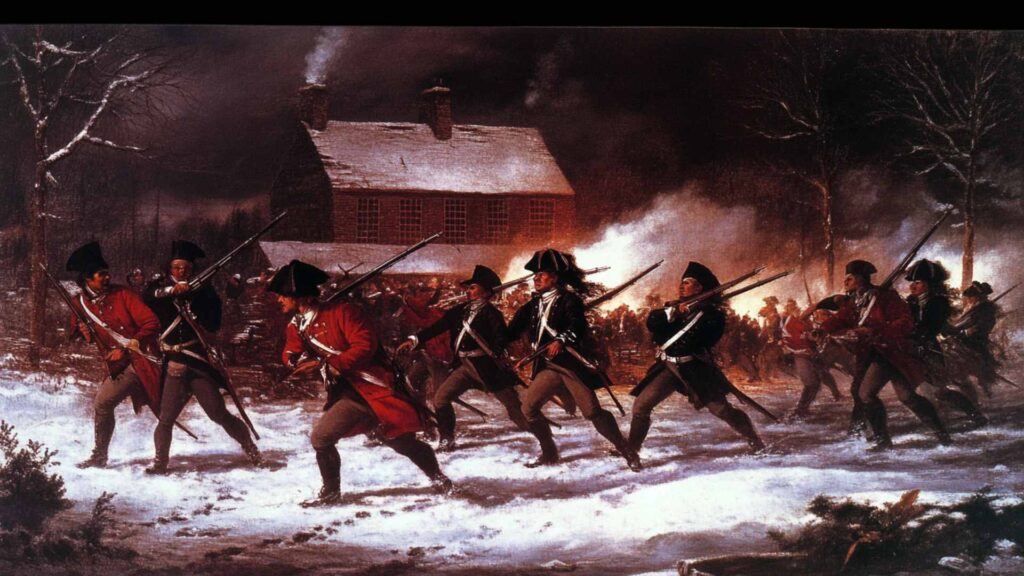
Global War: Allies, Enemies & Diplomacy
Q: What 1778 pacts made France an American ally and trading partner?
A: The Treaty of Alliance and Treaty of Amity and Commerce.
Q: Which French admiral bottled up Cornwallis at Yorktown?
A: François Joseph Paul, comte de Grasse.
Q: Which French general marched south with Washington in 1781?
A: Jean-Baptiste de Rochambeau.
Q: What 1780 coalition protected neutral shipping against Britain?
A: The League of Armed Neutrality.
Q: Which country entered the war in 1779, striking British Gulf holdings?
A: Spain.
Q: At which 1779 siege did French, American, and Caribbean troops fail?
A: Savannah.
Q: What Caribbean colony sent the Chasseurs-Volontaires to that siege?
A: Saint-Domingue (present-day Haiti).
Q: Which American envoy won Dutch recognition in April 1782?
A: John Adams.
Q: What 1782 Caribbean sea fight shattered French hopes to invade Jamaica?
A: The Battle of the Saintes.
Q: Which Muslim-majority kingdom was among the earliest to recognize the U.S.?
A: Morocco.
Q: Which British general surrendered at Yorktown in 1781?
A: Charles Cornwallis.
Q: Which French finance minister’s policies shaped wartime lending?
A: Jacques Necker.
Q: Which Nova Scotian port anchored Britain’s North American fleet?
A: Halifax.
Q: What British West Florida capital fell to Gálvez in 1781?
A: Pensacola.
Q: Which teenage French volunteer served as a major general without pay?
A: Lafayette.
Q: Which Scandinavian monarchy signed a U.S. treaty in 1783?
A: Sweden.
Q: Which Bahamian target fell to an American marine raid in 1776?
A: Nassau.
Q: In what Paris suburb did Franklin reside and entertain?
A: Passy.
Q: What Spanish motto—often associated with Pensacola—means “I alone”?
A: “Yo solo.”
Q: Which Dutch island was seized in 1781 for trading with Americans?
A: St. Eustatius.
Q: Who signed the 1783 peace for Britain?
A: David Hartley.
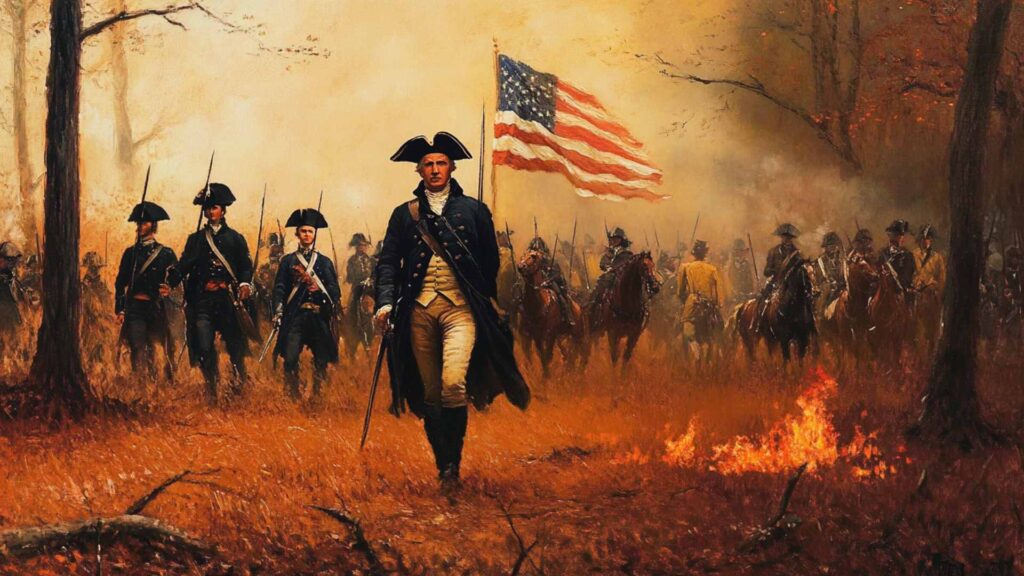
Life on the Home Front: Society, Women, Black & Native Peoples, Economy
Q: What phrase mocked collapsing paper money value?
A: “Not worth a Continental.”
Q: What homespun movement encouraged boycotts of British textiles?
A: Spinning and weaving homespun cloth.
Q: What famous camp-heroine story likely blends several women?
A: The “Molly Pitcher” legend.
Q: Which First Lady wintered with troops and boosted morale?
A: Martha Washington.
Q: Who urged her husband to “remember the ladies” in 1776?
A: Abigail Adams.
Q: Which state’s 1776 constitution allowed some women to vote?
A: New Jersey (property-holders, until 1807).
Q: Which 1783 Massachusetts cases helped end slavery there?
A: The Quock Walker decisions.
Q: What November 1775 proclamation offered freedom to enslaved people who fled to British lines?
A: Lord Dunmore’s Proclamation.
Q: What 1779 order expanded that British offer across the colonies?
A: The Philipsburg Proclamation.
Q: What integrated regiment fought at the Battle of Rhode Island?
A: The 1st Rhode Island Regiment.
Q: Which African American soldier was cited for bravery at Bunker Hill?
A: Salem Poor.
Q: Which Iroquois nation notably supported the Americans?
A: The Oneida.
Q: What 1779 campaign devastated Iroquois towns allied with Britain?
A: The Sullivan Expedition.
Q: What city served as British headquarters for most of the war?
A: New York City.
Q: What financial tactic did the British use to wreck Continental currency?
A: Counterfeiting.
Q: What critical fiscal power did Congress lack under the Articles?
A: Direct taxation.
Q: Where did Patriot-Loyalist civil war run especially hot?
A: The southern backcountry (Carolinas).
Q: What 1783 ledger listed Black Loyalists evacuated to Nova Scotia?
A: The Book of Negroes.
Q: Which Philadelphia Quaker woman passed intelligence to Washington?
A: Lydia Darragh.
Q: What 1779 Philadelphia confrontation centered on price controls and shortages?
A: The Fort Wilson Riot.
Q: Which Pennsylvania town hosted Congress during 1777–78?
A: York (after a brief stop in Lancaster).
Military: Weapons, Tactics, Spies & Logistics
Q: What nickname was given to militia ready at a minute’s notice?
A: Minutemen.
Q: What British musket, the “Brown Bess,” was common on both sides?
A: The Land Pattern Musket.
Q: Who codified drill in the “Blue Book” after Valley Forge?
A: Baron von Steuben.
Q: Whose winter trek hauled heavy guns from Ticonderoga to Boston?
A: Henry Knox’s “Noble Train.”
Q: What hand-powered submersible tried to attack HMS Eagle in 1776?
A: David Bushnell’s Turtle.
Q: What were painted logs used as fake cannon called?
A: “Quaker guns.”
Q: What New York-based spy ring used laundry signals and codes?
A: The Culper Ring.
Q: Which young American spy was hanged in 1776?
A: Nathan Hale.
Q: What invisible ink, created by James Jay, hid messages?
A: “Sympathetic stain.”
Q: What chronic problem often hobbled the Continental Army?
A: Supply shortages—food, shoes, clothing.
Q: Who became Quartermaster General in 1778 to fix logistics?
A: Nathanael Greene.
Q: About how many musket shots could a trained soldier fire per minute?
A: Roughly two to three.
Q: What edged weapon made close-quarters shock tactics decisive?
A: The bayonet.
Q: What British tactic at Bunker Hill proved costly?
A: Frontal uphill assaults.
Q: Which South Carolina partisan earned the nickname “Swamp Fox”?
A: Francis Marion.
Q: Who led early rifle corps and later masterminded Cowpens?
A: Daniel Morgan.
Q: What frontier firearm offered superior range and accuracy?
A: The Pennsylvania (Kentucky) long rifle.
Q: What boats ferried Washington’s troops across the Delaware?
A: Sturdy Durham boats.
Q: What sharpened log barrier guarded many redoubts?
A: Abatis.
Q: Which future Treasury Secretary led the storming of Redoubt 10?
A: Alexander Hamilton.
Q: In which Boston church were “one if by land, two if by sea” lanterns hung?
A: Old North Church.
Symbols, Songs & Memory: Flags, Prints, Myths
Q: What first national banner combined Union Jack and 13 stripes?
A: The Grand Union Flag.
Q: What coiled-snake flag warns “Don’t Tread on Me”?
A: The Gadsden Flag.
Q: Who is often credited—though evidence is debated—with sewing the first stars-and-stripes?
A: Betsy Ross.
Q: What June 14, 1777 act standardized 13 stars and 13 stripes?
A: The Flag Resolution.
Q: What tune that mocked colonists became a Patriot favorite?
A: “Yankee Doodle.”
Q: What song is often said to have played at Yorktown’s surrender?
A: “The World Turned Upside Down” (tradition, not certain).
Q: What Boston symbol of resistance was an elm used for protests?
A: The Liberty Tree.
Q: Whose engraving of the Boston Massacre fueled outrage?
A: Paul Revere’s.
Q: What first printed version of the Declaration spread by the thousands?
A: The Dunlap broadside.
Q: What rousing hymn by William Billings became a Patriot anthem?
A: “Chester.”
Q: What famous story of Washington praying at Valley Forge lacks evidence?
A: The “Prayer at Valley Forge” legend.
Q: What camp-heroine tale is likely a composite of multiple women?
A: “Molly Pitcher.”
Q: What 1782 award inspired today’s Purple Heart?
A: The Badge of Military Merit.
Q: What segmented-snake cartoon urged unity with “Join, or Die”?
A: Franklin’s 1754 image, later repurposed.
Q: Whose 1776 letter—not a battlefield slogan—said “remember the ladies”?
A: Abigail Adams’s letter to John.
Q: What pamphlet series opened, “These are the times that try men’s souls”?
A: Paine’s The American Crisis.
Q: What 1768 song cheered boycotts with “by uniting we stand”?
A: “The Liberty Song.”
Q: What flag bore a pine tree and “An Appeal to Heaven”?
A: The Pine Tree Flag.
Q: What Latin motto adopted in 1782 means “Out of many, one”?
A: E pluribus unum.
Q: What common myth claims about the Declaration’s signatures is wrong?
A: That all signed on July 4 (most signed August 2).
Q: Where was the Declaration publicly read in Philadelphia on July 8, 1776?
A: The yard of the Pennsylvania State House (Independence Hall).
From tea chests and town meetings to secret inks and siege lines, the Revolution is endlessly quiz-able.
Keep these questions handy for class, trivia night, or your next road trip—then dive into biographies and battle maps to turn quick answers into deeper understanding.

Ellie Simons creates and edits Random Trivia. She researches trivia using primary and authoritative sources whenever possible and is currently reviewing the site's older trivia library for accuracy, clarity, and playability. Read more on the About page.
About this quiz
Site editor: Ellie Simons. Read our Trivia Methodology to learn how questions are researched and updated. Page last updated: . Report an error.