
Love means zero here, which is already a pretty good sign that tennis trivia gets weird fast. These 118 questions cover scoring, serves, tiebreaks, all four Grand Slams, surfaces, equipment, famous champions, legendary matches, doubles, strategy, records, and the vocabulary that makes a tennis broadcast sound like its own language.
The first round is easy. The last one may go to a fifth-set tiebreak.
Why Tennis Makes Great Trivia
Tennis looks simple until you try to explain why 40 comes after 30, why a player can win more total points and still lose the match, or why the same athlete can dominate clay and struggle on grass. The sport combines centuries of history with four major tournaments, different surfaces, individual rivalries, equipment changes, and distinctive scoring.
Rules here follow the International Tennis Federation. For more sports challenges, try our sports trivia, Olympics trivia, and golf trivia.
Tennis Scoring & Rules
Q: What score means zero points in tennis?
A: Love.
Q: What scores follow love in a standard game?
A: 15, 30, and 40.
Q: What is the score called when both players reach 40?
A: Deuce.
Q: What does a player need after deuce to win the game under standard scoring?
A: Two consecutive points.
Q: What is the first point after deuce called for the player who wins it?
A: Advantage.
Q: How many games must a player normally win to take a set without a tiebreak?
A: At least six games with a margin of two.
Q: What usually happens at 6-6 in a set under modern tournament rules?
A: A tiebreak is typically played, though exact formats can vary by event and deciding set.
Q: How many points normally win a standard tiebreak?
A: At least seven points with a two-point margin.
Q: What is an ace?
A: A legal serve the receiver cannot touch.
Q: What is a double fault?
A: Missing both serve attempts and losing the point.
Q: What is a let on serve?
A: A serve that touches the net but still lands correctly in the service box, causing the serve to be replayed.
Q: How many service attempts does a player normally get to start a point?
A: Two.
Q: What happens if a ball touches a boundary line?
A: It is considered in.
Q: Can a player hit the ball before it bounces?
A: Yes. That shot is called a volley.
Q: Can a player lose a match despite winning more total points?
A: Yes. Tennis is decided by games and sets, not total points accumulated across the entire match.
The Four Grand Slam Tournaments
Q: What are tennis's four Grand Slam tournaments?
A: Australian Open, Roland-Garros, Wimbledon, and the US Open.
Q: Which Grand Slam is played first in the calendar year?
A: The Australian Open.
Q: In what city is the Australian Open held?
A: Melbourne.
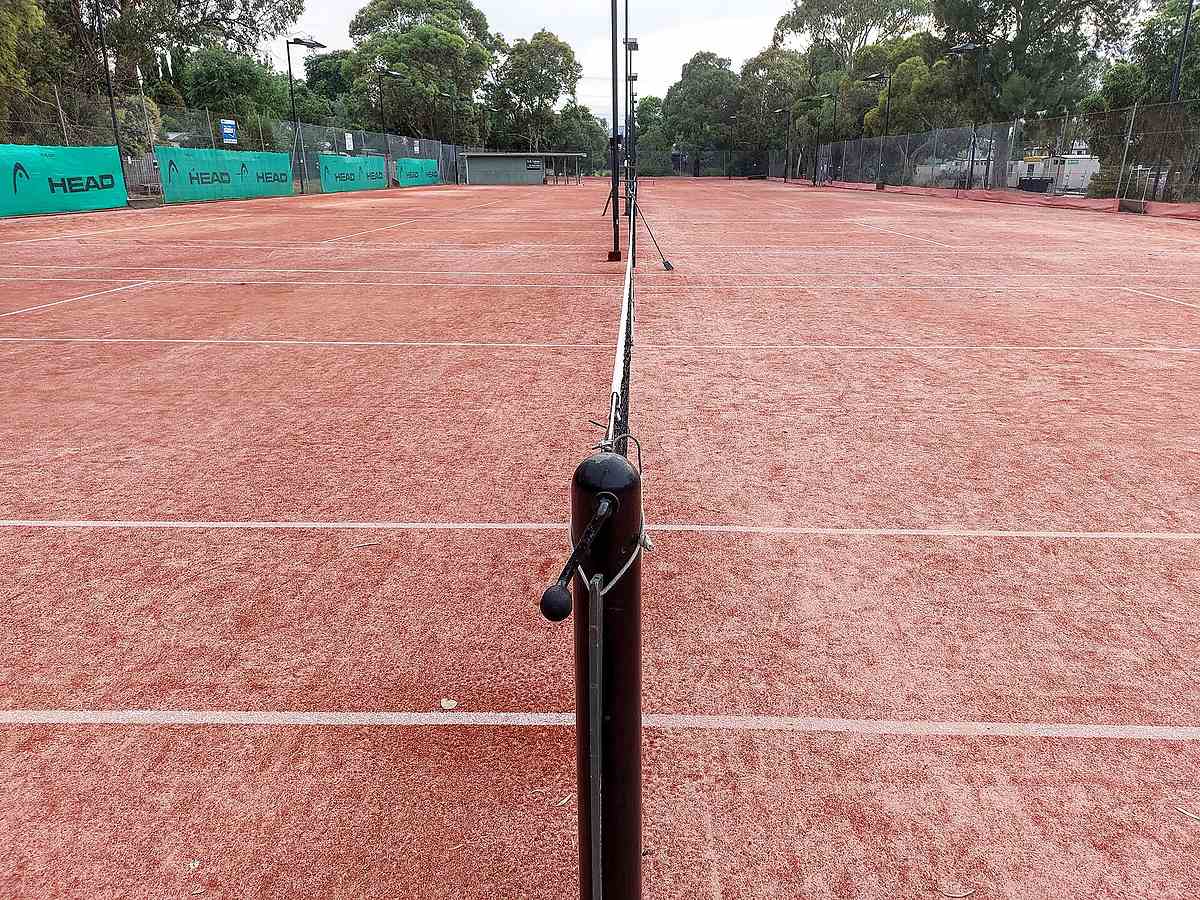
Q: Which Grand Slam is played on clay?
A: Roland-Garros, also called the French Open.
Q: In what city is Roland-Garros held?
A: Paris.
Q: Which Grand Slam is played on grass?
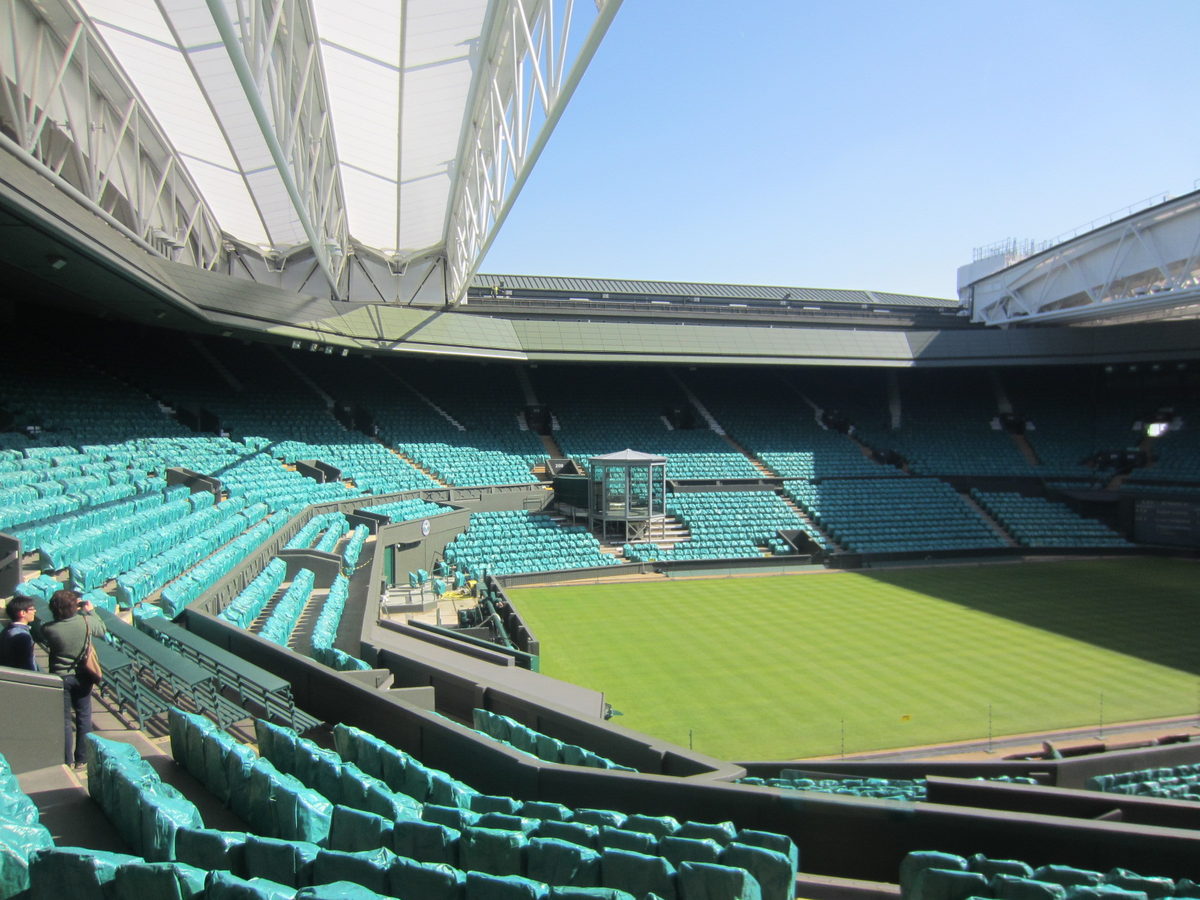
A: Wimbledon.
Q: In what city is Wimbledon held?
A: London.
Q: Which Grand Slam is played last in the calendar year?
A: The US Open.
Q: In what New York City borough is the US Open held?
A: Queens.
Q: What does winning all four majors in the same calendar year mean?
A: Completing a calendar-year Grand Slam.
Q: What is a career Grand Slam?
A: Winning each of the four majors at least once during a career.
Q: Which Grand Slam is the oldest tennis championship?
A: Wimbledon, first held in 1877.
Q: What distinctive clothing rule is Wimbledon famous for?
A: Players must wear almost entirely white clothing.
Q: What famous main stadium hosts the US Open finals?
A: Arthur Ashe Stadium.
Q: What person is Arthur Ashe Stadium named after?
A: Arthur Ashe, the pioneering American Grand Slam champion and activist.
Grass, Clay, Hard Courts & Equipment
Q: What surface is traditionally fastest among the three major Grand Slam surface types?
A: Grass is generally associated with lower, quicker bounces, though court speed varies by conditions and era.
Q: What surface often produces higher, slower bounces and longer rallies?
A: Clay.
Q: What two Grand Slams are currently played on hard courts?
A: The Australian Open and US Open.
Q: Why do players slide more visibly on clay?
A: The loose surface allows controlled sliding into shots.
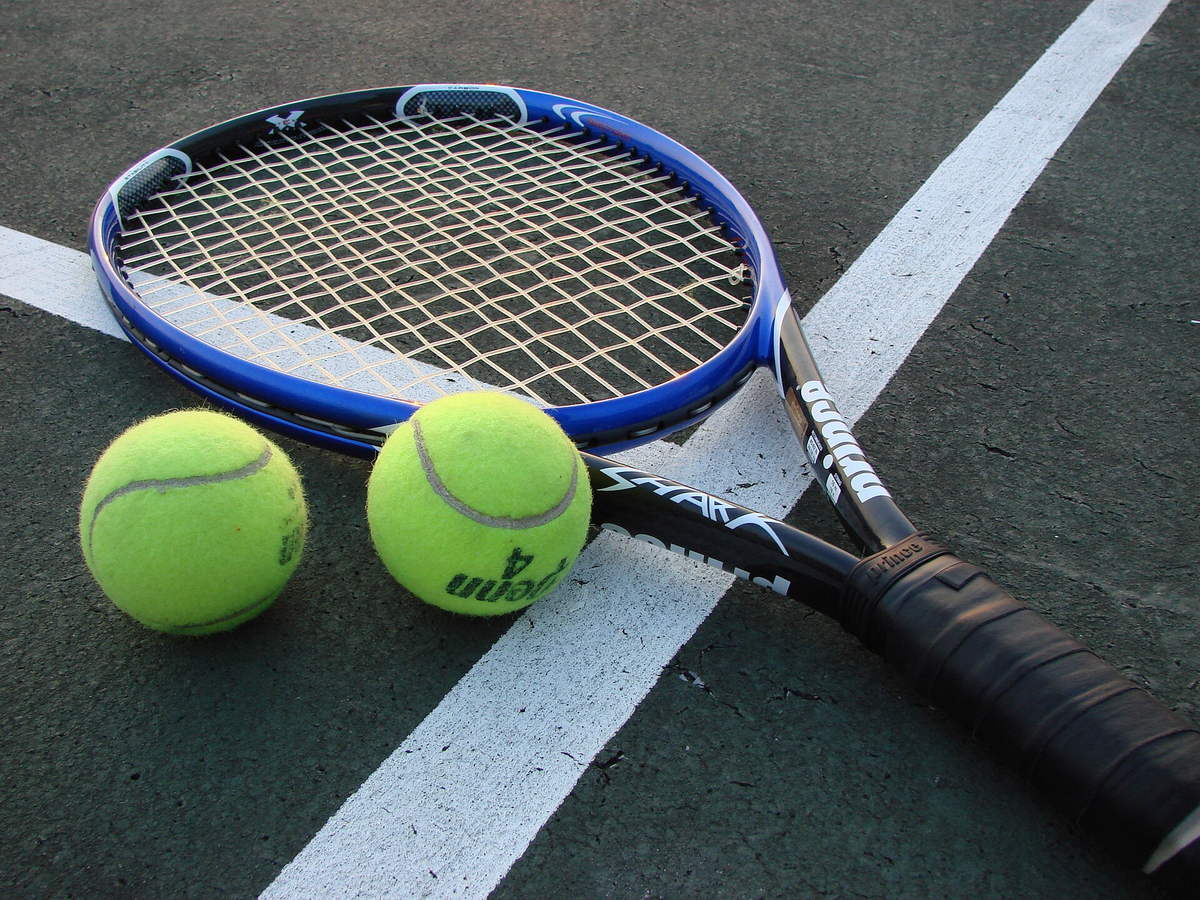
Q: What basic piece of equipment does a player use to strike the ball?
A: A racket.
Q: What material were tennis rackets commonly made from before modern composites took over?
A: Wood.
Q: What materials dominate modern elite rackets?
A: Graphite and other composite materials.
Q: What part of the racket actually contacts the ball?
A: The string bed.
Q: What is string tension?
A: The tightness with which strings are installed in the racket, affecting feel, control, power, and response.
Q: What fuzzy object is used in tennis instead of a smooth rubber ball?
A: A pressurized or pressureless felt-covered tennis ball, depending on use.
Q: Why are tennis balls bright yellow-green in major competition?
A: The color improves visibility for players, spectators, and television.
Q: What is topspin?
A: Forward rotation that makes the ball dip more quickly and kick upward after bouncing.
Q: What is slice?
A: Backspin or underspin that can keep the ball lower and alter its flight.
Q: Why can the same player perform differently across surfaces?
A: Bounce height, speed, footing, movement, serve effectiveness, and rally patterns all change.
Q: What shoe feature matters especially on clay or grass?
A: The outsole pattern and traction must suit the surface so players can move safely and efficiently.
Famous Men's Champions
Q: Which Swiss player won eight Wimbledon men's singles titles?
A: Roger Federer.
Q: Which Spanish player became synonymous with dominance at Roland-Garros?
A: Rafael Nadal.
Q: What nickname is Rafael Nadal often given because of his clay-court success?
A: The King of Clay.
Q: Which Serbian champion has won major titles on all three Grand Slam surfaces?
A: Novak Djokovic.
Q: What three players are commonly grouped as the Big Three of modern men's tennis?
A: Roger Federer, Rafael Nadal, and Novak Djokovic.
Q: Which American won 14 Grand Slam men's singles titles and was famous for a huge serve?
A: Pete Sampras.
Q: Which American rival of Sampras completed a career Grand Slam and won eight majors?
A: Andre Agassi.
Q: Which Swedish great won five consecutive Wimbledon singles titles from 1976 through 1980?
A: Björn Borg.
Q: Which American became famous for fiery arguments and the phrase "You cannot be serious"?
A: John McEnroe.
Q: Which Czech-born American champion won multiple majors and was known for an aggressive all-court game?
A: Ivan Lendl was Czech-born and later American, with a baseline-heavy power game rather than classic serve-and-volley style.
Q: Which Australian player completed two men's calendar-year Grand Slams?
A: Rod Laver.
Q: In what years did Rod Laver complete calendar-year Grand Slams?
A: 1962 and 1969.
Q: Which American player won the inaugural US Open in 1968?
A: Arthur Ashe.
Q: Which German champion became the youngest Wimbledon men's singles winner at age 17 in 1985?
A: Boris Becker.
Q: Why is comparing major-title totals across men's eras complicated?
A: Travel, tournament participation, amateur and professional restrictions, equipment, surfaces, schedule length, and the Open Era changed the competitive landscape.
Famous Women's Champions
Q: Which American won 23 Grand Slam singles titles in the Open Era?
A: Serena Williams.
Q: Who is Serena Williams's older sister and fellow multiple Grand Slam champion?
A: Venus Williams.
Q: Which Czech-American player won a record nine Wimbledon women's singles titles?
A: Martina Navratilova.
Q: Which German champion won 22 Grand Slam singles titles and completed a Golden Slam in 1988?
A: Steffi Graf.
Q: What is a Golden Slam?
A: Winning all four Grand Slam singles titles plus Olympic singles gold in the same calendar year.
Q: Who completed the only calendar-year Golden Slam in singles in 1988?
A: Steffi Graf.
Q: Which Australian champion won 24 Grand Slam singles titles across the amateur and Open eras?
A: Margaret Court.
Q: Which American champion won 18 Grand Slam singles titles and was a major rival of Navratilova?
A: Chris Evert.
Q: Which player became famous for winning the 1997 US Open as a 16-year-old?
A: Martina Hingis was a teenage champion that era, but she won the 1997 US Open at 16 after already winning the Australian Open and Wimbledon that year.
Q: Which Chinese player became the first Asian Grand Slam singles champion at the 2011 French Open?
A: Li Na.
Q: Which Japanese player won her first Grand Slam singles title at the 2018 US Open?
A: Naomi Osaka.
Q: Which Belgian champion won seven Grand Slam singles titles and was known for a one-handed backhand?
A: Justine Henin.
Q: Which Yugoslav-born American star won nine Grand Slam singles titles and was stabbed during a match in 1993?
A: Monica Seles.
Q: Which American champion founded the Women's Tennis Association in 1973?
A: Billie Jean King.
Q: Why is women's tennis central to sports-history trivia beyond championship totals?
A: Players led major fights over professional opportunities, prize money, gender equity, media visibility, and the structure of women's sport.
Famous Matches, Milestones & Tennis History
Q: What year marks the beginning of tennis's Open Era?
A: 1968.
Q: What did the Open Era change?
A: Major tournaments opened to both professional and amateur players.
Q: What 1973 exhibition match between Billie Jean King and Bobby Riggs became a landmark cultural event?
A: The Battle of the Sexes.
Q: Who won the Battle of the Sexes?
A: Billie Jean King.
Q: What organization did Billie Jean King help found in 1973?
A: The Women's Tennis Association.
Q: What was the longest match in professional tennis history by duration?
A: John Isner versus Nicolas Mahut at Wimbledon in 2010.
Q: How long did Isner versus Mahut last?
A: 11 hours and 5 minutes over three days.
Q: What was the final-set score in Isner versus Mahut?
A: 70-68 in games.
Q: Why can that exact 70-68 deciding-set score no longer happen under current Wimbledon rules?
A: Modern Grand Slams use deciding-set tiebreak procedures instead of unlimited advantage sets.
Q: What famous 2008 Wimbledon final pitted Rafael Nadal against Roger Federer?
A: The men's singles final, won by Nadal in five sets.
Q: Why is the 2008 Wimbledon final often remembered as exceptional?
A: It combined two dominant rivals, changing light, rain delays, five sets, and a dramatic final set.
Q: What technology allows electronic review of line calls in many tournaments?
A: Electronic line-calling systems, historically including Hawk-Eye challenge technology.
Q: What historic American tournament became the US Open?
A: The U.S. National Championships.
Q: What historic French tournament became internationally known as Roland-Garros or the French Open?
A: The French Championships evolved into the modern major.
Q: Why does tennis history divide strongly around 1968?
A: Before the Open Era, many top professionals were excluded from major amateur championships, complicating comparisons across generations.
Strategy, Shots & Tennis Vocabulary
Q: What is a forehand?
A: A stroke hit on the racket-hand side with the palm generally leading the swing.
Q: What is a backhand?
A: A stroke hit across the body from the side opposite the forehand.
Q: Can a backhand be hit with one hand or two?
A: Yes.
Q: What is a drop shot?
A: A softly hit ball intended to land short near the net.
Q: What is a lob?
A: A high shot hit over an opponent who has moved toward the net.
Q: What is an overhead smash?
A: A powerful shot hit above the head, often against a weak lob.
Q: What is a passing shot?
A: A groundstroke hit past an opponent positioned at the net.
Q: What does serve-and-volley mean?
A: Serving and immediately moving toward the net to attack the return with a volley.
Q: What is a baseline player?
A: A player who conducts much of the rally from around the back of the court.
Q: What is a break of serve?
A: Winning a game in which the opponent is serving.
Q: What is a break point?
A: A point on which the receiver can win the opponent's service game.
Q: What does hold serve mean?
A: Winning your own service game.
Q: What is an unforced error?
A: A mistake judged to occur without sufficiently forcing pressure from the opponent, though statistical definitions can involve judgment.
Q: What is a winner?
A: A shot the opponent cannot return successfully.
Q: Why does point construction matter in tennis?
A: Players use placement, spin, pace, court position, patterns, and changes of direction to create progressively better attacking opportunities.
Hard Tennis Challenge
Q: Which Grand Slam is the oldest?
A: Wimbledon.
Q: Which two Grand Slams are currently played on hard courts?
A: Australian Open and US Open.
Q: Who completed calendar-year Grand Slams in men's singles in both 1962 and 1969?
A: Rod Laver.
Q: Who completed a calendar-year Golden Slam in 1988?
A: Steffi Graf.
Q: Which champion won the 1973 Battle of the Sexes?
A: Billie Jean King.
Q: Which stadium is the US Open's largest show court?
A: Arthur Ashe Stadium.
Q: What score follows 30 in a standard tennis game?
A: 40.
Q: What score follows 40-40?
A: Deuce, then advantage if one player wins the next point.
Q: What is the difference between an ace and a service winner?
A: An ace is untouched by the receiver, while a service winner can be touched but still not returned successfully.
Q: What is the difference between a volley and a half-volley?
A: A volley is hit before the bounce, while a half-volley is struck immediately after the ball bounces.
Q: What is the difference between a career Grand Slam and calendar Grand Slam?
A: A career Grand Slam can be completed across multiple years, while a calendar Grand Slam requires all four majors in the same year.
Q: Why is tennis record trivia especially tricky?
A: Amateur and professional eras, changing surfaces, tiebreak rules, racket technology, tournament participation, schedules, and active players make direct comparisons complicated.
Q: Why is tennis especially deep trivia material?
A: Strange scoring, four majors, three main surfaces, individual and doubles tactics, iconic rivalries, equipment evolution, Olympic history, equality battles, marathon matches, and more than a century of champions create endless angles for questions.
How Did You Score?
If deuce, the Open Era, the Golden Slam, the 70-68 Isner-Mahut set, Arthur Ashe Stadium, serve-and-volley, and the difference between a career and calendar Grand Slam all came easily, your tennis trivia held serve.
Keep playing with our sports trivia, Olympics trivia, and golf trivia.

Ellie Simons creates and edits Random Trivia. She researches trivia using primary and authoritative sources whenever possible and is currently reviewing the site's older trivia library for accuracy, clarity, and playability. Read more on the About page.
About this quiz
Site editor: Ellie Simons. Read our Trivia Methodology to learn how questions are researched and updated. Page last updated: . Report an error.