
From Olympia’s olive groves to modern megacities, the Olympic Games blend sport, ceremony, and global culture.
This ultimate Olympics trivia set spans ancient origins, host cities, Summer and Winter sports rules, record breakers, iconic symbols, and the Paralympics... moving from easy questions to tougher stumpers in each category.
Ancient Origins & the Modern Revival
Q: Where did the ancient Olympic Games take place?
A: Olympia, in the Peloponnese of Greece.
Q: Which god were the ancient Games held in honor of?
A: Zeus.
Q: How often were the ancient Olympics held?
A: Every four years.
Q: What name was given to that four-year cycle?
A: An Olympiad.
Q: In what year do historians traditionally date the first Olympics?
A: 776 BCE.
Q: What was the only event at the very earliest Games?
A: The stadion (a short footrace).
Q: Who was allowed to compete in the ancient Olympics?
A: Freeborn Greek men.
Q: What was the prize for ancient Olympic victors?
A: An olive wreath (kotinos).
Q: What was the “Olympic Truce” called in Greek?
A: Ekecheiria.
Q: Could married women attend as spectators in ancient Olympia?
A: Generally no (with rare exceptions).
Q: Which poet’s victory odes made champions famous?
A: Pindar.
Q: True or false: Ancient athletes competed nude.
A: True.
Q: Which Roman emperor is often credited with ending the ancient Games?
A: Theodosius I (late 4th century CE).
Q: Who led the revival of the modern Olympics?
A: Pierre de Coubertin.
Q: In what year was the IOC founded?
A: 1894.
Q: Where were the first modern Olympics held?
A: Athens, in 1896.
Q: Which famous legend inspired the marathon event?
A: Pheidippides’ run from Marathon to Athens.
Q: What is the standardized marathon distance?
A: 42.195 km (26 miles, 385 yards).
Q: In which Games did women first compete in the modern era?
A: Paris 1900.
Q: Which African nation produced one of the earliest modern Olympic sprint champions?
A: South Africa (Reggie Walker, 1908).
Q: What is the current Olympic motto in Latin?
A: Citius, Altius, Fortius—Communiter (“Faster, Higher, Stronger—Together”).
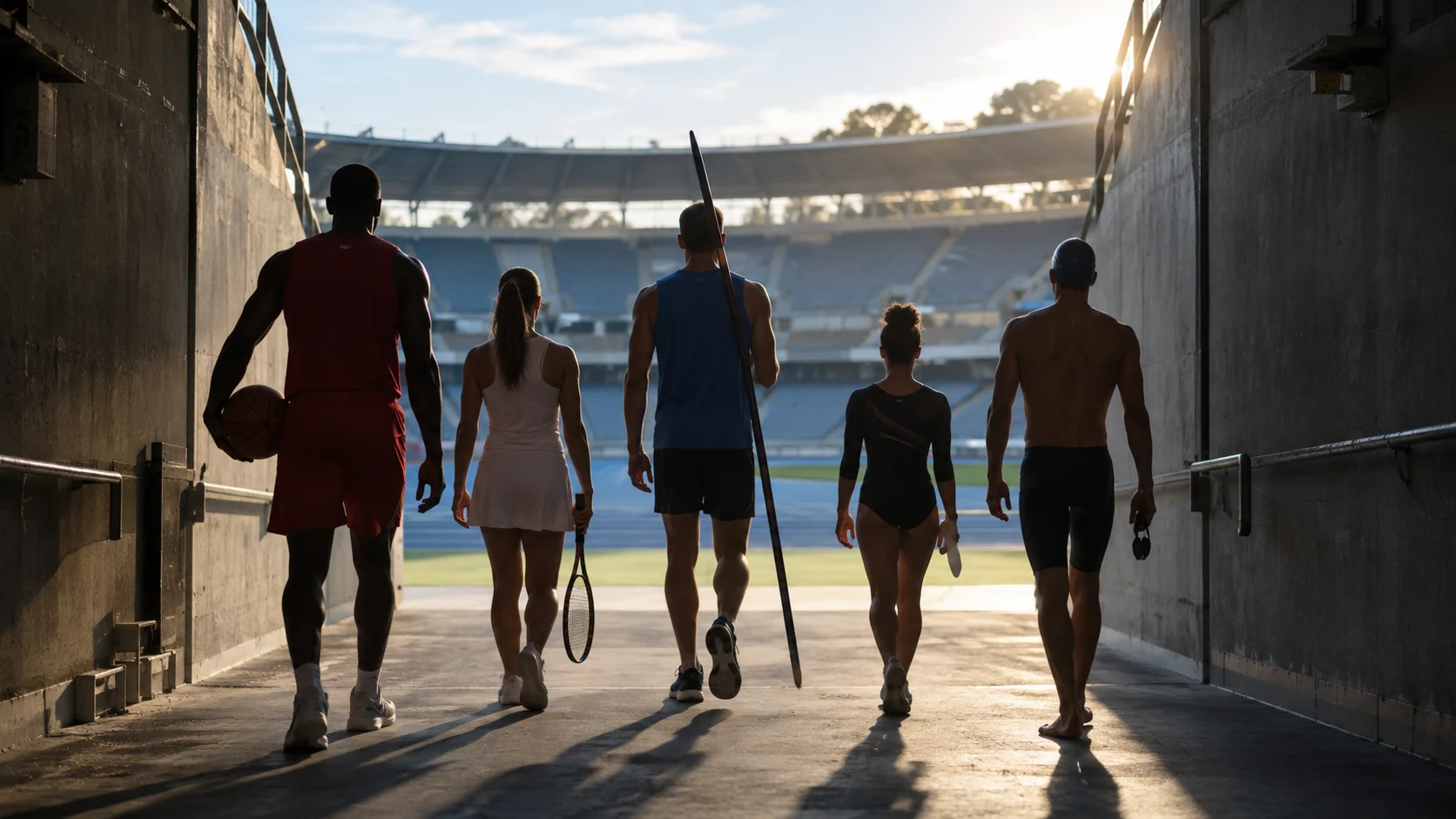
Summer Sports: Rules, Events & Tactics
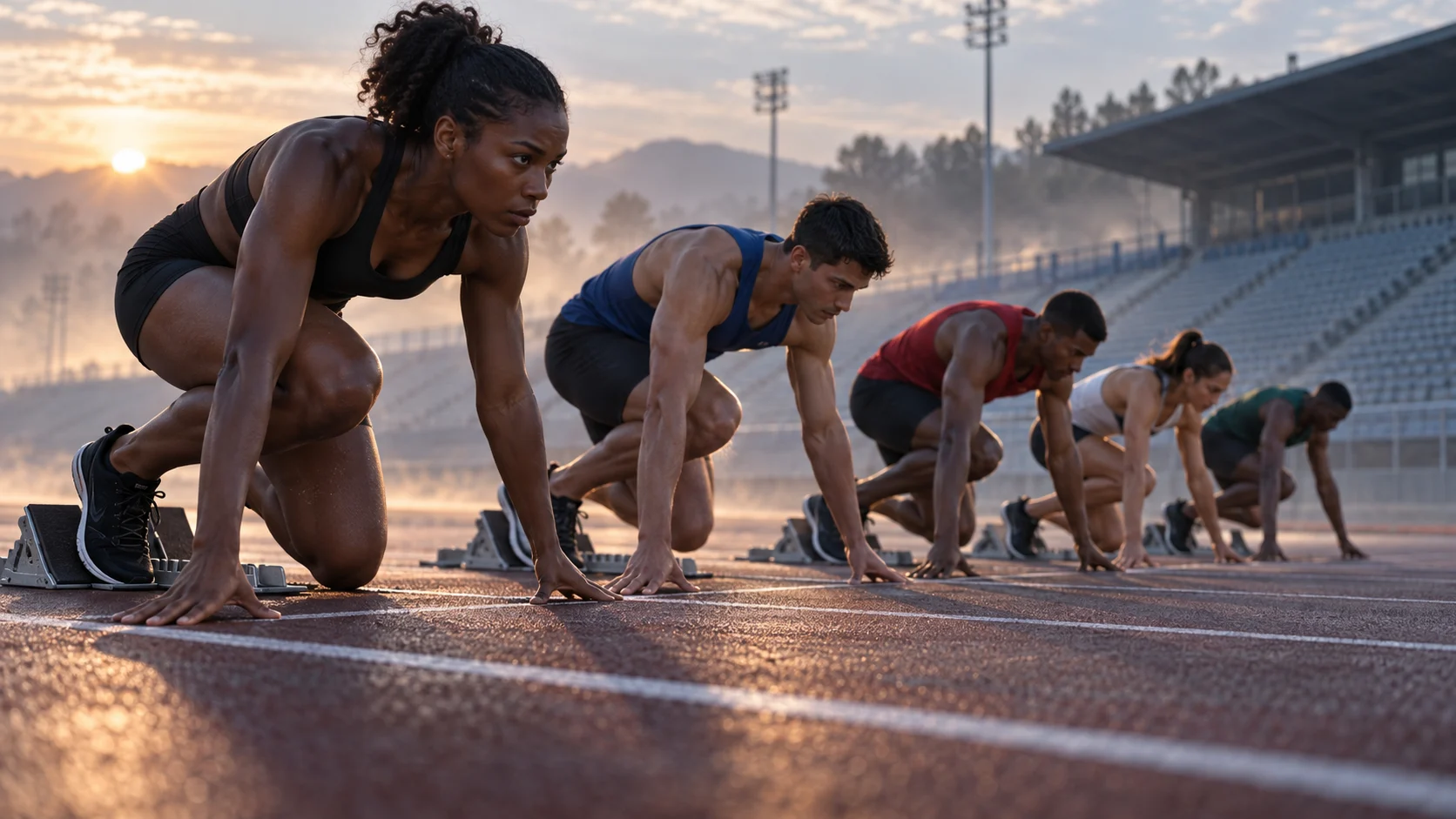
Q: How long is a standard Olympic outdoor track lap?
A: 400 meters.
Q: The decathlon has how many events and for whom?
A: Ten events, typically for men.
Q: The women’s combined track & field event is called what?
A: The heptathlon (seven events).
Q: What happens after a false start in Olympic sprinting today?
A: Immediate disqualification.
Q: What’s the lane order for individual medley swimming?
A: Butterfly, backstroke, breaststroke, freestyle.
Q: And the order for the medley relay?
A: Backstroke, breaststroke, butterfly, freestyle.
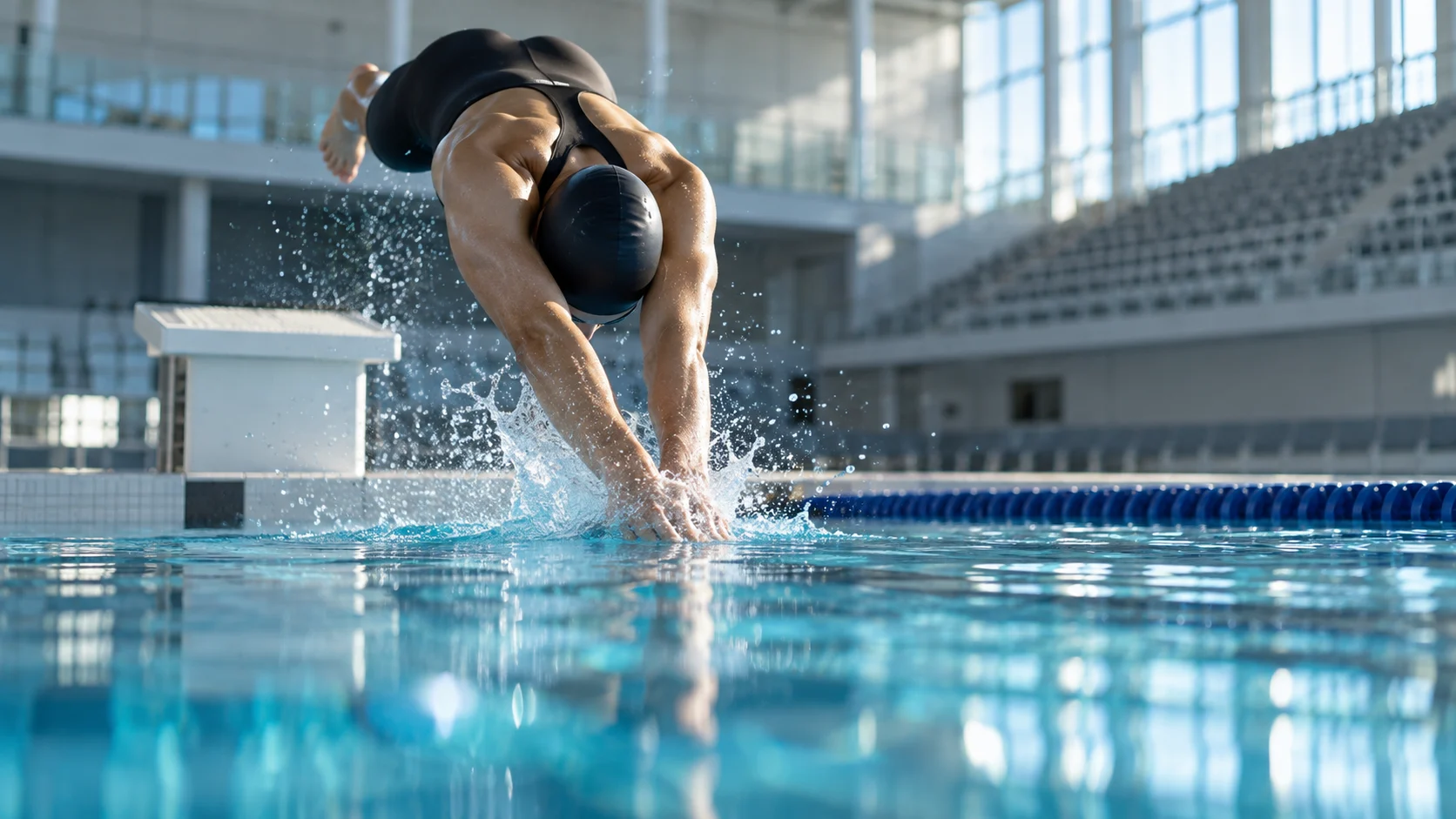
Q: How long is an Olympic pool used for swimming races?
A: 50 meters.
Q: In breaststroke, how many dolphin kicks are permitted off each wall?
A: One.
Q: Badminton uses what scoring format?
A: Rally scoring to 21 points, best-of-three games.
Q: Table tennis singles finals are typically best of how many games?
A: Best of seven.
Q: How many weapons exist in Olympic fencing?
A: Three: foil, épée, sabre.
Q: Which fencing weapon allows double touches to score?
A: Épée.
Q: In Olympic football (soccer), what’s unique about the men’s tournament?
A: Primarily U-23 squads with limited over-age players.
Q: In basketball, how long are FIBA quarters?
A: 10 minutes per quarter.
Q: 3x3 basketball ends at what target?
A: First to 21 points or 10 minutes.
Q: Rugby sevens features how many players per side?
A: Seven.
Q: Olympic golf returned in which year after a long absence?
A: 2016 (Rio).
Q: How many disciplines are in Olympic wrestling?
A: Two: freestyle and Greco-Roman.
Q: Do women compete in Greco-Roman wrestling at the Olympics?
A: No—women compete in freestyle.
Q: Boxing bouts at the Games generally consist of how many rounds?
A: Three rounds of three minutes.
Q: What are the two lifts contested in Olympic weightlifting?
A: The snatch; the clean & jerk.
Winter Sports: Rules, Courses & Techniques
Q: What two skills does biathlon combine?
A: Cross-country skiing and rifle shooting.
Q: In biathlon, a missed shot usually results in what?
A: A penalty loop or time penalty.
Q: What does the “K-point” mark in ski jumping represent?
A: The hill’s calculation point for scoring distance.
Q: Which winter sport uses sliders head-first down an ice track?
A: Skeleton.
Q: And which uses a feet-first single sled?
A: Luge.
Q: How many people are in a bobsleigh team for the four-man event?
A: Four.
Q: What is the standard long-track speed skating oval length?
A: 400 meters.
Q: Short track speed skating uses a track of approximately what length?
A: 111.12 meters.
Q: Name the four Olympic figure skating disciplines.
A: Women’s singles, men’s singles, pairs, ice dance.
Q: Which scoring system replaced the old “6.0” in figure skating?
A: The ISU Judging System (IJS).
Q: What’s the typical size of an international ice hockey rink?
A: About 60 × 30 meters.
Q: Alpine skiing includes which technical events?
A: Slalom and giant slalom.
Q: And which speed events in alpine skiing?
A: Downhill and super-G.
Q: What combined alpine event challenges both speed and technique?
A: The alpine combined.
Q: Which snowboard events emphasize aerial tricks?
A: Halfpipe, slopestyle, big air.
Q: Which snowboard event is head-to-head racing?
A: Snowboard cross.
Q: Curling is scored in segments called what?
A: Ends.
Q: The team that throws the last stone in curling has what advantage?
A: The hammer.
Q: Nordic combined merges which disciplines?
A: Ski jumping and cross-country skiing.
Q: Cross-country skiing has which two main techniques?
A: Classic and freestyle (skating).
Q: Speed skating added which strategic mass-start race recently?
A: The mass start (tactical pack race).
Hosts, Bids & Venues
Q: Where were the first modern Olympics hosted?
A: Athens, 1896.
Q: Which city hosted the second modern Games?
A: Paris, 1900.
Q: Which U.S. city first hosted the modern Olympics?
A: St. Louis, 1904.
Q: Which European capital held the 1908 Games?
A: London.
Q: The 1916 Olympics were canceled due to what?
A: World War I.
Q: Which city hosted the first Winter Games?
A: Chamonix, 1924.
Q: Which city is widely noted as the first to host the Games twice?
A: Paris (1900 and 1924).
Q: Which city became the first to host the Summer Olympics three times?
A: London (1908, 1948, 2012).
Q: The marathon’s high-altitude record fest occurred in which city?
A: Mexico City, 1968.
Q: Which 1956 equestrian events were held far from the main host due to quarantine laws?
A: In Stockholm, separate from Melbourne.
Q: The “Bird’s Nest” is the nickname of which Olympic stadium?
A: Beijing National Stadium.
Q: Which was the first city to host both Summer and Winter Olympics?
A: Beijing (2008 Summer, 2022 Winter).
Q: Which Asian city first hosted the Summer Olympics?
A: Tokyo, 1964.
Q: Which city hosted the first Winter Olympics in Asia?
A: Sapporo, 1972.
Q: Name a Games canceled due to World War II.
A: 1940 or 1944.
Q: What is the usual parade order rule in opening ceremonies?
A: Greece first, host nation last.
Q: Which city is famed for the 1992 waterfront revival tied to the Olympics?
A: Barcelona.
Q: What’s a modern bid emphasis: building new venues or reusing?
A: Increasingly, reusing & sustainability.
Q: Which U.S. city hosted a privately funded Summer Games model in 1984?
A: Los Angeles.
Q: Name a Games that famously leveraged existing college venues and temporary sites.
A: Los Angeles 1984 (and later LA plans).
Q: Which European capital last hosted both a Summer and a later separate Winter Games within the same country?
A: France (Paris 1924 Summer; Chamonix 1924 Winter).
Olympic Symbols & Ceremonies
Q: Who designed the five interlaced Olympic rings?
A: Pierre de Coubertin.
Q: What do the ring colors signify?
A: At least one appears on every national flag (no color-to-continent map).
Q: On what background do the rings sit on the Olympic flag?
A: White.
Q: In which Games was the Olympic flag first flown at a ceremony?
A: Antwerp, 1920.
Q: When was the Olympic flame tradition revived?
A: Amsterdam, 1928.
Q: The torch relay, as we know it, began at which Games?
A: Berlin, 1936.
Q: What is the Olympic Oath’s purpose?
A: Affirm fair play and respect for rules.
Q: Who takes versions of the Olympic Oath today?
A: An athlete, a judge/official, and a coach.
Q: What is the Olympic Hymn?
A: The anthem performed at Olympic ceremonies.
Q: Who composed the Olympic Hymn’s music?
A: Spyridon Samaras (lyrics by Kostis Palamas).
Q: What item replaced laurel wreaths in modern medal ceremonies?
A: Medals (gold, silver, bronze).
Q: Are modern Olympic “gold” medals solid gold?
A: No—gold-plated silver.
Q: Which city introduced the first official Olympic mascot?
A: Munich, 1972 (“Waldi”).
Q: What tradition closes the Games and opens the next?
A: The handover of the Olympic flag.
Q: What unique city-specific element appears on medal designs?
A: Host-themed artistic motifs on obverse/reverse.
Q: Since the 2020 cycle, how many co-flag bearers are encouraged per nation?
A: Two—one woman and one man.
Q: What is the protocol if two athletes tie for first?
A: Two golds awarded; no silver.
Q: In ceremonies, what languages are used officially?
A: French and English (plus the host language).
Q: What symbol do medalists stand on during awards?
A: A victory podium (often with sustainable materials).
Q: Which item travels from host to host as a continuity symbol?
A: The Olympic flag.
Q: What is the Refugee Olympic Team’s official three-letter code?
A: EOR (Équipe Olympique des Réfugiés).
Records, Firsts & Milestones
Q: Who is the most decorated Olympian of all time?
A: Michael Phelps (28 medals, 23 gold).
Q: Who held the women’s all-time medal mark in artistic gymnastics through Tokyo?
A: Larisa Latynina (18 medals) historically; others have neared.
Q: Who was the first gymnast to score a perfect 10 at the Olympics?
A: Nadia Comăneci (1976).
Q: Which sprinter won the 100m and 200m at three consecutive Games?
A: Usain Bolt (2008, 2012, 2016).
Q: Who ran—and won—the Olympic marathon barefoot?
A: Abebe Bikila (1960).
Q: Which swimmer won eight golds at a single Games?
A: Michael Phelps (2008).
Q: Who was the first Black African Olympic champion?
A: Abebe Bikila (1960 marathon).
Q: Who was the first Asian Olympic champion?
A: Mikio Oda (Japan, 1928 triple jump).
Q: Which woman won six swimming golds at one Games?
A: Kristin Otto (1988).
Q: Who is the oldest Olympic medalist on record?
A: Oscar Swahn (72; shooting, 1920).
Q: Who is the youngest confirmed Olympic medalist?
A: Dimitrios Loundras (10; gymnastics, 1896).
Q: Which city first staged both Summer and Winter Olympics?
A: Beijing (2008 & 2022).
Q: Which nation dominated men’s football with three early golds?
A: Hungary.
Q: What legendary long jump still stands as the Olympic record?
A: Bob Beamon’s 8.90 m (1968).
Q: Which event did Al Oerter win at four straight Olympics?
A: Men’s discus throw.
Q: Which country tops the all-time Olympic medal table?
A: The United States.
Q: Who became the first woman to light an Olympic cauldron?
A: Enriqueta Basilio (Mexico City, 1968).
Q: Name the only athlete to win gold at both Summer and Winter in different sports.
A: Eddie Eagan (boxing 1920; bobsleigh 1932).
Q: Who won Olympic gold in the same sport in both Summer and Winter?
A: Gillis Grafström (figure skating, 1920 Summer & 1924/28 Winter).
Q: Which sport gave the world the “Dream Team” pros in 1992?
A: Basketball (USA men).
Q: Which Ethiopian legend repeated as marathon champion?
A: Abebe Bikila (1960, 1964).
Women, Inclusion & the Paralympics
Q: In what year did women first compete at the Olympics?
A: 1900.
Q: Who is recognized as the first individual female Olympic champion?
A: Charlotte Cooper (tennis, 1900).
Q: When did women’s marathon debut?
A: 1984 (Los Angeles).
Q: Who won that first women’s marathon?
A: Joan Benoit (later Benoit Samuelson).
Q: When did women’s boxing join the Olympics?
A: 2012 (London).
Q: Women’s ski jumping entered the program in which Winter Games?
A: 2014 (Sochi).
Q: Which two women were the first elected IOC members (1981)?
A: Flor Isava-Fonseca and Pirjo Häggman.
Q: Which movement led to the Paralympic Games?
A: The Stoke Mandeville rehabilitation sport movement.
Q: In what year are the first official Paralympic Games recognized?
A: 1960 (Rome).
Q: Who is widely credited as the father of the Paralympics?
A: Sir Ludwig Guttmann.
Q: Where were the first Winter Paralympics held?
A: Örnsköldsvik, 1976.
Q: What is the Paralympic symbol called?
A: The Agitos (three swooshes).
Q: What colors are used in the Agitos?
A: Red, blue, and green.
Q: Do Paralympic sports use classification systems?
A: Yes, to group athletes by impairment impact.
Q: Are the Paralympics governed by the IOC?
A: They’re governed by the IPC, in partnership with the IOC.
Q: What is the Refugee Olympic Team designed to represent?
A: Athletes displaced from their home countries.
Q: Do the Special Olympics differ from the Paralympics?
A: Yes—Special Olympics focus on intellectual disabilities with year-round events.
Q: What youth-focused Olympic event began in the 21st century?
A: The Youth Olympic Games.
Q: Where was the first Summer Youth Olympics held?
A: Singapore, 2010.
Q: Where was the first Winter Youth Olympics held?
A: Innsbruck, 2012.
Q: What is “universality” in Olympic qualification?
A: Ensuring broad global participation via special quota places.
Rules, Governance & Controversies
Q: What organization governs the Olympic Movement?
A: The International Olympic Committee (IOC).
Q: Where is the IOC headquartered?
A: Lausanne, Switzerland.
Q: What’s the role of a National Olympic Committee (NOC)?
A: To oversee Olympic sport in a country.
Q: What agency coordinates anti-doping policy across sports?
A: The World Anti-Doping Agency (WADA).
Q: What tribunal hears sport-related disputes, including Olympic cases?
A: The Court of Arbitration for Sport (CAS).
Q: Which Games saw a tragic terrorist attack on athletes in the Village?
A: Munich, 1972.
Q: Which Games experienced a bombing in Centennial Olympic Park?
A: Atlanta, 1996.
Q: What two Cold War boycotts famously reshaped Olympic fields?
A: Moscow 1980 and Los Angeles 1984.
Q: What African-led boycott protested apartheid-linked sport contacts in 1976?
A: The Montreal Games boycott.
Q: Which Games were canceled due to global wars?
A: 1916, 1940, 1944.
Q: Does the IOC publish an “official” medals ranking by nation?
A: No—tables exist, but no official ranking system.
Q: What longstanding debate did the pro “Dream Team” signal the end of?
A: Strict amateurism.
Q: What rule restricts political demonstrations on the field of play?
A: The Olympic Charter’s Rule 50.
Q: What document binds hosts to deliver Games requirements?
A: The Host City Contract.
Q: What initiative has pushed sustainability and venue reuse in recent bids?
A: Olympic Agenda 2020 (and evolving reforms).
Q: What is the UN-backed concept calling for peace during the Games?
A: The Olympic Truce.
Q: Can athletes compete under a neutral status in some circumstances?
A: Yes—when nations or federations face sanctions.
Q: Who elects the IOC President?
A: The IOC Session (its members).
Q: Are there universal age limits for Olympians?
A: No—age limits vary by sport.
Q: What term describes the post-Games reuse of venues and legacy planning?
A: Legacy (sustainable long-term use).
Q: What’s the principle behind athlete selection quotas?
A: Balancing performance qualification with worldwide representation.
Summer Classics: Events, Tactics & History
Q: Which event crowns the “world’s fastest human”?
A: The 100 meters.
Q: The baton must be passed where in a relay?
A: Within the exchange zone.
Q: How many hurdles in the 110/100 m hurdles?
A: Ten.
Q: In javelin, a valid throw must land how?
A: Tip first within sector lines.
Q: In high jump, what technique dominates today?
A: The Fosbury Flop.
Q: In long jump, where is the foul line measured?
A: At the takeoff board plastiline.
Q: In road cycling, what is a “peloton”?
A: The main rider pack.
Q: In track cycling, which sprint uses a pacing bike?
A: The keirin.
Q: In archery, what distance do Olympic recurve archers shoot?
A: 70 meters.
Q: In tennis, what surface hosted the 2012 Olympic tournament?
A: Grass (Wimbledon).
Q: In volleyball, how many players per side are on court?
A: Six.
Q: In beach volleyball, how many players per team?
A: Two.
Q: How many athletes are on the artistic gymnastics women’s team?
A: Typically five or fewer, depending on cycle rules.
Q: What apparatus is unique to women’s artistic gymnastics?
A: Balance beam.
Q: What apparatus is unique to men’s artistic gymnastics?
A: Still rings (among others like pommel horse).
Q: In rhythmic gymnastics, name a handheld apparatus.
A: Ribbon (also hoop, ball, clubs, rope).
Q: In modern pentathlon, name two of the five disciplines.
A: Fencing and swimming (also equestrian, running, shooting).
Q: In triathlon, what is the run distance in the standard event?
A: 10 km.
Q: What new Olympic basketball format emphasizes street style?
A: 3x3 basketball.
Q: Name a “new-millennium” Summer sport added back to the program.
A: Rugby sevens or golf.
Q: Which boardsport joined the Olympic family in the 21st century?
A: Skateboarding (as part of recent additions).
Winter Classics: Events, Strategy & History
Q: What do athletes ride in skeleton?
A: A small sled, head-first.
Q: What is the objective of ice dance versus pairs?
A: Dance emphasizes rhythm/steps over lifts and throws.
Q: In speed skating, why do skaters switch lanes each lap?
A: To equalize distance.
Q: In short track, what common penalty involves blocking a pass?
A: Impeding.
Q: In ski jumping, what’s awarded besides distance points?
A: Style points from judges.
Q: In cross-country team sprint, how many skiers alternate per team?
A: Two.
Q: In alpine slalom, what do skiers “clear” with their shins and hands?
A: Gates.
Q: In snowboarding big air, what do judges value most?
A: Amplitude, difficulty, execution, landing.
Q: What’s the sweeping effect in curling?
A: Reduces friction to extend and guide the stone.
Q: In hockey, what does a power play mean?
A: Numerical advantage after a penalty.
Q: Which Nordic sport requires fast shooting heart-rate control?
A: Biathlon.
Q: In luge, how do sliders steer?
A: Subtle calf and shoulder pressure.
Q: In bobsleigh, who starts the sled with explosive power?
A: The push crew (and pilot).
Q: What parallel racing format appears in alpine team events?
A: Head-to-head parallel slalom/giant slalom.
Q: In figure skating, what is a quadruple jump?
A: A jump with four full rotations.
Q: What is the team event in figure skating?
A: Combined points across disciplines for each nation.
Q: In snowboard cross, how many riders race simultaneously?
A: Typically four (sometimes six in rounds).
Q: In mixed doubles curling, how many stones per team per end?
A: Five (with one pre-positioned).
Q: In ski cross, what distinguishes it from alpine slalom?
A: Head-to-head racing on a course with features.
Q: In speed skating mass start, what counts toward victory?
A: Points at sprints and the final finish.
Q: Which Winter sport features “wax techs” as crucial support staff?
A: Cross-country skiing.
Tiebreakers, Formats & Inside-Baseball (Across Both Seasons)
Q: What determines a nation’s marching order in opening ceremonies?
A: Host language alphabetical, Greece first, host last.
Q: Does every sport use the same tiebreak policy?
A: No—tiebreak rules vary by sport.
Q: In athletics field events, how are ties usually broken?
A: By countback (fewest misses at the last cleared height/distance).
Q: In track sprints, how close can finishes be decided?
A: Thousandths of a second via photo finish.
Q: In swimming, can two swimmers share a medal place?
A: Yes—ties can occur for any medal.
Q: In team sports group stages, what’s a common first tiebreak?
A: Goal difference or head-to-head.
Q: What is “seeded draw” meant to prevent?
A: Strong teams meeting immediately.
Q: What is a “repechage” used for in combat/rowing sports?
A: Second-chance bracket to fight back for medals or finals.
Q: In boxing and combat sports, who may appeal bout results?
A: Teams through formal review channels (limited).
Q: What’s the general principle behind anti-doping testing at the Games?
A: In- and out-of-competition testing with strict protocols.
Q: What happens to medals if an athlete is disqualified later?
A: Reallocation to the next eligible athletes/teams.
Q: Are demonstration sports the same as medal sports?
A: No—demonstration sports showcase without official medals.
Q: Do all Olympic sports share the same officiating technology?
A: No—VAR, Hawkeye, photo finish vary by sport.
Q: In gymnastics, why is the scoring “open-ended”?
A: Difficulty adds to execution; no 10-point cap.
Q: In fencing, what indicates a valid hit electronically?
A: A light (color depends on weapon/priority).
Q: In archery, what device measures arrow placement precisely?
A: A judge’s gauge and electronic scoring.
Q: In rowing, what is a “coxswain”?
A: Crew member steering and calling rhythm.
Q: In canoe slalom, touching a gate adds what penalty?
A: Two seconds.
Q: In sailing, races are called what?
A: Regattas (series with points).
Q: In equestrian jumping, what costs faults?
A: Knockdowns, refusals, and time penalties.
Q: In the marathon, what must runners avoid while taking water?
A: Outside assistance beyond allowed stations.

Ellie Simons creates and edits Random Trivia. She researches trivia using primary and authoritative sources whenever possible and is currently reviewing the site's older trivia library for accuracy, clarity, and playability. Read more on the About page.
Explore more rounds in our Sports trivia collection.
About this quiz
Site editor: Ellie Simons. Read our Trivia Methodology to learn how questions are researched and updated. Page last updated: . Report an error.