
The Maya were not one vanished city or one mysterious calendar. These 116 trivia questions explore a civilization spread across hundreds of communities, with powerful kings, complex writing, extraordinary mathematics and astronomy, monumental architecture, ballgames, trade, farming, sacred stories, and living descendants who still speak more than 30 Maya languages today.
The first round is friendly. The last one belongs on a carved stela.
Why Maya Civilization Makes Great Trivia
Maya civilization developed across parts of modern Mexico, Guatemala, Belize, Honduras, and El Salvador. The Smithsonian National Museum of the American Indian emphasizes that Maya people are not an extinct civilization. Modern Maya communities share deep cultural roots with ancient ancestors while maintaining many distinct languages and traditions.
The Smithsonian's Living Maya Time project anchors the calendars, cities, and living-culture sections below. For more ancient history, try our Ancient Egypt trivia, Ancient Greece trivia, and world history trivia.
Maya Geography, Time Periods & People
Q: In what broad region did Maya civilization develop?
A: Mesoamerica.
Q: Name three modern countries containing major ancient Maya sites.
A: Mexico, Guatemala, and Belize, with important Maya regions also in Honduras and El Salvador.
Q: What peninsula contains many famous Maya sites including Chichén Itzá and Uxmal?
A: The Yucatán Peninsula.
Q: What period is commonly called the Classic Maya period?
A: Roughly 250 to 900 CE.
Q: Did Maya civilization begin only in 250 CE?
A: No. Large Maya communities, ritual centers, art, and writing traditions developed during the earlier Preclassic period.
Q: Did Maya history end completely around 900 CE?
A: No. Some southern lowland cities declined, but powerful Maya communities continued through the Postclassic period and beyond Spanish conquest.
Q: Are there living Maya people today?
A: Yes.
Q: About how many living Maya languages does the Smithsonian say are spoken today?
A: More than 30.
Q: Did ancient Maya civilization form one permanent unified empire?
A: No. It consisted largely of city-states and kingdoms whose alliances and rivalries changed over time.
Q: What environmental region includes cities such as Tikal?
A: The tropical Maya lowlands.
Q: What natural rock type dominates much of northern Yucatán?
A: Limestone.
Q: What water-filled sinkholes are especially important in the limestone landscape of Yucatán?
A: Cenotes.
Q: Why were cenotes important?
A: They provided freshwater and could also hold sacred or ritual significance.
Q: What agricultural crop was central to Maya food and identity?
A: Maize, or corn.
Q: Why is it inaccurate to describe the Maya as a single vanished people?
A: Ancient Maya society was regionally diverse, and millions of Maya descendants continue living across Mesoamerica today.
Tikal, Palenque, Copán & Maya Cities
Q: What major Maya city lies in modern Guatemala and contains thousands of ancient structures?
A: Tikal.
Q: What modern country contains Palenque?
A: Mexico.
Q: What modern country contains Copán?
A: Honduras.
Q: What famous Maya city lies in Mexico's Yucatán state?
A: Chichén Itzá.
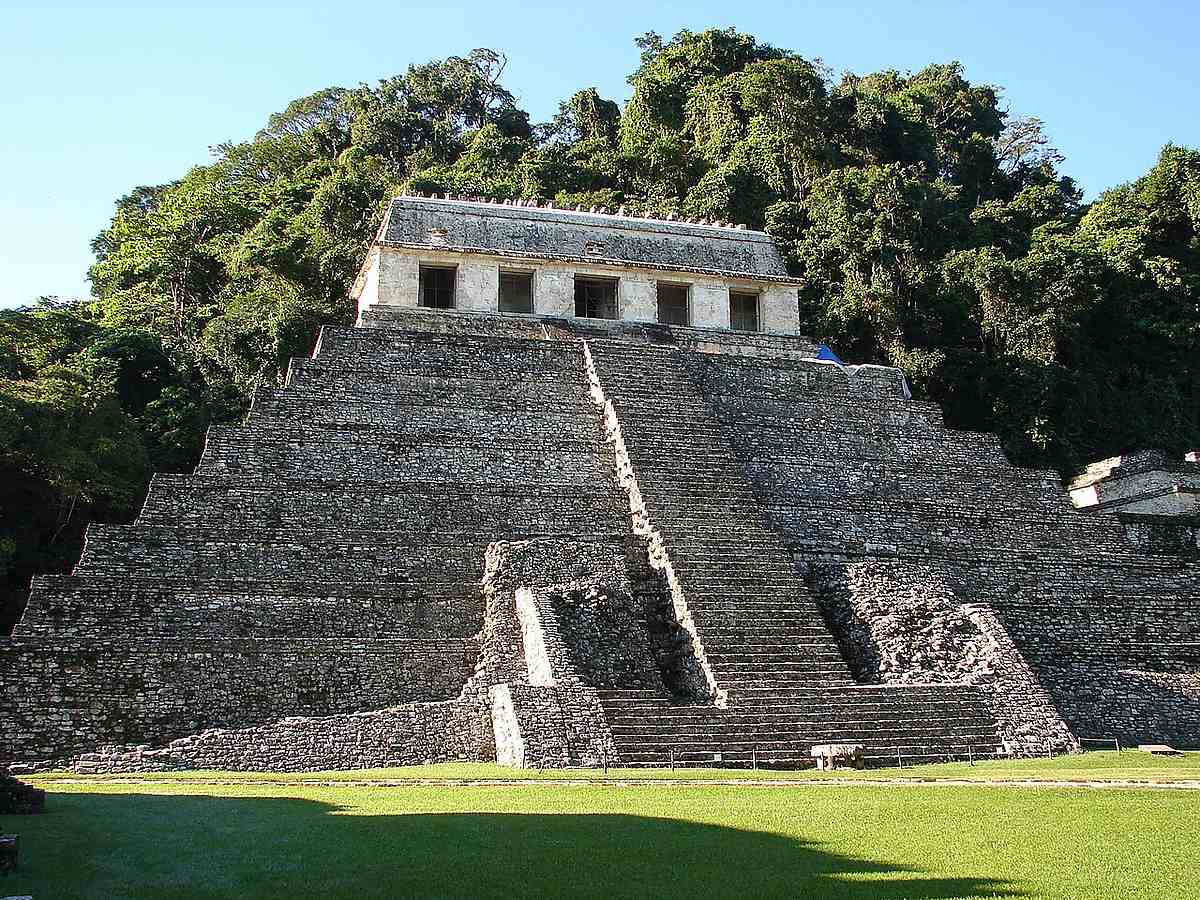
Q: What ruler's tomb was discovered inside Palenque's Temple of the Inscriptions in 1952?
A: K'inich Janaab' Pakal, commonly called Pakal the Great.
Q: What type of monument often recorded royal events and calendar dates in carved stone?
A: A stela.
Q: What city is famous for a long Hieroglyphic Stairway recording dynastic history?
A: Copán.
Q: What structures dominate many Maya ceremonial centers?
A: Temples, pyramidal platforms, palaces, plazas, ball courts, and carved monuments.
Q: What was a Maya palace likely used for?
A: Royal residence, administration, court ceremony, storage, and other elite functions depending on the building.
Q: Were Maya pyramids primarily empty geometric monuments?
A: No. Many supported temples, contained burials, or formed part of ceremonial and political complexes.
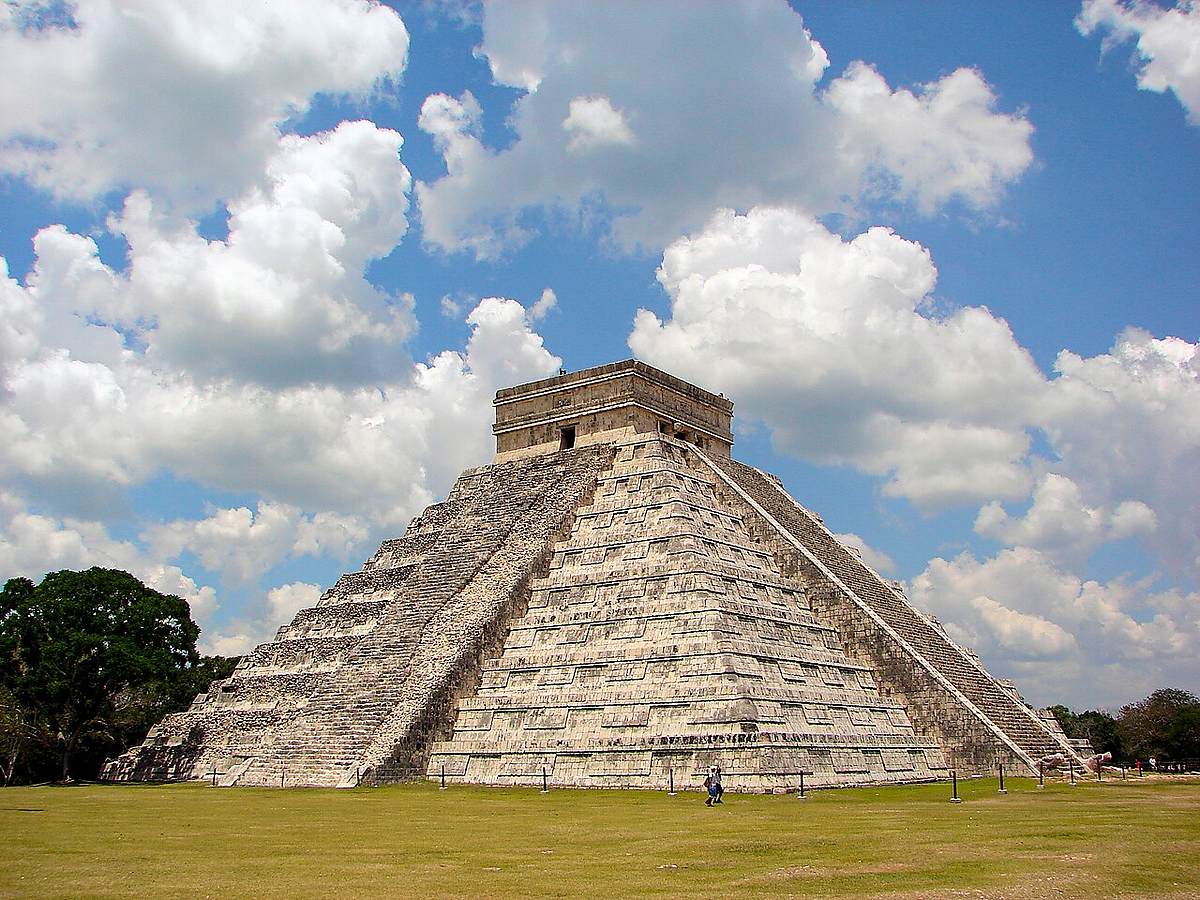
Q: What building at Chichén Itzá is commonly called El Castillo?
A: The Temple of Kukulcán.
Q: What astronomical body did Chichén Itzá's residents observe with particular care according to Smithsonian materials?
A: Venus.
Q: What great plaza activity took place in specialized courts at many Maya cities?
A: The Mesoamerican ballgame.
Q: Did all Maya cities have the same architecture and political history?
A: No. Regional styles, dynasties, materials, alliances, and historical trajectories varied greatly.
Maya Writing, Numbers & Calendars
Q: Did the ancient Maya have a fully developed writing system?
A: Yes.
Q: What type of script did Maya scribes use?
A: A hieroglyphic logo-syllabic system combining signs for words and sounds.
Q: Where did Maya writing appear?
A: On monuments, buildings, ceramics, books, ornaments, and other objects.
Q: What were Maya books traditionally made from?
A: Folded bark-paper pages coated for writing and painting.
Q: What are surviving pre-Columbian Maya books commonly called?
A: Codices.
Q: What mathematical concept did Maya number systems represent with a special sign?
A: Zero.
Q: What base did the Maya number system largely use?
A: Base 20, or vigesimal notation.
Q: What simple marks commonly represented numbers one through four?
A: Dots.
Q: What mark commonly represented five?
A: A bar.
Q: What is the 260-day sacred Maya calendar called?
A: Tzolk'in.
Q: What is the approximately 365-day solar calendar called?
A: Haab.
Q: What cycle results from interweaving the Tzolk'in and Haab calendars?
A: The Calendar Round.
Q: About how long does a Calendar Round last?
A: 52 Haab years.
Q: What calendar system counts days continuously from a mythological starting point?
A: The Long Count.
Q: Why was December 21, 2012 not an ancient Maya prediction of the end of the world?
A: It marked a significant Long Count cycle completion in one correlation, not a documented Maya prophecy that Earth would be destroyed.
Astronomy, Religion & the Sacred World
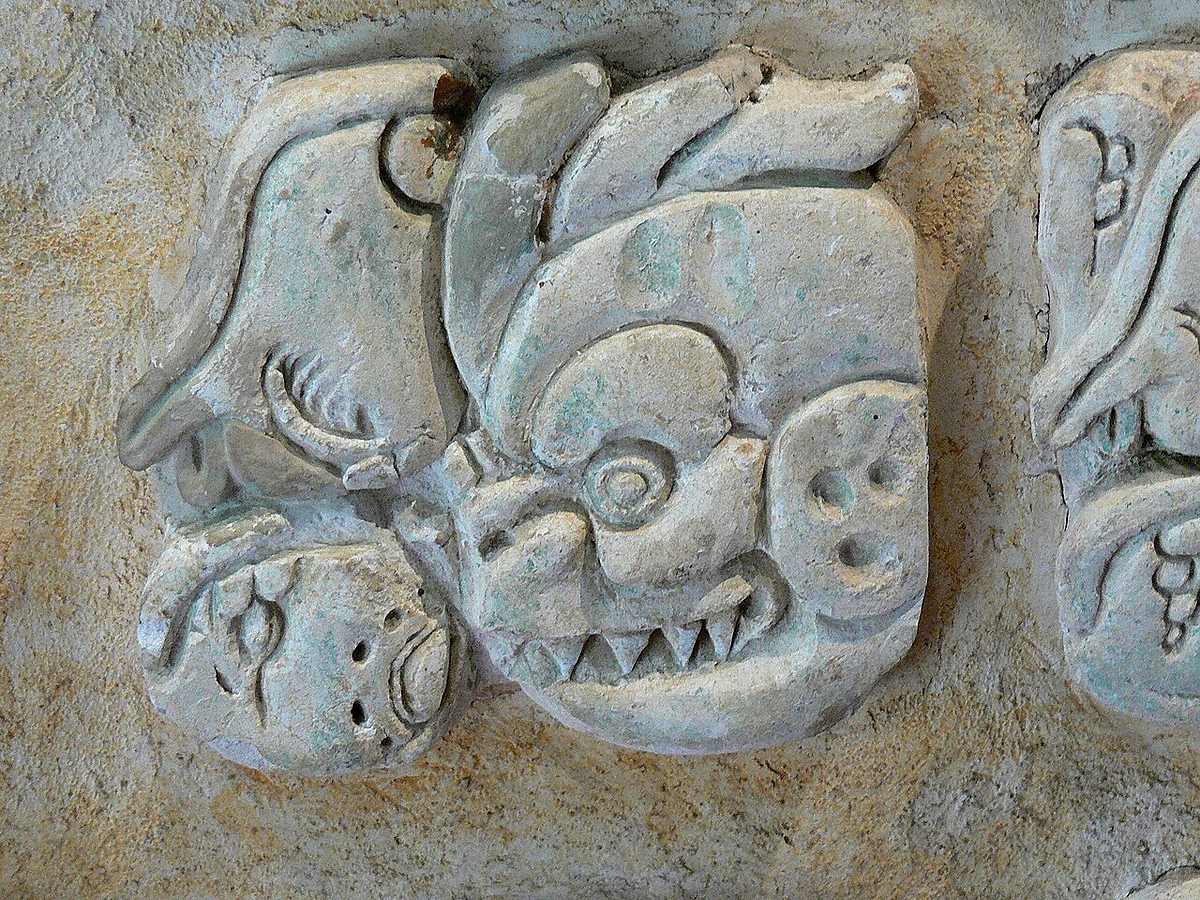
Q: What celestial body besides the Sun and Moon received particularly careful Maya observation?
A: Venus.
Q: Why was astronomy important to Maya rulers and priests?
A: Celestial cycles informed calendars, ritual timing, agriculture, political symbolism, and divination.
Q: What birdlike serpent deity is known as Kukulcán in Yucatán?
A: A feathered-serpent deity related to the central Mexican Quetzalcoatl tradition.
Q: What tree often symbolizes the connection between different cosmic levels in Maya thought?
A: The ceiba tree.
Q: What ancient K'iche' Maya text preserves creation stories including the Hero Twins?
A: The Popol Wuj, often spelled Popol Vuh.
Q: Who are the Hero Twins in the Popol Wuj tradition?
A: Hunahpu and Xbalanque.
Q: What activity do the Hero Twins famously play in the underworld story?
A: The ballgame.
Q: What is Xibalba in K'iche' Maya tradition?
A: The underworld realm associated with powerful death lords.
Q: Did Maya religion involve only one god?
A: No. Maya communities honored many deities, ancestors, sacred forces, and localized divine beings.
Q: What did bloodletting rituals sometimes involve among Maya elites?
A: Deliberately drawing blood as an offering during important ceremonies.
Q: Did human sacrifice occur in Maya ritual practice?
A: Yes, in certain political and religious contexts, although it should not be treated as the sole or defining feature of Maya religion.
Q: What did rulers communicate through public ritual?
A: Connections with gods, ancestors, cosmic order, dynastic legitimacy, warfare, and community welfare.
Q: What sacred landscape feature at Chichén Itzá received offerings and sacrifices?
A: The Sacred Cenote.
Q: Were ancient Maya beliefs identical everywhere?
A: No. Beliefs shared broad themes but varied across centuries, languages, cities, and regions.
Q: Why are Maya art and inscriptions essential to understanding religion?
A: They preserve images and texts about gods, rulers, myths, ceremonies, creation, ancestors, and supernatural events from Maya perspectives.
Farming, Food, Trade & Daily Life
Q: What staple crop is central to Maya creation stories and daily food?
A: Maize.
Q: What two crops are often grown alongside maize in Mesoamerican farming systems?
A: Beans and squash.
Q: Why are maize, beans, and squash agriculturally complementary?
A: They can support soil fertility, provide ground cover, and together offer a more balanced food system.
Q: What seed was used to make elite beverages and could also function as a valuable trade item?
A: Cacao.
Q: Did ancient Maya chocolate usually resemble a modern sweet candy bar?
A: No. Cacao was commonly prepared as a drink, often with different flavorings and little resemblance to modern milk chocolate.
Q: What volcanic glass was traded widely for sharp tools and ritual objects?
A: Obsidian.
Q: What green stone was especially prized for elite jewelry and ritual objects?
A: Jadeite.
Q: What bird's brilliant green feathers were highly valued?
A: The quetzal.
Q: What domesticated bird was an important source of food?
A: Turkey.
Q: Did the Maya use wheeled carts for transportation on a large scale?
A: No. Wheels existed in some small objects, but large draft-animal cart transport did not develop as in Eurasia.
Q: What did Maya merchants move between regions?
A: Obsidian, jade, cacao, salt, shells, textiles, ceramics, feathers, food products, and luxury goods.
Q: How did Maya farmers adapt to different environments?
A: They used techniques such as raised fields, terracing, household gardens, forest management, irrigation, reservoirs, and shifting cultivation depending on location.
Q: What water-management challenge faced cities in some seasonally dry lowland areas?
A: Storing enough rainwater through long dry seasons.
Q: What did many Maya households manufacture in addition to farming?
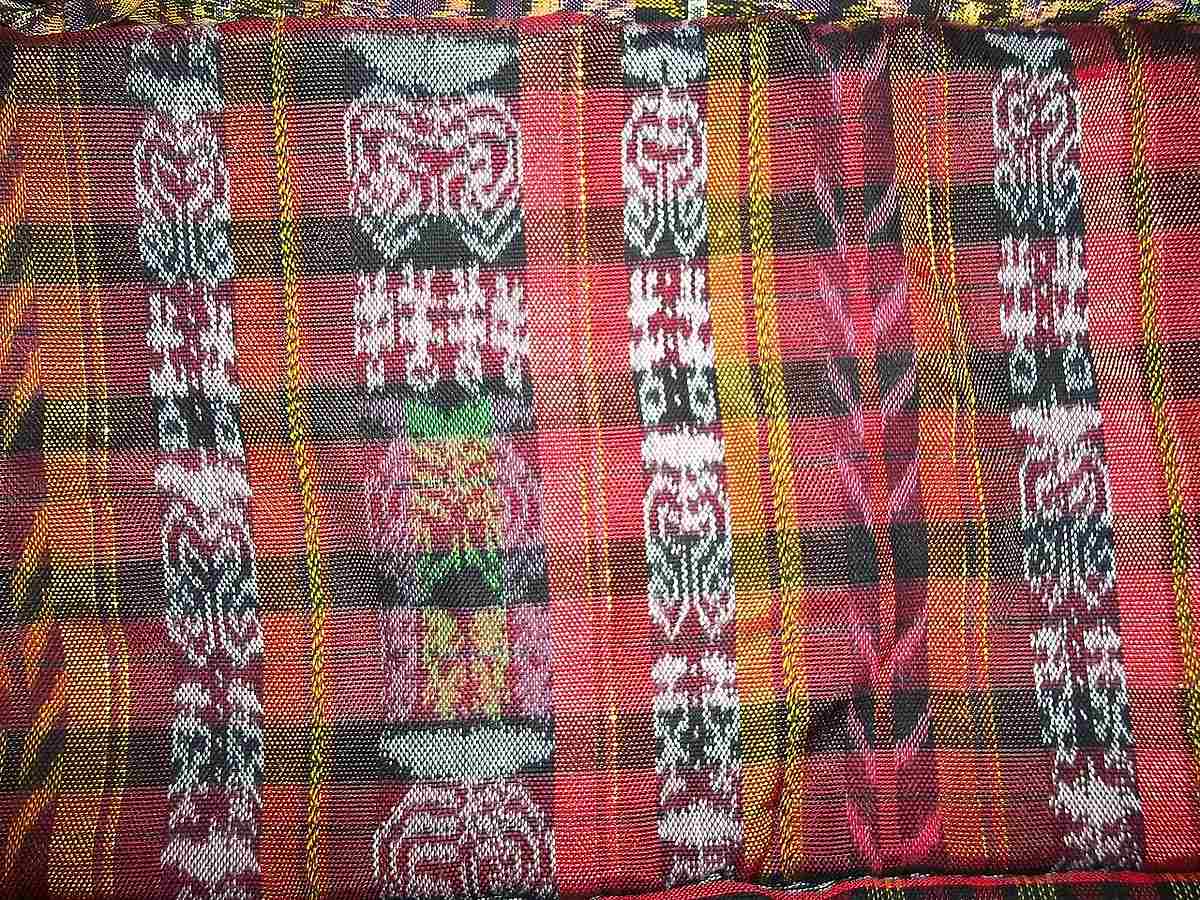
A: Pottery, textiles, stone tools, food products, and other crafts varied by household and community.
Art, Architecture, Kings & Warfare
Q: What title is often translated as holy lord or divine king in Classic Maya inscriptions?
A: Ajaw, with k'uhul ajaw used for divine or sacred lord in many contexts.
Q: What did Maya stelae often depict?
A: Rulers in elaborate regalia alongside hieroglyphic texts and dates.
Q: What did carved lintels record at cities such as Yaxchilán?
A: Royal ceremonies, warfare, bloodletting, dynastic events, and supernatural visions.
Q: What material was commonly painted with detailed courtly and mythological scenes?
A: Ceramic vessels.
Q: Did some ancient Maya artists sign their work?
A: Yes. The Metropolitan Museum notes that some Maya sculptors and painters signed works, unusually for ancient art.
Q: What material commonly covered Maya masonry architecture to create smooth surfaces?
A: Stucco.
Q: Were Maya temples originally bare gray stone?
A: No. Many were covered with plaster and painted in vivid colors.
Q: What architectural form creates a high stepped platform supporting a temple?
A: A stepped pyramid.
Q: What corbel technique was commonly used to span interior spaces?
A: The corbel vault.
Q: What did royal courts use warfare to achieve?
A: Territory, tribute, captives, prestige, political leverage, and dynastic advantage.
Q: Was Maya warfare limited to the end of the Classic period?
A: No. Warfare occurred throughout Maya history.
Q: What was a captive ruler sometimes shown doing in Maya art?
A: Kneeling or being displayed beneath a victorious ruler as a political statement.
Q: What city's ruler Pakal is especially famous for a carved sarcophagus lid?
A: Palenque.
Q: What does Maya royal art let historians reconstruct?
A: Dynastic sequences, marriages, wars, alliances, accessions, rituals, ancestry, and political claims.
Q: Why is monumental art more than decoration in Maya history?
A: It functioned as public political communication, sacred imagery, historical record, and dynastic memory.
Postclassic Maya, Spanish Conquest & Living Maya
Q: Did all Maya cities collapse at the end of the Classic period?
A: No.
Q: What famous northern city flourished strongly in the Postclassic era?
A: Chichén Itzá.
Q: What Maya city became a major Postclassic power after Chichén Itzá?
A: Mayapan.
Q: What walled coastal Maya city was occupied when Spaniards reached the region?
A: Tulum.
Q: Did Spanish conquest of Maya regions happen in one quick campaign?
A: No. Different Maya polities resisted for generations.
Q: What Maya kingdom centered at Nojpetén remained independent until 1697?
A: The Itza kingdom.
Q: What European country conquered Maya territories during the colonial era?
A: Spain.
Q: What happened to many Maya books during colonial religious campaigns?
A: They were destroyed, contributing to the small number of surviving pre-Columbian codices.
Q: Did Maya writing disappear entirely after conquest?
A: No. Maya scribes adapted the Latin alphabet to record histories, titles, legal documents, and religious traditions.
Q: What K'iche' text was preserved using alphabetic writing during the colonial period?
A: The Popol Wuj.
Q: Do modern Maya communities still use traditional calendar knowledge?
A: Yes. Smithsonian materials document continuing sacred-calendar practices and agricultural timekeeping in some communities.
Q: What language family connects modern Maya languages?
A: The Mayan language family.
Q: Are all modern Maya communities culturally identical?
A: No. They speak many languages and maintain diverse local identities and traditions.
Q: What major modern challenge follows from saying the Maya mysteriously disappeared?
A: It erases living Maya peoples and reduces a complex historical transformation to a false extinction story.
Hard Maya Civilization Challenge
Q: What are the names of the 260-day and 365-day Maya calendars?
A: Tzolk'in and Haab.
Q: What cycle combines the Tzolk'in and Haab?
A: The 52-year Calendar Round.
Q: What type of number system uses dots, bars, and a zero sign in Maya notation?
A: A largely base-20 positional system.
Q: What city contains the Temple of the Inscriptions and Pakal's tomb?
A: Palenque.
Q: What city contains the famous Hieroglyphic Stairway?
A: Copán.
Q: What Guatemala city contains more than 4,000 documented ancient structures within its protected landscape according to Smithsonian materials?
A: Tikal.
Q: What is El Castillo at Chichén Itzá more formally called?
A: The Temple of Kukulcán.
Q: What sacred sinkhole at Chichén Itzá received offerings?
A: The Sacred Cenote.
Q: What is the Popol Wuj?
A: A K'iche' Maya community book preserving creation stories, heroic cycles, dynastic memory, and sacred tradition.
Q: What are the names of the Popol Wuj's Hero Twins?
A: Hunahpu and Xbalanque.
Q: What architectural technique creates Maya vaulted ceilings by projecting successive stone courses inward?
A: Corbel vaulting.
Q: What word broadly means lord or ruler in Maya inscriptions?
A: Ajaw.
Q: What natural resource created both water access and sacred places in northern Yucatán?
A: Cenotes.
Q: What is the most important correction to the popular phrase "the Maya disappeared"?
A: Political centers changed and many ancient cities declined, but Maya peoples survived and millions of descendants live across Mesoamerica today.
How Did You Score?
If Tzolk'in, Haab, ajaw, Pakal, Copán's staircase, the ceiba world tree, the Itza kingdom, and the reason 2012 was not a Maya apocalypse prophecy all came easily, your Maya history belongs on a stela.
Keep exploring with our Ancient Egypt trivia, Ancient Greece trivia, and world history trivia.

Ellie Simons creates and edits Random Trivia. She researches trivia using primary and authoritative sources whenever possible and is currently reviewing the site's older trivia library for accuracy, clarity, and playability. Read more on the About page.
About this quiz
Site editor: Ellie Simons. Read our Trivia Methodology to learn how questions are researched and updated. Page last updated: . Report an error.