
Hello, I'm Johnny Cash trivia. These 114 questions cover Sun Records, “Folsom Prison Blues,” “I Walk the Line,” “Ring of Fire,” June Carter Cash, prison concerts, the Tennessee Three, black clothes, addiction and recovery, gospel faith, American Recordings, “Hurt,” movies, military service, and the voice that made country music sound like it had been carved out of dark wood.
Arkansas, Air Force & Sun Records
Q: What is Johnny Cash's full birth name?
A: J. R. Cash.
Q: When was Johnny born?
A: February 26, 1932.
Q: What state was he born in?
A: Arkansas.
Q: What farming community did his family move to?
A: Dyess, Arkansas.
Q: What major economic era shaped his childhood?
A: Great Depression.
Q: What crop did the Cash family work around?
A: Cotton.
Q: What tragedy affected Johnny as a child?
A: His older brother Jack died after a sawmill accident.
Q: What branch of the military did Johnny join?
A: U.S. Air Force.
Q: Where was he stationed overseas?
A: Germany.
Q: What work did he do there?
A: Radio intercept/Morse-code-related intelligence work.
Q: What historical event did Cash later say he was among the first Americans to hear about through intercepted communications?
A: Joseph Stalin's death.
Q: Why did he use Johnny rather than J. R. in the military?
A: The Air Force required a full first name, so he used John.
Q: What city did Cash move to after military service?
A: Memphis.
Q: What label did he audition for?
A: Sun Records.
Q: Who ran Sun Records?
A: Sam Phillips.
Q: What other future legends recorded at Sun?
A: Elvis Presley, Jerry Lee Lewis, Carl Perkins, and others.
Q: What backing group became Cash's core?
A: Tennessee Two, later Tennessee Three.
Q: Who played guitar?
A: Luther Perkins.
Q: Who played bass?
A: Marshall Grant.
Q: What was Cash's first Sun single?
A: “Cry! Cry! Cry!” followed “Hey Porter” on the first release.
Q: What train-themed song appeared early?
A: “Hey Porter.”
Q: What prison song became a signature?
A: “Folsom Prison Blues.”
Q: What famous line does it contain about Reno?
A: The narrator says he shot a man in Reno “just to watch him die.”
Q: Did Cash actually serve a prison sentence for murder?
A: No.
Q: Why did prison themes fascinate him?
A: Crime stories, empathy for prisoners, films, guilt, and outsider identity influenced his writing.
Q: What 1956 hit defines commitment?
A: “I Walk the Line.”
Q: What musical trick helps Cash find starting pitches in the recording?
A: He hums between key changes.
Q: What does “walk the line” mean?
A: Staying faithful and morally disciplined.
Q: What made Sun-era Cash distinctive?
A: Sparse boom-chicka-boom rhythm, deep voice, train-like momentum, and concise storytelling.
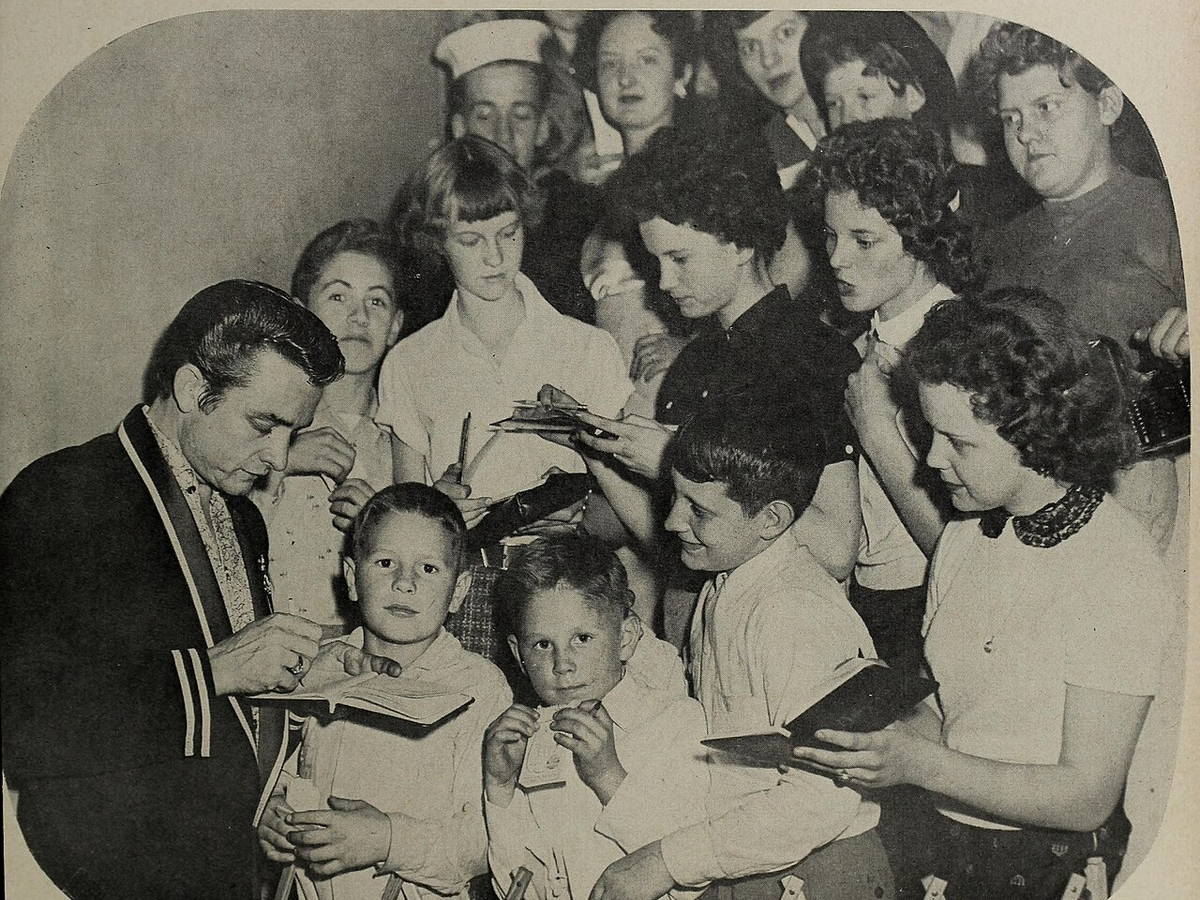
June Carter, Ring of Fire & the Man in Black
Q: What famous music family did June Carter come from?
A: Carter Family tradition.
Q: Who was June's mother?
A: Maybelle Carter.
Q: What was June's relationship to Johnny before marriage?
A: Touring partner, friend, collaborator, and romantic partner.
Q: What song is famously associated with June's feelings for Johnny?
A: “Ring of Fire.”
Q: Who wrote “Ring of Fire”?
A: June Carter and Merle Kilgore.
Q: What unusual instruments give Cash's version its sound?
A: Mariachi-style trumpets.
Q: What metaphor does the song use?
A: Falling in love as falling into a burning ring.
Q: When did Johnny and June marry?
A: 1968.
Q: Where did Johnny famously propose to June?
A: Onstage in London, Ontario.
Q: Did June help Johnny with addiction struggles?
A: Yes, though recovery was complex and involved family, faith, treatment, and personal effort.
Q: What substances did Johnny struggle with?
A: Amphetamines and barbiturates among others.
Q: What did addiction affect?
A: Health, behavior, touring, marriage, and career.
Q: What religious faith remained important?
A: Christianity.
Q: What nickname became central to Cash's image?
A: Man in Black.
Q: Why did Johnny Cash say he wore black?
A: As a symbol for poor people, prisoners, the sick, victims of war, and those left behind.
Q: What song explains that image?
A: “Man in Black.”
Q: Did he literally wear only black every day of his life?
A: No, but black became his defining stage uniform.
Q: What did the clothing communicate?
A: Simplicity, solidarity, seriousness, and an anti-glam country identity.
Q: What Bob Dylan connection did Cash have?
A: Mutual admiration and musical friendship.
Q: What Dylan album features Cash?
A: Nashville Skyline.
Q: What song do they duet on there?
A: “Girl from the North Country.”
Q: What television series did Johnny host?
A: The Johnny Cash Show.
Q: What kind of guests appeared?
A: Country, folk, rock, gospel, and other artists.
Q: Name one notable guest.
A: Bob Dylan, Joni Mitchell, Neil Young, Louis Armstrong, or others.
Q: What did the show demonstrate?
A: Cash's broad musical tastes and ability to bridge genres.
Q: What song did Johnny and June often perform together?
A: “Jackson.”
Q: What Grammy did “Jackson” win?
A: Best Country & Western Performance Duet, Trio or Group.
Q: What gave Johnny and June's stage chemistry appeal?
A: Humor, affection, tension, and complementary voices.
Q: What did June become beyond a duet partner?
A: Wife, creative collaborator, stabilizing force, and major figure in Cash's life.
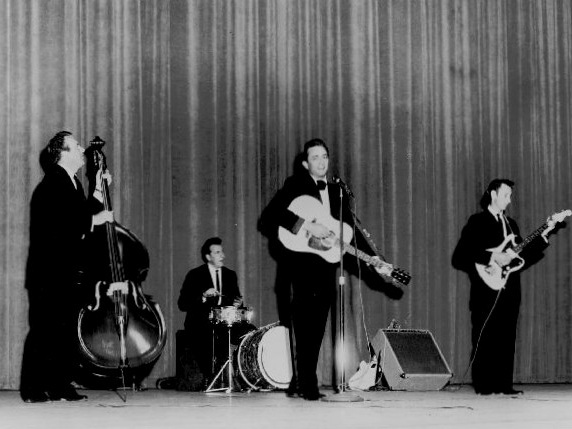
Folsom, San Quentin, Outlaw Image & Film
Q: What 1968 live album was recorded in a prison?
A: At Folsom Prison.
Q: What prison was it?
A: Folsom State Prison in California.
Q: What song naturally opens the show?
A: “Folsom Prison Blues.”
Q: Why was the audience reaction so intense?
A: Cash was singing directly to incarcerated people about prison life and alienation.
Q: Did the album help revive Cash's career?
A: Yes.
Q: What second major prison album followed?
A: At San Quentin.
Q: What song did Johnny Cash write about San Quentin prison?
A: “San Quentin.”
Q: How did prisoners respond?
A: Loudly and enthusiastically to Cash criticizing the prison.
Q: What novelty hit from the concert tells of a boy with an unusual name?
A: “A Boy Named Sue.”
Q: Who wrote it?
A: Shel Silverstein.
Q: What does the father claim the name accomplished?
A: Made his son tough enough to survive a hard world.
Q: Did Cash often identify with outlaws?
A: Yes, but he also emphasized faith, law, family, and redemption.
Q: What is misleading about calling him simply an outlaw?
A: His worldview contains contradictions rather than a single anti-law identity.
Q: What Native American-themed album did Cash release?
A: Bitter Tears: Ballads of the American Indian.
Q: What subject did it address?
A: Indigenous history and injustice.
Q: What song from it became notable?
A: “The Ballad of Ira Hayes.”
Q: Who was Ira Hayes?
A: Pima Marine who helped raise the U.S. flag on Iwo Jima and later struggled after war.
Q: Did country radio immediately embrace the project?
A: Not fully; Cash actively promoted it when radio support was weak.
Q: What 2005 biopic tells his early story?
A: Walk the Line.
Q: Who plays Johnny?
A: Joaquin Phoenix.
Q: Who plays June?
A: Reese Witherspoon.
Q: Did they sing their own parts?
A: Yes.
Q: What Oscar did Witherspoon win?
A: Best Actress.
Q: Was the film released while Johnny and June were alive?
A: No. Both died in 2003.
Q: Did the film compress history?
A: Yes, as biopics often do.
Q: What song gives the film its title?
A: “I Walk the Line.”
Q: What does Cash's prison-concert legacy demonstrate?
A: He could transform empathy with marginalized audiences into some of his most commercially successful work.
Q: What did prison audiences give him?
A: Raw feedback, credibility, and an electric live atmosphere.
Q: Why are Folsom and San Quentin central?
A: They turned the Man in Black image into lived performance history.
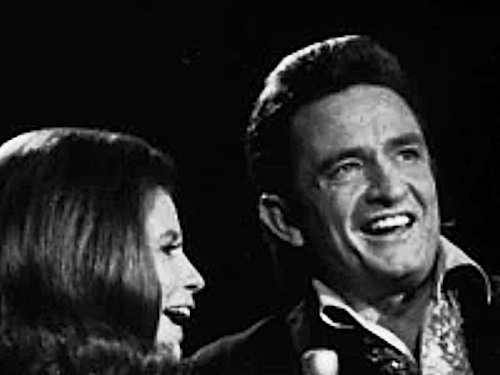
American Recordings, Hurt, Legacy & Hard Cash Trivia
Q: Who revived Cash's recording career in the 1990s?
A: Producer Rick Rubin.
Q: What label/project name did their first album use?
A: American Recordings.
Q: What was unusual about the first American Recordings sound?
A: Mostly Johnny's voice and acoustic guitar.
Q: What songs did Rubin encourage him to cover?
A: Material from rock, alternative, traditional, country, gospel, and singer-songwriters.
Q: What Nine Inch Nails song did Cash reinterpret?
A: “Hurt.”
Q: Who wrote “Hurt”?
A: Trent Reznor.
Q: On which album does Johnny Cash’s cover of “Hurt” appear?
A: American IV: The Man Comes Around.
Q: What makes the video so powerful?
A: Elderly Cash, archival footage, decaying wealth, religious imagery, and June's presence create a meditation on mortality.
Q: Where was part of it filmed?
A: House of Cash museum property in Tennessee.
Q: What did Trent Reznor say broadly after seeing the video?
A: Cash's interpretation made the song feel profoundly his own.
Q: What title track appears on American IV?
A: “The Man Comes Around.”
Q: What biblical imagery does it use?
A: Revelation and judgment.
Q: What Depeche Mode song did Cash cover?
A: “Personal Jesus.”
Q: What U2 song did he cover?
A: “One.”
Q: What Soundgarden song did he cover?
A: “Rusty Cage.”
Q: When did June Carter Cash die?
A: May 15, 2003.
Q: When did Johnny Cash die?
A: September 12, 2003.
Q: How many months apart were their deaths?
A: About four months.
Q: How old was Johnny?
A: 71.
Q: What illnesses affected him late in life?
A: Diabetes-related complications and autonomic neuropathy among serious health issues.
Q: Was Johnny only a country artist?
A: No.
Q: What other traditions run through his work?
A: Gospel, rockabilly, folk, blues, rock, protest song, spoken storytelling, and Americana.
Q: What nickname defines him?
A: Man in Black.
Q: What song defines Sun Records Cash?
A: “I Walk the Line” or “Folsom Prison Blues.”
Q: What song defines the June partnership?
A: “Ring of Fire” and duet “Jackson.”
Q: What recording defines the late-career Rubin era?
A: “Hurt.”
Q: What simple introduction became legendary?
A: “Hello, I'm Johnny Cash.”
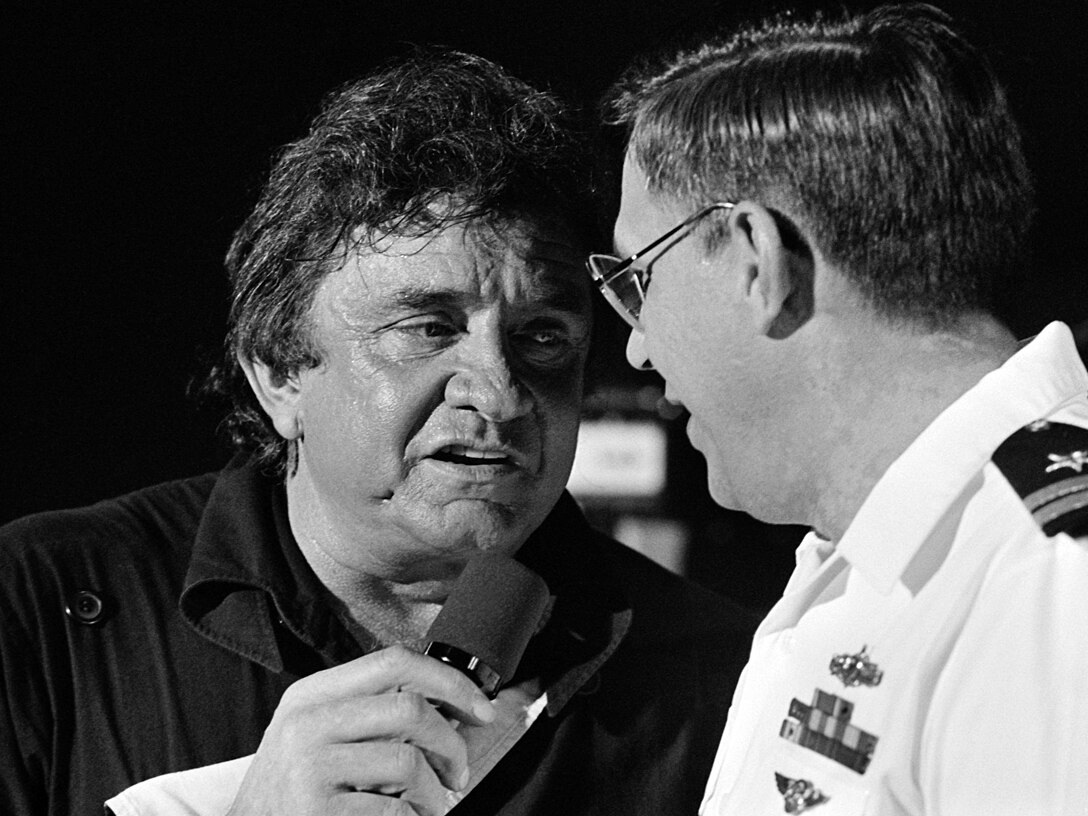
How Did You Score?
If Dyess, Morse code, the Tennessee Two, mariachi trumpets, Ira Hayes, Folsom, Rick Rubin, and “Hurt” all came easily, you walked the line.

Ellie Simons creates and edits Random Trivia. She researches trivia using primary and authoritative sources whenever possible and is currently reviewing the site's older trivia library for accuracy, clarity, and playability. Read more on the About page.
Explore more questions in our music trivia guide.
About this quiz
Site editor: Ellie Simons. Read our Trivia Methodology to learn how questions are researched and updated. Page last updated: . Report an error.