
Deserts can be hot, cold, sandy, rocky, coastal, or covered by an ice sheet. These 120 desert trivia questions cross dunes, salt flats, dry valleys, oases, and rain shadows while keeping the emergency water bottle strictly metaphorical.
Explore farther with our geography trivia, Earth science trivia, and mountain trivia.
Desert Science, Climate, and Survival
A desert is defined by scarce precipitation, not by a compulsory supply of sand. That distinction matters when Antarctica enters the conversation and turns a beach-shaped mental picture into a very cold geography lesson.
Q: What condition defines a desert?
A: It receives very little precipitation compared with the water that could evaporate.
Q: How much annual precipitation do many desert definitions use as a rough upper limit?
A: About 10 inches.
Q: What are the four broad types of desert?
A: Hot and dry, semiarid, coastal, and cold deserts.
Q: Why can nights become cold in hot deserts?
A: Dry air and sparse cloud cover allow heat to escape quickly after sunset.
Q: What process breaks rocks apart through repeated heating and cooling?
A: Physical weathering.
Q: What is desert pavement?
A: A surface layer of closely packed stones left after finer material is removed.
Q: What is a wind-shaped ridge of sand called?
A: A dune.
Q: What crescent-shaped dune has horns pointing downwind?
A: A barchan dune.
Q: What long dune forms roughly parallel to the prevailing wind?
A: A longitudinal or linear dune.
Q: What star-shaped dune forms under winds from several directions?
A: A star dune.
Q: What temporary desert lake bed is called a playa?
A: A flat basin that holds water briefly after rain.
Q: What salt-covered desert basin is called?
A: A salt flat or salt pan.
Q: What is a wadi?
A: A normally dry channel or valley that can carry water after rain.
Q: What fertile desert place forms around a dependable water source?
A: An oasis.
Q: What underground water-bearing rock layer can supply an oasis?
A: An aquifer.
Q: What sudden dangerous flood can race through a dry wash?
A: A flash flood.
Q: Why are flash floods dangerous in deserts?
A: Rain may fall far upstream and send water into an apparently dry channel.
Q: What is desertification?
A: Land degradation that makes drylands less productive and more desert-like.
Q: How can overgrazing contribute to desertification?
A: It removes protective vegetation and exposes soil to erosion.
Q: What plant adaptation reduces water loss from leaves?
A: Small leaves, spines, waxy surfaces, or closing stomata.
Q: What stem adaptation helps many cacti survive drought?
A: Thick tissue stores water.
Q: What root strategy lets some desert plants capture brief rain?
A: Wide, shallow roots absorb water quickly near the surface.
Q: What animal behavior avoids the hottest part of a desert day?
A: Nocturnal activity.
Q: How do large ears help some desert mammals?
A: They release body heat.
Q: What does an estivation period help an animal survive?
A: Extreme heat or drought.
Q: What optical effect can make distant desert surfaces look like water?
A: A mirage.
Q: How does a mirage form?
A: Light bends through layers of air at different temperatures.
Q: What causes most sand movement in deserts?
A: Wind moving grains by bouncing, rolling, and suspension.
Q: Why are many deserts located near 30 degrees latitude?
A: Descending air in subtropical high-pressure zones suppresses clouds and rain.
Q: What mountain effect creates a dry region on the leeward side?
A: A rain shadow.
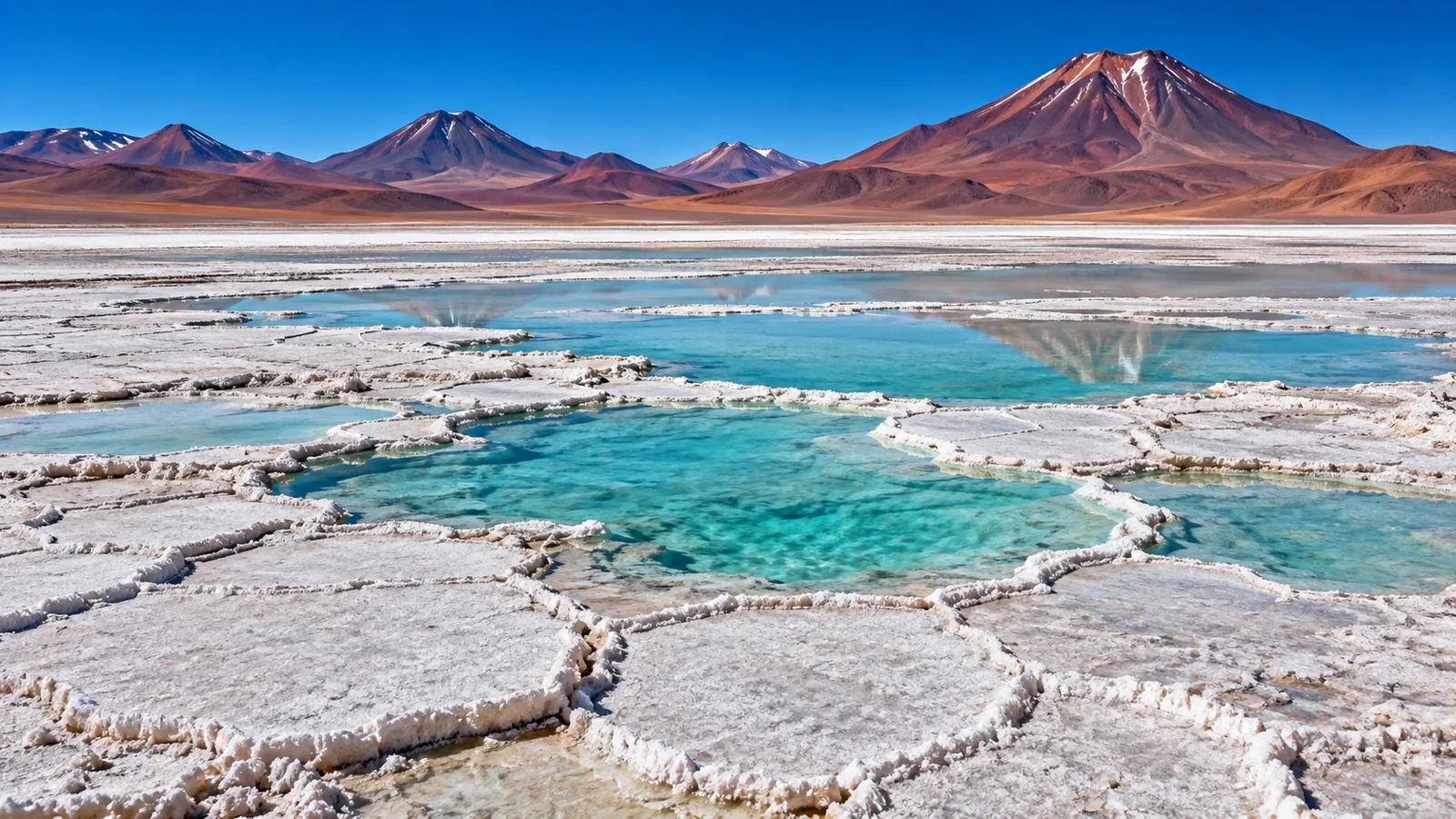
The Sahara and Deserts of Africa
Africa’s drylands include oceans of dunes, rocky plateaus, salt pans, foggy coasts, and places where rivers vanish into sand. My imaginary camel has already requested a better contract and a larger water break.
Q: Which desert is the world’s largest hot desert?
A: The Sahara.
Q: Which continent contains the Sahara?
A: Africa.
Q: Which ocean borders the Sahara to the west?
A: The Atlantic Ocean.
Q: Which sea borders the Sahara to the north?
A: The Mediterranean Sea.
Q: Which river crosses the eastern Sahara on its way to the Mediterranean?
A: The Nile River.
Q: What Arabic-derived word names a vast sand sea in the Sahara?
A: Erg.
Q: What term describes a rocky desert plateau in the Sahara?
A: Hamada.
Q: What gravel-covered desert surface is called a reg?
A: A stony plain of gravel and pebbles.
Q: Which mountain range lies in the central Sahara of Algeria?
A: The Ahaggar Mountains.
Q: Which extinct volcanic mountain is the Sahara’s highest point?
A: Emi Koussi in Chad.
Q: Which large depression in Egypt lies below sea level?
A: The Qattara Depression.
Q: Which Egyptian oasis was home to the ancient oracle visited by Alexander the Great?
A: Siwa Oasis.
Q: Which people are traditionally associated with caravan travel across much of the central Sahara?
A: The Tuareg.
Q: What valuable mineral was historically carried north by Saharan caravans?
A: Gold was traded north, while salt was carried south.
Q: Which West African city became a major southern terminus of Saharan trade?
A: Timbuktu.
Q: Which desert occupies much of Botswana and parts of Namibia and South Africa?
A: The Kalahari.
Q: Why is much of the Kalahari considered semiarid rather than true hyperarid desert?
A: It receives more seasonal rain and supports extensive grasses and shrubs.
Q: Which inland delta spreads across the Kalahari Basin?
A: The Okavango Delta.
Q: Which salt-pan system covers a large area of northeastern Botswana?
A: The Makgadikgadi Pans.
Q: Which desert runs along the Atlantic coast of Namibia and Angola?
A: The Namib Desert.
Q: Why can the Namib coast remain extremely dry beside an ocean?
A: The cold Benguela Current limits rainfall and helps produce fog instead.
Q: Which coastal fog supplies water to many Namib organisms?
A: Atlantic fog.
Q: Which famous Namibian pan contains dark dead camel thorn trees?
A: Deadvlei.
Q: Which dune area surrounds Deadvlei?
A: Sossusvlei.
Q: Which unusual Namib plant can live for more than a thousand years?
A: Welwitschia.
Q: Which desert animal collects moisture from fog on its body?
A: The Namib fog-basking beetle.
Q: Which South African desert region is famous for spring wildflower displays?
A: Namaqualand.
Q: Which semidesert plateau covers much of South Africa’s interior?
A: The Karoo.
Q: Which narrow desert lies along the Red Sea coast of Egypt and Sudan?
A: The Eastern Desert.
Q: Which African desert is sometimes called the Libyan Desert in its northeastern region?
A: The eastern Sahara.
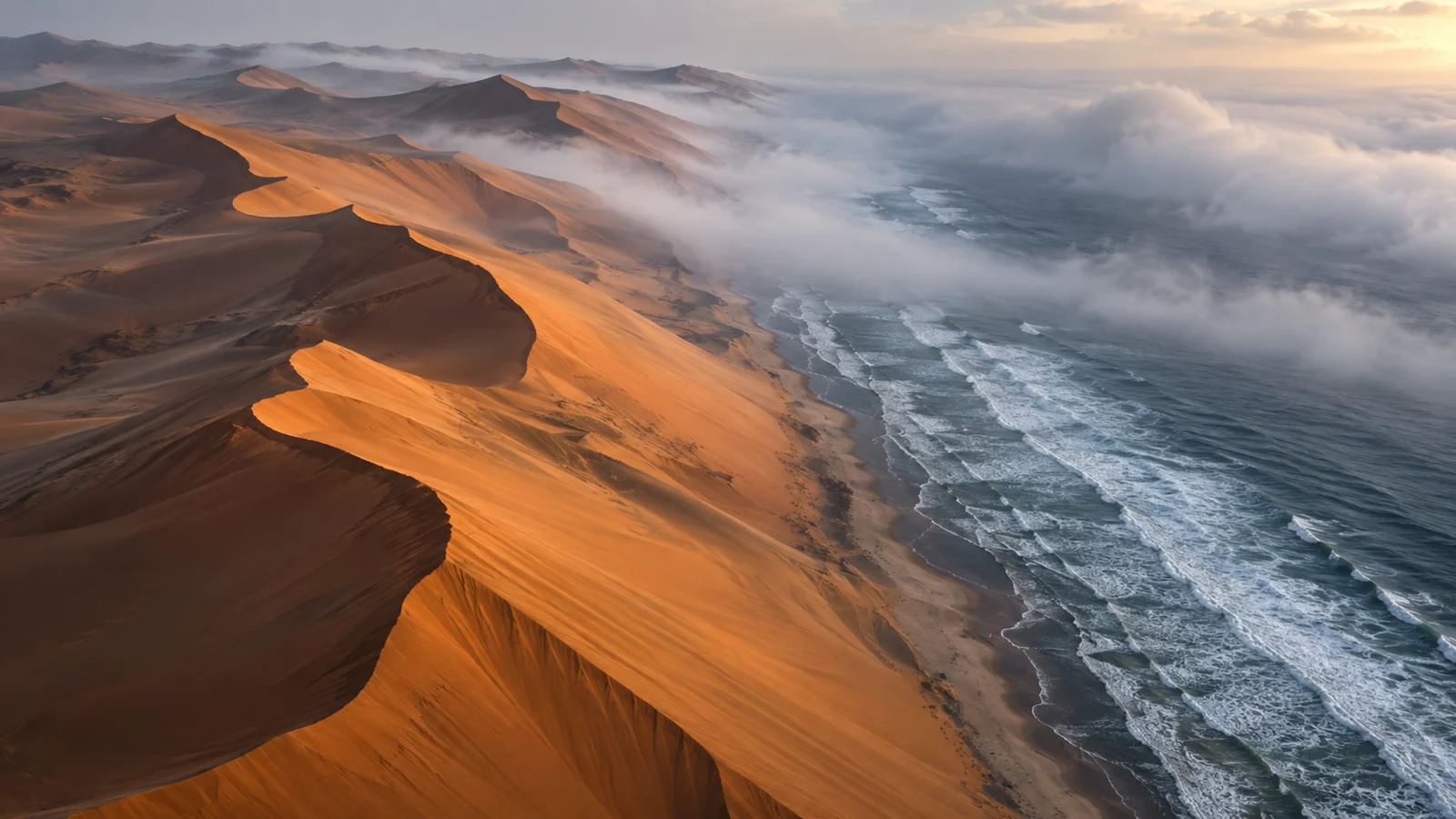
Deserts of Asia and the Middle East
Asian deserts stretch from scorching Arabian dunes to high, cold basins behind the Himalaya. The temperature range alone could fill a suitcase with sunscreen, snow gloves, and regret.
Q: Which desert covers much of the Arabian Peninsula?
A: The Arabian Desert.
Q: Which enormous sand desert occupies southern Saudi Arabia and neighboring countries?
A: The Rub’ al Khali, or Empty Quarter.
Q: What does Rub’ al Khali mean in English?
A: The Empty Quarter.
Q: Which Saudi desert is known for red dunes near Riyadh?
A: The Ad-Dahna Desert.
Q: Which rocky desert lies east of Jordan’s capital?
A: The Syrian Desert extends across Jordan and neighboring countries.
Q: Which protected Jordanian desert valley is called the Valley of the Moon?
A: Wadi Rum.
Q: Which people have long lived and traveled in Arabian deserts?
A: Bedouin communities.
Q: Which desert spans northern China and southern Mongolia?
A: The Gobi Desert.
Q: What type of desert is much of the Gobi?
A: A cold desert.
Q: Which mountain ranges help create the Gobi’s rain shadow?
A: The Himalaya and Tibetan Plateau contribute to blocking moist air from the south.
Q: Which dinosaur discoveries made Mongolia’s Gobi famous?
A: Fossil eggs, nests, and skeletons from several dinosaur species.
Q: Which explorer led major 1920s fossil expeditions in the Mongolian Gobi?
A: Roy Chapman Andrews.
Q: Which desert lies in China’s Tarim Basin?
A: The Taklamakan Desert.
Q: Which mountain ranges border the Tarim Basin?
A: The Tian Shan, Kunlun, and Pamir ranges.
Q: Which ancient trade routes skirted the Taklamakan?
A: Branches of the Silk Road.
Q: Which Chinese desert is the source of dust that can cross the Pacific?
A: The Gobi Desert.
Q: Which salt desert lies in northwestern India and southeastern Pakistan?
A: The Thar Desert.
Q: What seasonal salt marsh borders the Thar in Gujarat?
A: The Rann of Kutch.
Q: Which desert city in Rajasthan is called the Golden City?
A: Jaisalmer.
Q: Which camel species is native to Central Asian deserts?
A: The two-humped Bactrian camel.
Q: Which camel is most associated with Arabian and North African deserts?
A: The one-humped dromedary.
Q: Which Iranian desert is known for salt polygons and extreme heat?
A: The Dasht-e Lut.
Q: Which Iranian desert is dominated by salt and mud flats?
A: The Dasht-e Kavir.
Q: Which landforms in the Lut were carved into long ridges by wind?
A: Kaluts, also called yardangs.
Q: Which high desert lies north of the Himalaya in India?
A: The Ladakh cold desert.
Q: Why is Ladakh so dry?
A: The Himalaya block much of the South Asian monsoon moisture.
Q: Which desert covers much of western and southern Israel?
A: The Negev Desert.
Q: Which erosion landform is a major feature of Israel’s Ramon Crater?
A: A makhtesh, or erosion cirque.
Q: Which desert surrounds the ancient city of Petra?
A: The deserts of southern Jordan, including the area near Wadi Araba.
Q: Which inland sea has desert shores and the lowest exposed land elevation?
A: The Dead Sea.
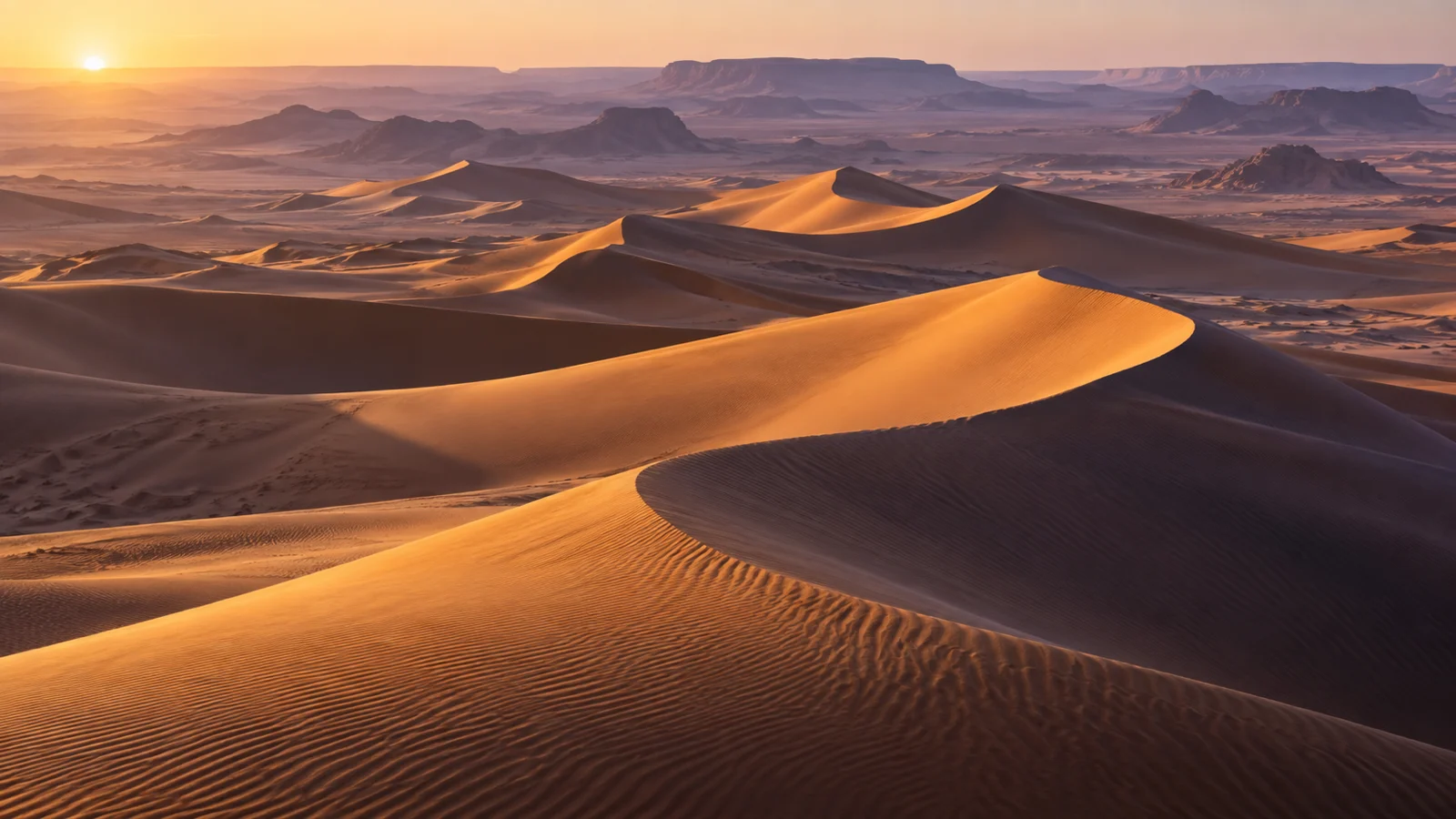
Deserts of the Americas, Australia, and the Polar Regions
The last round adds cactus forests, salt basins, red Australian dunes, and two polar deserts with almost no sand at all. Antarctica has won the technicality contest, and honestly it did so convincingly.
Q: Which desert is the driest nonpolar desert on Earth?
A: The Atacama Desert.
Q: Which country contains most of the Atacama?
A: Chile.
Q: Which ocean current helps keep the Atacama dry?
A: The cold Humboldt Current.
Q: Which high plateau east of the Atacama contains salt flats and volcanoes?
A: The Altiplano.
Q: Which Bolivian salt flat is the world’s largest?
A: Salar de Uyuni.
Q: What valuable element is found in brines beneath many Andean salt flats?
A: Lithium.
Q: Which desert covers much of coastal Peru?
A: The Sechura Desert.
Q: Which ancient geoglyphs lie in Peru’s coastal desert?
A: The Nazca Lines.
Q: Which desert spans southeastern California, southern Nevada, and nearby states?
A: The Mojave Desert.
Q: Which tree is an emblem of the Mojave Desert?
A: The Joshua tree.
Q: Which North American desert contains Death Valley?
A: The Mojave Desert.
Q: What basin in Death Valley is the lowest point in North America?
A: Badwater Basin.
Q: Which desert covers much of southern Arizona and northern Mexico?
A: The Sonoran Desert.
Q: Which giant cactus is native to the Sonoran Desert?
A: The saguaro.
Q: Which desert lies mainly in New Mexico, Texas, and northern Mexico?
A: The Chihuahuan Desert.
Q: Which desert plant is famous around White Sands National Park?
A: Soaptree yucca.
Q: What mineral forms the white dunes at White Sands?
A: Gypsum.
Q: Which South American desert lies in Patagonia’s rain shadow?
A: The Patagonian Desert.
Q: Which mountain range creates much of Patagonia’s rain shadow?
A: The Andes.
Q: Which desert is Australia’s largest?
A: The Great Victoria Desert.
Q: Which Australian desert is famous for long parallel red dunes?
A: The Simpson Desert.
Q: What famous tall Simpson Desert dune is commonly called Big Red?
A: Nappanerica.
Q: Which Australian desert lies south of the Great Sandy Desert?
A: The Gibson Desert.
Q: Which Australian territory contains Uluru?
A: The Northern Territory.
Q: Which people are the traditional owners of Uluru?
A: The Aṉangu.
Q: Which continent contains the world’s largest desert?
A: Antarctica.
Q: Why is Antarctica classified as a desert?
A: It receives extremely little precipitation.
Q: Which is the world’s second-largest desert?
A: The Arctic polar desert.
Q: What Antarctic region contains ice-free valleys with almost no precipitation?
A: The McMurdo Dry Valleys.
Q: How can polar deserts be dry despite abundant ice?
A: Cold air holds little moisture, so snowfall is very limited.
How Did You Score?
If you knew a barchan from a yardang, found the Rub’ al Khali, and remembered Antarctica’s technical victory, your desert score is thriving. Mine needs shade, electrolytes, and one more look at the Taklamakan spelling.

Ellie Simons creates and edits Random Trivia. She researches trivia using primary and authoritative sources whenever possible and is currently reviewing the site's older trivia library for accuracy, clarity, and playability. Read more on the About page.
About this quiz
Site editor: Ellie Simons. Read our Trivia Methodology to learn how questions are researched and updated. Page last updated: . Report an error.