
Try 119 Bob Dylan trivia questions about his early folk career, electric records, landmark songs, tours, albums, and awards. Choose a section or play through the whole quiz.
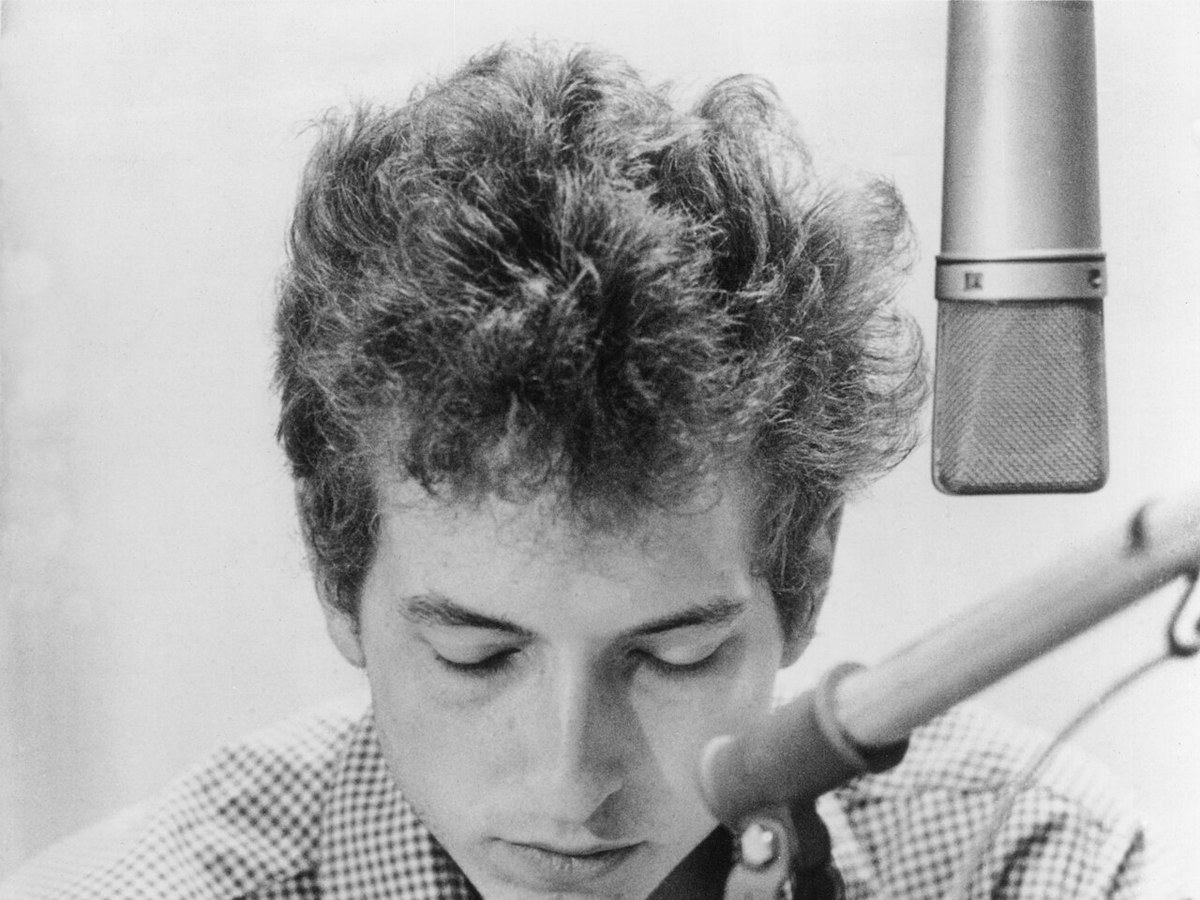
Minnesota, Greenwich Village & Folk Dylan
Q: What is Bob Dylan's birth name?
A: Robert Allen Zimmerman.
Q: When was Dylan born?
A: May 24, 1941.
Q: In which U.S. state was Bob Dylan born?
A: Minnesota.
Q: What city is associated with his childhood?
A: Hibbing.
Q: What university did he briefly attend?
A: University of Minnesota.
Q: What neighborhood did he move to in New York City?
A: Greenwich Village.
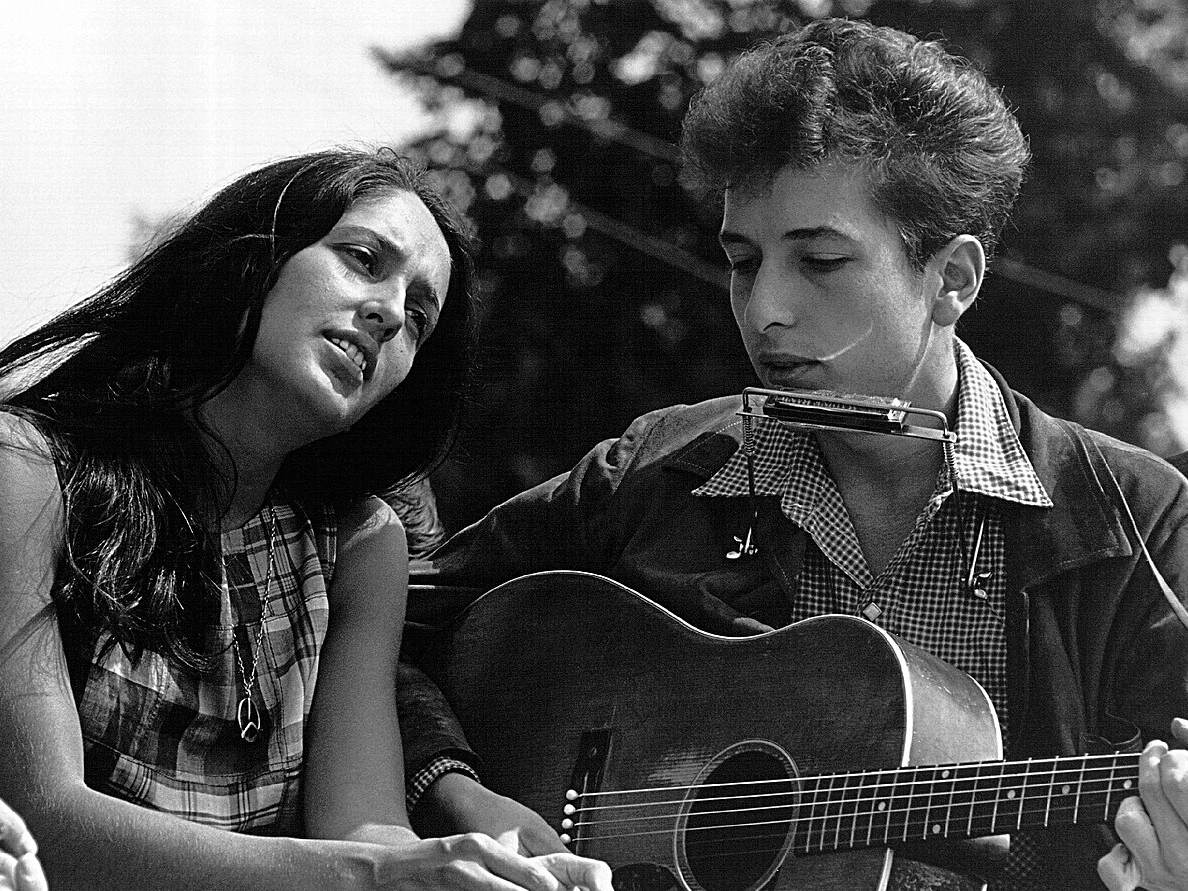
Q: What folk singer was his great early hero?
A: Woody Guthrie.
Q: Why did Dylan visit Guthrie?
A: Guthrie was seriously ill, and Dylan sought him out as a musical hero.
Q: What was Dylan's first album called?
A: Bob Dylan.
Q: In what year was Bob Dylan’s self-titled debut album released?
A: 1962.
Q: Did Bob Dylan’s debut album consist mostly of his own songs?
A: No. It contained many folk and blues standards.
Q: What second album made him a major songwriter?
A: The Freewheelin' Bob Dylan.
Q: What song asks how many roads a man must walk down?
A: “Blowin' in the Wind.”
Q: Which folk trio made a hit recording of Dylan’s “Blowin’ in the Wind”?
A: Peter, Paul and Mary.
Q: What topics does the song ask about?
A: War, freedom, human rights, and moral responsibility.
Q: What song describes nuclear-war anxiety?
A: “A Hard Rain's a-Gonna Fall.”
Q: What song is a bitter relationship farewell?
A: “Don't Think Twice, It's All Right.”
Q: Who appears walking with Dylan on the Freewheelin' cover?
A: Suze Rotolo.
Q: What was Rotolo's relationship to Dylan?
A: Girlfriend and important early influence.
Q: What 1964 album has a title about changing times?
A: The Times They Are a-Changin'.
Q: What title track became a social-change anthem?
A: “The Times They Are a-Changin'.”
Q: What did Dylan increasingly resist?
A: Being treated as the official spokesman of a political movement.
Q: What 1964 album turned more inward and surreal?
A: Another Side of Bob Dylan.
Q: Which song on Another Side of Bob Dylan includes the phrase “It Ain’t Me, Babe”?
A: “It Ain’t Me, Babe.”
Q: What did Dylan's early folk persona combine?
A: Traditional songs, political ballads, humor, romance, blues, and newly poetic songwriting.
Q: Did Dylan invent protest folk?
A: No.
Q: How did Dylan contribute to protest folk rather than inventing it?
A: He brought unusually vivid language and mass attention to an existing folk tradition.
Q: What instrument accompanied him most visibly?
A: Acoustic guitar.
Q: What other small instrument became iconic around his neck?
A: Harmonica.
Q: Why is Greenwich Village central to Dylan trivia?
A: Its clubs, folk singers, poets, activists, and record industry helped transform Zimmerman into Bob Dylan.
Going Electric, Like a Rolling Stone & Blonde on Blonde
Q: What 1965 album began Dylan's electric transition?
A: Bringing It All Back Home.
Q: How is the album structured?
A: One side leans electric rock, the other more acoustic.
Q: What opening song is a rapid surreal electric track?
A: “Subterranean Homesick Blues.”
Q: What visual device appears in Dylan’s “Subterranean Homesick Blues” film sequence?
A: Dylan flips cue cards with selected lyric words.
Q: What documentary includes the scene?
A: Don't Look Back.
Q: What song asks Mr. Tambourine Man to play a song?
A: “Mr. Tambourine Man.”
Q: Which band made “Mr. Tambourine Man” a No. 1 folk-rock hit?
A: The Byrds.
Q: What 1965 festival performance became legendary?
A: Newport Folk Festival.
Q: What did Dylan do there?
A: Played an electric set.
Q: Why was Dylan’s electric 1965 Newport performance controversial?
A: Some folk purists felt electric rock betrayed the acoustic folk movement.
Q: Was every boo definitely about electricity alone?
A: No. Accounts also mention sound quality, short set length, and audience expectations.
Q: What song became the defining electric Dylan single?
A: “Like a Rolling Stone.”
Q: In what year was “Like a Rolling Stone” released?
A: 1965.
Q: Which instrument makes the opening crash of “Like a Rolling Stone”?
A: Snare drum.
Q: What keyboard instrument is iconic in the arrangement?
A: Hammond organ.
Q: Who played the Hammond organ on “Like a Rolling Stone”?
A: Al Kooper.
Q: Was Kooper originally booked as the organ player?
A: No. He maneuvered into the session despite limited organ experience.
Q: What album contains “Like a Rolling Stone”?
A: Highway 61 Revisited.
Q: What highway does the title reference?
A: U.S. Highway 61.
Q: Why was Highway 61 culturally important to Dylan?
A: It connects Minnesota south through blues territory toward New Orleans.
Q: What long surreal song closes Highway 61?
A: “Desolation Row.”
Q: What 1966 double album followed?
A: Blonde on Blonde.
Q: In what city was much of Blonde on Blonde recorded?
A: Nashville.
Q: What phrase did Dylan use for the sound associated with Blonde on Blonde?
A: “Thin wild mercury sound.”
Q: What song opens Blonde on Blonde?
A: “Rainy Day Women #12 & 35.”
Q: What repeated phrase made “Rainy Day Women #12 & 35” notorious?
A: “Everybody must get stoned.”
Q: What wedding-song standard appears there?
A: “I Want You” is romantic, while “Sad Eyed Lady of the Lowlands” is the enormous closing love song.
Q: Who inspired “Sad Eyed Lady of the Lowlands”?
A: Sara Lownds, Dylan's wife.
Q: What happened to Dylan in 1966?
A: He had a motorcycle accident.
Q: What change in Dylan’s touring followed his 1966 motorcycle accident?
A: He withdrew from relentless touring and public visibility for a period.
Basement Tapes, Blood on the Tracks & Rolling Thunder
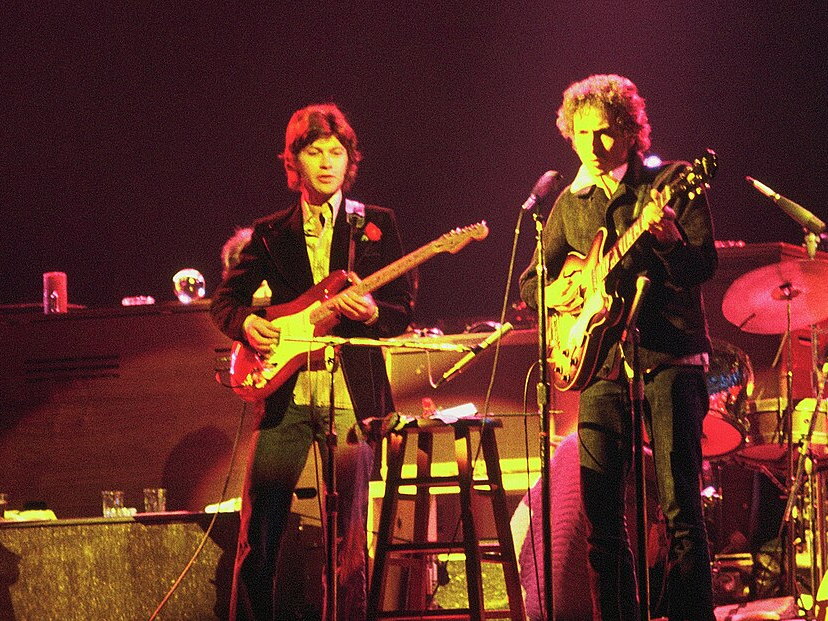
Q: What group played with Dylan in Woodstock-area sessions after the accident?
A: The Band.
Q: What were Dylan’s Woodstock-area recordings with the Band later called?
A: The Basement Tapes.
Q: Were the Basement Tapes first made as a conventional commercial album?
A: No. Many began as informal recordings and song demos.
Q: What 1967 album returned with sparse biblical country-folk?
A: John Wesley Harding.
Q: Which song from John Wesley Harding did Jimi Hendrix famously cover?
A: “All Along the Watchtower.”
Q: Did Dylan admire Hendrix's version?
A: Yes, and he later performed the song in a more Hendrix-influenced style.
Q: What 1969 album embraced country singing?
A: Nashville Skyline.
Q: What happened to Dylan's vocal tone there?
A: It became smoother and more crooning.
Q: Who duets with Dylan on “Girl from the North Country”?
A: Johnny Cash.
Q: What 1975 album is famous for breakup songs?
A: Blood on the Tracks.
Q: Which troubled relationship was often discussed in connection with Blood on the Tracks?
A: Dylan’s marriage to Sara.
Q: Did Dylan present Blood on the Tracks as a literal autobiography?
A: No. He resisted simple autobiographical readings.
Q: What song opens the album?
A: “Tangled Up in Blue.”
Q: What is unusual about the narration in “Tangled Up in Blue”?
A: Time and point of view shift fluidly.
Q: Which Blood on the Tracks song opens “Someone’s got it in for me”?
A: “Idiot Wind.” Source
Q: What gentle song is titled “Shelter from the Storm”?
A: “Shelter from the Storm.”
Q: What did Dylan do before final release?
A: Rerecorded several songs in Minneapolis.
Q: Who helped organize the Minneapolis sessions for Blood on the Tracks?
A: Dylan’s brother David Zimmerman.
Q: What touring spectacle began later in 1975?
A: Rolling Thunder Revue.
Q: What made the Rolling Thunder Revue unusual?
A: A traveling ensemble played smaller venues with changing guests and theatrical atmosphere.
Q: Who was one prominent violinist?
A: Scarlet Rivera.
Q: What singer-songwriter joined the tour?
A: Joan Baez.
Q: What boxer inspired “Hurricane”?
A: Rubin “Hurricane” Carter.
Q: What did the song argue?
A: Carter had been wrongfully convicted.
Q: Was Carter later released?
A: Yes, his conviction was overturned years later.
Q: What album contains “Hurricane”?
A: Desire.
Q: What film/documentary project is associated with Rolling Thunder?
A: Renaldo and Clara originally, and later Martin Scorsese's Rolling Thunder Revue film.
Q: Why is Blood on the Tracks so revered?
A: It turns heartbreak into shifting narrative, imagery, anger, memory, and compassion.
Q: What did the 1970s prove about Dylan?
A: He could disappear, change voice, embrace country, and still return with career-defining songwriting.
Gospel Years, Never Ending Tour, Nobel & Hard Dylan Trivia
Q: What religious conversion reshaped Dylan's music around 1979?
A: Born-again Christianity.
Q: Which album began Dylan’s born-again Christian period?
A: Slow Train Coming.
Q: What song says “you gotta serve somebody”?
A: “Gotta Serve Somebody.”
Q: Which Grammy did “Gotta Serve Somebody” win?
A: Best Rock Vocal Performance, Male. Source
Q: What producer worked on Slow Train Coming?
A: Jerry Wexler and Barry Beckett.
Q: What guitarist plays prominently?
A: Mark Knopfler.
Q: What band is Knopfler from?
A: Dire Straits.
Q: Did Dylan remain confined to explicitly Christian music forever?
A: No.
Q: What 1989 album was produced by Daniel Lanois?
A: Oh Mercy.
Q: What supergroup did Dylan join in the late 1980s?
A: Traveling Wilburys.
Q: Name another Wilbury.
A: George Harrison, Tom Petty, Roy Orbison, or Jeff Lynne.
Q: What pseudonym did Dylan use in the Wilburys?
A: Lucky Wilbury/Boo Wilbury depending on album-era credits.
Q: What enormous touring period began in 1988?
A: The so-called Never Ending Tour.
Q: Did Dylan officially name his tour the Never Ending Tour?
A: No. It is a popular media and fan label.
Q: What is notable about Dylan's live arrangements?
A: He frequently changes tempo, phrasing, melody, and instrumentation.
Q: Why can familiar songs be hard to recognize live?
A: Dylan treats them as material to reinterpret rather than reproduce.
Q: What 1997 album marked another critical resurgence?
A: Time Out of Mind.
Q: Which Grammy did Time Out of Mind win?
A: Album of the Year. Source
Q: Who produced Time Out of Mind?
A: Daniel Lanois.
Q: What 2001 album followed?
A: Love and Theft.
Q: What 2020 album features long historical meditations?
A: Rough and Rowdy Ways.
Q: What nearly 17-minute song reflects on JFK's assassination and American culture?
A: “Murder Most Foul.”
Q: What major literary prize did Dylan receive in 2016?
A: Nobel Prize in Literature.
Q: Why was the Nobel historically unusual?
A: A songwriter was recognized for creating new poetic expressions within the American song tradition.
Q: Did Dylan immediately attend the Nobel ceremony?
A: No.
Q: What debate did the prize reignite?
A: Whether song lyrics count as literature.
Q: What song did the Byrds turn into a folk-rock standard?
A: “Mr. Tambourine Man.”
Q: What song did Hendrix transform?
A: “All Along the Watchtower.”
Q: What song did Adele later cover?
A: “Make You Feel My Love.”
Q: Why is Bob Dylan especially deep trivia material?
A: Folk, blues, rock, country, gospel, poetry, politics, covers, shape-shifting vocals, six decades of albums, and constant live reinterpretation create almost endless material.
How Did You Score?
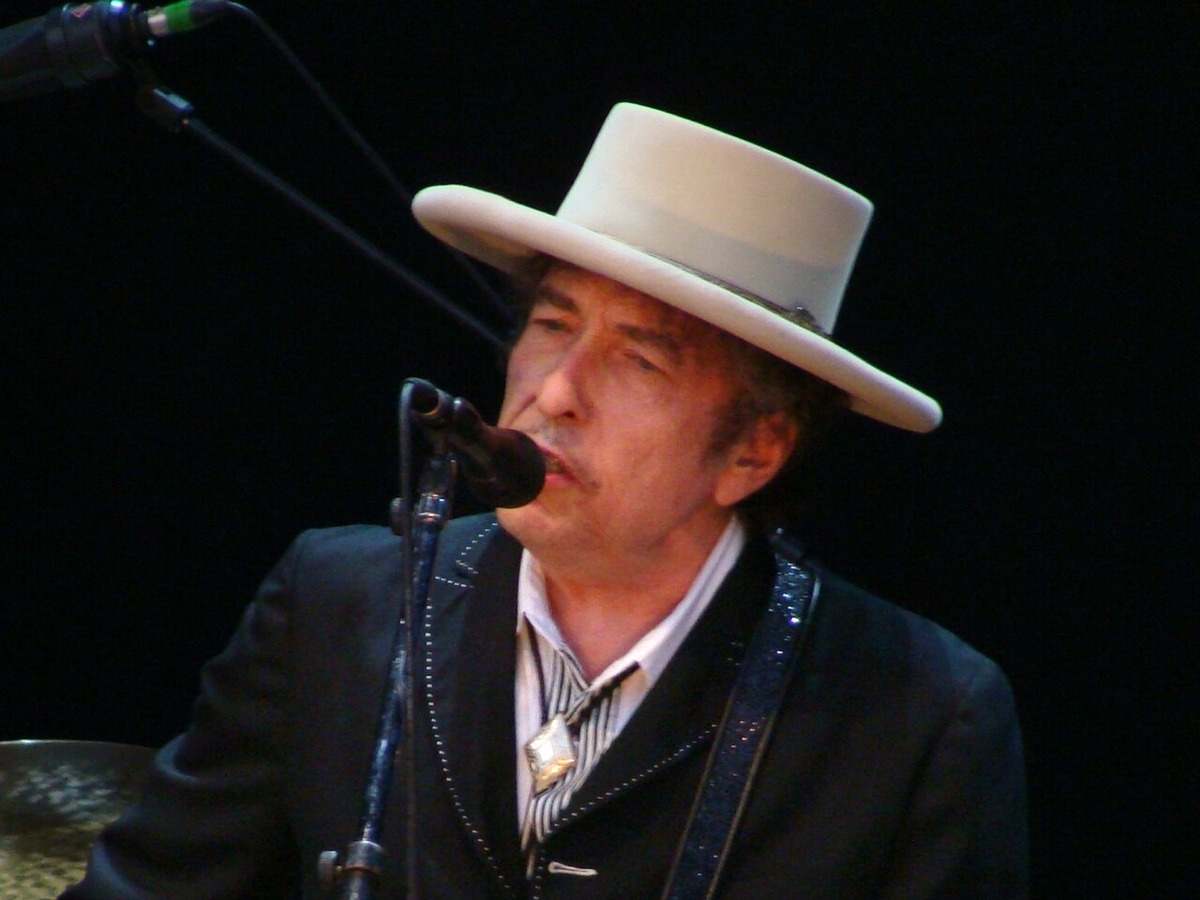
If Hibbing, Suze Rotolo, Al Kooper, Newport, the Minneapolis Blood on the Tracks sessions, Rolling Thunder, Traveling Wilburys, and the Nobel all came easily, the answer is not blowing in the wind. You know Dylan.

Ellie Simons creates and edits Random Trivia. She researches trivia using primary and authoritative sources whenever possible and is currently reviewing the site's older trivia library for accuracy, clarity, and playability. Read more on the About page.
Explore more questions in our music trivia guide.
About this quiz
Site editor: Ellie Simons. Read our Trivia Methodology to learn how questions are researched and updated. Page last updated: . Report an error.