
Elephants can detect distant rumbles, reshape a landscape, and turn a trunk into everything from a snorkel to a gentle fingertip.
These elephant trivia questions cover species, anatomy, behavior, habitats, and conservation, with changing threat categories dated where needed.
The Three Living Elephant Species
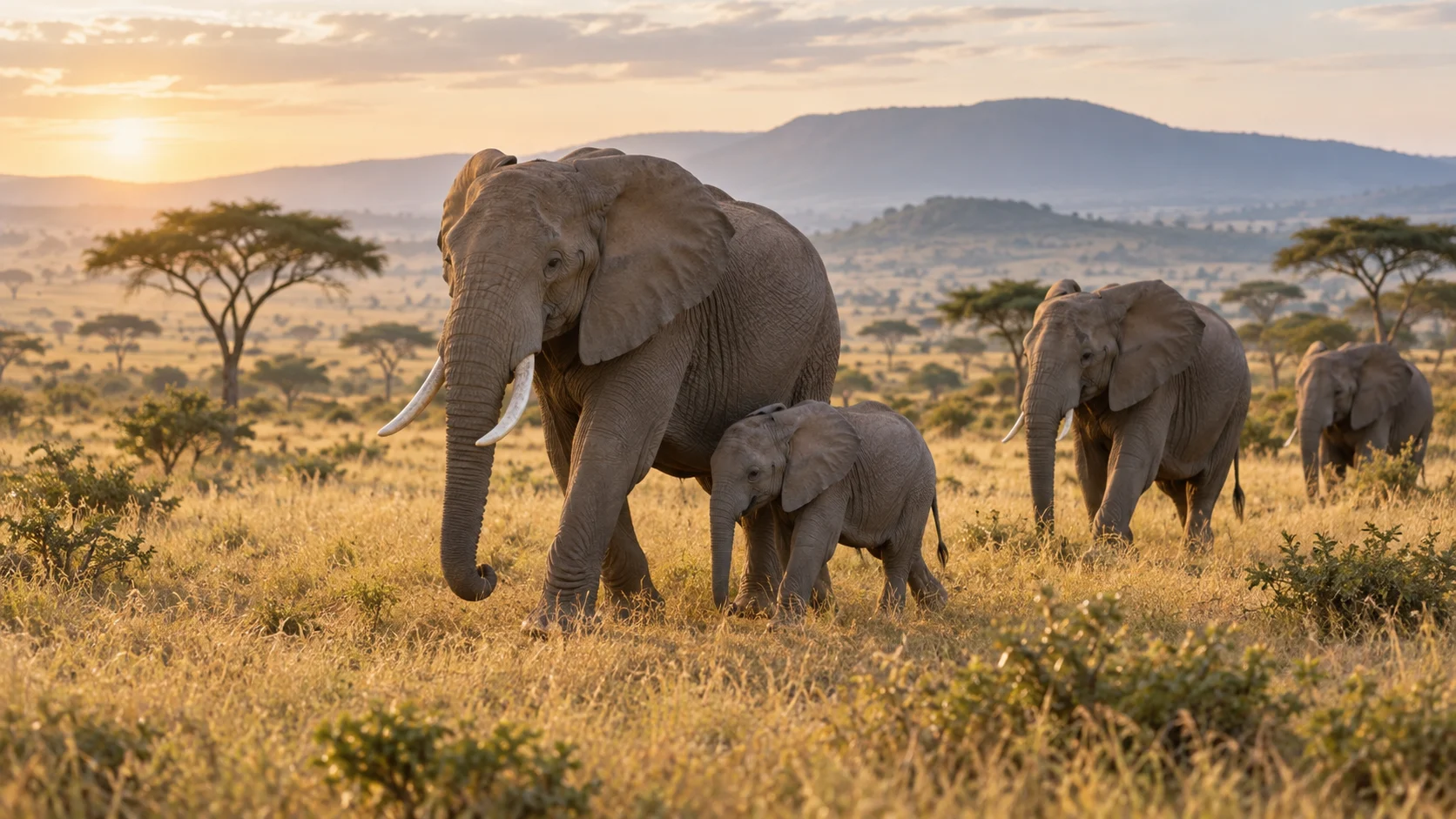
Begin by separating savanna, forest, and Asian elephants instead of treating one species as the template for all.
- How many living elephant species are widely recognized by the IUCN?
Answer: Three - What are the two African elephant species?
Answer: African savanna elephant and African forest elephant - What is the scientific name of the African savanna elephant?
Answer: Loxodonta africana - What is the scientific name of the African forest elephant?
Answer: Loxodonta cyclotis - What is the scientific name of the Asian elephant?
Answer: Elephas maximus - Which living elephant species is largest?
Answer: The African savanna elephant - Which African species generally has rounder ears?
Answer: The African forest elephant - Which African species usually has larger, more triangular ears?
Answer: The African savanna elephant - How does an Asian elephant's back often compare with an African savanna elephant's?
Answer: It is often more rounded or convex - How many finger-like tips does an African elephant trunk have?
Answer: Two - How many finger-like tips does an Asian elephant trunk have?
Answer: One - Do female African elephants usually grow visible tusks?
Answer: Yes - Do all female Asian elephants grow large visible tusks?
Answer: No - What are tuskless male Asian elephants sometimes called?
Answer: Makhnas - Where do African forest elephants mainly live?
Answer: Tropical forests of central and western Africa
Trunks, Tusks, Ears, and Feet
Elephant anatomy is built for strength, sensitivity, cooling, and astonishingly precise movement.
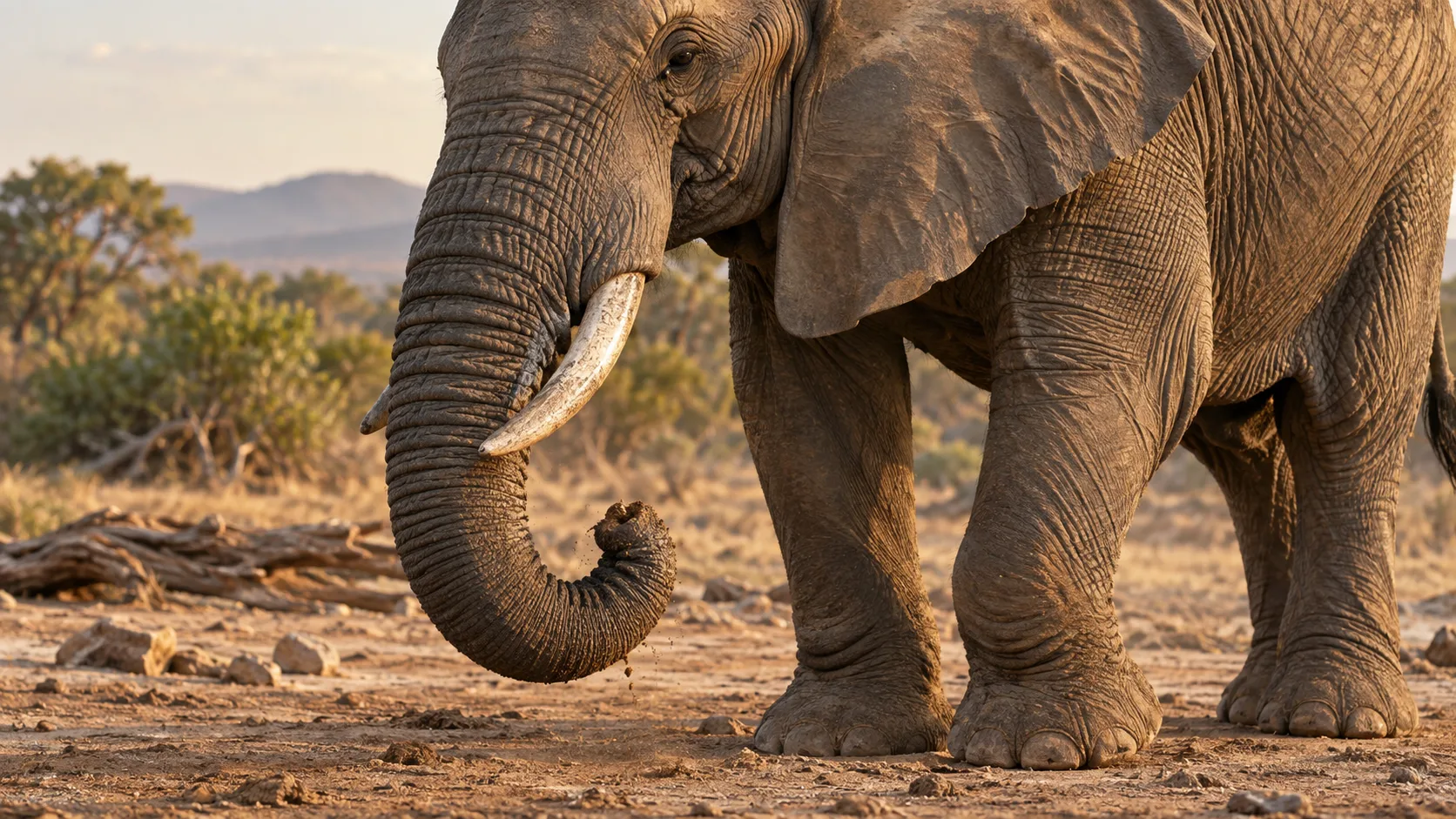
- What is an elephant's trunk anatomically?
Answer: An elongated nose and upper lip - Does an elephant trunk contain bones?
Answer: No - Approximately how many muscles or muscle fascicles are often said to power the trunk?
Answer: Around 40,000 muscle units - What senses does an elephant use through its trunk?
Answer: Smell and touch - Can an elephant use its trunk as a snorkel?
Answer: Yes - What are elephant tusks?
Answer: Elongated upper incisor teeth - Do tusks grow throughout much of an elephant's life?
Answer: Yes - What can elephants do with tusks?
Answer: Dig, strip bark, move objects, fight, and display - Why do elephants flap their ears?
Answer: Communication and heat loss - How can ear blood vessels help cool an elephant?
Answer: They release heat near the skin surface - How many toes are visible on elephant feet varies by what?
Answer: Species and front versus hind feet - What soft tissue helps cushion elephant footsteps?
Answer: A thick fat pad in the foot - Can elephants walk quietly despite their size?
Answer: Yes - Can elephants jump with all four feet off the ground?
Answer: No known normal jumping gait does so - What replaces worn elephant molars?
Answer: New molars move forward from the back of the jaw
Herds, Calves, and Family Life
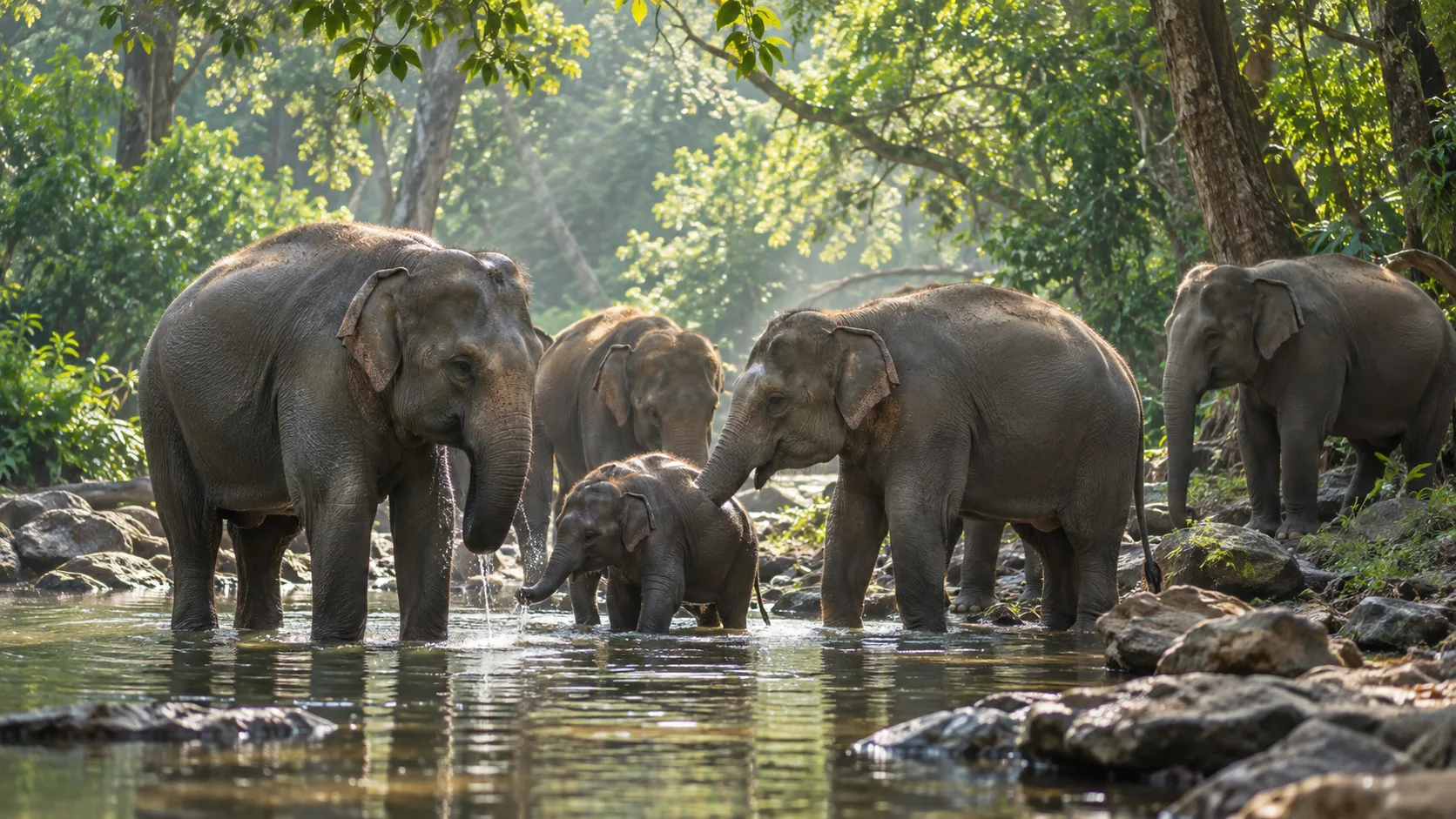
Elephant societies are shaped by long memory, maternal leadership, and years of learning.
- What adult usually leads a family herd?
Answer: A matriarch - Who normally makes up a core elephant family group?
Answer: Related females and their young - Do adult males usually remain permanently in their birth herd?
Answer: No - What is a male elephant called?
Answer: A bull - What is a female elephant called?
Answer: A cow - What is a young elephant called?
Answer: A calf - How long is an elephant pregnancy?
Answer: About 22 months - Is that the longest known gestation among living land mammals?
Answer: Yes - How many calves are usually born at once?
Answer: One - Can elephant twins occur?
Answer: Yes, but rarely - What is allomothering?
Answer: Females helping care for calves that are not their own - Why are older matriarchs valuable?
Answer: They retain social and ecological knowledge - At what life stage do many young males leave family groups?
Answer: Adolescence - Do bull elephants always live entirely alone?
Answer: No, they may form associations or groups - What is musth?
Answer: A periodic state in adult males involving hormonal, behavioral, and physical changes
Rumbles, Smells, and Elephant Communication
Elephants communicate through sound, scent, touch, posture, and vibrations traveling through the ground.
- What low-frequency elephant calls can travel long distances?
Answer: Rumbles - What is infrasound?
Answer: Sound below the usual lower limit of human hearing - Can elephant rumbles include infrasonic frequencies?
Answer: Yes - How can elephants detect ground vibrations?
Answer: Through sensitive feet and body tissues - What loud call is often made through the trunk?
Answer: A trumpet - What can ear position communicate?
Answer: Arousal, threat, attention, or social state - How do elephants greet familiar individuals?
Answer: Touching with trunks, vocalizing, and body contact - What chemical information can urine and dung carry?
Answer: Identity and reproductive status - What is flehmen-like trunk investigation used for?
Answer: Sampling chemical cues - Can elephants distinguish some human groups by voice or scent?
Answer: Studies show they can discriminate certain cues - What is contact calling?
Answer: Calling to maintain or restore social connection - What is a seismic signal?
Answer: A vibration transmitted through the ground - Why can low-frequency sound travel farther than high-frequency sound?
Answer: It loses energy more slowly in many conditions - What does trunk touching often reinforce?
Answer: Social bonds - Are all elephant vocalizations trumpets?
Answer: No
Diet, Water, and Habitat Engineering
As huge herbivores, elephants do not merely occupy ecosystems; they help rebuild them bite by bite.
- Are elephants herbivores?
Answer: Yes - What do elephants eat?
Answer: Grasses, leaves, bark, roots, fruit, and other plants - Do elephant diets stay identical across habitats and seasons?
Answer: No - Why do elephants spend much of the day feeding?
Answer: Their large bodies require substantial plant intake - Why is water important beyond drinking?
Answer: Bathing, cooling, and mud wallowing - What does mud do for elephant skin?
Answer: Helps cool it and protects from sun and insects - What is dust bathing?
Answer: Throwing soil over the body - How can elephants create water access during dry periods?
Answer: Digging in riverbeds or enlarging water holes - How can elephants disperse seeds?
Answer: By eating fruit and depositing seeds in dung - Why are elephants called ecosystem engineers?
Answer: Their feeding and movement alter habitats for other species - How can elephants maintain savanna openings?
Answer: By browsing and pushing woody plants - How can forest elephants influence forests?
Answer: By dispersing seeds and changing vegetation structure - What habitat does the African savanna elephant occupy?
Answer: Savannas, woodlands, deserts, and other open or mixed habitats - What habitats do Asian elephants use?
Answer: Forests, grasslands, and scrub mosaics - Why do elephants migrate or move seasonally?
Answer: To find water, food, mates, and suitable habitat
Learning, Memory, and Complex Behavior
Research reveals flexible problem-solving, long-term recognition, play, and socially learned behavior.
- Why is elephant memory useful?
Answer: It helps track resources, routes, threats, and social partners - Can elephants recognize individuals after long separations?
Answer: Yes - Do elephant calves learn by watching older animals?
Answer: Yes - What is social learning?
Answer: Learning from observing or interacting with others - Can elephants use tools?
Answer: Yes - What is one observed elephant tool use?
Answer: Using branches as fly switches or modifying objects - Can elephants solve some cooperative tasks?
Answer: Yes - What is play behavior in young elephants?
Answer: Running, mock fighting, object play, and social games - Do elephants sleep standing, lying down, or both?
Answer: Both - Do elephants generally sleep fewer hours than many mammals?
Answer: Yes - Can elephants swim?
Answer: Yes - How do they breathe while swimming?
Answer: They can hold the trunk above water - What response may elephants show toward bones or remains of other elephants?
Answer: Investigation and repeated touching - Should that behavior be described simply as human-like mourning?
Answer: No, interpretations should remain careful - Can elephants recognize themselves in mirror tests?
Answer: Some elephants have shown mirror self-recognition
Elephants in History and Human Culture
Elephants have appeared in warfare, religion, labor, art, and national symbolism across many societies.
- Which ancient general famously crossed the Alps with elephants?
Answer: Hannibal - What empire used war elephants at the Battle of the Hydaspes against Alexander?
Answer: The kingdom of King Porus - Which South Asian god is depicted with an elephant head?
Answer: Ganesha - What role have Asian elephants performed in parts of Asia?
Answer: Transport, logging, ceremonies, and warfare - What is a mahout?
Answer: A person who works closely with and cares for an elephant - What Thai national symbol is a rare pale elephant?
Answer: The white elephant - Is a white elephant usually albino?
Answer: No, it typically has unusually pale pigmentation - What does the phrase white elephant mean in English?
Answer: A costly possession difficult to maintain - What fictional elephant can fly using oversized ears?
Answer: Dumbo - What children's-book elephant lives in Celesteville?
Answer: Babar - What Dr. Seuss elephant hears a Who?
Answer: Horton - What political party uses an elephant as its U.S. symbol?
Answer: The Republican Party - Who popularized that party elephant in a 19th-century cartoon?
Answer: Thomas Nast - What ivory source drove extensive elephant hunting?
Answer: Tusks - Why is elephant riding controversial in tourism?
Answer: Training and working conditions can harm welfare
Threats, Status, and Elephant Conservation
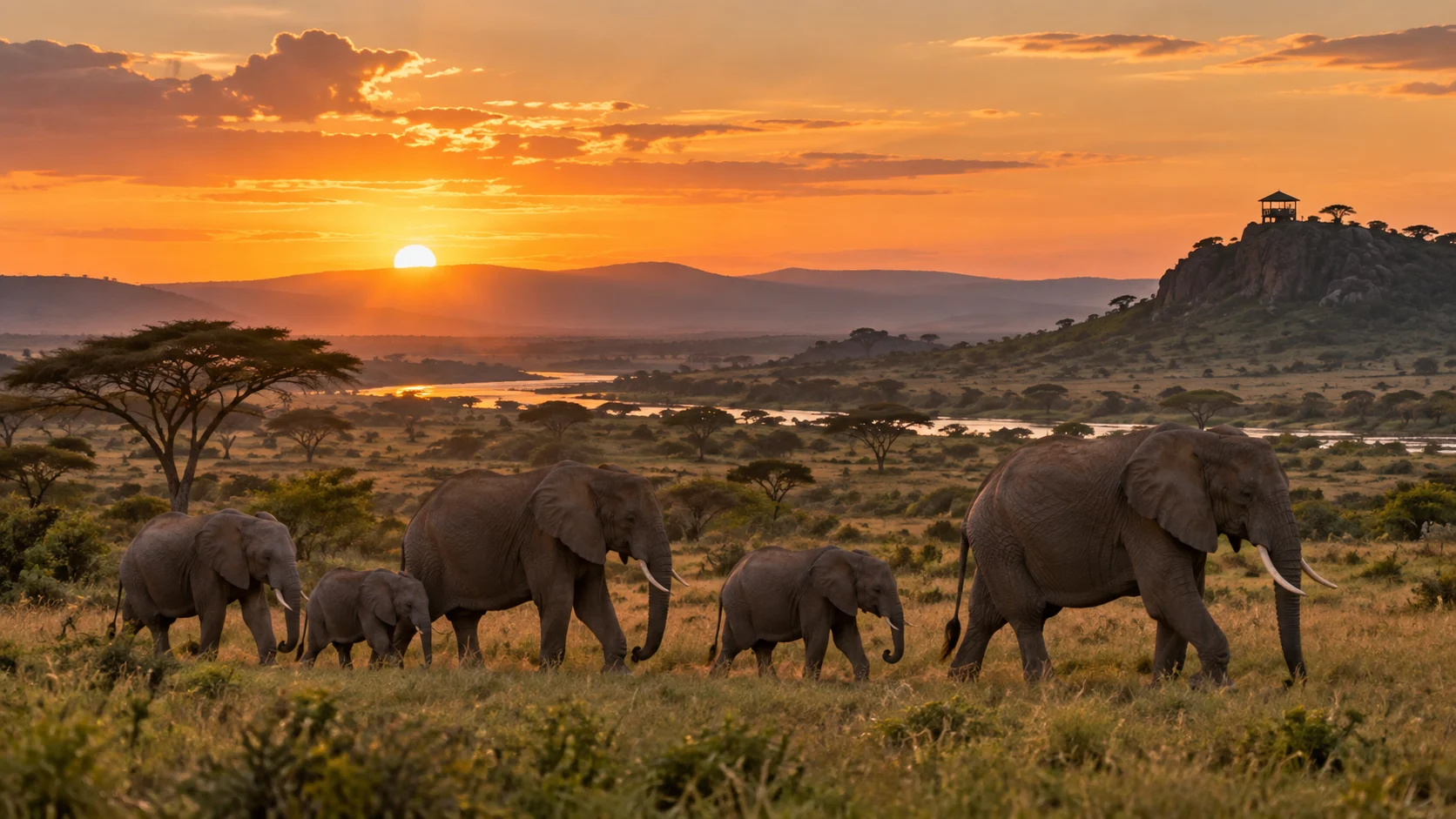
These answers use IUCN's 2021 African assessments and current species-level distinctions rather than one blanket status.
- What was the African forest elephant's IUCN category in the 2021 assessment?
Answer: Critically Endangered - What was the African savanna elephant's IUCN category in the 2021 assessment?
Answer: Endangered - What is the Asian elephant's IUCN category?
Answer: Endangered - What major threat is driven by demand for ivory?
Answer: Poaching - What is habitat fragmentation?
Answer: Breaking continuous habitat into isolated pieces - How can roads and farms increase human-elephant conflict?
Answer: They overlap with movement routes and food sources - What is crop raiding?
Answer: Elephants feeding on cultivated crops - What can wildlife corridors do?
Answer: Connect habitat and movement routes - What treaty regulates international trade in elephant ivory?
Answer: CITES - What does CITES stand for?
Answer: Convention on International Trade in Endangered Species of Wild Fauna and Flora - Why is anti-poaching enforcement only part of conservation?
Answer: Habitat, conflict, governance, and community needs also matter - What is a transboundary population?
Answer: A population moving across national borders - Why must population estimates be dated?
Answer: Methods and elephant numbers change over time - What is a noninvasive way to study elephants?
Answer: Dung DNA, camera traps, acoustics, or observation - What is one responsible tourism rule around wild elephants?
Answer: Keep distance and never block or provoke them
Keep the game going with animal trivia, India trivia, environmental science trivia, and horse trivia.
Sources and Further Reading
- IUCN Red List African elephant assessments
- CITES elephant conservation and trade
- Smithsonian National Zoo elephant facts
- WWF elephant conservation
- Encyclopaedia Britannica: Elephant

Ellie Ewert is the founder and author of RandomTrivia.co, blending her passion for research with years of experience in content creation to deliver accurate, engaging, and well-sourced trivia. Dedicated to providing readers with trustworthy and entertaining facts, she applies meticulous fact-checking and SEO expertise to ensure every article meets the highest standards. Read more about our high standards in our Editorial Guidelines.