
People welcome a new year with grapes, bells, noodles, bonfires, cold swims, and enough lucky foods to stock a pantry. I collected 120 questions, but I am not personally jumping into the North Sea.
New Year Traditions Across the Americas
Q: What food is commonly eaten for New Year's luck in the American South?
A: Black-eyed peas are associated with coins, luck, and prosperity.
Q: What is Hoppin' John?
A: It is a Southern dish of black-eyed peas and rice often served on New Year's Day.
Q: What do cooked greens symbolize in Southern New Year's meals?
A: Their color resembles paper money, so they symbolize prosperity.
Q: What does cornbread symbolize on some Southern New Year's tables?
A: Its golden color makes it a symbol of wealth.
Q: What does pork symbolize in many American New Year's meals?
A: Because pigs root forward, pork is associated with progress.
Q: What object drops at midnight in Times Square?
A: An illuminated ball descends a pole atop One Times Square.
Q: Which song is traditionally sung after midnight in the United States and Canada?
A: Auld Lang Syne is the familiar song of remembrance and friendship.
Q: What chilly New Year's activity is popular across Canada and the United States?
A: Polar bear plunges send swimmers briefly into cold water, usually at organized events.
Q: Why should a polar bear plunge be professionally organized?
A: Cold shock can be dangerous, so supervision, screening, and a rapid warm-up plan matter.
Q: What is Philadelphia's Mummers Parade?
A: It is a colorful January 1 procession featuring costumed clubs, music, and performances.
Q: Which California parade is held on New Year's Day?
A: Pasadena hosts the Rose Parade with flower-covered floats.
Q: Why is the Rose Bowl linked with New Year's Day?
A: The college football game grew alongside Pasadena's Tournament of Roses festivities.
Q: What do many people in Mexico eat with the midnight chimes?
A: They eat 12 grapes, making a wish for each month.
Q: What do some Mexican celebrants carry to invite travel?
A: They walk with empty suitcases as a playful wish for journeys.
Q: What do lentils represent in parts of Mexico and Latin America?
A: Their coin-like shape connects them with prosperity.
Q: What do some people in Puerto Rico throw out at midnight?
A: They toss buckets of water outside to symbolically clear away the old year.
Q: What is one Cuban New Year's cleaning custom?
A: Some households throw water outside, sending away bad energy with the old year.
Q: What do Haitians eat on January 1?
A: Soup joumou is served to celebrate both New Year and Haitian independence.
Q: Why is soup joumou historically powerful?
A: Enslaved Haitians were denied the dish, and it became a symbol of freedom after independence.
Q: What do many Bahamians celebrate around New Year's Day?
A: Junkanoo parades bring elaborate costumes, drums, bells, and dancing to the streets.
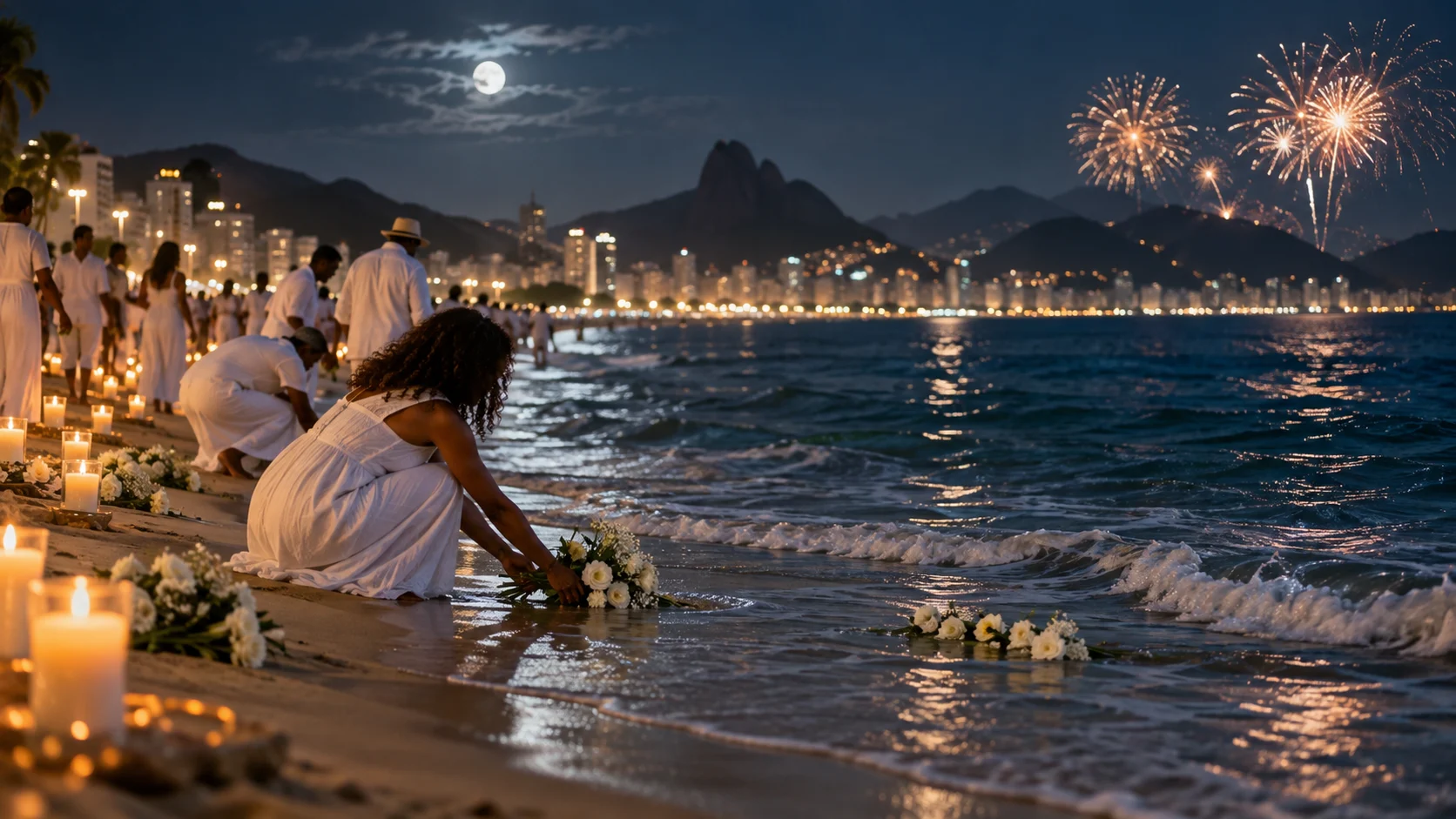
Q: Which Brazilian clothing color is associated with peace at New Year?
A: White is widely worn, especially at coastal celebrations.
Q: What do some Brazilian celebrants do at the ocean?
A: They jump seven waves while making wishes for the coming year.
Q: Who is honored by some offerings placed in the sea in Brazil?
A: Iemanja is honored within living Afro-Brazilian religious traditions.
Q: What should visitors remember about Iemanja offerings?
A: They carry spiritual meaning and should not be treated as disposable party props.
Q: What burns at midnight in many Ecuadorian communities?
A: Effigies called años viejos represent the old year and are burned.
Q: What do Ecuador's años viejos often portray?
A: They may depict public figures, fictional characters, or events from the departing year.
Q: What does an empty suitcase symbolize in Colombia?
A: Carrying one around invites travel in the new year.
Q: What do some Colombians keep in their pockets at midnight?
A: Lentils may be carried as a wish for abundance.
Q: What New Year's practice appears in parts of Chile?
A: Some families attend late-night cemetery gatherings to remember deceased relatives.
Q: Why should Latin American New Year's customs be described as regional?
A: Practices differ widely between countries, cities, families, and religious communities.
European Customs for Luck and a Fresh Start
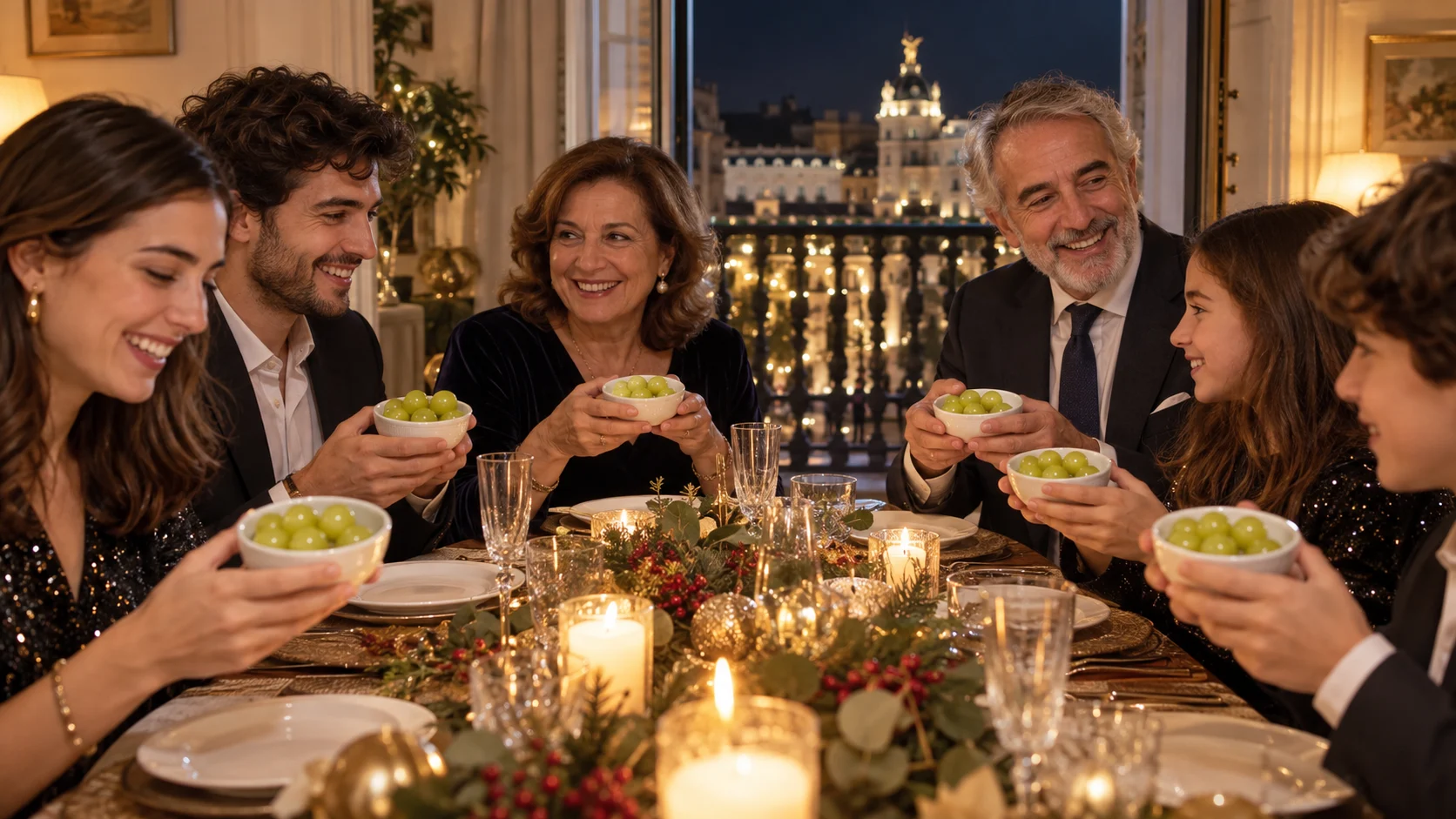
Q: What are Spain's 12 lucky grapes called?
A: They are las doce uvas de la suerte.
Q: Where do Spain's nationally watched New Year chimes sound?
A: They sound from the clock at Puerta del Sol in Madrid.
Q: What must grape eaters follow during the Spanish countdown?
A: They try to eat one grape with each of the 12 midnight chimes.
Q: What is Hogmanay?
A: It is the Scots name for New Year's Eve and its celebrations.
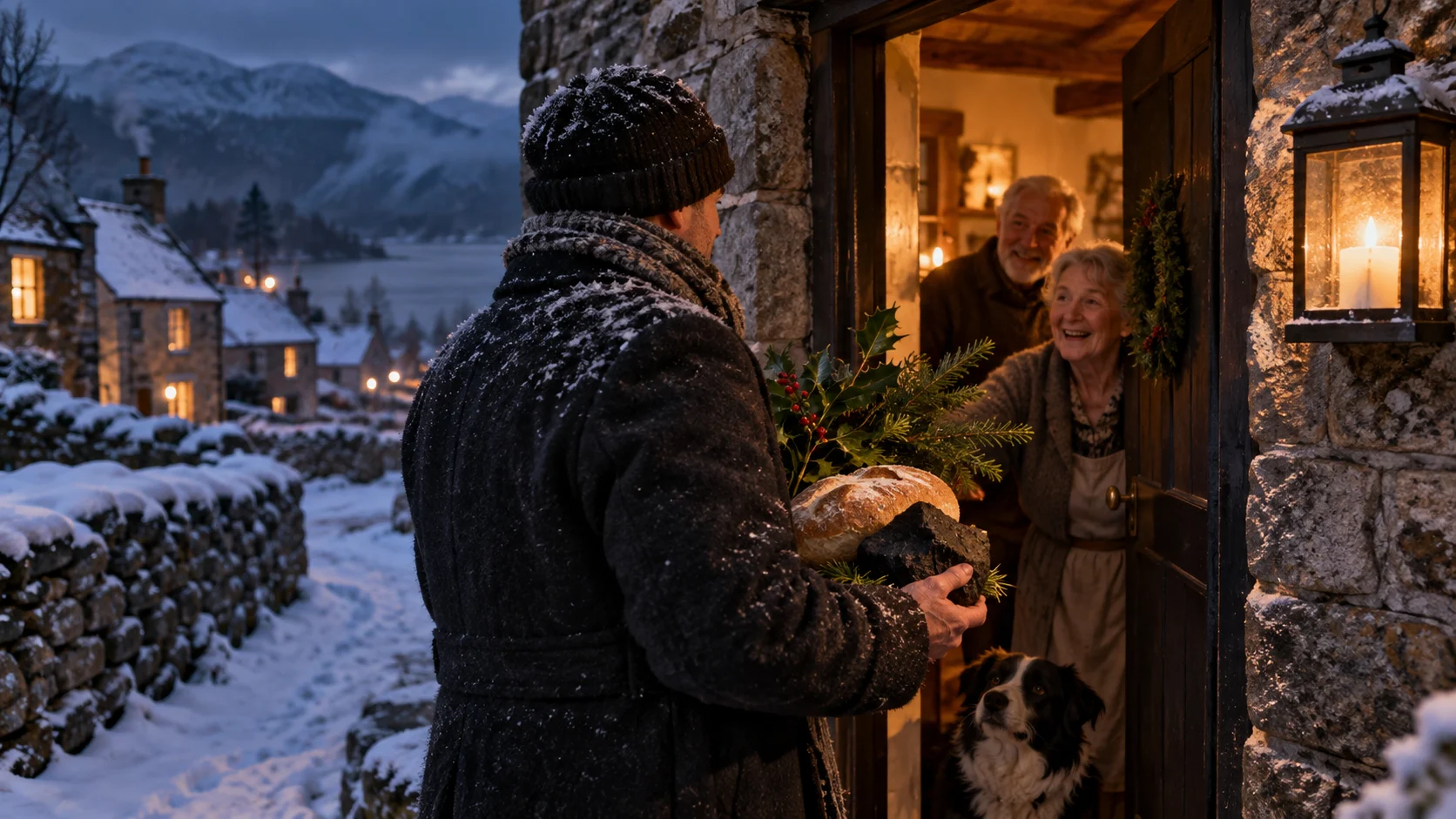
Q: What is first-footing in Scotland?
A: It is the tradition of the first visitor entering a home after midnight.
Q: What may a Scottish first-footer bring?
A: Coal, shortbread, salt, whisky, or black bun can symbolize household blessings.
Q: What is Edinburgh's Hogmanay known for?
A: It features street festivities, concerts, torchlight events, and fireworks, depending on the year.
Q: What is the Loony Dook?
A: It is a costume-filled cold-water dip held near Edinburgh around New Year.
Q: What do some people in Denmark do with old dishes?
A: They leave broken plates at friends' doors as a sign of affection and luck.
Q: What do Danes symbolically jump into at midnight?
A: They leap from chairs into the new year.
Q: What is vasilopita?
A: It is a Greek New Year's cake containing a hidden coin.
Q: Who is honored in the name vasilopita?
A: The cake is associated with Saint Basil, whose feast is January 1.
Q: What happens to the person who finds the vasilopita coin?
A: That person is traditionally promised good luck for the year.
Q: Why do some Greek families smash a pomegranate?
A: Its many seeds symbolize abundance and good fortune.
Q: What plant is sometimes hung at Greek doorways for New Year?
A: A sea squill may symbolize resilience because it continues sprouting after uprooting.
Q: What do Italians commonly eat for New Year's prosperity?
A: Lentils are served because they resemble small coins.
Q: Which Italian pork dish often accompanies New Year's lentils?
A: Cotechino, a rich cooked sausage, is a traditional choice.
Q: What clothing color is linked with New Year's luck in Italy?
A: Red underwear is popularly associated with good fortune and romance.
Q: What fried treat is traditional in the Netherlands at New Year?
A: Oliebollen are round, deep-fried dough treats often dusted with powdered sugar.
Q: What is the Dutch Nieuwjaarsduik?
A: It is a New Year's Day dive into cold water, famously held at Scheveningen.
Q: Which tiny good-luck animal appears in German New Year's gifts?
A: Marzipan pigs symbolize luck and prosperity.
Q: What is Bleigießen?
A: It is a fortune-telling custom formerly using molten lead poured into cold water.
Q: Why do modern versions often use wax instead of lead?
A: Lead is toxic, so safer materials replace it.
Q: Which short comedy is repeatedly watched on German New Year's Eve?
A: Dinner for One has become a television tradition despite being in English.
Q: What line is repeated throughout Dinner for One?
A: The same procedure as every year is the famous running phrase.
Q: What do the French call a long New Year's Eve dinner?
A: It is called le réveillon de la Saint-Sylvestre.
Q: What drink is strongly associated with a French midnight toast?
A: Champagne is traditional, though any festive drink can fill the glass.
Q: What is Iceland's New Year's Eve famous for?
A: Community bonfires, family gatherings, comedy television, and extensive fireworks mark the night.
Q: Why are Icelandic bonfires called áramótabrennur?
A: The term refers to bonfires at the turning of the year.
Q: What do Estonian New Year's meal traditions sometimes count?
A: Some people eat seven, nine, or 12 meals for strength and abundance.
Asian New Years, Midnight Rituals, and Multiple Calendars
Q: What is New Year's Eve called in Japan?
A: It is called Omisoka.
Q: What noodles are eaten in Japan on New Year's Eve?
A: Toshikoshi soba are year-crossing noodles associated with longevity and letting go.
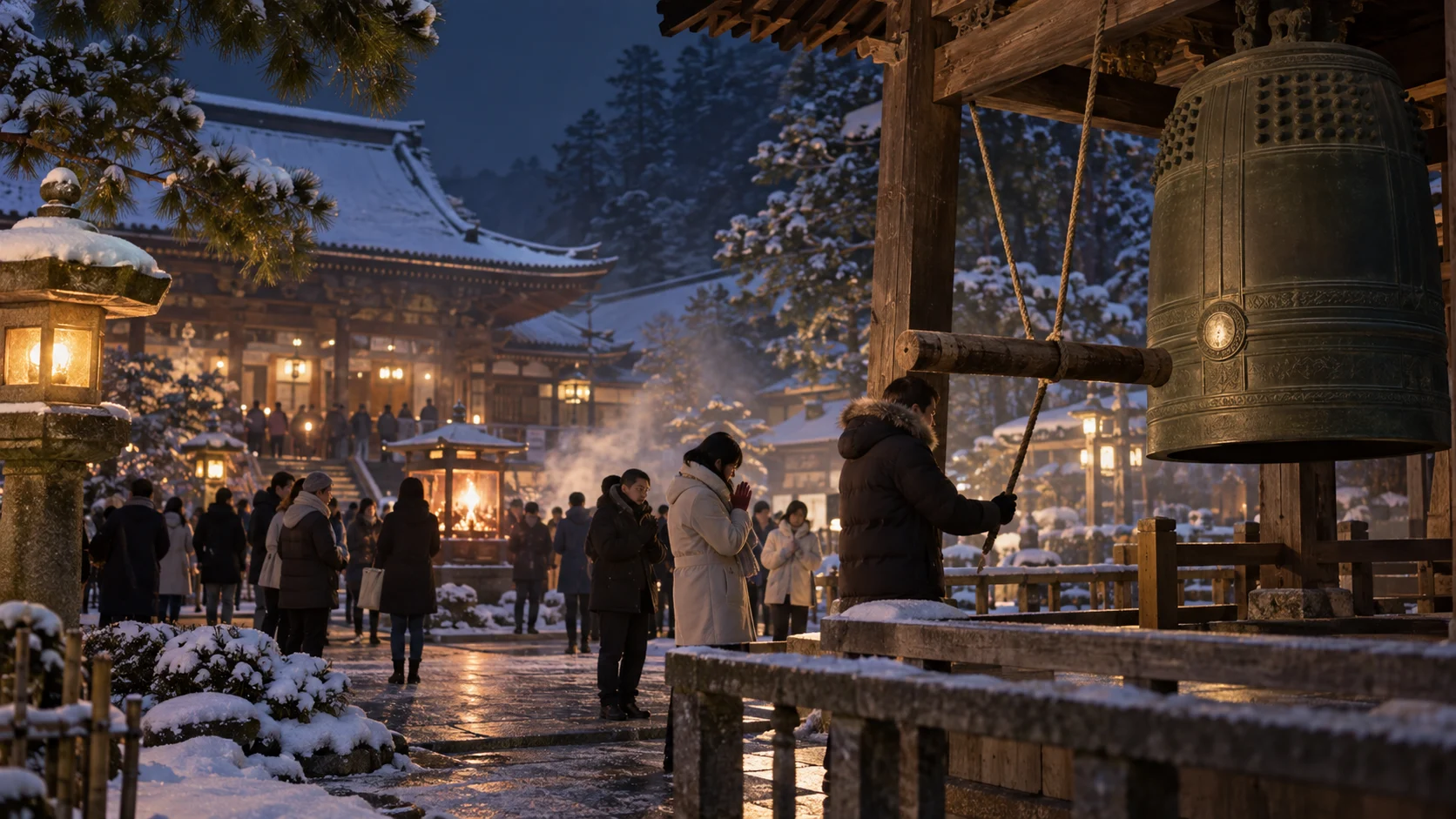
Q: What is Joya no Kane?
A: It is the ringing of Buddhist temple bells 108 times around New Year.
Q: What do the 108 Japanese bell rings symbolize?
A: They represent clearing the 108 worldly desires or defilements in Buddhist teaching.
Q: What is hatsumode?
A: It is the year's first visit to a Shinto shrine or Buddhist temple.
Q: What is osechi ryori?
A: It is an assortment of symbolic Japanese New Year's foods packed in tiered boxes.
Q: What does kadomatsu decorate?
A: Pine-and-bamboo arrangements stand near entrances to welcome ancestral or seasonal spirits.
Q: Which Seoul bell ceremony marks the Gregorian New Year?
A: The Bosingak bell is rung in central Seoul at midnight.
Q: How many times is Seoul's Bosingak bell traditionally rung?
A: It is rung 33 times.
Q: What do round fruits symbolize in Filipino New Year's displays?
A: Their coin-like shape represents prosperity.
Q: Why are polka dots popular in some Filipino New Year's outfits?
A: The round pattern also resembles coins and abundance.
Q: What do Filipino children sometimes do at midnight?
A: They jump, following a playful belief that it will help them grow taller.
Q: Why are loud noises common in Filipino celebrations?
A: Horns, music, and fireworks are traditionally used to drive away bad luck.
Q: What is Media Noche in the Philippines?
A: It is the festive midnight meal shared as the new year begins.
Q: What does long pancit symbolize at Filipino celebrations?
A: Uncut noodles represent long life.
Q: Which Singapore location hosts a major New Year's countdown?
A: Marina Bay is known for light displays, performances, and fireworks.
Q: Where do huge crowds gather for New Year in Taipei?
A: They gather around Taipei 101 for fireworks and a building light show.
Q: What is distinctive about Bangkok's Gregorian New Year?
A: Modern countdowns coexist with Songkran, Thailand's traditional April New Year festival.
Q: What is Songkran famous for?
A: Water splashing accompanies religious merit-making and family customs in April.
Q: Why is Lunar New Year not the same as January 1?
A: It follows lunisolar calendars and falls on a varying date weeks later.
Q: What is Lunar New Year called in Vietnam?
A: It is called Tet and is the country's most important traditional holiday.
Q: What is Seollal?
A: It is the Korean Lunar New Year, distinct from the Gregorian January 1 celebration.
Q: What is Nowruz?
A: It is a spring-equinox New Year celebrated across Iran and many neighboring cultures.
Q: Why is Nowruz not a January New Year?
A: Its calendar and seasonal meaning begin with the March equinox.
Q: What calendar is used for the Islamic New Year?
A: It follows the lunar Islamic calendar, so its Gregorian date moves earlier each year.
Q: What is Rosh Hashanah?
A: It is the Jewish New Year, observed in early fall rather than on January 1.
Q: What is Enkutatash?
A: It is the Ethiopian New Year, celebrated in September.
Q: When does Nepal's Bikram Sambat New Year usually occur?
A: It usually falls in mid-April.
Q: When is Sri Lanka's Sinhala and Tamil New Year?
A: It is celebrated in April with carefully timed rituals, foods, and family visits.
Q: Why does Asia have several different New Year dates?
A: Religious, lunar, lunisolar, solar, and civil calendars all shape local observances.
Africa, Oceania, and the Many Ways a Year Can Begin
Q: Which city is famous for fireworks over its harbor and opera house?
A: Sydney stages a major New Year's Eve display on its harbor.
Q: Why does Sydney celebrate before most large Western cities?
A: Its eastern Australian time zone reaches midnight earlier.
Q: Which New Zealand city is among the first major cities to welcome the year?
A: Auckland reaches midnight early and celebrates around its skyline.
Q: Which New Zealand region is promoted for seeing an early sunrise?
A: The Gisborne area on the eastern North Island is known for early light.
Q: What is Matariki?
A: It is the Maori New Year associated with the rising of the Matariki star cluster in midwinter.
Q: Why is Matariki distinct from January 1?
A: It follows Maori seasonal astronomy and occurs around June or July.
Q: What happened when Samoa changed sides of the International Date Line in 2011?
A: It skipped December 30 and moved directly to December 31.
Q: Why did Samoa change its calendar position?
A: It aligned business days more closely with Australia and New Zealand.
Q: Which Pacific country is among the first to enter January 1?
A: Tonga is among the earliest inhabited nations to welcome the year.
Q: Which island nation includes Kiritimati in UTC+14?
A: Kiribati contains the Line Island that reaches the new year first.
Q: What South African city holds a large waterfront countdown?
A: Cape Town hosts concerts and celebrations near the V&A Waterfront.
Q: What January 2 parade is a Cape Town tradition?
A: The Cape Town Minstrel Carnival brings costumed troupes and music through the city.
Q: What is New Year called in Afrikaans?
A: Nuwejaar is the Afrikaans word for New Year.
Q: What does Ghana's Watch Night often involve?
A: Many Christian congregations gather for prayer, music, testimony, and midnight worship.
Q: What is a crossover service?
A: It is a church service that continues from the old year into the new one.
Q: Why are religious New Year's services not universal across Africa?
A: The continent contains immense religious, cultural, and regional diversity.
Q: What calendar gives Ethiopia 13 months?
A: The Ethiopian calendar has 12 thirty-day months plus a short thirteenth month.
Q: What is Nayrouz in Egypt?
A: It is the Coptic New Year, observed in September.
Q: What calendar begins at sunset rather than midnight in many traditions?
A: Jewish and Islamic religious dates begin at sunset, though their calendar rules differ.
Q: Why do some new years move through the Gregorian calendar?
A: Purely lunar calendars are shorter than the solar year.
Q: Why do lunisolar calendars add leap months?
A: Extra months keep lunar dates aligned with the solar seasons.
Q: What is a solar new year?
A: It is a year boundary tied mainly to the Sun's seasonal cycle.
Q: What is a lunar new year?
A: It is a new-year date calculated from phases of the Moon.
Q: What is a lunisolar new year?
A: It uses lunar months with adjustments to remain aligned with the solar year.
Q: Why does January 1 remain globally prominent?
A: International travel, business, government, and media widely use the Gregorian civil calendar.
Q: Does January 1 replace traditional new years?
A: No, many people celebrate both the civil New Year and a cultural or religious New Year.
Q: What is one respectful way to join an unfamiliar New Year tradition?
A: Learn its meaning, follow local guidance, and avoid turning sacred practices into costumes.
Q: Why should travelers confirm event details each year?
A: Public celebrations change with weather, safety rules, budgets, and local decisions.
Q: What do New Year traditions around the world share most often?
A: They mark transition through food, light, noise, reflection, community, and hopes for luck.
Q: What is the best fact to remember about global New Year customs?
A: No country celebrates in only one way, because families are wonderfully inconsistent.
How Did You Score?
If you knew the difference between lunar and lunisolar calendars, excellent work. If you mainly learned that almost every culture has a lucky snack, that is useful too.

Ellie Simons creates and edits Random Trivia. She researches trivia using primary and authoritative sources whenever possible and is currently reviewing the site's older trivia library for accuracy, clarity, and playability. Read more on the About page.
About this quiz
Site editor: Ellie Simons. Read our Trivia Methodology to learn how questions are researched and updated. Page last updated: . Report an error.