
From Beijing's imperial palaces to Shanghai's skyline, Sichuan pandas, the Yangtze, Silk Road history, regional cuisines, festivals, inventions, and one extremely long wall, China offers far more trivia than any single dynasty can hold. These 120 questions balance ancient heritage with modern geography and culture.
Heritage facts are checked against UNESCO's China World Heritage profile. Keep exploring with our geography trivia, Ancient China trivia, and world history trivia.
China Basics, Cities & Geography
Q: What is the capital of China?
A: Beijing.
Q: What is China's largest city by urban population commonly considered to be?
A: Shanghai.
Q: What sea lies east of much of China?
A: East China Sea.
Q: What river is the longest in China and Asia?
A: Yangtze River.
Q: What is the Chinese name commonly used for the Yangtze?
A: Chang Jiang.
Q: What major northern river is famous for its loess sediment?
A: Yellow River.
Q: What is the Chinese name for the Yellow River?
A: Huang He.
Q: Why is the Yellow River important historically?
A: Early Chinese states and farming cultures developed in its basin.
Q: What plateau north of Tibet is famous for windblown yellow soil?
A: Loess Plateau.
Q: What vast desert lies in northern China and Mongolia?
A: Gobi Desert.
Q: What major desert lies in Xinjiang's Tarim Basin?
A: Taklamakan Desert.
Q: What enormous mountain range forms part of China's southwest frontier zone?
A: Himalayas.
Q: What is the world's highest mountain?
A: Mount Everest.
Q: What Chinese name is used for Everest?
A: Qomolangma.
Q: What plateau is often called the Roof of the World?
A: Tibetan Plateau.
Q: What famous city sits at the mouth of the Yangtze region on China's east coast?
A: Shanghai.
Q: What river runs through Shanghai?
A: Huangpu River.
Q: What waterfront promenade shows Shanghai's historic colonial-era architecture?
A: The Bund.
Q: What modern Shanghai district is famous for skyscrapers?
A: Pudong.
Q: What megacity is a major technology and manufacturing center beside Hong Kong?
A: Shenzhen.
Q: What southern city was historically known in English as Canton?
A: Guangzhou.
Q: What central Chinese city is famous for spicy food and pandas nearby?
A: Chengdu.
Q: What city is famous for the Terracotta Army?
A: Xi'an.
Q: What city is famous for West Lake?
A: Hangzhou.
Q: What famous karst landscape is associated with Guilin?
A: Limestone hills along the Li River.
Q: What currency is used in mainland China?
A: Renminbi.
Q: What is the main unit of the renminbi?
A: Yuan.
Q: What language is the national standard spoken language?
A: Standard Mandarin Chinese, or Putonghua.
Q: Does China have only one spoken Chinese language variety?
A: No. Many Sinitic varieties and minority languages are spoken.
Q: Why is Chinese geography so varied?
A: The country spans mountains, plateaus, deserts, river basins, subtropical coasts, plains, and high-altitude regions.
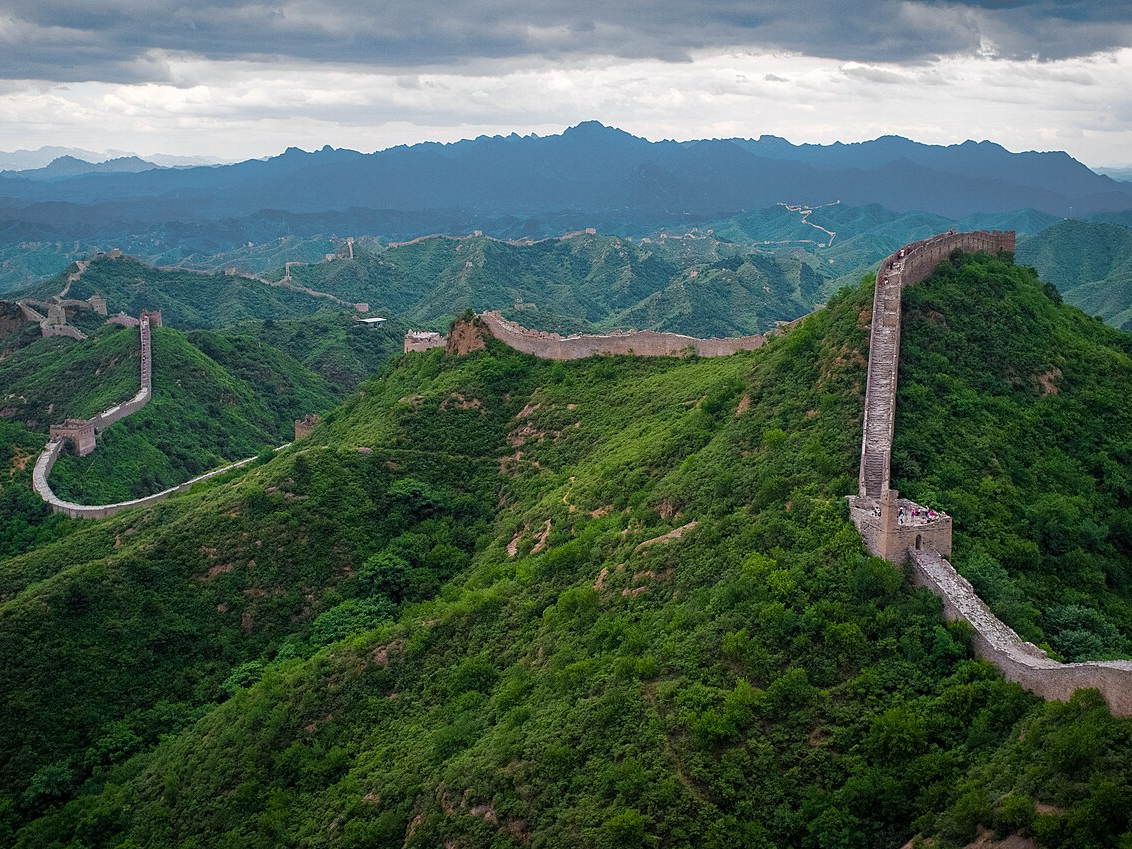
Great Wall, Forbidden City & Imperial Heritage
Q: What is China's most famous defensive structure?
A: Great Wall.
Q: Was the Great Wall built all at once by one emperor?
A: No.
Q: Over roughly how long did wall-building traditions continue?
A: Many centuries across different states and dynasties.
Q: Which dynasty built many of the famous masonry sections seen today?
A: Ming dynasty.
Q: What earlier dynasty connected and expanded frontier walls after unification?
A: Qin dynasty.
Q: Did Qin Shi Huang build every surviving Great Wall section?
A: No.
Q: In what year was the Great Wall inscribed by UNESCO?
A: 1987.
Q: What was the wall's central military purpose?
A: Frontier defense, communication, control, and movement.
Q: What towers punctuate many wall sections?
A: Watchtowers and signal towers.
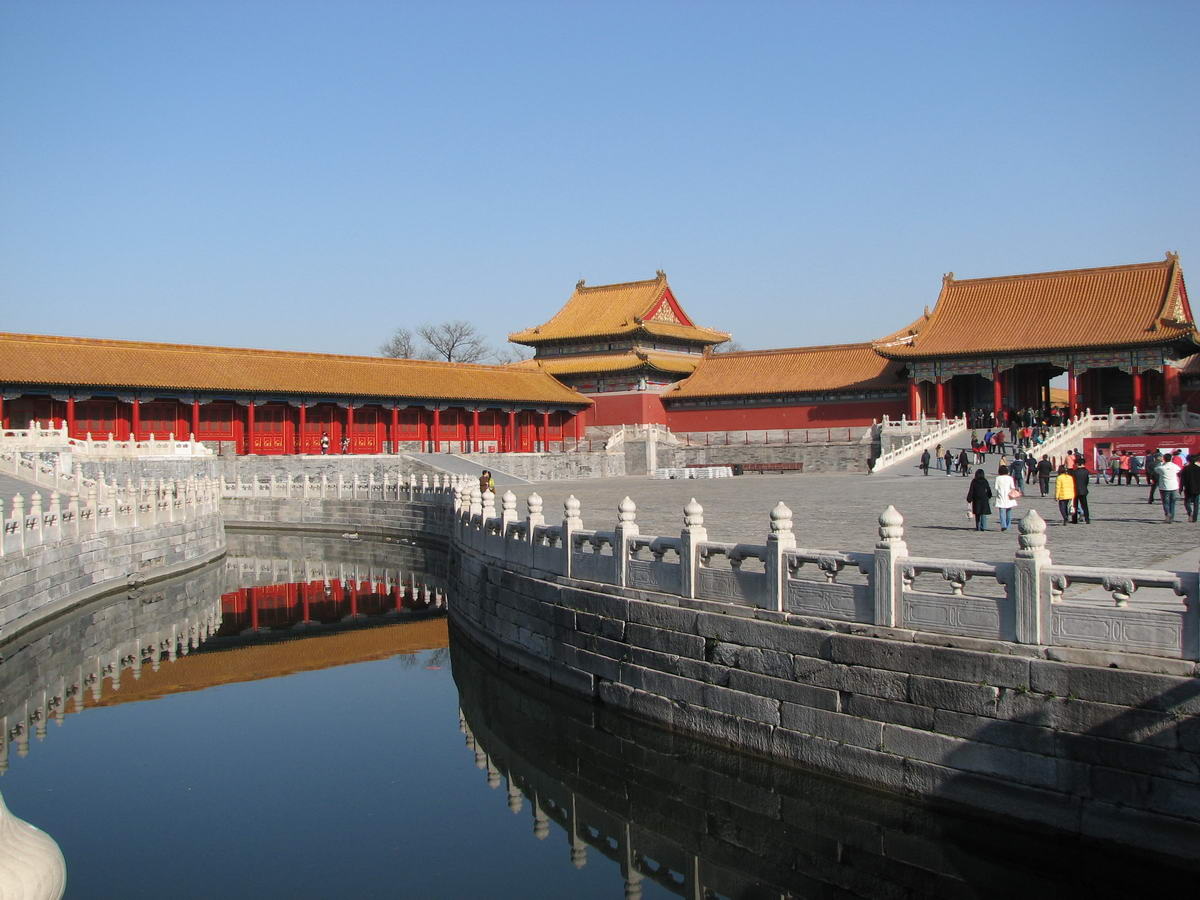
Q: What famous imperial palace complex lies in central Beijing?
A: Forbidden City.
Q: Which dynasties ruled from the Forbidden City?
A: Ming and Qing.
Q: About how long did it serve as the seat of supreme imperial power?
A: Roughly five centuries.
Q: What museum occupies the Forbidden City today?
A: Palace Museum.
Q: What huge square lies immediately south of the Forbidden City?
A: Tiananmen Square.
Q: What gate gives Tiananmen Square its name?
A: Gate of Heavenly Peace, or Tian'anmen.
Q: What royal garden complex northwest of central Beijing is famous for lakes and pavilions?
A: Summer Palace.
Q: What imperial ritual complex in Beijing includes the Hall of Prayer for Good Harvests?
A: Temple of Heaven.
Q: What emperor unified China in 221 BCE?
A: Qin Shi Huang.
Q: What army was buried near his mausoleum?
A: Terracotta Army.
Q: About how many terracotta soldiers and horses does UNESCO describe in the mausoleum complex?
A: More than 8,000 figures in the vast archaeological complex.
Q: Are all Terracotta Army faces identical?
A: No.
Q: What material are the figures made from?
A: Terracotta, or fired clay.
Q: What ancient capital is associated with the Terracotta Army?
A: Xi'an area, historically near Qin capitals.
Q: What ancient Silk Road city was called Chang'an?
A: Xi'an's historical predecessor.
Q: What cave complex in Gansu contains Buddhist art spanning centuries?
A: Mogao Caves.
Q: What ancient walled city in Shanxi is a UNESCO site?
A: Pingyao.
Q: What huge Buddhist statues are carved at Longmen near Luoyang?
A: Longmen Grottoes.
Q: What does UNESCO say the Forbidden City represents?
A: A supreme model of ancient Chinese palace architecture and imperial court culture.
Q: What does imperial heritage reveal beyond rulers?
A: Religion, bureaucracy, art, architecture, engineering, ritual, defense, and labor organization.
Q: Why should China trivia separate dynasties carefully?
A: Famous monuments often combine construction, rebuilding, and use across very different historical periods.
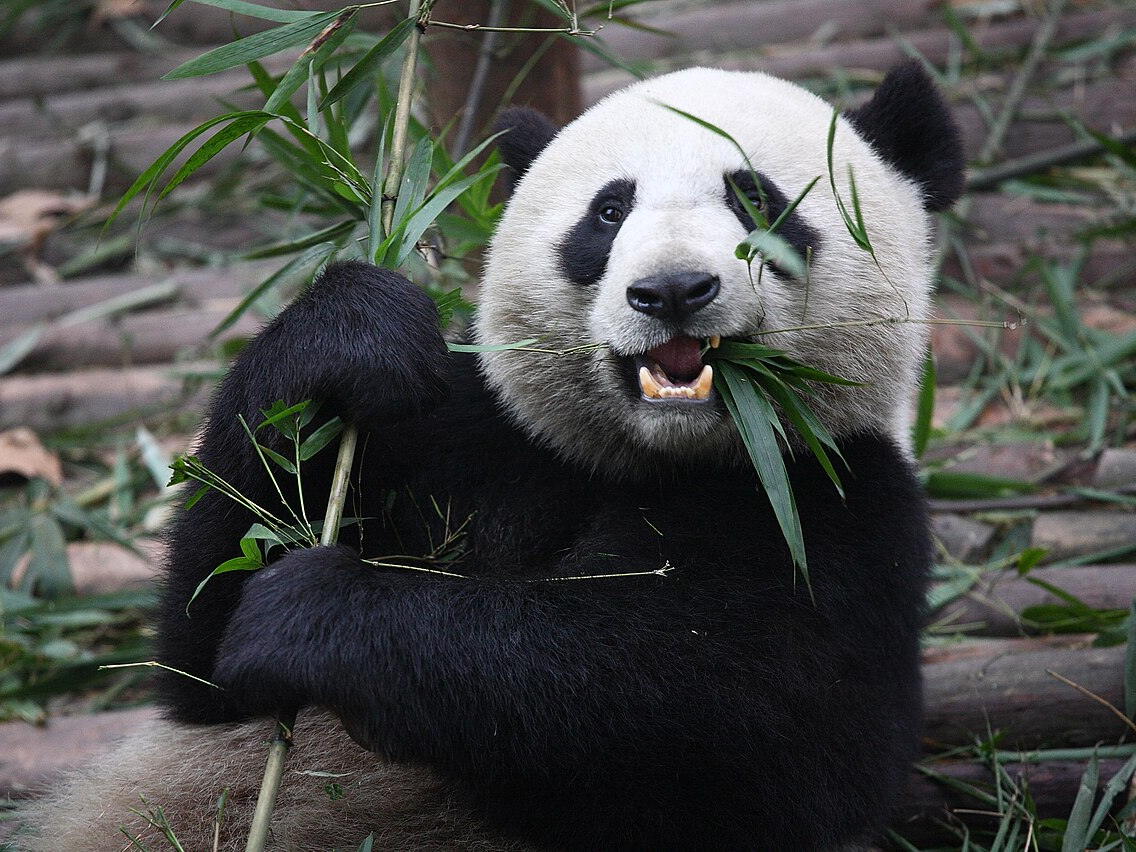
Pandas, Inventions, Festivals & Food
Q: What black-and-white bear is strongly associated with China?
A: Giant panda.
Q: What does the giant panda mainly eat?
A: Bamboo.
Q: Is a panda biologically a bear?
A: Yes.
Q: What region is especially associated with wild giant pandas?
A: Mountain forests of Sichuan and neighboring areas.
Q: What conservation center city is famous for panda research?
A: Chengdu.
Q: What traditional calendar celebration marks the new lunar year?
A: Spring Festival, commonly called Chinese New Year internationally.
Q: What color is strongly associated with luck and celebration?
A: Red.
Q: What envelopes are traditionally given during New Year celebrations?
A: Red envelopes, or hongbao.
Q: What animal cycle repeats every twelve years?
A: Chinese zodiac.
Q: Name one zodiac animal.
A: Rat, Ox, Tiger, Rabbit, Dragon, Snake, Horse, Goat, Monkey, Rooster, Dog, or Pig.
Q: Which zodiac creature is mythological?
A: Dragon.
Q: What festival features mooncakes?
A: Mid-Autumn Festival.
Q: What festival features dragon-boat racing?
A: Dragon Boat Festival.
Q: What poet is commemorated by Dragon Boat Festival traditions?
A: Qu Yuan.
Q: What writing material was developed in ancient China and improved during the Han era?
A: Paper.
Q: What technology uses carved or movable surfaces to reproduce text?
A: Printing.
Q: What explosive invention originated in China?
A: Gunpowder.
Q: What navigation technology used magnetism?
A: Compass.
Q: What four inventions are often grouped as the Four Great Inventions?
A: Papermaking, printing, gunpowder, and compass.
Q: What fine fabric gave the Silk Road its modern name?
A: Silk.
Q: What insect produces silk fiber?
A: Silkworm.
Q: What drink has ancient roots in China?
A: Tea.
Q: What style of Chinese cuisine is famous for málà heat and numbing peppercorn?
A: Sichuan cuisine.
Q: What spice creates Sichuan pepper's numbing sensation?
A: Sichuan peppercorn.
Q: Is Sichuan pepper botanically the same as black pepper?
A: No.
Q: What Cantonese meal style serves small dishes with tea?
A: Dim sum.
Q: What does yum cha literally relate to?
A: Drinking tea.
Q: What Beijing specialty features roasted duck?
A: Peking duck.
Q: What northern staple is often more common than rice in wheat-growing regions?
A: Noodles, dumplings, and breads made from wheat.
Q: Why is the phrase “Chinese food” extremely broad?
A: Regional cuisines differ drastically in ingredients, climate, techniques, staple grains, and flavor traditions.
Arts, Sports, Modern Landmarks & Hard China Trivia
Q: What character-based writing system is used for written Chinese?
A: Chinese characters, or hanzi.
Q: Is written Chinese an alphabet?
A: No.
Q: What Romanization system is widely used for Mandarin pronunciation?
A: Hanyu Pinyin.
Q: What does Beijing mean literally?
A: Northern Capital.
Q: What does Nanjing mean?
A: Southern Capital.
Q: What traditional philosophical system is associated with Confucius?
A: Confucianism.
Q: What philosophical tradition centers on the Dao?
A: Daoism.
Q: What religion entered China from India and Central Asia?
A: Buddhism.
Q: What martial art is associated with Shaolin traditions?
A: Shaolin kung fu.
Q: What slow movement practice is often seen in parks?
A: Tai chi.
Q: What board game uses black and white stones on a grid and is called weiqi in China?
A: Go.
Q: What racket sport has China dominated internationally for decades?
A: Table tennis.
Q: What city hosted the 2008 Summer Olympics?
A: Beijing.
Q: What stadium became known as the Bird's Nest?
A: Beijing National Stadium.
Q: What aquatics venue became known as the Water Cube?
A: Beijing National Aquatics Center.
Q: What unusual Olympic distinction did Beijing gain in 2022?
A: First city to host both Summer and Winter Olympic Games.
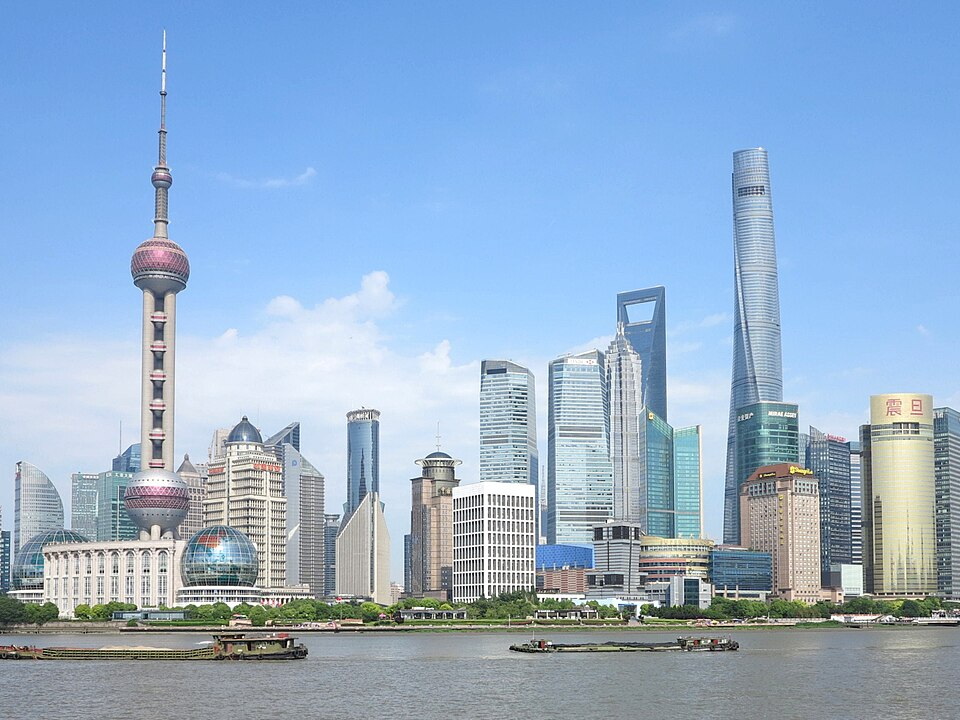
Q: What Shanghai skyscraper twists upward in Pudong?
A: Shanghai Tower.
Q: What tower with spherical observation decks is a Shanghai icon?
A: Oriental Pearl Tower.
Q: What city is famous for an army of terracotta soldiers?
A: Xi'an.
Q: What city is famous for pandas?
A: Chengdu.
Q: What city is famous for the Bund?
A: Shanghai.
Q: What city is famous for the Forbidden City?
A: Beijing.
Q: What city is famous for West Lake?
A: Hangzhou.
Q: What city is famous for classical gardens in nearby Jiangsu?
A: Suzhou.
Q: What ancient route connected China with Central Asia and beyond?
A: Silk Road networks.
Q: Was the Silk Road one single road?
A: No.
Q: What dynasty is famous for Terracotta Army unification?
A: Qin.
Q: What dynasty is strongly associated with Silk Road expansion?
A: Han.
Q: What dynasty built many famous Great Wall sections?
A: Ming.
Q: Why is China especially deep trivia material?
A: Ancient states, diverse geography, writing, philosophy, food, engineering, inventions, heritage sites, wildlife, megacities, and regional cultures span thousands of years.
How Did You Score?
If Qomolangma, Chang Jiang, Pudong, Putonghua, the Mogao Caves, the Four Great Inventions, Qu Yuan, and the distinction between Qin and Ming wall-building all came easily, your China trivia has excellent character.

Ellie Simons creates and edits Random Trivia. She researches trivia using primary and authoritative sources whenever possible and is currently reviewing the site's older trivia library for accuracy, clarity, and playability. Read more on the About page.
About this quiz
Site editor: Ellie Simons. Read our Trivia Methodology to learn how questions are researched and updated. Page last updated: . Report an error.