
Bees range from tiny solitary miners to bustling honeybee colonies, and most have no interest in your picnic soda.
These bee trivia questions distinguish honeybee behavior from the wider world of bee species while covering anatomy, pollination, and conservation.
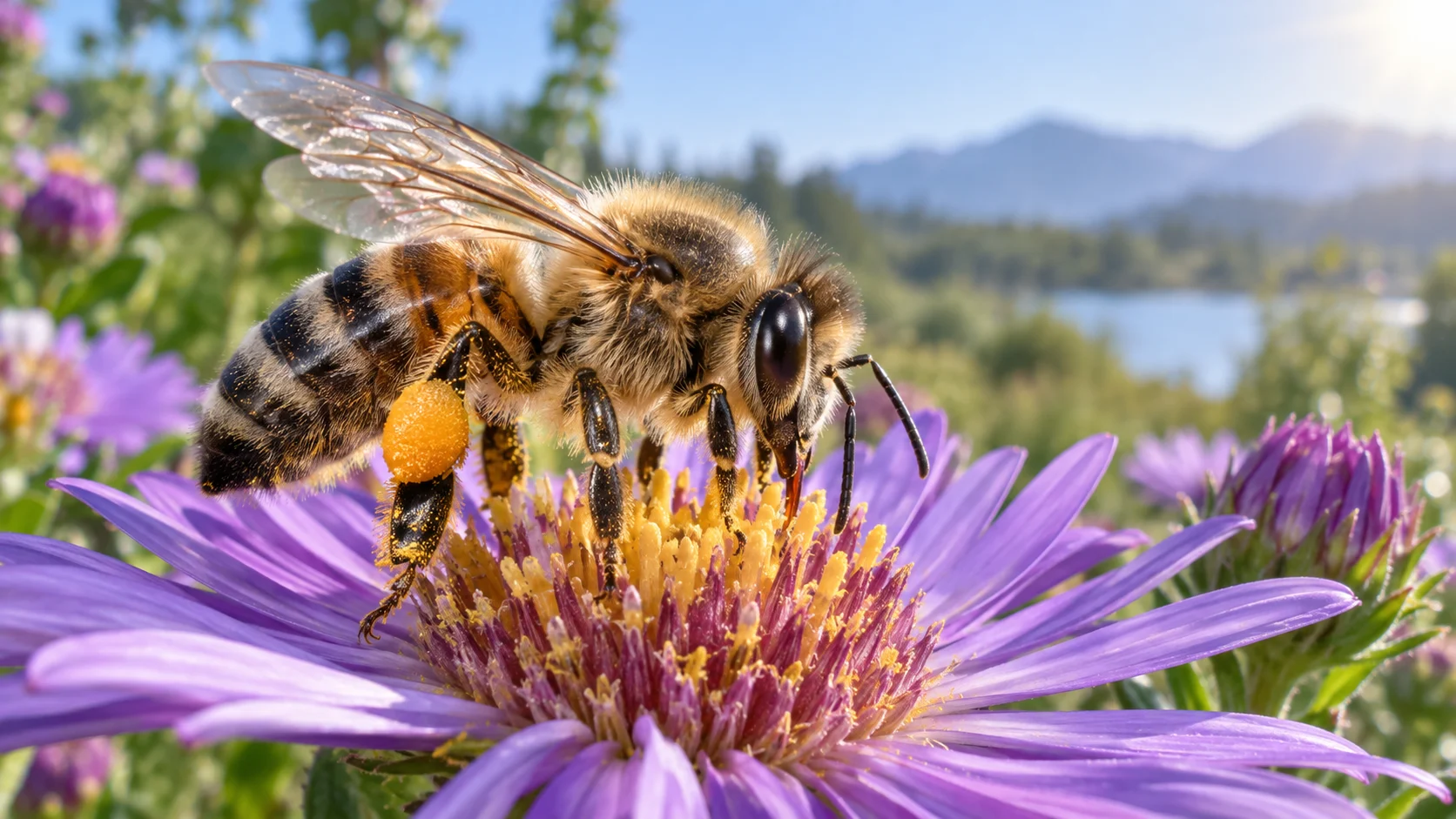
Bee Bodies from Antennae to Stingers
Start with the structures that help bees fly, feed, sense flowers, and carry pollen.
- How many main body sections does an adult bee have?
Answer: Three - What are the three main body sections of a bee?
Answer: Head, thorax, and abdomen - How many legs does an adult bee have?
Answer: Six - How many wings do most adult bees have?
Answer: Four - Where are a bee's wings and legs attached?
Answer: The thorax - How many antennae does a bee have?
Answer: Two - What mouthpart do many bees use to lap nectar?
Answer: The proboscis or tongue - What are a bee's large paired eyes called?
Answer: Compound eyes - What are the three small simple eyes on top of the head called?
Answer: Ocelli - What structures hook a bee's forewings and hindwings together in flight?
Answer: Hamuli - What branched body hairs help bees collect pollen?
Answer: Plumose hairs - What pollen-carrying structure occurs on many bees' legs or abdomen?
Answer: A scopa - What is the pollen basket on a honeybee hind leg called?
Answer: A corbicula - Which sex has a stinger in bee species that sting?
Answer: Females - Why do male bees lack stingers?
Answer: A stinger is a modified egg-laying structure
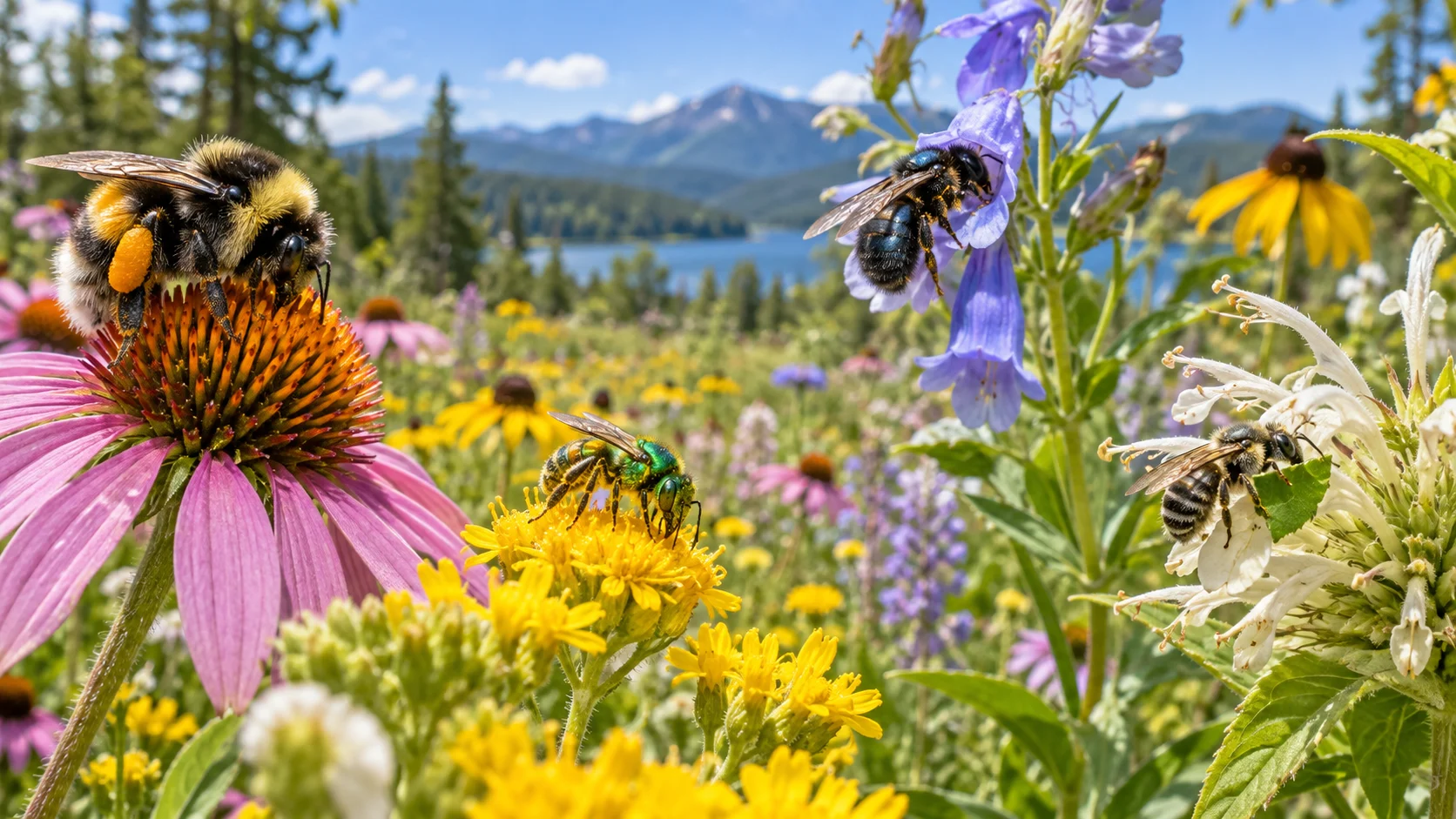
A World of Bee Diversity
Honeybees are only one branch of a family tree containing thousands of very different species.
- Approximately how many described bee species exist worldwide?
Answer: More than 20,000 - Are most bee species social or solitary?
Answer: Solitary - What genus includes western honeybees?
Answer: Apis - What is the scientific name of the western honeybee?
Answer: Apis mellifera - What genus includes many bumblebees?
Answer: Bombus - What nesting habit gives mason bees their common name?
Answer: They use mud to partition nest cells - What material do leafcutter bees use to line nest cells?
Answer: Cut pieces of leaves - Where do mining bees commonly nest?
Answer: In the ground - What behavior gives carpenter bees their name?
Answer: Excavating nests in wood - Do carpenter bees eat structural wood?
Answer: No, they excavate it - What metallic colors are many sweat bees known for?
Answer: Green, blue, or bronze - Why are some halictid bees called sweat bees?
Answer: They may seek salts from perspiration - What are cuckoo bees?
Answer: Bees that lay eggs in other bees' nests - Which continent has no native bee species?
Answer: Antarctica - Are all yellow-and-black flying insects bees?
Answer: No
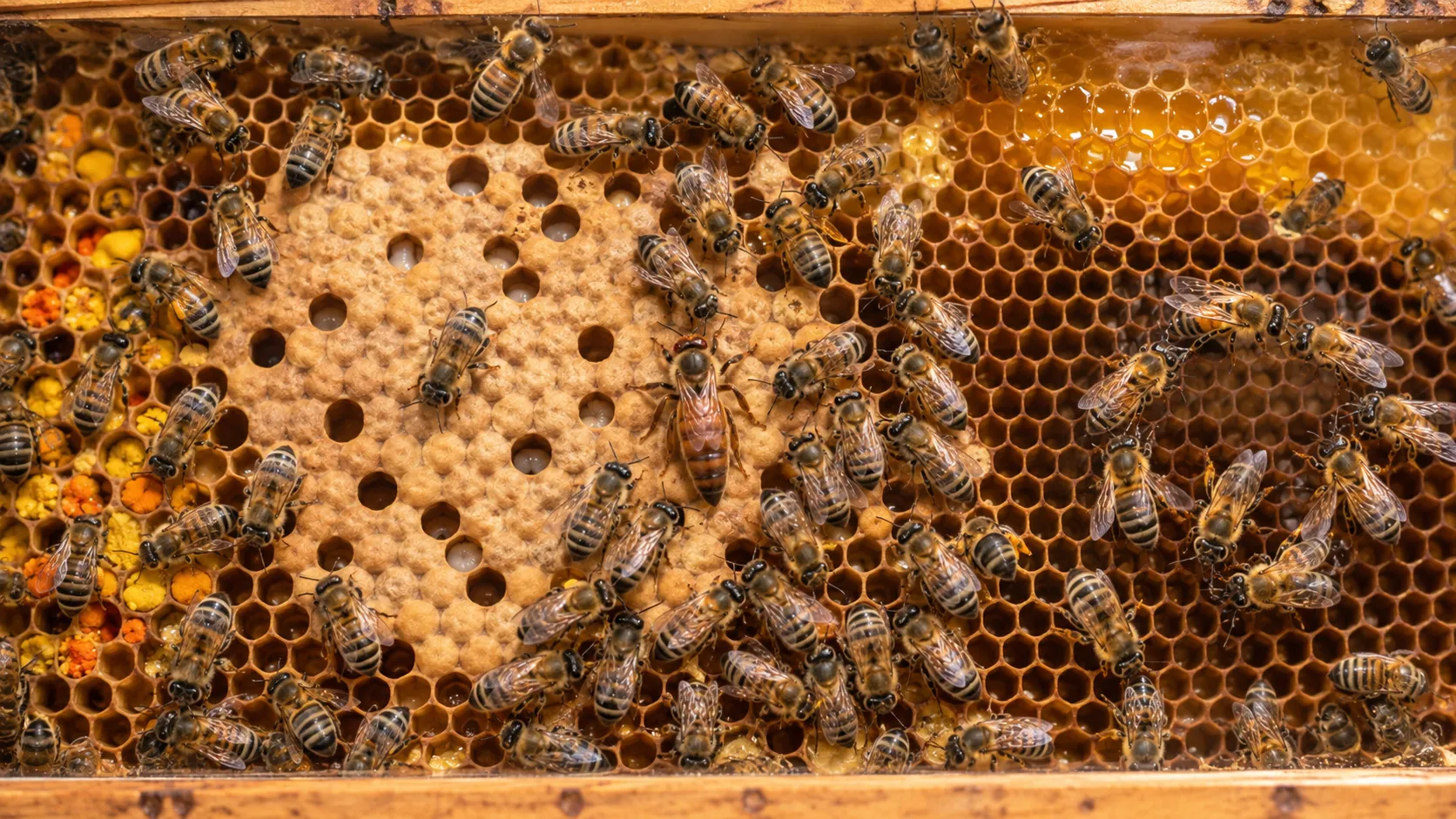
Inside a Honeybee Colony
This round is specifically about social honeybees, not a universal description of every bee.
- What three adult castes occur in a honeybee colony?
Answer: Queen, workers, and drones - Which caste normally lays most eggs?
Answer: The queen - Are worker honeybees male or female?
Answer: Female - What is a male honeybee called?
Answer: A drone - What is the drone's primary reproductive role?
Answer: Mating with a queen - What substance do workers feed young queen larvae in abundance?
Answer: Royal jelly - Where do honeybees store honey?
Answer: In wax comb cells - Who produces beeswax in a honeybee colony?
Answer: Young worker bees - What shape are honeybee comb cells?
Answer: Hexagonal - What is brood?
Answer: Developing eggs, larvae, and pupae - What is capped brood?
Answer: Developing brood sealed in cells - What is swarming?
Answer: A queen and many workers leaving to found a new colony - What is supersedure?
Answer: Workers replacing an old or failing queen - What is a nuptial flight?
Answer: A queen's mating flight - Can a healthy honeybee colony contain tens of thousands of workers in peak season?
Answer: Yes
Flowers, Pollen, and Pollination
Bees visit flowers for food, and plants often gain successful reproduction along the way.
- What sweet liquid do flowers offer many bees?
Answer: Nectar - What protein-rich floral material do bees collect?
Answer: Pollen - What is pollination?
Answer: Transfer of pollen to a flower's receptive female structure - What is cross-pollination?
Answer: Pollen transfer between different plants of the same species - Do bees deliberately pollinate flowers for the plant's benefit?
Answer: No, pollination is usually a byproduct of foraging - What is buzz pollination?
Answer: Vibrating flowers to release pollen - Which familiar crop benefits from buzz pollination?
Answer: Tomatoes - Can honeybees perform true buzz pollination?
Answer: No - Which bees commonly perform buzz pollination?
Answer: Bumblebees and some solitary bees - What is floral constancy?
Answer: Repeatedly visiting one flower species during a foraging trip - Why can floral constancy help plants?
Answer: It moves compatible pollen between the same species - What ultraviolet feature can guide bees toward floral rewards?
Answer: Nectar guides - Which colors can bees see that humans cannot?
Answer: Ultraviolet wavelengths - Can bees see red the same way humans do?
Answer: No - What is a pollinator garden?
Answer: A garden providing nectar, pollen, nesting resources, and reduced pesticide risk
Nests and Bee Life Cycles
Follow bees from egg to adult in nests that may be underground, inside stems, or built in cavities.
- What four stages make up complete bee metamorphosis?
Answer: Egg, larva, pupa, adult - What emerges from a bee egg?
Answer: A larva - Does a bee larva resemble an adult bee?
Answer: No - At what stage does major adult-body transformation occur?
Answer: The pupa - Where do most solitary bee females place pollen and nectar for young?
Answer: In individual brood cells - Do most solitary bee mothers care for offspring after sealing the cell?
Answer: No - Where do many solitary bee species nest?
Answer: In soil - What are cavity-nesting bees?
Answer: Bees using hollow stems, beetle holes, or similar spaces - What is a bee hotel?
Answer: A human-made nesting structure for some cavity-nesting bees - Why must bee hotels be maintained?
Answer: Dirty, damp, or crowded materials can harbor parasites and disease - What do ground-nesting bees need at some sites?
Answer: Patches of suitable bare or lightly vegetated soil - Do bumblebee colonies usually persist for many years?
Answer: No, most annual colonies die except new queens - Where do many bumblebee queens spend winter?
Answer: In sheltered hibernation sites - What starts a typical temperate bumblebee colony in spring?
Answer: A mated queen - What does diapause allow a bee to do?
Answer: Pause development or activity through an unfavorable season
Bee Senses, Signals, and Behavior
Bees use scent, vibration, landmarks, and in honeybees, a celebrated dance language.
- What do bee antennae detect?
Answer: Odors, touch, humidity, and other cues - What honeybee dance communicates direction and distance to food?
Answer: The waggle dance - What reference does the waggle dance use for direction?
Answer: The sun's position - Who decoded the honeybee waggle dance?
Answer: Karl von Frisch - What honeybee dance often indicates food near the hive?
Answer: The round dance - What chemical signals coordinate insect behavior?
Answer: Pheromones - What is thermoregulation in a honeybee colony?
Answer: Controlling nest temperature through behavior - How do honeybees cool a hot hive?
Answer: Fanning and evaporating water - How can honeybees warm brood?
Answer: Clustering and generating heat with muscles - What is grooming?
Answer: Cleaning the body or another bee - What behavior lets some bees dislodge pollen from poricidal flowers?
Answer: Buzz pollination - Can bees learn colors and odors associated with rewards?
Answer: Yes - What is a homing flight?
Answer: A flight used to orient to the nest location - What is robbing in honeybees?
Answer: Workers stealing stored honey from another colony - Why do many solitary male bees patrol flowers or nesting areas?
Answer: To find mates
Honey, Wax, and Human Beekeeping
These questions separate colony products from the far broader ecological value of bees.
- What do honeybees make by processing and dehydrating nectar?
Answer: Honey - Why do honeybees store honey?
Answer: As food for times when forage is scarce - Do all bee species produce harvestable honey stores?
Answer: No - What is beekeeping also called?
Answer: Apiculture - What is an apiary?
Answer: A place where managed bee colonies are kept - What removable-frame hive was patented by L. L. Langstroth in 1852?
Answer: The Langstroth hive - What principle makes movable frames practical?
Answer: Bee space - What is a smoker used for?
Answer: Producing cool smoke that helps calm honeybees - What is a hive tool?
Answer: A lever and scraper used to open and inspect hives - What is a honey super?
Answer: A hive box intended mainly for honey storage - What device spins honey from frames?
Answer: A honey extractor - What is propolis?
Answer: Plant resin collected and used by honeybees to seal the hive - What is bee bread?
Answer: Stored pollen mixed with nectar or honey and microbes - What product is made from secretions workers use to build comb?
Answer: Beeswax - What is pollination service in agriculture?
Answer: Managed placement of colonies to pollinate crops
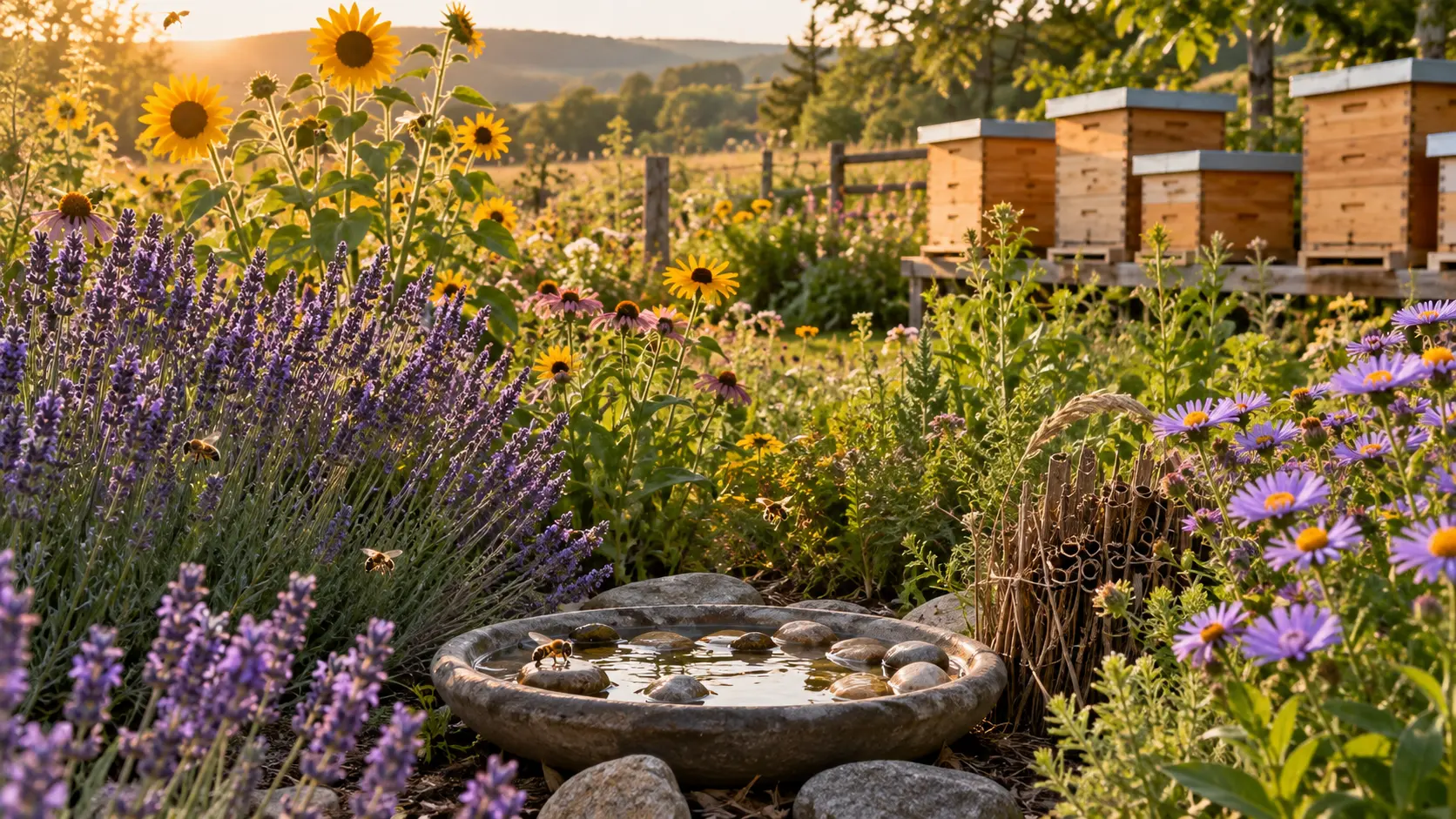
Threats, Conservation, and Bee-Friendly Choices
Finish by sorting real pressures from myths and focusing on actions that help diverse bee communities.
- What parasitic mite is a major threat to western honeybee colonies?
Answer: Varroa destructor - What pathogen-related condition affects honeybee larvae and has American and European forms?
Answer: Foulbrood - What is colony collapse disorder?
Answer: A syndrome involving sudden loss of most adult worker honeybees - Is every honeybee colony loss colony collapse disorder?
Answer: No - What can habitat loss remove from native bees?
Answer: Forage and nesting sites - Why can broad pesticide exposure harm bees?
Answer: It can kill them or impair behavior and reproduction - What pesticide class has received attention for bee risks?
Answer: Neonicotinoids - Why are bloom-time pesticide applications especially risky?
Answer: Bees may be actively foraging on treated flowers - What garden choice can provide food across seasons?
Answer: Planting diverse species with staggered bloom times - Why include native plants?
Answer: They often support local pollinator relationships - Why leave some hollow stems over winter?
Answer: Cavity-nesting bees may be developing inside - Why avoid excessive fall cleanup?
Answer: Leaf litter and stems can shelter overwintering insects - What is a major difference between honeybee and native-bee conservation?
Answer: Managed honeybee health is not identical to conserving wild bee diversity - Can nonnative managed honeybees compete with wild bees for flowers in some settings?
Answer: Yes - What is the best first step when a bee nest poses a concern?
Answer: Identify the species and risk before choosing a response
Keep the game going with insect trivia, plants trivia, environmental science trivia, and animal trivia.
Sources and Further Reading
- USDA Bee Research Laboratory
- U.S. Geological Survey native bee inventory
- Smithsonian: Bees
- Xerces Society pollinator conservation
- Encyclopaedia Britannica: Bee

Ellie Ewert is the founder and author of RandomTrivia.co, blending her passion for research with years of experience in content creation to deliver accurate, engaging, and well-sourced trivia. Dedicated to providing readers with trustworthy and entertaining facts, she applies meticulous fact-checking and SEO expertise to ensure every article meets the highest standards. Read more about our high standards in our Editorial Guidelines.