
Plants power our planet... feeding us, shading us, and dazzling us with flowers, forests, and fascinating survival tricks.
This quiz-style guide moves from simple to advanced: classification, anatomy, photosynthesis, reproduction, trees and forests, edible plants and spices, home gardening, and the strangest plant behaviors on Earth.
Plant Basics & Classification
Q: What is the scientific study of plants called?
A: Botany.
Q: To which kingdom do plants belong?
A: Kingdom Plantae.
Q: What are the two major groups of seed plants?
A: Gymnosperms and angiosperms.
Q: Mosses, liverworts, and hornworts are collectively known as what?
A: Bryophytes.
Q: How do ferns and their allies primarily reproduce?
A: By releasing spores.
Q: In angiosperms, seeds are enclosed within what structure?
A: A fruit (mature ovary).
Q: How many cotyledons do monocots and eudicots have, respectively?
A: One and two.
Q: What leaf-vein pattern is typical of monocots versus eudicots?
A: Parallel vs. netted (reticulate).
Q: Binomial scientific names contain which two ranks?
A: Genus and species.
Q: How are scientific names usually formatted?
A: Italicized; Genus capitalized, species lowercase.
Q: What two vascular tissues move water and sugars?
A: Xylem and phloem.
Q: Mycorrhizae describe a symbiosis between plant roots and what?
A: Fungi.
Q: In mosses, which life stage is dominant: sporophyte or gametophyte?
A: Gametophyte.
Q: Land plants’ closest algal relatives belong to which group?
A: Charophyte green algae.
Q: Carboniferous “coal forests” were dominated by which plants?
A: Lycophytes, horsetails, and ferns.
Q: Name the four living lineages of gymnosperms.
A: Conifers, cycads, ginkgo, gnetophytes.
Q: Which plant clade is defined by having flowers?
A: Angiosperms.
Q: What does it mean if a species is endemic?
A: It occurs naturally only in a specific area.
Q: In taxonomy, what is a “type specimen”?
A: The reference specimen for a species’ description.
Q: What does ICN (or ICNafp) stand for?
A: International Code of Nomenclature for algae, fungi, and plants.
Q: The APG system classifies which group using DNA evidence?
A: Angiosperms (Angiosperm Phylogeny Group).

Anatomy & Growth
Q: What are the three basic organs of most vascular plants?
A: Roots, stems, and leaves.
Q: Plant cell walls are primarily made of what carbohydrate?
A: Cellulose.
Q: Which organelles carry out photosynthesis?
A: Chloroplasts.
Q: What leaf pores regulate gas exchange and water loss?
A: Stomata.
Q: Which vascular tissue transports water and minerals upward?
A: Xylem.
Q: Which vascular tissue distributes sugars from sources to sinks?
A: Phloem.
Q: Where does primary (length) growth occur?
A: At apical meristems.
Q: What produces secondary growth (thickening) in woody plants?
A: Lateral meristems—vascular and cork cambium.
Q: Tree “annual rings” mostly record changes in which tissue?
A: Secondary xylem.
Q: Which polymer adds stiffness and waterproofing to woody walls?
A: Lignin.
Q: The waxy epidermal layer that reduces water loss is called what?
A: The cuticle.
Q: Roots that arise from stems or leaves are called what?
A: Adventitious roots.
Q: Legume root nodules house bacteria that fix what gas?
A: Nitrogen (N₂).
Q: Tiny leaf hairs that deter herbivores and reduce water loss are called?
A: Trichomes.
Q: What support cells have thick, lignified walls and are dead at maturity?
A: Sclerenchyma (fibers and sclereids).
Q: Which tissue provides flexible support in growing regions?
A: Collenchyma.
Q: Which hormone is key to apical dominance and phototropism?
A: Auxin.
Q: Name three directional growth responses to stimuli (tropisms).
A: Phototropism, gravitropism, thigmotropism.
Q: What is the common name for secondary xylem?
A: Wood.
Q: What specialized roots help mangroves exchange gases in waterlogged soils?
A: Pneumatophores.
Q: What waterproof band in the endodermis controls root water entry?
A: The Casparian strip (suberin).
Photosynthesis & Physiology
Q: Which green pigment captures light energy?
A: Chlorophyll.
Q: In photosynthesis, which gas is taken in and which released?
A: CO₂ in; O₂ out.
Q: Photosynthesis has two main stages—name them.
A: Light reactions and the Calvin cycle.
Q: What enzyme fixes CO₂ in the Calvin cycle?
A: Rubisco.
Q: The splitting of water during photosynthesis is called what?
A: Photolysis.
Q: Light reactions produce which two molecules used in the Calvin cycle?
A: ATP and NADPH.
Q: Which cells open and close the stomata?
A: Guard cells.
Q: What mechanism explains upward water movement in xylem?
A: Cohesion–tension from transpiration pull.
Q: What distinguishes C3, C4, and CAM pathways?
A: Different CO₂-fixation strategies and separation in space/time.
Q: What wasteful process occurs when rubisco binds O₂?
A: Photorespiration.
Q: Name three common limiting factors for photosynthesis.
A: Light intensity, CO₂ concentration, temperature.
Q: In chloroplasts, where are thylakoids stacked, and what surrounds them?
A: Grana stacks within the stroma.
Q: The “Z-scheme” describes electron flow through which two complexes?
A: Photosystem II and Photosystem I.
Q: Name three essential macronutrients for plants.
A: Nitrogen, phosphorus, potassium (also Ca, Mg, S).
Q: What leaf symptom often signals nitrogen deficiency?
A: General chlorosis, starting with older leaves.
Q: What hypothesis explains sugar movement in phloem?
A: Pressure-flow (mass flow) hypothesis.
Q: Which hormone helps close stomata during drought?
A: Abscisic acid (ABA).
Q: What is photoperiodism?
A: Growth/flowering response to daylength.
Q: Which pigment system senses red/far-red light to set photoperiodic responses?
A: Phytochrome.
Q: What is etiolation?
A: Pale, elongated growth in darkness.
Q: CAM stands for what, and where is it common?
A: Crassulacean Acid Metabolism; many succulents and cacti.
Flowers, Pollination & Reproduction
Q: What are the male reproductive structures of a flower called?
A: Stamens (anther + filament).
Q: What structure includes stigma, style, and ovary?
A: The pistil/carpel.
Q: Angiosperms have double fertilization—what two tissues result?
A: Embryo and triploid endosperm.
Q: Collectively, what are sepals and petals called?
A: Calyx and corolla; together, perianth.
Q: Fruits develop from which floral part?
A: The ovary (sometimes with accessory tissues).
Q: Give one example each: simple, aggregate, and multiple fruit.
A: Cherry (simple), raspberry (aggregate), pineapple (multiple).
Q: Contrast dehiscent and indehiscent dry fruits.
A: Dehiscent split to release seeds; indehiscent do not.
Q: Define monoecious vs. dioecious.
A: Both sexes on one plant vs. sexes on separate plants.
Q: What mechanism prevents self-fertilization in many flowers?
A: Self-incompatibility.
Q: Name a trait typical of wind-pollinated flowers.
A: Reduced petals and abundant pollen.
Q: What are pollination syndromes?
A: Suites of traits tailored to specific pollinators.
Q: What are nectar guides, often visible in UV?
A: Patterns directing pollinators to nectar.
Q: The seed coat originates from which structure?
A: The integuments.
Q: What are stratification and scarification used for?
A: Breaking seed dormancy.
Q: What is apomixis?
A: Seed formation without fertilization.
Q: Name three asexual propagation methods in horticulture.
A: Cuttings, layering, grafting.
Q: Where are gymnosperm seeds borne?
A: Naked on cone scales.
Q: What is the composite “flower” of daisies technically called?
A: A capitulum (head) of many florets.
Q: What are pollinia, common in orchids?
A: Cohesive masses of pollen.
Q: Largest single flower vs. largest unbranched inflorescence—name them.
A: Rafflesia arnoldii; Amorphophallus titanum (titan arum).
Q: Darwin predicted a pollinator for a long-spurred orchid—what insect proved him right?
A: A long-tongued hawkmoth (Xanthopan morganii praedicta).
Trees, Forests & Wood
Q: Botanically, what distinguishes a tree from a shrub?
A: A single, self-supporting woody trunk (usually taller).
Q: What reproductive structures do conifers bear?
A: Cones.
Q: What does deciduous mean?
A: Seasonally sheds leaves.
Q: What science uses tree rings to date past events?
A: Dendrochronology.
Q: Contrast heartwood and sapwood.
A: Older, nonconducting vs. younger, conducting xylem.
Q: What is the tallest tree species on Earth?
A: Coast redwood (Sequoia sempervirens).
Q: What massive clonal aspen colony is often called the world’s heaviest organism?
A: Pando.
Q: The oldest known non-clonal trees are which species?
A: Great Basin bristlecone pine (Pinus longaeva).
Q: “Hardwood” and “softwood” refer to what distinction?
A: Angiosperm vs. gymnosperm wood, not actual hardness.
Q: Commercial cork is harvested from which tree?
A: Cork oak (Quercus suber).
Q: Name a famously dense, durable wood used for bearings.
A: Lignum vitae (Guaiacum).
Q: Which grass can grow astonishingly fast, even over 90 cm in a day?
A: Bamboo (some species).
Q: Which biome—also called boreal forest—is the world’s largest terrestrial biome?
A: Taiga.
Q: What coastal forests are dominated by salt-tolerant trees with aerial roots?
A: Mangroves.
Q: Underground fungal networks connecting trees are often nicknamed what (debated metaphor)?
A: The “wood wide web.”
Q: Traditional techniques that harvest new shoots from cut trunks/branches are called what?
A: Coppicing and pollarding.
Q: In wood anatomy, ring-porous vs. diffuse-porous refers to what?
A: Vessel size distribution across growth rings.
Q: Why is timber seasoned before use?
A: To reduce moisture and warping.
Q: What is the treeline?
A: The altitude/latitude limit where trees no longer grow.
Q: Oaks and beeches belong to which family?
A: Fagaceae.
Q: What ecological process replaces pioneer species with later communities over time?
A: Succession.
Edible Plants, Herbs & Spices
Q: Botanically, is a tomato a fruit or vegetable?
A: Fruit (culinarily used as a vegetable).
Q: What type of fruit is a strawberry?
A: An aggregate accessory fruit (achenes on receptacle).
Q: Botanically, what are bananas?
A: Berries.
Q: Botanically, what is an avocado?
A: A berry with one large seed.
Q: Peanuts belong to which plant group?
A: Legumes (Fabaceae).
Q: A potato is what kind of structure?
A: A stem tuber.
Q: A sweet potato is what kind of structure?
A: A storage root.
Q: An onion is what type of organ?
A: A bulb (modified leaves).
Q: Broccoli is primarily which plant part?
A: Immature flower buds.
Q: What is the fruit type of cereal grains like wheat and rice?
A: Caryopsis.
Q: Quinoa and amaranth are what kind of “grains”?
A: Pseudocereals.
Q: Saffron consists of what floral parts?
A: The dried stigmas of Crocus sativus.
Q: Vanilla comes from which plant family?
A: Orchids (Vanilla planifolia).
Q: Cinnamon is harvested from what tissue?
A: Inner bark of Cinnamomum trees.
Q: Cloves are which dried plant part?
A: Flower buds (Syzygium aromaticum).
Q: Nutmeg and mace come from which structures of the same fruit?
A: The seed (nutmeg) and aril (mace).
Q: Black peppercorns are dried what?
A: Drupes of Piper nigrum.
Q: Chocolate is made from the seeds of what tree?
A: Theobroma cacao.
Q: Coffee and tea come from which plants?
A: Coffea species; Camellia sinensis.
Q: What compound gives chilies their heat, measured in Scoville units?
A: Capsaicin.
Q: Which protein-rich edible seeds are called pulses?
A: Legumes like soybeans, peas, lentils.
Houseplants & Gardening Know-How
Q: What is the most common cause of houseplant decline?
A: Overwatering leading to root rot.
Q: What light do most tropical houseplants prefer?
A: Bright, indirect light.
Q: Which pot material dries out faster, terra-cotta or plastic?
A: Terra-cotta.
Q: In fertilizers, what do N-P-K stand for?
A: Nitrogen, phosphorus, potassium.
Q: Which easy plants root readily from stem cuttings in water or soil?
A: Pothos, philodendron, coleus, and similar.
Q: Which plant tolerates low light and infrequent watering especially well?
A: Snake plant (Dracaena/Sansevieria).
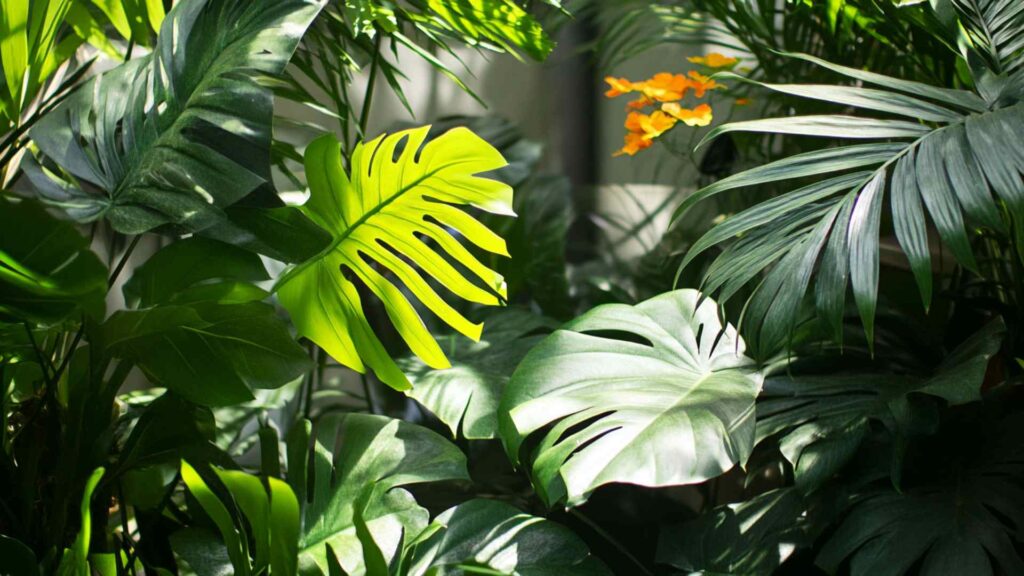
Q: Why do mature Monstera leaves develop holes (fenestrations)?
A: Age-related leaf development; more light/wind passage.
Q: What medium do many epiphytic orchids prefer?
A: Coarse, airy bark mixes.
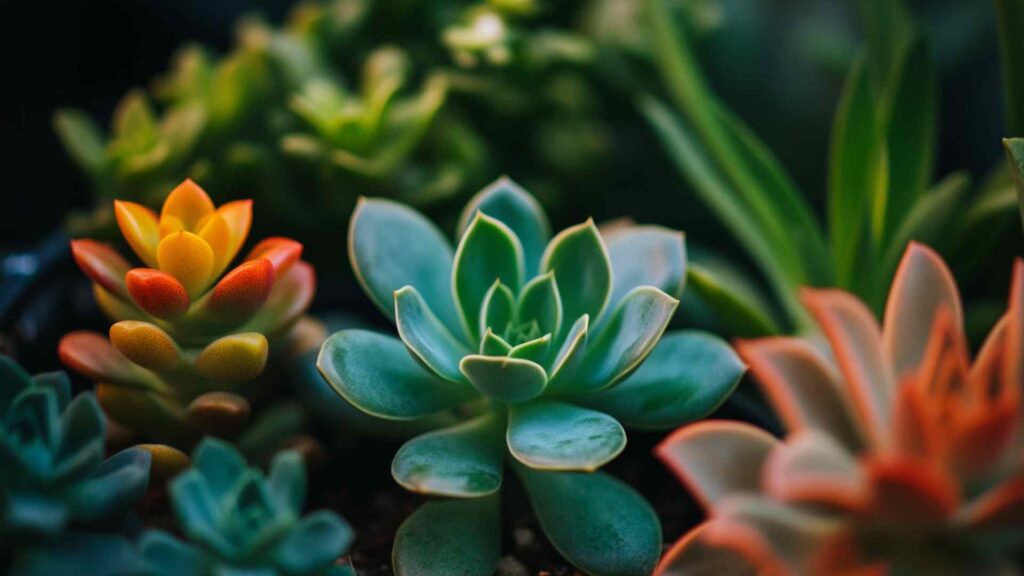
Q: What soil and light do most succulents need?
A: Gritty, fast-draining soil and strong light.
Q: What watering method evenly moistens soil from below?
A: Bottom watering.
Q: What do USDA hardiness zones help gardeners choose?
A: Plants suited to local winter minimums.
Q: What pruning rule removes the “three D’s”?
A: Dead, diseased, and damaged wood.
Q: Pinching which kitchen herb encourages bushy growth?
A: Basil.
Q: What does “leggy” seedling growth usually signal indoors?
A: Insufficient light.
Q: Name two benefits of mulch.
A: Conserves moisture; suppresses weeds.
Q: What companion is often used to help deter some pests in beds?
A: Marigolds (with mixed, context-dependent results).
Q: What common “organic” spray requires careful, targeted use on pests?
A: Neem oil.
Q: Why use sterile seed-starting mix?
A: To reduce damping-off disease.
Q: Why does soil pH matter, and which fruit loves acidic soil?
A: It affects nutrient availability; blueberries prefer acidic.
Q: What technique joins a scion to a rootstock?
A: Grafting.
Q: What propagation method roots a stem while still attached?
A: Air layering (e.g., rubber tree).
Weird & Wonderful Plants
Q: What triggers a Venus flytrap to snap shut?
A: Stimulating its sensitive trigger hairs twice in succession.
Q: Which plants trap prey in fluid-filled pitchers?
A: Pitcher plants (Nepenthes, Sarracenia).
Q: Which carnivores use sticky, glistening tentacles to ensnare insects?
A: Sundews (Drosera).
Q: Which aquatic carnivores use vacuum bladders to capture tiny prey?
A: Bladderworts (Utricularia).
Q: Which parasitic plant produces the largest single flower?
A: Rafflesia arnoldii.
Q: Which plant bears the tallest unbranched inflorescence and smells of decay?
A: Titan arum (Amorphophallus titanum).
Q: Which “sensitive” plant folds its leaflets when touched?
A: Mimosa pudica.
Q: What giant water lilies have dinner-plate leaves that can support careful weight?
A: The genus Victoria.
Q: Some orchids trick insects via sexual mimicry; what is this strategy called?
A: Pseudocopulation.
Q: Which South African succulents look like pebbles to avoid herbivores?
A: Lithops.
Q: What do we call plants that grow on other plants without parasitizing them?
A: Epiphytes.
Q: Which figs start life on branches and then engulf their hosts?
A: Strangler figs (Ficus).
Q: Which threadlike parasitic vine lacks chlorophyll and taps hosts with haustoria?
A: Dodder (Cuscuta).
Q: Mistletoe is what kind of parasite?
A: Hemiparasite—photosynthetic but host-tapping.
Q: Which desert oddity bears just two ever-growing leaves for centuries?
A: Welwitschia mirabilis.
Q: Which “resurrection plant” revives from extreme dryness?
A: Selaginella lepidophylla.
Q: What flowering plants live fully submerged in the sea?
A: Seagrasses (e.g., Zostera, Posidonia).
Q: Which African trees store water in massive trunks and live for millennia?
A: Baobabs (Adansonia).
Q: “Dragon’s blood” resin is famously harvested from which tree?
A: Dracaena cinnabari (among others).
Q: Which palm is often said to “walk” on stilt roots—though the claim is debated?
A: Socratea exorrhiza.
Q: What are the world’s smallest flowering plants?
A: Wolffia (duckweeds).

Ellie Simons creates and edits Random Trivia. She researches trivia using primary and authoritative sources whenever possible and is currently reviewing the site's older trivia library for accuracy, clarity, and playability. Read more on the About page.
About this quiz
Site editor: Ellie Simons. Read our Trivia Methodology to learn how questions are researched and updated. Page last updated: . Report an error.