
Flip the switch on a lively tour of charges, circuits, lightning, power plants, and bright ideas.
These questions cover the science that keeps electrons moving and modern life humming.
Charged Up Basics
Q: What subatomic particle carries a negative electric charge?
A: The electron.
Q: What subatomic particle carries a positive electric charge?
A: The proton.
Q: What happens when two charges with the same sign approach each other?
A: They repel.
Q: What happens when charges with opposite signs approach each other?
A: They attract.
Q: What is the flow of electric charge called?
A: Electric current.
Q: What pushes charge through an electric circuit?
A: A potential difference, or voltage.
Q: What property opposes current in a material?
A: Electrical resistance.
Q: What kind of electricity involves a buildup of charge rather than a continuous flow?
A: Static electricity.
Q: What electric field surrounds every electric charge?
A: A region where the charge exerts electric force.
Q: What is a material that allows charge to move easily?
A: A conductor.
Q: What is a material that strongly resists the movement of charge?
A: An insulator.
Q: Which metal is commonly used in household wiring?
A: Copper.
Q: Is rubber generally a conductor or an insulator?
A: An insulator.
Q: What law describes the force between two point charges?
A: Coulomb's law.
Q: What happens to electric force when the distance between two point charges doubles?
A: It becomes one-fourth as strong.
Current, Voltage, and Units
Q: What is the SI unit of electric current?
A: The ampere.
Q: What symbol represents the ampere?
A: A.
Q: What is the SI unit of electric charge?
A: The coulomb.
Q: One ampere equals one coulomb passing a point in how much time?
A: One second.
Q: What is the SI unit of electric potential difference?
A: The volt.
Q: What is the SI unit of electrical resistance?
A: The ohm.
Q: What is the SI unit of electric power?
A: The watt.
Q: What unit do electric companies commonly use to bill energy consumption?
A: The kilowatt-hour.
Q: Is a kilowatt-hour a unit of power or energy?
A: Energy.
Q: What is the SI unit of energy?
A: The joule.
Q: Which equation expresses Ohm's law?
A: V = IR.
Q: Which equation gives electrical power from voltage and current?
A: P = VI.
Q: How many watts are in one kilowatt?
A: 1,000.
Q: How many joules equal one watt-second?
A: One joule.
Q: Which instrument measures electric current?
A: An ammeter.
Inside a Circuit
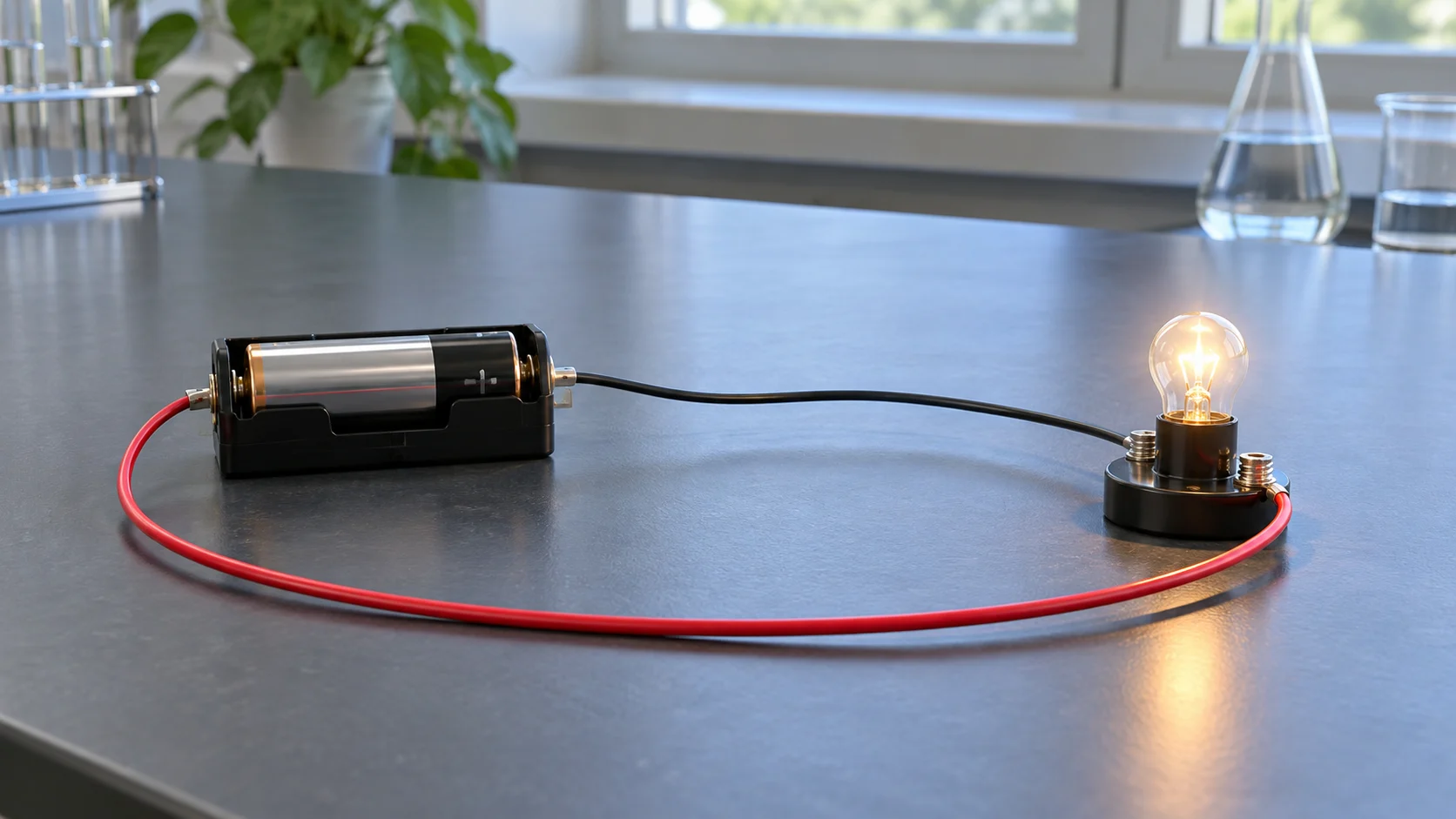
Q: What must a circuit provide for current to flow continuously?
A: A closed conducting path.
Q: What is a break in a circuit called?
A: An open circuit.
Q: What dangerous low-resistance path can allow excessive current?
A: A short circuit.
Q: What component opens or closes a circuit on command?
A: A switch.
Q: In a series circuit, how many paths does current have?
A: One.
Q: In a parallel circuit, do components share one path or separate branches?
A: Separate branches.
Q: What quantity is the same through every component in a series circuit?
A: Current.
Q: What quantity is the same across each branch of an ideal parallel circuit?
A: Voltage.
Q: What happens to total resistance when resistors are added in series?
A: It increases.
Q: What happens to total resistance when another branch is added in parallel?
A: It decreases.
Q: Which instrument measures voltage between two points?
A: A voltmeter.
Q: How is an ammeter connected to measure current through a component?
A: In series.
Q: How is a voltmeter connected to measure voltage across a component?
A: In parallel.
Q: What component is designed to limit current?
A: A resistor.
Q: What is the part of a circuit that uses electrical energy called?
A: A load.
Components at Work
Q: What component stores separated electric charge?
A: A capacitor.
Q: What is the SI unit of capacitance?
A: The farad.
Q: What component stores energy in a magnetic field when current flows?
A: An inductor.
Q: What is the SI unit of inductance?
A: The henry.
Q: What electronic component ideally allows current mainly in one direction?
A: A diode.
Q: What does LED stand for?
A: Light-emitting diode.
Q: What semiconductor device can act as a switch or amplifier?
A: A transistor.
Q: What device changes alternating voltage using electromagnetic induction?
A: A transformer.
Q: Can an ordinary transformer operate steadily on direct current?
A: No.
Q: What circuit component melts to interrupt dangerously high current?
A: A fuse.
Q: What reusable safety device trips open during excessive current?
A: A circuit breaker.
Q: What device converts chemical energy into electrical energy?
A: A battery.
Q: What is a single electrochemical unit within a battery called?
A: A cell.
Q: What material has conductivity between that of a conductor and an insulator?
A: A semiconductor.
Q: Which element is widely used to make semiconductor chips?
A: Silicon.
Static Sparks and Lightning
Q: What transfer of electrons can occur when unlike materials are rubbed together?
A: Triboelectric charging.
Q: Why can a charged balloon stick to a wall?
A: It polarizes charges in the wall and attracts them.
Q: What is the sudden movement of charge through air called?
A: An electric discharge.
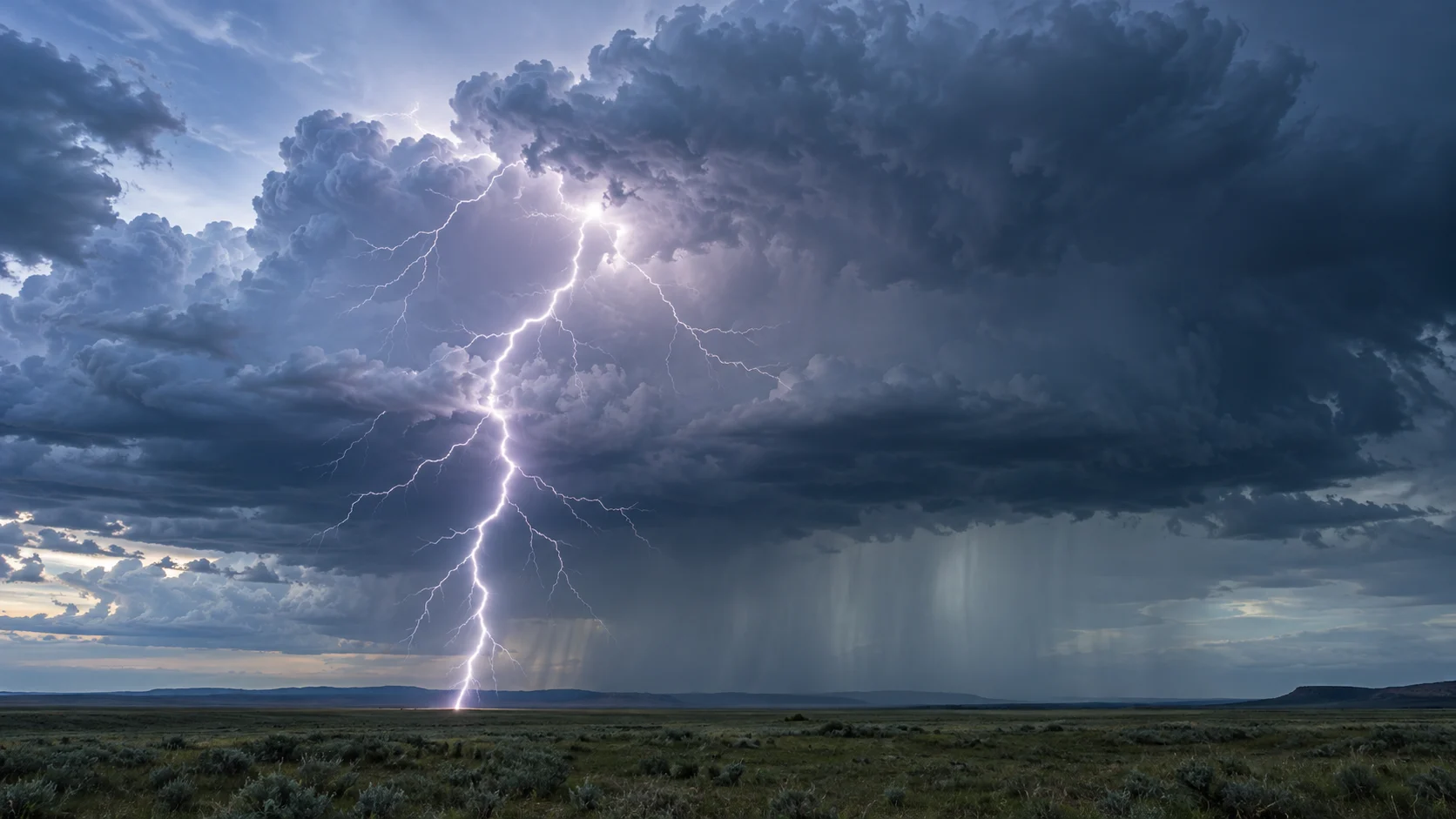
Q: What enormous atmospheric electric discharge occurs during storms?
A: Lightning.
Q: What sound is produced when lightning rapidly heats and expands air?
A: Thunder.
Q: Why is lightning seen before thunder is heard?
A: Light travels much faster than sound.
Q: What device gives lightning a preferred conducting path to ground?
A: A lightning rod.
Q: Who famously demonstrated the electrical nature of lightning with a kite experiment?
A: Benjamin Franklin.
Q: What machine uses a moving belt to build up very high static voltage?
A: A Van de Graaff generator.
Q: What instrument detects the presence of electric charge?
A: An electroscope.
Q: What effect makes hair stand apart near a charged dome?
A: Repulsion between like charges.
Q: What process safely transfers excess charge to Earth?
A: Grounding.
Q: Does humid air usually reduce or increase static charge buildup?
A: Reduce it.
Q: What blue-violet glow can appear when air ionizes around high-voltage conductors?
A: Corona discharge.
Q: What state of matter forms when a gas becomes ionized?
A: Plasma.
AC, DC, and the Power Grid
Q: What kind of current periodically reverses direction?
A: Alternating current.
Q: What kind of current flows in one direction?
A: Direct current.
Q: Do standard batteries supply AC or DC?
A: DC.
Q: Do ordinary U.S. wall outlets supply AC or DC?
A: AC.
Q: What is the standard grid frequency in the United States?
A: 60 hertz.
Q: What does a generator convert mechanical energy into?
A: Electrical energy.
Q: What does an electric motor convert electrical energy into?
A: Mechanical energy.
Q: Why is voltage stepped up for long-distance transmission?
A: To reduce current and energy losses.
Q: What network carries electricity from power plants to consumers?
A: The power grid.
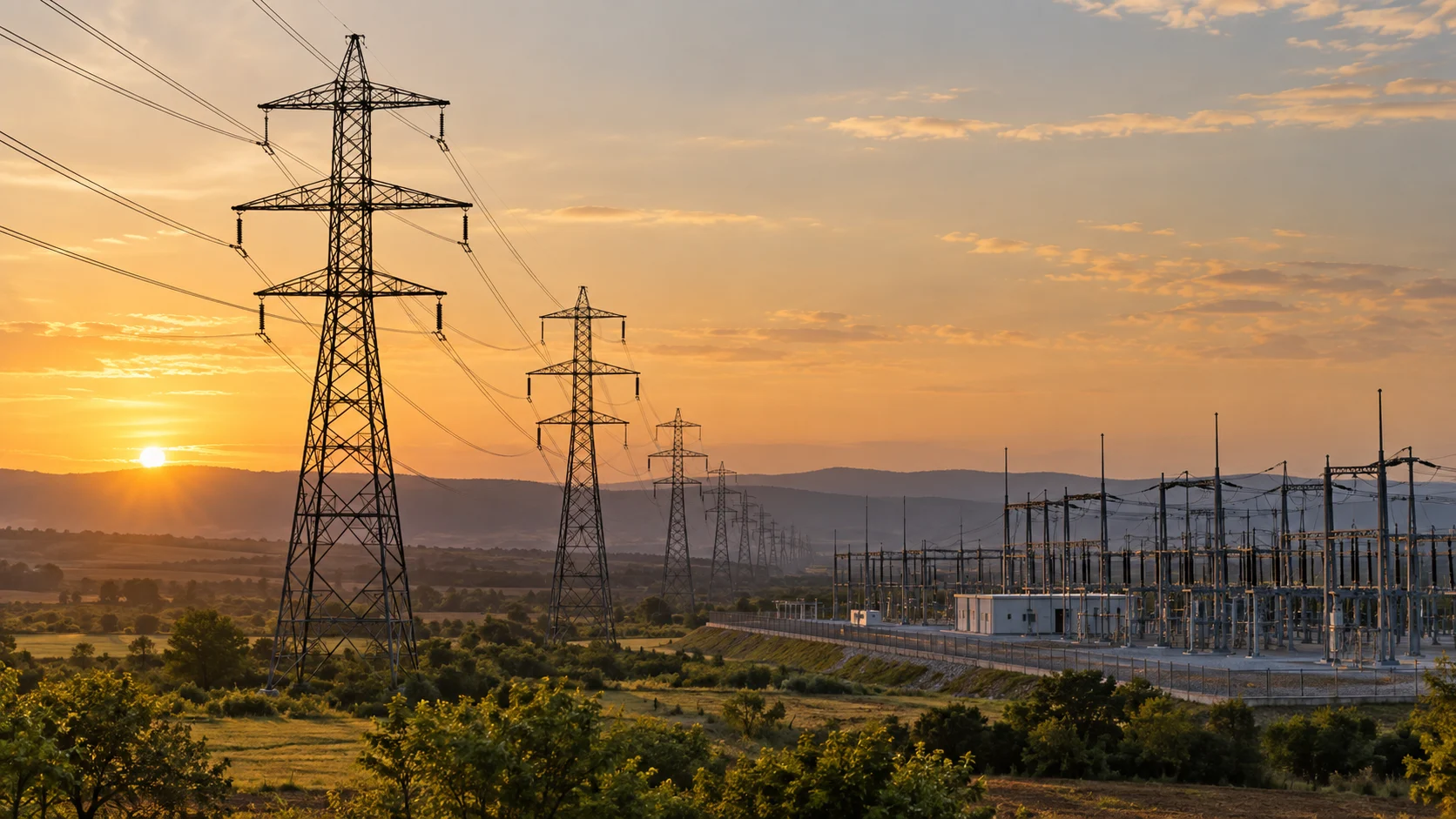
Q: What lines carry electricity at high voltage over long distances?
A: Transmission lines.
Q: What local lines deliver electricity from substations to customers?
A: Distribution lines.
Q: What facility changes voltage and routes power on the grid?
A: A substation.
Q: What renewable device converts sunlight directly into electricity?
A: A photovoltaic cell.
Q: What spinning machine in many power plants drives a generator?
A: A turbine.
Q: What storage plant pumps water uphill when extra electricity is available?
A: Pumped-storage hydropower.
Electricity in Daily Life
Q: What appliance converts electrical energy mainly into thermal energy to brown bread?
A: A toaster.
Q: What effect heats a resistive wire when current passes through it?
A: Joule heating.
Q: What household device uses an electric motor to move air?
A: A fan.
Q: What does a phone charger convert wall-outlet AC into?
A: Low-voltage DC.
Q: What does GFCI stand for in electrical safety?
A: Ground-fault circuit interrupter.
Q: Where are GFCI outlets especially useful?
A: In wet locations.
Q: Why should a damaged power cord be replaced?
A: Exposed conductors can cause shock or fire.
Q: What hazard can result from plugging too many high-power devices into one circuit?
A: An overload.
Q: Why can wet skin increase electric-shock risk?
A: It lowers the body's electrical resistance.
Q: What three-prong plug connection provides a safety path for fault current?
A: The ground prong.
Q: What does an electricity meter record for billing?
A: Electrical energy use.
Q: Which label compares an appliance's rate of energy use?
A: Its power rating in watts.
Q: What type of bulb produces light with a semiconductor junction?
A: An LED bulb.
Q: What does an inverter convert DC into?
A: AC.
Q: What does a rectifier convert AC into?
A: DC.
Bright Sparks in History
Q: Which ancient Greek thinker described amber attracting light objects after rubbing?
A: Thales of Miletus.
Q: Which scientist coined the Latin term electricus from the Greek word for amber?
A: William Gilbert.
Q: Who invented the electric battery known as the voltaic pile?
A: Alessandro Volta.
Q: Which unit of potential difference honors Alessandro Volta?
A: The volt.
Q: Which scientist's name became the unit of electric current?
A: André-Marie Ampère.
Q: Which physicist formulated the relationship among voltage, current, and resistance?
A: Georg Ohm.
Q: Which scientist discovered electromagnetic induction in 1831?
A: Michael Faraday.
Q: Which unit of capacitance honors Michael Faraday?
A: The farad.
Q: Which scientist developed equations unifying electricity and magnetism?
A: James Clerk Maxwell.
Q: Which inventor developed a practical incandescent lighting system and commercial power network?
A: Thomas Edison.
Q: Which inventor championed polyphase alternating-current systems?
A: Nikola Tesla.
Q: Which scientist discovered that an electric current could deflect a compass needle?
A: Hans Christian Ørsted.
Q: Which industrialist helped promote and deploy AC power systems in the United States?
A: George Westinghouse.
Q: Which physicist discovered the electron in 1897?
A: J. J. Thomson.
Q: Which physicist measured the elementary electric charge with an oil-drop experiment?
A: Robert Millikan.
You Brought the Spark
If you powered through all 120, consider this quiz officially illuminated. Keep the current flowing with our science trivia and history of inventions trivia.

Ellie Ewert is the founder and author of RandomTrivia.co, blending her passion for research with years of experience in content creation to deliver accurate, engaging, and well-sourced trivia. Dedicated to providing readers with trustworthy and entertaining facts, she applies meticulous fact-checking and SEO expertise to ensure every article meets the highest standards. Read more about our high standards in our Editorial Guidelines.