
This Korean War trivia guide follows a conflict that redrew battle lines quickly, changed alliances globally, and never ended with a formal peace treaty.
From the 38th parallel and Inchon to MiG Alley, Panmunjom, and the war's human cost, every round keeps the history clear and respectful.
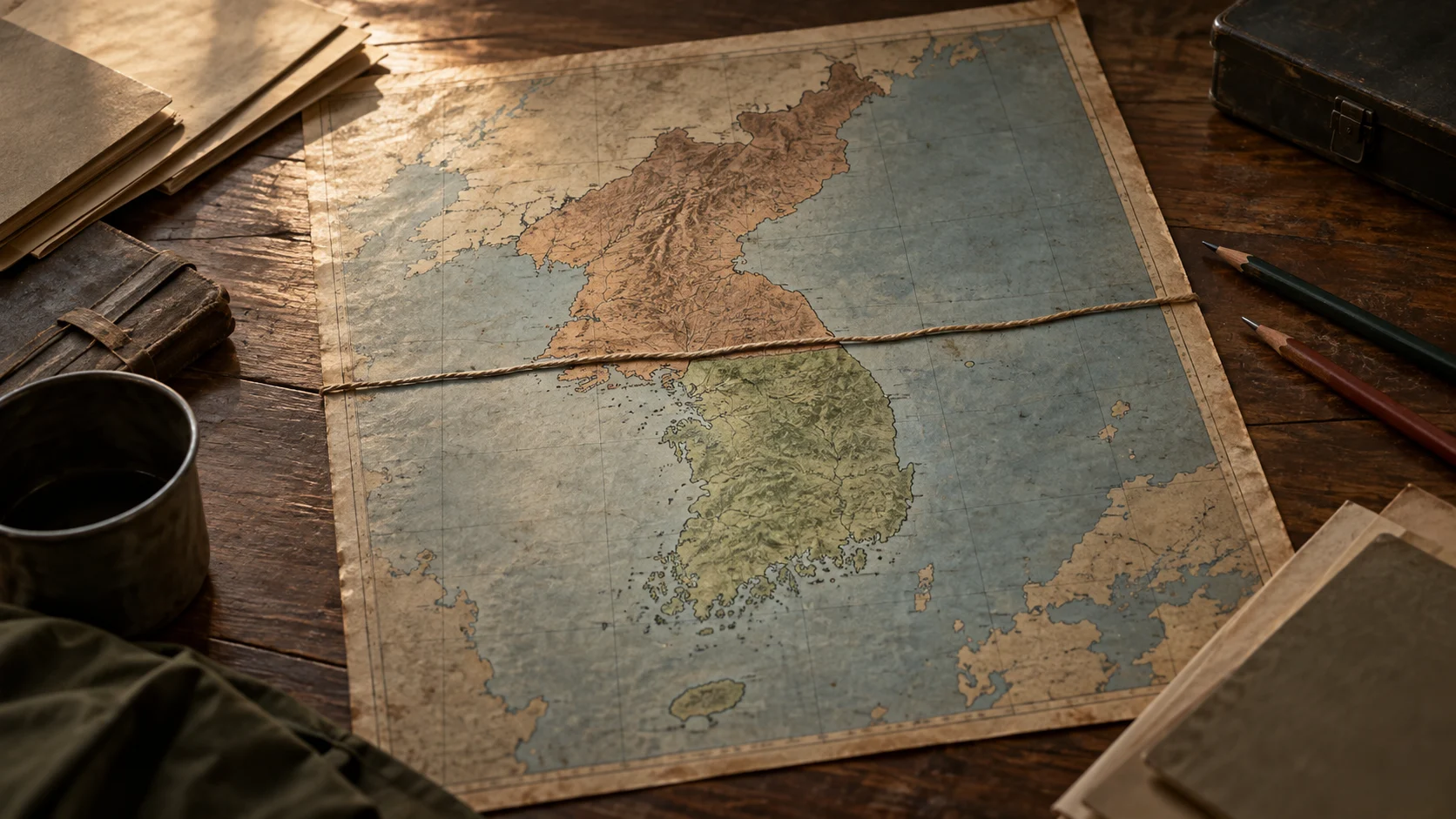
How Korea Became Divided
Q: Which country formally annexed Korea in 1910?
A: Japan.
Q: What event ended Japanese colonial rule in Korea?
A: Japan's surrender in World War II.
Q: In what year was Korea divided into Soviet and American occupation zones?
A: 1945.
Q: Which line was chosen to divide the occupation zones?
A: The 38th parallel.
Q: Which power occupied Korea north of the dividing line?
A: The Soviet Union.
Q: Which power occupied Korea south of the dividing line?
A: The United States.
Q: What country was established in the south in August 1948?
A: The Republic of Korea.
Q: Who became the Republic of Korea's first president?
A: Syngman Rhee.
Q: What country was established in the north in September 1948?
A: The Democratic People's Republic of Korea.
Q: Who became North Korea's founding leader?
A: Kim Il Sung.
Q: Which global rivalry shaped the division of Korea?
A: The Cold War.
Q: Which ideology did North Korea's government follow?
A: Communism.
Q: Which two powers provided major support to North Korea?
A: The Soviet Union and China.
Q: Which country became South Korea's principal military ally?
A: The United States.
Q: Had the two Korean governments peacefully agreed to a permanent division before the war?
A: No.
Invasion and the Race South
Q: On what date did the Korean War begin?
A: June 25, 1950.
Q: Which side launched the opening invasion?
A: North Korea.
Q: What North Korean tank played a major role in the first offensive?
A: The Soviet-built T-34.
Q: How quickly did North Korean forces capture Seoul?
A: Within three days.
Q: What bridge was controversially destroyed during the retreat from Seoul?
A: The Hangang Bridge.
Q: Which United Nations resolution condemned the North Korean attack?
A: UN Security Council Resolution 82.
Q: Why was the Soviet Union absent when the Security Council acted?
A: It was boycotting the council over China's UN representation.
Q: What American-led command coordinated international forces in Korea?
A: United Nations Command.
Q: Who became the first commander of United Nations Command?
A: Douglas MacArthur.
Q: What was the first U.S. ground unit to fight in Korea called?
A: Task Force Smith.
Q: Near which city did Task Force Smith fight on July 5, 1950?
A: Osan.
Q: Which U.S. general was captured after the defense of Daejeon?
A: William F. Dean.
Q: What southeastern defensive zone became the UN's critical foothold?
A: The Pusan Perimeter.
Q: Which river formed much of the Pusan Perimeter's western defense?
A: The Naktong River.
Q: Which U.S. general commanded Eighth Army during the defense of the perimeter?
A: Walton Walker.
Inchon and the Advance North
Q: What daring amphibious landing changed the war's momentum in September 1950?
A: The Inchon landing.
Q: On what date did the Inchon landing begin?
A: September 15, 1950.
Q: Who championed the risky Inchon plan?
A: Douglas MacArthur.
Q: What made Inchon especially difficult for an amphibious assault?
A: Extreme tides, narrow channels, and seawalls.
Q: What codename was given to the Inchon operation?
A: Operation Chromite.
Q: Which U.S. Marine division spearheaded the landing?
A: The 1st Marine Division.
Q: What nearby airfield was quickly captured after the landing?
A: Kimpo Airfield.
Q: Which capital did UN and South Korean forces retake after Inchon?
A: Seoul.
Q: What happened to North Korean forces around the Pusan Perimeter after Inchon?
A: They retreated northward.
Q: Which boundary did UN forces cross in October 1950?
A: The 38th parallel.
Q: Which North Korean capital fell to UN and South Korean forces?
A: Pyongyang.
Q: What river forms much of the border between North Korea and China?
A: The Yalu River.
Q: What political goal guided the advance deep into North Korea?
A: Reunifying Korea under the southern government.
Q: Which airborne unit dropped near Sukchon and Sunchon in October 1950?
A: The U.S. 187th Airborne Regimental Combat Team.
Q: What warning did China give as UN forces approached its border?
A: It warned that it might intervene.
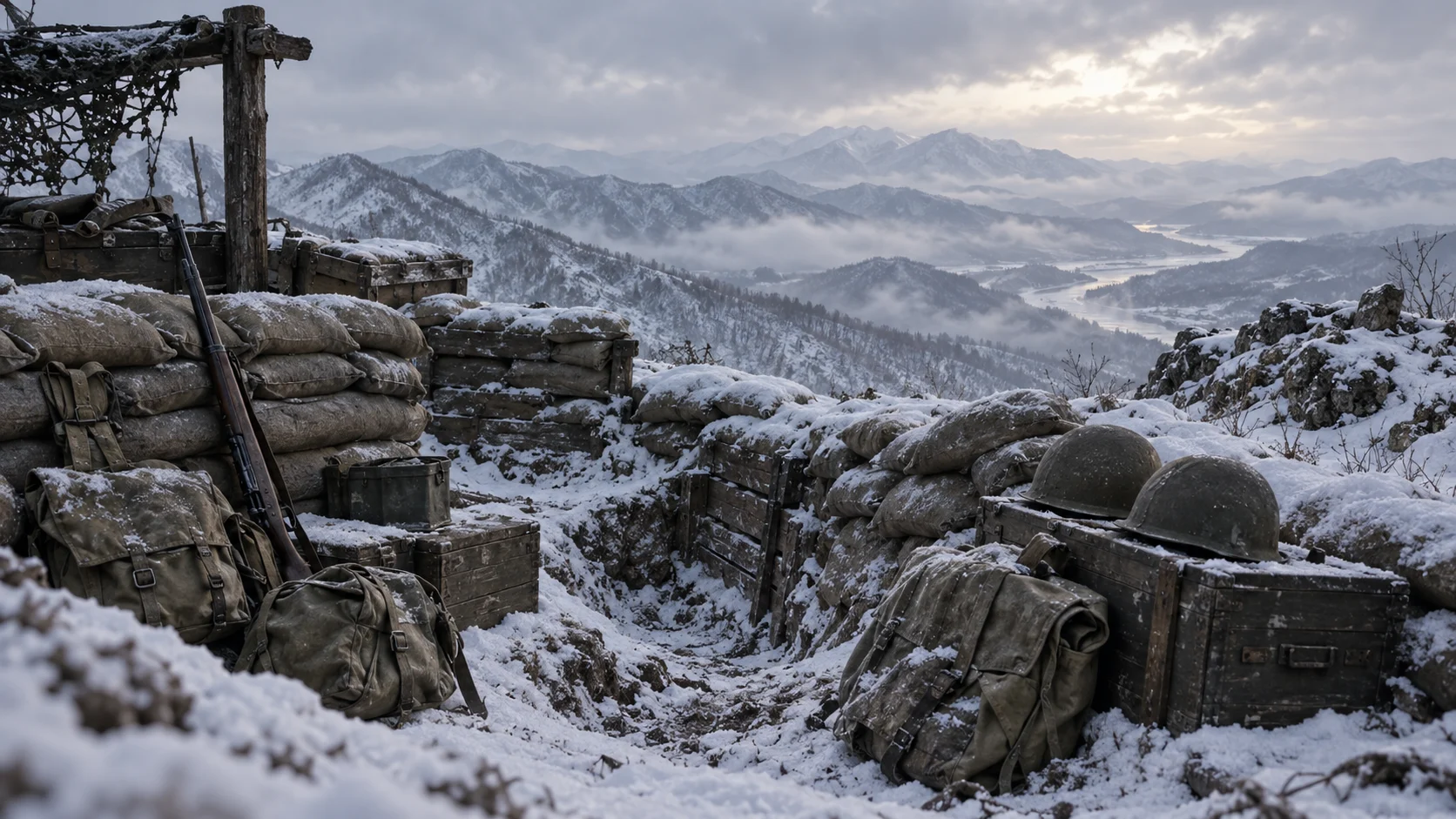
China Enters and the Front Freezes
Q: What name did China give its forces sent into Korea?
A: The Chinese People's Volunteers.
Q: In what month did Chinese forces first enter combat in Korea?
A: October 1950.
Q: Who commanded the Chinese People's Volunteers?
A: Peng Dehuai.
Q: What frozen reservoir became the site of a brutal winter campaign?
A: Chosin Reservoir.
Q: What is Chosin Reservoir called in Korean?
A: Changjin Reservoir.
Q: What nickname was adopted by veterans of the Chosin campaign?
A: The Chosin Few.
Q: Toward which port did UN forces withdraw from northeastern Korea?
A: Hungnam.
Q: What massive evacuation removed troops and civilians from Hungnam?
A: The Hungnam evacuation.
Q: Which merchant ship carried more than 14,000 refugees from Hungnam?
A: SS Meredith Victory.
Q: Which city fell to communist forces again in January 1951?
A: Seoul.
Q: In what month did UN forces retake Seoul for the second time?
A: March 1951.
Q: Which U.S. general succeeded Walton Walker as Eighth Army commander?
A: Matthew Ridgway.
Q: Near what line did the front stabilize during 1951?
A: Near the 38th parallel.
Q: What kind of warfare dominated after the rapid advances ended?
A: Positional fighting over hills and trenches.
Q: Did China's intervention produce a complete communist conquest of South Korea?
A: No.
Commanders, Presidents, and Coalition Forces
Q: Who was president of the United States when the war began?
A: Harry S. Truman.
Q: Which Soviet leader approved support for North Korea's invasion?
A: Joseph Stalin.
Q: Which Chinese leader decided to intervene on North Korea's side?
A: Mao Zedong.
Q: Why did Truman remove Douglas MacArthur from command in April 1951?
A: MacArthur publicly challenged administration policy and civilian control.
Q: Who replaced MacArthur as UN commander?
A: Matthew Ridgway.
Q: Who replaced Ridgway as UN commander in 1952?
A: Mark Clark.
Q: Which South Korean general became his country's first four-star general?
A: Paik Sun-yup.
Q: How many nations supplied combat units under United Nations Command?
A: Sixteen.
Q: Which country supplied the largest UN combat contingent after the United States?
A: The United Kingdom.
Q: Which two Commonwealth battalions fought a noted delaying action at Kapyong in 1951?
A: The 2nd Battalion, Princess Patricia's Canadian Light Infantry, and Australia's 3rd Battalion, Royal Australian Regiment.
Q: Which brigade from a NATO country fought at Kunuri?
A: The Turkish Brigade.
Q: Which African country sent the Kagnew Battalion?
A: Ethiopia.
Q: Which South American country sent both an infantry battalion and a naval frigate?
A: Colombia.
Q: Which Asian country sent the Philippine Expeditionary Forces to Korea?
A: The Philippines.
Q: Which country provided the 60th Indian Field Ambulance?
A: India.
Jets, Helicopters, and Battles on the Hills
Q: What Soviet-designed jet fighter challenged UN aircraft?
A: The MiG-15.
Q: What American jet became the MiG-15's best-known opponent?
A: The F-86 Sabre.
Q: What nickname was given to the air-combat zone near the Yalu River?
A: MiG Alley.
Q: Why is the Korean War important in aviation history?
A: It featured the first large-scale jet-versus-jet combat.
Q: What heavy bomber carried out major UN bombing missions?
A: The B-29 Superfortress.
Q: What aircraft transformed battlefield medical evacuation?
A: The helicopter.
Q: What did the acronym MASH stand for?
A: Mobile Army Surgical Hospital.
Q: What battleship carried out shore bombardment in Korea and had also hosted Japan's World War II surrender?
A: USS Missouri.
Q: Which branch used aircraft carriers to project air power from the sea?
A: The navy.
Q: What 1951 battle gave its name to a ridge described as heartbreakingly costly?
A: Heartbreak Ridge.
Q: What nearby ridge battle preceded Heartbreak Ridge?
A: Bloody Ridge.
Q: Which hill battle became famous through the name Pork Chop Hill?
A: The Battle of Pork Chop Hill.
Q: Which 1952 battle pitted Chinese and UN forces around a ridge complex called Triangle Hill?
A: The Battle of Triangle Hill.
Q: What defensive construction became common along the static front?
A: Trenches, bunkers, and barbed wire.
Q: What harsh seasonal conditions repeatedly affected soldiers and equipment?
A: Bitter winters and muddy monsoons.
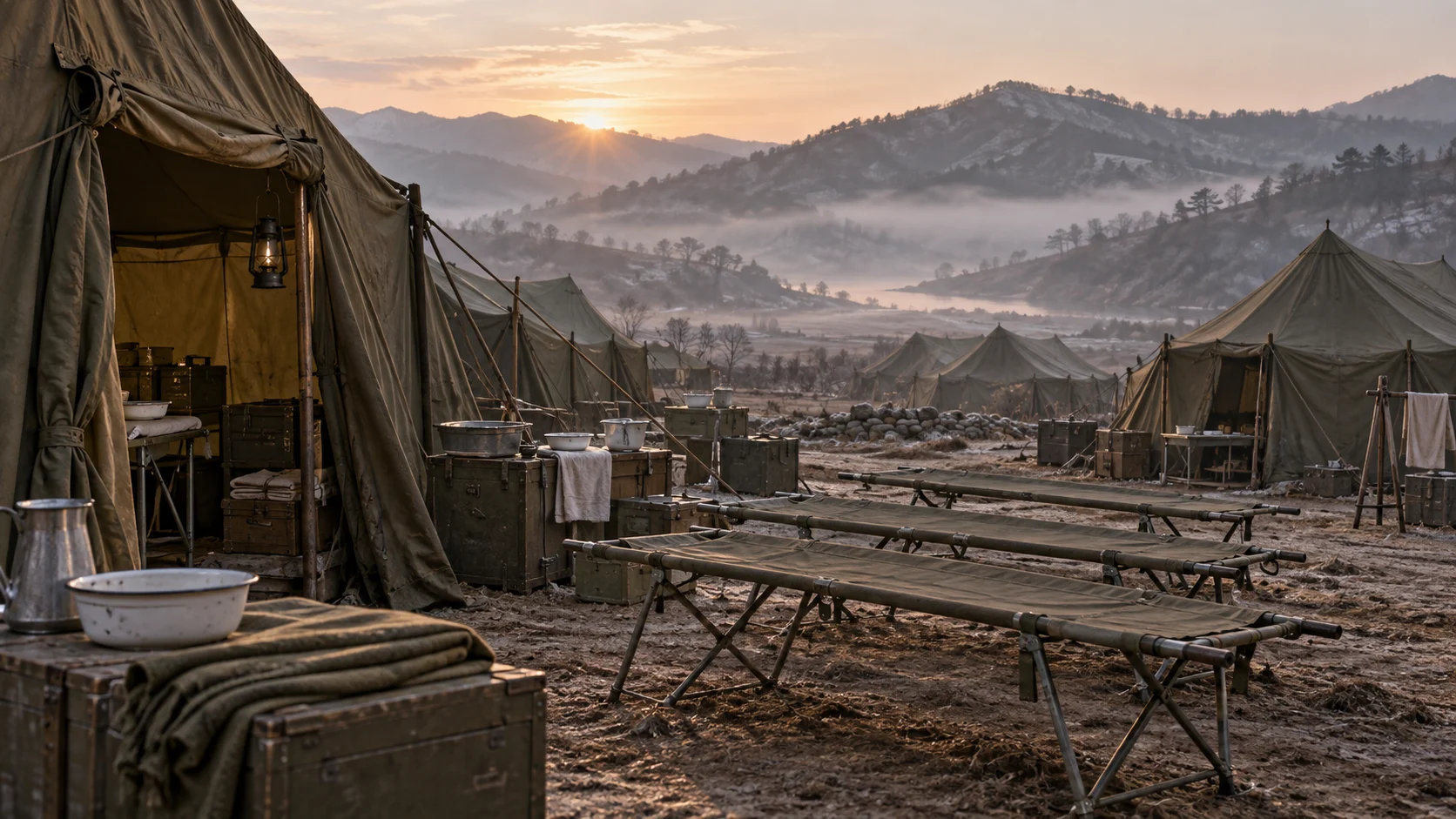
Civilians, Prisoners, and the Human Cost
Q: Which group suffered the largest share of the war's deaths and displacement?
A: Korean civilians.
Q: What happened to millions of Koreans as the front swept up and down the peninsula?
A: They became refugees or were displaced.
Q: What 1950 mass killing of civilians by South Korean police and military units is linked to the Bodo League?
A: The Bodo League massacre.
Q: What South Korean village became associated with the killing of civilians by U.S. troops?
A: No Gun Ri.
Q: Did atrocities occur on only one side of the conflict?
A: No, multiple forces committed atrocities.
Q: What major dispute delayed armistice negotiations for many months?
A: The repatriation of prisoners of war.
Q: Why was prisoner repatriation controversial?
A: Many prisoners said they did not want to return to their country of origin.
Q: What principle did the UN side insist on for prisoner return?
A: Voluntary repatriation.
Q: What 1953 exchange returned sick and wounded prisoners before the armistice?
A: Operation Little Switch.
Q: What larger post-armistice prisoner exchange followed?
A: Operation Big Switch.
Q: Which neutral nation led the commission handling prisoners who resisted repatriation?
A: India.
Q: What existing U.S. policy accelerated the racial integration of military units during the war?
A: Executive Order 9981.
Q: Which president had issued Executive Order 9981 in 1948?
A: Harry S. Truman.
Q: What family tragedy affected Koreans separated by the new military boundary?
A: Many relatives were cut off from one another.
Q: Why do casualty totals vary among historical sources?
A: Records are incomplete and categories differ.
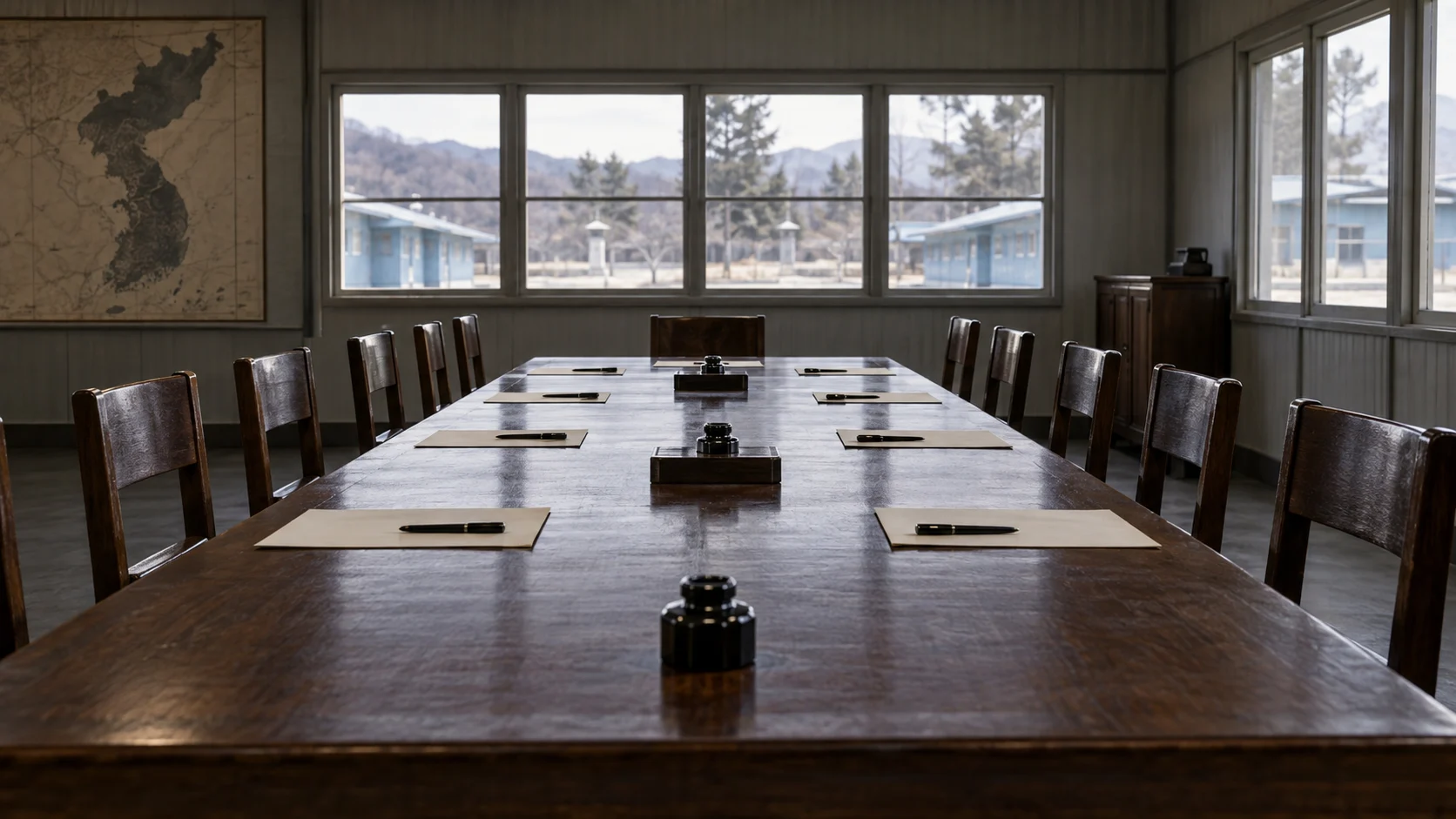
Armistice, DMZ, and an Unfinished Peace
Q: Where did armistice negotiations begin in July 1951?
A: Kaesong.
Q: To what village were the negotiations moved?
A: Panmunjom.
Q: On what date was the Korean Armistice Agreement signed?
A: July 27, 1953.
Q: Did the armistice create a permanent peace treaty?
A: No.
Q: Which country's government refused to sign the armistice?
A: South Korea.
Q: Who signed for United Nations Command at Panmunjom?
A: Lieutenant General William K. Harrison Jr.
Q: Who signed for the Korean People's Army and Chinese People's Volunteers?
A: General Nam Il.
Q: What buffer zone was created around the final military line?
A: The Korean Demilitarized Zone.
Q: About how wide is the DMZ?
A: About 2.5 miles, or 4 kilometers.
Q: What line runs through the center of the DMZ?
A: The Military Demarcation Line.
Q: What meeting area inside the DMZ is commonly called the truce village?
A: The Joint Security Area at Panmunjom.
Q: What nickname is often applied to the Korean War in the United States?
A: The Forgotten War.
Q: What Washington, D.C., memorial features 19 stainless-steel service-member statues?
A: The Korean War Veterans Memorial.
Q: Which television series brought a fictional mobile surgical hospital to American screens?
A: M*A*S*H.
Q: What is the clearest description of the war's legal ending?
A: Fighting stopped under an armistice, but the war was not ended by treaty.
Your Korean War Round Is Complete
If you followed every advance, retreat, negotiation, and hard-earned lesson, that was serious history work well done. Continue with our famous people trivia or explore the era through decades trivia.

Ellie Ewert is the founder and author of RandomTrivia.co, blending her passion for research with years of experience in content creation to deliver accurate, engaging, and well-sourced trivia. Dedicated to providing readers with trustworthy and entertaining facts, she applies meticulous fact-checking and SEO expertise to ensure every article meets the highest standards. Read more about our high standards in our Editorial Guidelines.