
Pull up a chair at chemistry's most famous table, where every square has a story to tell.
These questions mix atomic basics, element families, clever symbols, discoveries, and the substances hiding in everyday life.
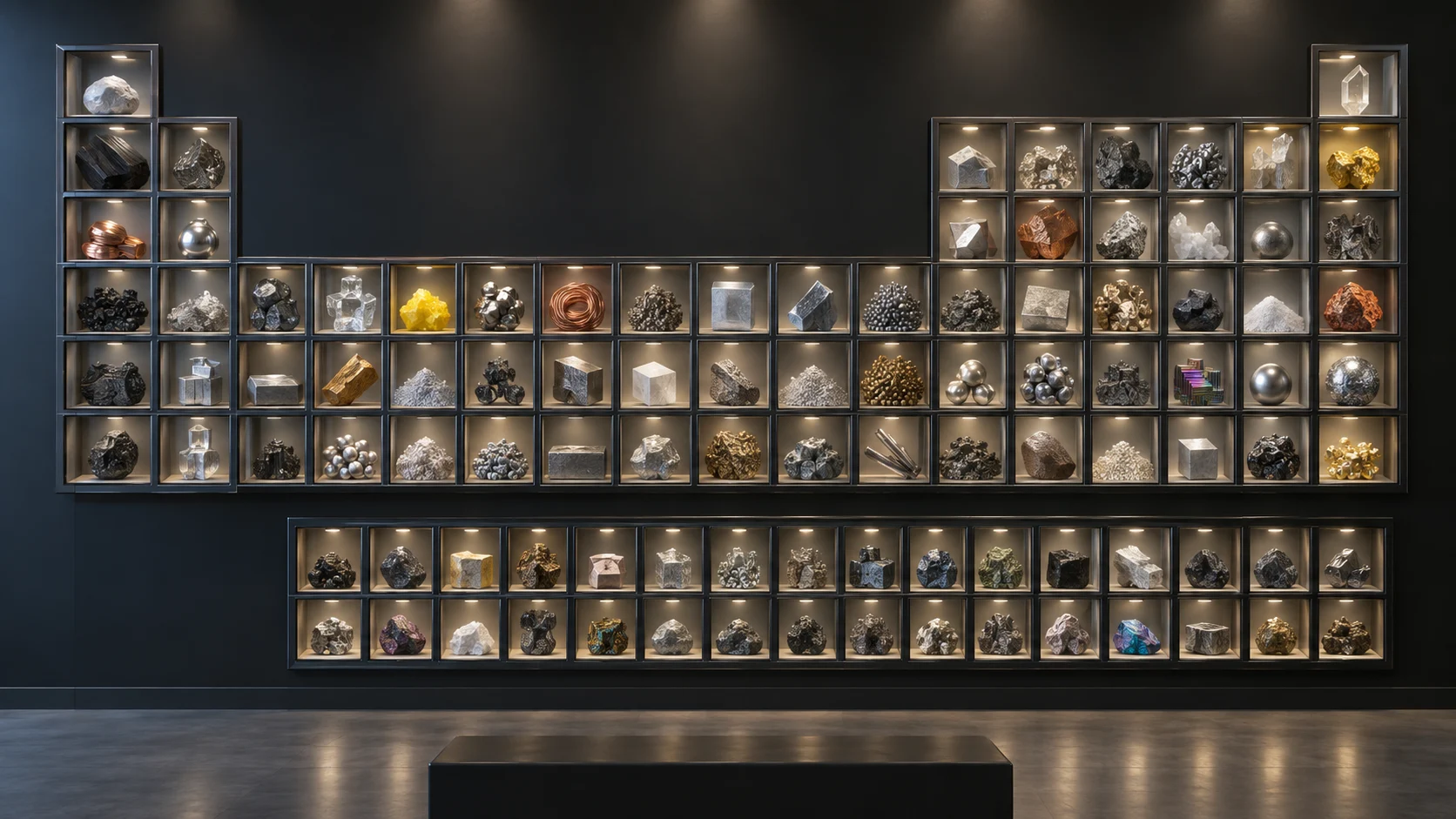
Meet the Periodic Table
Q: How many confirmed elements are on the modern periodic table?
A: 118.
Q: What number determines an element's position on the periodic table?
A: Its atomic number.
Q: What does an element's atomic number count?
A: Protons in its nucleus.
Q: What are the horizontal rows of the periodic table called?
A: Periods.
Q: What are the vertical columns of the periodic table called?
A: Groups.
Q: How many periods does the modern periodic table have?
A: Seven.
Q: How many numbered groups does the modern periodic table have?
A: 18.
Q: Which element sits at atomic number 1?
A: Hydrogen.
Q: Which element currently has the highest atomic number?
A: Oganesson.
Q: What one-letter symbol belongs to carbon?
A: C.
Q: What two-letter symbol belongs to helium?
A: He.
Q: Is the second letter of a two-letter element symbol uppercase or lowercase?
A: Lowercase.
Q: Which broad class occupies most of the periodic table?
A: Metals.
Q: What zigzag boundary roughly separates metals from nonmetals?
A: The metalloid staircase.
Q: What information besides atomic number commonly appears in an element's box?
A: Its symbol, name, and atomic weight.
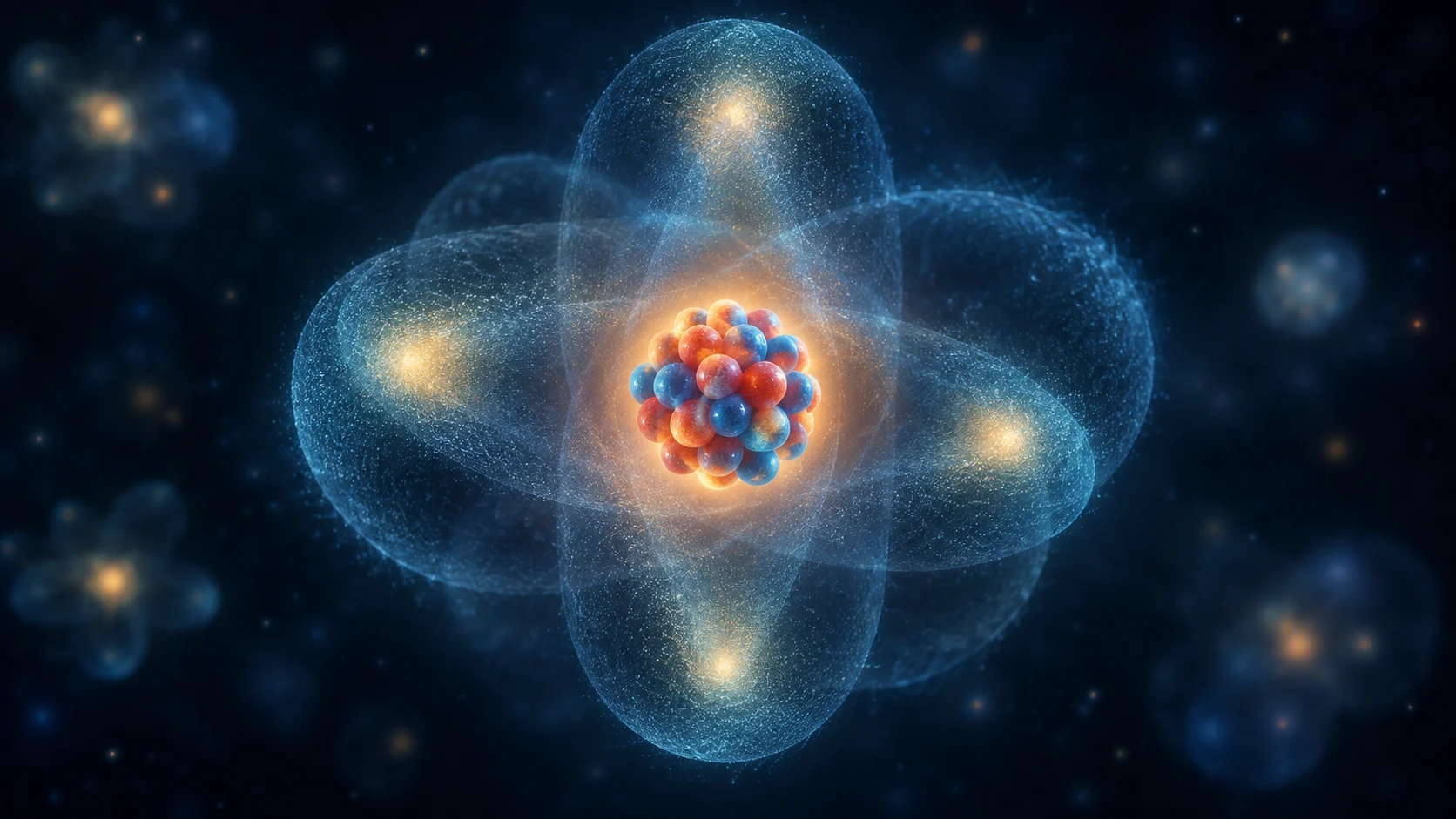
Atoms, Isotopes, and Ions
Q: Which subatomic particle carries a positive charge?
A: The proton.
Q: Which subatomic particle carries a negative charge?
A: The electron.
Q: Which subatomic particle has no electric charge?
A: The neutron.
Q: Where are protons and neutrons found in an atom?
A: In the nucleus.
Q: What makes two atoms isotopes of the same element?
A: They have the same number of protons but different numbers of neutrons.
Q: What does an isotope's mass number equal?
A: Its protons plus neutrons.
Q: What is an atom called after it gains or loses electrons?
A: An ion.
Q: What kind of ion forms when an atom loses electrons?
A: A cation.
Q: What kind of ion forms when an atom gains electrons?
A: An anion.
Q: In a neutral atom, the number of electrons equals the number of what particles?
A: Protons.
Q: Which carbon isotope is widely used to date once-living material?
A: Carbon-14.
Q: Which hydrogen isotope has one proton and one neutron?
A: Deuterium.
Q: Which hydrogen isotope is radioactive and has two neutrons?
A: Tritium.
Q: What term describes the electrons in an atom's outermost occupied shell?
A: Valence electrons.
Q: What weighted value reflects the natural isotope mixture of many elements?
A: Standard atomic weight.
Families with Chemistry
Q: What is the common name for Group 1 elements other than hydrogen?
A: Alkali metals.
Q: What is the common name for Group 2 elements?
A: Alkaline earth metals.
Q: What family occupies Group 17?
A: The halogens.
Q: What family occupies Group 18?
A: The noble gases.
Q: Which alkali metal is the lightest metal?
A: Lithium.
Q: Which Group 1 metal has the symbol Na?
A: Sodium.
Q: Which alkaline earth metal is essential to bones and teeth?
A: Calcium.
Q: Which halogen is a liquid at room temperature?
A: Bromine.
Q: Which halogen is commonly added to toothpaste as fluoride compounds?
A: Fluorine.
Q: Which noble gas is used in bright advertising signs?
A: Neon.
Q: Which noble gas often fills party balloons because it is nonflammable?
A: Helium.
Q: What broad block of metals fills Groups 3 through 12?
A: The transition metals.
Q: What 15-element series runs from lanthanum through lutetium?
A: The lanthanides.
Q: What 15-element series runs from actinium through lawrencium?
A: The actinides.
Q: Which actinide is the main fuel in many nuclear power reactors?
A: Uranium.
Patterns Across the Table
Q: Why do elements in the same group often behave similarly?
A: They have similar valence-electron arrangements.
Q: Moving left to right across a period, does atomic number rise or fall?
A: It rises.
Q: Moving down a group, do atoms generally gain or lose occupied electron shells?
A: They gain shells.
Q: Which property measures an atom's attraction for bonding electrons?
A: Electronegativity.
Q: Which element has the highest electronegativity?
A: Fluorine.
Q: Across a period from left to right, atomic radius generally increases or decreases?
A: Decreases.
Q: Down a group, atomic radius generally increases or decreases?
A: Increases.
Q: What energy is required to remove an electron from a gaseous atom?
A: Ionization energy.
Q: Across a period, first ionization energy generally rises or falls?
A: Rises.
Q: Which side of the table contains the most metallic elements?
A: The left side.
Q: Where are most nonmetals located on the periodic table?
A: On the upper right, plus hydrogen.
Q: What are elements near the metal-nonmetal staircase often called?
A: Metalloids.
Q: Which metalloid is the foundation of most computer chips?
A: Silicon.
Q: Which block contains the lanthanides and actinides?
A: The f-block.
Q: Why are the f-block series usually shown below the main table?
A: To keep the table compact.
Symbols with Surprises
Q: Which element has the symbol Fe?
A: Iron.
Q: Which element has the symbol Au?
A: Gold.
Q: Which element has the symbol Ag?
A: Silver.
Q: Which element has the symbol K?
A: Potassium.
Q: Which element has the symbol Hg?
A: Mercury.
Q: Which element has the symbol Pb?
A: Lead.
Q: Which element has the symbol Sn?
A: Tin.
Q: Which element has the symbol W?
A: Tungsten.
Q: Which element has the symbol Sb?
A: Antimony.
Q: Which element has the symbol Cu?
A: Copper.
Q: Which element has the symbol Cl?
A: Chlorine.
Q: Which element has the symbol P?
A: Phosphorus.
Q: Which element has the symbol Mn?
A: Manganese.
Q: Which element has the symbol Co?
A: Cobalt.
Q: Which element has the symbol Kr?
A: Krypton.

Elements in Everyday Life
Q: Which element makes up most of the Sun by mass?
A: Hydrogen.
Q: Which element is most abundant in Earth's crust by mass?
A: Oxygen.
Q: Which metal is most abundant in Earth's crust?
A: Aluminum.
Q: Which element forms both diamond and graphite?
A: Carbon.
Q: Which element sits at the oxygen-binding center of hemoglobin's heme groups?
A: Iron.
Q: Which element is combined with chlorine in ordinary table salt?
A: Sodium.
Q: Which element is used to galvanize steel against corrosion?
A: Zinc.
Q: Which metal is widely used for electrical wiring?
A: Copper.
Q: Which element is the major component of natural gas when bonded with hydrogen in methane?
A: Carbon.
Q: Which element helps stainless steel resist corrosion?
A: Chromium.
Q: Which lightweight metal is widely used in aircraft alloys?
A: Aluminum.
Q: Which element is used in the filaments of traditional incandescent bulbs?
A: Tungsten.
Q: Which liquid metal was historically used in thermometers?
A: Mercury.
Q: Which element is added to some drinking water supplies in fluoride compounds?
A: Fluorine.
Q: Which noble metal is widely used in catalytic converters?
A: Platinum.
Discoveries and Table Makers
Q: Who published a highly influential periodic table in 1869?
A: Dmitri Mendeleev.
Q: What did Mendeleev leave for elements that had not yet been discovered?
A: Gaps.
Q: Which scientist organized elements by atomic number in the early 20th century?
A: Henry Moseley.
Q: Which element discovered in 1868 was first detected in the Sun's spectrum?
A: Helium.
Q: Which element did Marie and Pierre Curie name after Poland?
A: Polonium.
Q: Which radioactive element did the Curies name from a Latin word meaning ray?
A: Radium.
Q: Which element was the first produced artificially?
A: Technetium.
Q: Which synthetic element is named for Albert Einstein?
A: Einsteinium.
Q: Which element honors periodic-table pioneer Dmitri Mendeleev?
A: Mendelevium.
Q: Which element is named after physicist Niels Bohr?
A: Bohrium.
Q: Which element is named for physicist Lise Meitner?
A: Meitnerium.
Q: Which element is named after the planet Uranus?
A: Uranium.
Q: Which element is named after the dwarf planet Pluto?
A: Plutonium.
Q: Which element's name honors the city of Moscow and its surrounding region?
A: Moscovium.
Q: What organization approves names for newly recognized elements?
A: IUPAC.
Atomic Number Lightning Round
Q: What is the atomic number of helium?
A: 2.
Q: What is the atomic number of carbon?
A: 6.
Q: What is the atomic number of oxygen?
A: 8.
Q: What is the atomic number of neon?
A: 10.
Q: What is the atomic number of sodium?
A: 11.
Q: What is the atomic number of silicon?
A: 14.
Q: What is the atomic number of chlorine?
A: 17.
Q: What is the atomic number of argon?
A: 18.
Q: What is the atomic number of calcium?
A: 20.
Q: What is the atomic number of iron?
A: 26.
Q: What is the atomic number of nickel?
A: 28.
Q: What is the atomic number of copper?
A: 29.
Q: What is the atomic number of silver?
A: 47.
Q: What is the atomic number of gold?
A: 79.
Q: What is the atomic number of uranium?
A: 92.
Your Chemistry Is in Its Element
If you made it through all 120, your trivia skills deserve their own square on the table. Keep experimenting with our science trivia and space trivia.

Ellie Ewert is the founder and author of RandomTrivia.co, blending her passion for research with years of experience in content creation to deliver accurate, engaging, and well-sourced trivia. Dedicated to providing readers with trustworthy and entertaining facts, she applies meticulous fact-checking and SEO expertise to ensure every article meets the highest standards. Read more about our high standards in our Editorial Guidelines.