
Bacteria and viruses may both be microscopic, but they are definitely not the same kind of thing.
Put their structures, life cycles, useful roles, famous examples, and public-health history under the trivia microscope.
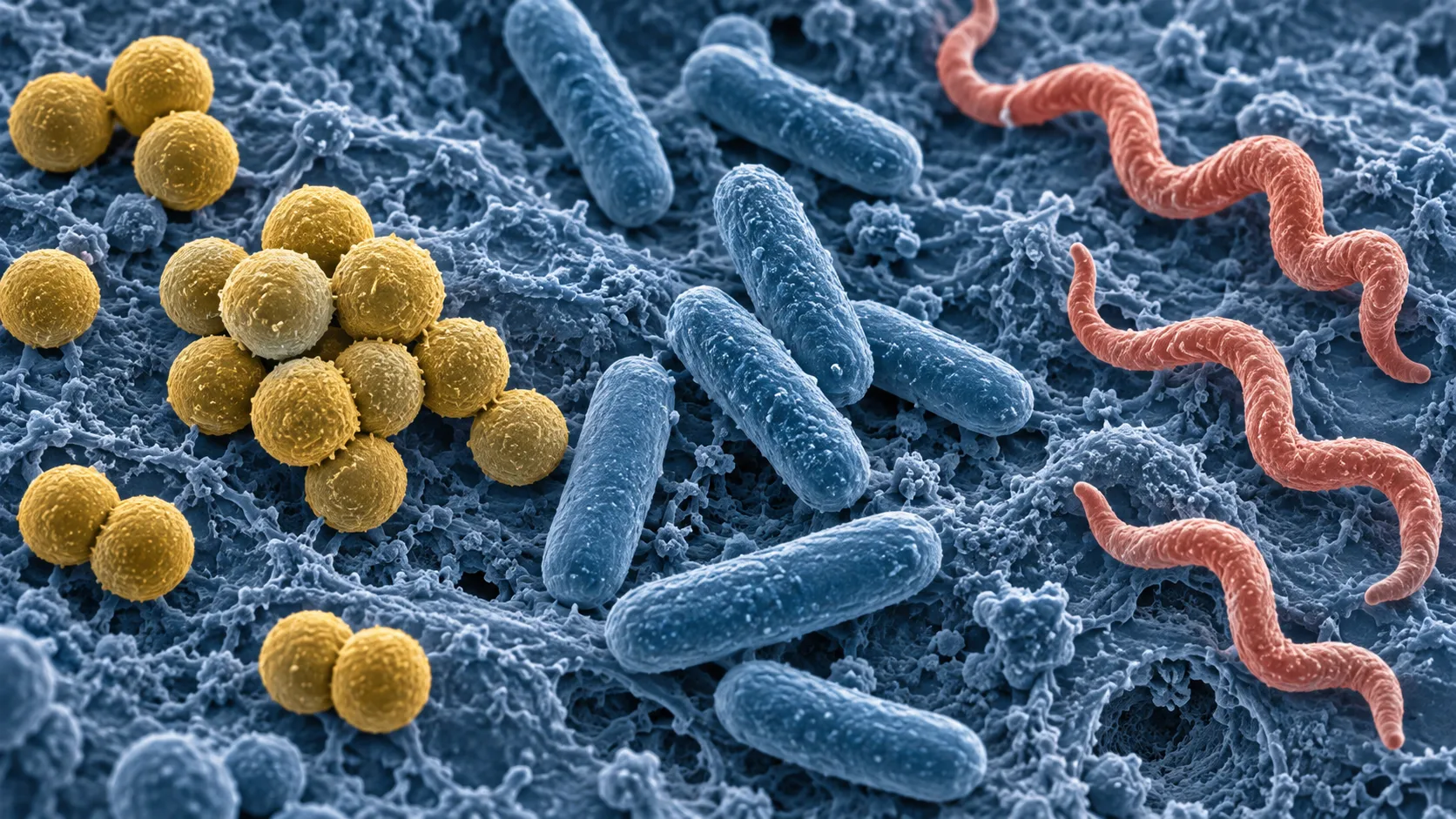
Bacteria Basics
Q: Are bacteria living cells?
A: Yes.
Q: Are viruses cells?
A: No.
Q: What type of cell is a bacterium?
A: A prokaryotic cell.
Q: Do bacterial cells have a membrane-bound nucleus?
A: No.
Q: What sturdy polymer strengthens most bacterial cell walls?
A: Peptidoglycan.
Q: What is a ball-shaped bacterium called?
A: A coccus.
Q: What is a rod-shaped bacterium called?
A: A bacillus.
Q: What is a curved comma-shaped bacterium called?
A: A vibrio.
Q: What is a rigid spiral bacterium called?
A: A spirillum.
Q: What is a flexible corkscrew-shaped bacterium called?
A: A spirochete.
Q: What structure helps some bacteria swim?
A: A flagellum.
Q: What sticky outer layer can protect some bacteria?
A: A capsule.
Q: What bacterial structures make proteins?
A: Ribosomes.
Q: What small DNA circles can carry extra genes in bacteria?
A: Plasmids.
Q: What test classifies bacteria by differences in their cell envelopes?
A: The Gram stain.
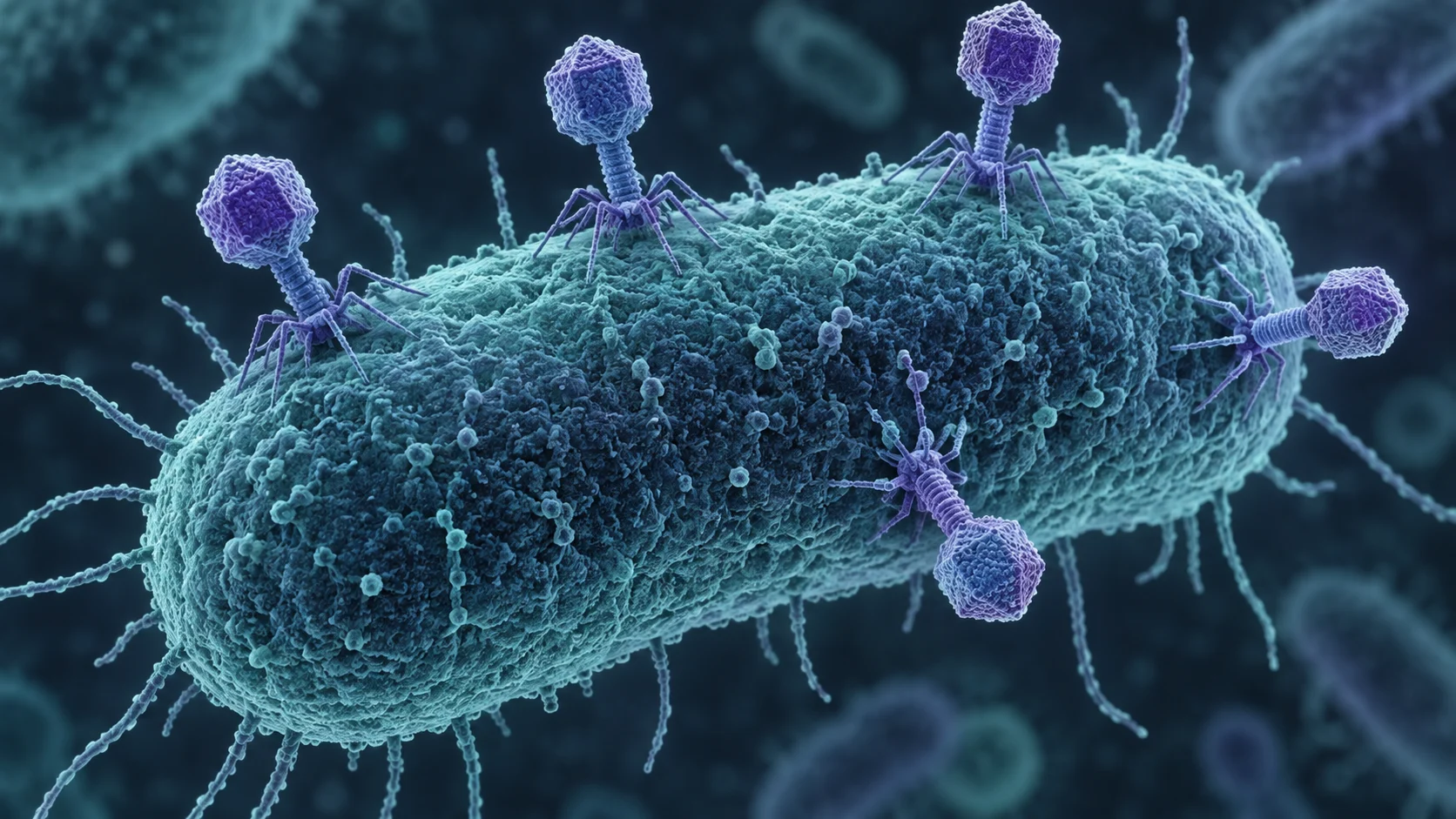
Viral Building Blocks
Q: What is the genetic core of a virus called?
A: Its genome.
Q: What kinds of nucleic acid can serve as viral genomes?
A: DNA or RNA.
Q: What protein coat encloses a viral genome?
A: A capsid.
Q: What are capsid subunits called?
A: Capsomeres.
Q: What membrane surrounds some viruses?
A: A lipid envelope.
Q: Where do viral envelopes usually come from?
A: Host-cell membranes.
Q: What viral proteins often project from an envelope?
A: Spikes.
Q: What do viral spikes commonly bind to?
A: Receptors on host cells.
Q: What is a complete infectious virus particle called?
A: A virion.
Q: What virus shape has 20 triangular faces?
A: Icosahedral.
Q: What long cylindrical arrangement is called helical symmetry?
A: Helical symmetry.
Q: What complex virus has a head, tail, and tail fibers?
A: A bacteriophage.
Q: Are all viruses smaller than all bacteria?
A: No.
Q: Can a virus carry both DNA and RNA as its genome?
A: Generally no.
Q: Do viruses have their own ribosomes?
A: No.
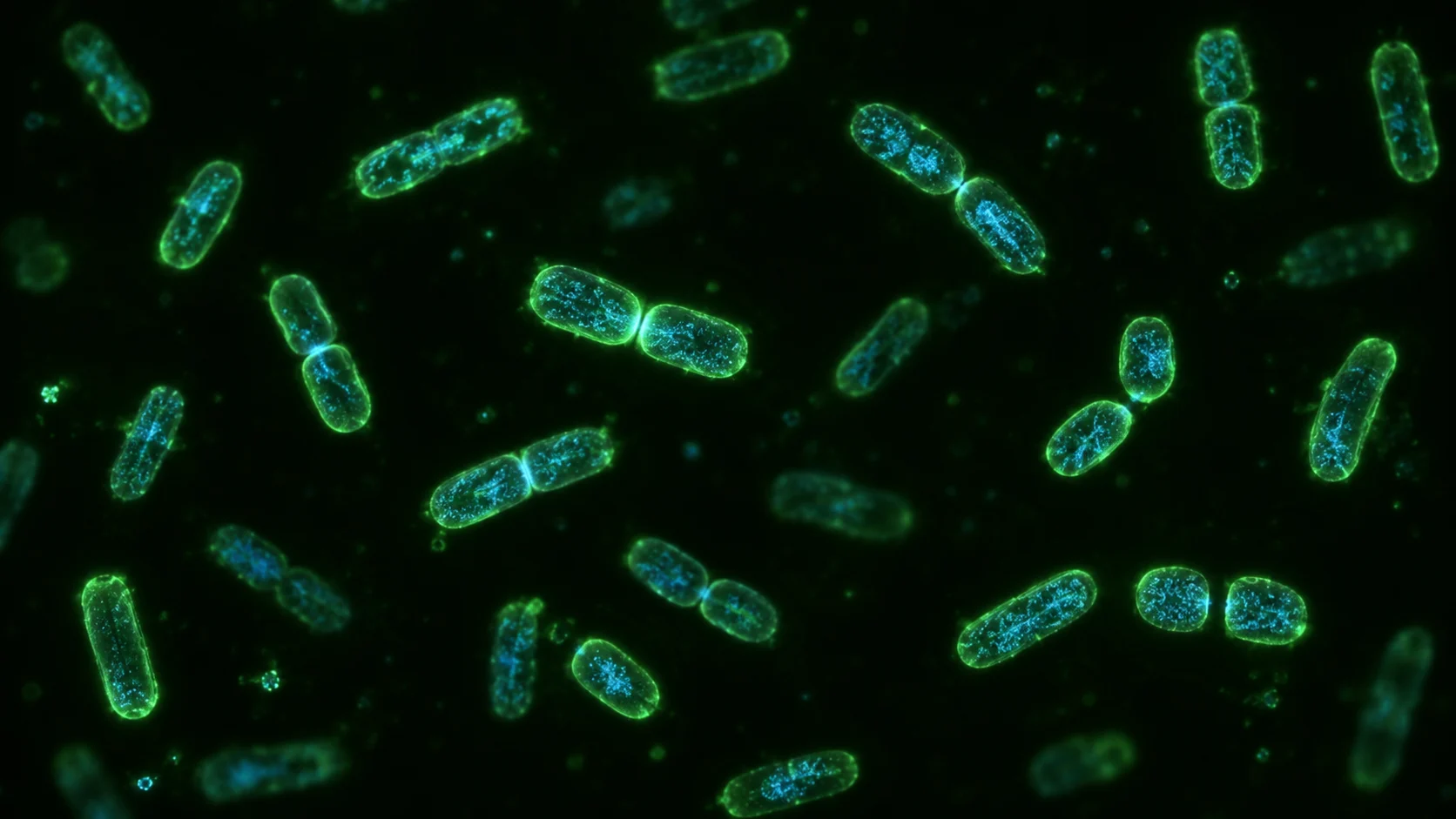
How They Multiply
Q: How do most bacteria make new cells?
A: Binary fission.
Q: What happens first to bacterial DNA before binary fission?
A: It is replicated.
Q: What bacterial growth phase features rapid division?
A: The exponential phase.
Q: What growth phase balances new cells with dying cells?
A: The stationary phase.
Q: What structure lets some bacteria survive harsh conditions without reproducing?
A: An endospore.
Q: What process moves DNA directly between touching bacterial cells?
A: Conjugation.
Q: What process lets bacteria absorb free environmental DNA?
A: Transformation.
Q: What must a virus enter to make copies?
A: A host cell.
Q: What is the first step when a virus binds a host receptor?
A: Attachment.
Q: What follows attachment when viral material enters a cell?
A: Penetration or entry.
Q: What lytic-cycle event releases many phages by bursting a bacterium?
A: Lysis.
Q: What viral enzyme copies RNA into DNA?
A: Reverse transcriptase.
Q: Can one viral species infect every kind of cell?
A: No.
Q: What are bacterial viruses called?
A: Bacteriophages.
Q: Do viruses grow larger before dividing in two?
A: No.
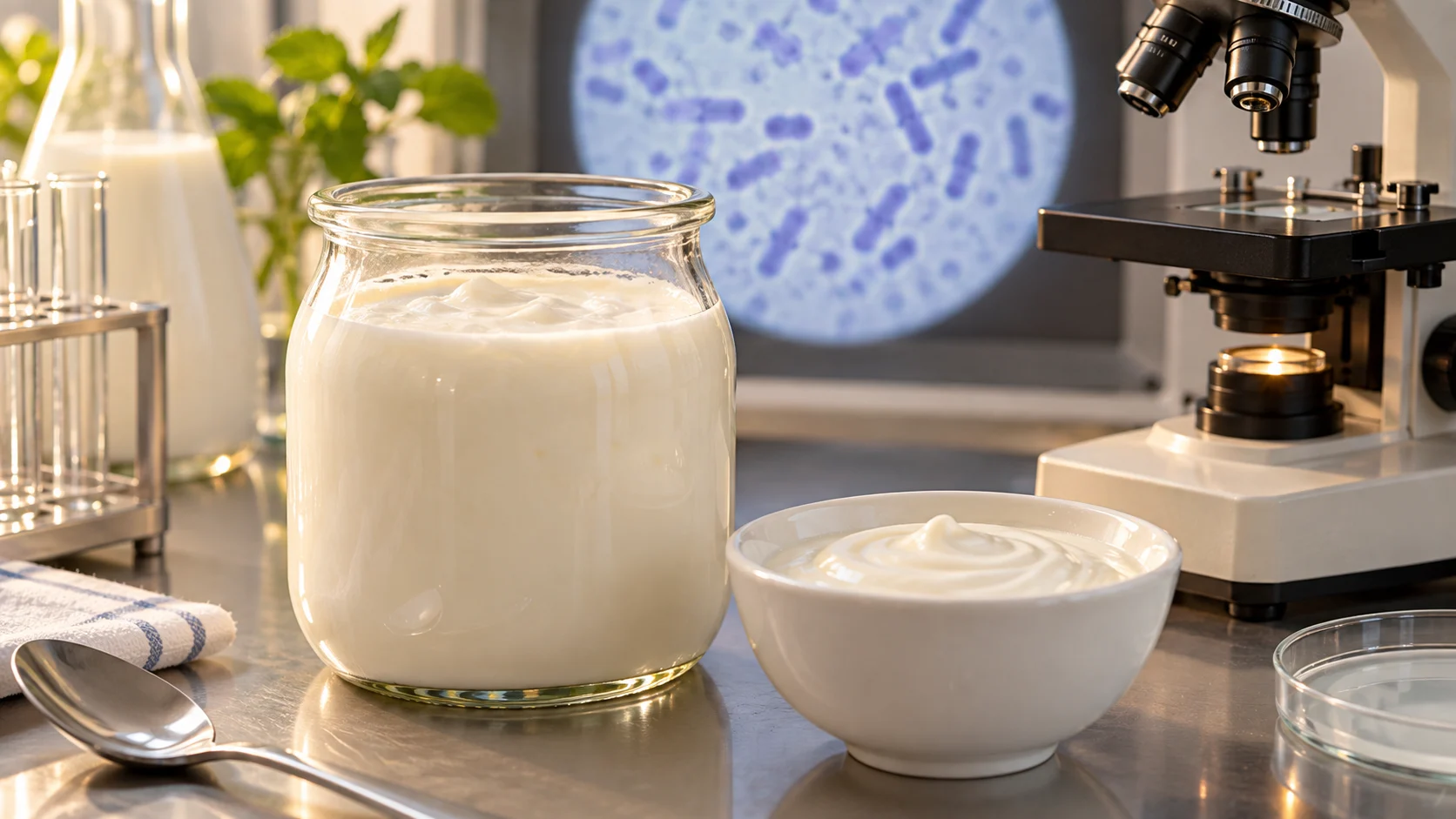
Helpful Bacteria
Q: What bacteria help convert milk into yogurt?
A: Lactic acid bacteria.
Q: What bacterial species is used with another culture in many yogurts?
A: Lactobacillus delbrueckii subsp. bulgaricus.
Q: What yogurt partner grows alongside it?
A: Streptococcus thermophilus.
Q: What bacteria convert ethanol into acetic acid for vinegar?
A: Acetic acid bacteria.
Q: What root-associated bacteria fix nitrogen for legumes?
A: Rhizobium species.
Q: What plant structures house many nitrogen-fixing bacteria?
A: Root nodules.
Q: What photosynthetic bacteria release oxygen?
A: Cyanobacteria.
Q: What bacteria help decompose dead organic matter?
A: Saprotrophic bacteria.
Q: What bacterium is widely used to make recombinant human insulin?
A: Escherichia coli.
Q: What soil bacterium supplies genes used in some insect-resistant crops?
A: Bacillus thuringiensis.
Q: Are all bacteria harmful to humans?
A: No.
Q: What is a community of surface-attached microbes in a matrix?
A: A biofilm.
Q: What food-making bacteria are called when they provide a health benefit in adequate amounts?
A: Probiotics.
Q: What nonliving food components feed beneficial microbes?
A: Prebiotics.
Q: What is a bacterium capable of causing disease called?
A: A bacterial pathogen.
Infection and Immunity
Q: What is a virus capable of causing disease called?
A: A viral pathogen.
Q: What is the time between infection and symptoms called?
A: The incubation period.
Q: What animal that transmits a pathogen is called?
A: A vector.
Q: What body barrier blocks many bacteria and viruses?
A: The skin.
Q: What sticky secretion traps microbes in airways?
A: Mucus.
Q: What hairlike airway structures move trapped material upward?
A: Cilia.
Q: What immune cells can engulf bacteria?
A: Phagocytes.
Q: What molecules bind specific antigens?
A: Antibodies.
Q: What white blood cells mature into antibody-secreting plasma cells?
A: B cells.
Q: What cells can destroy virus-infected cells?
A: Cytotoxic T cells.
Q: What fever-associated proteins help hinder viral replication?
A: Interferons.
Q: What toxin is released mainly when certain Gram-negative cells break apart?
A: Endotoxin.
Q: What is an infection passed from animals to people called?
A: A zoonosis.
Q: What does a vaccine safely present to the immune system?
A: Antigens or instructions for making them.
Q: What immune feature allows a faster response after vaccination?
A: Immune memory.
Vaccines and Medicines
Q: What type of vaccine uses an inactivated pathogen?
A: An inactivated vaccine.
Q: What type uses a weakened form of a pathogen?
A: A live attenuated vaccine.
Q: What vaccine type delivers genetic instructions in messenger RNA?
A: An mRNA vaccine.
Q: Do antibiotics kill viruses?
A: No.
Q: What do antibiotics target?
A: Bacteria or bacterial processes.
Q: What does antiviral medicine target?
A: Steps in viral infection or replication.
Q: What can happen when bacteria survive an antibiotic and pass on resistance?
A: Antibiotic resistance spreads.
Q: Should antibiotics be used for colds caused by viruses?
A: No.
Q: What test can amplify pathogen genetic material?
A: PCR.
Q: What test detects specific viral or bacterial proteins?
A: An antigen test.
Q: What test can show antibodies from a past or recent immune response?
A: A serology test.
Q: What practice physically removes many microbes from hands?
A: Handwashing with soap and water.
Q: What process destroys all microbial life, including bacterial spores?
A: Sterilization.
Q: What process reduces many harmful microbes on objects?
A: Disinfection.
Q: What bacterium commonly lives in the human intestine and is a research workhorse?
A: Escherichia coli.
Famous Species and Viruses
Q: What bacterium causes tuberculosis?
A: Mycobacterium tuberculosis.
Q: What bacterium causes cholera?
A: Vibrio cholerae.
Q: What bacterium causes Lyme disease?
A: Borrelia burgdorferi.
Q: What bacterium causes strep throat?
A: Streptococcus pyogenes.
Q: What bacterium is linked to many stomach ulcers?
A: Helicobacter pylori.
Q: What bacterium causes tetanus?
A: Clostridium tetani.
Q: What bacterium causes botulism?
A: Clostridium botulinum.
Q: What virus causes influenza?
A: Influenza virus.
Q: What virus causes measles?
A: Measles virus.
Q: What virus causes chickenpox?
A: Varicella-zoster virus.
Q: What virus causes rabies?
A: Rabies virus.
Q: What virus causes COVID-19?
A: SARS-CoV-2.
Q: What virus causes AIDS?
A: HIV.
Q: What virus causes polio?
A: Poliovirus.
Q: What virus was eradicated worldwide through vaccination?
A: Variola virus, which caused smallpox.
Big Discoveries and Public Health
Q: Who first observed bacteria with handcrafted microscopes?
A: Antonie van Leeuwenhoek.
Q: Who showed that microbes do not arise spontaneously in sterile broth?
A: Louis Pasteur.
Q: Who developed postulates linking particular microbes to particular diseases?
A: Robert Koch.
Q: Who created the first successful smallpox vaccine?
A: Edward Jenner.
Q: Who discovered penicillin's antibacterial effect?
A: Alexander Fleming.
Q: Who pioneered antiseptic surgery?
A: Joseph Lister.
Q: Who promoted handwashing to prevent childbed fever?
A: Ignaz Semmelweis.
Q: Which physician argued that cholera spread through contaminated water?
A: John Snow.
Q: What pump did Snow connect to London's 1854 cholera outbreak?
A: The Broad Street pump.
Q: What global agency declared smallpox eradicated?
A: The World Health Organization.
Q: In what year was smallpox declared eradicated?
A: 1980.
Q: What global laboratory network tracks changing influenza viruses?
A: The WHO Global Influenza Surveillance and Response System.
Q: What public-health strategy separates infected people from others?
A: Isolation.
Q: What strategy restricts movement after possible exposure?
A: Quarantine.
Q: What term means protection that rises when enough people are immune?
A: Community immunity.
Tiny Subjects, Mighty Score
You sorted 120 bacterial and viral facts with laboratory-level precision. Keep the curiosity contagious, in the nicest possible sense.

Ellie Ewert is the founder and author of RandomTrivia.co, blending her passion for research with years of experience in content creation to deliver accurate, engaging, and well-sourced trivia. Dedicated to providing readers with trustworthy and entertaining facts, she applies meticulous fact-checking and SEO expertise to ensure every article meets the highest standards. Read more about our high standards in our Editorial Guidelines.