
Step into Vietnam War trivia covering colonial rule, divided governments, major battles, protest movements, diplomacy, and the long road home.
These questions keep the history clear, respectful, and grounded while introducing the people and decisions that shaped a generation.
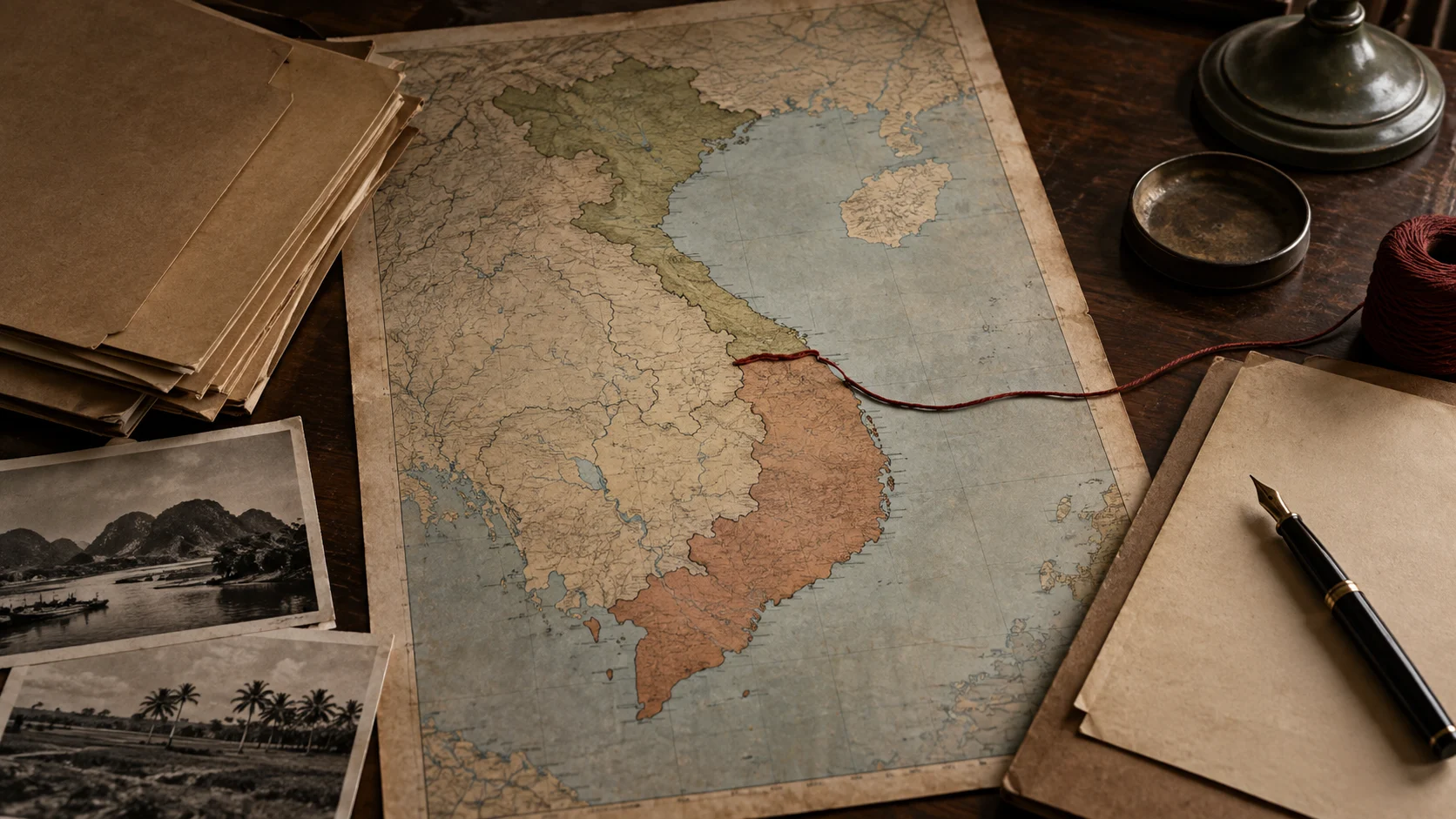
Roots of the Conflict
Q: Which European country colonized Vietnam in the 19th century?
A: France.
Q: What was the French colonial federation that included Vietnam called?
A: French Indochina.
Q: Which three present-day countries made up French Indochina?
A: Vietnam, Laos, and Cambodia.
Q: Who founded the Viet Minh independence movement in 1941?
A: Ho Chi Minh.
Q: Which country occupied Vietnam during World War II?
A: Japan.
Q: In which city did Ho Chi Minh declare Vietnamese independence in 1945?
A: Hanoi.
Q: What conflict pitted France against the Viet Minh from 1946 to 1954?
A: The First Indochina War.
Q: Which 1954 battle ended in a decisive French defeat?
A: The Battle of Dien Bien Phu.
Q: What 1954 agreements temporarily divided Vietnam?
A: The Geneva Accords.
Q: At which parallel was Vietnam temporarily divided?
A: The 17th parallel.
Q: What city served as the capital of North Vietnam?
A: Hanoi.
Q: What city served as the capital of South Vietnam?
A: Saigon.
Q: Who became president of South Vietnam in 1955?
A: Ngo Dinh Diem.
Q: What political ideology did the government of North Vietnam follow?
A: Communism.
Q: What Cold War theory warned that one country's fall to communism could lead nearby countries to follow?
A: The domino theory.
America Enters the War
Q: Which U.S. president sent military advisers to support French forces in Indochina?
A: Harry S. Truman.
Q: Which U.S. president increased the number of American military advisers in South Vietnam?
A: John F. Kennedy.
Q: Which U.S. president dramatically escalated American combat involvement?
A: Lyndon B. Johnson.
Q: What August 1964 incident involved reported attacks on U.S. destroyers?
A: The Gulf of Tonkin incident.
Q: What congressional measure gave President Johnson broad authority to use force in Southeast Asia?
A: The Gulf of Tonkin Resolution.
Q: Which U.S. destroyer reported an attack on August 2, 1964?
A: USS Maddox.
Q: Did the alleged second Gulf of Tonkin attack on August 4 occur as initially reported?
A: No, later evidence showed it did not.
Q: What sustained U.S. bombing campaign against North Vietnam began in 1965?
A: Operation Rolling Thunder.
Q: Where did the first U.S. combat troops land in March 1965?
A: Da Nang.
Q: Which branch supplied those first U.S. combat units?
A: The U.S. Marine Corps.
Q: Who commanded U.S. forces in Vietnam from 1964 to 1968?
A: General William Westmoreland.
Q: What headquarters directed U.S. military operations in Vietnam?
A: Military Assistance Command, Vietnam.
Q: What did the acronym MACV stand for?
A: Military Assistance Command, Vietnam.
Q: In which year did the number of U.S. troops in Vietnam reach its peak?
A: 1969.
Q: About how many U.S. military personnel were in Vietnam at the 1969 peak?
A: About 543,000.
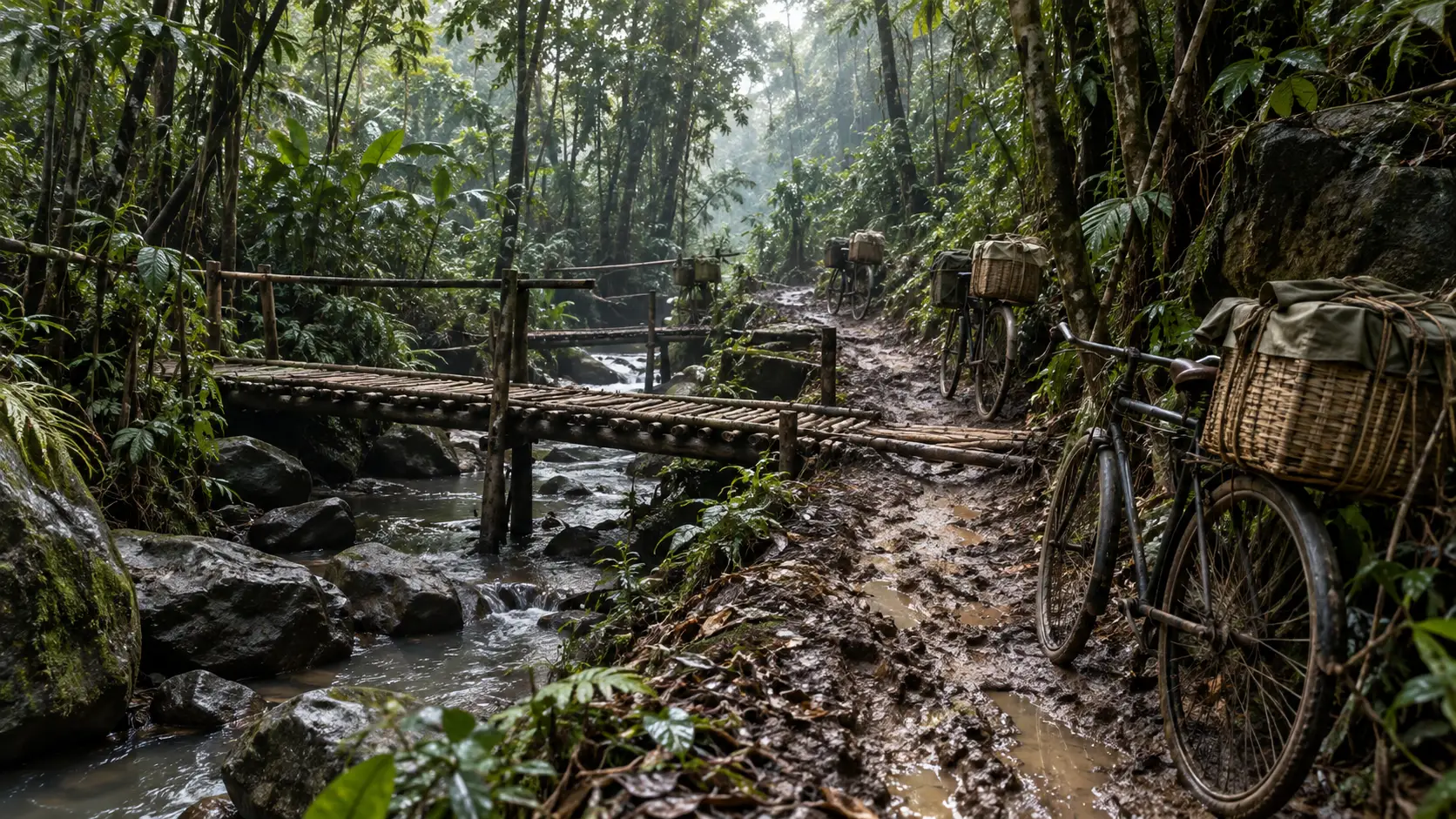
Forces, Routes, and Strategy
Q: What was the official name of North Vietnam's army?
A: The People's Army of Vietnam.
Q: What common abbreviation identifies the People's Army of Vietnam?
A: PAVN.
Q: What was the formal name of the communist-led organization fighting the South Vietnamese government?
A: The National Liberation Front.
Q: What name did U.S. forces commonly use for National Liberation Front fighters?
A: Viet Cong.
Q: What was South Vietnam's military called?
A: The Army of the Republic of Vietnam.
Q: What abbreviation was commonly used for South Vietnam's army?
A: ARVN.
Q: What supply network carried troops and materials through Laos and Cambodia?
A: The Ho Chi Minh Trail.
Q: What name did North Vietnam give the Ho Chi Minh Trail?
A: The Truong Son Strategic Supply Route.
Q: What U.S. tactic used helicopters to move troops quickly into combat zones?
A: Airmobile warfare.
Q: What missions sent troops into rural areas to locate and engage opposing forces?
A: Search-and-destroy missions.
Q: What measure counted enemy dead as an indicator of battlefield success?
A: Body count.
Q: What chemical defoliant was widely sprayed by U.S. forces?
A: Agent Orange.
Q: What herbicide campaign included the spraying of Agent Orange?
A: Operation Ranch Hand.
Q: What incendiary substance became closely associated with images of the war?
A: Napalm.
Q: What tunnel network near Saigon sheltered fighters, supplies, and command facilities?
A: The Cu Chi tunnels.
Major Battles and Turning Points
Q: What 1965 battle was the first major clash between U.S. troops and North Vietnamese forces?
A: The Battle of Ia Drang.
Q: Which U.S. Army division fought at Ia Drang?
A: The 1st Cavalry Division.
Q: What large coordinated offensive began during the Lunar New Year in 1968?
A: The Tet Offensive.
Q: What Vietnamese holiday gave the Tet Offensive its name?
A: Tet, the Lunar New Year.
Q: Which ancient imperial city saw weeks of fierce fighting during Tet?
A: Hue.
Q: Which U.S. diplomatic compound in Saigon was attacked during Tet?
A: The U.S. Embassy compound.
Q: Why was the Tet Offensive a political turning point in the United States?
A: It weakened public confidence in official claims of progress.
Q: What U.S. Marine base endured a long siege in early 1968?
A: Khe Sanh.
Q: What 1969 battle at Hill 937 became known by a grim nickname?
A: The Battle of Hamburger Hill.
Q: What 1970 operation expanded major U.S. ground fighting into a neighboring country?
A: The Cambodian Campaign.
Q: What 1971 South Vietnamese operation entered Laos without U.S. ground troops?
A: Operation Lam Son 719.
Q: What major North Vietnamese offensive began in spring 1972?
A: The Easter Offensive.
Q: What U.S. air campaign struck targets in North Vietnam during much of 1972?
A: Operation Linebacker.
Q: What December 1972 bombing campaign was also called the Christmas Bombing?
A: Operation Linebacker II.
Q: What 1975 campaign ended with the capture of Saigon?
A: The Ho Chi Minh Campaign.
Presidents, Policy, and Politics
Q: Which South Vietnamese president was overthrown and killed in 1963?
A: Ngo Dinh Diem.
Q: Which South Vietnamese general became president in 1967?
A: Nguyen Van Thieu.
Q: Which U.S. secretary of defense was a leading architect of escalation under Johnson?
A: Robert McNamara.
Q: What phrase described senior advisers who shaped U.S. Vietnam policy under Kennedy and Johnson?
A: The Best and the Brightest.
Q: Which U.S. president announced he would not seek reelection in March 1968?
A: Lyndon B. Johnson.
Q: Which president introduced the policy called Vietnamization?
A: Richard Nixon.
Q: What was Vietnamization designed to do?
A: Shift more combat responsibility to South Vietnamese forces.
Q: Who served as Nixon's national security adviser and later secretary of state?
A: Henry Kissinger.
Q: What term described the Nixon administration's effort to win support from Americans who avoided public protest?
A: The silent majority.
Q: What policy called for allies to take greater responsibility for their own defense?
A: The Nixon Doctrine.
Q: Which constitutional amendment lowered the U.S. voting age to 18 in 1971?
A: The 26th Amendment.
Q: What 1973 law sought to limit a president's ability to wage war without Congress?
A: The War Powers Resolution.
Q: Which branch of Congress held televised Vietnam hearings chaired by Senator William Fulbright?
A: The Senate.
Q: What government study leaked in 1971 revealed secret decisions about U.S. involvement?
A: The Pentagon Papers.
Q: Who provided the Pentagon Papers to the press?
A: Daniel Ellsberg.
The War at Home
Q: What federal system selected many young American men for military service?
A: The draft.
Q: What agency administered the U.S. draft?
A: The Selective Service System.
Q: What document did some protesters publicly burn to oppose the draft?
A: Draft cards.
Q: Which college campus saw four students killed by National Guard troops in 1970?
A: Kent State University.
Q: Which historically Black college saw two students killed by police days after Kent State?
A: Jackson State College.
Q: What 1969 event brought huge antiwar crowds to Washington, D.C.?
A: The Moratorium March.
Q: Which civil rights leader publicly opposed the war in his 1967 Riverside Church speech?
A: Martin Luther King Jr.
Q: Which heavyweight boxing champion refused induction into the U.S. Army?
A: Muhammad Ali.
Q: What credibility problem grew as official statements clashed with battlefield reporting?
A: The credibility gap.
Q: Why was the conflict sometimes called the living-room war?
A: Television brought frequent war coverage into American homes.
Q: Which CBS anchor said in 1968 that the war appeared headed for stalemate?
A: Walter Cronkite.
Q: What 1968 massacre of Vietnamese civilians was exposed by investigative reporting?
A: The My Lai massacre.
Q: Which journalist won a Pulitzer Prize for exposing the My Lai massacre?
A: Seymour Hersh.
Q: What organization of former service members became a prominent antiwar voice?
A: Vietnam Veterans Against the War.
Q: What black-and-white POW/MIA flag emerged from concern about missing U.S. personnel?
A: The National League of Families POW/MIA flag.
Peace Talks and the War's End
Q: In which city did formal peace negotiations begin in 1968?
A: Paris.
Q: What 1973 agreement established a cease-fire and U.S. troop withdrawal?
A: The Paris Peace Accords.
Q: On what date were the Paris Peace Accords signed?
A: January 27, 1973.
Q: Which four parties signed the Paris Peace Accords?
A: The United States, North Vietnam, South Vietnam, and the Provisional Revolutionary Government.
Q: Which two negotiators shared the 1973 Nobel Peace Prize?
A: Henry Kissinger and Le Duc Tho.
Q: Which co-recipient declined the 1973 Nobel Peace Prize?
A: Le Duc Tho.
Q: What operation returned American prisoners of war after the accords?
A: Operation Homecoming.
Q: In what year did the last U.S. combat troops leave Vietnam?
A: 1973.
Q: What event on April 30, 1975, marked the collapse of South Vietnam?
A: The fall of Saigon.
Q: What evacuation removed Americans and some Vietnamese from Saigon by helicopter?
A: Operation Frequent Wind.
Q: From which rooftop compound did a famous evacuation photograph show a helicopter rescue?
A: A CIA-linked apartment building.
Q: Was that famous helicopter evacuation photograph taken on the roof of the U.S. Embassy?
A: No.
Q: What was Saigon officially renamed after the war?
A: Ho Chi Minh City.
Q: In what year was Vietnam formally reunified as one country?
A: 1976.
Q: What is the reunified country's official name?
A: The Socialist Republic of Vietnam.
Aftermath, Memory, and Culture
Q: What neighboring country experienced a communist takeover by the Khmer Rouge in 1975?
A: Cambodia.
Q: What term described many Vietnamese refugees who fled by sea after the war?
A: Boat people.
Q: In what year did the United States and Vietnam restore diplomatic relations?
A: 1995.
Q: What health condition has affected veterans exposed to combat and trauma?
A: Post-traumatic stress disorder.
Q: Which chemical contaminant in Agent Orange is linked to serious health problems?
A: Dioxin.
Q: What Washington, D.C., memorial lists the names of U.S. service members who died or remain missing?
A: The Vietnam Veterans Memorial.
Q: Who designed the Vietnam Veterans Memorial?
A: Maya Lin.
Q: In what year was the Vietnam Veterans Memorial dedicated?
A: 1982.
Q: What nickname is commonly used for the memorial's polished black granite panels?
A: The Wall.
Q: What statue near the Wall depicts three U.S. service members?
A: The Three Servicemen.
Q: What memorial honors women who served in Vietnam, especially nurses?
A: The Vietnam Women's Memorial.
Q: Which novelist wrote The Things They Carried?
A: Tim O'Brien.
Q: Which journalist wrote the Vietnam War book Dispatches?
A: Michael Herr.
Q: Which 1986 film follows infantryman Chris Taylor in Vietnam?
A: Platoon.
Q: Which filmmaker directed the documentary series The Vietnam War with Lynn Novick?
A: Ken Burns.
You Made It Through the History
If you held the timeline together through all 120 questions, your history instincts are in excellent shape. Keep exploring the people and eras behind the headlines with our famous people trivia and decades trivia.

Ellie Ewert is the founder and author of RandomTrivia.co, blending her passion for research with years of experience in content creation to deliver accurate, engaging, and well-sourced trivia. Dedicated to providing readers with trustworthy and entertaining facts, she applies meticulous fact-checking and SEO expertise to ensure every article meets the highest standards. Read more about our high standards in our Editorial Guidelines.