
Sushi looks simple, but every little roll carries a world of technique, tradition, and tasty details.
These 120 questions slice through rice, seafood, history, etiquette, and clever creations without getting lost in the soy sauce.
Sushi Foundations
Q: What ingredient gives sushi its name?
A: Seasoned rice.
Q: Does the word sushi mean raw fish?
A: No.
Q: What is sushi rice seasoned with?
A: Rice vinegar, sugar, and salt.
Q: What Japanese term means sushi rice?
A: Shari.
Q: What Japanese term can refer to a sushi topping?
A: Neta.
Q: What short-grain rice is commonly used for sushi?
A: Japanese rice.
Q: What should properly cooked sushi rice be able to do?
A: Hold together without becoming mushy.
Q: What seaweed sheet commonly wraps sushi rolls?
A: Nori.
Q: What pale green condiment often accompanies sushi?
A: Wasabi.
Q: What pink garnish commonly served with sushi is pickled ginger?
A: Gari.
Q: What dipping sauce is commonly served with sushi?
A: Soy sauce.
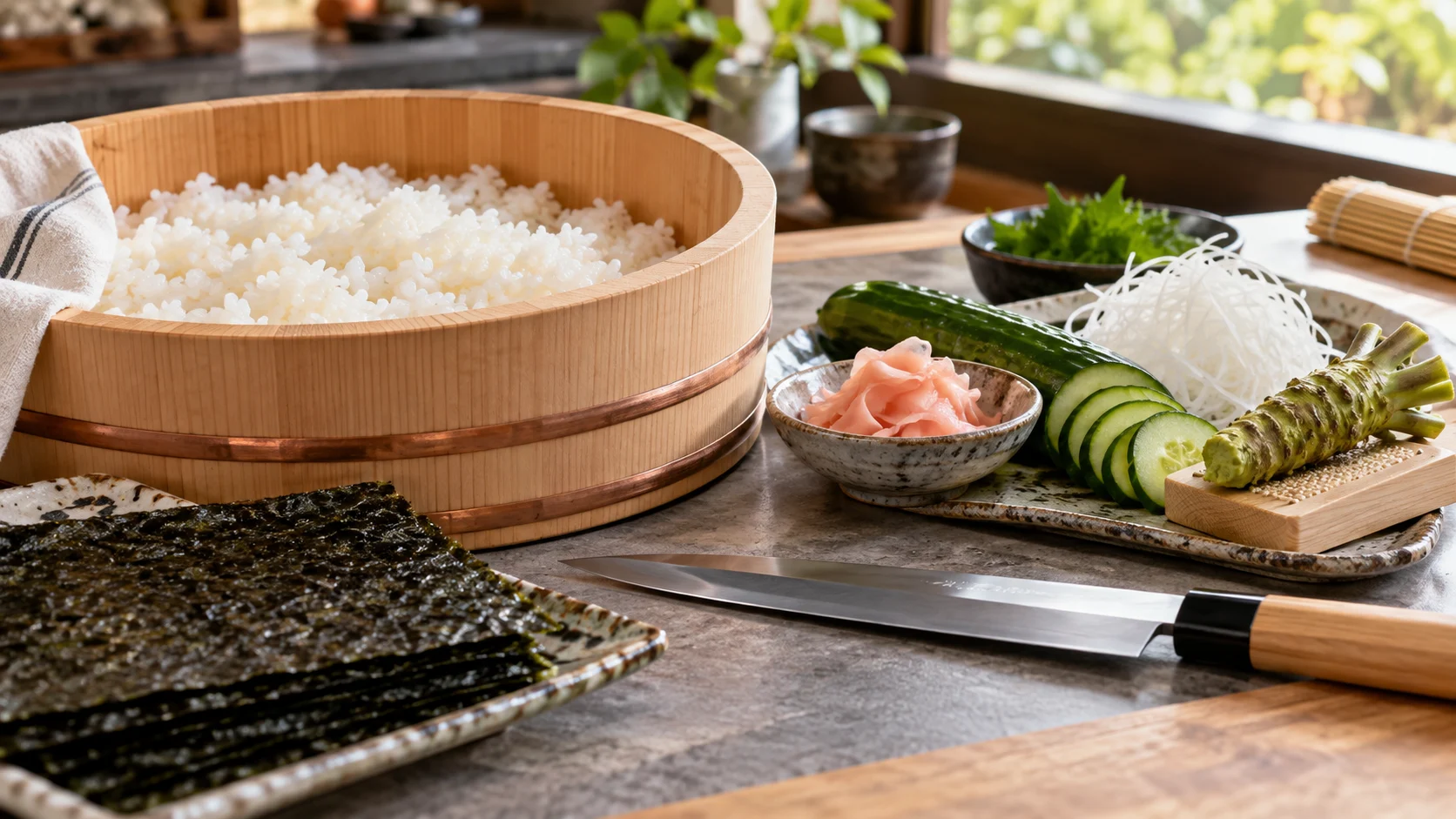
Q: What bamboo mat helps shape rolled sushi?
A: A makisu.
Q: What wooden tub is traditionally used to season and cool sushi rice?
A: A hangiri.
Q: What utensil gently cuts seasoning through sushi rice?
A: A rice paddle.
Q: Is all sushi made with seafood?
A: No.
Nigiri, Rolls, and More
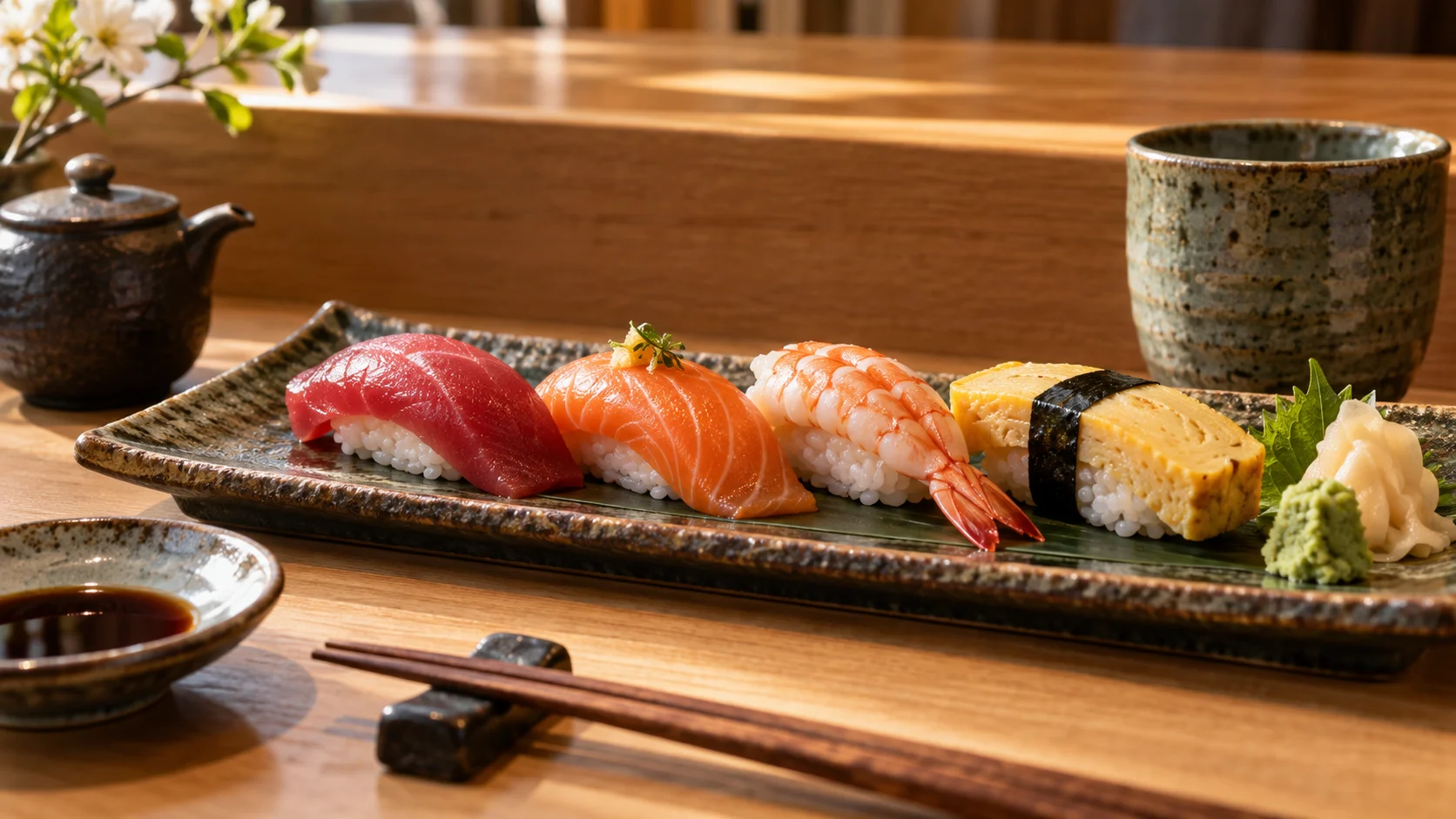
Q: What sushi consists of a hand-pressed rice mound topped with another ingredient?
A: Nigiri.
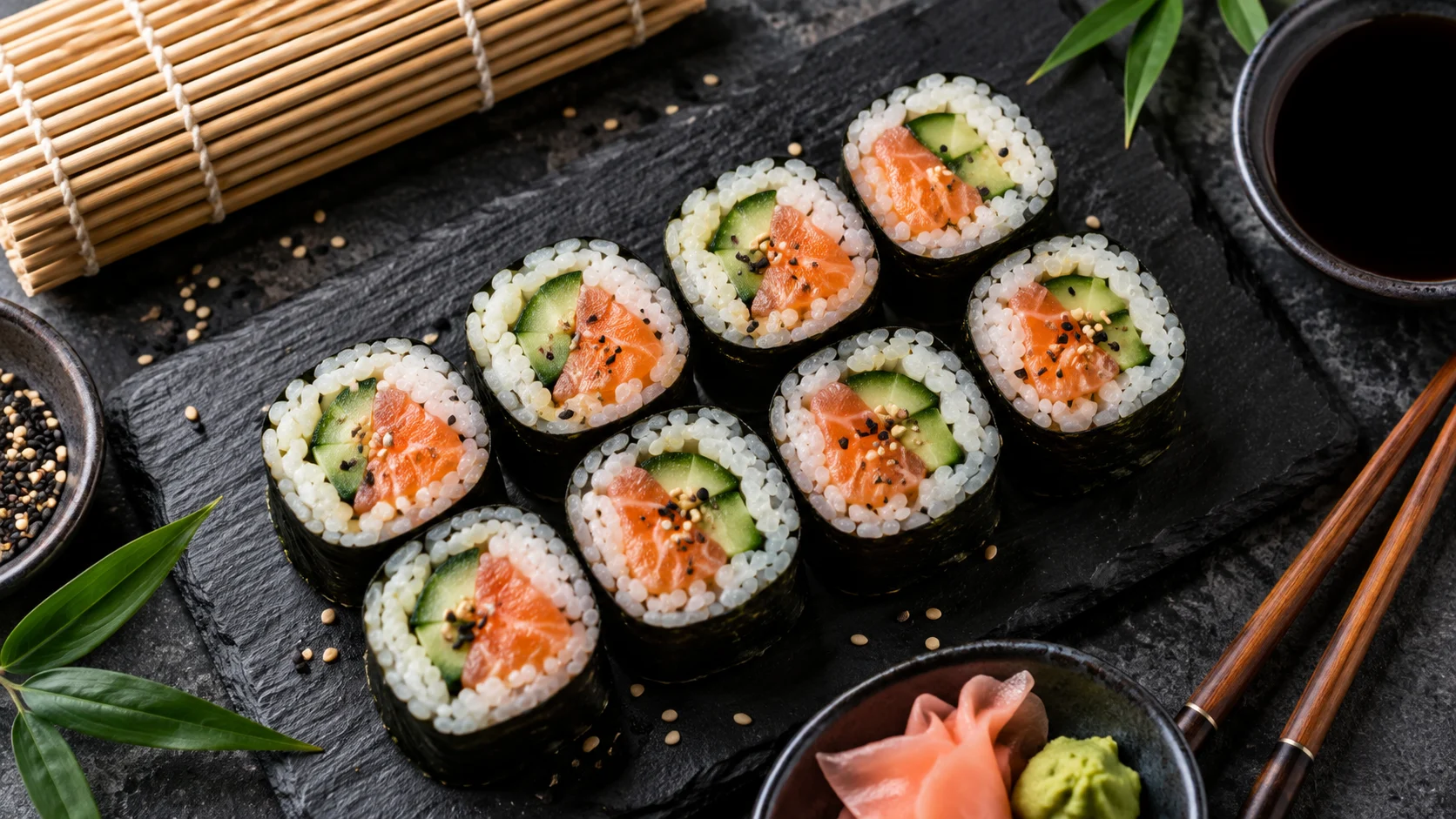
Q: What rolled sushi is wrapped and sliced into rounds?
A: Maki.
Q: What sushi has nori on the inside and rice on the outside?
A: Uramaki.
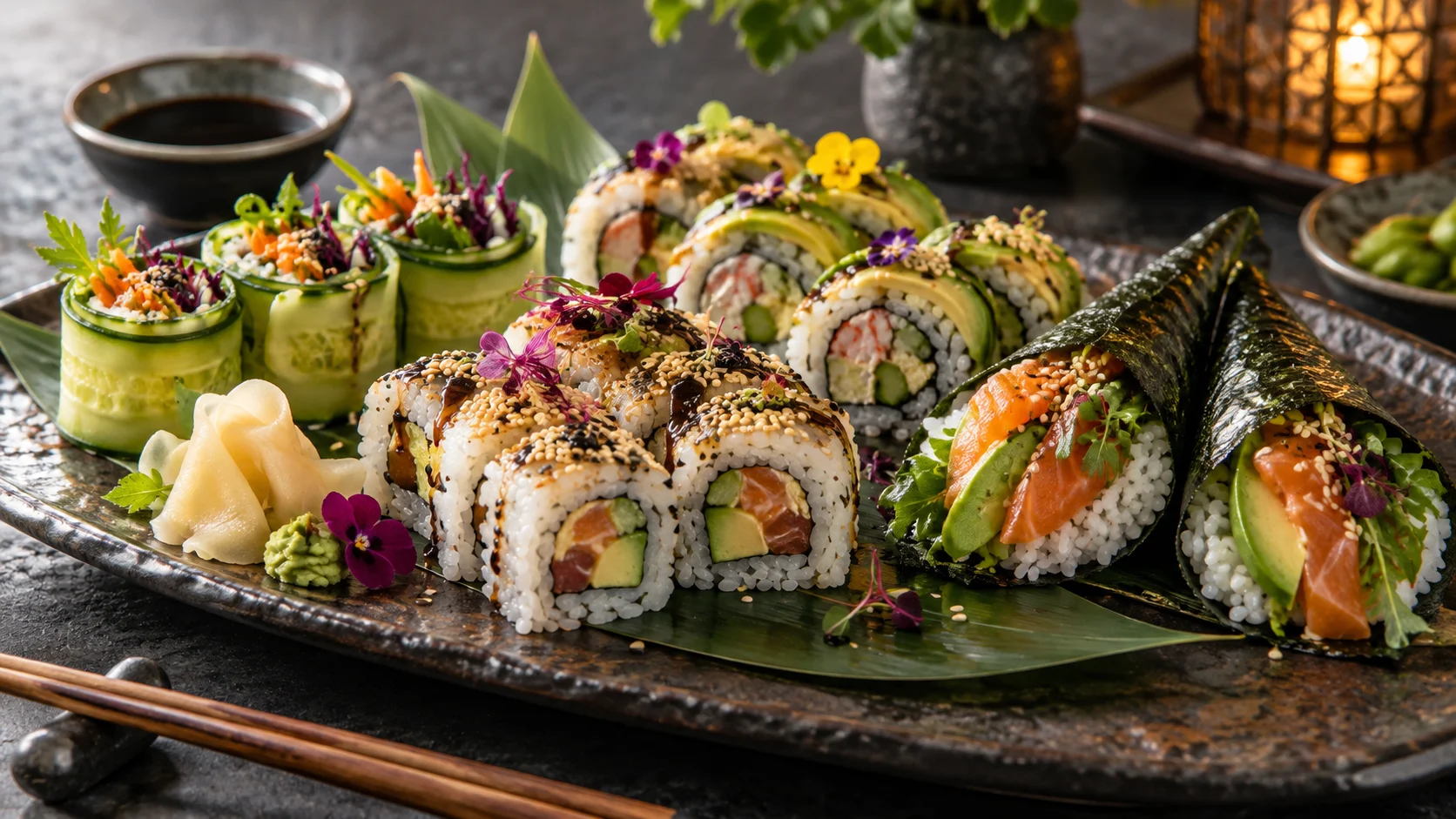
Q: What cone-shaped hand roll is called temaki?
A: Temaki.
Q: What sushi presents fillings in a bowl of vinegared rice?
A: Chirashizushi.
Q: What sushi fills a pouch of seasoned fried tofu with rice?
A: Inarizushi.
Q: What molded sushi is pressed in a box or mold?
A: Oshizushi.
Q: What battleship-shaped sushi holds loose toppings behind a nori wall?
A: Gunkan-maki.
Q: What thick roll commonly contains several fillings?
A: Futomaki.
Q: What thin roll usually features one main filling?
A: Hosomaki.
Q: What cucumber roll is named kappa maki?
A: Kappa maki.
Q: What tuna roll is called tekka maki?
A: Tekka maki.
Q: What fermented ancestor of modern sushi preserves fish with rice?
A: Narezushi.
Q: What Osaka specialty is pressed sushi?
A: Oshizushi.
Q: What is sashimi?
A: Thinly sliced raw seafood or meat served without sushi rice.
Fish and Shellfish Favorites
Q: What fish is called maguro on a sushi menu?
A: Tuna.
Q: What fatty tuna belly is called toro?
A: Toro.
Q: What especially fatty tuna belly cut is otoro?
A: Otoro.
Q: What moderately fatty tuna cut is chutoro?
A: Chutoro.
Q: What fish is called sake or shake in sushi terminology?
A: Salmon.
Q: What yellowtail is called in Japanese sushi restaurants?
A: Hamachi.
Q: What freshwater eel is called unagi?
A: Unagi.
Q: What saltwater eel is called anago?
A: Anago.
Q: What shrimp is called ebi?
A: Ebi.
Q: What octopus is called tako?
A: Tako.
Q: What squid is called ika?
A: Ika.
Q: What scallop is called hotate?
A: Hotate.
Q: What salmon roe is called ikura?
A: Ikura.
Q: What tiny flying-fish roe is called tobiko?
A: Tobiko.
Q: What sea urchin gonads are served as uni?
A: Uni.
Vegetables, Eggs, and Garnishes
Q: What sweet rolled omelet is served as tamago sushi?
A: Tamagoyaki.
Q: What pickled daikon radish is called takuan?
A: Takuan.
Q: What creamy green fruit appears in many modern rolls?
A: Avocado.
Q: What crisp green vegetable stars in kappa maki?
A: Cucumber.
Q: What Japanese gourd strip is used in kanpyo rolls?
A: Dried bottle gourd.
Q: What fermented soybean food can top or fill sushi?
A: Natto.
Q: What brown sesame seeds can add crunch to rolls?
A: Sesame seeds.
Q: What Japanese herb with a bright aroma can garnish sushi?
A: Shiso.
Q: What sprout traditionally made from daikon can garnish sashimi?
A: Kaiware.
Q: What citrus peel may provide a fragrant accent?
A: Yuzu peel.
Q: What salty preserved plum can flavor vegetarian rolls?
A: Umeboshi.
Q: What brown sauce often tops eel sushi?
A: Eel sauce.
Q: What mayonnaise-based sauce commonly appears on American-style spicy rolls?
A: Spicy mayonnaise.
Q: What crunchy fried batter bits are called tenkasu?
A: Tenkasu.
Q: What mild white radish is often shredded beneath sashimi?
A: Daikon.
Sushi History
Q: Where did sushi's earliest fermented ancestor develop?
A: Southeast Asia.
Q: Why was rice originally packed around fish in early sushi?
A: To help preserve the fish.
Q: Was the rice in early narezushi always eaten?
A: No.
Q: In which country did sushi develop into its best-known forms?
A: Japan.
Q: What city was formerly called Edo?
A: Tokyo.
Q: What fast style of sushi became popular in Edo during the 1800s?
A: Nigirizushi.
Q: Who is traditionally credited with popularizing Edo-style nigiri?
A: Hanaya Yohei.
Q: Why was early Edo nigiri considered convenient street food?
A: It could be prepared and eaten quickly.
Q: What preservation method flavored many early nigiri toppings?
A: Marinating in soy sauce or vinegar.
Q: What technology helped raw seafood become more common in sushi?
A: Refrigeration.
Q: In what century did sushi become widely popular in the United States?
A: The 20th century.
Q: Which U.S. state became an early center of American sushi culture?
A: California.
Q: What inside-out roll helped introduce many Americans to sushi?
A: The California roll.
Q: Which ingredient replaced fatty tuna in some early California rolls?
A: Avocado.
Q: Is the exact inventor of the California roll universally agreed upon?
A: No.
At the Sushi Counter
Q: What phrase means the chef chooses the meal?
A: Omakase.
Q: What does omakase literally convey?
A: I leave it up to you.
Q: What is a sushi chef commonly called in Japanese?
A: Itamae.
Q: What counter-style service lets guests watch the chef work?
A: Sushi-bar seating.
Q: Which side of nigiri is usually lightly dipped in soy sauce?
A: The topping side.
Q: Why can soaking rice in soy sauce be a problem?
A: It may fall apart and absorb too much sauce.
Q: What garnish is eaten between bites to refresh the palate?
A: Pickled ginger.
Q: Is gari traditionally piled on top of every piece of sushi?
A: No.
Q: What Japanese phrase is commonly said before eating?
A: Itadakimasu.
Q: What phrase expresses thanks after a meal?
A: Gochisousama.
Q: What hot drink commonly accompanies sushi in Japan?
A: Green tea.
Q: What tea is traditionally called agari at some sushi shops?
A: Green tea.
Q: What towel may be provided before eating?
A: An oshibori.
Q: Can nigiri traditionally be eaten with clean fingers?
A: Yes.
Q: Should diners assume every chef follows exactly the same serving customs?
A: No.
Food Science and Safety
Q: Does lime juice reliably make raw fish free of pathogens?
A: No.
Q: Does freezing destroy every harmful microorganism in seafood?
A: No.
Q: Why is certain fish frozen before raw service?
A: To control parasites.
Q: Does freezing reliably kill all bacteria in fish?
A: No.
Q: What seafood safety hazard can form in improperly chilled tuna?
A: Histamine.
Q: Can cooking or freezing remove histamine once it has formed?
A: No.
Q: What should raw seafood stay until preparation?
A: Properly refrigerated.
Q: What causes rice to become sticky enough for sushi?
A: Its starch composition and cooking method.
Q: Why is hot rice folded rather than vigorously stirred with seasoning?
A: To avoid crushing the grains.
Q: What gives rice vinegar its sour taste?
A: Acetic acid.
Q: What pigment makes salmon flesh orange-pink?
A: Astaxanthin.
Q: What protein turns opaque when seafood cooks?
A: Denatured protein.
Q: Why is nori toasted?
A: To make it crisp and aromatic.
Q: What is cross-contamination?
A: The transfer of harmful microbes between foods or surfaces.
Q: Should raw and ready-to-eat ingredients use clean, separate tools when needed?
A: Yes.
Global Rolls and Creative Twists
Q: What roll commonly combines crab or imitation crab, cucumber, and avocado?
A: The California roll.
Q: What roll typically features smoked salmon, cream cheese, and cucumber?
A: The Philadelphia roll.
Q: What roll commonly contains cooked shrimp tempura?
A: A shrimp tempura roll.
Q: What term describes sushi made without animal ingredients?
A: Vegan sushi.
Q: Can mango appear in modern fusion sushi?
A: Yes.
Q: What spicy mixture often fills a spicy tuna roll?
A: Tuna with a chile-seasoned mayonnaise sauce.
Q: What outside coating often adds tiny orange beads to uramaki?
A: Tobiko or masago.
Q: What is masago?
A: Capelin roe.
Q: What dark sweet glaze often tops unagi rolls?
A: Eel sauce.
Q: What technique lightly sears the surface of sushi?
A: Aburi.
Q: What does aburi mean in a sushi context?
A: Flame-seared.
Q: What Hawaiian raw-fish dish sometimes inspires sushi rolls?
A: Poke.
Q: What Korean seaweed rice roll resembles maki but has its own tradition?
A: Gimbap.
Q: Is gimbap simply another Japanese name for sushi?
A: No.
Q: What makes contemporary sushi adaptable for many diets?
A: Its rice base can pair with many fillings.
You Are on a Roll
You handled all 120 bites of sushi trivia like a seasoned itamae. That score deserves a celebratory hand roll.

Ellie Ewert is the founder and author of RandomTrivia.co, blending her passion for research with years of experience in content creation to deliver accurate, engaging, and well-sourced trivia. Dedicated to providing readers with trustworthy and entertaining facts, she applies meticulous fact-checking and SEO expertise to ensure every article meets the highest standards. Read more about our high standards in our Editorial Guidelines.