
Antarctica is the one continent where “dry,” “windy,” and “covered in ice” all describe the same place. These 120 questions cross the map, climb the mountains, meet the wildlife, and follow the expeditions without turning into a frozen textbook.
Antarctica on the Map
Q: What is Antarctica?
A: It is known as the continent surrounding the geographic South Pole.
Q: Which Antarctic continent is the continent surrounding the geographic South Pole?
A: Antarctica.
Q: What is Southern Ocean?
A: It is known as the ocean encircling Antarctica south of roughly 60 degrees south latitude.
Q: Which Antarctic ocean is the ocean encircling Antarctica south of roughly 60 degrees south latitude?
A: Southern Ocean.
Q: What is Geographic South Pole?
A: It is known as the southern point where Earth’s rotation axis meets its surface.
Q: Which Antarctic location is the southern point where Earth’s rotation axis meets its surface?
A: Geographic South Pole.
Q: What is Antarctic Circle?
A: It is known as the line near 66.5 degrees south that marks the polar region.
Q: Which Antarctic line of latitude is the line near 66.5 degrees south that marks the polar region?
A: Antarctic Circle.
Q: What is East Antarctica?
A: It is known as the larger portion of the continent, mostly in the Eastern Hemisphere.
Q: Which Antarctic region is the larger portion of the continent, mostly in the Eastern Hemisphere?
A: East Antarctica.
Q: What is West Antarctica?
A: It is known as the smaller portion that includes the Antarctic Peninsula and Marie Byrd Land.
Q: Which Antarctic region is the smaller portion that includes the Antarctic Peninsula and Marie Byrd Land?
A: West Antarctica.
Q: What is Transantarctic Mountains?
A: It is known as the long range conventionally separating East and West Antarctica.
Q: Which Antarctic mountain range is the long range conventionally separating East and West Antarctica?
A: Transantarctic Mountains.
Q: What is Antarctic Peninsula?
A: It is known as the narrow arm reaching north toward South America.
Q: Which Antarctic landform is the narrow arm reaching north toward South America?
A: Antarctic Peninsula.
Q: What is Ross Sea?
A: It is known as the large embayment beside the Ross Ice Shelf.
Q: Which Antarctic sea is the large embayment beside the Ross Ice Shelf?
A: Ross Sea.
Q: What is Weddell Sea?
A: It is known as the sea east of the Antarctic Peninsula known for difficult pack ice.
Q: Which Antarctic sea is the sea east of the Antarctic Peninsula known for difficult pack ice?
A: Weddell Sea.
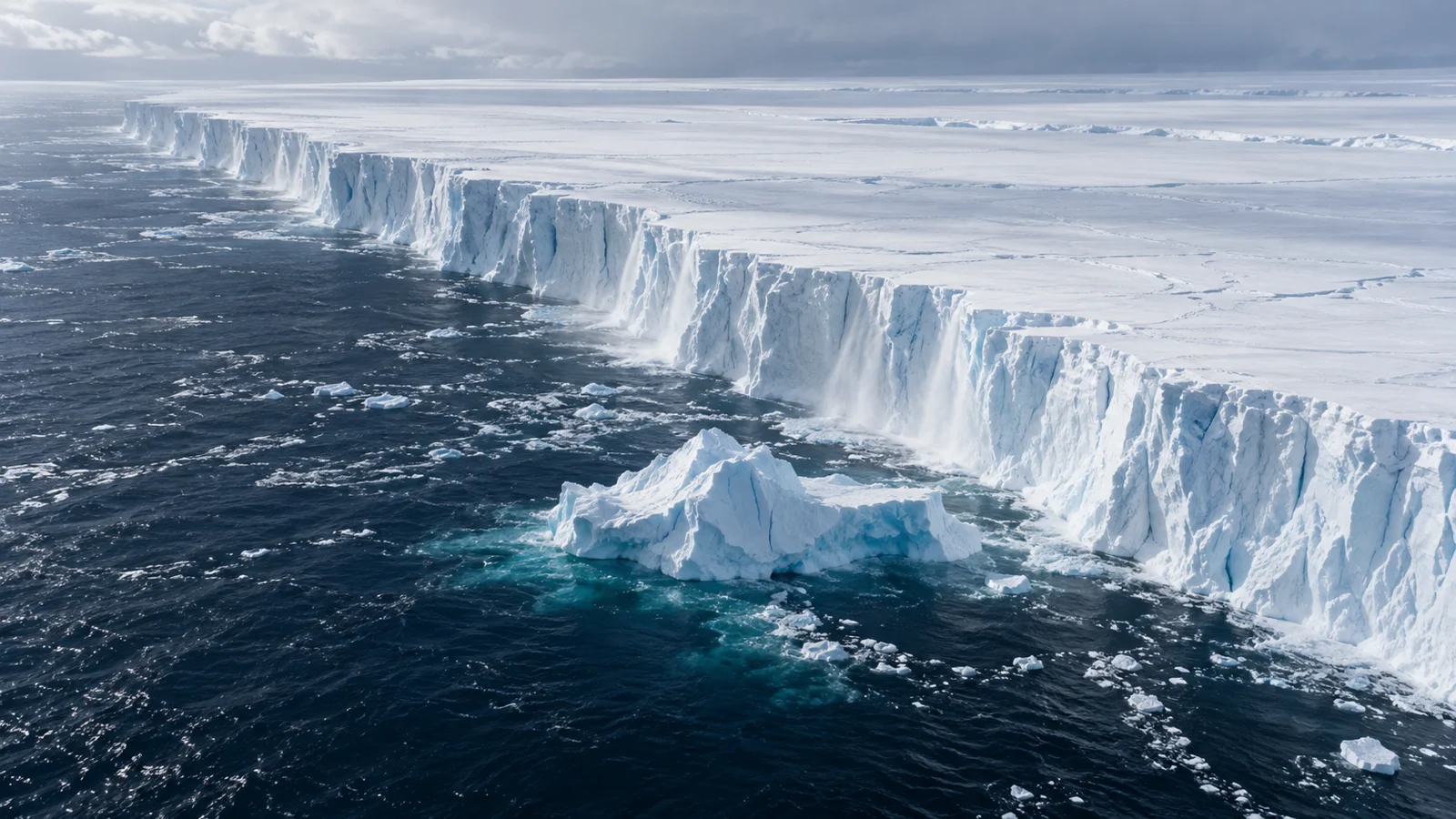
Q: What is Ross Ice Shelf?
A: It is known as the enormous floating shelf bordering the Ross Sea.
Q: Which Antarctic ice shelf is the enormous floating shelf bordering the Ross Sea?
A: Ross Ice Shelf.
Q: What is Ronne-Filchner Ice Shelf?
A: It is known as the vast floating ice system in the Weddell Sea.
Q: Which Antarctic ice shelf is the vast floating ice system in the Weddell Sea?
A: Ronne-Filchner Ice Shelf.
Q: What is Gamburtsev Subglacial Mountains?
A: It is known as the mountain chain buried beneath the East Antarctic Ice Sheet.
Q: Which Antarctic mountain range is the mountain chain buried beneath the East Antarctic Ice Sheet?
A: Gamburtsev Subglacial Mountains.
Q: What is Mount Vinson?
A: It is known as the highest peak in Antarctica at about 16,050 feet.
Q: Which Antarctic mountain is the highest peak in Antarctica at about 16,050 feet?
A: Mount Vinson.
Q: What is Mount Erebus?
A: It is known as the active volcano on Ross Island with a persistent lava lake.
Q: Which Antarctic volcano is the active volcano on Ross Island with a persistent lava lake?
A: Mount Erebus.
Ice, Weather & Polar Wildlife
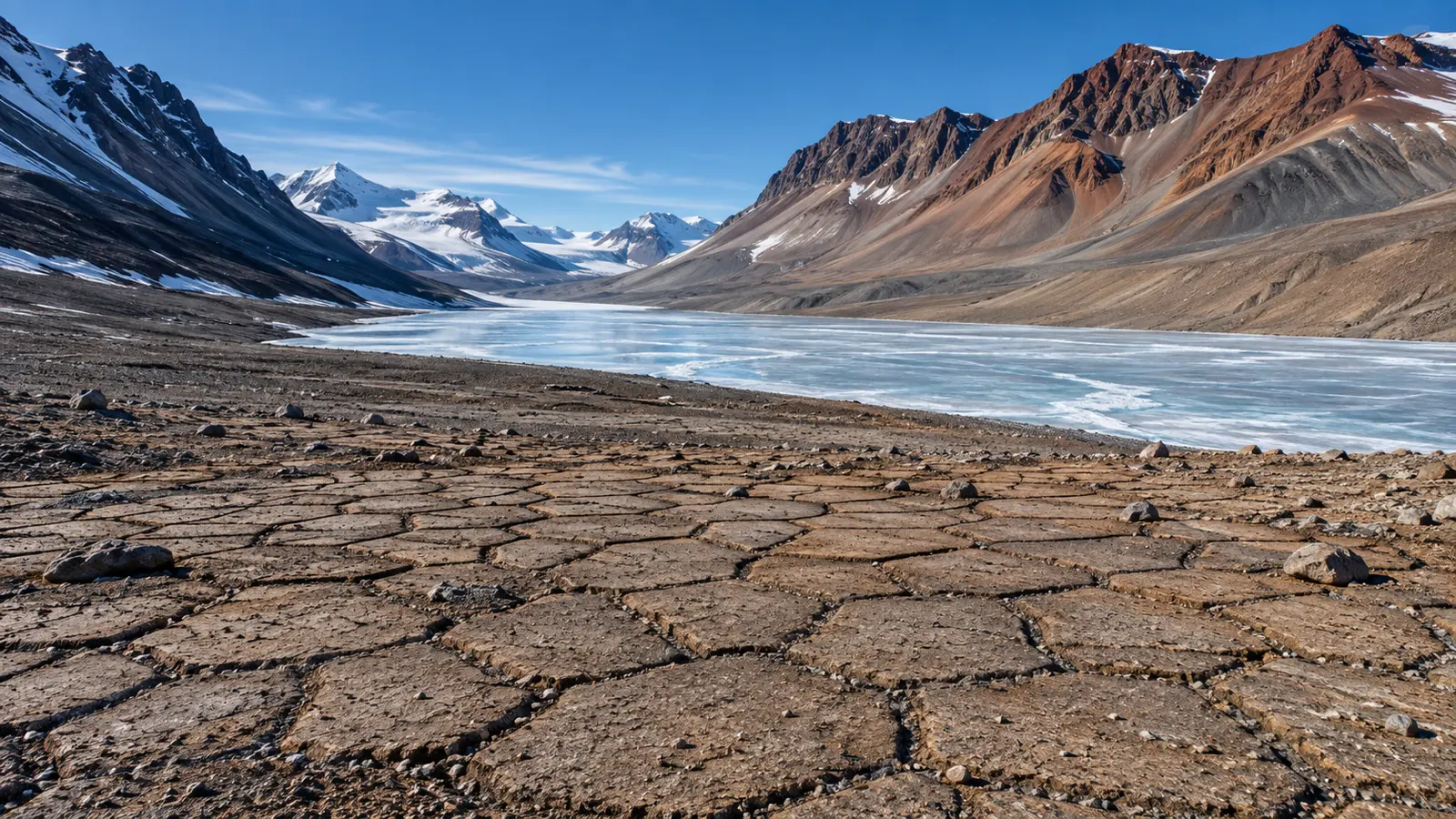
Q: What is McMurdo Dry Valleys?
A: It is known as the extremely arid, mostly ice-free valleys west of McMurdo Sound.
Q: Which Antarctic region is the extremely arid, mostly ice-free valleys west of McMurdo Sound?
A: McMurdo Dry Valleys.
Q: What is Lake Vostok?
A: It is known as the huge subglacial lake buried beneath East Antarctic ice.
Q: Which Antarctic lake is the huge subglacial lake buried beneath East Antarctic ice?
A: Lake Vostok.
Q: What is Antarctic Ice Sheet?
A: It is known as the ice mass holding most of Earth’s fresh water.
Q: Which Antarctic ice sheet is the ice mass holding most of Earth’s fresh water?
A: Antarctic Ice Sheet.
Q: What is East Antarctic Ice Sheet?
A: It is known as the larger and generally more stable of Antarctica’s two main ice sheets.
Q: Which Antarctic ice sheet is the larger and generally more stable of Antarctica’s two main ice sheets?
A: East Antarctic Ice Sheet.
Q: What is West Antarctic Ice Sheet?
A: It is known as the marine-based ice sheet whose bed lies largely below sea level.
Q: Which Antarctic ice sheet is the marine-based ice sheet whose bed lies largely below sea level?
A: West Antarctic Ice Sheet.
Q: What is Katabatic wind?
A: It is known as a cold, dense downslope wind driven by gravity.
Q: Which Antarctic wind is a cold, dense downslope wind driven by gravity?
A: Katabatic wind.
Q: What is Polar day?
A: It is known as the period when the sun remains above the horizon for at least 24 hours.
Q: Which Antarctic seasonal phenomenon is the period when the sun remains above the horizon for at least 24 hours?
A: Polar day.
Q: What is Polar night?
A: It is known as the period when the sun remains below the horizon for at least 24 hours.
Q: Which Antarctic seasonal phenomenon is the period when the sun remains below the horizon for at least 24 hours?
A: Polar night.
Q: What is Antarctic Convergence?
A: It is known as the zone where cold Antarctic water meets warmer subantarctic water.
Q: Which Antarctic ocean boundary is the zone where cold Antarctic water meets warmer subantarctic water?
A: Antarctic Convergence.
Q: What is Antarctic krill?
A: It is known as the small shrimp-like animal central to the Southern Ocean food web.
Q: Which Antarctic crustacean is the small shrimp-like animal central to the Southern Ocean food web?
A: Antarctic krill.
Q: What is Emperor penguin?
A: It is known as the largest living penguin and a winter breeder on Antarctic sea ice.
Q: Which Antarctic bird is the largest living penguin and a winter breeder on Antarctic sea ice?
A: Emperor penguin.
Q: What is Adelie penguin?
A: It is known as the black-and-white penguin named by explorer Jules Dumont d’Urville for his wife.
Q: Which Antarctic bird is the black-and-white penguin named by explorer Jules Dumont d’Urville for his wife?
A: Adelie penguin.
Q: What is Chinstrap penguin?
A: It is known as the penguin recognized by a narrow black line beneath its chin.
Q: Which Antarctic bird is the penguin recognized by a narrow black line beneath its chin?
A: Chinstrap penguin.
Q: What is Weddell seal?
A: It is known as the seal able to maintain breathing holes in sea ice with its teeth.
Q: Which Antarctic mammal is the seal able to maintain breathing holes in sea ice with its teeth?
A: Weddell seal.
Q: What is Leopard seal?
A: It is known as the large predatory seal that hunts penguins and other prey.
Q: Which Antarctic mammal is the large predatory seal that hunts penguins and other prey?
A: Leopard seal.
Treaties, Stations & Antarctic Science
Q: What is Crabeater seal?
A: It is known as the abundant seal that feeds mainly on krill despite its name.
Q: Which Antarctic mammal is the abundant seal that feeds mainly on krill despite its name?
A: Crabeater seal.
Q: What is Southern elephant seal?
A: It is known as the world’s largest seal, whose males can weigh several tons.
Q: Which Antarctic mammal is the world’s largest seal, whose males can weigh several tons?
A: Southern elephant seal.
Q: What is Antarctic midge?
A: It is known as the tiny wingless insect that is Antarctica’s largest native land animal.
Q: Which Antarctic insect is the tiny wingless insect that is Antarctica’s largest native land animal?
A: Antarctic midge.
Q: What is Lichen?
A: It is known as a partnership of fungus and photosynthetic organism that survives on Antarctic rock.
Q: Which Antarctic organism is a partnership of fungus and photosynthetic organism that survives on Antarctic rock?
A: Lichen.
Q: What is Antarctic Treaty?
A: It is known as the 1959 agreement reserving Antarctica for peaceful purposes and science.
Q: Which Antarctic agreement is the 1959 agreement reserving Antarctica for peaceful purposes and science?
A: Antarctic Treaty.
Q: What is Madrid Protocol?
A: It is known as the environmental protocol that prohibits mineral-resource activities except scientific research.
Q: Which Antarctic agreement is the environmental protocol that prohibits mineral-resource activities except scientific research?
A: Madrid Protocol.
Q: What is CCAMLR?
A: It is known as the commission that manages conservation of Antarctic marine living resources.
Q: Which Antarctic organization is the commission that manages conservation of Antarctic marine living resources?
A: CCAMLR.
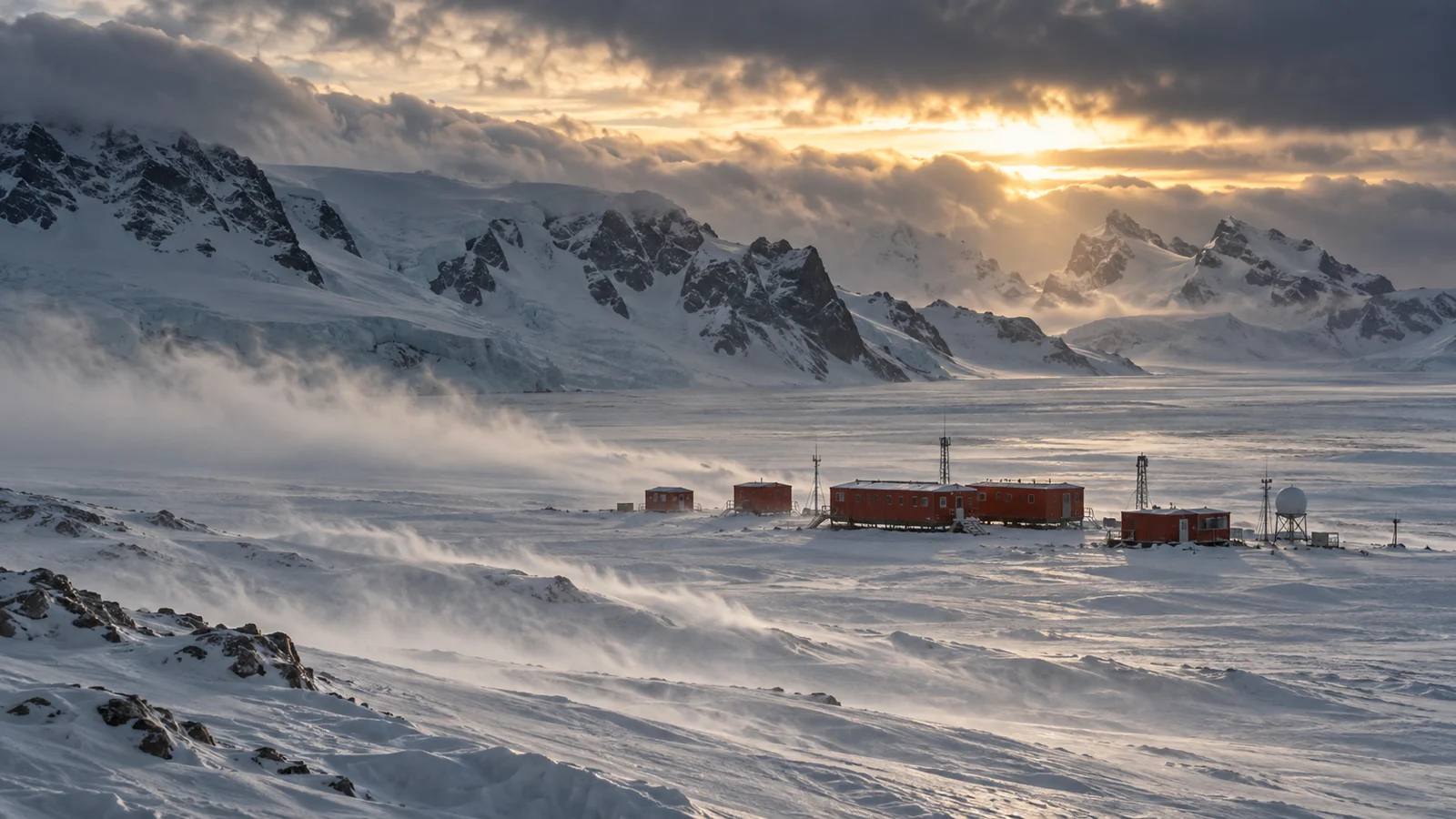
Q: What is McMurdo Station?
A: It is known as the largest Antarctic research station, operated by the United States.
Q: Which Antarctic research station is the largest Antarctic research station, operated by the United States?
A: McMurdo Station.
Q: What is Amundsen-Scott South Pole Station?
A: It is known as the U.S. station located at the geographic South Pole.
Q: Which Antarctic research station is the U.S. station located at the geographic South Pole?
A: Amundsen-Scott South Pole Station.
Q: What is Vostok Station?
A: It is known as the Russian inland station associated with Antarctica’s record low temperature.
Q: Which Antarctic research station is the Russian inland station associated with Antarctica’s record low temperature?
A: Vostok Station.
Q: What is Rothera Research Station?
A: It is known as the main British Antarctic Survey base on Adelaide Island.
Q: Which Antarctic research station is the main British Antarctic Survey base on Adelaide Island?
A: Rothera Research Station.
Q: What is Palmer Station?
A: It is known as the U.S. research base on Anvers Island near the Antarctic Peninsula.
Q: Which Antarctic research station is the U.S. research base on Anvers Island near the Antarctic Peninsula?
A: Palmer Station.
Q: What is Esperanza Base?
A: It is known as the Argentine station where Emilio Marcos Palma was born in 1978.
Q: Which Antarctic research station is the Argentine station where Emilio Marcos Palma was born in 1978?
A: Esperanza Base.
Q: What is Drake Passage?
A: It is known as the rough stretch of ocean between Cape Horn and the Antarctic Peninsula.
Q: Which Antarctic waterway is the rough stretch of ocean between Cape Horn and the Antarctic Peninsula?
A: Drake Passage.
Q: Who was Roald Amundsen?
A: A person known as the Norwegian who led the first expedition to reach the South Pole.
Q: Which Antarctic explorer is the Norwegian who led the first expedition to reach the South Pole?
A: Roald Amundsen.
Explorers, Records & Hard Antarctica Trivia
Q: Who was Robert Falcon Scott?
A: A person known as the British leader whose party reached the South Pole after Amundsen and died returning.
Q: Which Antarctic explorer is the British leader whose party reached the South Pole after Amundsen and died returning?
A: Robert Falcon Scott.
Q: Who was Ernest Shackleton?
A: A person known as the Anglo-Irish expedition leader famous for the survival of the Endurance crew.
Q: Which Antarctic explorer is the Anglo-Irish expedition leader famous for the survival of the Endurance crew?
A: Ernest Shackleton.
Q: What is Endurance?
A: It is known as Shackleton’s vessel that was crushed by Weddell Sea ice in 1915.
Q: Which Antarctic ship is Shackleton’s vessel that was crushed by Weddell Sea ice in 1915?
A: Endurance.
Q: What is Belgica expedition?
A: It is known as the 1897 to 1899 voyage whose crew became the first to overwinter in Antarctic waters.
Q: Which Antarctic expedition is the 1897 to 1899 voyage whose crew became the first to overwinter in Antarctic waters?
A: Belgica expedition.
Q: What is Larsen B Ice Shelf?
A: It is known as the Antarctic Peninsula shelf that dramatically collapsed in 2002.
Q: Which Antarctic ice shelf is the Antarctic Peninsula shelf that dramatically collapsed in 2002?
A: Larsen B Ice Shelf.
Q: What is Antarctic ozone hole?
A: It is known as the severe seasonal thinning of stratospheric ozone over Antarctica.
Q: Which Antarctic atmospheric phenomenon is the severe seasonal thinning of stratospheric ozone over Antarctica?
A: Antarctic ozone hole.
Q: What is Ice core?
A: It is known as a drilled cylinder of ice that preserves past snow, gases, and climate evidence.
Q: Which Antarctic scientific sample is a drilled cylinder of ice that preserves past snow, gases, and climate evidence?
A: Ice core.
Q: What is Albedo?
A: It is known as the fraction of incoming light a surface reflects.
Q: Which Antarctic physical property is the fraction of incoming light a surface reflects?
A: Albedo.
Q: What is Sea ice?
A: It is known as frozen seawater that forms and melts on the ocean.
Q: Which Antarctic ice type is frozen seawater that forms and melts on the ocean?
A: Sea ice.
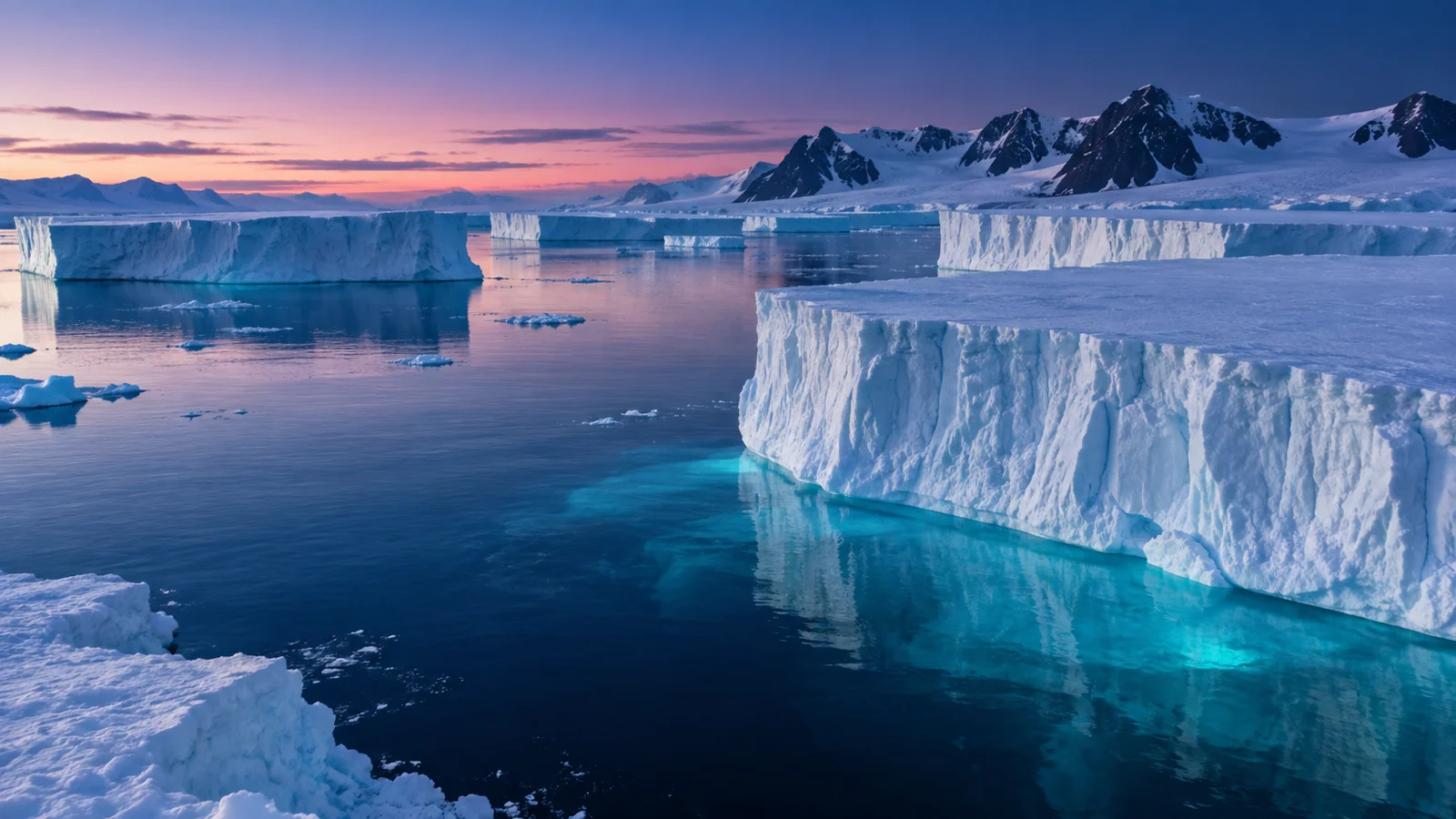
Q: What is Ice shelf?
A: It is known as floating glacier ice still attached to land.
Q: Which Antarctic ice type is floating glacier ice still attached to land?
A: Ice shelf.
Q: What is Iceberg?
A: It is known as a floating block of freshwater ice that has broken from a glacier or ice shelf.
Q: Which Antarctic ice type is a floating block of freshwater ice that has broken from a glacier or ice shelf?
A: Iceberg.
Q: What is Calving?
A: It is known as the breaking of ice from the edge of a glacier or ice shelf.
Q: Which Antarctic process is the breaking of ice from the edge of a glacier or ice shelf?
A: Calving.
Q: What is Nunatak?
A: It is known as a mountain peak or rocky ridge protruding through an ice sheet.
Q: Which Antarctic landform is a mountain peak or rocky ridge protruding through an ice sheet?
A: Nunatak.
Q: What is South Magnetic Pole?
A: It is known as the shifting point associated with Earth’s magnetic field rather than its rotation axis.
Q: Which Antarctic location is the shifting point associated with Earth’s magnetic field rather than its rotation axis?
A: South Magnetic Pole.
Q: What is Vostok temperature record?
A: It is known as the minus 128.6 degree Fahrenheit reading measured in July 1983.
Q: Which Antarctic record is the minus 128.6 degree Fahrenheit reading measured in July 1983?
A: Vostok temperature record.
How Did You Score?
If you separated an ice shelf from sea ice, knew Vinson from Vostok, and remembered what happened to Endurance, your polar knowledge is expedition-ready. I would still pack an extra pair of socks.

Ellie Simons creates and edits Random Trivia. She researches trivia using primary and authoritative sources whenever possible and is currently reviewing the site's older trivia library for accuracy, clarity, and playability. Read more on the About page.
About this quiz
Site editor: Ellie Simons. Read our Trivia Methodology to learn how questions are researched and updated. Page last updated: . Report an error.