
Trace the First World War from the Sarajevo assassination to the armistice and its aftermath. These 120 questions cover the causes of war, trench fighting, major battles, the home front, Russia, and the peace settlement in four broad rounds.
For a quiz organized by individual fronts, air and naval warfare, and weapons, try our World War I quiz by topic.
Causes, Alliances & the Road to War
Q: In what year did World War I begin?
A: 1914.
Q: What event immediately triggered the July Crisis?
A: The assassination of Archduke Franz Ferdinand of Austria-Hungary.
Q: Where was Franz Ferdinand assassinated?
A: Sarajevo.
Q: On what date was Franz Ferdinand assassinated?
A: June 28, 1914.
Q: Who assassinated Franz Ferdinand?
A: Gavrilo Princip.
Q: What was Princip's background?
A: A Bosnian Serb nationalist associated with the Young Bosnia movement.
Q: Which empire did Franz Ferdinand belong to?
A: Austria-Hungary.
Q: Who was assassinated alongside him?
A: His wife, Sophie, Duchess of Hohenberg.
Q: Which country did Austria-Hungary hold responsible for the crisis?
A: Serbia.
Q: What did Austria-Hungary send Serbia in July 1914?
A: A severe ultimatum containing demands tied to the assassination investigation.
Q: Did Serbia reject every demand in the ultimatum?
A: No. Serbia accepted many demands but objected to important provisions involving Austrian participation inside Serbia.
Q: Which country gave Austria-Hungary strong diplomatic backing?
A: Germany.
Q: What nickname is often given to that German assurance?
A: The “blank cheque.”
Q: Which great power supported Serbia?
A: Russia.
Q: Which countries formed the core Triple Entente before the war?
A: France, Russia, and Britain.
Q: Which countries formed the Triple Alliance before the war?
A: Germany, Austria-Hungary, and Italy.
Q: Did Italy immediately fight alongside Germany and Austria-Hungary in 1914?
A: No. Italy initially remained neutral.
Q: Which side did Italy join in 1915?
A: The Allies.
Q: What were Germany and Austria-Hungary commonly called during the war?
A: The Central Powers, joined by the Ottoman Empire and Bulgaria.
Q: Which empire entered the war on the Central Powers side in late 1914?
A: The Ottoman Empire.
Q: Which Balkan country joined the Central Powers in 1915?
A: Bulgaria.
Q: What German war plan aimed to defeat France quickly before turning east?
A: The Schlieffen Plan, though the 1914 operational plan differed from Schlieffen's original memorandum.
Q: Why did Germany invade Belgium?
A: To move through Belgium toward France as part of its western strategy.
Q: Why did Belgium's invasion help bring Britain into the war?
A: Britain cited Belgian neutrality and broader strategic interests when declaring war on Germany.
Q: When did Britain declare war on Germany?
A: August 4, 1914.
Q: What does mobilization mean in wartime?
A: Organizing and deploying armed forces and national resources for war.
Q: Why did mobilization schedules intensify the July Crisis?
A: Military plans created pressure to act quickly once rivals began mobilizing.
Q: What long-term forces helped make Europe unstable before 1914?
A: Militarism, alliance competition, imperial rivalry, nationalism, and repeated diplomatic crises.
Q: Was the assassination alone the complete cause of World War I?
A: No. It triggered a crisis within a much larger system of rivalries and strategic decisions.
Q: Why is responsibility for World War I still debated?
A: Multiple governments made consequential choices, and historians differ over the weight assigned to each state and long-term cause.
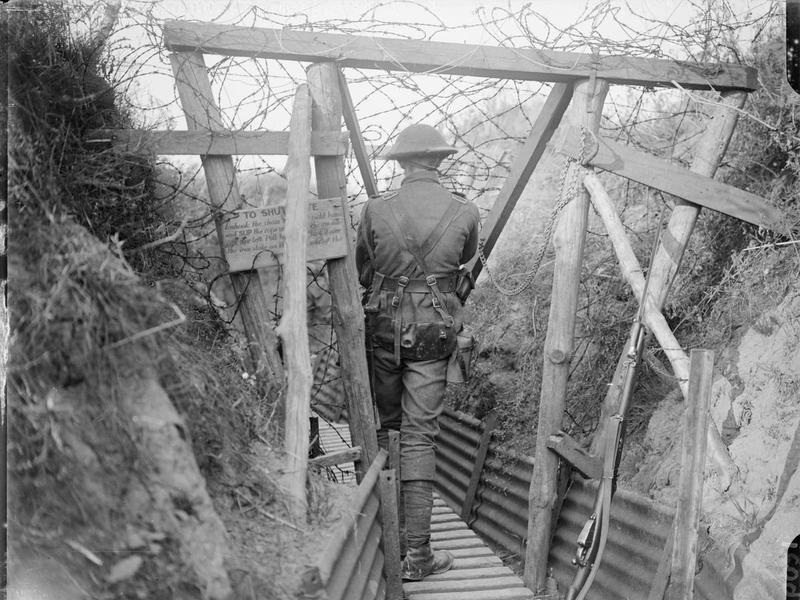
Trenches, Major Battles & the Western Front
Q: What was the Western Front?
A: The main battlefront running through Belgium and northern France between Allied and German armies.
Q: What battle in September 1914 helped stop the German advance toward Paris?
A: The First Battle of the Marne.
Q: What military pattern followed on much of the Western Front?
A: Trench warfare and a long defensive stalemate.
Q: What was “no man's land”?
A: The exposed ground between opposing trench systems.
Q: What obstacles often filled no man's land?
A: Barbed wire, shell craters, mud, debris, and defensive fire zones.
Q: What was a front-line trench?
A: The trench position closest to the enemy.
Q: What connected front, support, and reserve trenches?
A: Communication trenches.
Q: What was trench foot?
A: Tissue damage caused by prolonged exposure to cold, wet conditions.
Q: Why were rats common in trenches?
A: Food waste, poor sanitation, corpses, and extensive shelter created favorable conditions.
Q: What was shell shock?
A: A wartime term for severe psychological and neurological trauma now understood within a broader history of combat trauma and PTSD.
Q: What 1914 event saw some opposing soldiers temporarily fraternize at Christmas?
A: The Christmas Truce.
Q: Did the Christmas Truce occur everywhere on the Western Front?
A: No. It occurred in scattered sectors and was never a universal ceasefire.
Q: What 1916 battle became a symbol of French endurance?
A: The Battle of Verdun.
Q: Which countries fought most directly at Verdun?
A: France and Germany.
Q: What phrase became associated with French determination at Verdun?
A: “They shall not pass,” or “Ils ne passeront pas.”
Q: What 1916 battle began with a massive Allied offensive along a river in France?
A: The Battle of the Somme.
Q: What happened to the British Army on the first day of the Somme?
A: It suffered extraordinarily heavy casualties, the worst single day in its military history.
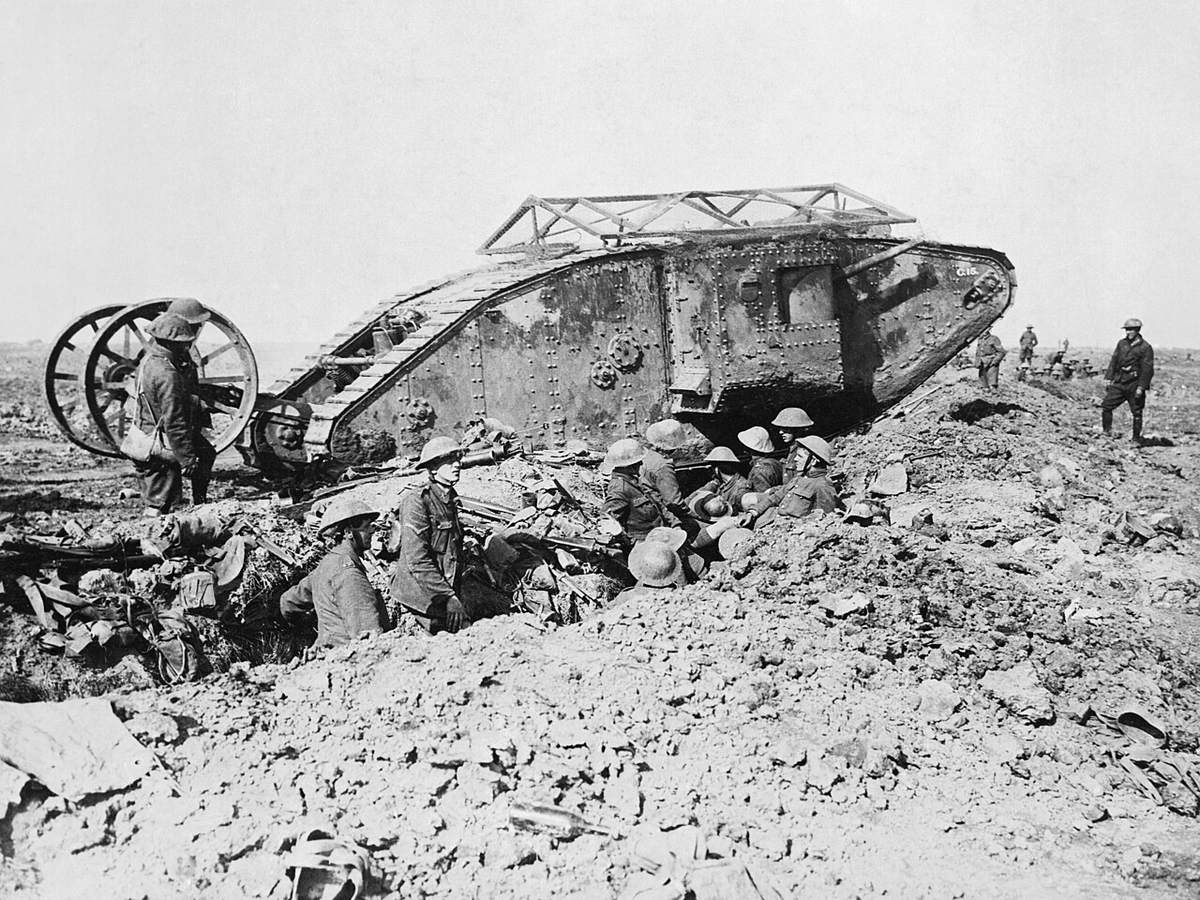
Q: What new armored weapon appeared in battle on the Somme?
A: Tanks.
Q: Were the first tanks fast and mechanically reliable?
A: No. Early tanks were slow, cramped, and prone to breakdowns.
Q: What 1917 battle is closely associated with extreme mud in Flanders?
A: The Third Battle of Ypres, commonly called Passchendaele.
Q: What was the Hindenburg Line?
A: A heavily fortified German defensive system on the Western Front.
Q: What was an artillery barrage?
A: Concentrated artillery fire against enemy positions.
Q: What was a creeping barrage?
A: Artillery fire that advanced in stages ahead of attacking infantry.
Q: Why did machine guns favor defenders?
A: They could fire rapidly across exposed ground and make frontal assaults extremely costly.
Q: What chemical weapon was used on a large scale at the Second Battle of Ypres in 1915?
A: Chlorine gas.
Q: What other notorious chemical agent was used later in the war?
A: Mustard gas.
Q: Did gas become the war's main cause of battlefield deaths?
A: No. Artillery, bullets, disease, and other causes killed far more people overall.
Q: What protective equipment became essential against gas attacks?
A: Gas masks and respirators.
Q: Why did trench stalemate eventually weaken?
A: Improved combined tactics, tanks, artillery coordination, air power, exhaustion, and changing manpower shifted the battlefield.
Q: What 1918 Allied offensives helped force Germany backward?
A: The Hundred Days Offensive.
Global War, Technology & the Home Front
Q: Was World War I fought only in France and Belgium?
A: No. Fighting occurred across Europe, Africa, the Middle East, Asia, the Pacific, and the world's oceans.
Q: What was the Eastern Front?
A: The vast front where Russia fought Germany and Austria-Hungary and where armies moved more than on the Western Front.
Q: What 1914 battle was a major German victory over Russia?
A: The Battle of Tannenberg.
Q: Which Ottoman campaign involved Allied landings on the Gallipoli Peninsula?
A: The Gallipoli campaign.
Q: What was the Allied strategic goal at Gallipoli?
A: Force the Dardanelles, threaten Constantinople, and open a supply route to Russia.
Q: Which troops are especially commemorated through ANZAC traditions?
A: Australian and New Zealand Army Corps troops.
Q: What does ANZAC stand for?
A: Australian and New Zealand Army Corps.
Q: Did troops from European colonies participate extensively in the war?
A: Yes. Millions of soldiers and laborers from Africa, Asia, the Caribbean, and other colonial regions served.
Q: What Ottoman wartime atrocity targeted Armenians through deportations and mass killing?
A: The Armenian genocide.
Q: Which Arab revolt challenged Ottoman rule beginning in 1916?
A: The Arab Revolt.
Q: What British officer became famous for his role alongside Arab forces?
A: T. E. Lawrence, later known as Lawrence of Arabia.
Q: What was unrestricted submarine warfare?
A: A policy of attacking shipping without the traditional warning and search procedures applied to merchant vessels.
Q: What German submarines became famous during the war?
A: U-boats.
Q: What passenger liner was sunk by a German U-boat in 1915?
A: RMS Lusitania.
Q: Did the sinking of Lusitania immediately bring the United States into the war?
A: No. The United States entered nearly two years later.
Q: What telegram helped turn U.S. opinion against Germany in 1917?
A: The Zimmermann Telegram.
Q: What did Germany propose in the Zimmermann Telegram?
A: A German-Mexican alliance if the United States entered the war against Germany.
Q: When did the United States declare war on Germany?
A: April 1917.
Q: Who was U.S. president when America entered the war?
A: Woodrow Wilson.
Q: What nickname was commonly used for U.S. soldiers in World War I?
A: Doughboys.
Q: Who commanded the American Expeditionary Forces?
A: General John J. Pershing.
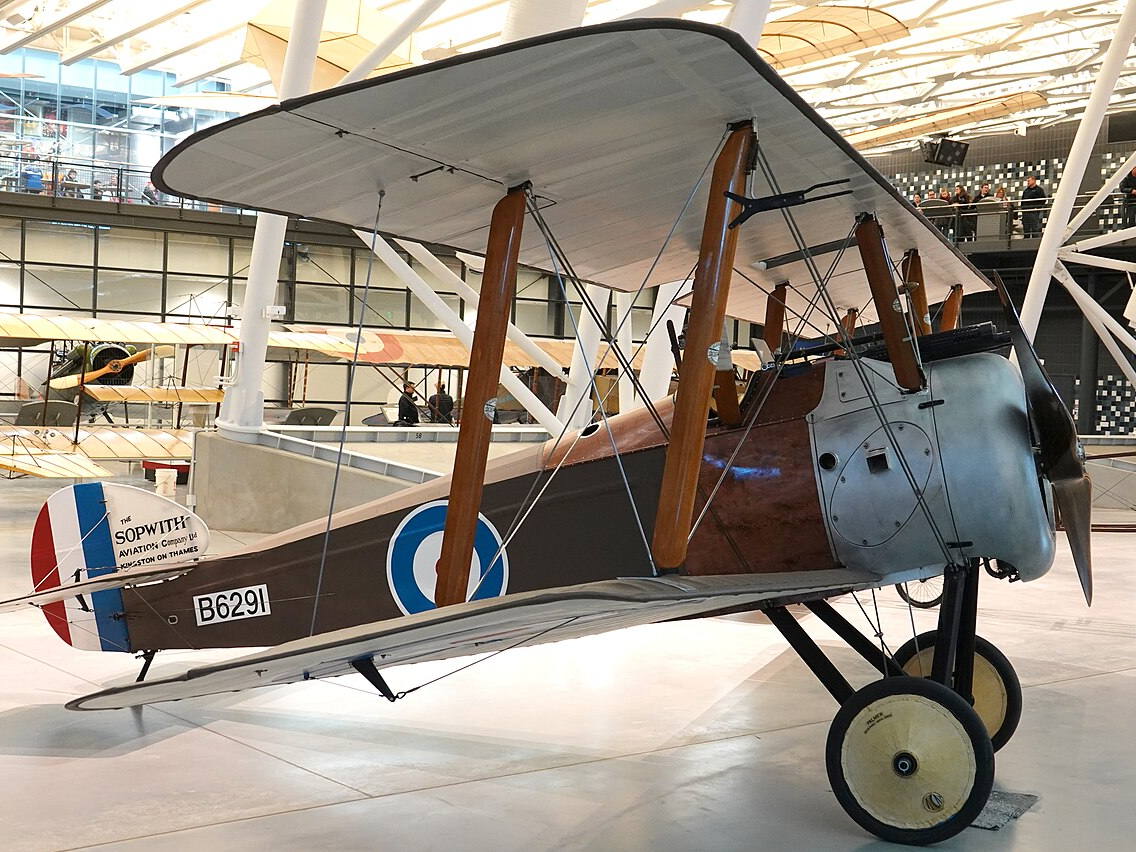
Q: How were airplanes first used extensively in the war?
A: Reconnaissance, later expanding to air combat, bombing, and ground support.
Q: What was a fighter ace?
A: A military pilot credited with shooting down multiple enemy aircraft, commonly five or more.
Q: Who was the German pilot nicknamed the Red Baron?
A: Manfred von Richthofen.
Q: What were zeppelins used for?
A: Reconnaissance and long-range bombing, including raids on Britain.
Q: How did governments influence civilian opinion during the war?
A: Through propaganda, censorship, speeches, posters, newspapers, and public campaigns.
Q: What happened to women's work in many belligerent countries?
A: Women entered or expanded roles in factories, transport, agriculture, nursing, offices, and other sectors.
Q: What were war bonds?
A: Government debt sold to citizens to help finance military spending.
Q: Why was food rationing introduced in some countries?
A: Blockades, shipping losses, military demand, and shortages strained food supplies.
Q: What deadly pandemic overlapped with the final year of the war?
A: The 1918 influenza pandemic.
Russia, Armistice, Versailles & the War's Legacy
Q: What major political upheavals transformed Russia in 1917?
A: The February and October Revolutions.
Q: What happened to Tsar Nicholas II in 1917?
A: He abdicated the Russian throne.
Q: What revolutionary party seized power in the October Revolution?
A: The Bolsheviks.
Q: Who was the leading Bolshevik figure?
A: Vladimir Lenin.
Q: What treaty removed Bolshevik Russia from the war?
A: The Treaty of Brest-Litovsk.
Q: In what year was Brest-Litovsk signed?
A: 1918.
Q: What major German offensive began in spring 1918 after troops shifted from the east?
A: The German Spring Offensive, also called the Kaiserschlacht.
Q: Why did the Spring Offensive fail to win the war?
A: German forces suffered heavy losses, outran logistics, lacked decisive strategic results, and faced strengthening Allied resistance.
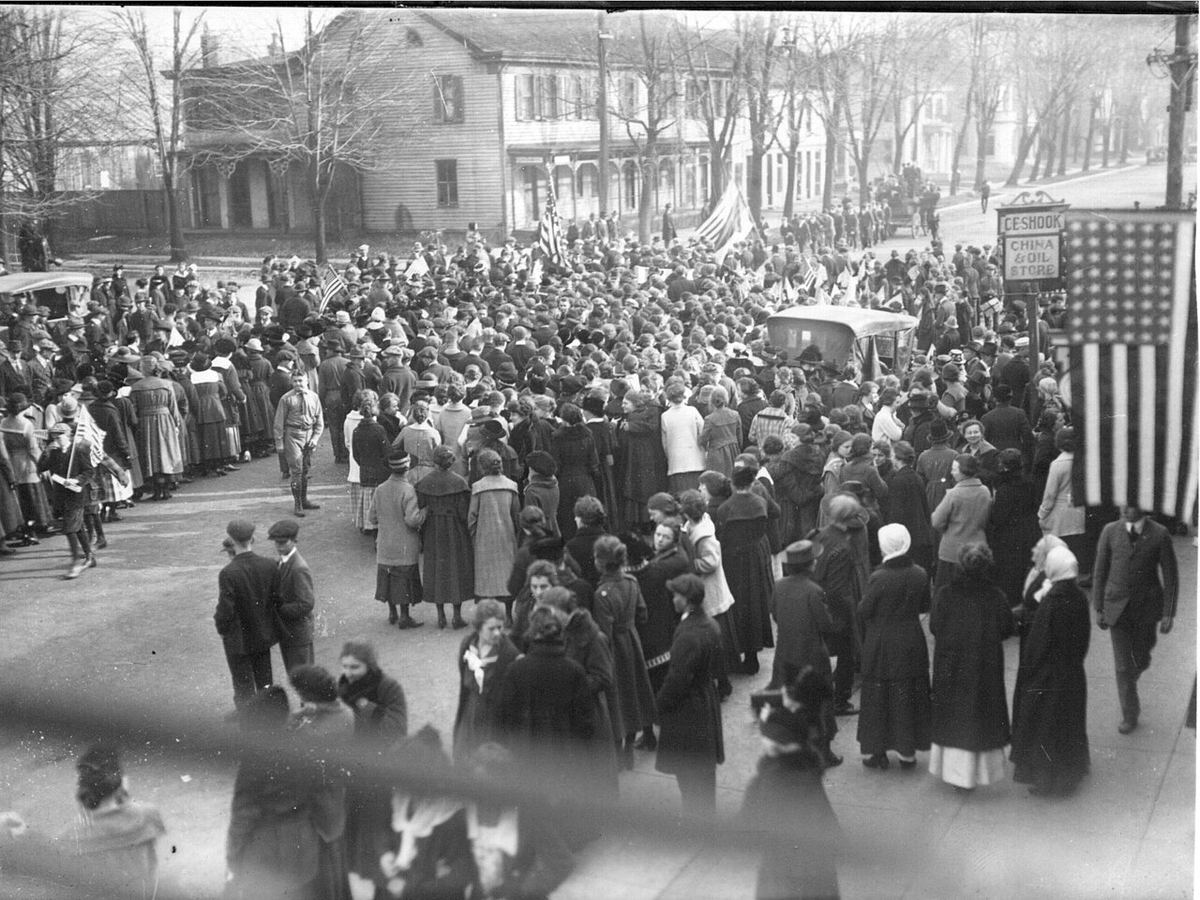
Q: On what date did the armistice on the Western Front take effect?
A: November 11, 1918.
Q: At what famous time did the armistice take effect?
A: The eleventh hour of the eleventh day of the eleventh month.
Q: Did the November 11 armistice itself constitute the final peace treaty?
A: No. It stopped fighting while formal peace settlements followed.
Q: What happened to Kaiser Wilhelm II near the war's end?
A: He abdicated and went into exile in the Netherlands.
Q: What treaty formally settled peace between Germany and the principal Allied powers?
A: The Treaty of Versailles.
Q: In what year was the Treaty of Versailles signed?
A: 1919.
Q: What did Article 231 of the Versailles treaty become known as?
A: The war guilt clause.
Q: What financial burden did the peace settlement place on Germany?
A: Reparations, alongside territorial and military restrictions.
Q: What international organization was created after the war to promote collective security?
A: The League of Nations.
Q: What peace program did Woodrow Wilson present in 1918?
A: The Fourteen Points.
Q: Did the United States join the League of Nations?
A: No. The U.S. Senate did not ratify the Treaty of Versailles.
Q: What happened to Austria-Hungary after the war?
A: The empire dissolved into multiple states and territories.
Q: What happened to the Ottoman Empire after the war?
A: It was dismantled through postwar conflict and settlements, with the Republic of Turkey emerging later.
Q: What other European empires ended during or immediately after the war?
A: The German and Russian empires also collapsed.
Q: Name one state restored or created in postwar Europe.
A: Poland, Czechoslovakia, or the Kingdom of Serbs, Croats and Slovenes are examples.
Q: What mandate system governed several former Ottoman and German territories?
A: League of Nations mandates administered by victorious powers.
Q: What secret 1916 agreement outlined British and French spheres in parts of the Ottoman Middle East?
A: The Sykes-Picot Agreement.
Q: What 1917 British statement supported establishing a “national home for the Jewish people” in Palestine?
A: The Balfour Declaration.
Q: How large was the human cost of World War I?
A: Military and civilian deaths numbered in the many millions, with tens of millions more wounded, displaced, or otherwise harmed.
Q: What flower became an international symbol of remembrance for World War I dead?
A: The red poppy.
Q: What poem helped connect poppies with remembrance?
A: “In Flanders Fields” by Canadian physician and soldier John McCrae.
Q: Why is World War I crucial to understanding later 20th-century history?
A: It toppled empires, redrew borders, radicalized politics, reshaped societies, and created unresolved tensions that influenced later conflicts, including World War II.
How Did You Score?
If Sarajevo, the Marne, Gallipoli, Passchendaele, the Zimmermann Telegram, Brest-Litovsk, the eleventh hour, and Sykes-Picot all came easily, your Great War trivia is ready for the history round.
Sources and further reading
For a timeline and archival background on the First World War, see U.S. National Archives: World War I.

Ellie Simons creates and edits Random Trivia. She researches trivia using primary and authoritative sources whenever possible and is currently reviewing the site's older trivia library for accuracy, clarity, and playability. Read more on the About page.
About this quiz
Site editor: Ellie Simons. Read our Trivia Methodology to learn how questions are researched and updated. Page last updated: . Report an error.