
Fire up the steam engine. These 119 Industrial Revolution trivia questions cover Britain, textiles, coal, iron, steam power, factories, canals, railways, cities, child labor, public health, unions, global industrialization, major inventors, consumer goods, and the transformation that moved production from workshops toward machines and permanently changed how much of the world lived and worked.
Origins in Britain, Textiles & Factory Production
Q: Where did the first Industrial Revolution begin?
A: Great Britain.
Q: In what century did industrialization begin accelerating in Britain?
A: The 18th century.
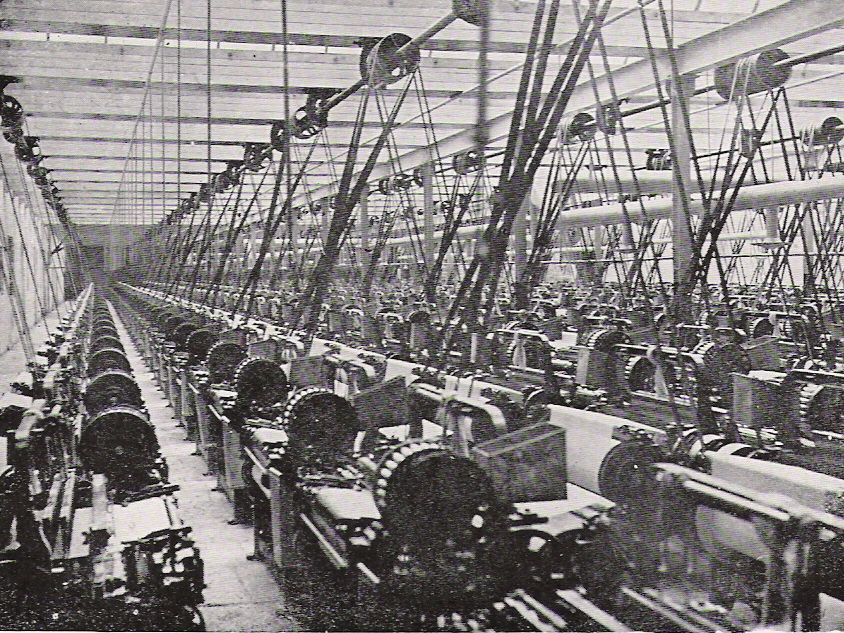
Q: What industry was especially important in early British industrialization?
A: Textiles, particularly cotton textiles.
Q: What was the domestic system?
A: Production in homes or small workshops before factory concentration became dominant in many industries.
Q: What is another name for the domestic system?
A: The putting-out system.
Q: What did merchants do in the putting-out system?
A: Supplied raw materials to households and collected finished goods for sale.
Q: What invention increased the speed of weaving before spinning fully caught up?
A: John Kay's flying shuttle.
Q: Who invented the spinning jenny?
A: James Hargreaves.
Q: What did the spinning jenny allow one worker to do?
A: Spin multiple threads at once.
Q: Who developed the water frame?
A: Richard Arkwright.
Q: What powered early water frames?
A: Flowing water.
Q: What textile machine did Samuel Crompton invent?
A: The spinning mule.
Q: What did the spinning mule combine?
A: Features of the spinning jenny and water frame to produce strong, fine yarn.
Q: Who patented a successful power loom in the 1780s?
A: Edmund Cartwright.
Q: What did the power loom mechanize?
A: Weaving.
Q: What is a factory?
A: A workplace that concentrates workers, machinery, power, and production under centralized management.
Q: Why did water-powered factories often cluster near rivers?
A: Moving water supplied mechanical energy.
Q: What later power source made factory location less dependent on fast-flowing rivers?
A: Steam power.
Q: Why was cotton important to British factories?
A: Mechanized spinning and weaving made cotton cloth a major mass-produced commodity.
Q: Where did much raw cotton used by British mills come from?
A: Overseas suppliers, especially the slave-based plantation economy of the United States and other regions.
Q: Why is slavery important to understanding industrialization?
A: Enslaved labor produced commodities such as cotton that fed industrial supply chains and global trade.
Q: What agricultural changes preceded and accompanied British industrialization?
A: Improved crop rotations, selective breeding, enclosure, and changing land use increased productivity and displaced some rural labor.
Q: What was enclosure?
A: The consolidation and legal fencing of common or scattered lands into more privately controlled holdings.
Q: Did enclosure have only positive effects?
A: No. It could improve agricultural efficiency while also disrupting common rights and rural livelihoods.
Q: Why did Britain's population growth matter to industrialization?
A: It expanded both the labor force and consumer demand.
Q: Why did Britain's coal deposits matter?
A: Coal supplied abundant energy for steam engines, heating, ironmaking, and industry.
Q: Why did access to capital matter?
A: Industrial machinery, mines, canals, factories, and railways required substantial investment.
Q: How did Britain's overseas trade contribute?
A: Trade networks supplied raw materials, markets, profits, and commercial infrastructure.
Q: Did the Industrial Revolution happen overnight?
A: No. It was a long, uneven transformation spanning generations.
Q: Was Britain the only country to industrialize?
A: No. Industrialization spread to continental Europe, North America, Japan, and eventually much of the world.
Steam, Coal, Iron, Canals & Railways
Q: Who built an early practical steam engine used for pumping water from mines?
A: Thomas Newcomen.
Q: What problem did Newcomen's engine help solve?
A: Removing water from mines.
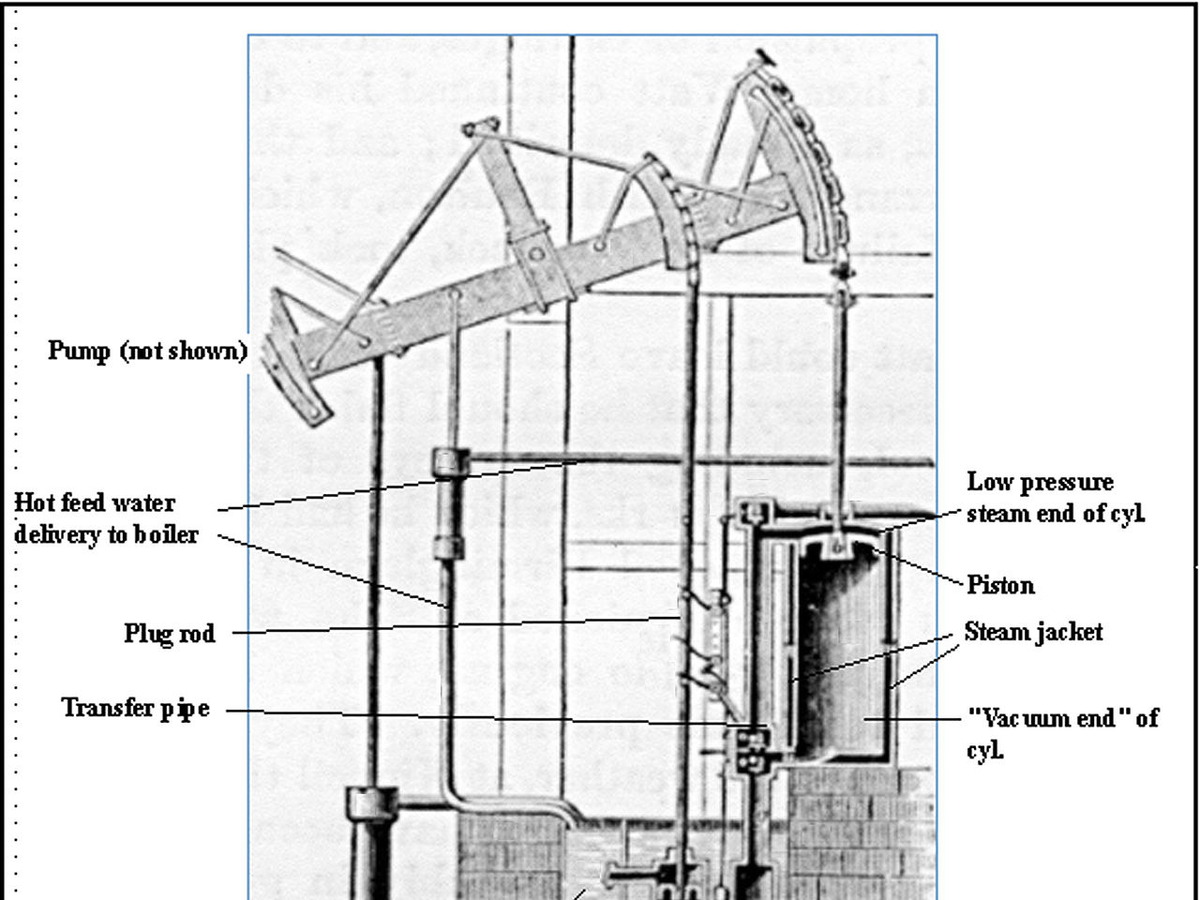
Q: Who made major improvements to steam-engine efficiency?
A: James Watt.
Q: Did James Watt invent the first steam engine?
A: No. He greatly improved existing steam-engine technology.
Q: What key Watt improvement reduced wasted heat?
A: The separate condenser.
Q: Who was Watt's important business partner?
A: Matthew Boulton.
Q: What did rotary steam power allow factories to do?
A: Drive machinery continuously without depending directly on waterwheels.
Q: Why were coal mines linked closely to steam technology?
A: Mines needed pumps, while coal fueled the engines that powered pumps and industry.
Q: What fuel increasingly replaced charcoal in British iron production?
A: Coke made from coal.
Q: Who is associated with using coke successfully to smelt iron at Coalbrookdale?
A: Abraham Darby I.
Q: Why was coke useful in ironmaking?
A: It reduced dependence on increasingly costly charcoal and supported larger-scale production.
Q: What process developed by Henry Cort improved wrought-iron production?
A: Puddling and rolling.
Q: Why was iron important to industrialization?
A: It was used for machinery, rails, bridges, tools, engines, and buildings.
Q: What transportation network expanded before railways?
A: Canals.
Q: Why were canals useful for industry?
A: They moved heavy bulk goods such as coal and raw materials more cheaply than roads.
Q: What English canal opened in 1761 and became a famous early industrial waterway?
A: The Bridgewater Canal.
Q: What commodity did the Bridgewater Canal famously carry toward Manchester?
A: Coal.
Q: Who developed successful early steam locomotives and became a major railway engineer?
A: George Stephenson.
Q: What 1825 railway is associated with Stephenson and early public steam transport?
A: The Stockton and Darlington Railway.
Q: What major railway opened between two industrial cities in 1830?
A: The Liverpool and Manchester Railway.
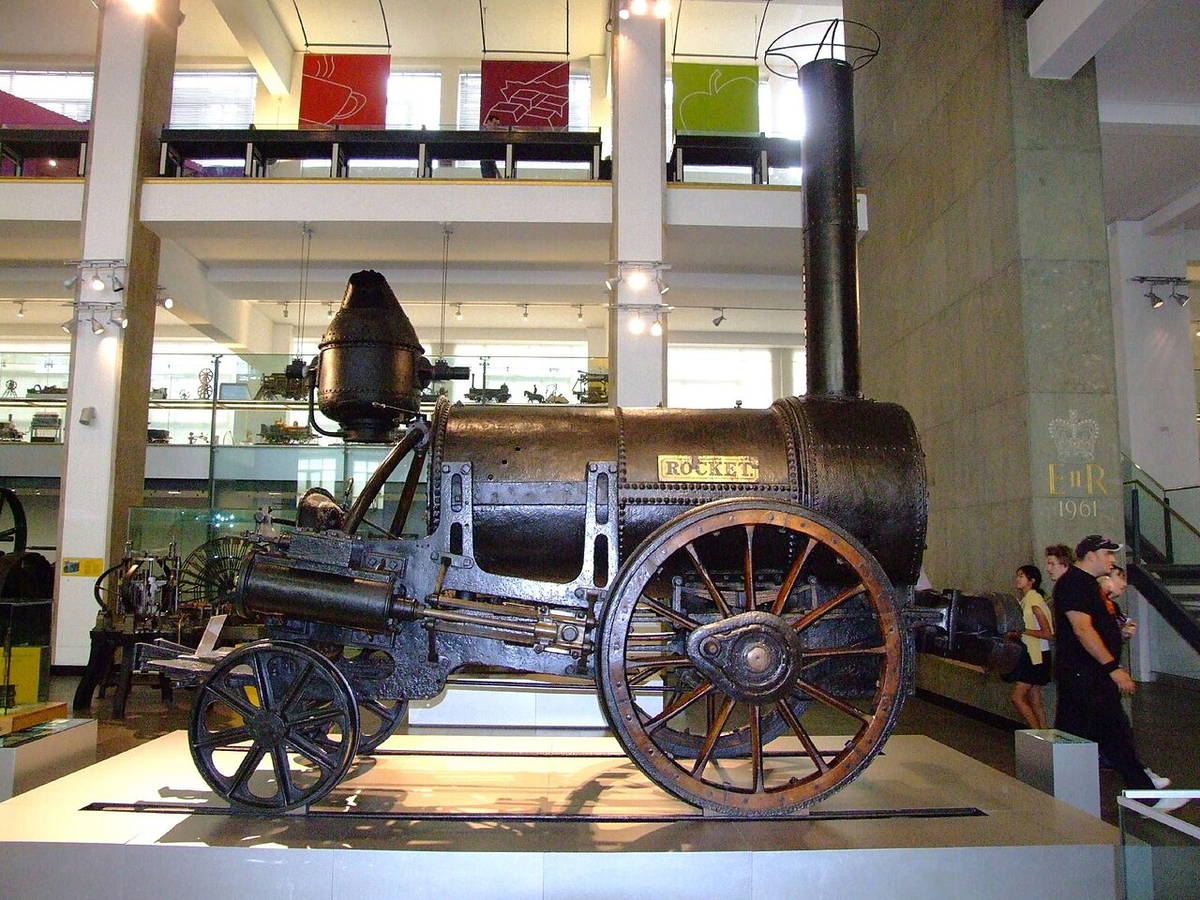
Q: What famous locomotive won the Rainhill Trials?
A: Rocket.
Q: Who built Rocket?
A: George and Robert Stephenson with their engineering team.
Q: What did railways dramatically reduce?
A: Travel time and the cost of moving many goods and passengers.
Q: How did railways affect timekeeping?
A: Schedules encouraged standardized local and eventually national time systems.
Q: What material increasingly replaced iron rails in later 19th-century railways?
A: Steel.
Q: What process made steel cheaper to produce in large quantities in the 19th century?
A: The Bessemer process.
Q: Who is the Bessemer process named after?
A: Henry Bessemer.
Q: What communications technology spread alongside rail networks?
A: The electric telegraph.
Q: Why did telegraphs matter to railways?
A: Rapid communication improved scheduling, traffic control, safety, and business coordination.
Q: What did steamships change about long-distance transport?
A: They made travel and shipping less dependent on wind and increasingly regular and predictable.
Factory Labor, Cities, Public Health & Reform
Q: What happened to many working hours in early factories?
A: Workers often faced long shifts under strict time discipline.
Q: Why did factory clocks matter?
A: Industrial work increasingly organized labor around standardized hours rather than task completion or daylight.
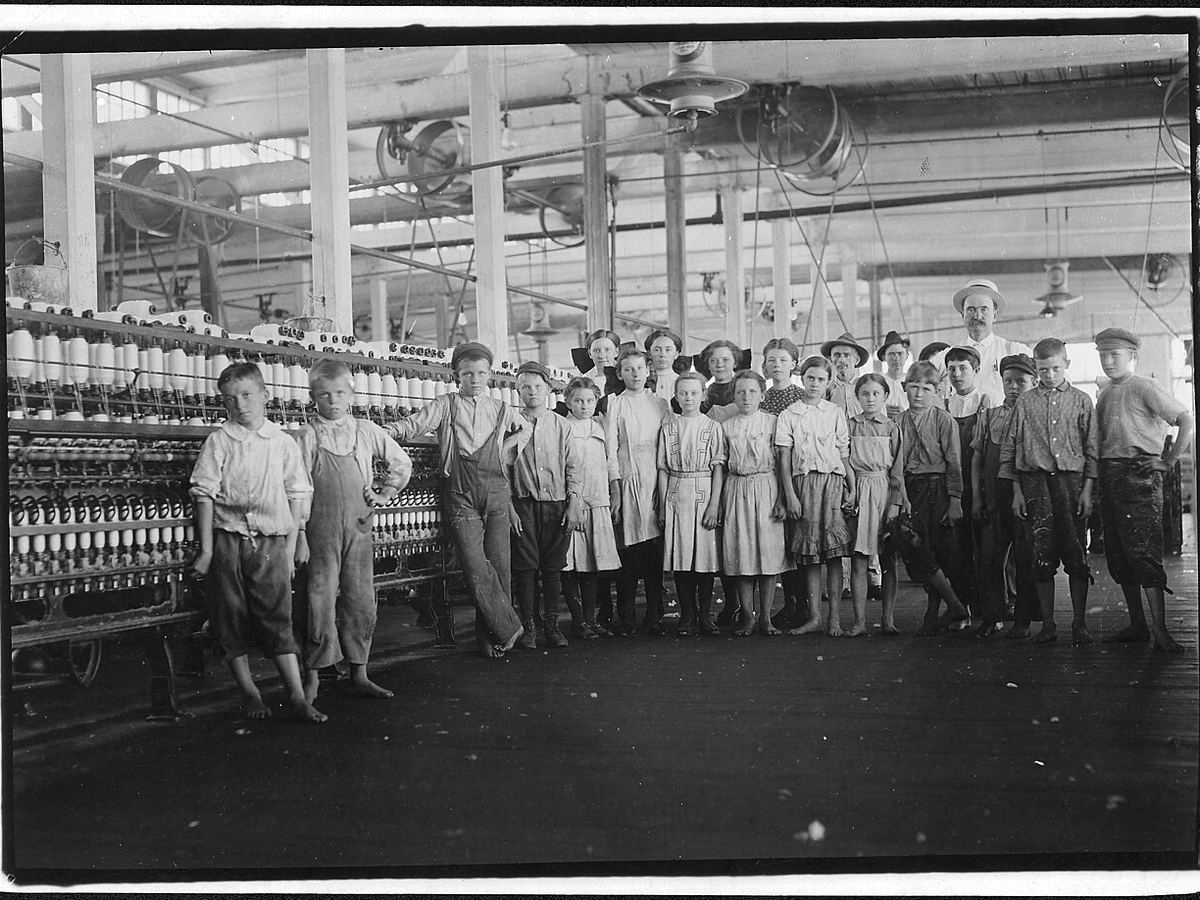
Q: Did children work in early industrial factories and mines?
A: Yes. Child labor was widespread in many industrial sectors.
Q: Why did employers hire children?
A: Children were cheap labor and were assigned many tasks in factories, mines, workshops, and households.
Q: What risks did child workers face?
A: Injury, exhaustion, poor health, lost schooling, and dangerous machinery or mine conditions.
Q: What did Britain's Factory Acts attempt to regulate?
A: Conditions such as child labor, working hours, schooling, and eventually broader factory safety.
Q: What did the 1833 Factory Act create in Britain?
A: Stronger restrictions on child factory labor and a system of factory inspectors.
Q: What did the Mines and Collieries Act of 1842 restrict?
A: Underground mine work by women and girls and by very young boys.
Q: What movement attacked some industrial machinery in early 19th-century England?
A: The Luddites.
Q: Were Luddites simply people who hated all technology?
A: No. They were skilled workers protesting particular machinery, wages, and changes that threatened livelihoods and labor standards.
Q: What is urbanization?
A: Growth in the share and number of people living in towns and cities.
Q: Why did industrial cities grow rapidly?
A: Factory jobs and related industries drew migrants from rural areas and other regions.
Q: What problems accompanied rapid urban growth?
A: Overcrowding, pollution, unsafe water, poor housing, sewage, and infectious disease.
Q: What disease repeatedly struck crowded 19th-century cities through contaminated water?
A: Cholera.
Q: Who famously mapped a London cholera outbreak in 1854?
A: John Snow.
Q: What water source did Snow link to the outbreak?
A: The Broad Street pump.
Q: Why was Snow's work important?
A: It supported the idea that cholera spread through contaminated water rather than bad air alone.
Q: What did modern sewer systems help reduce?
A: Exposure to human waste and waterborne disease in growing cities.
Q: What 1858 event in London dramatized sewage pollution in the Thames?
A: The Great Stink.
Q: Who designed a major new London sewer network afterward?
A: Joseph Bazalgette.
Q: What is a trade union?
A: An organization of workers formed to pursue shared workplace and economic interests.
Q: What is collective bargaining?
A: Workers negotiating with employers as a group over wages, hours, and conditions.
Q: What is a strike?
A: A coordinated refusal to work used to pressure an employer or authority.
Q: Were unions always legal and accepted during early industrialization?
A: No. Governments often restricted worker combinations before unions gradually gained legal recognition.
Q: What political movement in Britain demanded reforms including broader male suffrage?
A: Chartism.
Q: What document gave Chartism its name?
A: The People's Charter of 1838.
Q: What did industrialization do to a growing middle class?
A: It expanded opportunities for managers, merchants, professionals, engineers, and business owners.
Q: Did industrialization immediately raise living standards for every worker?
A: No. Gains were uneven, and many workers endured severe conditions before wages, health, and protections improved over time.
Q: What did mass production eventually do to many consumer goods?
A: Increased availability and often reduced prices.
Q: Why is the Industrial Revolution both an economic and social revolution?
A: It changed production, family life, class structure, cities, work discipline, consumption, politics, and the environment.
Global Industrialization, Second Revolution & Long-Term Legacy
Q: What continental European country industrialized early after Britain?
A: Belgium.
Q: Which major continental powers industrialized strongly during the 19th century?
A: France and the German states, with Germany becoming an industrial giant after unification.
Q: What country became a leading industrial power by the late 19th century across the Atlantic?
A: The United States.
Q: What Massachusetts city became famous for textile mills employing young women?
A: Lowell.
Q: What were the Lowell mill girls?
A: Young women employed in New England textile factories under an early paternalistic factory system.
Q: Who is strongly associated in U.S. history with promoting interchangeable parts?
A: Eli Whitney, although interchangeable manufacture developed through many inventors and armories.
Q: What invention made separating short-staple cotton fiber from seeds much faster?
A: The cotton gin.
Q: Who patented the cotton gin in the United States?
A: Eli Whitney.
Q: What terrible labor consequence accompanied cotton's expansion in the United States?
A: Expansion of plantation slavery and forced labor in the cotton economy.
Q: What is often called the Second Industrial Revolution?
A: A later 19th- and early 20th-century wave centered on steel, chemicals, electricity, petroleum, communications, and mass production.
Q: What energy source became increasingly important alongside coal in the Second Industrial Revolution?
A: Electricity.
Q: Who developed commercially important electric-lighting and power systems in the United States?
A: Thomas Edison and his teams.
Q: Who became famous for alternating-current electrical inventions and systems?
A: Nikola Tesla.
Q: What industrialist backed large-scale alternating-current power systems?
A: George Westinghouse.
Q: Who received a famous U.S. patent for the telephone in 1876?
A: Alexander Graham Bell.
Q: What engine type helped transform transport in the late 19th and early 20th centuries?
A: The internal-combustion engine.
Q: What fuel industry expanded with internal-combustion engines?
A: Petroleum.
Q: Did Henry Ford invent the assembly line itself?
A: No. Ford's factories famously refined moving assembly-line methods for high-volume automobile production.
Q: What did moving assembly lines help reduce?
A: The time and cost required to manufacture standardized products.
Q: What management approach is associated with Frederick Winslow Taylor?
A: Scientific management, or Taylorism.
Q: What did Taylorism try to optimize?
A: Work tasks, timing, and efficiency through systematic measurement and management control.
Q: How did large corporations affect industrial economies?
A: They concentrated capital, coordinated large workforces, and operated production and distribution at unprecedented scale.
Q: Why did banks and stock markets matter to industrial growth?
A: They helped mobilize capital for railways, factories, mines, utilities, and corporations.
Q: What Japanese political transformation launched rapid state-backed industrialization after 1868?
A: The Meiji Restoration.
Q: Did industrialization spread at the same speed everywhere?
A: No. Timing depended on resources, institutions, politics, capital, labor, markets, empire, and state policy.
Q: How were industrialization and imperialism connected?
A: Industrial powers sought raw materials, markets, strategic routes, and political control, while empire also shaped investment and trade.
Q: What environmental problem grew with large-scale coal burning?
A: Severe urban air pollution and rising carbon dioxide emissions.
Q: What political thinkers analyzed industrial capitalism and class conflict in the 19th century?
A: Karl Marx and Friedrich Engels were among the most influential.
Q: What 1848 political text did Marx and Engels publish?
A: The Communist Manifesto.
How Did You Score?
If the spinning mule, separate condenser, Rocket, Luddites, Broad Street pump, Bessemer process, Lowell mills, and Meiji industrialization all came easily, your history score is running at full steam.
Sources and further reading
For background on steam power in the Industrial Revolution, see Science Museum: steam engines.

Ellie Simons creates and edits Random Trivia. She researches trivia using primary and authoritative sources whenever possible and is currently reviewing the site's older trivia library for accuracy, clarity, and playability. Read more on the About page.
Explore more questions in our history trivia guide.
About this quiz
Site editor: Ellie Simons. Read our Trivia Methodology to learn how questions are researched and updated. Page last updated: . Report an error.