
Mexico stretches from deserts and cactus country to tropical forests, volcanic highlands, Caribbean reefs, Pacific surf, Maya cities, Mexica ruins, giant modern cities, mariachi, mole, lucha libre, and hundreds of deeply regional traditions. These 120 questions go far beyond tacos and sombreros.
Archaeological facts are checked against Mexico's National Institute of Anthropology and History and UNESCO. Keep exploring with our geography trivia, Aztec Empire trivia, and Maya civilization trivia.
Mexico Basics, Geography & Cities
Q: What is the capital of Mexico?
A: Mexico City.
Q: What is Mexico's official country name in Spanish?
A: Estados Unidos Mexicanos, or United Mexican States.
Q: What country lies immediately north of Mexico?
A: United States.
Q: What two countries border Mexico to the southeast?
A: Guatemala and Belize.
Q: What ocean lies west and south of much of Mexico?
A: Pacific Ocean.
Q: What gulf lies east of Mexico?
A: Gulf of Mexico.
Q: What sea borders the Yucatán Peninsula's east coast?
A: Caribbean Sea.
Q: What long peninsula forms northwestern Mexico?
A: Baja California Peninsula.
Q: What gulf separates Baja California from mainland Mexico?
A: Gulf of California, also called Sea of Cortez.
Q: What peninsula contains Cancún and much of the Maya heartland?
A: Yucatán Peninsula.
Q: What city is the capital of Jalisco?
A: Guadalajara.
Q: What state is strongly associated with mariachi and tequila?
A: Jalisco.
Q: What northern industrial city is capital of Nuevo León?
A: Monterrey.
Q: What colonial city is capital of Yucatán state?
A: Mérida.
Q: What city is famous for beaches on the Caribbean coast of Quintana Roo?
A: Cancún.
Q: What city sits beside the U.S. city of San Diego?
A: Tijuana.
Q: What major mountain systems run through Mexico?
A: Sierra Madre Occidental and Sierra Madre Oriental are two major ranges.
Q: What volcanic belt crosses central Mexico?
A: Trans-Mexican Volcanic Belt.
Q: What active volcano lies southeast of Mexico City and is nicknamed Popo?
A: Popocatépetl.
Q: What does Popocatépetl mean in Nahuatl?
A: Smoking Mountain.
Q: What is Mexico's highest mountain?
A: Pico de Orizaba, or Citlaltépetl.
Q: Is Pico de Orizaba a volcano?
A: Yes.
Q: What currency does Mexico use?
A: Mexican peso.
Q: What language is spoken by the large majority of Mexicans?
A: Spanish.
Q: Does Mexico have only one Indigenous language?
A: No. Many Indigenous languages and language families remain living.
Q: Name one major Indigenous language spoken in Mexico.
A: Nahuatl, Yucatec Maya, Mixtec, Zapotec, or many others.
Q: What symbol appears at the center of Mexico's flag?
A: An eagle with a snake perched on a cactus.
Q: What founding tradition does that symbol evoke?
A: Mexica tradition about choosing the site of Tenochtitlan.
Q: What city stands on the site of Tenochtitlan?
A: Mexico City.
Q: Why is Mexican geography unusually varied?
A: Two oceans, mountains, volcanoes, deserts, forests, reefs, plateaus, caves, and tropical coasts span a huge latitude and elevation range.
Maya, Mexica, Teotihuacan & Ancient Heritage
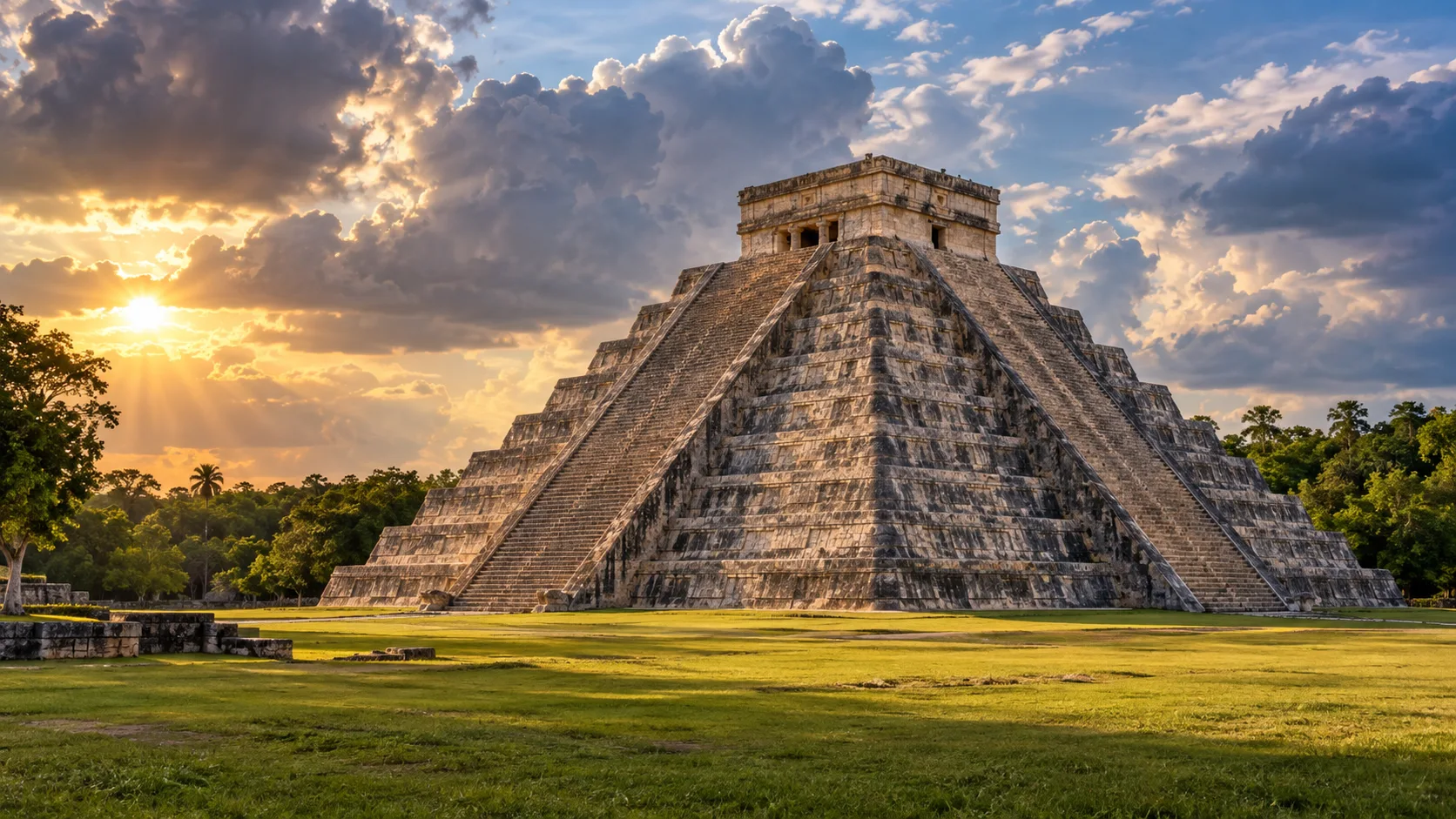
Q: What civilization built Chichén Itzá?
A: Maya.
Q: What state contains Chichén Itzá?
A: Yucatán.
Q: What famous pyramid there is called El Castillo?
A: Temple of Kukulcán.
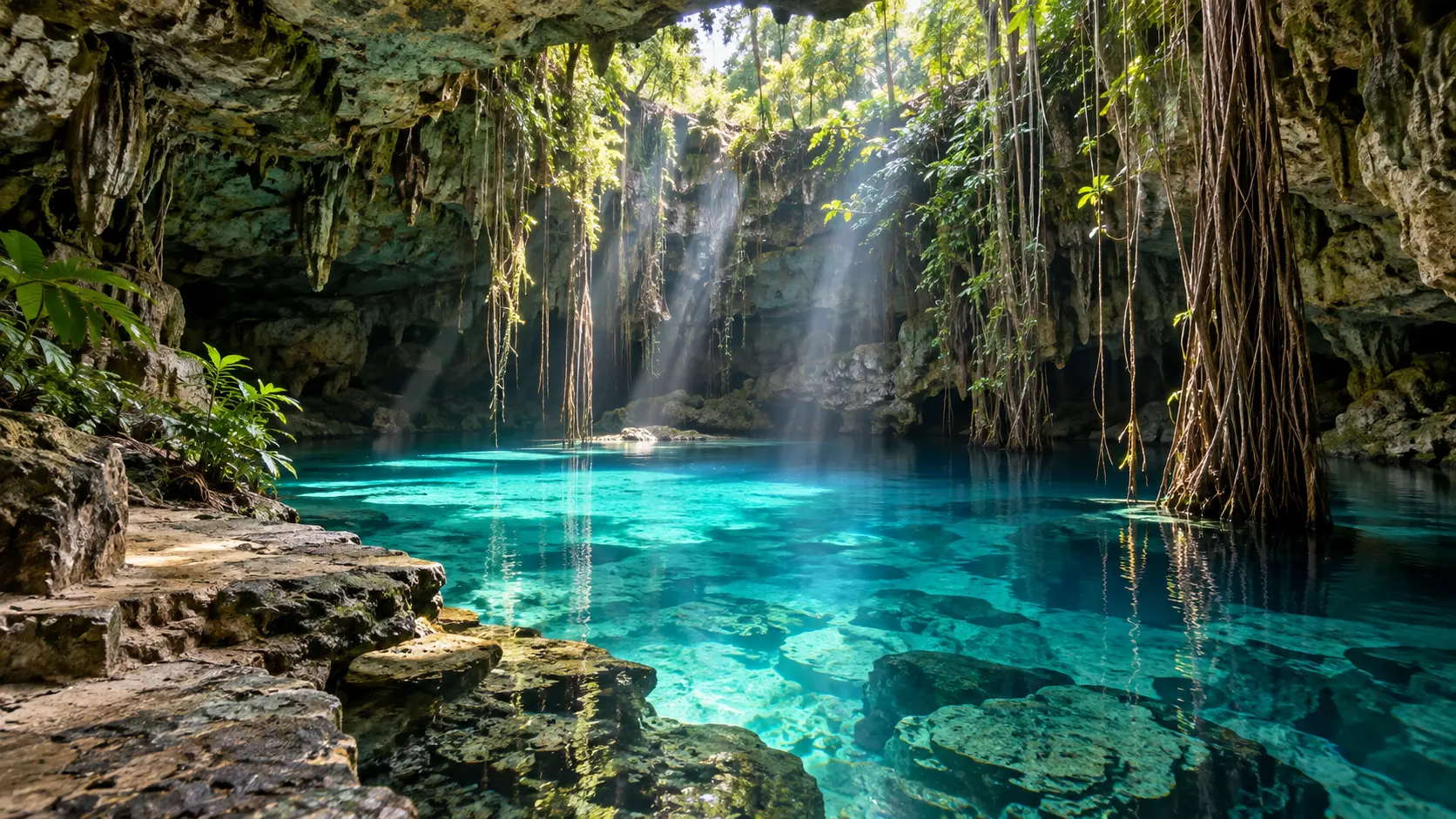
Q: What natural water-filled sinkholes are common in Yucatán?
A: Cenotes.
Q: Why were cenotes important to Maya communities?
A: Freshwater supply and sacred ritual significance.
Q: What Maya city sits on cliffs beside the Caribbean?
A: Tulum.
Q: What major Maya city in Chiapas is famous for a rainforest setting?
A: Palenque.
Q: What ruler's tomb was found inside Palenque's Temple of the Inscriptions?
A: Pakal the Great.
Q: What enormous ancient city lies northeast of modern Mexico City?
A: Teotihuacan.
Q: Did the Mexica build Teotihuacan?
A: No. It was already ancient when the Mexica encountered it.
Q: What two giant pyramids dominate Teotihuacan?
A: Pyramid of the Sun and Pyramid of the Moon.
Q: What central avenue runs through Teotihuacan?
A: Avenue of the Dead.
Q: What people founded Tenochtitlan?
A: Mexica.
Q: What broader empire is commonly called the Aztec Empire?
A: The Triple Alliance dominated by Tenochtitlan.
Q: What lake surrounded Tenochtitlan?
A: Lake Texcoco.
Q: What intensive agricultural system used raised plots in shallow lake zones?
A: Chinampas.
Q: Are chinampas literally floating islands?
A: No. They are constructed, anchored agricultural plots.
Q: What huge temple complex stood in central Tenochtitlan?
A: Templo Mayor.
Q: What two principal gods had shrines on its summit?
A: Huitzilopochtli and Tlaloc.
Q: Who ruled Tenochtitlan when Hernán Cortés arrived?
A: Moctezuma II.
Q: What Indigenous state became a major Spanish ally against Tenochtitlan?
A: Tlaxcala.
Q: When did Tenochtitlan fall?
A: August 13, 1521.
Q: What epidemic devastated the population during the conquest?
A: Smallpox.
Q: What is Oaxaca famous for archaeologically?
A: Monte Albán and Zapotec heritage.
Q: Who built Monte Albán?
A: Zapotec civilization.
Q: What Gulf Coast culture created colossal stone heads?
A: Olmec.
Q: What state contains many Olmec heartland sites?
A: Veracruz and Tabasco regions.
Q: What does Mesoamerica describe?
A: A cultural region stretching across much of Mexico and Central America with shared historical traditions.
Q: Did ancient Mexican civilizations form one unified culture?
A: No.
Q: Why is pre-Hispanic Mexico especially rich for trivia?
A: Maya, Mexica, Zapotec, Mixtec, Olmec, Teotihuacan, Purépecha, and many other societies developed distinct languages, cities, arts, and political systems.
Food, Day of the Dead, Art & Music
Q: What grain is foundational to many Mexican cuisines?
A: Maize, or corn.
Q: What process treats maize with an alkaline solution to improve its culinary qualities?
A: Nixtamalization.
Q: What dough is made from nixtamalized maize?
A: Masa.
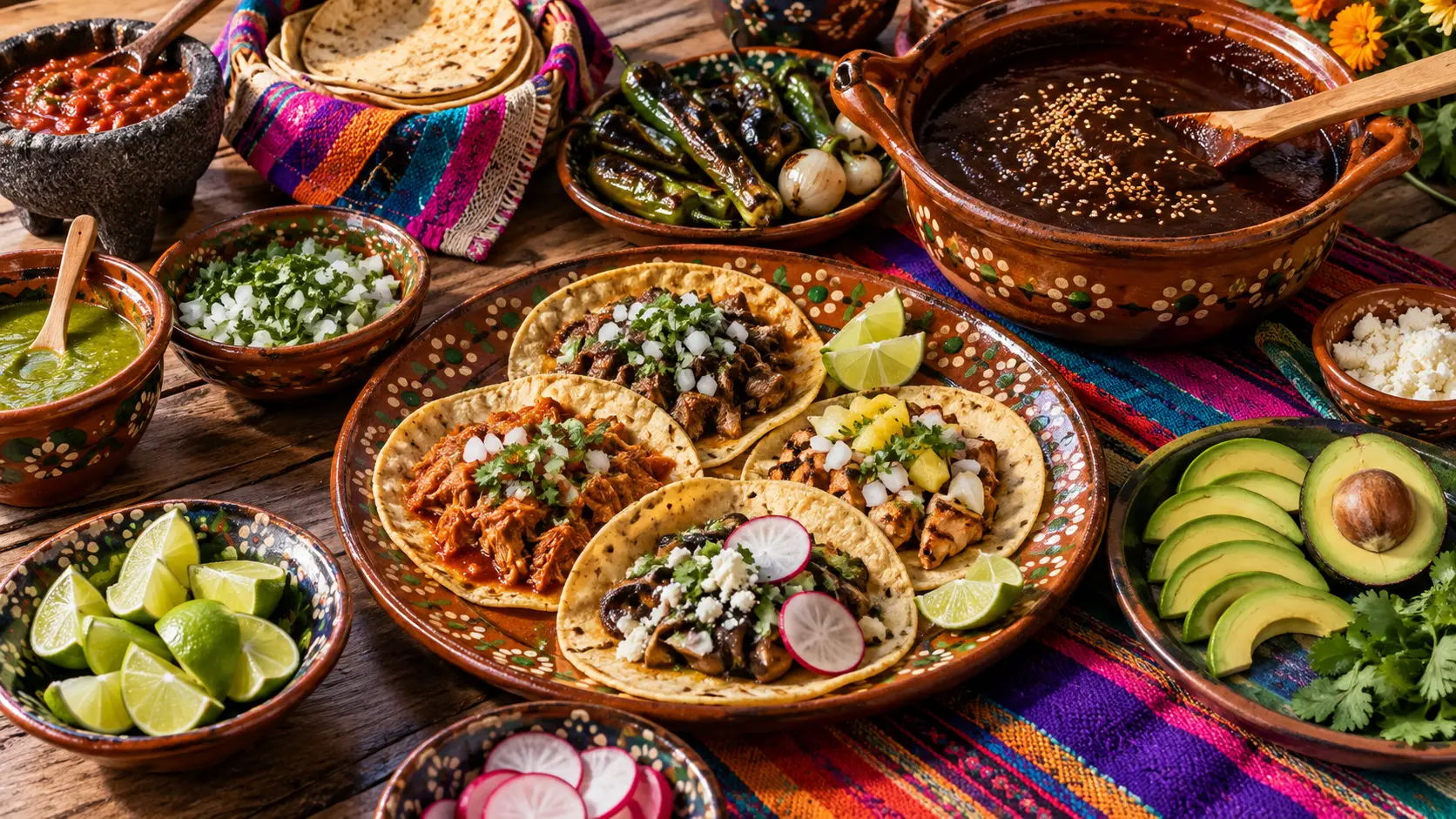
Q: What thin round bread is made from masa?
A: Corn tortilla.
Q: What dish folds or rolls a tortilla around fillings?
A: Taco.
Q: Is there one single authentic taco filling?
A: No.
Q: What dish combines a complex sauce with chiles, spices, and other ingredients?
A: Mole.
Q: What city and state are especially famous for mole poblano?
A: Puebla.
Q: Does all mole contain chocolate?
A: No.
Q: What spirit is distilled from blue agave in designated regions?
A: Tequila.
Q: What state is tequila most strongly associated with?
A: Jalisco.
Q: What broader agave spirit category includes many regional traditions?
A: Mezcal.
Q: Is tequila a type of mezcal in broad technical terms?
A: Yes, though it has its own legal denomination and production rules.
Q: What avocado-based dish is famous worldwide?
A: Guacamole.
Q: What chili-based sauce can range from mild to extremely hot?
A: Salsa.
Q: What November tradition honors deceased loved ones?
A: Día de Muertos, or Day of the Dead.
Q: Is Day of the Dead simply Mexican Halloween?
A: No.
Q: What home or cemetery display honors the dead?
A: Ofrenda.
Q: What bright orange flowers are associated with the celebration?
A: Marigolds, or cempasúchil.
Q: What decorated sugar objects represent skulls?
A: Calaveras de azúcar.
Q: What bread is baked for Day of the Dead?
A: Pan de muerto.
Q: What famous Mexican artist painted many self-portraits?
A: Frida Kahlo.
Q: Who was Kahlo married to?
A: Diego Rivera.
Q: What was Rivera famous for?
A: Large public murals.
Q: What Mexico City home associated with Kahlo is called the Blue House?
A: Casa Azul.
Q: What music ensemble uses violins, trumpets, guitars, vihuela, and guitarrón?
A: Mariachi.
Q: What state is strongly associated with mariachi's development?
A: Jalisco.
Q: What romantic song tradition is called ranchera?
A: A Mexican song genre strongly associated with rural themes and mariachi performance.
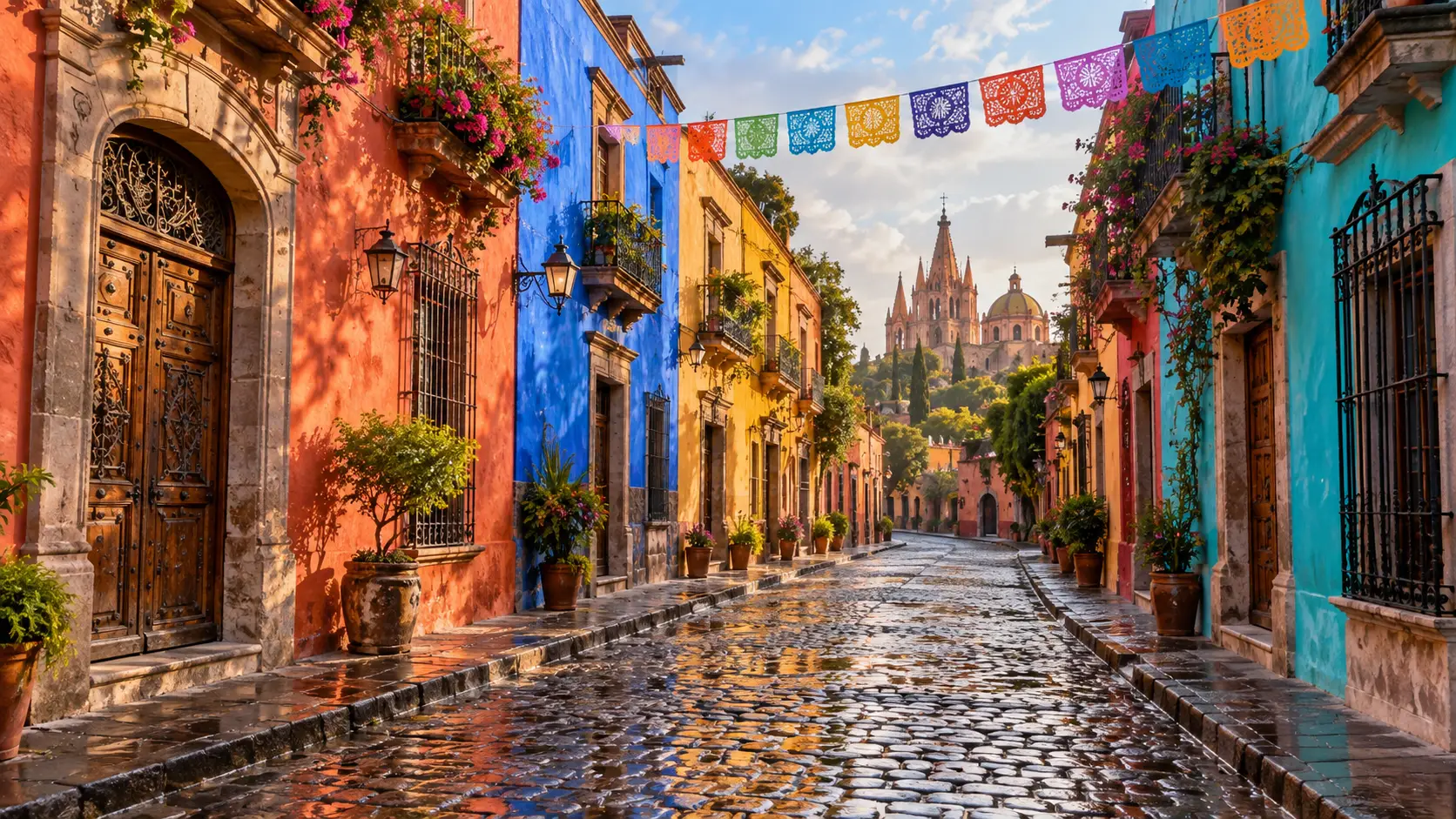
Q: What does papel picado mean?
A: Decorative perforated paper.
Q: Why is Mexican food and festival trivia so regional?
A: Indigenous crops, colonial history, local climates, migration, and state identities produced many distinct traditions.
Sports, Wildlife, Modern Culture & Hard Mexico Trivia
Q: What is Mexico's most popular spectator sport?
A: Football, or soccer.
Q: What giant stadium is famous in Mexico City?
A: Estadio Azteca.
Q: What two men's World Cup finals were played there before 2026?
A: 1970 and 1986.
Q: What legendary player led Brazil to the 1970 title there?
A: Pelé.
Q: What legendary player led Argentina to the 1986 title there?
A: Diego Maradona.
Q: What masked combat-sport tradition is famous in Mexico?
A: Lucha libre.
Q: What does lucha libre mean?
A: Free wrestling.
Q: What are masked wrestlers called?
A: Luchadores.
Q: What famous masked wrestler became a Mexican cultural icon?
A: El Santo.
Q: What fast racket sport has Mexico hosted internationally but is not the country's main sport?
A: Tennis and other sports have major events, while football remains dominant.
Q: What marine mammal migrates to Baja California lagoons to breed?
A: Gray whale.
Q: What butterfly migration reaches central Mexican forests?
A: Monarch butterfly migration.
Q: What biosphere reserve protects key monarch wintering sites?
A: Monarch Butterfly Biosphere Reserve.
Q: What endangered porpoise lives only in the northern Gulf of California?
A: Vaquita.
Q: What unusual salamander is native to the Mexico City region?
A: Axolotl.
Q: What is remarkable about axolotls?
A: They retain juvenile aquatic traits into adulthood and can regenerate tissues.
Q: What bird appears on Mexico's flag?
A: Golden eagle.
Q: What cactus does it perch on?
A: Prickly pear cactus, or nopal.
Q: What Independence Day date is celebrated nationally?
A: September 16.
Q: What event is commemorated?
A: The beginning of Mexico's independence struggle in 1810.
Q: Who issued the famous Grito de Dolores?
A: Miguel Hidalgo.
Q: Is Cinco de Mayo Mexico's Independence Day?
A: No.
Q: What does Cinco de Mayo commemorate?
A: Mexican victory over French forces at the Battle of Puebla in 1862.
Q: What revolutionary-era leader is famous for the phrase “Tierra y Libertad”?
A: Emiliano Zapata is strongly associated with “Land and Liberty.”
Q: What revolution began in 1910?
A: Mexican Revolution.
Q: What writer won the 1990 Nobel Prize in Literature?
A: Octavio Paz.
Q: What filmmaker directed Pan's Labyrinth and The Shape of Water?
A: Guillermo del Toro.
Q: Name another internationally famous Mexican filmmaker.
A: Alfonso Cuarón or Alejandro González Iñárritu.
Q: What does Mexico City physically reveal about Tenochtitlan?
A: Modern streets, buildings, archaeology, and the Templo Mayor occupy the same basin where the Mexica island capital once stood.
Q: Why is Mexico especially deep trivia material?
A: Indigenous civilizations, Spanish colonial history, revolution, megacities, food, wildlife, music, art, sport, beaches, deserts, volcanoes, and living Indigenous cultures overlap.
How Did You Score?
If Citlaltépetl, chinampas, Tlaxcala, nixtamalization, cempasúchil, Estadio Azteca, vaquita, and the real meaning of Cinco de Mayo all came easily, your Mexico trivia is muy bien.

Ellie Simons creates and edits Random Trivia. She researches trivia using primary and authoritative sources whenever possible and is currently reviewing the site's older trivia library for accuracy, clarity, and playability. Read more on the About page.
About this quiz
Site editor: Ellie Simons. Read our Trivia Methodology to learn how questions are researched and updated. Page last updated: . Report an error.