
From coral reefs and red desert rock to rainforest, snowfields, giant cities, marsupials, Indigenous cultures, cricket, coffee, beaches, and an opera house that looks nothing like a normal roof, Australia makes excellent trivia. These 120 questions cover the country without reducing it to kangaroos and “G'day.”
Nature and destination facts are checked against Tourism Australia. Keep exploring with our geography trivia, animal trivia, and sports trivia.
Australia Basics, States & Major Cities
Q: What is the capital of Australia?
A: Canberra.
Q: Is Sydney the capital of Australia?
A: No.
Q: What state is Sydney in?
A: New South Wales.
Q: What state is Melbourne in?
A: Victoria.
Q: What state is Brisbane in?
A: Queensland.
Q: What state is Perth in?
A: Western Australia.
Q: What state is Adelaide in?
A: South Australia.
Q: What island state lies south of the mainland?
A: Tasmania.
Q: How many states does Australia have?
A: Six.
Q: Name the six states.
A: New South Wales, Victoria, Queensland, Western Australia, South Australia, and Tasmania.
Q: What two large mainland territories are commonly grouped with the states?
A: Northern Territory and Australian Capital Territory.
Q: What city is the capital of the Northern Territory?
A: Darwin.
Q: What city is the capital of Tasmania?
A: Hobart.
Q: What city is the capital of Queensland?
A: Brisbane.
Q: What city is the capital of Western Australia?
A: Perth.
Q: What city is the capital of South Australia?
A: Adelaide.
Q: What city is the capital of Victoria?
A: Melbourne.
Q: What city is the capital of New South Wales?
A: Sydney.
Q: Why was Canberra chosen as national capital?
A: It provided a compromise between rival major cities Sydney and Melbourne.
Q: What building houses Australia's federal Parliament?
A: Parliament House in Canberra.
Q: What ocean lies west of Australia?
A: Indian Ocean.
Q: What ocean lies east of Australia?
A: Pacific Ocean.
Q: What sea lies between Australia and New Zealand?
A: Tasman Sea.
Q: What sea lies between northern Australia and New Guinea?
A: Arafura Sea.
Q: What strait separates mainland Australia and Tasmania?
A: Bass Strait.
Q: What currency does Australia use?
A: Australian dollar.
Q: What language is most widely spoken nationally?
A: English.
Q: Does Australia have only one Indigenous language tradition?
A: No. Aboriginal and Torres Strait Islander peoples have hundreds of language traditions.
Q: What nickname is often used for Australia's remote interior?
A: The Outback.
Q: Why is Australia both a country and a continent in common usage?
A: The country occupies the great majority of the Australian continental landmass.
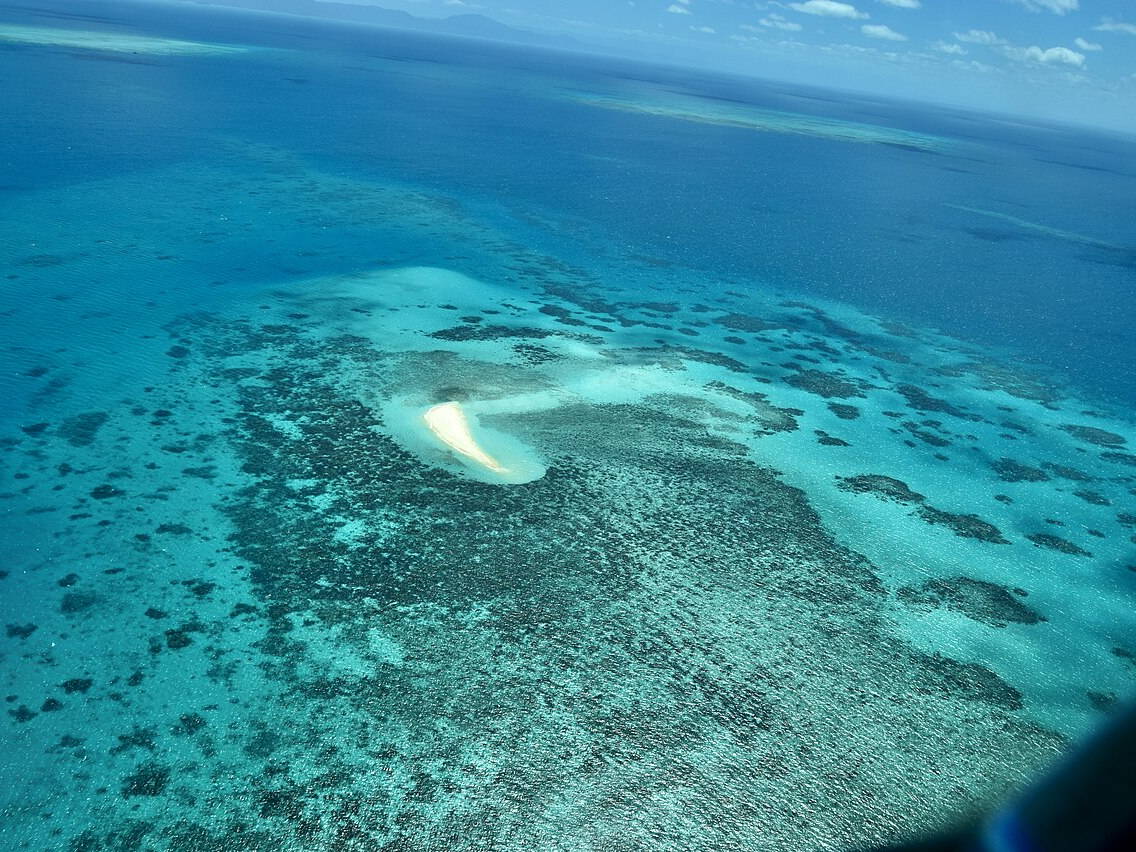
Great Barrier Reef, Uluru & Australian Landscapes
Q: What enormous coral reef system lies off Queensland?
A: Great Barrier Reef.
Q: What sea contains much of the Great Barrier Reef?
A: Coral Sea.
Q: Is the Great Barrier Reef one single coral reef?
A: No. It is a vast system of reefs and islands.
Q: What threatens coral reefs during extreme heat?
A: Coral bleaching and mortality.
Q: What causes bleaching?
A: Stressed corals expel or lose much of their symbiotic algae.
Q: What famous sandstone formation rises in Australia's Red Centre?
A: Uluru.
Q: What national park contains Uluru?
A: Uluṟu-Kata Tjuṯa National Park.
Q: What Indigenous people are the traditional owners of Uluru?
A: Aṉangu.
Q: About how high is Uluru above the surrounding plain?
A: About 348 metres.
Q: What group of giant domed rock formations lies nearby?
A: Kata Tjuṯa.
Q: How many main domes make up Kata Tjuṯa?
A: Thirty-six.
Q: What desert town is a major gateway to Australia's Red Centre?
A: Alice Springs.
Q: What mountain range runs along eastern Australia?
A: Great Dividing Range.
Q: What is Australia's highest mainland mountain?
A: Mount Kosciuszko.
Q: What state contains Mount Kosciuszko?
A: New South Wales.
Q: Can it snow in Australia?
A: Yes.
Q: What huge sandstone region west of Sydney is famous for cliffs and eucalyptus forests?
A: Blue Mountains.
Q: Why do the Blue Mountains often look blue?
A: Atmospheric scattering and oils from eucalyptus vegetation contribute to the haze.
Q: What long scenic road runs along Victoria's coast?
A: Great Ocean Road.
Q: What limestone stacks are a famous Great Ocean Road landmark?
A: Twelve Apostles.
Q: Are exactly twelve stacks visible today?
A: No.
Q: What huge sandstone monolith in Western Australia is called Mount Augustus in English?
A: Burringurrah.
Q: What vast plain spans South Australia and Western Australia?
A: Nullarbor Plain.
Q: What does Nullarbor mean from Latin roots?
A: No trees.
Q: What tropical wetland park is famous in the Northern Territory?
A: Kakadu National Park.
Q: What national park near Darwin contains waterfalls and swimming holes?
A: Litchfield National Park.
Q: What island off South Australia is famous for wildlife?
A: Kangaroo Island.
Q: What Western Australian reef is famous for whale sharks?
A: Ningaloo Reef.
Q: What ancient rainforest lies in far north Queensland?
A: Daintree Rainforest.
Q: Why is Australian landscape trivia so varied?
A: The continent includes tropical rainforest, coral reefs, alpine country, deserts, wetlands, savanna, and temperate forests.
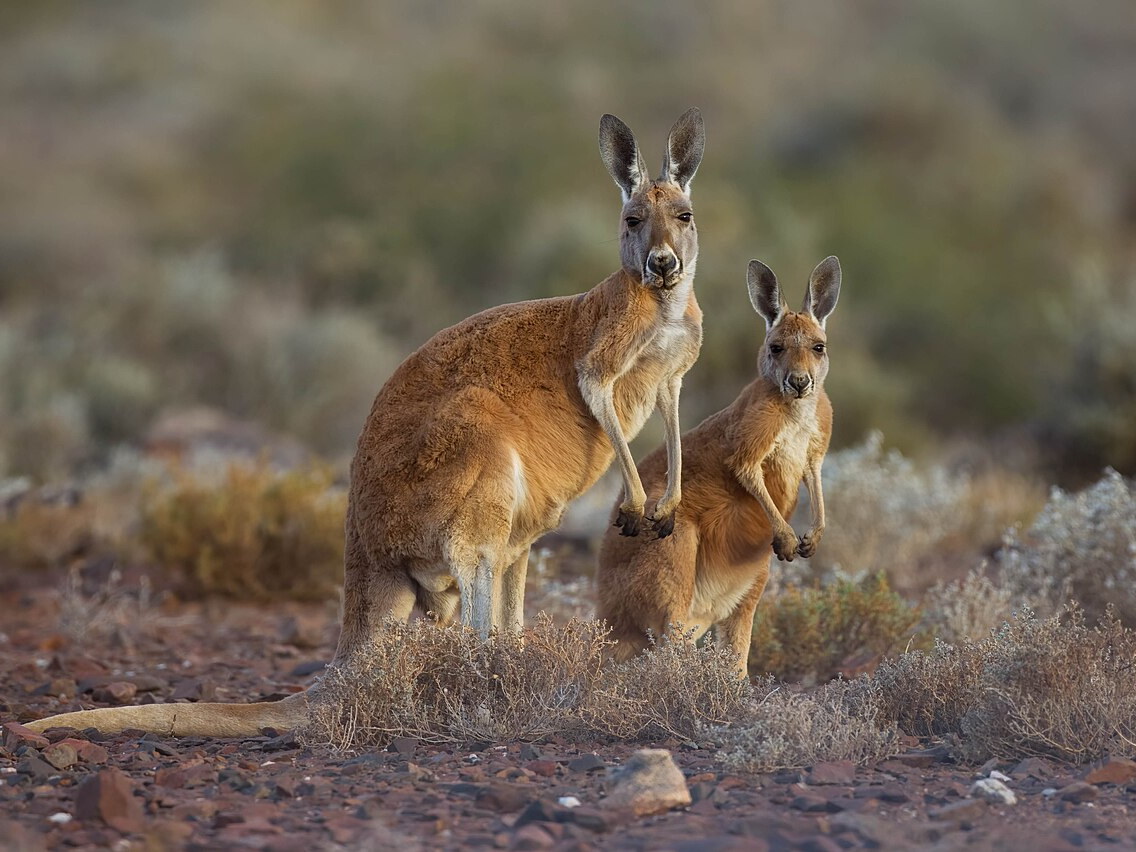
Wildlife, Indigenous Cultures & Australian History
Q: What hopping marsupial is an Australian icon?
A: Kangaroo.
Q: What tree-dwelling marsupial eats eucalyptus leaves?
A: Koala.
Q: Is a koala a bear?
A: No.
Q: What egg-laying mammal has a ducklike bill?
A: Platypus.
Q: What spiny egg-laying mammal lives in Australia?
A: Echidna.
Q: What term describes egg-laying mammals like platypus and echidnas?
A: Monotremes.
Q: What large flightless bird appears on Australia's coat of arms?
A: Emu.
Q: What other animal appears on the coat of arms?
A: Kangaroo.
Q: What wild dog is native to Australia?
A: Dingo.
Q: What Tasmanian marsupial is famous for a powerful bite and loud vocalizations?
A: Tasmanian devil.
Q: What enormous bird builds nesting mounds and lives in tropical forests?
A: Cassowary.
Q: Is Australia's wildlife dangerous only because of snakes and spiders?
A: No. Most animals avoid people, and sensational stereotypes exaggerate everyday risk.
Q: Who are Australia's First Peoples?
A: Aboriginal and Torres Strait Islander peoples.
Q: How long have Aboriginal cultures existed in Australia?
A: Tens of thousands of years.
Q: What term refers broadly to ancestral creation knowledge and law in many Aboriginal traditions?
A: Dreaming or Dreamtime, though terminology and meanings vary among nations.
Q: Is there one single Aboriginal culture?
A: No.
Q: What is a Welcome to Country?
A: A formal welcome delivered by Traditional Owners or authorized representatives.
Q: What is an Acknowledgement of Country?
A: A statement recognizing Traditional Owners that can be given by Indigenous or non-Indigenous people.
Q: What did British colonization establish at Sydney Cove in 1788?
A: A penal colony.
Q: Who commanded the First Fleet?
A: Arthur Phillip.
Q: What date is associated with the First Fleet's arrival at Sydney Cove?
A: January 26, 1788.
Q: Why is January 26 contested?
A: It is celebrated officially as Australia Day but is also marked by many Indigenous Australians as Invasion Day or a day of mourning.
Q: When did the six Australian colonies federate?
A: January 1, 1901.
Q: What new political entity formed?
A: Commonwealth of Australia.
Q: What gold rushes transformed several colonies in the 1850s?
A: Major gold discoveries in Victoria and New South Wales.
Q: What rebellious 1854 event took place at Ballarat?
A: Eureka Stockade.
Q: What did the Eureka conflict involve?
A: Miners protesting licensing and political conditions.
Q: What military force is remembered annually on ANZAC Day?
A: Australian and New Zealand Army Corps and broader service personnel.
Q: On what date is ANZAC Day?
A: April 25.
Q: Why is Australian history best told with Indigenous history first?
A: Aboriginal and Torres Strait Islander societies existed for tens of thousands of years before British colonization.
Sports, Food, Culture & Hard Australia Trivia
Q: What sport is abbreviated AFL?
A: Australian Football League, playing Australian rules football.
Q: What oval ball sport is especially associated with Melbourne?
A: Australian rules football.
Q: What bat-and-ball sport is a major summer tradition?
A: Cricket.
Q: What famous cricket rivalry is contested with England?
A: The Ashes.
Q: What major tennis tournament is held in Melbourne?
A: Australian Open.
Q: What annual horse race is called the race that stops a nation?
A: Melbourne Cup.
Q: What sport uses State of Origin between Queensland and New South Wales?
A: Rugby league.
Q: What famous surf beach is in Sydney?
A: Bondi Beach.
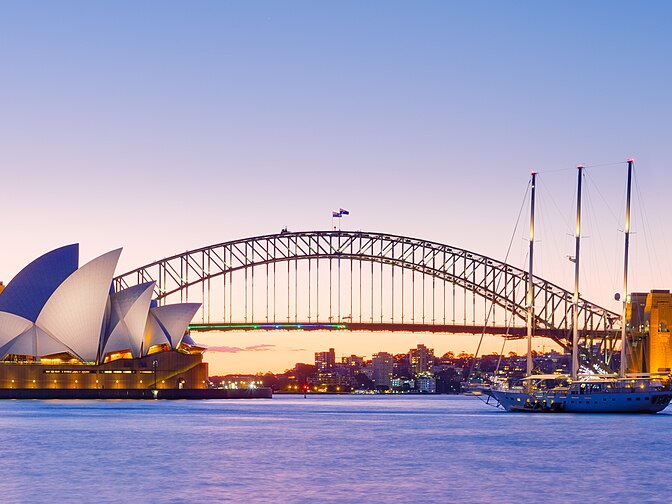
Q: What Sydney building is famous for sail-like roof shells?
A: Sydney Opera House.
Q: Who designed Sydney Opera House?
A: Jørn Utzon.
Q: What bridge beside it is nicknamed the Coathanger?
A: Sydney Harbour Bridge.
Q: What chocolate biscuit is often eaten by biting opposite corners and drinking through it?
A: Tim Tam.
Q: What does that drinking trick get called?
A: Tim Tam Slam.
Q: What yeast-extract spread is an Australian breakfast icon?
A: Vegemite.
Q: What meringue dessert is claimed by both Australia and New Zealand?
A: Pavlova.
Q: What small cake is coated in chocolate and coconut?
A: Lamington.
Q: What meat pie is a classic Australian snack?
A: Individual savory meat pie.
Q: What coffee style is often claimed as an Australian or New Zealand specialty?
A: Flat white.
Q: What does “servo” mean in Australian slang?
A: Service station or gas station.
Q: What does “arvo” mean?
A: Afternoon.
Q: What does “brekkie” mean?
A: Breakfast.
Q: What does “ute” mean?
A: Utility vehicle.
Q: What invention is associated with Australian scientist Howard Florey's role in medicine?
A: He helped develop penicillin into a practical lifesaving treatment, rather than discovering penicillin itself.
Q: What Australian invention helped make Wi-Fi practical?
A: CSIRO research contributed key wireless LAN technology.
Q: What rock band formed in Australia and recorded “Back in Black”?
A: AC/DC.
Q: What singer from Melbourne became famous for “Can't Get You Out of My Head”?
A: Kylie Minogue.
Q: What actor born in Australia played Wolverine for decades?
A: Hugh Jackman.
Q: What children's animated show follows a Blue Heeler family?
A: Bluey.
Q: What city is Bluey set in?
A: Brisbane.
Q: Why is Australia especially deep trivia material?
A: A continent-country combines ancient Indigenous cultures, unusual wildlife, global cities, reefs, deserts, sports, migration, regional slang, and enormous ecological variety.
How Did You Score?
If Canberra, Bass Strait, Aṉangu, monotremes, the Eureka Stockade, Jørn Utzon, State of Origin, and the difference between a Welcome and Acknowledgement of Country all came easily, your Australia trivia is fair dinkum.

Ellie Simons creates and edits Random Trivia. She researches trivia using primary and authoritative sources whenever possible and is currently reviewing the site's older trivia library for accuracy, clarity, and playability. Read more on the About page.
About this quiz
Site editor: Ellie Simons. Read our Trivia Methodology to learn how questions are researched and updated. Page last updated: . Report an error.