
Welcome to a trivia round 66 million years in the making. These 120 dinosaur questions cover T. rex, Triceratops, Stegosaurus, sauropods, feathers, eggs, fossils, the Triassic, Jurassic and Cretaceous periods, extinction, paleontology, and the movie myths that real fossils keep ruining in the best possible way.
Science facts are checked against the Smithsonian National Museum of Natural History and the Natural History Museum. Keep exploring with our science trivia, animal trivia, and Earth trivia.
Dinosaur Basics & Deep Time
Q: What kind of animals were dinosaurs?
A: Reptiles.
Q: Did all prehistoric reptiles count as dinosaurs?
A: No.
Q: Were pterosaurs dinosaurs?
A: No, they were flying reptiles.
Q: Were plesiosaurs dinosaurs?
A: No, they were marine reptiles.
Q: What major time interval contains the age of dinosaurs?
A: The Mesozoic Era.
Q: What are the three Mesozoic periods?
A: Triassic, Jurassic, and Cretaceous.
Q: Which period came first?
A: Triassic.
Q: Which came second?
A: Jurassic.
Q: Which came last?
A: Cretaceous.
Q: About when did the first dinosaurs appear?
A: Roughly 230 million years ago.
Q: About when did non-avian dinosaurs go extinct?
A: 66 million years ago.
Q: How long did dinosaurs dominate terrestrial ecosystems?
A: More than 140 million years.
Q: Did humans live with non-avian dinosaurs?
A: No.
Q: What living animals are dinosaurs?
A: Birds.
Q: Are birds merely related to dinosaurs?
A: They are living theropod dinosaurs.
Q: What key leg posture helped distinguish early dinosaurs from many other reptiles?
A: Their limbs were positioned more directly beneath the body.
Q: Did all dinosaurs walk on two legs?
A: No.
Q: Did all dinosaurs walk on four legs?
A: No.
Q: What does bipedal mean?
A: Walking on two legs.
Q: What does quadrupedal mean?
A: Walking on four legs.
Q: Did dinosaurs live only in warm jungles?
A: No, they occupied many environments.
Q: Have dinosaur fossils been found in Antarctica?
A: Yes.
Q: What does herbivore mean?
A: Plant eater.
Q: What does carnivore mean?
A: Meat eater.
Q: What does omnivore mean?
A: An animal that eats both plant and animal foods.
Q: Were all dinosaur species enormous?
A: No, some were very small.
Q: What chicken-sized dinosaur is famous for feathers and gliding adaptations?
A: Microraptor.
Q: Why is the phrase “age of reptiles” incomplete?
A: The Mesozoic contained many different reptile groups, and dinosaurs were only one branch.
Q: What is paleontology?
A: The study of ancient life through fossils.
Q: What is a paleontologist?
A: A scientist who studies ancient life and fossils.
T. rex, Triceratops & Famous Dinosaurs
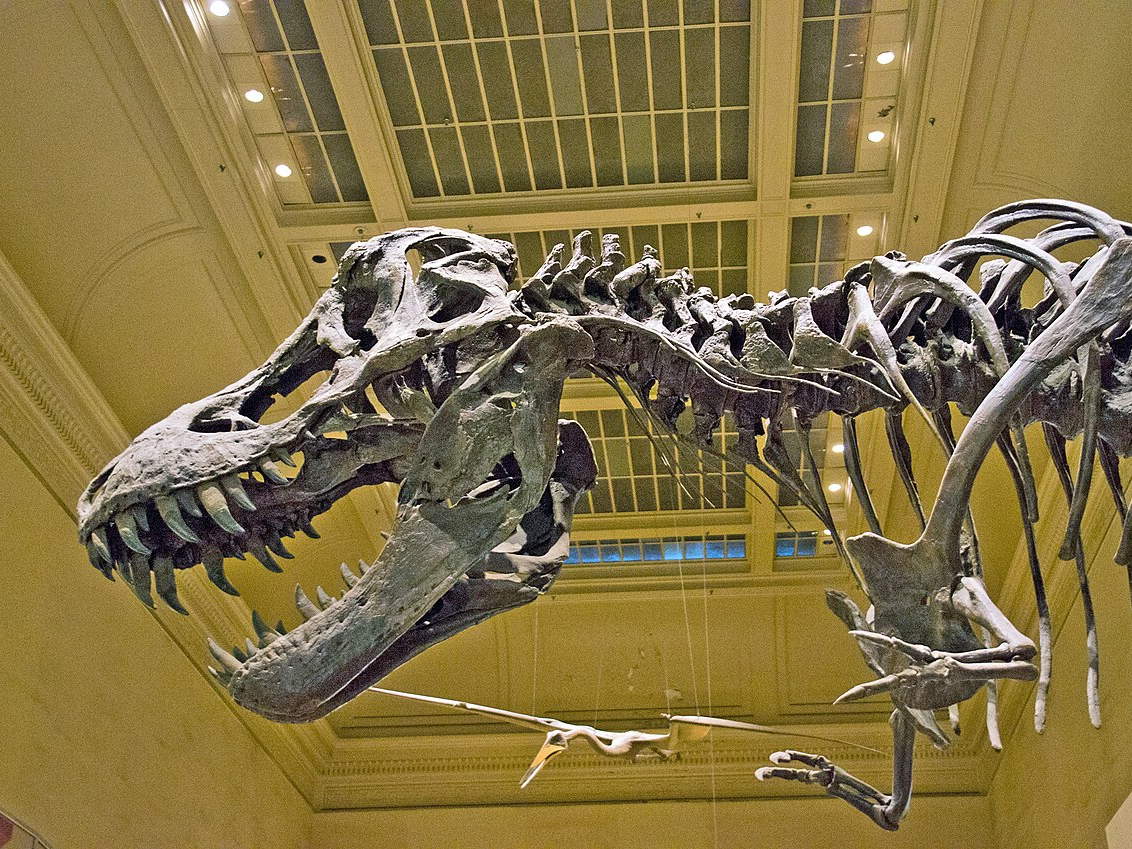
Q: What does Tyrannosaurus rex mean?
A: Tyrant lizard king.
Q: When did T. rex live?
A: Late Cretaceous, about 68 to 66 million years ago.
Q: Where have T. rex fossils been found?
A: Western North America.
Q: About how long was a typical adult T. rex?
A: Around 12 meters, with very large individuals approaching 13.
Q: How did T. rex move?
A: On two legs.
Q: What did T. rex eat?
A: Other animals.
Q: How many teeth did T. rex have at a time, approximately?
A: Around 60.
Q: What were its teeth adapted to do?
A: Puncture, grip, crush bone, and tear flesh.
Q: Did T. rex only scavenge?
A: Evidence suggests it hunted live prey and also scavenged.
Q: What famous T. rex specimens are among the largest known?
A: Sue and Scotty.
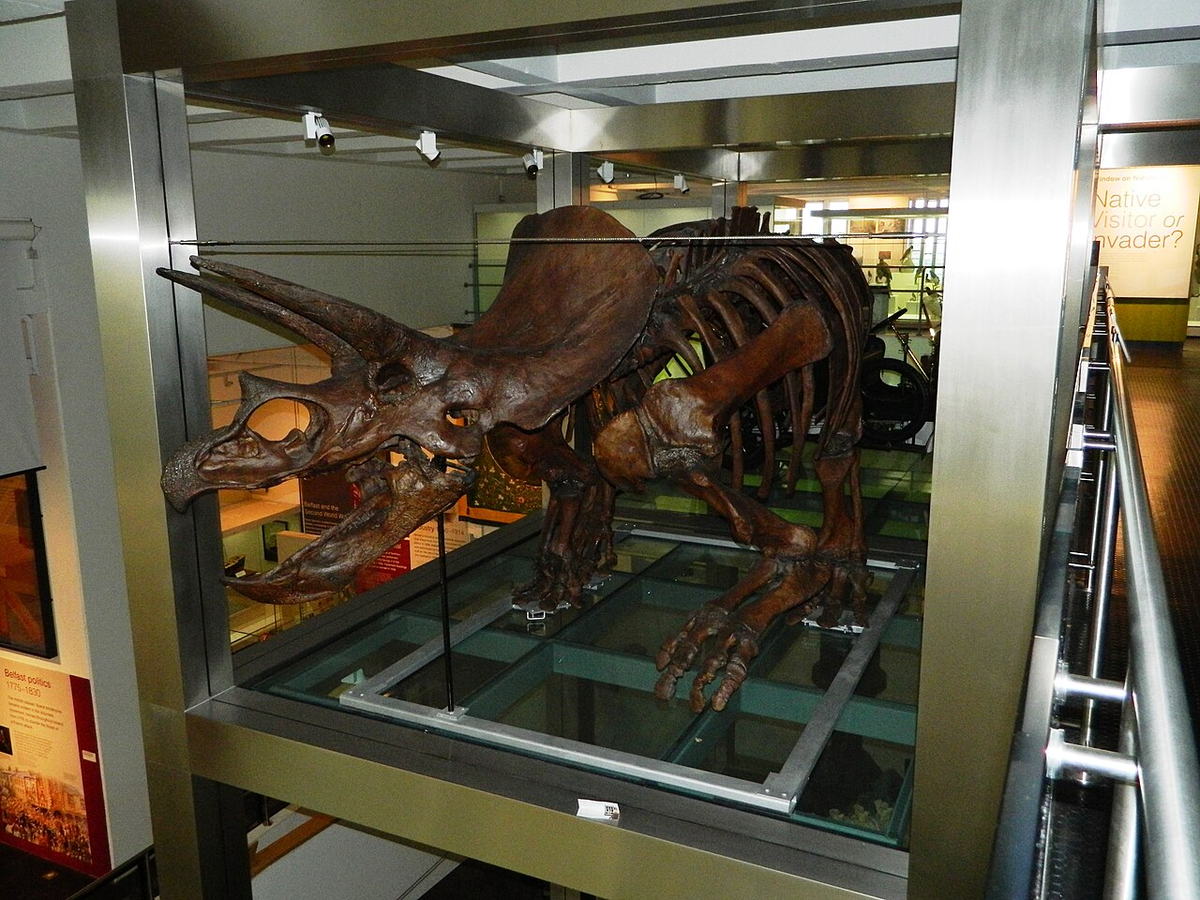
Q: What dinosaur had three facial horns?
A: Triceratops.
Q: What does Triceratops mean?
A: Three-horned face.
Q: Did Triceratops live at the same time as T. rex?
A: Yes.
Q: Was Triceratops a herbivore?
A: Yes.
Q: What large structure projected from the back of its skull?
A: A frill.
Q: What evidence shows T. rex and Triceratops interacted?
A: Triceratops fossils preserve tyrannosaur bite marks.
Q: What armored dinosaur carried a tail club?
A: Ankylosaurus.
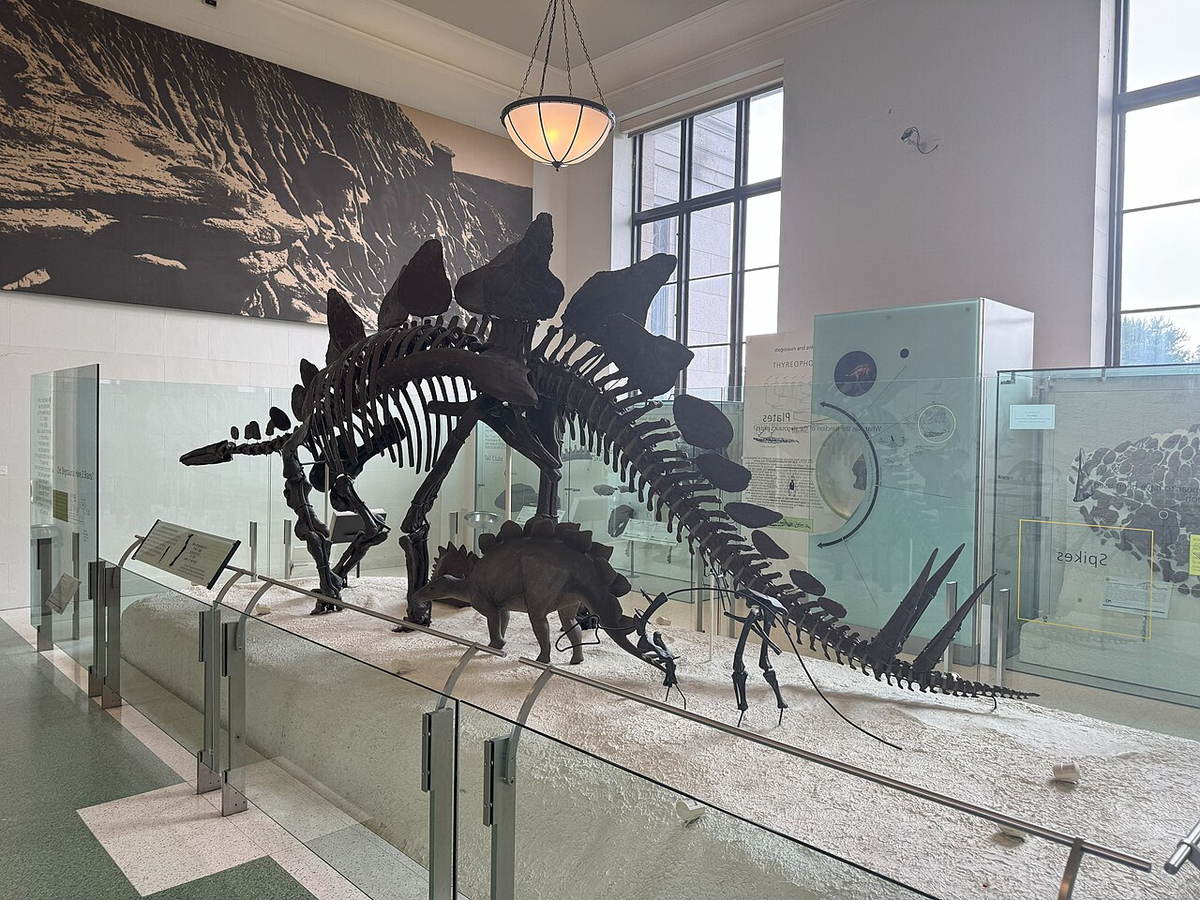
Q: What dinosaur is famous for plates along its back?
A: Stegosaurus.
Q: What weapon did Stegosaurus have on its tail?
A: Large spikes.
Q: What nickname is often used for the Stegosaurus tail spikes?
A: Thagomizer.
Q: What group includes giant long-necked dinosaurs?
A: Sauropods.
Q: Name one famous sauropod.
A: Brachiosaurus, Diplodocus, or Apatosaurus.
Q: What distinguishes Brachiosaurus's proportions?
A: Its forelimbs were longer than its hindlimbs.
Q: What enormous sauropod group includes Argentinosaurus?
A: Titanosaurs.
Q: What theropod had a long crocodile-like snout and sail?
A: Spinosaurus.
Q: What small predator gave Jurassic Park its name recognition far beyond science?
A: Velociraptor.
Q: Was real Velociraptor as large as the movie version?
A: No, it was much smaller.
Q: Did Velociraptor have feathers?
A: Evidence strongly indicates it did.
Q: What sickle-shaped structure did dromaeosaurs carry on the foot?
A: An enlarged claw on the second toe.
Q: What makes famous-dinosaur trivia tricky?
A: Movies often combine, resize, or simplify real species.
Feathers, Eggs, Fossils & Dinosaur Science
Q: Did some dinosaurs have feathers?
A: Yes.
Q: What dinosaur group is most closely linked to modern birds?
A: Theropods.
Q: What famous fossil animal helped reveal the dinosaur-bird connection?
A: Archaeopteryx.
Q: Did Archaeopteryx have feathers?
A: Yes.
Q: Did Archaeopteryx also have teeth?
A: Yes.
Q: Why is that combination important?
A: It shows a mosaic of birdlike and dinosaurian traits.
Q: Did all feathered dinosaurs fly?
A: No.
Q: What could feathers do before powered flight evolved?
A: Insulate, display, camouflage, brood eggs, and assist movement.
Q: Did dinosaurs lay eggs?
A: Yes.
Q: Have fossil dinosaur nests been found?
A: Yes.
Q: What dinosaur is famous for evidence of brooding nests?
A: Oviraptor and related oviraptorosaurs.
Q: What did Oviraptor's name originally imply?
A: Egg thief.
Q: Why is that name now ironic?
A: Fossils suggest some individuals were guarding their own nests rather than stealing eggs.
Q: What is a fossil?
A: Preserved evidence of past life.
Q: Are all fossils bones?
A: No.
Q: Name a trace fossil.
A: Footprints, burrows, nests, or coprolites.
Q: What is a coprolite?
A: Fossilized feces.
Q: What can coprolites reveal?
A: Diet and digestive evidence.
Q: What can fossil footprints reveal?
A: Movement, speed estimates, group behavior, and foot anatomy.
Q: Does fossilization usually preserve every part of an animal?
A: No.
Q: Why are complete dinosaur skeletons rare?
A: Bodies decay, scatter, are scavenged, erode, or fail to fossilize.
Q: What rock type commonly preserves fossils?
A: Sedimentary rock.
Q: Can paleontologists tell a dinosaur's exact color from bones alone?
A: No.
Q: How have scientists inferred colors in some feathered dinosaurs?
A: Microscopic pigment-bearing structures called melanosomes can survive in exceptional fossils.
Q: What is a bone bed?
A: A deposit containing many fossil bones.
Q: What can growth rings in bones help estimate?
A: Growth patterns and age.
Q: How are dinosaurs named scientifically?
A: Using genus and species names.
Q: Who formally named Tyrannosaurus rex?
A: Henry Fairfield Osborn.
Q: Who discovered important early T. rex skeletons?
A: Barnum Brown.
Q: Why can dinosaur classifications change?
A: New fossils and new analyses can revise evolutionary relationships.
Extinction, Myths & Hard Dinosaur Trivia
Q: What mass extinction ended the age of non-avian dinosaurs?
A: The Cretaceous-Paleogene extinction.
Q: What abbreviation is commonly used for that boundary?
A: K-Pg.
Q: About when did it happen?
A: 66 million years ago.
Q: What major impact is linked to the extinction?
A: A giant asteroid impact.
Q: Where is the impact crater?
A: Chicxulub beneath Mexico's Yucatán region.
Q: Did the asteroid instantly kill every dinosaur on Earth?
A: No.
Q: What global effects followed?
A: Fire, atmospheric debris, darkness, cooling, food-web collapse, and other severe environmental changes.
Q: Did all dinosaurs go extinct?
A: No, birds survived.
Q: What other major geological activity was occurring around the same time?
A: Massive Deccan Traps volcanism in India.
Q: Did T. rex live in the Jurassic?
A: No, it lived in the Late Cretaceous.
Q: Did Stegosaurus live with T. rex?
A: No, Stegosaurus lived much earlier.
Q: Did Stegosaurus live in the Jurassic?
A: Yes.
Q: Did Triceratops live with T. rex?
A: Yes.
Q: Did Velociraptor live in North America?
A: The classic Velociraptor fossils are from Asia.
Q: Did dinosaurs roar exactly like movie monsters?
A: We do not know their exact vocalizations.
Q: Could T. rex only see moving objects?
A: No, that is a movie invention.
Q: Were dinosaurs universally scaly?
A: No.
Q: Were dinosaurs universally feathered?
A: No.
Q: Was Brontosaurus always accepted as a valid genus?
A: No, its classification has changed over time.
Q: What does Brontosaurus mean?
A: Thunder lizard.
Q: What does Apatosaurus mean?
A: Deceptive lizard.
Q: What dinosaur had a thick domed skull?
A: Pachycephalosaurus.
Q: What dinosaur group includes horned dinosaurs like Triceratops?
A: Ceratopsians.
Q: What group includes duck-billed dinosaurs?
A: Hadrosaurs.
Q: Why are they called duck-billed?
A: Their broad snouts superficially resemble bills.
Q: What hadrosaur is famous for a long backward crest?
A: Parasaurolophus.
Q: What might hollow crests have helped with?
A: Sound production, display, and recognition.
Q: What is the Nation's T. rex?
A: A prominent T. rex specimen displayed at the Smithsonian National Museum of Natural History.
Q: Why is dinosaur trivia constantly changing?
A: New fossils, imaging, biomechanical models, and evolutionary analyses regularly refine what scientists think.
Q: Why are dinosaurs especially deep trivia material?
A: They combine geology, evolution, anatomy, extinction, field discovery, classification, feathers, behavior, and more than a century of pop-culture myths.
How Did You Score?
If theropods, melanosomes, coprolites, the K-Pg boundary, Chicxulub, Oviraptor's misleading name, and the fact that birds are dinosaurs all came easily, your prehistoric trivia is very much alive.

Ellie Simons creates and edits Random Trivia. She researches trivia using primary and authoritative sources whenever possible and is currently reviewing the site's older trivia library for accuracy, clarity, and playability. Read more on the About page.
About this quiz
Site editor: Ellie Simons. Read our Trivia Methodology to learn how questions are researched and updated. Page last updated: . Report an error.