
Wine can turn one grape species into thousands of bottles with wildly different personalities.
These wine trivia questions travel from vineyard to cellar while covering grapes, regions, terminology, production, and history.
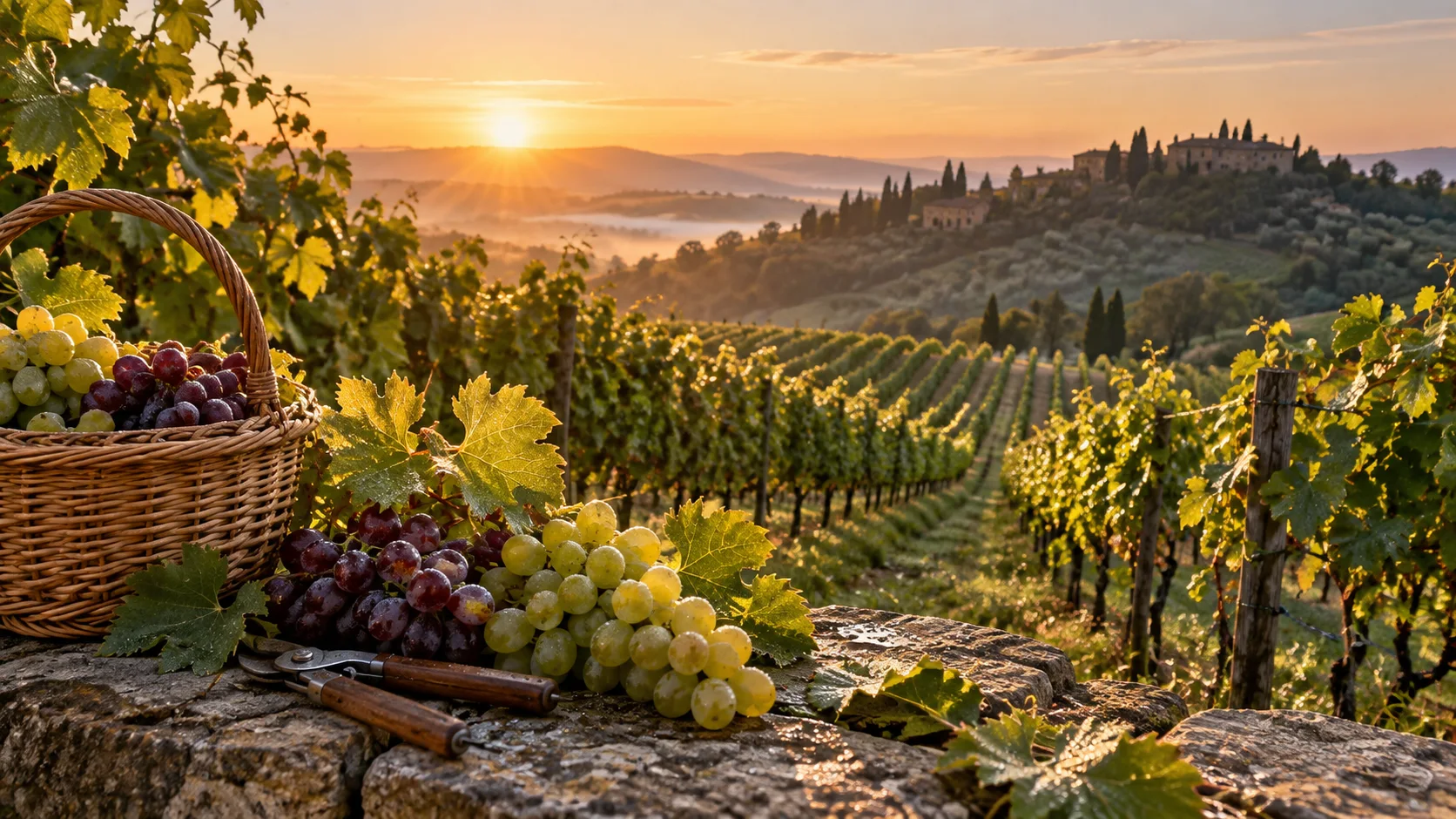
Inside the Grape and Vineyard
Start where every bottle does, with vines, fruit, soil, weather, and one very busy harvest season.
- What species supplies most of the world's wine grapes?
Answer: Vitis vinifera - What is the grape-growing branch of agriculture called?
Answer: Viticulture - What French word describes the combined influence of place on wine?
Answer: Terroir - What is the yearly grape-gathering season called?
Answer: Harvest or vintage - What is the period when grapes begin changing color called?
Answer: Veraison - Which grape part contains most of a red wine's color pigments?
Answer: The skins - Which grape components contribute tannin to wine?
Answer: Skins, seeds, and stems - What natural sugar in grapes is converted into alcohol?
Answer: Glucose and fructose - What measurement estimates grape sugar and potential alcohol in many countries?
Answer: Brix - What vine-training structure supports shoots and fruit?
Answer: A trellis - What is a cutting attached to another vine's root system called?
Answer: A graft - Which root-feeding insect devastated European vineyards in the 1800s?
Answer: Phylloxera - What American vine material helped many European vineyards recover?
Answer: Phylloxera-resistant rootstocks - What vineyard term means removing leaves to improve airflow and sun exposure?
Answer: Leaf thinning - What fungal condition produces noble rot in suitable grapes?
Answer: Botrytis cinerea
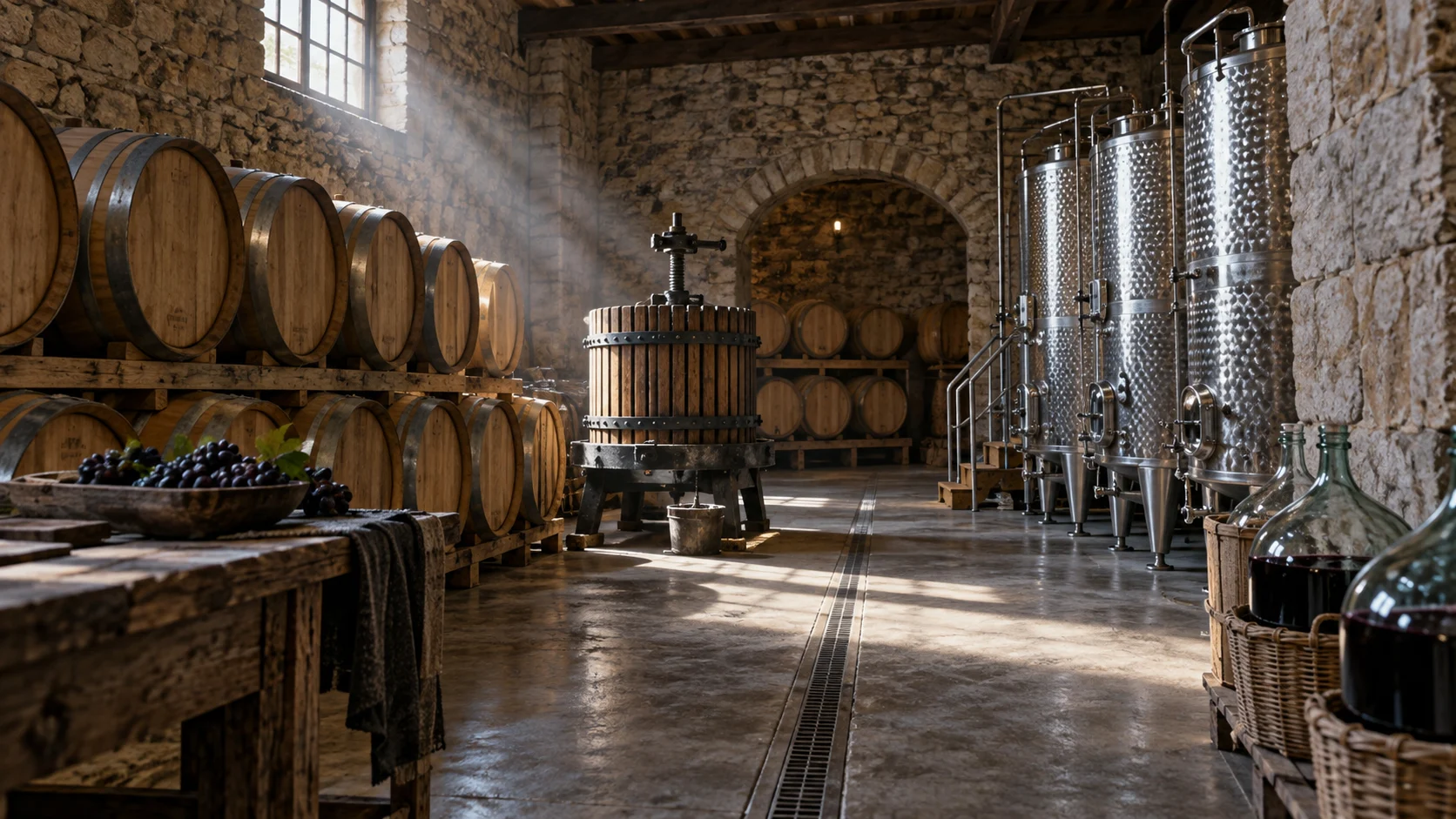
From Crush to Cellar
Now follow the fruit through fermentation, aging, blending, and bottling.
- What does alcoholic fermentation convert grape sugar into?
Answer: Alcohol and carbon dioxide - Which microorganism carries out wine fermentation?
Answer: Yeast - What is freshly crushed grape juice with skins and seeds called?
Answer: Must - Why is white wine often fermented without skins?
Answer: To limit color and tannin extraction - What process softens acidity by converting malic acid to lactic acid?
Answer: Malolactic fermentation - Which buttery aroma compound can result from malolactic fermentation?
Answer: Diacetyl - What is the cap in red-wine fermentation?
Answer: Skins and solids pushed to the surface - What cellar action submerges the cap by hand or tool?
Answer: Punching down - What action circulates juice over the cap?
Answer: Pumping over - What vessel can add toast, vanilla, and spice notes during aging?
Answer: An oak barrel - Which oak species is commonly associated with tighter grain and subtle spice?
Answer: French oak - What inert metal vessel preserves fresh fruit character?
Answer: Stainless steel - What does racking do?
Answer: Transfers wine off settled sediment - What is fining used for?
Answer: Clarifying or stabilizing wine - What process forces wine through a medium to remove particles?
Answer: Filtration
Major White Grapes
These white varieties range from steely and citrusy to floral, tropical, and richly textured.
- Which white grape is central to Chablis?
Answer: Chardonnay - Which grape is famous in New Zealand's Marlborough region?
Answer: Sauvignon Blanc - Which aromatic German grape can range from dry to very sweet?
Answer: Riesling - Which grape is used for Italian Pinot Grigio?
Answer: Pinot Gris - What grape is the main variety of Vouvray?
Answer: Chenin Blanc - Which grape gives Gewürztraminer its name?
Answer: Gewürztraminer - What white grape is used in Albariño wines from Rías Baixas?
Answer: Albariño - Which grape is the main white variety of Rioja?
Answer: Viura - What grape is used in Soave?
Answer: Garganega - Which white grape is strongly associated with Austria?
Answer: Grüner Veltliner - What grape is the main variety in Muscadet?
Answer: Melon de Bourgogne - Which grape is central to white Condrieu?
Answer: Viognier - Which Greek grape is famous on Santorini?
Answer: Assyrtiko - Which grape is used for many dry and sweet wines in Hungary's Tokaj region?
Answer: Furmint - What white grape is widely planted in Argentina alongside Malbec?
Answer: Torrontés
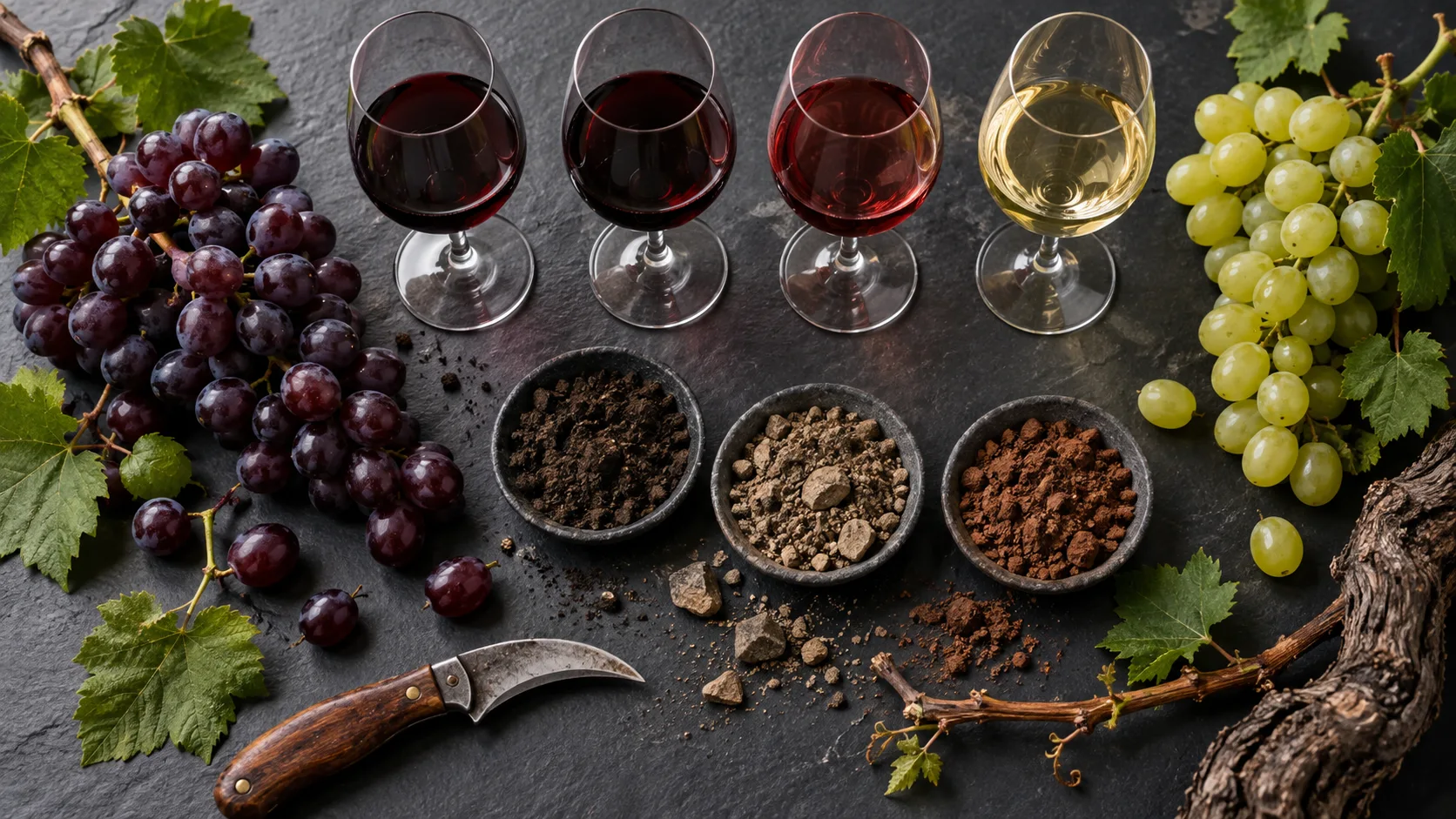
Major Red Grapes
Meet the varieties behind silky Burgundy, powerful Barolo, peppery Rhône blends, and plenty in between.
- Which red grape dominates red Burgundy?
Answer: Pinot Noir - Which grape is the backbone of many Left Bank Bordeaux blends?
Answer: Cabernet Sauvignon - Which grape is especially important on Bordeaux's Right Bank?
Answer: Merlot - What grape is called Shiraz in Australia?
Answer: Syrah - Which grape is the main variety of red Rioja?
Answer: Tempranillo - Which grape makes Barolo and Barbaresco?
Answer: Nebbiolo - Which grape is central to Chianti?
Answer: Sangiovese - What grape is Argentina's signature red variety?
Answer: Malbec - Which grape is strongly associated with Beaujolais?
Answer: Gamay - What grape is the principal red variety of Northern Rhône Côte-Rôtie?
Answer: Syrah - Which grape adds peppery character to many Loire reds?
Answer: Cabernet Franc - What red grape is central to Austrian red wine and shares its name with a color?
Answer: Blaufränkisch - Which grape is known as Primitivo in Italy and Zinfandel in the United States?
Answer: Tribidrag, commonly called Zinfandel or Primitivo - What grape is the primary variety of Spanish Priorat alongside Carignan?
Answer: Garnacha - Which red grape is South Africa's Pinot Noir-Cinsaut crossing?
Answer: Pinotage
France, Italy, and the Old World
In classic European regions, place names often matter more on the label than grape names.
- Which French region is the traditional home of sparkling Champagne?
Answer: Champagne - What two red grapes join Chardonnay as Champagne's principal varieties?
Answer: Pinot Noir and Pinot Meunier - Which French region is divided by the Gironde estuary into Left and Right Banks?
Answer: Bordeaux - What river runs through much of the Loire Valley wine region?
Answer: The Loire - Which region includes Chablis, Côte d'Or, and Mâconnais?
Answer: Burgundy - What wind is famous in the Rhône Valley?
Answer: The Mistral - Which Italian region produces Chianti Classico?
Answer: Tuscany - Which Italian region is home to Barolo?
Answer: Piedmont - Which Italian sparkling wine comes from northeastern hills around Conegliano and Valdobbiadene?
Answer: Prosecco - What Spanish region is famous for long-aged Tempranillo-based reds?
Answer: Rioja - Which fortified wine comes from Jerez and nearby towns in Spain?
Answer: Sherry - Which Portuguese valley produces grapes for Port?
Answer: The Douro Valley - What Hungarian region is famous for Tokaji wines?
Answer: Tokaj - Which German region is known for steep Riesling vineyards along a river of the same name?
Answer: The Mosel - Which Greek island is known for basket-trained Assyrtiko vines?
Answer: Santorini
Wine Beyond Europe
New World regions built distinctive identities from coastal fog, mountain vineyards, and bold experimentation.
- Which California valley is internationally famous for Cabernet Sauvignon?
Answer: Napa Valley - Which California county includes Russian River Valley and Dry Creek Valley?
Answer: Sonoma County - Which Oregon valley is best known for Pinot Noir?
Answer: Willamette Valley - Which Washington wine region covers a large part of the state's east side?
Answer: Columbia Valley - Which Argentine region lies near the Andes and is famous for Malbec?
Answer: Mendoza - Which Chilean valley is known for Cabernet Sauvignon and Carmenère?
Answer: Maipo Valley - Which grape was mistaken for Merlot in Chile before being identified in 1994?
Answer: Carmenère - Which South African wine region surrounds a historic university town?
Answer: Stellenbosch - Which Australian valley is famous for Shiraz?
Answer: Barossa Valley - Which Australian region is known for cool-climate Riesling?
Answer: Clare Valley - Which New Zealand region is famous for Sauvignon Blanc?
Answer: Marlborough - Which New Zealand region is the country's southernmost major wine area?
Answer: Central Otago - What Canadian wine style is made from grapes frozen naturally on the vine?
Answer: Icewine - Which U.S. state is home to the Finger Lakes wine region?
Answer: New York - Which South American country is home to the Canelones wine region?
Answer: Uruguay
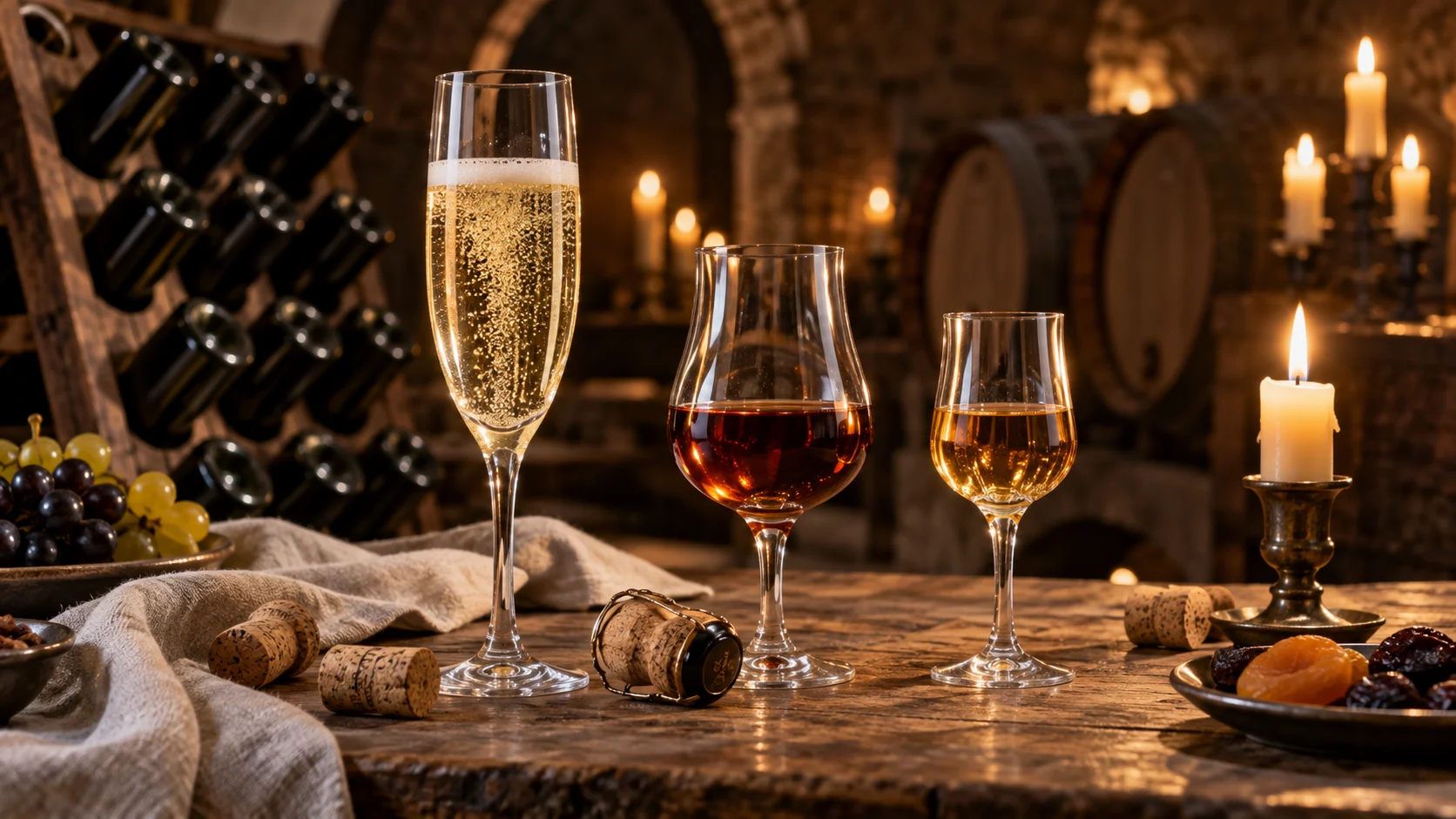
Sparkling, Sweet, and Fortified Styles
Bubbles, residual sugar, and fortification create some of wine's most distinctive categories.
- What is the traditional-method second fermentation carried out in?
Answer: The bottle - What does disgorgement remove from sparkling wine?
Answer: Yeast sediment - What is the sugar-and-wine addition after disgorgement called?
Answer: Dosage - What does brut indicate on most sparkling wine labels?
Answer: A dry sweetness category - Which grape is the primary variety in Prosecco?
Answer: Glera - What sparkling wine comes from Spain and usually uses the traditional method?
Answer: Cava - What sparkling wine term means white wine made from white grapes?
Answer: Blanc de blancs - What term means white sparkling wine made from dark grapes?
Answer: Blanc de noirs - What is wine fortification?
Answer: Adding distilled grape spirit - At what stage is spirit added to Port to retain sweetness?
Answer: During fermentation - What Spanish fortified wine is aged using a fractional blending system?
Answer: Sherry - What is that fractional aging system called?
Answer: The solera system - Which French sweet wine region is associated with botrytized Sémillon and Sauvignon Blanc?
Answer: Sauternes - What Italian sweet wine is traditionally made from dried grapes in Tuscany?
Answer: Vin Santo - What German term identifies a wine made from individually selected botrytized berries?
Answer: Beerenauslese
Labels, Tasting, and Wine History
Finish with service terms, label language, and milestones that connect ancient amphorae to modern bottles.
- What does vintage indicate on a wine label?
Answer: The year the grapes were harvested - What does non-vintage usually mean?
Answer: Wine blended from more than one harvest year - What is decanting?
Answer: Transferring wine into another vessel before serving - Why might an older red wine be decanted carefully?
Answer: To separate it from sediment - What does body describe in wine?
Answer: Its perceived weight or fullness - What does dry mean in wine?
Answer: It has little perceptible residual sugar - What is tannin?
Answer: A group of astringent compounds from skins, seeds, stems, or oak - What does acidity contribute to wine?
Answer: Freshness and tartness - What is a sommelier?
Answer: A wine-service professional - What tool removes a cork from a bottle?
Answer: A corkscrew - What ancient region, now in Georgia, has yielded evidence of winemaking around 6000 BCE?
Answer: The South Caucasus - What clay vessels are used in traditional Georgian winemaking?
Answer: Qvevri - Which ancient civilization spread viticulture widely around the Mediterranean through colonization?
Answer: The Greeks and later Romans - What French monk is popularly linked with Champagne but did not invent sparkling wine?
Answer: Dom Pérignon - What 1976 blind tasting boosted the global reputation of California wine?
Answer: The Judgment of Paris
Keep the game going with food trivia, Italy trivia, France trivia, and California trivia.
Sources and Further Reading
- International Organisation of Vine and Wine
- Wine Institute: Wine facts and education
- University of California Cooperative Extension viticulture resources
- Institut National de l'Origine et de la Qualité
- Encyclopaedia Britannica: Wine

Ellie Ewert is the founder and author of RandomTrivia.co, blending her passion for research with years of experience in content creation to deliver accurate, engaging, and well-sourced trivia. Dedicated to providing readers with trustworthy and entertaining facts, she applies meticulous fact-checking and SEO expertise to ensure every article meets the highest standards. Read more about our high standards in our Editorial Guidelines.