
Rome wasn't built in a day, and 120 questions barely scratch the surface. This trivia tour covers the Colosseum, Forum, Pantheon, emperors, aqueducts, Vatican City, Renaissance masterpieces, fountains, piazzas, food, neighborhoods, football, and the layers that earned Rome its “Eternal City” nickname.
Landmark facts are checked against Italia.it's official Rome heritage guide. Keep exploring with our geography trivia, world history trivia, and Italy trivia.
Ancient Rome & the Republic
Q: What river flows through Rome?
A: Tiber.
Q: What traditional year is given for Rome's founding?
A: 753 BCE.
Q: What legendary twins are tied to Rome's founding?
A: Romulus and Remus.
Q: What animal supposedly nursed the twins?
A: A she-wolf.
Q: Which twin traditionally founded the city?
A: Romulus.
Q: What hill is strongly associated with Rome's earliest settlement?
A: Palatine Hill.
Q: How many famous hills make up traditional Rome?
A: Seven.
Q: Name one of the Seven Hills.
A: Palatine, Capitoline, Aventine, Caelian, Esquiline, Quirinal, or Viminal.
Q: What political system replaced Rome's monarchy?
A: Roman Republic.
Q: Around what year did the Roman Republic traditionally begin?
A: 509 BCE.
Q: What governing body represented Rome's elite political class?
A: Senate.
Q: What two annually elected magistrates led the Republic?
A: Consuls.
Q: What social class made up Rome's hereditary aristocracy?
A: Patricians.
Q: What broader citizen class included ordinary Romans?
A: Plebeians.
Q: What famous early Roman law code was displayed publicly?
A: Twelve Tables.
Q: What military unit became the backbone of Roman armies?
A: Legion.
Q: What wars pitted Rome against Carthage?
A: Punic Wars.
Q: What Carthaginian general crossed the Alps with elephants?
A: Hannibal.
Q: Who was Julius Caesar?
A: Roman general, politician, and dictator.
Q: Was Julius Caesar officially Rome's first emperor?
A: No.
Q: On what date was Caesar assassinated?
A: March 15, 44 BCE.
Q: What is that date called?
A: Ides of March.
Q: Who was Caesar's adopted heir?
A: Octavian.
Q: What title did Octavian later receive?
A: Augustus.
Q: What famous road led southeast from Rome?
A: Via Appia, or Appian Way.
Q: What does “all roads lead to Rome” reflect?
A: Rome's huge road network connected the capital with its territories.
Q: What public center combined temples, government, speeches, and commerce?
A: Roman Forum.
Q: What hill beside the Forum held major temples and government symbolism?
A: Capitoline Hill.
Q: What temple stood prominently there?
A: Temple of Jupiter Optimus Maximus.
Q: Why is republican Rome such rich trivia territory?
A: Its institutions, wars, laws, roads, generals, and political conflicts shaped later Western political vocabulary.
Emperors, Colosseum & Imperial Rome
Q: Who was Rome's first emperor?
A: Augustus.
Q: What long peaceful era began under Augustus?
A: Pax Romana.
Q: What does Pax Romana mean?
A: Roman Peace.
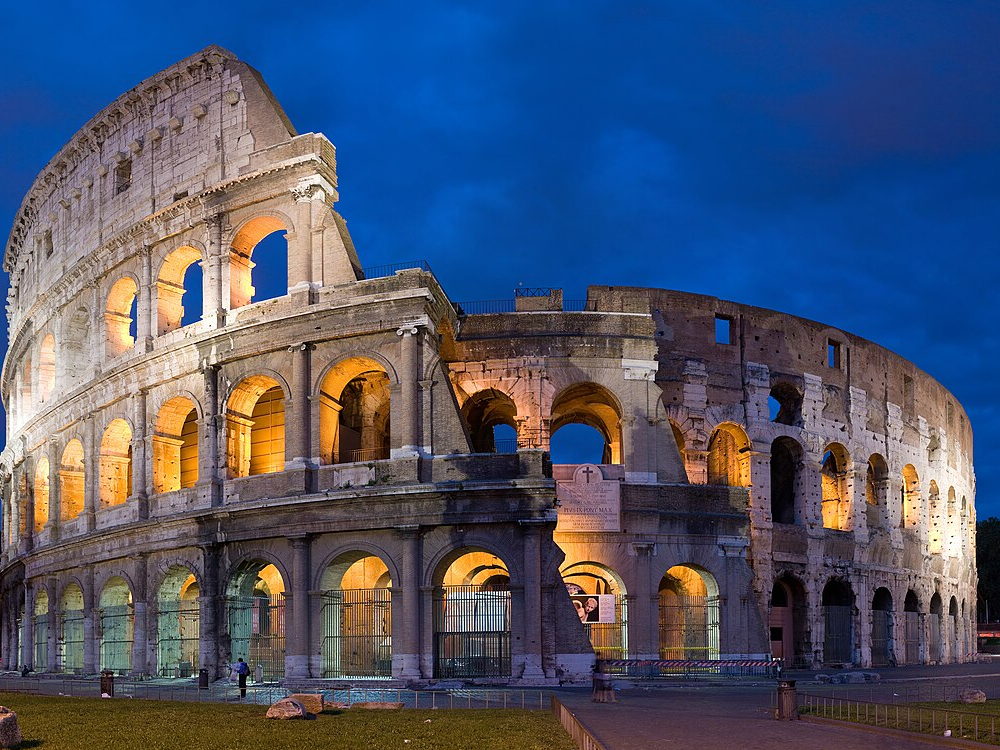
Q: What huge amphitheater is Rome's most famous ancient monument?
A: Colosseum.
Q: What is the Colosseum's ancient name?
A: Flavian Amphitheatre.
Q: Which imperial dynasty built it?
A: Flavian dynasty.
Q: Which emperor began construction?
A: Vespasian.
Q: Which emperor opened it?
A: Titus.
Q: What spectacles were staged there?
A: Gladiatorial contests, animal hunts, executions, and public shows.
Q: What was the hypogeum?
A: Underground passages and rooms beneath the arena floor.
Q: Were all gladiators enslaved people?
A: No. Some were enslaved, prisoners, condemned people, or volunteers.
Q: Did Roman emperors always decide gladiator deaths with a simple thumbs-down gesture exactly like movies?
A: The precise historical gestures and meanings are debated.
Q: What emperor is infamous for a fire in Rome in 64 CE?
A: Nero.
Q: Did Nero literally fiddle while Rome burned?
A: No. The violin did not exist in that form, and the story is later legend.
Q: What emperor built a vast palace called the Domus Aurea?
A: Nero.
Q: What emperor completed a major forum and column celebrating Dacian wars?
A: Trajan.
Q: What monument tells those campaigns in a spiral relief?
A: Trajan's Column.
Q: What emperor is associated with the Pantheon's surviving reconstruction?
A: Hadrian.
Q: What is remarkable about the Pantheon's dome?
A: It remains the world's largest unreinforced concrete dome.
Q: What circular opening sits at the dome's center?
A: Oculus.
Q: Does rain enter through the Pantheon's oculus?
A: Yes.
Q: How does the floor handle rainwater?
A: It is subtly sloped with drainage holes.
Q: What emperor built a famous wall in Britain?
A: Hadrian.
Q: What huge bath complex is named for Caracalla?
A: Baths of Caracalla.
Q: What were Roman baths besides places to wash?
A: Social, exercise, business, and leisure complexes.
Q: What carried fresh water into Rome?
A: Aqueducts.
Q: Did aqueducts require pumps for most of their route?
A: No. Gravity did most of the work.
Q: What did Romans build to carry sewage and drainage?
A: Systems including the Cloaca Maxima.
Q: What is the Cloaca Maxima?
A: One of Rome's ancient drainage and sewer systems.
Q: Why does imperial Rome remain visible today?
A: Stone, concrete, engineering, reuse of ancient buildings, archaeology, and later preservation kept major structures standing.
Vatican, Renaissance, Baroque & Famous Piazzas
Q: What independent state lies entirely within Rome?
A: Vatican City.
Q: What religious leader resides in Vatican City?
A: The Pope.
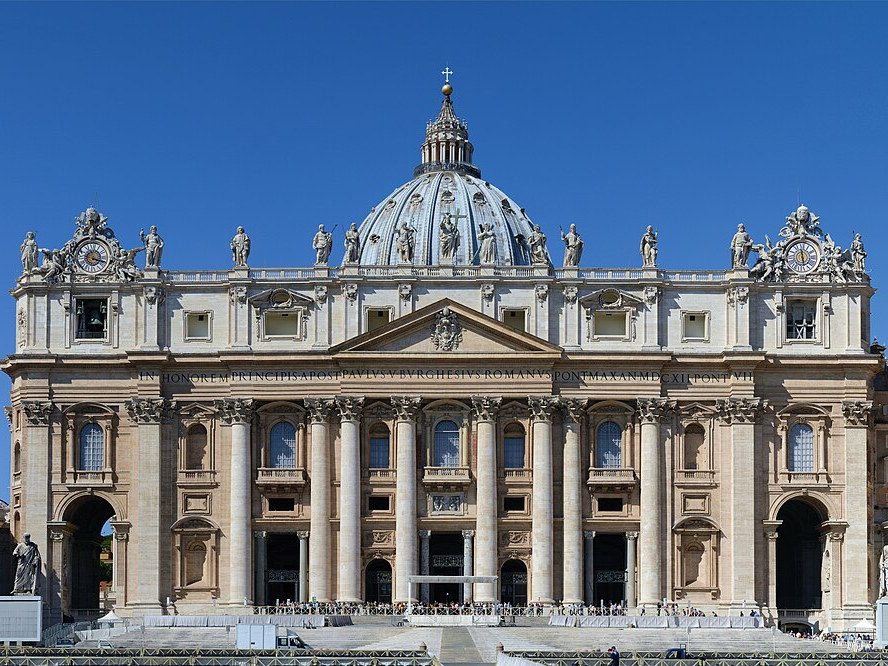
Q: What huge church dominates St Peter's Square?
A: St Peter's Basilica.
Q: Who designed the famous colonnades around St Peter's Square?
A: Gian Lorenzo Bernini.
Q: What chapel contains Michelangelo's famous ceiling?
A: Sistine Chapel.
Q: Who painted that ceiling?
A: Michelangelo.
Q: What later Michelangelo fresco covers the altar wall?
A: The Last Judgment.
Q: What Vatican sculpture by Michelangelo depicts Mary holding Jesus?
A: Pietà.
Q: Who painted The School of Athens?
A: Raphael.
Q: Where is The School of Athens?
A: Raphael Rooms in the Vatican.
Q: What major Roman artist and architect created dynamic Baroque fountains and sculpture?
A: Bernini.
Q: What rival Baroque architect designed San Carlo alle Quattro Fontane?
A: Francesco Borromini.
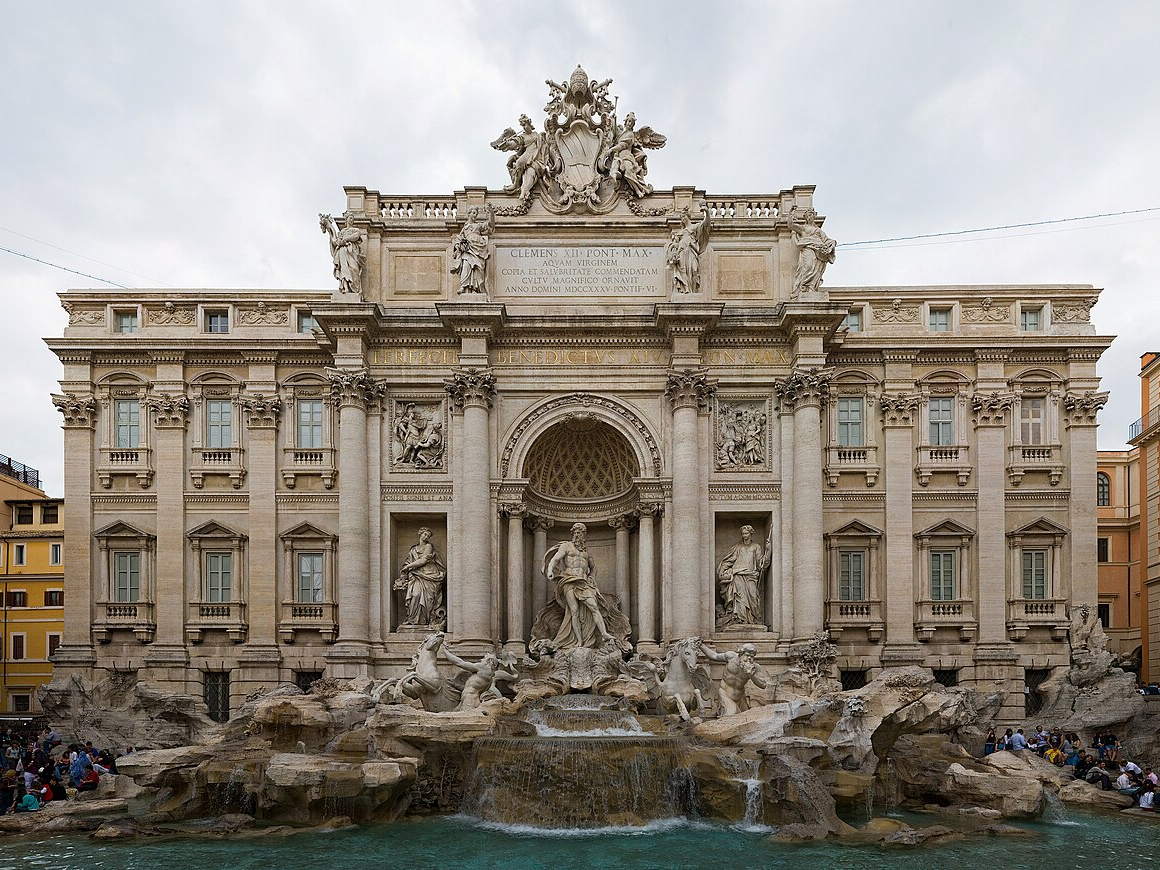
Q: What fountain is Rome's most famous Baroque fountain?
A: Trevi Fountain.
Q: What tradition involves tossing a coin into Trevi Fountain?
A: It is said to help ensure a return to Rome.
Q: What square contains Bernini's Fountain of the Four Rivers?
A: Piazza Navona.
Q: What ancient structure influenced Piazza Navona's long shape?
A: Stadium of Domitian.
Q: What square is at the bottom of the Spanish Steps?
A: Piazza di Spagna.
Q: What church sits above the Spanish Steps?
A: Trinità dei Monti.
Q: What small boat-shaped fountain sits below them?
A: Fontana della Barcaccia.
Q: What square contains the Pantheon?
A: Piazza della Rotonda.
Q: What enormous white monument honors Victor Emmanuel II?
A: Vittoriano or Altare della Patria.
Q: Who was Victor Emmanuel II?
A: First king of unified Italy.
Q: What hilltop square did Michelangelo redesign?
A: Piazza del Campidoglio.
Q: What museums occupy palaces there?
A: Capitoline Museums.
Q: What famous equestrian statue stands at the center in replica form?
A: Marcus Aurelius.
Q: Why did the original bronze survive when many ancient bronzes did not?
A: It was long misidentified as the Christian emperor Constantine.
Q: What castle near the Vatican began as Hadrian's mausoleum?
A: Castel Sant'Angelo.
Q: What fortified corridor links Vatican City with Castel Sant'Angelo?
A: Passetto di Borgo.
Q: What style dominates many of Rome's fountains and churches?
A: Baroque.
Q: Why is post-ancient Rome as important as imperial Rome?
A: Medieval Christianity, papal power, Renaissance art, Baroque architecture, and modern Italy continually remade the city.
Food, Neighborhoods, Football & Hard Rome Trivia
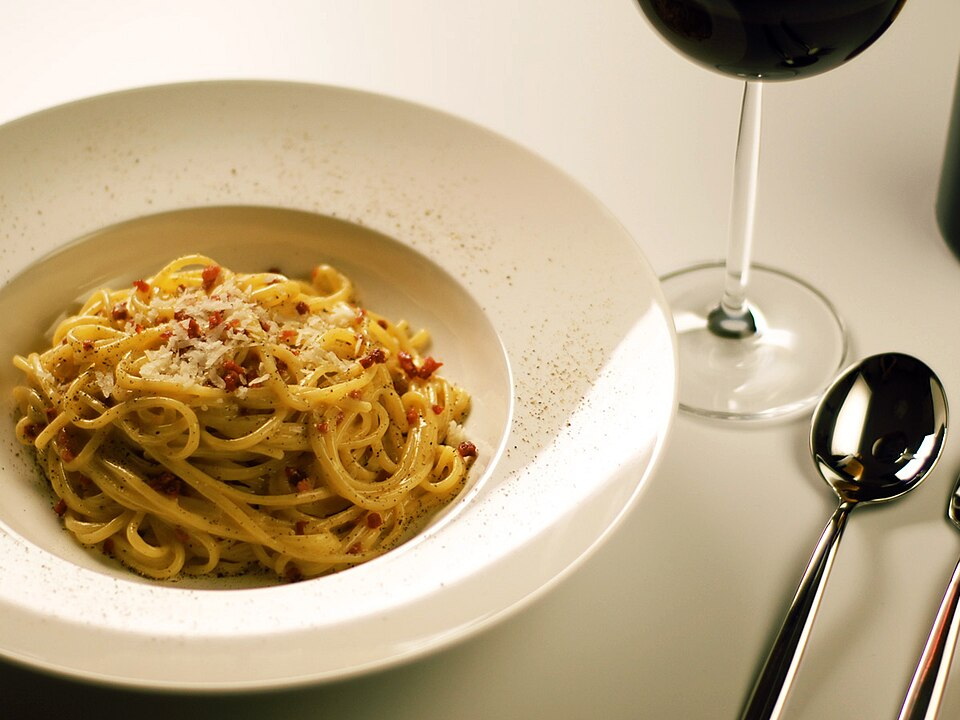
Q: What pasta dish uses egg, pecorino, guanciale, and black pepper?
A: Carbonara.
Q: What cured pork is traditional in carbonara?
A: Guanciale.
Q: What cheese is traditional?
A: Pecorino Romano.
Q: Does traditional carbonara require cream?
A: No.
Q: What pasta dish combines pecorino and black pepper?
A: Cacio e pepe.
Q: What pasta dish combines tomato, guanciale, and pecorino?
A: Amatriciana.
Q: What pasta dish uses guanciale and pecorino without tomato?
A: Gricia.
Q: What fried rice croquette is a Roman snack?
A: Supplì.
Q: What filling often runs through classic supplì?
A: Mozzarella.
Q: What neighborhood is famous for nightlife and medieval streets across the Tiber?
A: Trastevere.
Q: What does Trastevere mean?
A: Across the Tiber.
Q: What neighborhood contains the Colosseum?
A: Monti lies nearby and is one of central Rome's oldest districts.
Q: What large park contains Villa Borghese?
A: Villa Borghese gardens.
Q: What museum there holds works by Bernini and Caravaggio?
A: Galleria Borghese.
Q: What painter is famous for dramatic light and shadow and worked in Rome?
A: Caravaggio.
Q: What city-state has its own museums inside Rome?
A: Vatican City.
Q: What football club wears sky blue?
A: Lazio.
Q: What major Rome football club wears red and yellow?
A: AS Roma.
Q: What stadium do Roma and Lazio traditionally share?
A: Stadio Olimpico.
Q: What derby do they contest?
A: Derby della Capitale.
Q: What major tennis event is held at Foro Italico?
A: Italian Open.
Q: What does SPQR stand for?
A: Senatus Populusque Romanus, the Senate and People of Rome.
Q: Where can SPQR still be seen?
A: On municipal symbols, manhole covers, monuments, and public infrastructure.
Q: What nickname is Rome commonly given?
A: The Eternal City.
Q: What phrase means “when in Rome, do as the Romans do”?
A: A proverb advising people to follow local customs.
Q: Is the Vatican the same thing as the historic center of Rome?
A: No. Vatican City is sovereign, while much of central Rome is Italian territory.
Q: What UNESCO site encompasses Rome's historic center and related heritage?
A: Historic Centre of Rome and associated Vatican properties under the World Heritage listing.
Q: What did Italia.it note about Rome's historic center?
A: It contains tens of thousands of environmental and archaeological points of interest.
Q: What is the biggest mistake in Roman-history trivia?
A: Treating Julius Caesar as the first emperor instead of Augustus.
Q: Why is Rome especially deep trivia material?
A: Mythic kings, republic, empire, Christianity, Renaissance, Baroque art, modern Italy, food, football, and an independent country all occupy the same cityscape.
How Did You Score?
If the Cloaca Maxima, hypogeum, Augustus, Passetto di Borgo, gricia, Marcus Aurelius, SPQR, and the Caesar-versus-emperor distinction all came easily, your Rome trivia could survive a full day on the cobblestones.

Ellie Simons creates and edits Random Trivia. She researches trivia using primary and authoritative sources whenever possible and is currently reviewing the site's older trivia library for accuracy, clarity, and playability. Read more on the About page.
About this quiz
Site editor: Ellie Simons. Read our Trivia Methodology to learn how questions are researched and updated. Page last updated: . Report an error.