
Follow the sound of fado and the scent of warm custard tarts, because Portugal rewards curious travelers at every turn.
These Portugal trivia questions sail through geography, explorers, tiled cities, island peaks, literature, food, festivals, and football history.
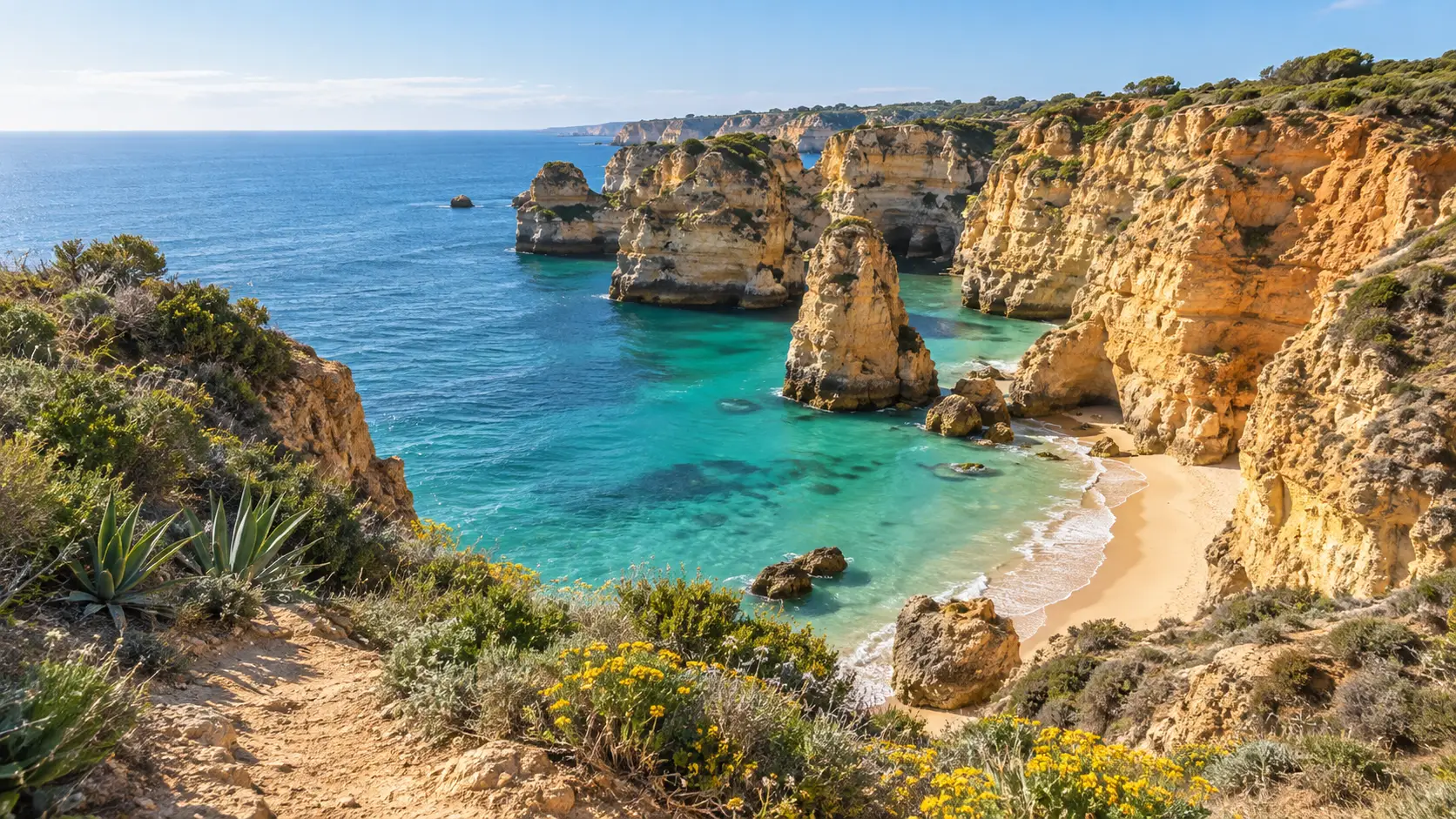
Portugal on the Map
Q: What is the capital of Portugal?
A: Lisbon.
Q: On which peninsula is mainland Portugal located?
A: The Iberian Peninsula.
Q: Which country shares Portugal's only land border on the mainland?
A: Spain.
Q: Which ocean borders Portugal?
A: The Atlantic Ocean.
Q: What is the westernmost point of mainland continental Europe?
A: Cabo da Roca.
Q: Which river reaches the Atlantic at Lisbon?
A: The Tagus.
Q: Which river flows through Porto?
A: The Douro.
Q: Which river forms part of Portugal's border with Spain?
A: The Guadiana.
Q: What is the highest mountain in mainland Portugal?
A: Torre in the Serra da Estrela.
Q: What is the highest point in all of Portugal?
A: Mount Pico.
Q: On which island is Mount Pico?
A: Pico Island.
Q: What are Portugal's two autonomous Atlantic archipelagos?
A: The Azores and Madeira.
Q: How many main island groups make up the Azores?
A: Three groups containing nine major islands.
Q: What is the largest island in the Madeira archipelago?
A: Madeira Island.
Q: What is the official language of Portugal?
A: Portuguese.
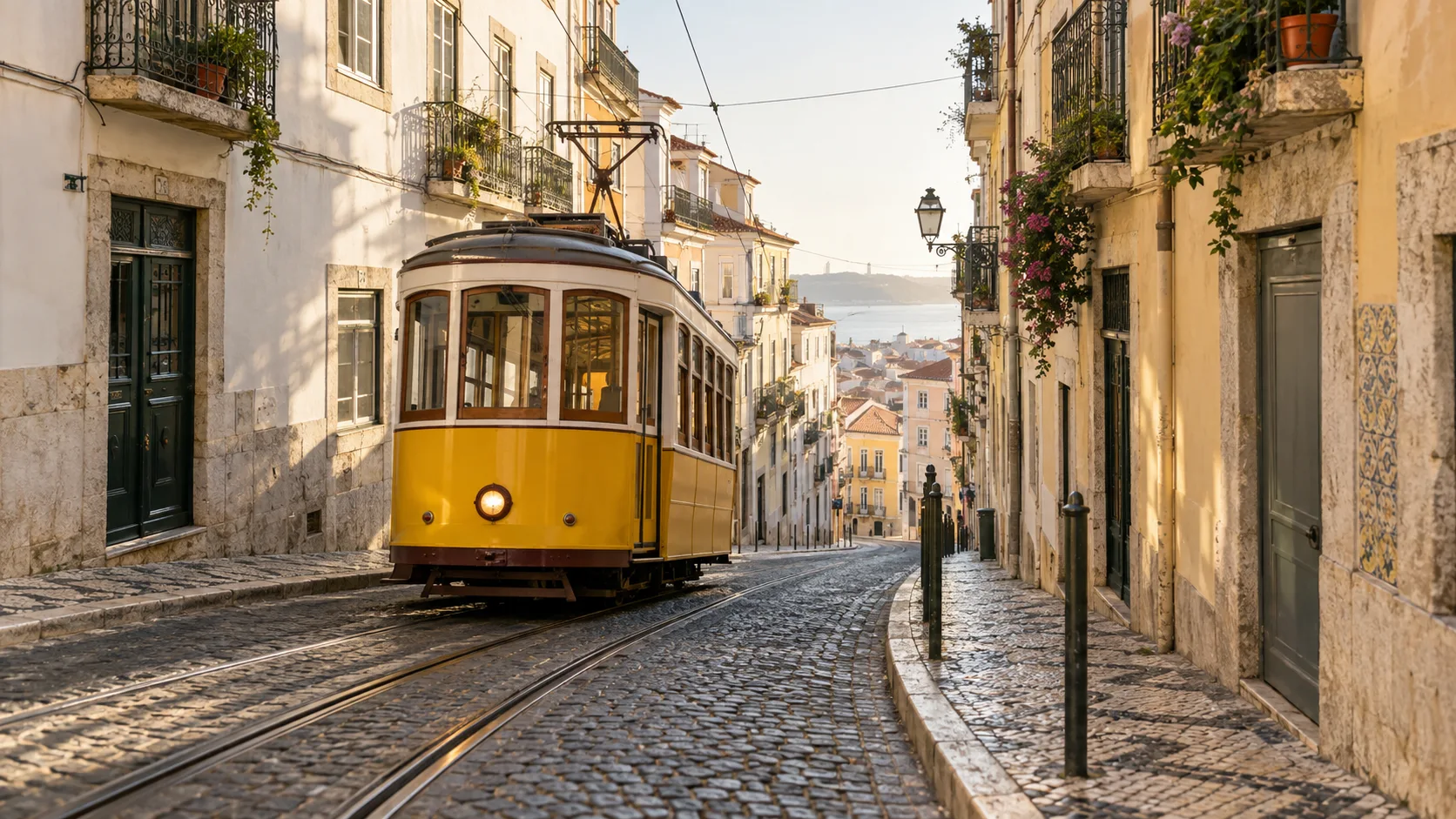
Lisbon's Hills and Landmarks
Q: What nickname refers to Lisbon's traditional topography?
A: The City of Seven Hills.
Q: Which historic Lisbon district is known for steep lanes and fado houses?
A: Alfama.
Q: What riverside fortress in Belém once guarded Lisbon's harbor?
A: Belém Tower.
Q: Which grand monastery in Belém is a masterpiece of Manueline architecture?
A: Jerónimos Monastery.
Q: Which famous explorer is buried at Jerónimos Monastery?
A: Vasco da Gama.
Q: What monument in Belém honors Portuguese explorers?
A: The Monument to the Discoveries.
Q: What large waterfront square was rebuilt after the 1755 earthquake?
A: Praça do Comércio.
Q: What castle overlooks Lisbon from one of its hills?
A: São Jorge Castle.
Q: Which yellow tram route is especially famous with Lisbon visitors?
A: Tram 28.
Q: What neo-Gothic lift connects lower Lisbon with the Carmo area?
A: The Santa Justa Lift.
Q: Which suspension bridge crosses the Tagus and bears the date of a revolution?
A: The 25 de Abril Bridge.
Q: What vast modern bridge across the Tagus is named for an explorer?
A: Vasco da Gama Bridge.
Q: What devastating disaster struck Lisbon on November 1, 1755?
A: A major earthquake followed by fires and a tsunami.
Q: Which prime minister directed Lisbon's reconstruction after the earthquake?
A: The Marquis of Pombal.
Q: What Lisbon pastry shop has sold pastéis de Belém since the 19th century?
A: Pastéis de Belém.
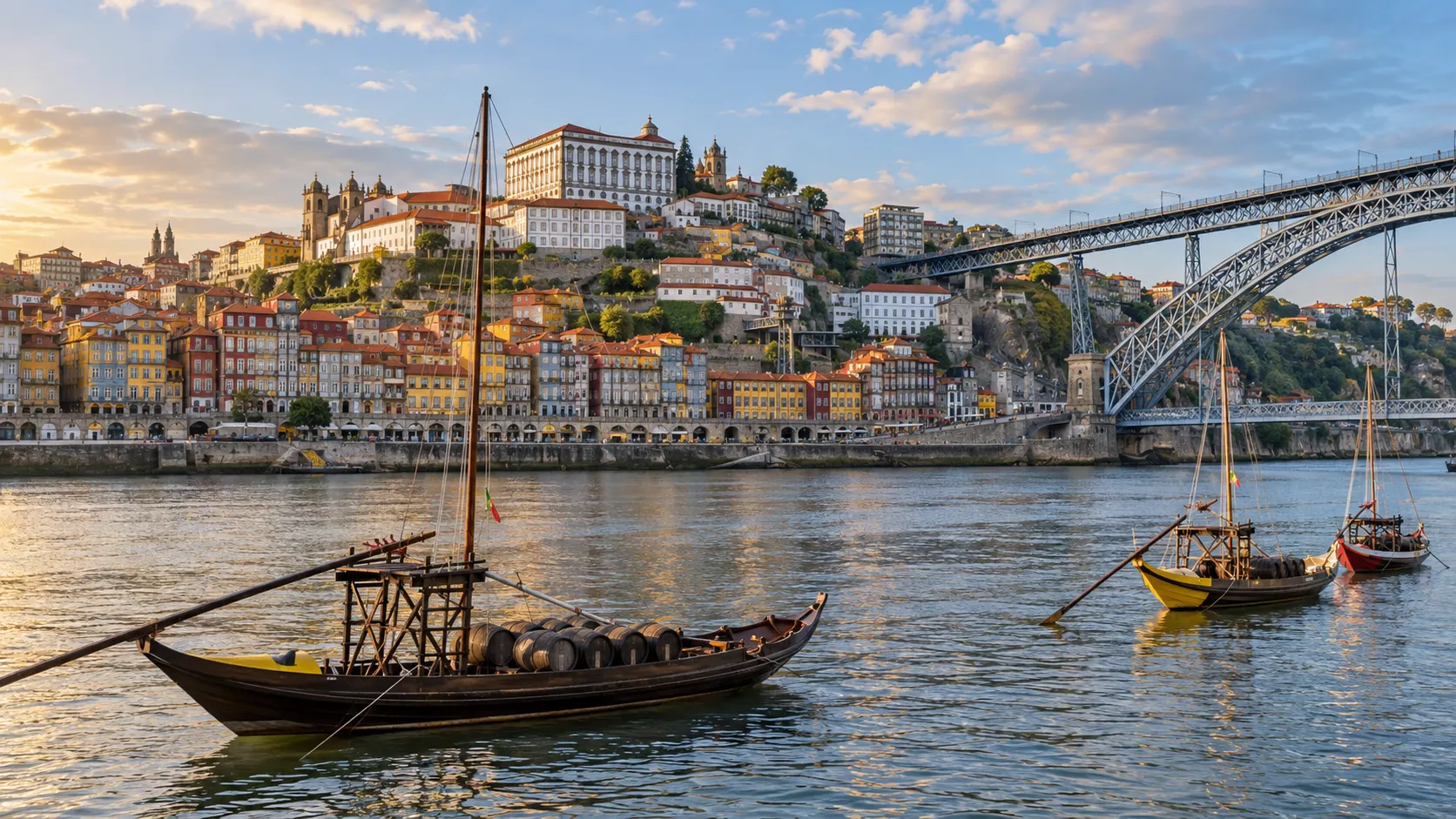
Porto and Northern Portugal
Q: Which city gave Portugal its name?
A: Porto, from the ancient name Portus Cale.
Q: What colorful historic district lines Porto's Douro waterfront?
A: Ribeira.
Q: What double-deck metal bridge links Porto with Vila Nova de Gaia?
A: Dom Luís I Bridge.
Q: Who designed the Dom Luís I Bridge?
A: Théophile Seyrig.
Q: In which city across the river are many port wine lodges located?
A: Vila Nova de Gaia.
Q: What fortified wine takes its English name from Porto?
A: Port.
Q: Which valley upstream from Porto produces grapes for port wine?
A: The Douro Valley.
Q: What Porto railway station is famous for blue-and-white tile panels?
A: São Bento Station.
Q: What word describes Portugal's decorative ceramic tiles?
A: Azulejos.
Q: Which ornate Porto bookstore is famous for its grand staircase?
A: Livraria Lello.
Q: What tall Baroque landmark offers sweeping views over Porto?
A: Clérigos Tower.
Q: Which city is considered the birthplace of Portugal and has a famous medieval castle?
A: Guimarães.
Q: Which northern city is known for the Bom Jesus do Monte sanctuary?
A: Braga.
Q: What green, lightly effervescent wine comes from northwestern Portugal?
A: Vinho Verde.
Q: What June festival fills Porto with hammers, grilled sardines, and fireworks?
A: São João Festival.
Founding a Kingdom
Q: What ancient people resisted Roman rule in western Iberia?
A: The Lusitanians.
Q: Which Lusitanian leader became famous for fighting Rome?
A: Viriathus.
Q: What Roman province covered much of present-day Portugal?
A: Lusitania.
Q: Which North African Muslim forces entered Iberia in 711?
A: The Moors.
Q: Who is regarded as Portugal's first king?
A: Afonso Henriques, or Afonso I.
Q: What 1143 agreement recognized Afonso Henriques as king?
A: The Treaty of Zamora.
Q: Which city did Afonso I capture from Moorish rule in 1147?
A: Lisbon.
Q: What 1297 treaty largely fixed the border between Portugal and Castile?
A: The Treaty of Alcañices.
Q: Which king founded the institution that became the University of Coimbra in 1290?
A: King Dinis.
Q: What 1385 battle secured the rule of João I?
A: The Battle of Aljubarrota.
Q: Which dynasty began with João I?
A: The House of Aviz.
Q: What monastery commemorates the victory at Aljubarrota?
A: Batalha Monastery.
Q: Which Spanish king took the Portuguese throne in 1580?
A: Philip II of Spain.
Q: What name is given to the period when Portugal and Spain shared monarchs?
A: The Iberian Union.
Q: In what year did Portugal restore its independence from Spanish rule?
A: 1640.
The Age of Exploration
Q: Which prince sponsored early Portuguese Atlantic exploration?
A: Prince Henry the Navigator.
Q: Which Portuguese explorer rounded the Cape of Good Hope in 1488?
A: Bartolomeu Dias.
Q: Who reached India by sea from Portugal in 1498?
A: Vasco da Gama.
Q: At which Indian city did Vasco da Gama arrive?
A: Calicut, now Kozhikode.
Q: Which Portuguese navigator reached Brazil in 1500?
A: Pedro Álvares Cabral.
Q: Which Portuguese explorer led the expedition that achieved the first circumnavigation?
A: Ferdinand Magellan.
Q: Who completed Magellan's expedition after Magellan died?
A: Juan Sebastián Elcano.
Q: What 1494 treaty divided newly encountered lands between Portugal and Spain?
A: The Treaty of Tordesillas.
Q: What small, maneuverable sailing ship became associated with Portuguese exploration?
A: The caravel.
Q: Which navigational instrument helped sailors measure altitude using the stars?
A: The mariner's astrolabe.
Q: Which Indian territory remained under Portuguese administration until 1961?
A: Goa.
Q: Which Chinese coastal territory was administered by Portugal until 1999?
A: Macau.
Q: What architectural style combines maritime imagery with elaborate late Gothic design?
A: Manueline style.
Q: Which king gave the Manueline style its name?
A: Manuel I.
Q: Which epic poem celebrates Vasco da Gama's voyage?
A: The Lusiads.
Revolution, Republic, and Democracy
Q: To which city did the Portuguese royal court flee during the Napoleonic invasions?
A: Rio de Janeiro.
Q: What 1820 uprising began Portugal's Liberal Revolution?
A: The Porto Revolution.
Q: In what year was the Portuguese monarchy overthrown?
A: 1910.
Q: What political system replaced the monarchy in 1910?
A: The First Portuguese Republic.
Q: What authoritarian regime ruled Portugal for much of the 20th century?
A: The Estado Novo.
Q: Which longtime leader was most closely associated with the Estado Novo?
A: António de Oliveira Salazar.
Q: What peaceful 1974 uprising ended the dictatorship?
A: The Carnation Revolution.
Q: On what date is the Carnation Revolution commemorated?
A: April 25.
Q: Why did carnations become the revolution's symbol?
A: Civilians placed them in soldiers' rifle barrels.
Q: What song served as a secret signal for the revolution to proceed?
A: “Grândola, Vila Morena.”
Q: Who wrote “Grândola, Vila Morena”?
A: José Afonso.
Q: In what year did Portugal join the European Economic Community?
A: 1986.
Q: What European currency did Portugal adopt?
A: The euro.
Q: Which African countries were major Portuguese colonies until 1975?
A: Angola and Mozambique.
Q: What parliamentary form does modern Portugal use?
A: A semi-presidential republic.
Fado, Books, and Portuguese Traditions
Q: What melancholy musical tradition is strongly associated with Portugal?
A: Fado.
Q: Which singer became known internationally as the Queen of Fado?
A: Amália Rodrigues.
Q: What pear-shaped string instrument often accompanies fado?
A: The Portuguese guitar.
Q: What Portuguese word describes a deep, nostalgic longing?
A: Saudade.
Q: Who wrote The Lusiads?
A: Luís de Camões.
Q: Which poet wrote under many alternate literary identities called heteronyms?
A: Fernando Pessoa.
Q: Which Portuguese novelist won the Nobel Prize in Literature in 1998?
A: José Saramago.
Q: What is the title of Saramago's novel about an epidemic of sightlessness?
A: Blindness.
Q: What patterned stone paving decorates many Portuguese plazas and sidewalks?
A: Calçada portuguesa.
Q: What colorful folk symbol comes from the legend of a miraculously crowing rooster?
A: The Rooster of Barcelos.
Q: Which saint is celebrated in Lisbon with weddings and grilled sardines?
A: Saint Anthony.
Q: What student music tradition is associated with Coimbra's university?
A: Coimbra fado.
Q: What material from oak bark is Portugal famous for producing?
A: Cork.
Q: What is Portugal's traditional decorative tilework called?
A: Azulejo.
Q: Which UNESCO-listed town is home to a colorful hilltop palace built for Ferdinand II?
A: Sintra.
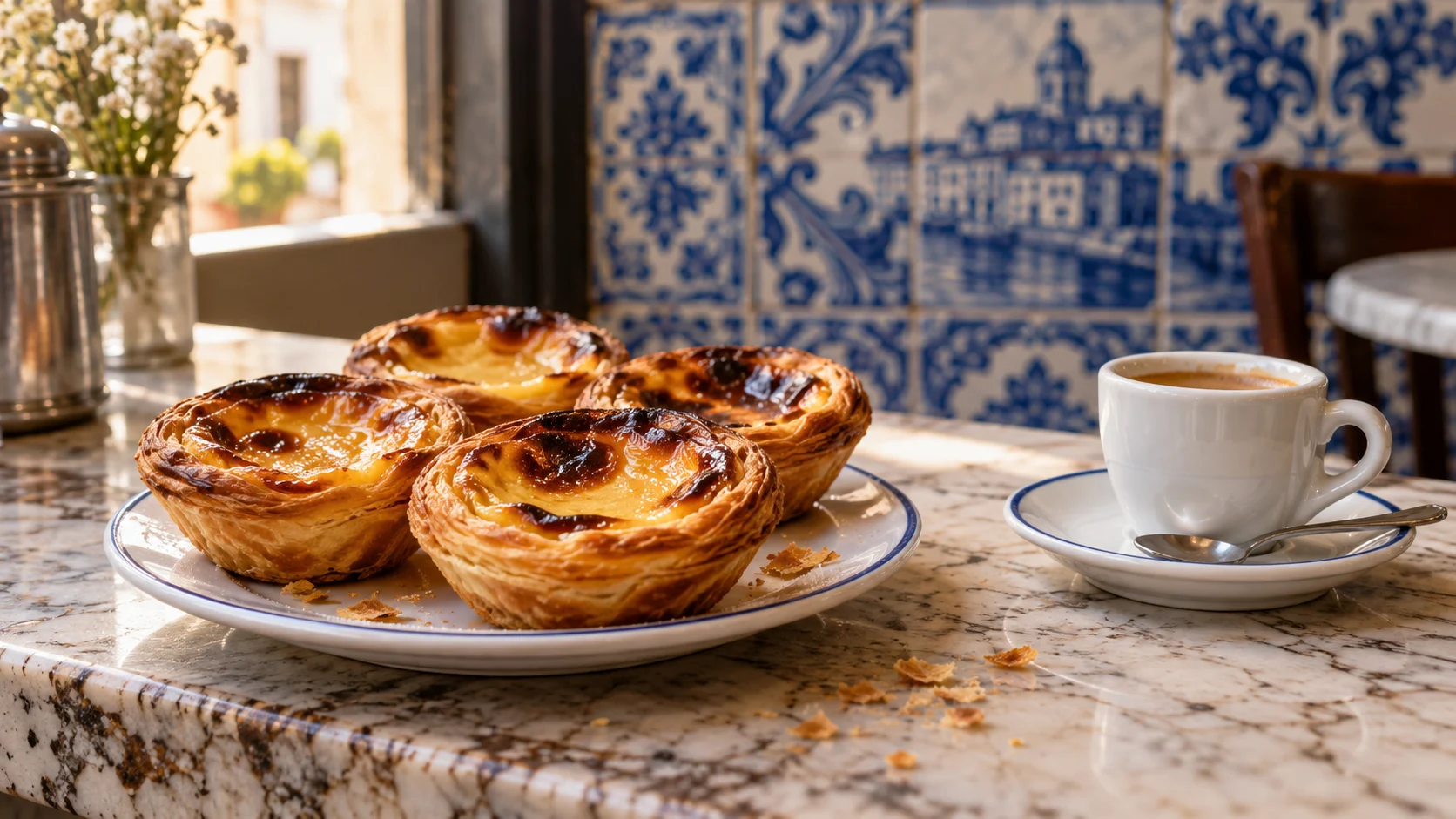
Portuguese Food, Football, and Fun
Q: What salted fish is famously prepared in countless Portuguese recipes?
A: Bacalhau.
Q: What custard tart is one of Portugal's best-known sweets?
A: Pastel de nata.
Q: What green soup combines potatoes, kale, and often chouriço?
A: Caldo verde.
Q: What hearty Porto sandwich is covered with melted cheese and a rich sauce?
A: Francesinha.
Q: What simple pork sandwich is known as a bifana?
A: Marinated pork served in a bread roll.
Q: What hinged copper vessel gives an Algarve seafood dish its name?
A: A cataplana.
Q: What cherry liqueur is popular in Lisbon and Óbidos?
A: Ginjinha.
Q: What fortified wine comes from Portugal's namesake Atlantic island?
A: Madeira wine.
Q: What nickname is given to Portugal's men's national soccer team?
A: Seleção das Quinas.
Q: Which three clubs are traditionally called Portugal's Big Three?
A: Benfica, Porto, and Sporting CP.
Q: In what year did Portugal win its first major men's soccer championship?
A: 2016.
Q: What tournament did Portugal win in 2016?
A: The UEFA European Championship.
Q: Which Mozambican-born Portuguese star was nicknamed the Black Panther?
A: Eusébio.
Q: Which coastal town is famous for enormous surfable waves?
A: Nazaré.
Q: What international soccer tournament did Portugal win in 2019?
A: The UEFA Nations League.
Obrigado for Playing
If you sailed through every round, your Portugal knowledge is ready for the open Atlantic. Continue the trip with our Greece trivia or meet more remarkable figures in famous people trivia.

Ellie Ewert is the founder and author of RandomTrivia.co, blending her passion for research with years of experience in content creation to deliver accurate, engaging, and well-sourced trivia. Dedicated to providing readers with trustworthy and entertaining facts, she applies meticulous fact-checking and SEO expertise to ensure every article meets the highest standards. Read more about our high standards in our Editorial Guidelines.