
The Persian empires built roads, palaces, and rivalries on a scale that could make any ancient map feel crowded.
These Persian Empire trivia questions travel from Cyrus and Persepolis through Parthian cavalry, Sasanian courts, world-changing battles, faith, art, and enduring traditions.
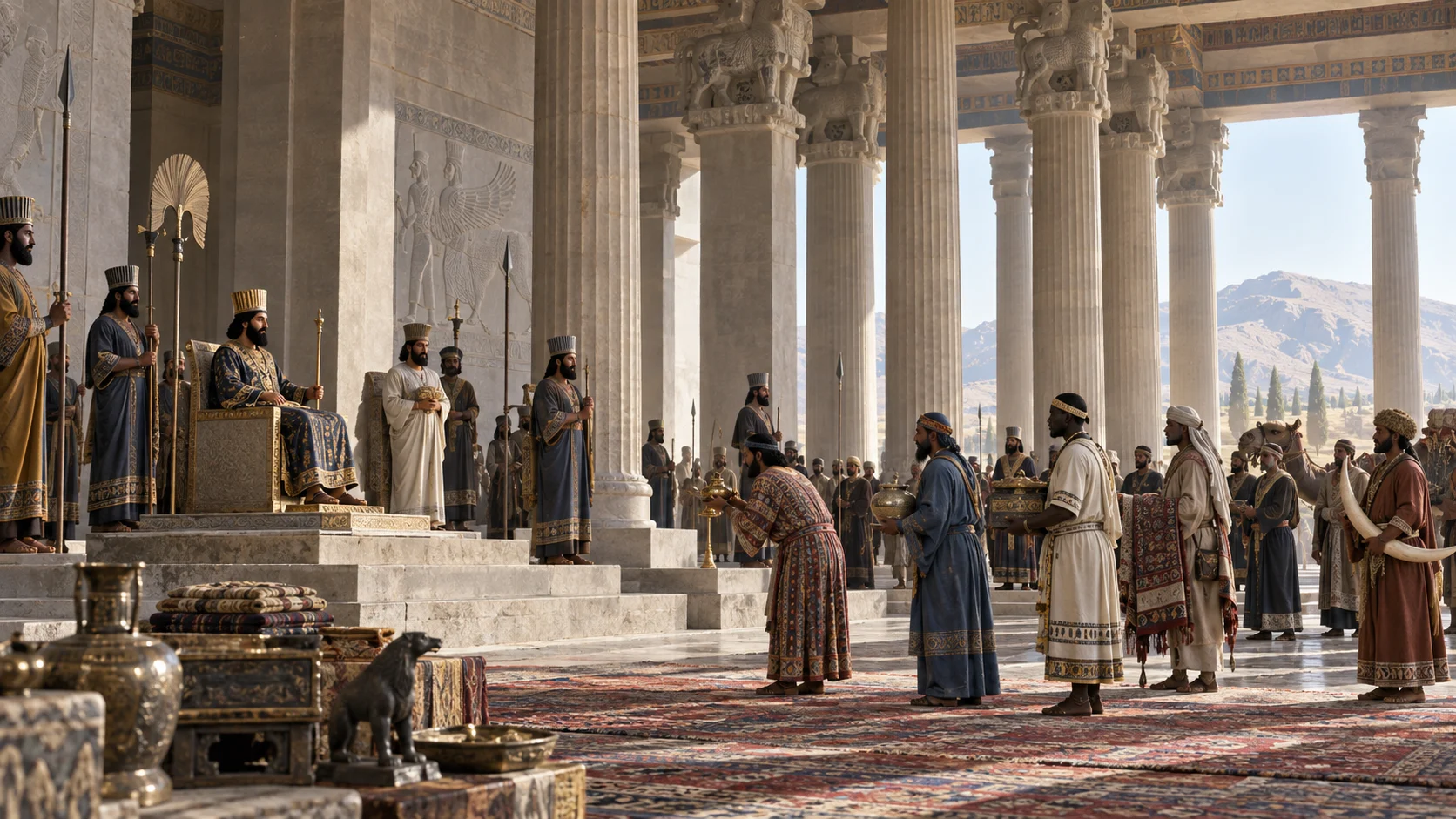
Rise of the Achaemenids
Q: Who founded the Achaemenid Empire?
A: Cyrus II, or Cyrus the Great.
Q: Around what year did Cyrus defeat the Median king Astyages?
A: 550 BCE.
Q: Which kingdom did Cyrus conquer after Media?
A: Lydia.
Q: Who was the wealthy Lydian king defeated by Cyrus?
A: Croesus.
Q: Which city did Cyrus capture in 539 BCE?
A: Babylon.
Q: What ancient text describes Cyrus entering Babylon and restoring cults?
A: The Cyrus Cylinder.
Q: Which son of Cyrus conquered Egypt?
A: Cambyses II.
Q: Which pharaoh was defeated by Cambyses at Pelusium?
A: Psamtik III.
Q: Who seized the throne after Cambyses and ruled as Darius I?
A: Darius the Great.
Q: What monument records Darius's version of his rise in three languages?
A: The Behistun Inscription.
Q: Which rebel did Darius say had impersonated Bardiya?
A: Gaumata.
Q: What royal house gave the Achaemenid dynasty its name?
A: The house of Achaemenes.
Q: What title did Persian rulers commonly use to express supremacy?
A: King of Kings.
Q: What region in southwestern Iran was the dynasty's homeland?
A: Persis, or Fars.
Q: Which ancient capital of Elam became an Achaemenid administrative center?
A: Susa.
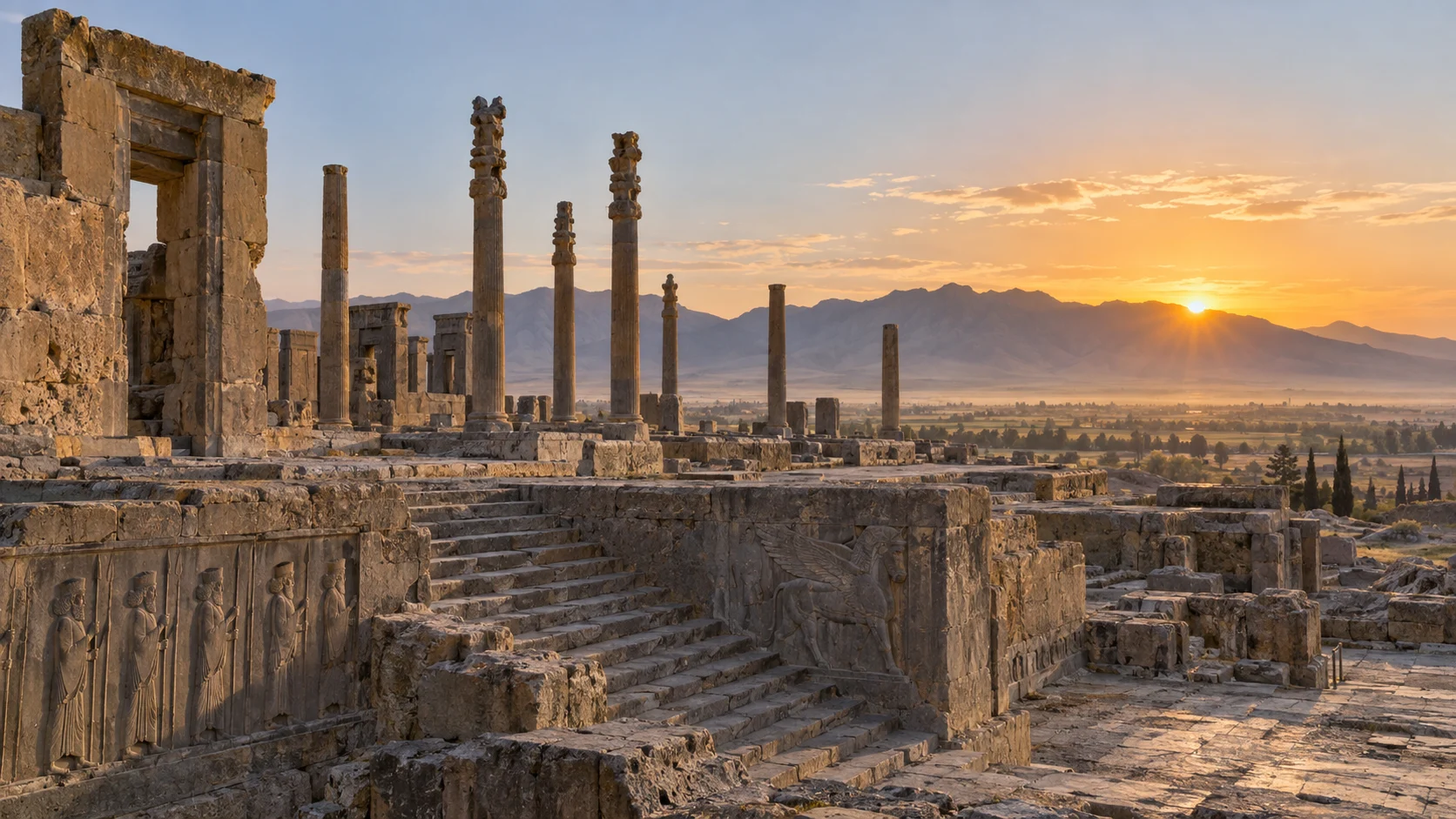
Kings, Courts, and Capitals
Q: Which ceremonial capital did Darius I begin building?
A: Persepolis.
Q: Which ruler completed major parts of Persepolis after Darius?
A: Xerxes I.
Q: What grand audience hall at Persepolis had 72 columns?
A: The Apadana.
Q: What relief subject lines the Apadana stairways?
A: Delegations bringing tribute.
Q: Which city served as a royal residence and treasury before Persepolis?
A: Pasargadae.
Q: Whose tomb stands at Pasargadae?
A: Cyrus the Great's.
Q: Which Mesopotamian city was a winter residence of Achaemenid kings?
A: Babylon.
Q: Which Median city served as a royal summer residence?
A: Ecbatana.
Q: What official language was widely used for Achaemenid administration?
A: Imperial Aramaic.
Q: What script appears in royal Old Persian inscriptions?
A: Old Persian cuneiform.
Q: What elite infantry unit did Greek writers call the Immortals?
A: A 10,000-man royal guard.
Q: Who commanded the king's household and court?
A: The hazarapati, or commander of a thousand.
Q: What precious metal decorated many palace surfaces at Persepolis?
A: Gold.
Q: What winged symbol is often associated with Achaemenid royal imagery?
A: The faravahar-like winged disk.
Q: Which Greek physician served at the court of Artaxerxes II?
A: Ctesias.
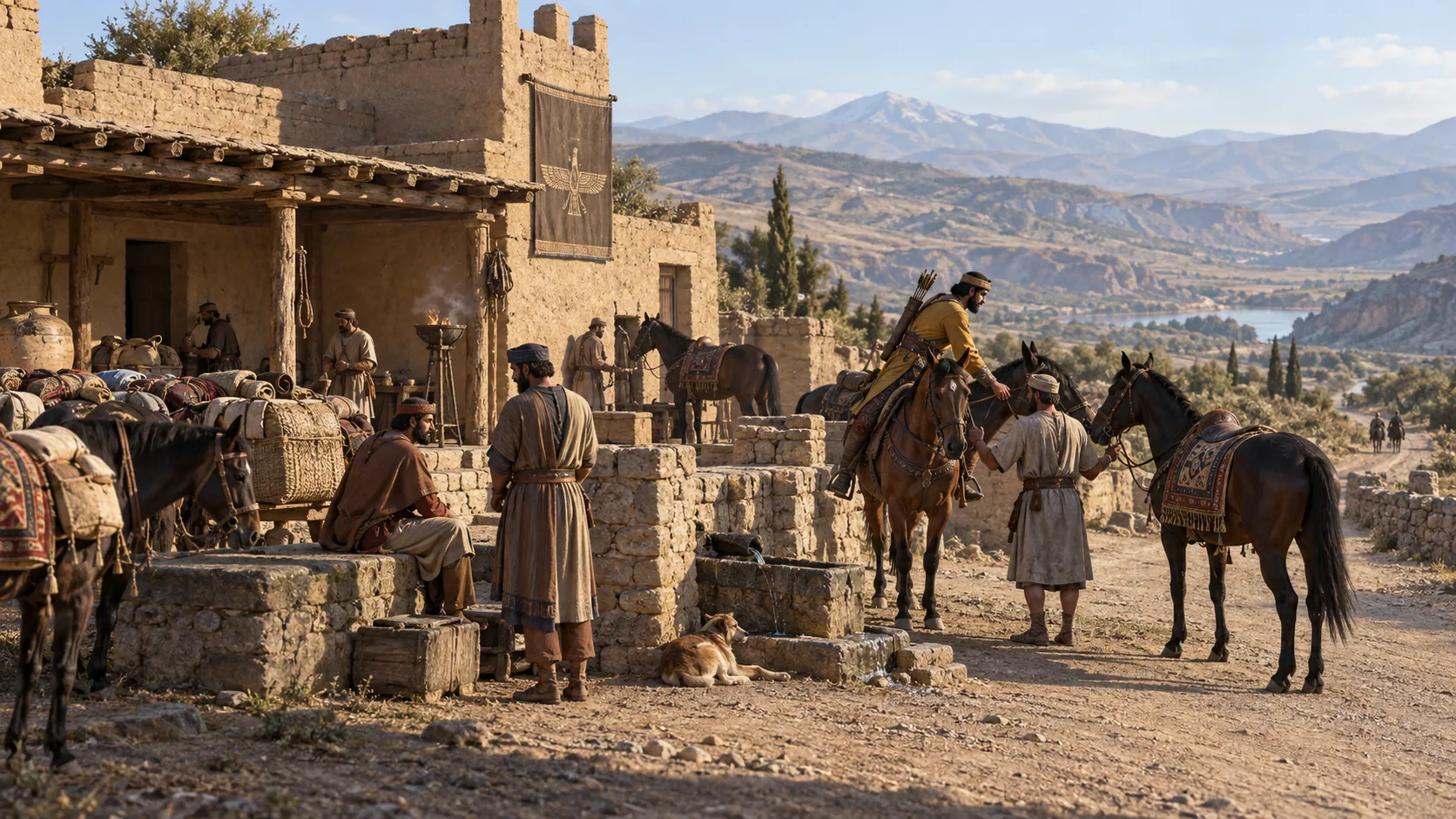
Running a Vast Empire
Q: What were Achaemenid provinces called?
A: Satrapies.
Q: What was a provincial governor called?
A: A satrap.
Q: Which king reorganized the empire into tax-paying satrapies?
A: Darius I.
Q: What road linked Susa with Sardis?
A: The Royal Road.
Q: Which Greek historian described the Royal Road's relay system?
A: Herodotus.
Q: What royal inspectors were nicknamed the King's Eyes and Ears?
A: Traveling imperial officials.
Q: What gold coin was associated with Achaemenid kings?
A: The daric.
Q: What silver coin complemented the daric?
A: The siglos.
Q: Which standard helped unify imperial taxation?
A: Standardized weights and coinage.
Q: What underground water channels carried water in arid regions?
A: Qanats.
Q: What policy often let conquered peoples retain local customs and religions?
A: Pragmatic local autonomy.
Q: Which sea did Darius connect to the Nile with a canal?
A: The Red Sea.
Q: What language did Egyptian administrators continue using under Persian rule?
A: Egyptian.
Q: Which Phoenician cities supplied ships to Persian fleets?
A: Cities including Sidon and Tyre.
Q: What institution stored tribute at Persepolis?
A: The royal treasury.
Persia and the Greek World
Q: Which Persian king faced the Ionian Revolt?
A: Darius I.
Q: What battle ended Darius's 490 BCE invasion of mainland Greece?
A: Marathon.
Q: Who led Persia's invasion of Greece in 480 BCE?
A: Xerxes I.
Q: At what narrow pass did Leonidas resist Xerxes?
A: Thermopylae.
Q: Which Greek city did Persian forces occupy and burn?
A: Athens.
Q: What naval battle checked Xerxes's fleet?
A: Salamis.
Q: What 479 BCE battle defeated the remaining Persian army in Greece?
A: Plataea.
Q: Which naval battle the same year defeated Persian forces in Ionia?
A: Mycale.
Q: What Greek alliance was created under Athenian leadership after the invasions?
A: The Delian League.
Q: Which Persian prince hired Greek mercenaries to challenge Artaxerxes II?
A: Cyrus the Younger.
Q: What work tells of the Ten Thousand's retreat after Cyrus died?
A: Xenophon's Anabasis.
Q: At what battle was Cyrus the Younger killed?
A: Cunaxa.
Q: Which peace traditionally dated to 449 BCE may have ended major Greco-Persian fighting?
A: The Peace of Callias.
Q: What 387/386 BCE settlement imposed by Artaxerxes II was called the King's Peace?
A: The Peace of Antalcidas.
Q: Which Greek city-state received Persian support against Athens late in the Peloponnesian War?
A: Sparta.
Alexander and the Hellenistic Interlude
Q: Which Macedonian king invaded the Achaemenid Empire in 334 BCE?
A: Alexander the Great.
Q: Who was the final Achaemenid king?
A: Darius III.
Q: What was Alexander's first major victory over Persian forces in Asia Minor?
A: The Battle of the Granicus.
Q: At which 333 BCE battle did Darius III flee Alexander?
A: Issus.
Q: What 331 BCE battle broke Achaemenid power decisively?
A: Gaugamela.
Q: Which Phoenician island city resisted Alexander for seven months?
A: Tyre.
Q: What happened to Persepolis after Alexander captured it?
A: Its palace complex was burned.
Q: Who killed Darius III while fleeing east?
A: Bessus and fellow conspirators.
Q: Which successor dynasty ruled much of Iran after Alexander?
A: The Seleucid dynasty.
Q: Who founded the Seleucid Empire?
A: Seleucus I Nicator.
Q: What culture spread through Seleucid cities?
A: Hellenistic Greek culture.
Q: Which Central Asian satrapy became an independent Greek kingdom?
A: Bactria.
Q: What Iranian-speaking people rose southeast of the Caspian Sea?
A: The Parthians.
Q: Who founded the Arsacid dynasty?
A: Arsaces I.
Q: Around what year did Arsaces seize Parthia?
A: 247 BCE.
The Parthian Empire
Q: What dynasty ruled the Parthian Empire?
A: The Arsacid dynasty.
Q: Which king greatly expanded Parthian territory in the second century BCE?
A: Mithridates I.
Q: What city on the Tigris became a major Parthian capital?
A: Ctesiphon.
Q: What older city stood across the Tigris from Ctesiphon?
A: Seleucia.
Q: What cavalry archers' maneuver gave us the phrase Parthian shot?
A: Firing backward while retreating.
Q: What heavily armored cavalry formed Parthia's striking force?
A: Cataphracts.
Q: Which Roman commander invaded Parthia and died at Carrhae?
A: Marcus Licinius Crassus.
Q: In what year was the Battle of Carrhae?
A: 53 BCE.
Q: Which Parthian commander defeated Crassus?
A: Surena.
Q: Which Roman emperor recovered standards lost by Crassus through diplomacy?
A: Augustus.
Q: Which Roman emperor captured Ctesiphon in 116 CE?
A: Trajan.
Q: What trade network enriched Parthia between Rome and China?
A: The Silk Road.
Q: How was Arsacid rule less centralized than Achaemenid rule?
A: Power was shared with noble families and client kings.
Q: Which Armenian king was installed by Parthia, intensifying rivalry with Rome?
A: Tiridates I.
Q: Who overthrew the last Arsacid king in 224 CE?
A: Ardashir I.
The Sasanian Revival
Q: Who founded the Sasanian Empire?
A: Ardashir I.
Q: Which Arsacid king did Ardashir defeat?
A: Artabanus IV.
Q: Which Sasanian king captured Roman emperor Valerian?
A: Shapur I.
Q: At what battle was Valerian captured in 260 CE?
A: Edessa.
Q: Which rock relief site shows Shapur triumphing over Roman emperors?
A: Naqsh-e Rostam.
Q: What was the principal Sasanian capital?
A: Ctesiphon.
Q: Which king is remembered as Anushirvan, meaning immortal soul?
A: Khosrow I.
Q: What academy flourished at Gundeshapur?
A: A center of medicine and learning.
Q: Which Byzantine emperor fought Khosrow I and concluded the Eternal Peace?
A: Justinian I.
Q: Which Sasanian king captured Jerusalem in 614?
A: Khosrow II.
Q: Which Byzantine emperor reversed Khosrow II's conquests?
A: Heraclius.
Q: Who was the last Sasanian king?
A: Yazdegerd III.
Q: What 636 battle opened much of Iraq to Arab Muslim armies?
A: Al-Qadisiyyah.
Q: What 642 battle was called the Victory of Victories by Arab sources?
A: Nahavand.
Q: In what year did Yazdegerd III die, conventionally ending the empire?
A: 651 CE.
Faith, Art, and Lasting Legacies
Q: Which religion was closely associated with Sasanian kingship?
A: Zoroastrianism.
Q: Who is the supreme god in Zoroastrianism?
A: Ahura Mazda.
Q: What sacred Zoroastrian texts are called the Avesta?
A: The religion's collection of scriptures.
Q: What sacred element was kept burning in fire temples?
A: Fire.
Q: Which prophet founded Manichaeism under the Sasanians?
A: Mani.
Q: Which Sasanian king initially protected Mani?
A: Shapur I.
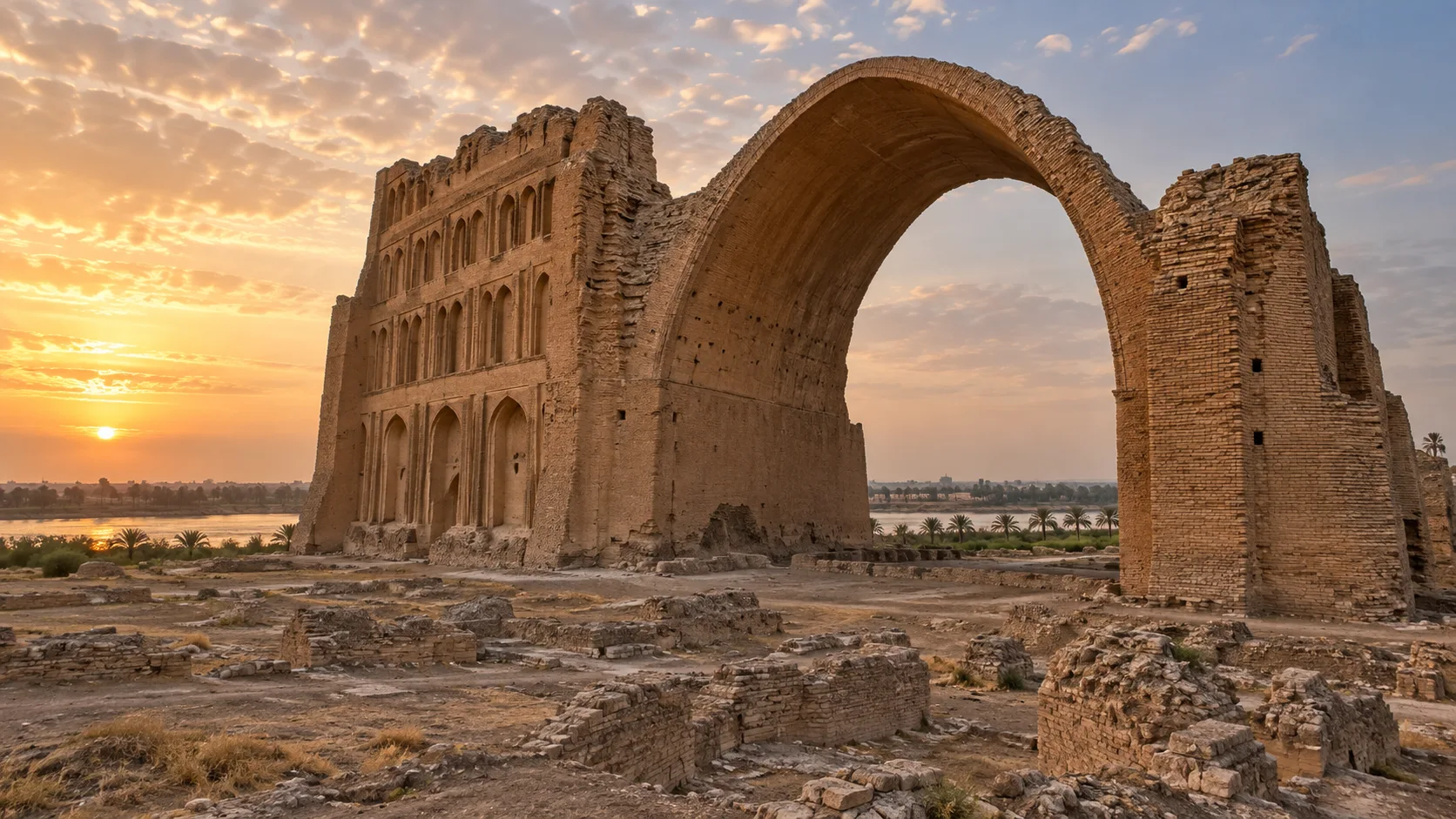
Q: What monumental vaulted hall survives at Ctesiphon?
A: The Taq Kasra.
Q: What type of silver vessel is a hallmark of Sasanian luxury art?
A: Repoussé silver plates and bowls.
Q: What royal activity appears often on Sasanian silver plates?
A: Hunting.
Q: Which textile motifs traveled from Persia into Byzantine and medieval European art?
A: Pearl roundels and paired animals.
Q: What garden term entered English from an Old Persian word meaning enclosure?
A: Paradise.
Q: Which modern holiday celebrates the Persian New Year at the spring equinox?
A: Nowruz.
Q: What board game reached Persia from India and developed into shatranj?
A: Chess.
Q: Which epic by Ferdowsi preserves stories of Iran's legendary kings?
A: The Shahnameh.
Q: What modern country contains the heartland of the ancient Persian empires?
A: Iran.
An Empire-Sized Finish
If you kept Cyrus, Crassus, and Khosrow straight, your history-night credentials are shining. Continue with our Greece trivia or meet more influential figures in famous people trivia.

Ellie Ewert is the founder and author of RandomTrivia.co, blending her passion for research with years of experience in content creation to deliver accurate, engaging, and well-sourced trivia. Dedicated to providing readers with trustworthy and entertaining facts, she applies meticulous fact-checking and SEO expertise to ensure every article meets the highest standards. Read more about our high standards in our Editorial Guidelines.