
Warm up those mammalian brains. These 120 mammal trivia questions cover hair, milk, whales, dolphins, bats, primates, elephants, big cats, bears, hoofed mammals, marsupials, monotremes, echolocation, record holders, evolution, social behavior, and the class of animals that somehow includes both a blue whale and a bumblebee bat.
Mammal Basics, Hair, Milk & Reproduction
Q: What animal class includes mammals?
A: Mammalia.
Q: What feature gives mammals their name?
A: Mammary glands that produce milk.
Q: What body covering is characteristic of mammals?
A: Hair or fur at some stage of life.
Q: Are whales mammals even though adults may look nearly hairless?
A: Yes. They share mammalian anatomy, nurse young, breathe air, and have hair during development or in small amounts.
Q: Are mammals warm-blooded?
A: Yes. They are endothermic and regulate internal body temperature metabolically.
Q: What muscle is especially important in mammalian breathing?
A: The diaphragm.
Q: How many middle-ear bones do mammals have in each ear?
A: Three.
Q: What are the three mammalian middle-ear bones?
A: Malleus, incus, and stapes.
Q: What is the smallest bone in the human body?
A: The stapes.
Q: Do all mammals give live birth?
A: No. Monotremes lay eggs.
Q: What living mammals are monotremes?
A: The platypus and echidnas.
Q: Where are living monotremes native?
A: Australia and New Guinea.
Q: Does a platypus have nipples?
A: No. Milk is secreted onto specialized skin and fur for the young to lap.
Q: Are male platypuses venomous?
A: Adult males have venom-delivering spurs on their hind legs.
Q: What is a marsupial?
A: A mammal whose very underdeveloped young usually continue development attached to a teat, often in a pouch.
Q: What famous Australian marsupial carries a joey in a pouch?
A: The kangaroo.
Q: Are all marsupials Australian?
A: No. Opossums and several other marsupials are native to the Americas.
Q: What is a placental mammal?
A: A mammal whose embryo develops with a complex placenta during pregnancy.
Q: Which mammal group contains most living mammal species?
A: Placental mammals.
Q: What is gestation?
A: The period of development inside the mother before birth.
Q: What land mammal has the longest pregnancy?
A: The elephant, at roughly 22 months.
Q: What is weaning?
A: The transition from relying on milk toward other foods.
Q: What is hibernation?
A: A prolonged state of reduced metabolism and body activity used by some mammals during unfavorable seasons.
Q: Do all bears undergo the same deep hibernation physiology as small rodents?
A: No. Bear winter dormancy differs in important physiological ways from classic small-mammal hibernation.
Q: What is torpor?
A: A temporary controlled reduction in metabolism and body temperature.
Q: What mammal body tissue generates heat especially effectively in many newborns and hibernators?
A: Brown adipose tissue, or brown fat.
Q: What is whisker hair technically called?
A: Vibrissae.
Q: Why are vibrissae useful?
A: They are sensitive touch organs that help detect nearby objects and movement.
Q: What is a herd?
A: A social group of mammals, especially hoofed species, though group names vary.
Q: What science studies mammals?
A: Mammalogy.
Whales, Dolphins, Primates & Marine Mammals
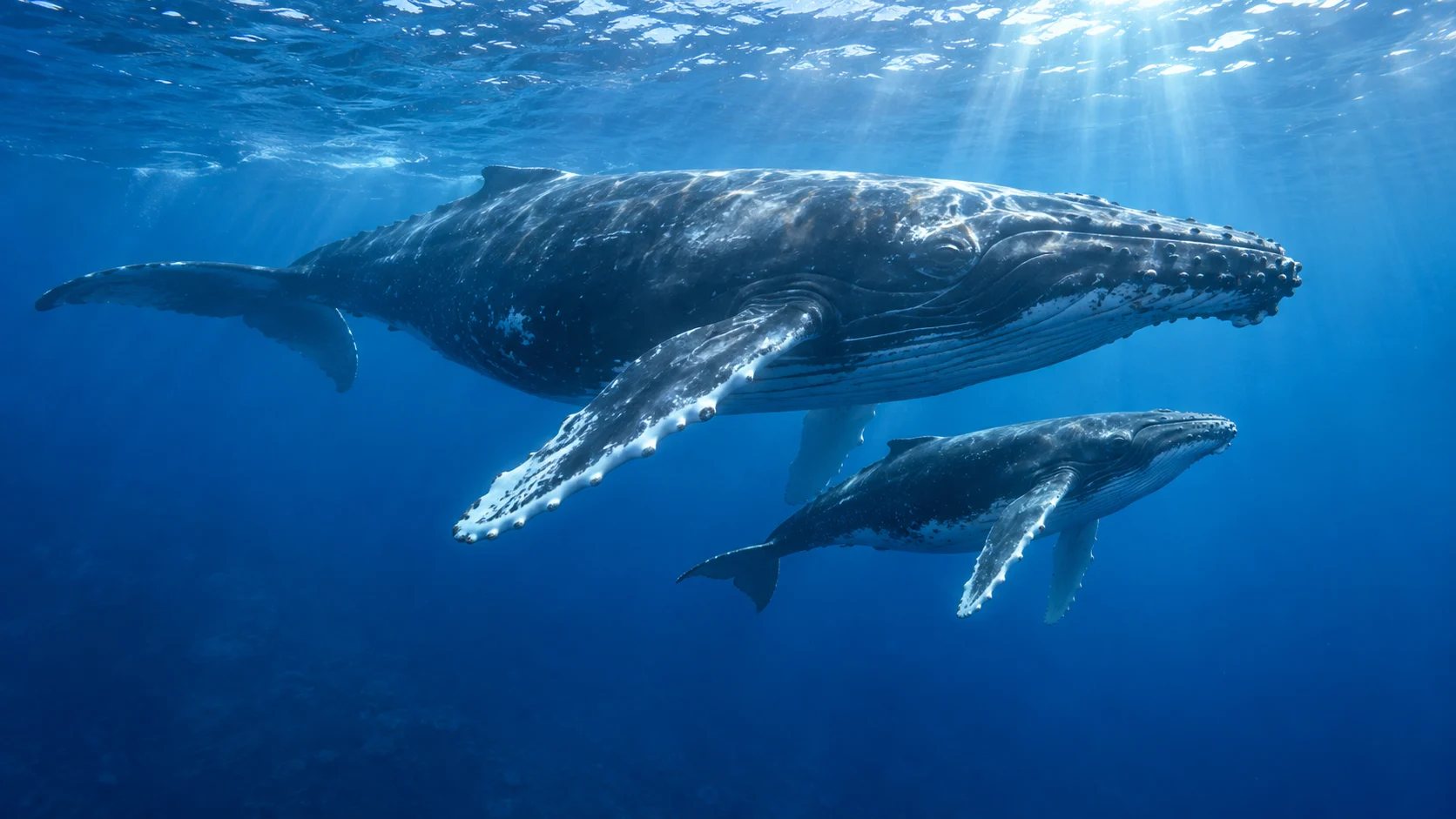
Q: What is the largest animal known to have lived?
A: The blue whale.
Q: What do whales and dolphins breathe?
A: Air through lungs.
Q: What opening do whales use to breathe at the surface?
A: A blowhole, or two blowholes in baleen whales.
Q: What are the two major living whale groups?
A: Baleen whales and toothed whales.
Q: What is baleen?
A: Keratinous plates used by baleen whales to filter prey from water.
Q: Is a blue whale a baleen whale or a toothed whale?
A: A baleen whale.
Q: Is a sperm whale a baleen whale or a toothed whale?
A: A toothed whale.
Q: What toothed whale is famous for extremely deep dives?
A: The sperm whale is one famous deep diver, while beaked whales hold exceptional documented dive records.
Q: What large prey do sperm whales famously hunt?
A: Squid, including large deep-sea species.
Q: What is echolocation?
A: Emitting sounds and interpreting returning echoes to locate objects and prey.
Q: What marine mammals use sophisticated echolocation?
A: Toothed whales such as dolphins, porpoises, and sperm whales.
Q: Are dolphins fish?
A: No. They are mammals.
Q: What is the largest member of the dolphin family?
A: The orca, or killer whale.
Q: Are orcas actually whales in the broad sense?
A: Yes. Dolphins are a family within the toothed whales.
Q: What is blubber?
A: A thick layer of fat that provides insulation, energy storage, and streamlining in marine mammals.
Q: What are pinnipeds?
A: Seals, sea lions, and walruses.
Q: What visible ear feature helps distinguish sea lions from true seals?
A: Sea lions have external ear flaps, while true seals do not.
Q: What marine mammal has long tusks and lives in Arctic regions?
A: The walrus.
Q: What are walrus tusks?
A: Greatly elongated canine teeth.
Q: What marine mammals include manatees and dugongs?
A: Sirenians.
Q: What do manatees and dugongs mainly eat?
A: Aquatic vegetation.
Q: What mammal order includes humans, apes, monkeys, lemurs, and relatives?
A: Primates.
Q: What are the living great apes?
A: Orangutans, gorillas, chimpanzees, bonobos, and humans.
Q: What living animals are humans most closely related to?
A: Chimpanzees and bonobos share our most recent common ancestor among living species.
Q: Are humans descended from modern chimpanzees?
A: No. Humans and chimpanzees descended from a shared ancestral population.
Q: What great ape is native to Asia?
A: The orangutan.
Q: What does “orangutan” mean in Malay and Indonesian roots?
A: “Person of the forest.”
Q: What primates are native to Madagascar and nearby islands?
A: Lemurs are native to Madagascar.
Q: What primate is famous for using sticks to fish for termites?
A: Chimpanzees in some populations.
Q: What does primate tool use demonstrate?
A: Complex learning, planning, culture, and flexible problem-solving are not uniquely human.
Bats, Big Cats, Bears, Elephants & Hoofed Mammals
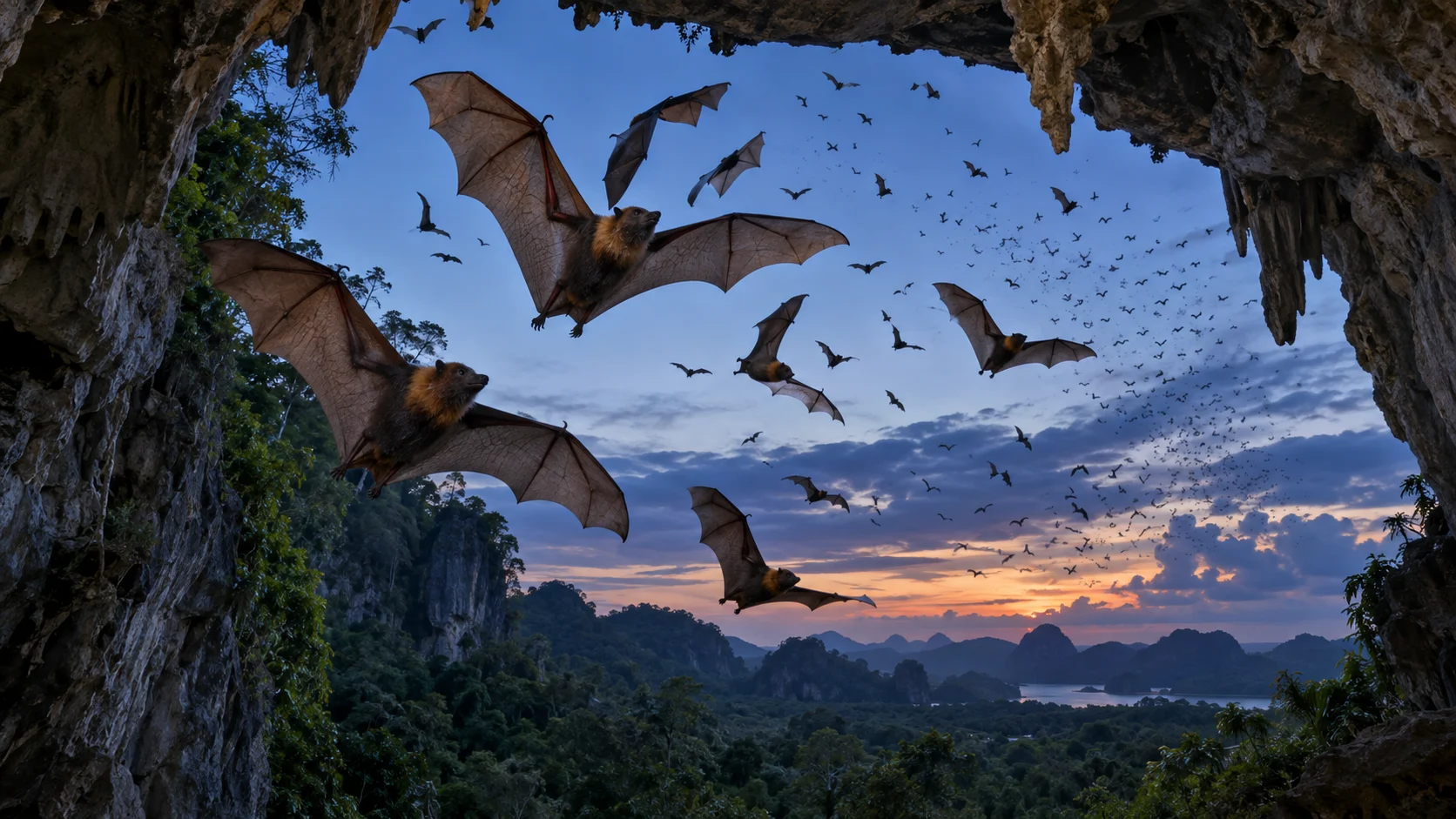
Q: What are the only mammals capable of true powered flight?
A: Bats.
Q: Are bats blind?
A: No. Bats can see, and many species also use echolocation.
Q: What is the smallest mammal by body mass often cited?
A: Kitti's hog-nosed bat, also called the bumblebee bat, is among the smallest.
Q: Do all bats eat insects?
A: No. Bat diets include insects, fruit, nectar, fish, small vertebrates, and blood in a few species.
Q: How many living vampire bat species feed on blood?
A: Three.
Q: Why are nectar-feeding bats ecologically important?
A: They pollinate many plants, including some important desert and tropical species.
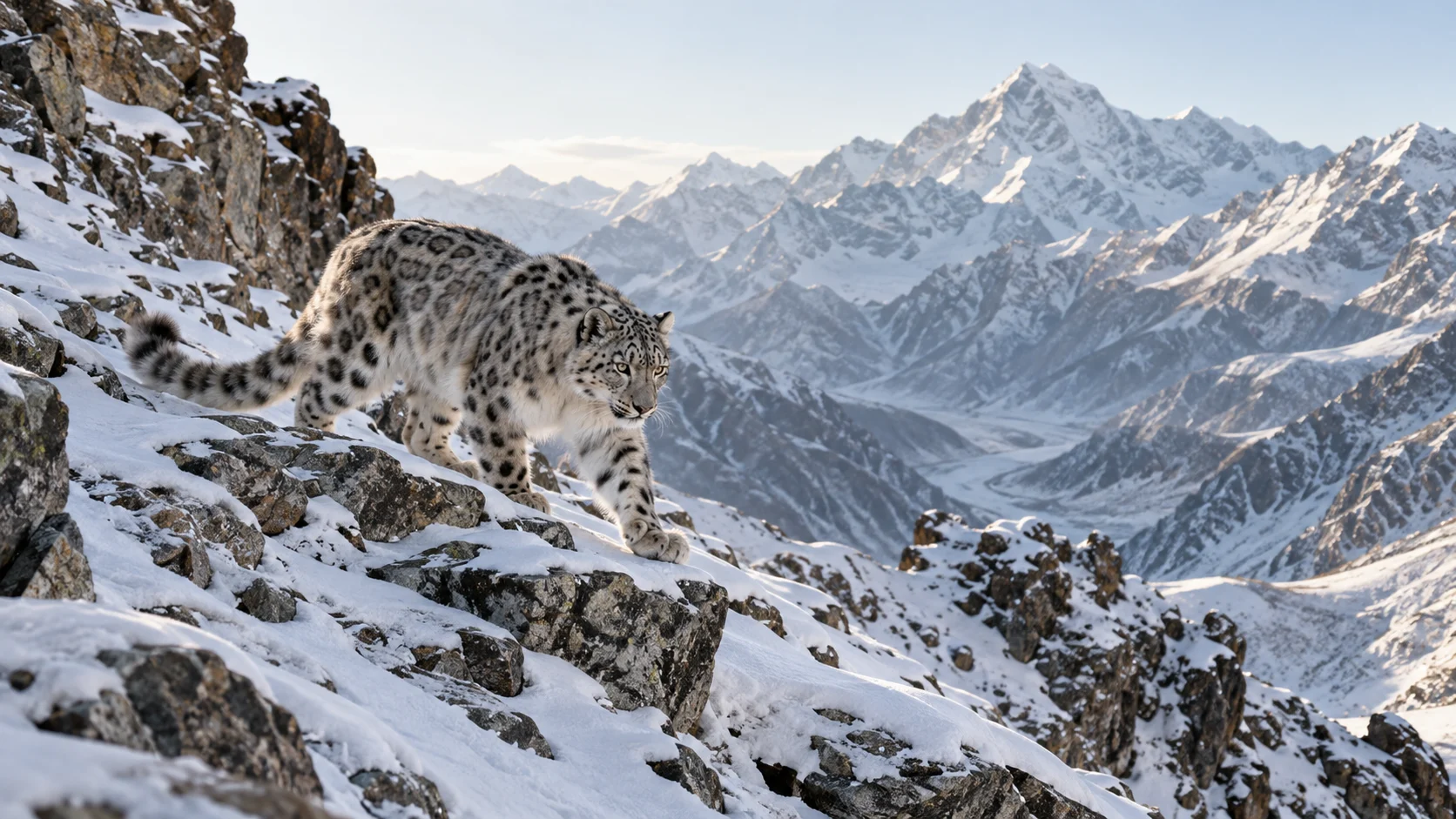
Q: What is the largest living cat species?
A: The tiger.
Q: What is the fastest land mammal?
A: The cheetah.
Q: Are cheetahs built mainly for long-distance endurance running?
A: No. They specialize in explosive high-speed sprints.
Q: What big cat lives naturally in both Africa and Asia today?
A: The lion, with a small wild population of Asiatic lions in India.
Q: What is a lion pride?
A: A social group usually containing related females, young, and one or more adult males.
Q: What big cat is famous for hauling prey into trees?
A: The leopard.
Q: Is a black panther a separate species?
A: No. The term usually refers to a melanistic leopard or jaguar.
Q: What is the largest living bear species by average size?
A: The polar bear is generally considered the largest, with Kodiak brown bears also reaching enormous sizes.
Q: What does a polar bear's black skin do beneath its fur?
A: The skin is dark, while dense fur and fat provide most insulation.
Q: Is polar bear fur actually white pigment?
A: No. The hairs are largely transparent and appear white because of light scattering.
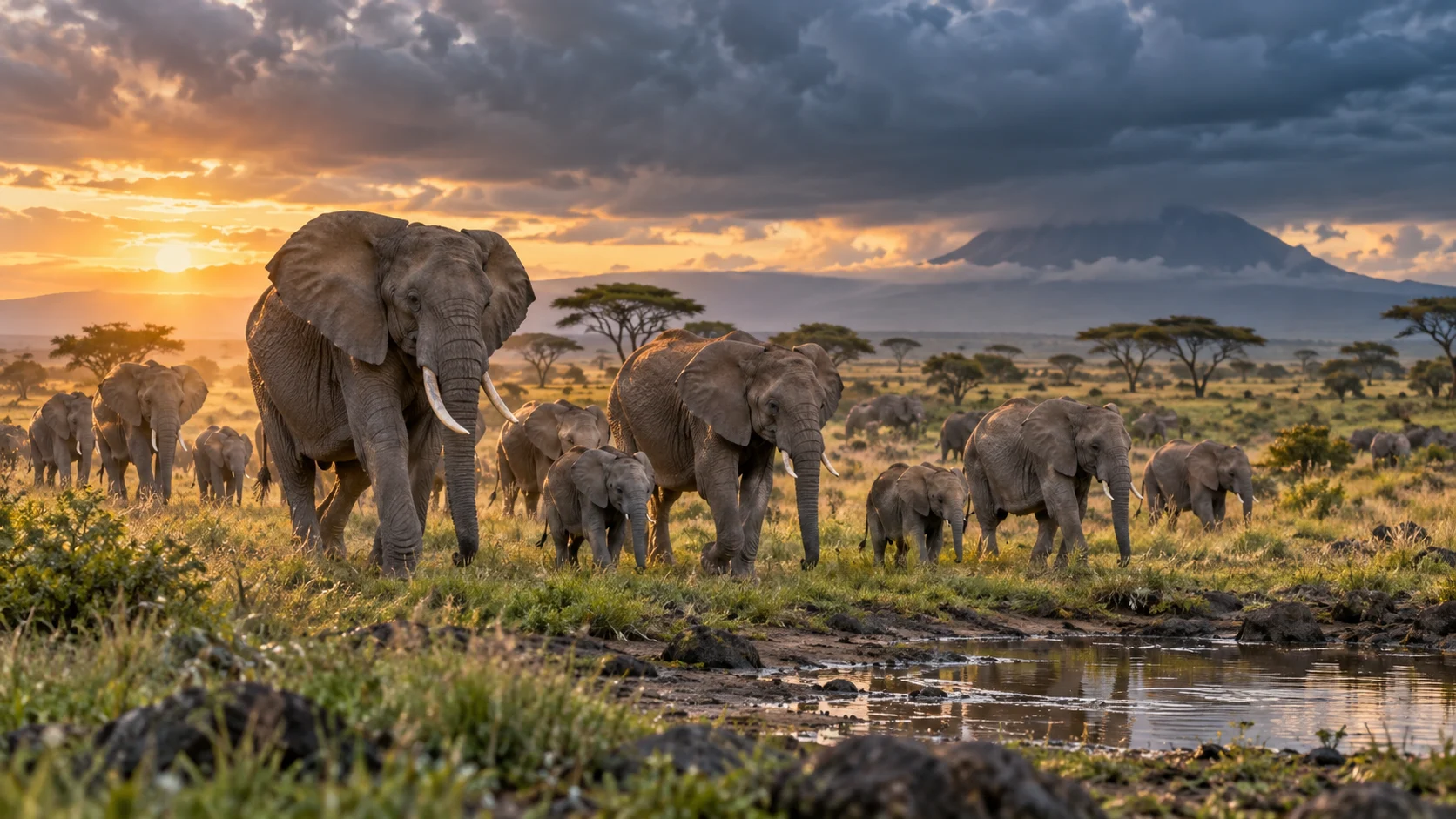
Q: What is the largest living land animal?
A: The African bush elephant.
Q: What are elephant tusks?
A: Enlarged incisor teeth.
Q: What does an elephant trunk combine anatomically?
A: An elongated nose and upper lip.
Q: Do elephants use low-frequency sounds to communicate over long distances?
A: Yes. They produce infrasonic calls below or near the lower range of human hearing.
Q: What are ungulates?
A: Hoofed mammals, a practical grouping that includes several evolutionary lineages.
Q: What is the tallest living land animal?
A: The giraffe.
Q: How many neck vertebrae does a giraffe usually have?
A: Seven, the same basic number as humans.
Q: What is a ruminant?
A: A hoofed mammal that ferments plant food in a specialized stomach and often rechews cud.
Q: What animals are classic ruminants?
A: Cattle, sheep, goats, deer, giraffes, and many antelope.
Q: What is cud?
A: Partly digested food regurgitated and chewed again.
Q: What mammal has a horn made from densely packed keratin rather than a bony horn core?
A: The rhinoceros.
Q: What is the difference between antlers and true horns?
A: Antlers are bone and are usually shed; true horns have a bony core covered by keratin and usually persist.
Q: What living deer has the largest antlers?
A: The moose.
Q: What horse relative is famous for black-and-white stripes?
A: The zebra.
Evolution, Intelligence, Records & Conservation
Q: What ancient vertebrate lineage eventually gave rise to mammals?
A: Synapsids.
Q: Did early mammals live alongside dinosaurs?
A: Yes. Mammals and their close relatives existed throughout much of the dinosaur era.
Q: What happened to mammal diversity after the end-Cretaceous mass extinction?
A: Mammals rapidly diversified into many ecological roles after non-avian dinosaurs disappeared.
Q: Why is fossil hair less common than fossil teeth and bones?
A: Hair is soft tissue and usually decays unless preservation conditions are exceptional.
Q: Why are teeth so useful to mammal paleontologists?
A: Teeth preserve well and reveal clues about diet, ancestry, and species identity.
Q: Why do dolphins and sharks have similarly streamlined bodies despite distant ancestry?
A: Convergent evolution favored similar shapes for efficient swimming.
Q: What bones support a bat's wing membrane?
A: Greatly elongated finger bones along with the arm and body.
Q: Can flying squirrels truly fly with powered wingbeats?
A: No. They glide using a membrane stretched between the limbs.
Q: What unusual body covering protects pangolins?
A: Large overlapping keratin scales.
Q: What mammal has bands of bony armor beneath its skin?
A: The armadillo.
Q: Why are sloths famous for moving slowly?
A: Their low-energy leaf diet and metabolism favor energy conservation.
Q: What unusual social system occurs in naked mole-rats?
A: Eusocial colonies with a breeding queen and many non-breeding workers.
Q: What sense helps a platypus detect prey underwater with its bill?
A: Electroreception, detecting tiny electrical signals from muscle activity.
Q: Have elephants shown evidence of mirror self-recognition?
A: Yes. Some elephants have passed forms of the mirror self-recognition test.
Q: What vocal feature can function somewhat like an individual name in bottlenose dolphins?
A: A signature whistle.
Q: What small North American mammals have complex alarm calls that can encode detailed information?
A: Prairie dogs.
Q: What social mammal often uses sentinels to watch for predators?
A: Meerkats.
Q: What is a wolf pack usually built around?
A: A family group, often consisting of breeding parents and their offspring.
Q: What wild species is the primary ancestor of domestic dogs?
A: The gray wolf lineage.
Q: Where did domestic cat ancestry largely trace to?
A: Near Eastern and North African wildcat populations associated with early farming communities.
Q: What mammal is famous for lifespans that can exceed two centuries?
A: The bowhead whale.
Q: What is the largest living rodent?
A: The capybara.
Q: What is the largest living marsupial?
A: The red kangaroo.
Q: What mammal is uniquely covered in large protective keratin scales?
A: The pangolin.
Q: Why are pangolins a major conservation concern?
A: Several species are heavily threatened by illegal wildlife trade and habitat loss.
Q: Does rhinoceros horn have proven medicinal properties because it is a horn?
A: No. Rhino horn is largely keratin and claims of special medicinal effects are unsupported.
Q: What is a wildlife corridor?
A: Habitat that connects separated areas so animals can move, disperse, and maintain gene flow.
Q: What ecosystem-engineering mammal builds dams that create wetlands?
A: The beaver.
Q: Why can beavers be considered keystone ecosystem engineers?
A: Their dams reshape water flow and create habitat used by many other species.
Q: Why is genetic diversity important in mammal conservation?
A: It can improve a population's ability to avoid inbreeding problems and adapt to environmental change.
How Did You Score?
If you knew your monotremes from your marsupials, your baleen from your blubber, and your vibrissae from your vampire bats, your mammal trivia is fully warmed up.

Ellie Simons creates and edits Random Trivia. She researches trivia using primary and authoritative sources whenever possible and is currently reviewing the site's older trivia library for accuracy, clarity, and playability. Read more on the About page.
Explore more questions in our animals trivia guide.
About this quiz
Site editor: Ellie Simons. Read our Trivia Methodology to learn how questions are researched and updated. Page last updated: . Report an error.