
There's a lady who's sure all that glitters is trivia. These 120 Led Zeppelin questions cover Robert Plant, Jimmy Page, John Paul Jones, John Bonham, “Whole Lotta Love,” “Stairway to Heaven,” “Black Dog,” “Kashmir,” Led Zeppelin IV, mysterious symbols, huge tours, album covers, blues roots, studio experimentation, and the thunderous drummer whose death ended the band.
Formation, Four Members & Led Zeppelin I
Q: In what country did Led Zeppelin form?
A: England.
Q: In what year did the band form?
A: 1968.
Q: Who was the guitarist?
A: Jimmy Page.
Q: Who was the lead singer?
A: Robert Plant.
Q: Who played bass and keyboards?
A: John Paul Jones.
Q: Who was the drummer?
A: John Bonham.
Q: What band was Jimmy Page in immediately before Led Zeppelin?
A: The Yardbirds.
Q: What did the earliest Zeppelin lineup briefly perform as?
A: The New Yardbirds.
Q: What legendary drummer is often linked to the “lead balloon” name joke?
A: Keith Moon of the Who is commonly associated with the joke that the project would go down like a lead balloon.
Q: Why is Zeppelin spelled without the “a” in lead?
A: To help English speakers pronounce it “led” rather than “leed.”
Q: What was Jimmy Page's career before joining the Yardbirds?
A: Session guitarist.
Q: What made that background valuable?
A: He understood studio recording, arrangements, and many musical styles.
Q: What was John Paul Jones's background?
A: Session musician, arranger, bassist, and keyboardist.
Q: How did Page learn about Robert Plant?
A: Through musical contacts after his first singer choices were unavailable.
Q: Who did Plant recommend on drums?
A: John Bonham.
Q: What relationship did Plant and Bonham already have?
A: They knew and played with each other in the Midlands music scene.
Q: What was the debut album called?
A: Led Zeppelin.
Q: In what year was the album Led Zeppelin released?
A: 1969.
Q: What disaster appears on the cover?
A: Hindenburg airship disaster.
Q: What song opens the album Led Zeppelin?
A: “Good Times Bad Times.”
Q: What song is built from blues call-and-response and a dramatic bowed-guitar section?
A: “Dazed and Confused.”
Q: What unusual object did Page use on guitar?
A: Violin bow.
Q: What folk song closes the album?
A: “How Many More Times” closes it, while “Babe I'm Gonna Leave You” is a folk-rooted arrangement earlier on the record.
Q: What style did Zeppelin fuse?
A: Blues, hard rock, folk, psychedelia, and heavy improvisation.
Q: Did critics immediately adore the debut?
A: No. Early reviews were often mixed or hostile.
Q: What happened with audiences?
A: The band rapidly built a huge following.
Q: What did Zeppelin often avoid compared with many bands?
A: Heavy reliance on television promotion and conventional singles strategy in the UK.
Q: What did they emphasize instead?
A: Albums and live concerts.
Q: What made Bonham's playing immediately distinctive?
A: Enormous power, groove, speed, footwork, and room-filling drum sound.
Q: What made Plant distinctive?
A: High, blues-influenced vocals and charismatic improvisation.
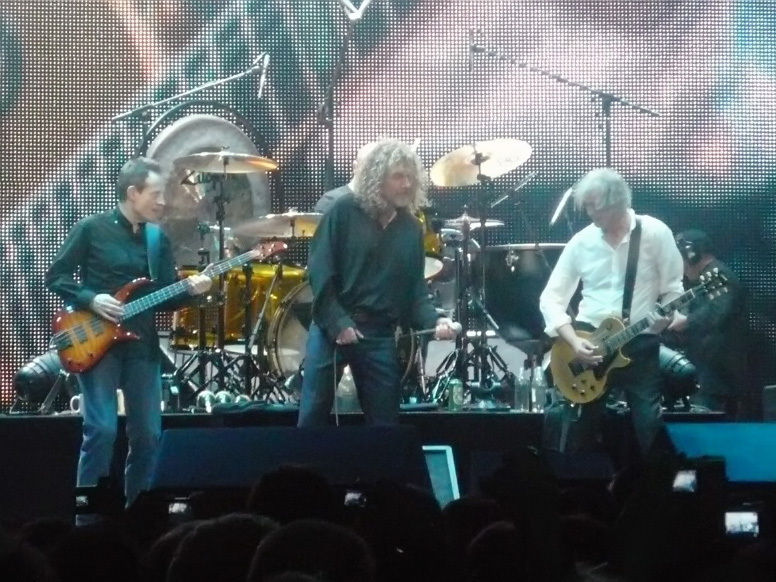
Whole Lotta Love, Immigrant Song & Led Zeppelin IV
Q: What is Led Zeppelin's second album called?
A: Led Zeppelin II.
Q: In what year was Led Zeppelin II released?
A: 1969.
Q: What huge riff opens “Whole Lotta Love”?
A: Jimmy Page's guitar riff.
Q: What experimental middle section appears in the song?
A: Psychedelic studio effects, percussion, vocal echoes, and noise.
Q: What studio technique was Page known for?
A: Layering, distance miking, echo, and creating depth rather than recording everything close and dry.
Q: What song on Zeppelin II is a bass-and-drum showcase?
A: “The Lemon Song” emphasizes the rhythm section, while “Moby Dick” is the major drum showcase.
Q: What is “Moby Dick”?
A: Instrumental built around a John Bonham drum solo.
Q: What is Led Zeppelin III known for?
A: Stronger acoustic, folk, and pastoral influence.
Q: What song opens it with Viking imagery?
A: “Immigrant Song.”
Q: What land is invoked in the opening?
A: Land of ice and snow.
Q: What inspired the Viking theme?
A: A trip to Iceland and Nordic imagery.
Q: What acoustic song is titled “That's the Way”?
A: “That's the Way.”
Q: What is the band's untitled fourth album commonly called?
A: Led Zeppelin IV.
Q: In what year was Led Zeppelin IV released?
A: 1971.
Q: Does the original cover prominently print the band name?
A: No.
Q: What image appears on the front?
A: An old man carrying sticks.
Q: What four symbols are associated with the members?
A: One symbol for Page, Jones, Bonham, and Plant.
Q: Which member's symbol is famously called “Zoso” by fans?
A: Jimmy Page.
Q: Did Page officially say it simply means Zoso?
A: No. That is a convenient visual nickname, not a confirmed translation.
Q: What song opens Led Zeppelin IV?
A: “Black Dog.”
Q: Why is it called “Black Dog”?
A: A black Labrador wandered around the recording location.
Q: What song has a complicated shifting groove?
A: “Black Dog,” built around an intentionally tricky riff.
Q: What rock anthem follows with a title about California?
A: “Going to California” is acoustic later on the album; “Rock and Roll” is the straightforward rocker near the beginning.
Q: What song is one of the most famous rock recordings ever?
A: “Stairway to Heaven.”
Q: Who wrote it?
A: Jimmy Page and Robert Plant.
Q: How does the arrangement evolve?
A: Quiet acoustic opening grows into drums, electric guitar, and a climactic solo.
Q: What instrument appears in the opening besides guitar?
A: Recorders played by John Paul Jones.
Q: Who plays the guitar solo?
A: Jimmy Page.
Q: Was “Stairway” originally released as a standard UK single?
A: No.
Q: Why is IV essential?
A: It balances hard rock, folk, blues, mysticism, and massive songwriting craft in one album.
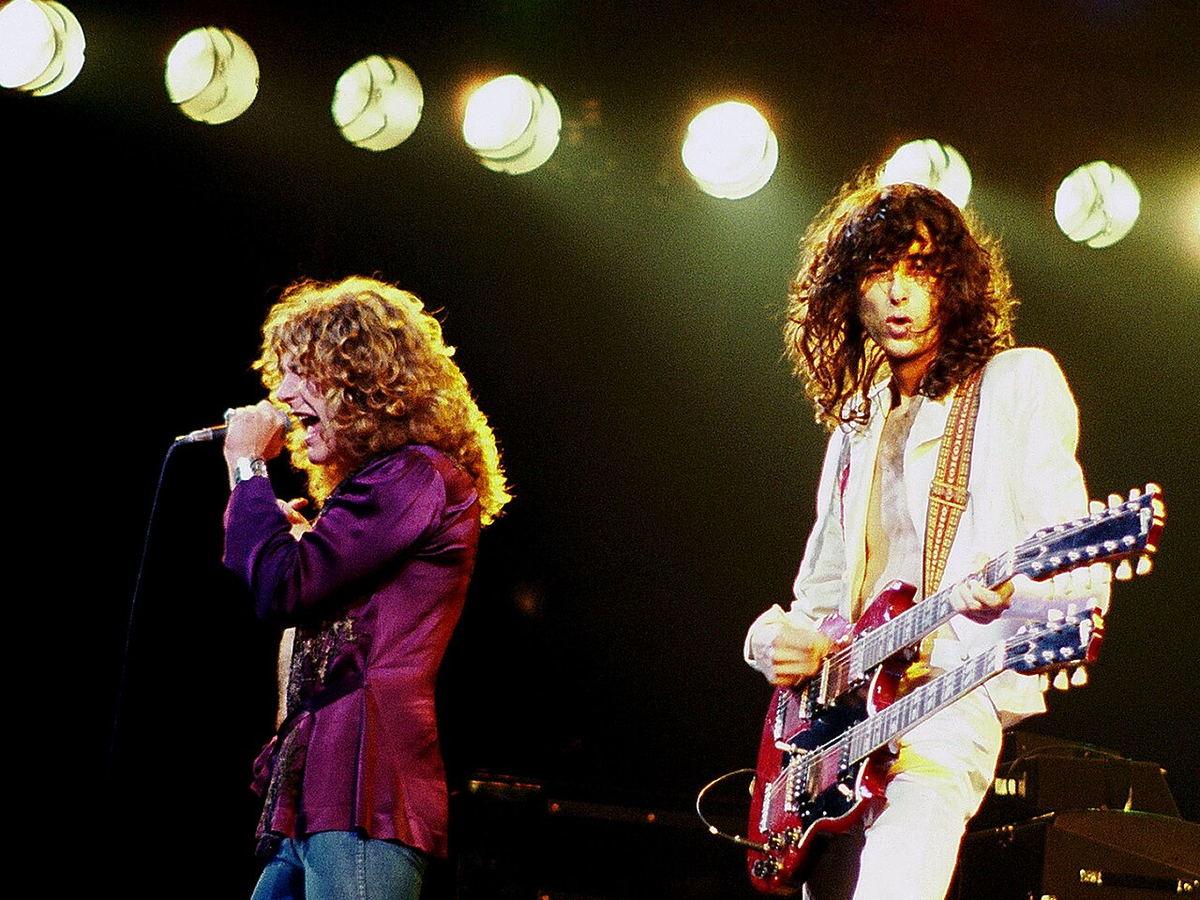
Houses of the Holy, Physical Graffiti & Kashmir
Q: What 1973 album followed IV?
A: Houses of the Holy.
Q: What strange image appears on its cover?
A: Naked childlike figures climbing Giant's Causeway rocks.
Q: Where is Giant's Causeway?
A: Northern Ireland.
Q: What reggae-influenced song appears on the album?
A: “D'yer Mak'er.”
Q: How is the title a joke?
A: It imitates a British joke pronunciation of “Jamaica.”
Q: What funk experiment appears?
A: “The Crunge.”
Q: What song opens Houses of the Holy with layered guitars?
A: “The Song Remains the Same.”
Q: What ballad follows?
A: “The Rain Song.”
Q: What 1975 double album expanded Zeppelin's range?
A: Physical Graffiti.
Q: What New York building appears on the cover?
A: Tenement buildings at 96 and 98 St. Mark's Place.
Q: What Rolling Stones-related album cover also used nearby New York imagery?
A: The area became iconic in rock photography, though Physical Graffiti's window design is uniquely Zeppelin.
Q: What epic song appears on Physical Graffiti?
A: “Kashmir.”
Q: Did Plant write “Kashmir” while in Kashmir?
A: No.
Q: Where did the lyrical inspiration come from?
A: Travel through Morocco/Sahara-like landscapes inspired the sense of an endless road.
Q: What musical feature makes “Kashmir” feel unusual?
A: A heavy repeating riff against orchestral and Eastern-influenced textures.
Q: What tuning did Page use?
A: DADGAD-like alternate tuning on guitar.
Q: What does John Bonham contribute?
A: Huge, deliberate drums that move against the riff.
Q: What song is titled “Trampled Under Foot”?
A: “Trampled Under Foot.”
Q: What instrument is central to its groove?
A: Clavinet played by John Paul Jones.
Q: What Stevie Wonder song/style influenced its funky keyboard feel?
A: “Superstition” is a clear clavinet-era reference point.
Q: What long blues track is titled “In My Time of Dying”?
A: “In My Time of Dying.”
Q: What does Page play prominently there?
A: Slide guitar.
Q: Was every Physical Graffiti track newly recorded in one session?
A: No. It includes material from multiple earlier sessions plus new recordings.
Q: What did the double-album format allow?
A: A broad survey of hard rock, blues, funk, folk, acoustic music, and experiments.
Q: What label did Zeppelin launch?
A: Swan Song Records.
Q: What mythic figure appears in the Swan Song logo?
A: A winged figure inspired by imagery of Apollo/Icarus-like art.
Q: Did Swan Song release only Zeppelin records?
A: No. It signed other artists.
Q: What band was among them?
A: Bad Company.
Q: What does Physical Graffiti represent?
A: Zeppelin at its broadest and most confident studio scale.
Q: Why is “Kashmir” especially revered?
A: It sounds monumental without relying on a conventional blues-rock structure.
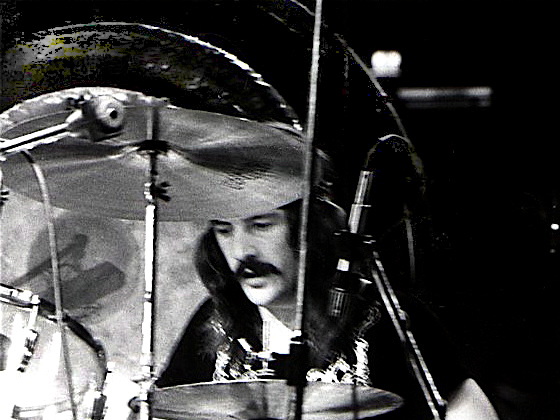
Later Years, Bonham, Reunions & Hard Zeppelin Trivia
Q: What 1976 album is titled Presence?
A: Presence.
Q: What long song opens it?
A: “Achilles Last Stand.”
Q: What was unusual about Plant during recording?
A: He was recovering from serious injuries from a car accident.
Q: What 1976 concert film did Zeppelin release?
A: The Song Remains the Same.
Q: What venue supplied much of the concert footage?
A: Madison Square Garden.
Q: What 1979 album was the last studio album released while all four were alive?
A: In Through the Out Door.
Q: Who took a larger songwriting role there?
A: John Paul Jones and Robert Plant.
Q: Why?
A: Page and Bonham were struggling with substance-related issues and availability.
Q: What keyboard-heavy song became a late hit?
A: “All My Love.”
Q: Who wrote it largely as a tribute to his son?
A: Robert Plant.
Q: What happened to Plant's son Karac?
A: He died in 1977 at age five.
Q: When did John Bonham die?
A: September 25, 1980.
Q: How old was he?
A: 32.
Q: What did the remaining members decide?
A: Led Zeppelin could not continue without him.
Q: Did they replace Bonham permanently?
A: No.
Q: What posthumous collection arrived in 1982?
A: Coda.
Q: Did the surviving members ever reunite for performances?
A: Yes, occasionally.
Q: What 1985 event featured a problematic short reunion?
A: Live Aid.
Q: What 2007 concert is considered the strongest major reunion?
A: Ahmet Ertegun Tribute Concert at London's O2 Arena.
Q: Who played drums?
A: Jason Bonham.
Q: What is Jason's relationship to John?
A: Son.
Q: What film documented that show?
A: Celebration Day.
Q: Why did it not become a full reunion tour?
A: Robert Plant did not want to resume Zeppelin as a permanent touring band.
Q: What member continued with Page in the 1990s?
A: Robert Plant collaborated with Jimmy Page on Page and Plant projects.
Q: What instrument made Bonham's “Moby Dick” famous?
A: Drums.
Q: What instrument did Page play with a violin bow?
A: Electric guitar.
Q: What album has the Zoso-like symbol?
A: Led Zeppelin IV.
Q: What album contains “Kashmir”?
A: Physical Graffiti.
Q: Why is Led Zeppelin especially deep trivia material?
A: Blues roots, studio invention, mysticism, symbols, giant live shows, album art, alternate tunings, tragedy, and four extraordinary musicians create endless rock lore.
Q: What ended the band's original story?
A: The death of John Bonham.
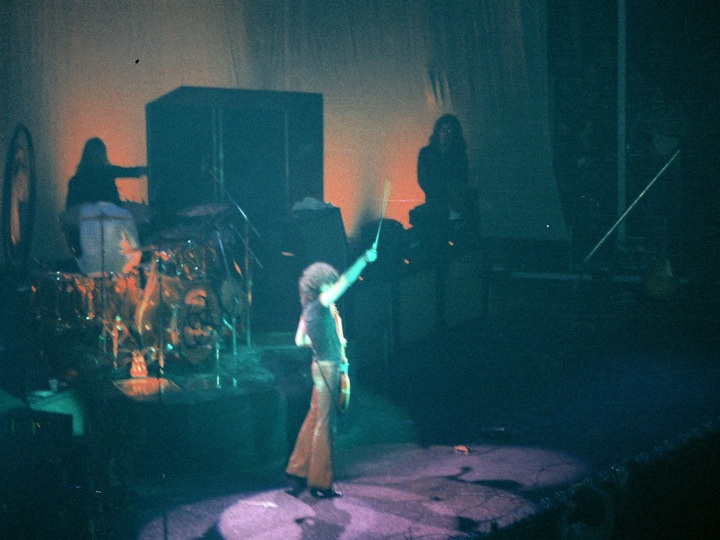
How Did You Score?
If the New Yardbirds, the Hindenburg, the black dog name, Giant's Causeway, Nellcôte belongs to the Stones but St. Mark's Place belongs here, Swan Song, DADGAD, and Jason Bonham all came easily, your Zeppelin trivia is a whole lotta love.

Ellie Simons creates and edits Random Trivia. She researches trivia using primary and authoritative sources whenever possible and is currently reviewing the site's older trivia library for accuracy, clarity, and playability. Read more on the About page.
Explore more questions in our music trivia guide.
About this quiz
Site editor: Ellie Simons. Read our Trivia Methodology to learn how questions are researched and updated. Page last updated: . Report an error.