
How well do you know Japan beyond sushi, bullet trains, and Mount Fuji? These 120 trivia questions travel across the country's islands, prefectures, history, language, food, religion, festivals, technology, art, sports, and everyday traditions.
The first rounds are approachable. Later sections wander into writing systems, feudal history, regional specialties, and details that can stump even enthusiastic travelers.
Why Japan Makes Great Trivia
Japan packs extraordinary geographic and cultural variety into an island nation stretching from the snowy north of Hokkaido to the subtropical islands of Okinawa. Ancient shrines sit beside high-speed rail, regional cuisines change from prefecture to prefecture, and traditions coexist with globally influential technology and entertainment.
Core civic facts here use Government of Japan: About Japan, which confirms 47 prefectures, Tokyo as the capital, Japanese as the language, and the yen as the currency. For more geography, try our geography trivia and world capitals trivia.
Japan Geography Basics
Q: What is the capital of Japan?
A: Tokyo.
Q: What is Japan's currency?
A: The Japanese yen.
Q: What is the main language of Japan?
A: Japanese.
Q: How many prefectures does Japan have?
A: 47.
Q: What is Japan's largest island?
A: Honshu.
Q: What is the northernmost of Japan's four main islands?
A: Hokkaido.
Q: Which main island lies southwest of Honshu and includes cities such as Fukuoka and Nagasaki?
A: Kyushu.
Q: What is the smallest of Japan's four main islands?
A: Shikoku.
Q: What is Japan's highest mountain?
A: Mount Fuji.
Q: What is Mount Fuji's elevation to the nearest meter?
A: About 3,776 meters.
Q: What ocean lies east of Japan?
A: The Pacific Ocean.
Q: What sea separates much of Japan from the Korean Peninsula and the Asian mainland?
A: The Sea of Japan.
Q: Why does Japan experience frequent earthquakes?
A: It lies near several interacting tectonic plates along the Pacific Ring of Fire.
Q: What chain of southern islands includes Okinawa?
A: The Ryukyu Islands.
Q: Is Japan made up only of its four largest islands?
A: No. The country includes thousands of islands in addition to Honshu, Hokkaido, Kyushu, and Shikoku.
Tokyo, Kyoto & Famous Places
Q: What city is home to the famous Shibuya Crossing?
A: Tokyo.
Q: What district is known for Tokyo's major electronics and anime shopping culture?
A: Akihabara.
Q: What Tokyo district is famous for the Meiji Shrine and nearby youth-fashion streets?
A: Harajuku.
Q: What tall broadcasting tower in Tokyo opened in 2012?
A: Tokyo Skytree.
Q: What landmark red-and-white tower was inspired in part by the Eiffel Tower?
A: Tokyo Tower.
Q: Which city served as Japan's imperial capital for more than a thousand years before the court moved to Tokyo?
A: Kyoto.
Q: What Kyoto shrine is famous for thousands of vermilion torii gates?
A: Fushimi Inari Taisha.
Q: What Kyoto temple is nicknamed the Golden Pavilion?
A: Kinkaku-ji.
Q: What city is famous for friendly deer roaming around Nara Park?
A: Nara.
Q: What enormous bronze Buddha is housed at Tōdai-ji in Nara?
A: The Great Buddha, or Daibutsu.
Q: What city is associated with Osaka Castle and a reputation for street food?
A: Osaka.
Q: What Hiroshima landmark preserves part of a building near the 1945 atomic-bomb hypocenter?
A: The Hiroshima Peace Memorial, often called the Atomic Bomb Dome.
Q: What island near Hiroshima is famous for Itsukushima Shrine's offshore torii gate?
A: Miyajima, officially Itsukushima.
Q: What historic village in Gifu Prefecture is famous for steep thatched gassho-zukuri farmhouses?
A: Shirakawa-go.
Q: What northern city is famous for an annual snow festival featuring giant sculptures?
A: Sapporo.
Japanese History & Samurai
Q: What title was used for Japan's hereditary military rulers during long periods of feudal history?
A: Shogun.
Q: What warrior class is strongly associated with feudal Japan?
A: Samurai.
Q: What term is often used for the ethical ideals associated with samurai conduct?
A: Bushido.
Q: What long sword is strongly associated with samurai?
A: The katana.
Q: What period began when Tokugawa Ieyasu established a shogunate in 1603?
A: The Edo period.
Q: What city was called Edo before becoming Tokyo?
A: Tokyo itself.
Q: What political transformation beginning in 1868 restored imperial authority and accelerated modernization?
A: The Meiji Restoration.
Q: Which European nation was an especially important trading partner through the restricted port of Dejima during the Edo period?
A: The Netherlands.
Q: What were daimyo?
A: Powerful feudal lords who controlled domains and samurai retainers.
Q: What were ninja historically associated with?
A: Espionage, scouting, intelligence gathering, infiltration, and irregular warfare rather than the magical image of modern fiction.
Q: What 1600 battle helped Tokugawa Ieyasu secure dominance before founding his shogunate?
A: The Battle of Sekigahara.
Q: What city was devastated by the first atomic bomb used in warfare on August 6, 1945?
A: Hiroshima.
Q: What Japanese city was struck by an atomic bomb three days later?
A: Nagasaki.
Q: In what year did Japan's current postwar constitution take effect?
A: 1947.
Q: What makes Japanese history especially rich for trivia?
A: It spans ancient court culture, warrior governments, international trade, isolation policies, industrial modernization, war, reconstruction, and rapid technological growth.
Language & Writing
Q: What three writing systems commonly appear together in modern Japanese?
A: Kanji, hiragana, and katakana.
Q: What are kanji?
A: Characters of Chinese origin used in Japanese writing for many word roots and names.
Q: What is hiragana primarily used for?
A: Native grammatical endings, function words, and words written phonetically.
Q: What is katakana commonly used for?
A: Foreign loanwords, emphasis, scientific names, and some sound effects.
Q: What does "arigatō" mean?
A: Thank you.
Q: What does "ohayō gozaimasu" mean?
A: Good morning, in a polite form.
Q: What does "konbanwa" mean?
A: Good evening.
Q: What does "sayonara" mean?
A: Goodbye, often with a sense of a more definite or longer farewell.
Q: What is a suffix such as -san used for?
A: It is an honorific attached to names as a polite form of address.
Q: What does -sensei commonly indicate?
A: A teacher, doctor, master, or respected professional.
Q: What is romaji?
A: Japanese written with the Latin alphabet.
Q: Does Japanese normally use spaces between every word the way English does?
A: No. Standard Japanese text usually runs without spaces between ordinary words.
Q: In traditional vertical Japanese writing, what direction do columns progress?
A: From right to left across the page while characters run top to bottom.
Q: What feature of Japanese speech changes depending on social context?
A: Levels of politeness and honorific language.
Q: What is keigo?
A: The system of honorific and polite Japanese speech used to express social relationships and respect.
Japanese Food & Drink
Q: What dish combines vinegared rice with ingredients such as seafood, vegetables, or egg?
A: Sushi.
Q: Is sushi defined simply as raw fish?
A: No. The defining element is seasoned vinegared rice.
Q: What is sashimi?
A: Thinly sliced raw fish or seafood served without sushi rice.
Q: What noodle soup has many regional styles including shoyu, miso, and tonkotsu?
A: Ramen.
Q: What thick wheat noodles are called udon?
A: Udon are thick, chewy wheat noodles served hot or cold.
Q: What thin buckwheat noodles are called soba?
A: Soba.
Q: What dish consists of battered and deep-fried seafood or vegetables?
A: Tempura.
Q: What Osaka specialty is made from a savory batter cooked into balls, traditionally with octopus pieces inside?
A: Takoyaki.
Q: What savory pancake is especially associated with Osaka and Hiroshima styles?
A: Okonomiyaki.
Q: What is onigiri?
A: A rice ball or rice shape often filled or seasoned and sometimes wrapped with nori.
Q: What is nori?
A: Edible seaweed commonly dried into sheets.
Q: What fermented soybean food is famous for its sticky texture and strong aroma?
A: Natto.
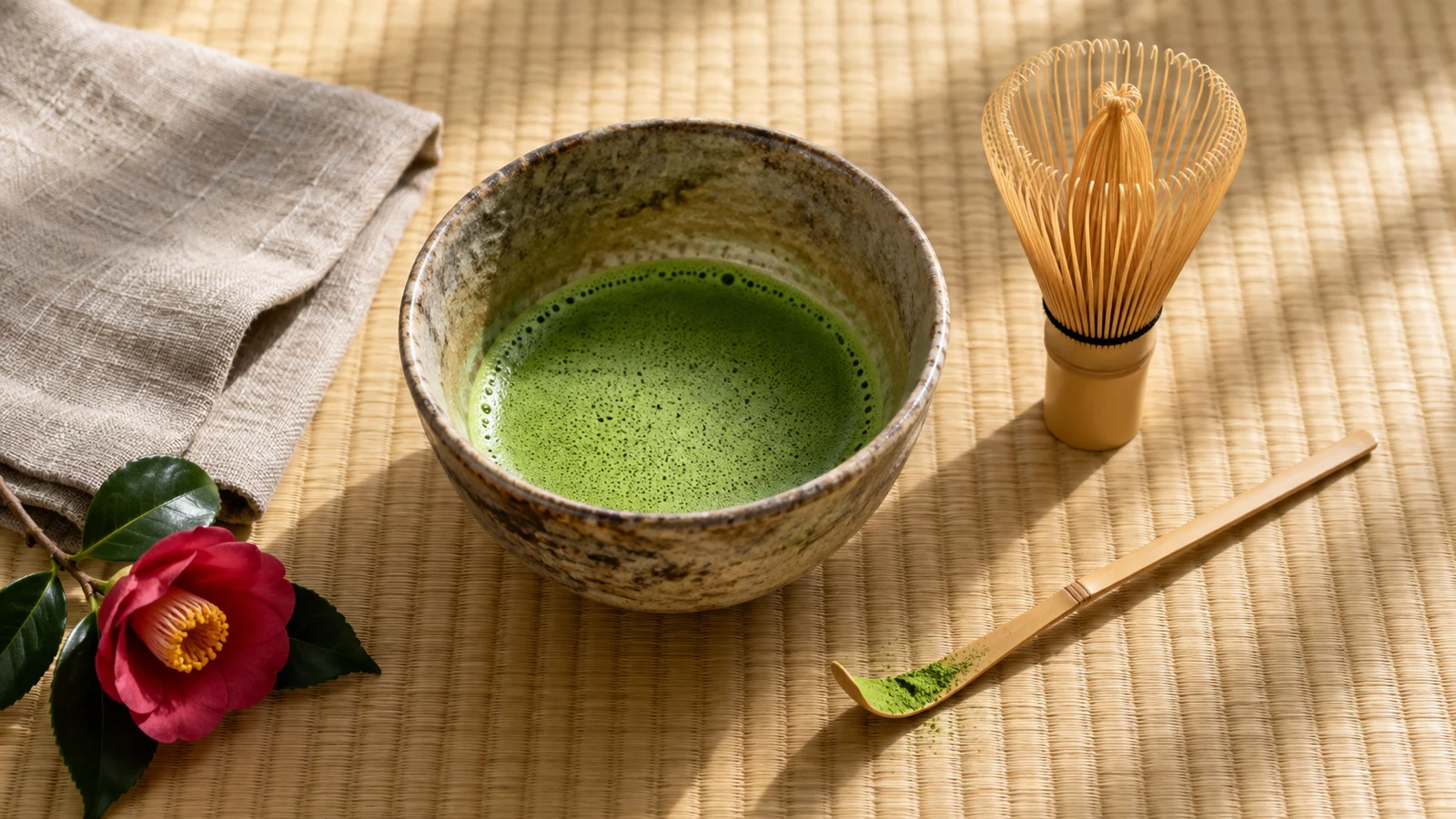
Q: What green powdered tea is central to Japanese tea ceremony traditions?
A: Matcha.
Q: What alcoholic drink is brewed from rice and often called rice wine in English?
A: Sake, although its brewing process is closer in some respects to beer than wine.
Q: What Japanese beef is famous for intense marbling, with Kobe being one specific regional brand?
A: Wagyu.
Religion, Festivals & Traditions
Q: What indigenous religious tradition is closely associated with shrines and kami?
A: Shinto.
Q: What are kami in Shinto?
A: Sacred presences or spirits associated with nature, ancestors, places, and other phenomena.
Q: What gate commonly marks the entrance to sacred space at a Shinto shrine?
A: A torii gate.
Q: What major religion arrived in Japan from the Asian mainland and became deeply intertwined with Japanese culture?
A: Buddhism.
Q: What is hanami?
A: The custom of viewing and enjoying seasonal flowers, especially cherry blossoms.
Q: What flower is most associated with spring hanami?
A: Cherry blossoms, or sakura.
Q: What holiday period in mid-August is associated with welcoming ancestral spirits?
A: Obon.
Q: What is Hatsumode?
A: The first shrine or temple visit of the New Year.
Q: What traditional robe is worn for formal occasions and cultural events?
A: Kimono.
Q: What lighter cotton garment is often worn at summer festivals and hot springs?
A: Yukata.
Q: What is a matsuri?
A: A Japanese festival, often connected to local shrines, seasons, or community traditions.
Q: What decorative paper craft involves folding without cutting or glue in its most familiar form?
A: Origami.
Q: What practice arranges flowers according to artistic principles?
A: Ikebana.
Q: What traditional Japanese tea practice emphasizes preparation, aesthetics, etiquette, and hospitality?
A: The tea ceremony, commonly called chanoyu or sadō.
Q: Why is bowing common in Japan?
A: It can communicate greeting, thanks, respect, apology, or formality depending on context.
Technology, Trains & Modern Culture
Q: What is Japan's high-speed rail network commonly called?
A: The Shinkansen.
Q: In what year did the first Shinkansen line open?
A: 1964.
Q: Which cities did the original Tokaido Shinkansen connect?
A: Tokyo and Osaka.
Q: What nickname is commonly used in English for Shinkansen trains?
A: Bullet trains.
Q: What Japanese company created the PlayStation brand?
A: Sony.
Q: What Kyoto-based company created Mario, Zelda, and many famous game systems?
A: Nintendo.
Q: What Japanese company created the Walkman?
A: Sony.
Q: What does anime refer to in Japanese usage?
A: Animation generally, while outside Japan the word commonly refers specifically to Japanese animation.
Q: What is manga?
A: Japanese comics and graphic storytelling.
Q: What giant radioactive monster first appeared in a 1954 Japanese film?
A: Godzilla.
Q: What globally famous media franchise began with Japanese video games about collecting creatures?
A: Pokémon.
Q: What catlike character created by Sanrio became one of Japan's most recognizable pop-culture icons?
A: Hello Kitty.
Q: What Studio Ghibli director co-founded the studio and directed films including Spirited Away and My Neighbor Totoro?
A: Hayao Miyazaki.
Q: What Japanese word describes cute aesthetics and has become internationally familiar?
A: Kawaii.
Q: What makes modern Japan especially good trivia material?
A: The country has major global influence in transportation, electronics, games, animation, automotive engineering, design, cuisine, and popular culture.
Sports, Symbols & Hard Japan Challenge
Q: What is Japan's national flag commonly called?
A: Hinomaru, while its official name is Nisshoki.
Q: What does the Japanese flag depict?
A: A deep red sun disc centered on a white field.
Q: What is Japan's national anthem called?
A: Kimigayo.
Q: What martial art literally translates roughly to "gentle way"?
A: Judo.
Q: What Japanese martial art emphasizes striking with hands and feet?
A: Karate, which developed strongly in Okinawa.
Q: What sport features enormous wrestlers trying to force one another out of a circular ring or onto the ground?
A: Sumo.
Q: What is the sumo ring called?
A: A dohyo.
Q: What professional team sport is enormously popular in Japan and has produced stars such as Ichiro Suzuki and Shohei Ohtani?
A: Baseball.
Q: Which city hosted the 1964 Summer Olympics?
A: Tokyo.
Q: Which Japanese city hosted the 1972 Winter Olympics?
A: Sapporo.
Q: Which Japanese city hosted the 1998 Winter Olympics?
A: Nagano.
Q: What prefecture contains Mount Fuji's northern side and the Fuji Five Lakes?
A: Yamanashi Prefecture, while the mountain also straddles Shizuoka Prefecture.
Q: What two prefectures share Mount Fuji?
A: Yamanashi and Shizuoka.
Q: What makes the number 47 especially useful in Japan trivia?
A: Japan is divided into 47 prefectures.
Q: What makes Japan unusually deep trivia territory?
A: Geography, ancient religion, samurai history, food, writing systems, festivals, high-speed rail, games, anime, architecture, sports, and regional traditions all intersect within one country.
How Did You Score?
If gassho-zukuri, keigo, Dejima, the Tokaido Shinkansen, Nisshoki, and the two prefectures sharing Mount Fuji all came easily, your Japan knowledge is traveling very well.
Keep exploring with our geography trivia, world capitals trivia, and Japanese mythology and folklore trivia.

Ellie Simons creates and edits Random Trivia. She researches trivia using primary and authoritative sources whenever possible and is currently reviewing the site's older trivia library for accuracy, clarity, and playability. Read more on the About page.
About this quiz
Site editor: Ellie Simons. Read our Trivia Methodology to learn how questions are researched and updated. Page last updated: . Report an error.