
Hold onto your rain hat, because this hurricane trivia is spinning through storm science, famous forecasts, record breakers, and lifesaving safety.
These questions cover the whole cyclone, from the calm eye to the wild outer bands.
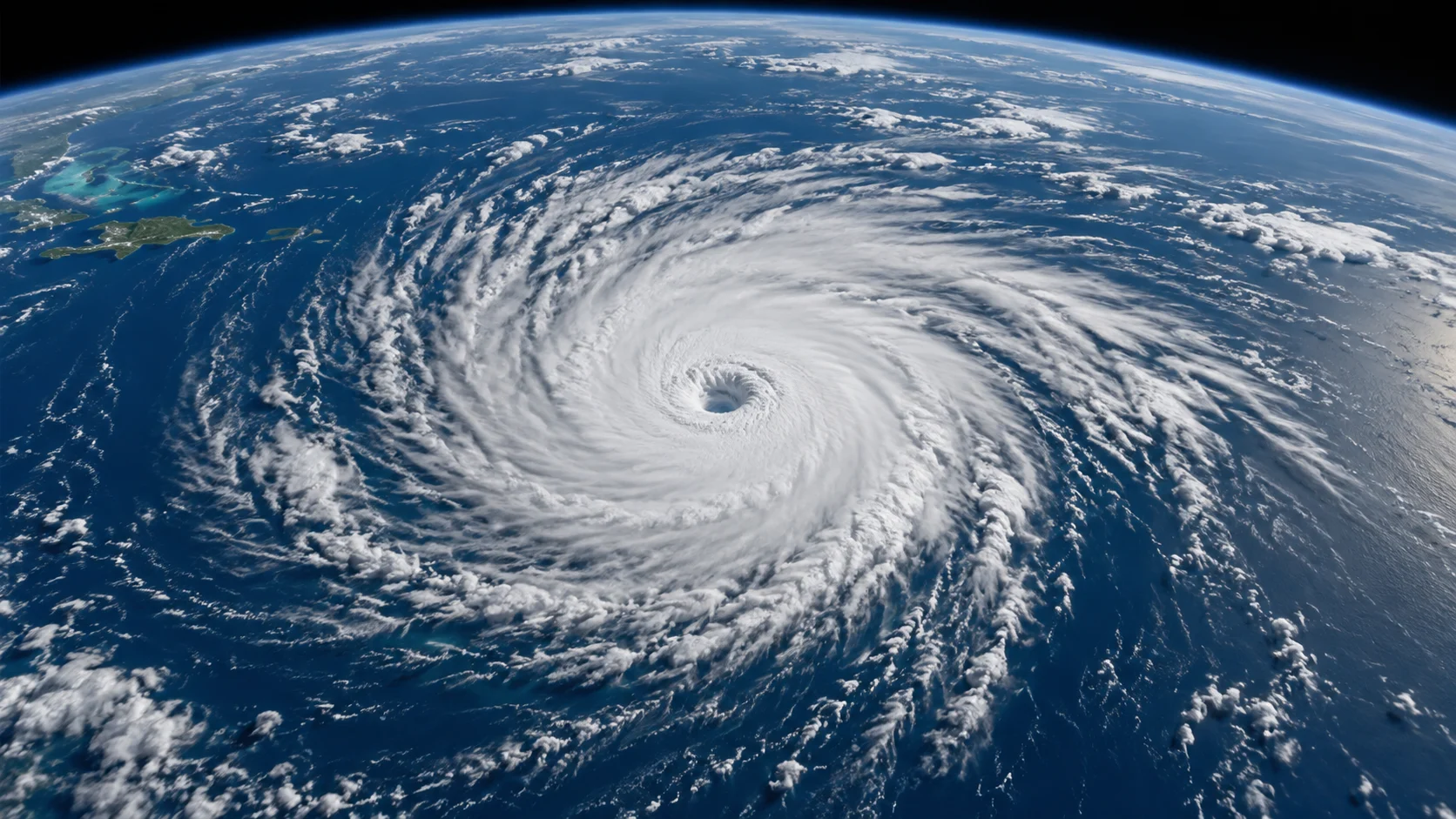
How Hurricanes Begin
Q: What broad type of storm is a hurricane?
A: A tropical cyclone.
Q: Over what kind of water do hurricanes form?
A: Warm tropical or subtropical ocean water.
Q: What is a tropical cyclone called before its sustained winds reach 39 mph?
A: A tropical depression.
Q: At what sustained wind speed does a tropical depression become a tropical storm?
A: 39 mph.
Q: At what sustained wind speed does a tropical storm become a hurricane?
A: 74 mph.
Q: What atmospheric pressure pattern sits at a hurricane's center?
A: Low pressure.
Q: What provides the heat energy that powers a hurricane?
A: Warm ocean water.
Q: What happens to water vapor as rising air cools inside a storm?
A: It condenses into clouds and rain.
Q: What does condensation release that helps fuel a hurricane?
A: Latent heat.
Q: What is the name for winds changing speed or direction with height?
A: Wind shear.
Q: Does strong vertical wind shear usually help or hinder hurricane formation?
A: It usually hinders it.
Q: What force caused by Earth's rotation helps tropical cyclones spin?
A: The Coriolis force.
Q: Why do hurricanes rarely form right at the equator?
A: The Coriolis force is too weak there.
Q: What organized weather feature can develop into a tropical cyclone before it has a closed circulation?
A: A tropical disturbance.
Q: What usually happens to a hurricane's energy supply after it moves over land?
A: It weakens as it loses warm ocean heat and moisture.
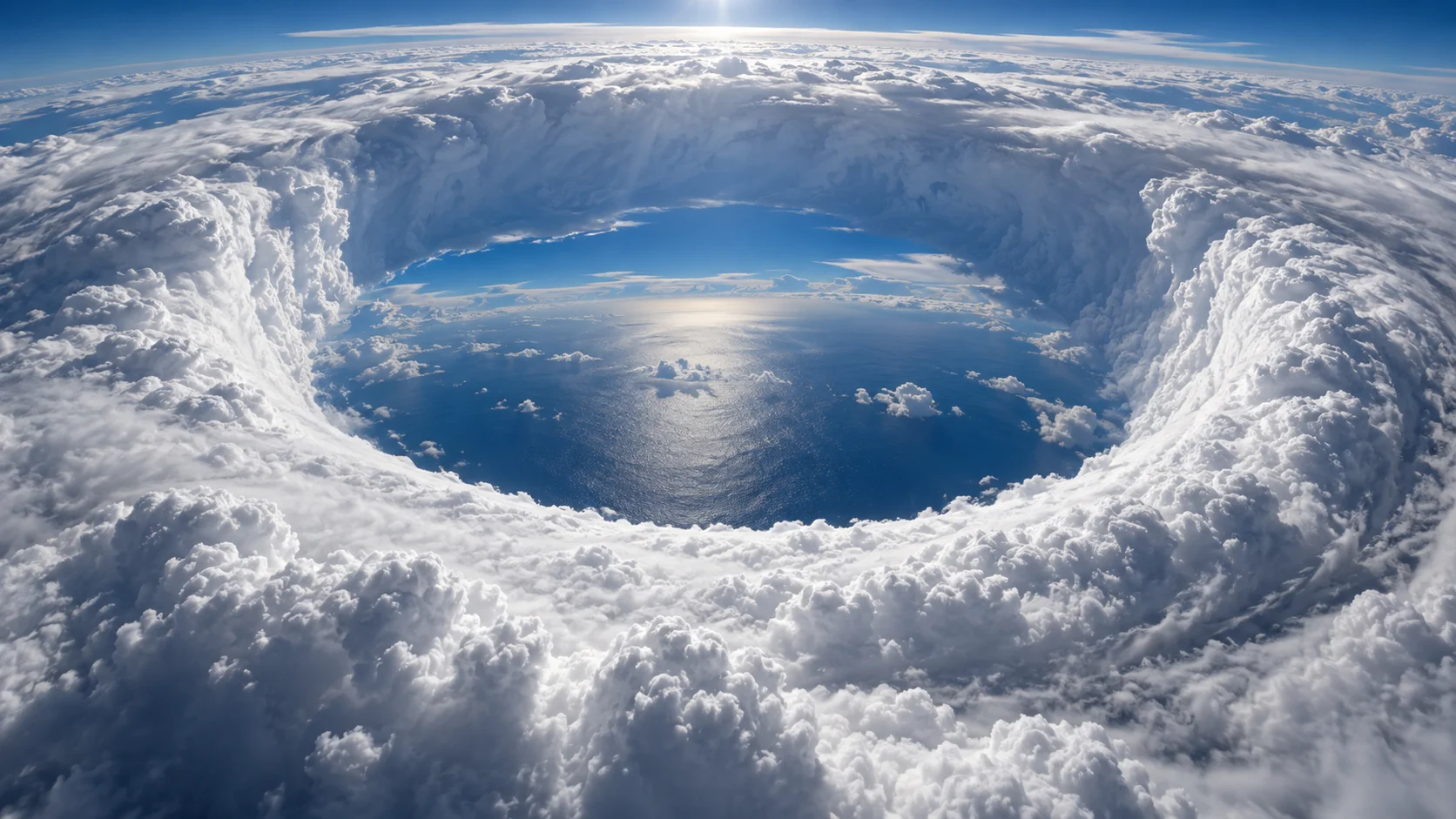
Eyes, Eyewalls, and Rainbands
Q: What is the relatively calm area at the center of a strong hurricane?
A: The eye.
Q: What ring of intense thunderstorms surrounds the eye?
A: The eyewall.
Q: Where are a hurricane's strongest surface winds usually found?
A: In the eyewall.
Q: What curved bands of showers and thunderstorms spiral away from the center?
A: Rainbands.
Q: Is the air pressure higher or lower in the eye than outside the storm?
A: Lower.
Q: What direction do hurricane winds rotate in the Northern Hemisphere?
A: Counterclockwise.
Q: What direction do tropical cyclones rotate in the Southern Hemisphere?
A: Clockwise.
Q: What is an eyewall replacement cycle?
A: A new outer eyewall forms and replaces the inner one.
Q: What commonly happens to maximum winds during an eyewall replacement cycle?
A: They weaken temporarily.
Q: What commonly happens to the storm's wind field during an eyewall replacement cycle?
A: It expands.
Q: What do meteorologists call the upper-level flow that carries air away from a hurricane?
A: Outflow.
Q: What towering cloud type dominates a hurricane's thunderstorms?
A: Cumulonimbus.
Q: What term describes a storm becoming stronger quickly?
A: Rapid intensification.
Q: How much must maximum sustained wind increase in 24 hours to meet the standard definition of rapid intensification?
A: At least 30 knots, or about 35 mph.
Q: Can dangerous weather arrive well before a hurricane's eye?
A: Yes.
Categories and Measurements
Q: What scale rates hurricanes from Category 1 through Category 5?
A: The Saffir-Simpson Hurricane Wind Scale.
Q: What single measurement determines a hurricane's Saffir-Simpson category?
A: Maximum sustained wind speed.
Q: Does the Saffir-Simpson scale include storm surge?
A: No.
Q: Does the Saffir-Simpson scale include rainfall flooding?
A: No.
Q: What is the wind range for a Category 1 hurricane?
A: 74 to 95 mph.
Q: Which category covers sustained winds from 96 to 110 mph?
A: Category 2.
Q: What is the lowest category considered a major hurricane?
A: Category 3.
Q: Which categories are called major hurricanes?
A: Categories 3, 4, and 5.
Q: A hurricane with sustained winds of 140 mph belongs to which category?
A: Category 4.
Q: At what wind speed does Category 5 begin?
A: 157 mph.
Q: What unit abbreviated kt is often used for tropical cyclone winds?
A: Knots.
Q: What instrument measures wind speed?
A: An anemometer.
Q: What instrument measures atmospheric pressure?
A: A barometer.
Q: What does a hurricane's central pressure generally do as the storm strengthens?
A: It falls.
Q: Is a hurricane's category a complete measure of its danger?
A: No.
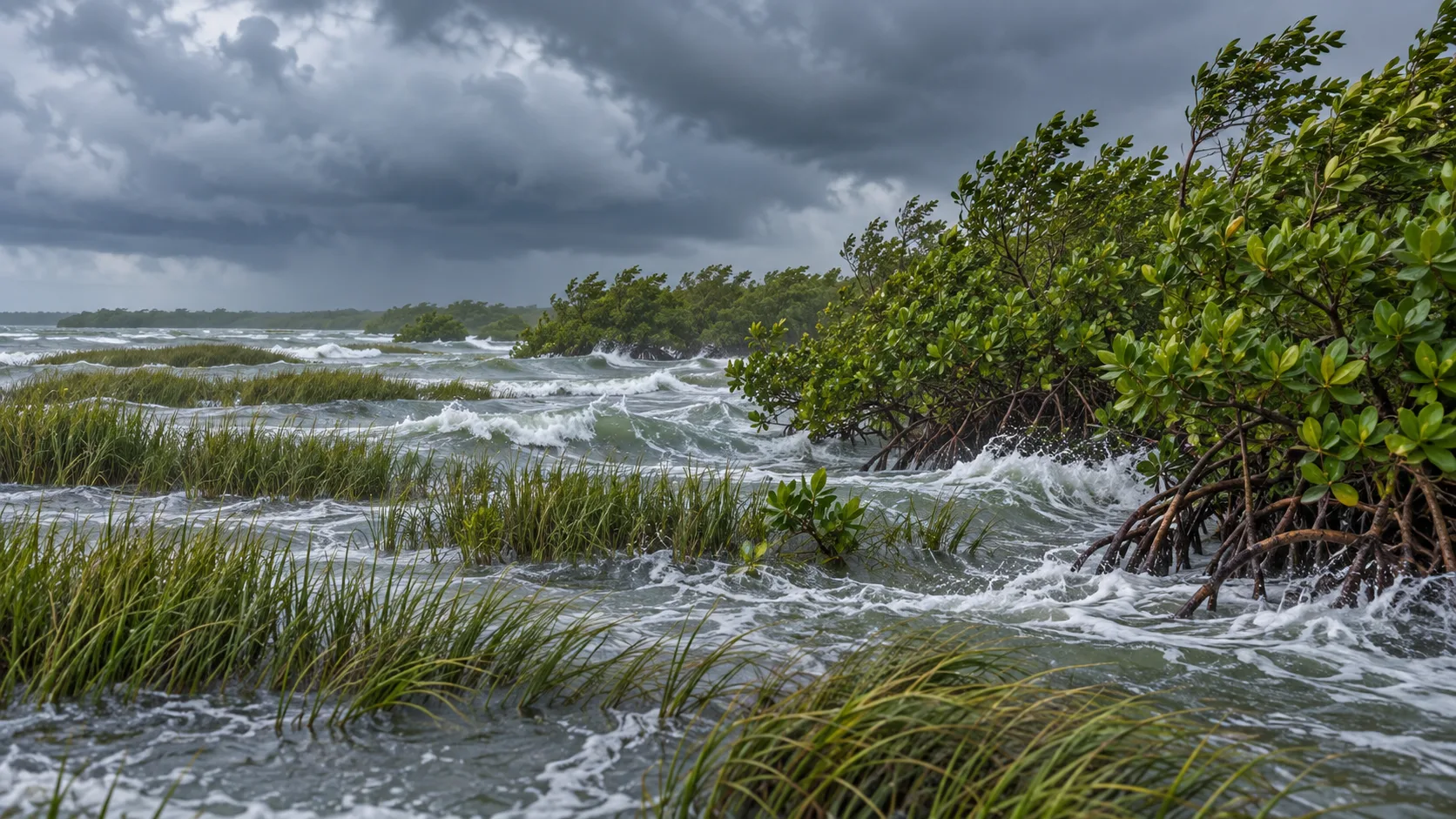
Surge, Rain, Wind, and Waves
Q: What is storm surge?
A: An abnormal rise of seawater caused by a storm.
Q: What is storm tide?
A: Storm surge combined with the astronomical tide.
Q: Which hurricane hazard pushes ocean water onto normally dry land?
A: Storm surge.
Q: Can a lower-category hurricane produce a devastating surge?
A: Yes.
Q: What coastal feature can amplify storm surge when water is pushed into a narrowing bay?
A: The shape of the coastline.
Q: How can shallow water near shore affect storm surge?
A: It can help pile water higher.
Q: What inland hazard can continue long after a hurricane weakens?
A: Freshwater flooding.
Q: Can tropical cyclones produce tornadoes?
A: Yes.
Q: In which part of a Northern Hemisphere hurricane are tornadoes often favored?
A: The right-front quadrant.
Q: What are rip currents?
A: Narrow, fast-moving currents flowing away from shore.
Q: Can a distant hurricane create dangerous surf and rip currents?
A: Yes.
Q: What is the eye-passage trap for people outside?
A: Mistaking a temporary lull for the storm's end.
Q: Why can winds suddenly reverse after the eye passes?
A: The opposite side of the circulation arrives.
Q: What damage can wind-driven debris cause?
A: It can break windows and injure people.
Q: Which often travels farther inland, hurricane-force winds or flooding rain?
A: Flooding rain.
Forecasting the Storm
Q: Which U.S. agency issues Atlantic hurricane forecasts?
A: The National Hurricane Center.
Q: In which Florida city is the National Hurricane Center located?
A: Miami.
Q: What does the forecast cone show?
A: The probable track area of the storm's center.
Q: Does the forecast cone show the storm's full size?
A: No.
Q: Can dangerous impacts occur outside the forecast cone?
A: Yes.
Q: What aircraft nickname is used for crews that fly into tropical cyclones?
A: Hurricane Hunters.
Q: What expendable instrument do Hurricane Hunters drop to measure the atmosphere?
A: A dropsonde.
Q: What does weather radar reveal about a hurricane near land?
A: Rainfall, movement, and storm structure.
Q: What observing tool tracks hurricanes far out at sea from space?
A: Weather satellites.
Q: What is a hurricane watch?
A: Notice that hurricane conditions are possible in the area.
Q: What is a hurricane warning?
A: Notice that hurricane conditions are expected in the area.
Q: About how far ahead is a hurricane watch generally issued?
A: 48 hours before tropical-storm-force winds are expected.
Q: Why are hurricane warnings issued before tropical-storm-force winds begin?
A: Preparations become difficult once those winds arrive.
Q: What is a storm surge warning?
A: Notice of danger from life-threatening coastal inundation.
Q: Why are forecast tracks updated regularly?
A: Storms and atmospheric steering patterns change.
Names, Seasons, and Ocean Basins
Q: What organization maintains the rotating lists of Atlantic storm names?
A: The World Meteorological Organization.
Q: When does an Atlantic tropical cyclone receive a name?
A: When it becomes a tropical storm.
Q: How often do the standard Atlantic name lists repeat?
A: Every six years.
Q: Why is a hurricane name retired?
A: Because reusing it would be inappropriate after an especially deadly or costly storm.
Q: What term is used for the same kind of storm in the western North Pacific?
A: Typhoon.
Q: What term is commonly used in the Indian Ocean and South Pacific?
A: Tropical cyclone.
Q: Which date opens the official Atlantic hurricane season?
A: June 1.
Q: What date marks the season's official close in the Atlantic?
A: November 30.
Q: Which month is usually the climatological peak of Atlantic hurricane activity?
A: September.
Q: Can Atlantic hurricanes occur outside the official season?
A: Yes.
Q: What region between Africa and the Americas often supplies disturbances that become Atlantic hurricanes?
A: The tropical Atlantic.
Q: What is a Cape Verde hurricane?
A: A hurricane that develops from a disturbance near the Cabo Verde Islands.
Q: What recurring Pacific pattern can suppress Atlantic hurricane activity through stronger wind shear?
A: El Niño.
Q: What recurring Pacific pattern often favors more Atlantic hurricane activity?
A: La Niña.
Q: What happens if all 21 standard Atlantic storm names are used in one season?
A: Names come from a supplemental list.
Historic Hurricanes
Q: Which 1900 hurricane caused the deadliest natural disaster in U.S. history?
A: The Galveston hurricane.
Q: Which city was devastated by Hurricane Katrina in 2005?
A: New Orleans.
Q: What failed around New Orleans during Hurricane Katrina?
A: Levees and floodwalls.
Q: Which 1992 hurricane devastated South Florida?
A: Hurricane Andrew.
Q: Which 1969 hurricane struck the Mississippi Gulf Coast as a Category 5?
A: Hurricane Camille.
Q: Which 2012 storm produced catastrophic surge in New York and New Jersey?
A: Hurricane Sandy.
Q: Which 2017 hurricane devastated Puerto Rico?
A: Hurricane Maria.
Q: Which 2017 hurricane stalled over southeastern Texas and produced catastrophic rainfall?
A: Hurricane Harvey.
Q: Which 2017 hurricane maintained Category 5 intensity while crossing parts of the Caribbean?
A: Hurricane Irma.
Q: Which 2005 hurricane reached the lowest central pressure recorded in the Atlantic basin?
A: Hurricane Wilma.
Q: Which 1935 storm remains the most intense hurricane at U.S. landfall by central pressure?
A: The Labor Day hurricane.
Q: Which 1988 hurricane brought major destruction to Jamaica and Mexico?
A: Hurricane Gilbert.
Q: Which 1998 hurricane caused catastrophic flooding in Central America?
A: Hurricane Mitch.
Q: Which 2004 hurricane crossed Florida and later made a second U.S. landfall?
A: Hurricane Ivan.
Q: Which 2022 hurricane caused catastrophic storm surge in southwest Florida?
A: Hurricane Ian.
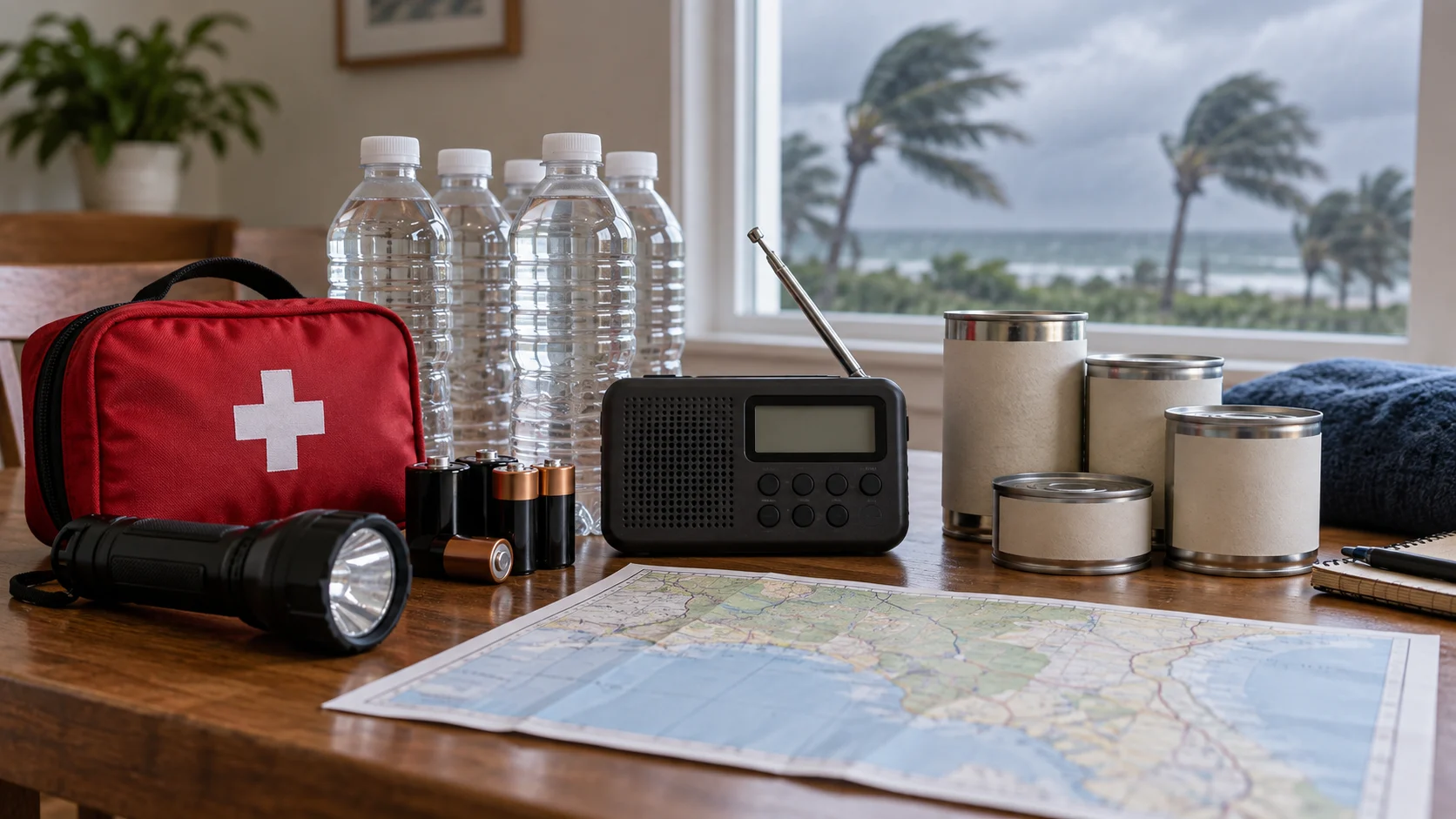
Prepare, Shelter, and Recover
Q: Who should you follow when an evacuation order is issued?
A: Local emergency officials.
Q: When should a household make a hurricane plan?
A: Before hurricane season or a storm threatens.
Q: What should an emergency kit include for power outages?
A: Flashlights and extra batteries.
Q: How much drinking water should emergency supplies include per person per day?
A: At least one gallon.
Q: Where is the safest place in a home during extreme wind if evacuation is not required?
A: A small interior room away from windows.
Q: Should you shelter in a mobile home during hurricane winds?
A: No.
Q: What should you do with outdoor furniture before a hurricane?
A: Bring it inside or secure it.
Q: Does tape keep windows from breaking in hurricane winds?
A: No.
Q: What provides real window protection against windborne debris?
A: Storm shutters or properly installed plywood.
Q: What should you do when a road is covered by floodwater?
A: Turn around and do not drive through it.
Q: Why should a portable generator never run inside a home or garage?
A: It can cause deadly carbon monoxide poisoning.
Q: How far should a portable generator be kept from a home, according to federal safety guidance?
A: At least 20 feet.
Q: Why should downed power lines be avoided after a storm?
A: They may still be energized.
Q: What document helps prove losses for an insurance claim?
A: A home inventory with photos or video.
Q: What simple rule applies before returning to an evacuated area?
A: Wait until local officials say it is safe.
You Weathered the Whole Quiz
If you made it through all 120, your forecast calls for a 100 percent chance of bragging rights. Keep the momentum going with our decades trivia and famous people trivia.

Ellie Ewert is the founder and author of RandomTrivia.co, blending her passion for research with years of experience in content creation to deliver accurate, engaging, and well-sourced trivia. Dedicated to providing readers with trustworthy and entertaining facts, she applies meticulous fact-checking and SEO expertise to ensure every article meets the highest standards. Read more about our high standards in our Editorial Guidelines.