
Gardening is equal parts sunlight, timing, soil science, and accepting that a squirrel has its own landscaping plan.
These gardening trivia questions focus on plant care, propagation, tools, soil, and growing terminology rather than becoming another identification quiz.
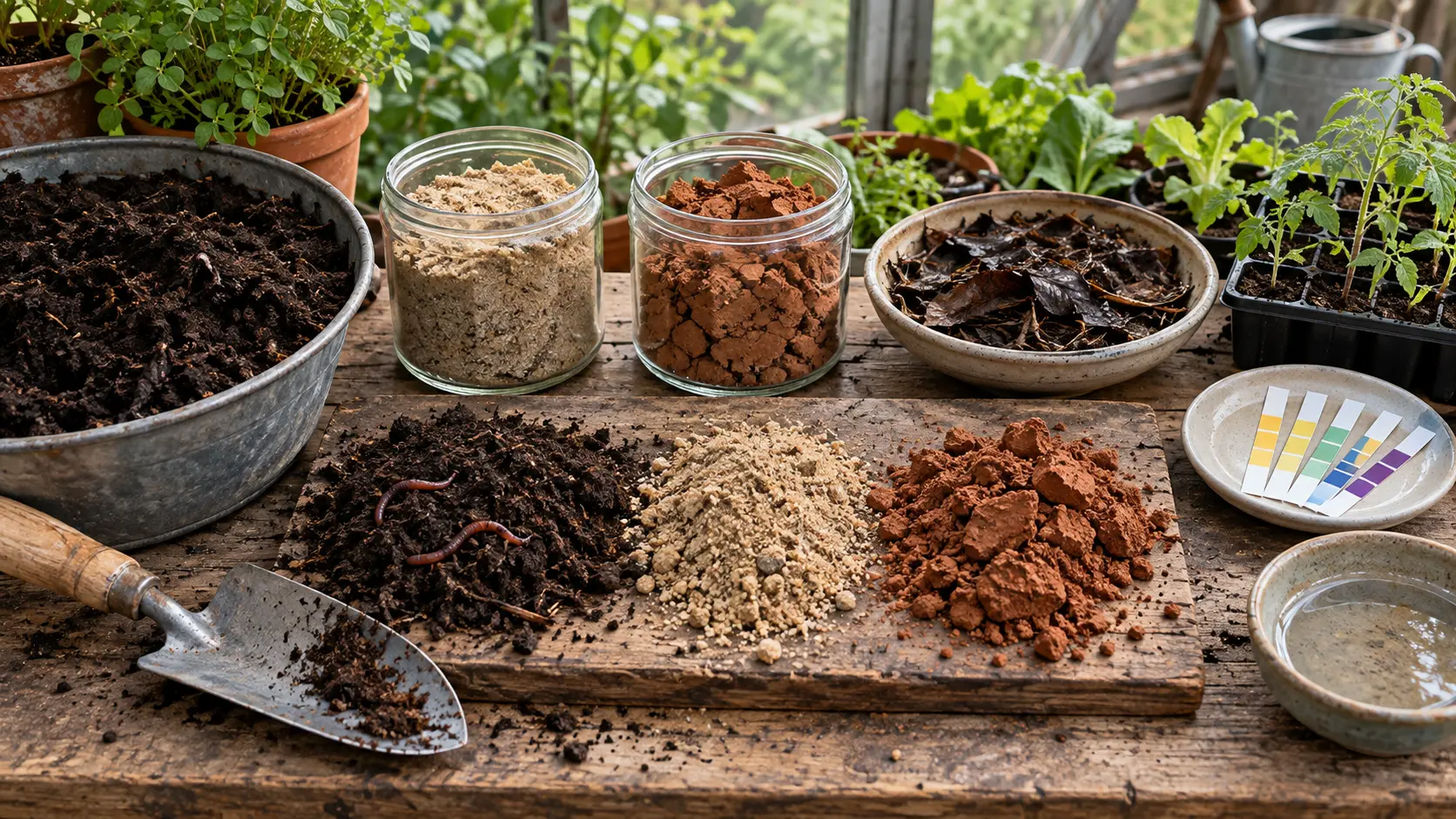
Soil, Compost, and Plant Nutrition
Healthy roots begin below the surface, where texture, chemistry, and living organisms all matter.
- What three particle groups define soil texture?
Answer: Sand, silt, and clay - Which soil particle is largest?
Answer: Sand - Which soil particle is smallest?
Answer: Clay - What balanced soil texture contains sand, silt, and clay?
Answer: Loam - What does soil pH measure?
Answer: Acidity or alkalinity - What pH is neutral?
Answer: 7 - Which primary nutrient is represented by N on fertilizer labels?
Answer: Nitrogen - Which nutrient is represented by P?
Answer: Phosphorus - Which nutrient is represented by K?
Answer: Potassium - What does compost add to soil?
Answer: Organic matter and nutrients - What organisms perform much of compost decomposition?
Answer: Microorganisms - What carbon-rich compost ingredients are called?
Answer: Browns - What nitrogen-rich compost ingredients are called?
Answer: Greens - What is humus?
Answer: Stable, decomposed organic matter in soil - What test gives gardeners information about pH and nutrient levels?
Answer: A soil test
Seeds, Germination, and Young Plants
A seed may look quiet, but moisture and warmth can switch on an entire growing season.
- What three basics do most seeds need to germinate?
Answer: Moisture, suitable temperature, and oxygen - What is germination?
Answer: The start of growth from a seed - What is the first root emerging from a seed called?
Answer: The radicle - What are seed leaves called?
Answer: Cotyledons - What is a seedling's first set of true leaves?
Answer: Leaves that resemble the mature plant's foliage - What does direct sowing mean?
Answer: Planting seed where the crop will grow - What is transplanting?
Answer: Moving a plant to a new growing site - What is thinning seedlings?
Answer: Removing extras to give remaining plants space - What does hardening off do?
Answer: Gradually acclimates seedlings to outdoor conditions - What is seed stratification?
Answer: A moist temperature treatment that breaks dormancy - What is scarification?
Answer: Weakening a hard seed coat to aid germination - Why are some tiny seeds surface-sown?
Answer: They need light to germinate - What is a seed's viability?
Answer: Its ability to germinate - What information does a germination-rate test provide?
Answer: The percentage of seeds likely to sprout - What is damping-off?
Answer: A seedling disease caused by soilborne pathogens
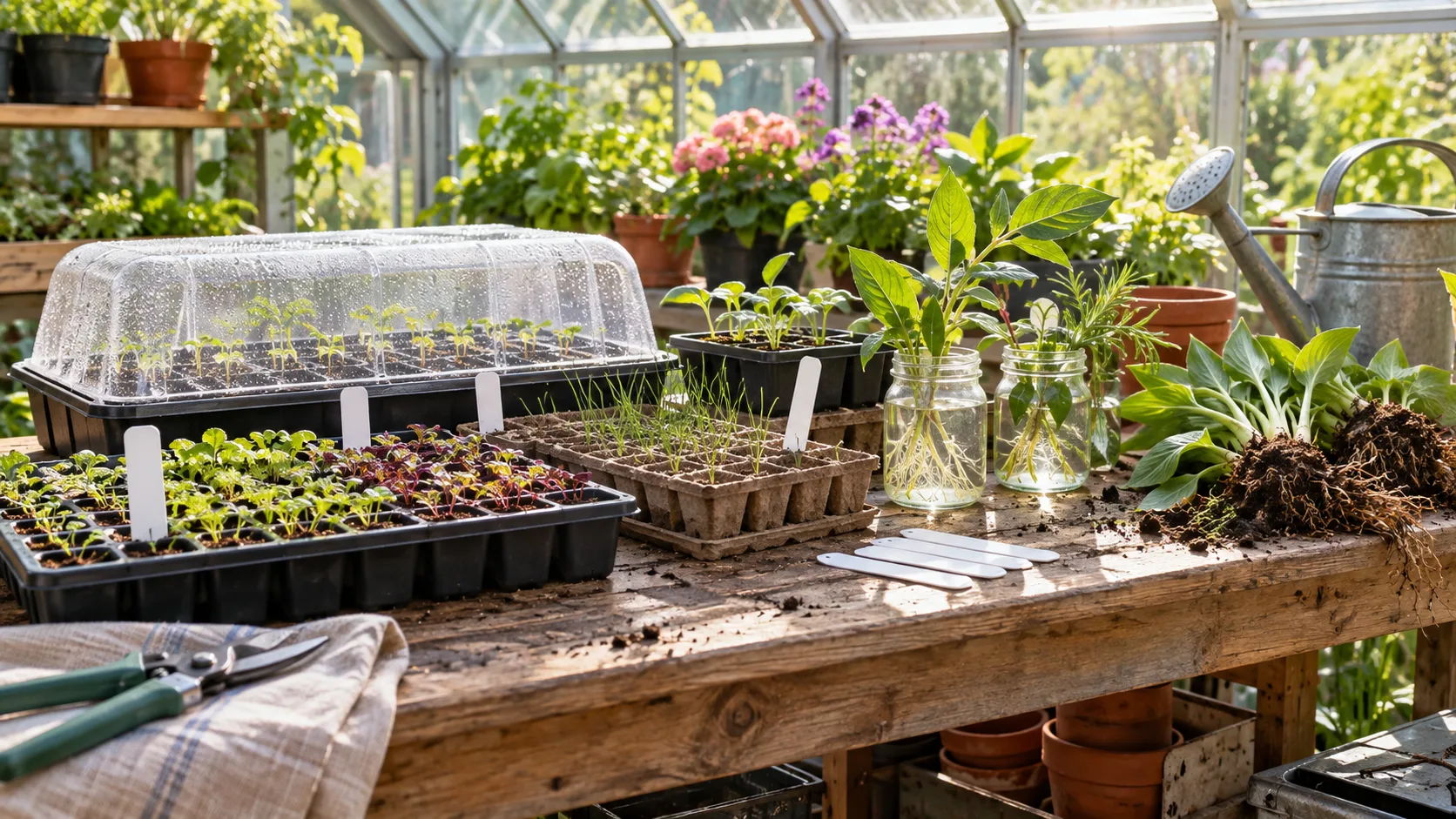
Cuttings, Division, and Other Propagation
Plants have more than one way to multiply, and gardeners happily take advantage of that.
- What is vegetative propagation?
Answer: Producing plants from non-seed plant parts - What is a stem cutting?
Answer: A piece of stem rooted to form a new plant - What does rooting hormone encourage?
Answer: Root formation on cuttings - What is division?
Answer: Separating a mature plant into rooted sections - What is layering?
Answer: Rooting a stem while it remains attached to the parent plant - What is air layering?
Answer: Encouraging roots on an aboveground stem before cutting it free - What is grafting?
Answer: Joining plant tissues so they grow together - What is the rooted lower portion of a grafted plant called?
Answer: The rootstock - What is the upper desired variety in a graft called?
Answer: The scion - What is budding?
Answer: A grafting method using a single bud - What is a runner or stolon?
Answer: A horizontal stem that can produce new plants - Which familiar fruit plant commonly spreads by runners?
Answer: Strawberry - What is a bulb?
Answer: An underground storage organ with a short stem and fleshy leaves - What is a rhizome?
Answer: A horizontal underground stem - What does tissue culture produce under sterile conditions?
Answer: Many cloned plantlets
Water, Sunlight, and Everyday Plant Care
Good care is less about a rigid schedule and more about reading the plant and its conditions.
- What does full sun usually mean on a plant label?
Answer: At least about six hours of direct sun daily - What is partial shade?
Answer: Limited direct sun, often roughly three to six hours - Why is morning watering often recommended?
Answer: Leaves can dry and less water is lost to heat - What is deep watering?
Answer: Applying enough water to moisten the root zone - Why can frequent shallow watering be unhelpful?
Answer: It encourages shallow roots - What is drip irrigation?
Answer: Slow water delivery near plant roots - What is mulch?
Answer: Material spread over soil surface - What can mulch reduce?
Answer: Evaporation and weed growth - Why should mulch be kept away from tree trunks?
Answer: Piled mulch can encourage rot and pests - What is wilting?
Answer: Loss of firmness from insufficient water uptake or other stress - Can wilting also occur in waterlogged soil?
Answer: Yes - What is chlorosis?
Answer: Yellowing caused by reduced chlorophyll - What does acclimation mean for a houseplant?
Answer: Adjustment to new light, temperature, or humidity - Why rotate many houseplants?
Answer: To encourage even growth toward light - What is bottom watering?
Answer: Letting a pot absorb water through drainage holes
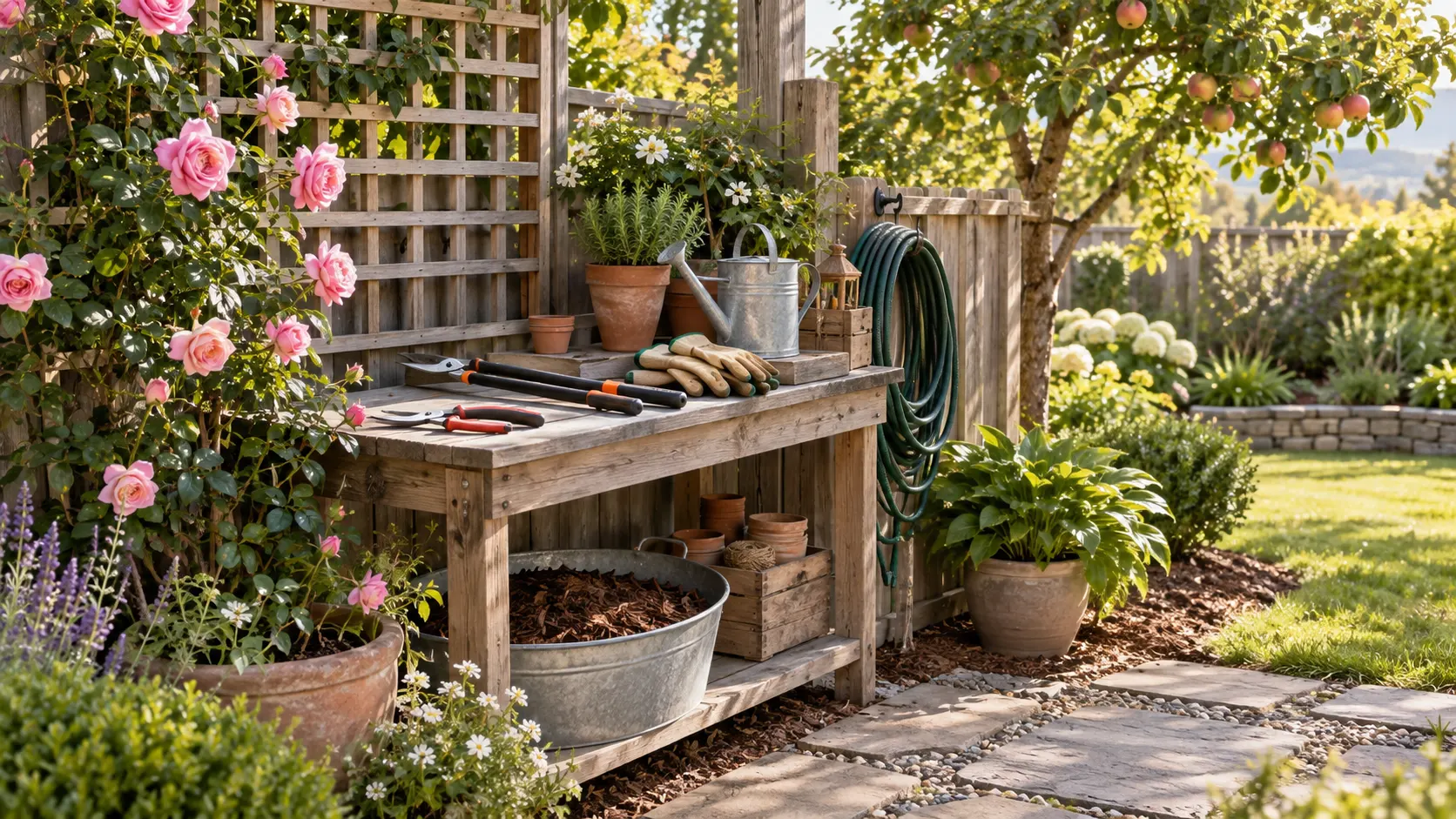
Pruning, Training, and Garden Tools
Sharp tools and correct timing can improve health, shape, access, and harvest.
- What are hand pruners used for?
Answer: Cutting small stems and branches - What tool cuts branches too thick for hand pruners?
Answer: Loppers - What tool cuts larger woody branches?
Answer: A pruning saw - What is a bypass pruner?
Answer: A pruner with blades that pass like scissors - What is an anvil pruner?
Answer: A blade closing onto a flat surface - What does deadheading remove?
Answer: Spent flowers - Why deadhead many annuals?
Answer: To encourage more blooms and prevent unwanted seed - What is pinching?
Answer: Removing soft shoot tips to promote branching - What is staking?
Answer: Supporting a plant upright - What is a trellis?
Answer: A framework supporting climbing plants - What is espalier?
Answer: Training a woody plant flat in a pattern - What is coppicing?
Answer: Cutting woody plants near ground level to stimulate shoots - What is pollarding?
Answer: Regularly cutting upper branches back to the same framework - Why disinfect pruning tools between diseased plants?
Answer: To reduce pathogen spread - Why make a tree-pruning cut just outside the branch collar?
Answer: To support natural wound closure
Pests, Diseases, and Garden Ecology
The goal is not a sterile yard but a balanced garden where problems are noticed early and handled thoughtfully.
- What does IPM stand for?
Answer: Integrated pest management - What is the first step in good pest management?
Answer: Correctly identify the problem - What are aphids?
Answer: Sap-feeding insects - What do lady beetles often eat?
Answer: Aphids and other small pests - What sticky substance do aphids excrete?
Answer: Honeydew - What black growth may develop on honeydew?
Answer: Sooty mold - What are spider mites?
Answer: Tiny sap-feeding arachnids - What mollusks may chew irregular holes in leaves at night?
Answer: Slugs and snails - What is powdery mildew?
Answer: A group of fungal diseases producing powdery growth - What condition often encourages root rot?
Answer: Poor drainage or overwatering - What is blossom-end rot in tomatoes linked to?
Answer: Inadequate calcium reaching developing fruit, often from uneven watering - What is crop rotation?
Answer: Changing plant families grown in a bed over time - Why remove diseased plant debris?
Answer: It may harbor pathogens or pests - What are beneficial insects?
Answer: Insects that pollinate or help control pests - What is biological control?
Answer: Using living organisms to reduce pest populations
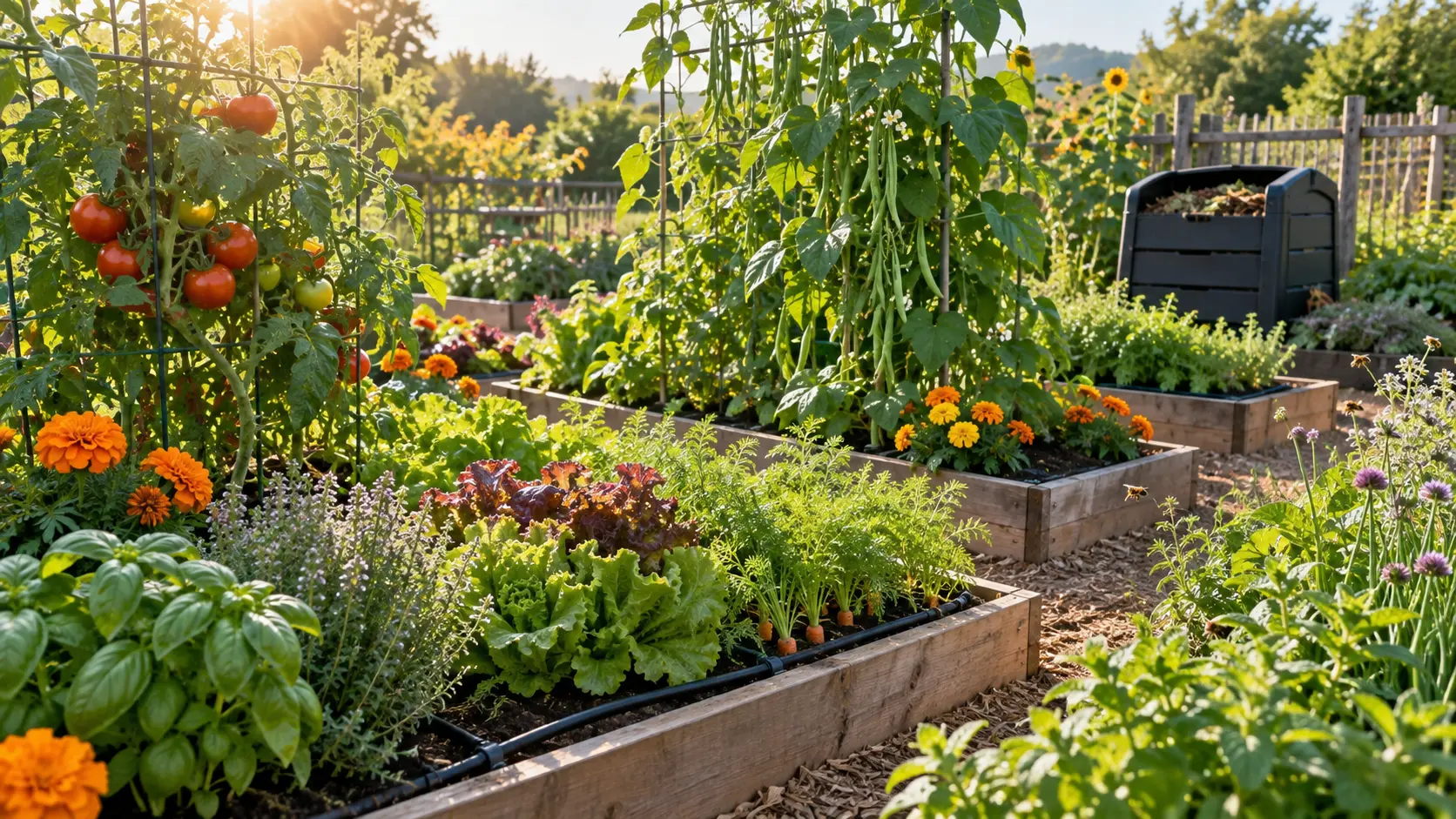
Vegetable Beds and Edible Gardening
These questions focus on timing, plant families, pollination, and practical harvest clues.
- Which vegetable family includes tomatoes, peppers, and eggplants?
Answer: The nightshade family, Solanaceae - Which family includes cabbage, broccoli, and kale?
Answer: Brassicaceae - Which family includes beans and peas?
Answer: Fabaceae, the legume family - What special ability do legumes have with bacterial partners?
Answer: They can fix atmospheric nitrogen in root nodules - Are tomatoes botanically fruits?
Answer: Yes - Are cucumbers botanically fruits?
Answer: Yes - What does succession planting mean?
Answer: Sowing or planting at intervals for continued harvest - What is companion planting?
Answer: Growing plants together for practical benefits, though claims vary in evidence - What is intercropping?
Answer: Growing two or more crops together in the same area - What is a cool-season crop?
Answer: A crop that grows best in cool weather - Name one common cool-season crop.
Answer: Lettuce, peas, kale, or radishes - Name one common warm-season crop.
Answer: Tomatoes, peppers, squash, or beans - Why do squash plants need pollination?
Answer: To develop fruit from female flowers - What is bolting?
Answer: Premature flowering and seed production - When are many leafy greens best harvested?
Answer: While leaves are tender, often in cool morning hours
Seasons, Zones, and Garden Planning
Finish with climate labels and design terms that help gardeners put the right plant in the right place.
- What is an annual plant?
Answer: A plant completing its life cycle in one growing season - What is a biennial?
Answer: A plant completing its life cycle over two growing seasons - What is a perennial?
Answer: A plant living for more than two years - What is a deciduous plant?
Answer: A plant that seasonally sheds its leaves - What is an evergreen?
Answer: A plant retaining foliage through more than one season - What is dormancy?
Answer: A period of greatly reduced growth - What does frost tender mean?
Answer: Likely to be damaged by frost - What is a hardiness zone?
Answer: A region based mainly on average annual extreme minimum temperature - Which agency publishes the U.S. Plant Hardiness Zone Map?
Answer: The U.S. Department of Agriculture - What is a microclimate?
Answer: A small area's climate differing from its surroundings - What is xeriscaping?
Answer: Landscaping designed to reduce supplemental water use - What is a rain garden?
Answer: A planted depression that captures runoff - What is a raised bed?
Answer: A growing area elevated above surrounding ground - What is crop spacing based on?
Answer: Mature size, airflow, light, and resource needs - What garden record can improve future seasons?
Answer: A journal of dates, varieties, weather, pests, and harvests
Keep the game going with plants trivia, spring trivia, environmental science trivia, and food trivia.
Sources and Further Reading
- USDA Plant Hardiness Zone Map
- USDA Natural Resources Conservation Service soils
- U.S. Environmental Protection Agency green infrastructure
- Royal Horticultural Society advice
- University of Minnesota Extension gardening

Ellie Ewert is the founder and author of RandomTrivia.co, blending her passion for research with years of experience in content creation to deliver accurate, engaging, and well-sourced trivia. Dedicated to providing readers with trustworthy and entertaining facts, she applies meticulous fact-checking and SEO expertise to ensure every article meets the highest standards. Read more about our high standards in our Editorial Guidelines.