
Brace yourself for an earthquake trivia tour through moving plates, seismic waves, famous faults, and some seriously shaky history.
These questions keep the science solid while exploring how people measure, study, and prepare for earthquakes around the world.
Earthquake Basics
Q: What is an earthquake?
A: A sudden release of energy that shakes the ground.
Q: What is the underground point where an earthquake begins?
A: The hypocenter, or focus.
Q: What is the point on Earth's surface directly above the hypocenter?
A: The epicenter.
Q: What is a fracture along which rocks move?
A: A fault.
Q: What theory explains the movement of Earth's large crustal plates?
A: Plate tectonics.
Q: In which rigid outer layer do tectonic plates move?
A: The lithosphere.
Q: What slower-moving layer lies beneath the lithosphere?
A: The asthenosphere.
Q: What term describes the sudden slipping of locked rock along a fault?
A: Elastic rebound.
Q: What is the motion between two sides of a fault called?
A: Slip.
Q: What kind of stress pulls rock apart?
A: Tension.
Q: What kind of stress squeezes rock together?
A: Compression.
Q: What kind of stress pushes rock sideways in opposite directions?
A: Shear.
Q: What is the study of earthquakes called?
A: Seismology.
Q: What scientist studies earthquakes and seismic waves?
A: A seismologist.
Q: Are most earthquakes caused by weather?
A: No.
Faults and Plate Boundaries
Q: What fault type forms when the hanging wall moves down?
A: A normal fault.
Q: Which fault has a hanging wall displaced upward relative to its footwall?
A: A reverse fault.
Q: What low-angle reverse fault is common at subduction zones?
A: A thrust fault.
Q: What fault type involves mainly horizontal motion?
A: A strike-slip fault.
Q: What boundary forms where plates move apart?
A: A divergent boundary.
Q: Colliding tectonic plates meet at which kind of boundary?
A: A convergent boundary.
Q: What boundary forms where plates slide past each other?
A: A transform boundary.
Q: What process sends one tectonic plate beneath another?
A: Subduction.
Q: What undersea mountain system marks many divergent boundaries?
A: The mid-ocean ridge system.
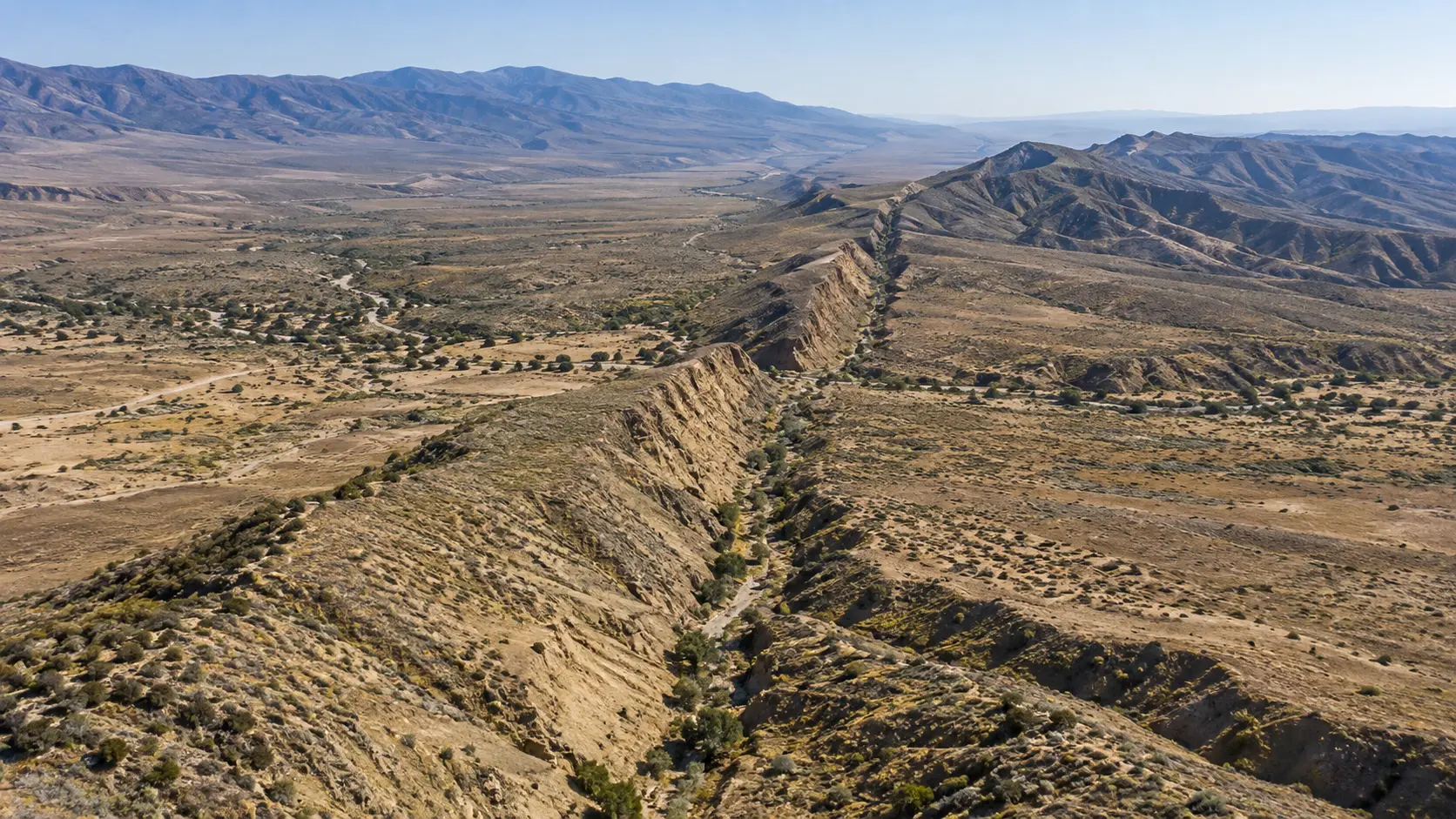
Q: Which two plates meet along California's San Andreas Fault?
A: The Pacific and North American plates.
Q: What type of fault is the San Andreas?
A: A right-lateral strike-slip fault.
Q: What horseshoe-shaped seismic belt circles much of the Pacific?
A: The Ring of Fire.
Q: Where do most earthquakes occur, within plates or near their boundaries?
A: Near plate boundaries.
Q: Can earthquakes occur far from plate boundaries?
A: Yes.
Q: What is a fault called when it has moved in recent geologic time?
A: An active fault.
Waves and Instruments
Q: What waves travel through Earth's interior?
A: Body waves.
Q: Which seismic waves arrive first?
A: P waves.
Q: What does the P in P wave stand for?
A: Primary.
Q: How do P waves move material?
A: Back and forth parallel to the wave's direction.
Q: Which body waves arrive after P waves?
A: S waves.
Q: The letter S in S wave is short for what?
A: Secondary.
Q: Can S waves travel through liquids?
A: No.
Q: Which waves travel along Earth's surface?
A: Surface waves.
Q: What two main kinds of surface waves do earthquakes produce?
A: Love and Rayleigh waves.
Q: Which surface waves move the ground mainly side to side?
A: Love waves.
Q: Which surface waves create a rolling motion?
A: Rayleigh waves.
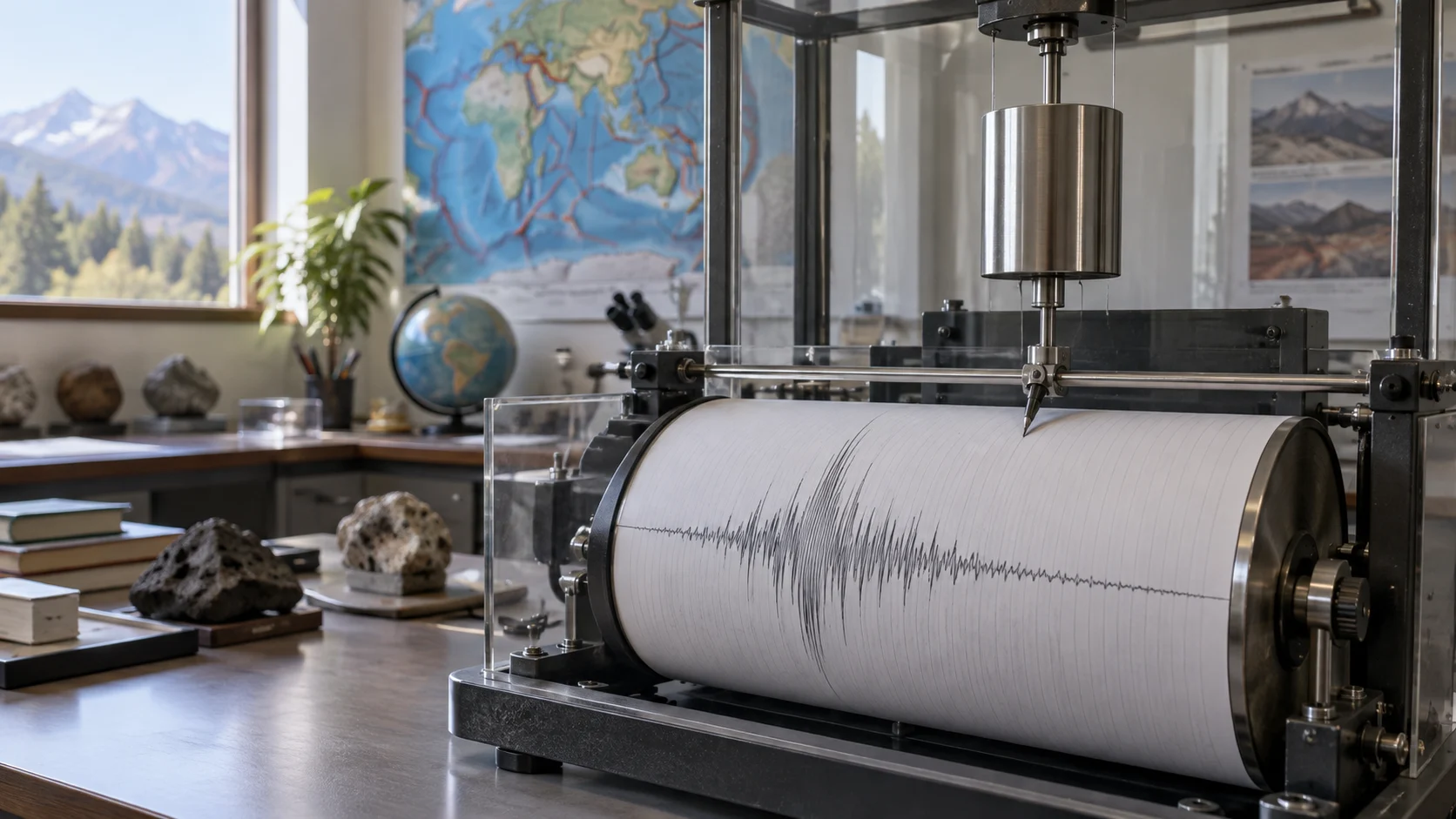
Q: What instrument detects and records ground motion?
A: A seismograph.
Q: What is the recorded trace from a seismograph called?
A: A seismogram.
Q: What wave-arrival gap helps scientists calculate distance to an earthquake?
A: The time between P and S waves.
Q: How many seismic stations are traditionally needed to locate an epicenter by triangulation?
A: At least three.
Magnitude and Intensity
Q: What does earthquake magnitude describe?
A: The earthquake's size at its source.
Q: How many magnitude values does one earthquake have?
A: One.
Q: Which measurement varies from place to place during one earthquake?
A: Intensity.
Q: Can one earthquake produce many intensity values?
A: Yes.
Q: Which scale is preferred for measuring very large earthquakes?
A: The moment magnitude scale.
Q: Which famous magnitude scale did Charles Richter develop?
A: The local magnitude scale.
Q: Is the Richter scale routinely used for large distant earthquakes today?
A: No.
Q: What U.S. scale rates observed shaking and damage?
A: The Modified Mercalli Intensity Scale.
Q: How are Modified Mercalli levels written?
A: With Roman numerals.
Q: What is the highest Modified Mercalli intensity?
A: XII.
Q: A one-unit magnitude increase means about how much greater wave amplitude?
A: Ten times greater.
Q: A one-unit magnitude increase releases about how much more energy?
A: About 32 times more.
Q: What physical quantity underlies moment magnitude?
A: Seismic moment.
Q: Does earthquake magnitude directly predict damage everywhere?
A: No.
Q: What local material often amplifies shaking more than solid bedrock?
A: Soft sediment.
Aftershocks and Secondary Hazards
Q: What smaller earthquakes follow a mainshock in the same area?
A: Aftershocks.
Q: When can an earlier earthquake be identified as a foreshock?
A: After a larger nearby earthquake occurs.
Q: What is the largest earthquake in a sequence called?
A: The mainshock.
Q: Can aftershocks continue for years?
A: Yes.
Q: What happens when waterlogged soil temporarily behaves like a liquid?
A: Liquefaction.
Q: What gravity-driven hazard can shaking trigger on steep slopes?
A: Landslides.
Q: What series of ocean waves can undersea earthquakes generate?
A: A tsunami.
Q: Does every undersea earthquake create a tsunami?
A: No.
Q: What seafloor motion is especially effective at generating tsunamis?
A: Sudden vertical displacement.
Q: What is a large wave sloshing inside a lake or reservoir called?
A: A seiche.
Q: What human activity can trigger small earthquakes by changing underground pressure?
A: Fluid injection.
Q: What underground process can produce earthquakes when magma moves?
A: Volcanic activity.
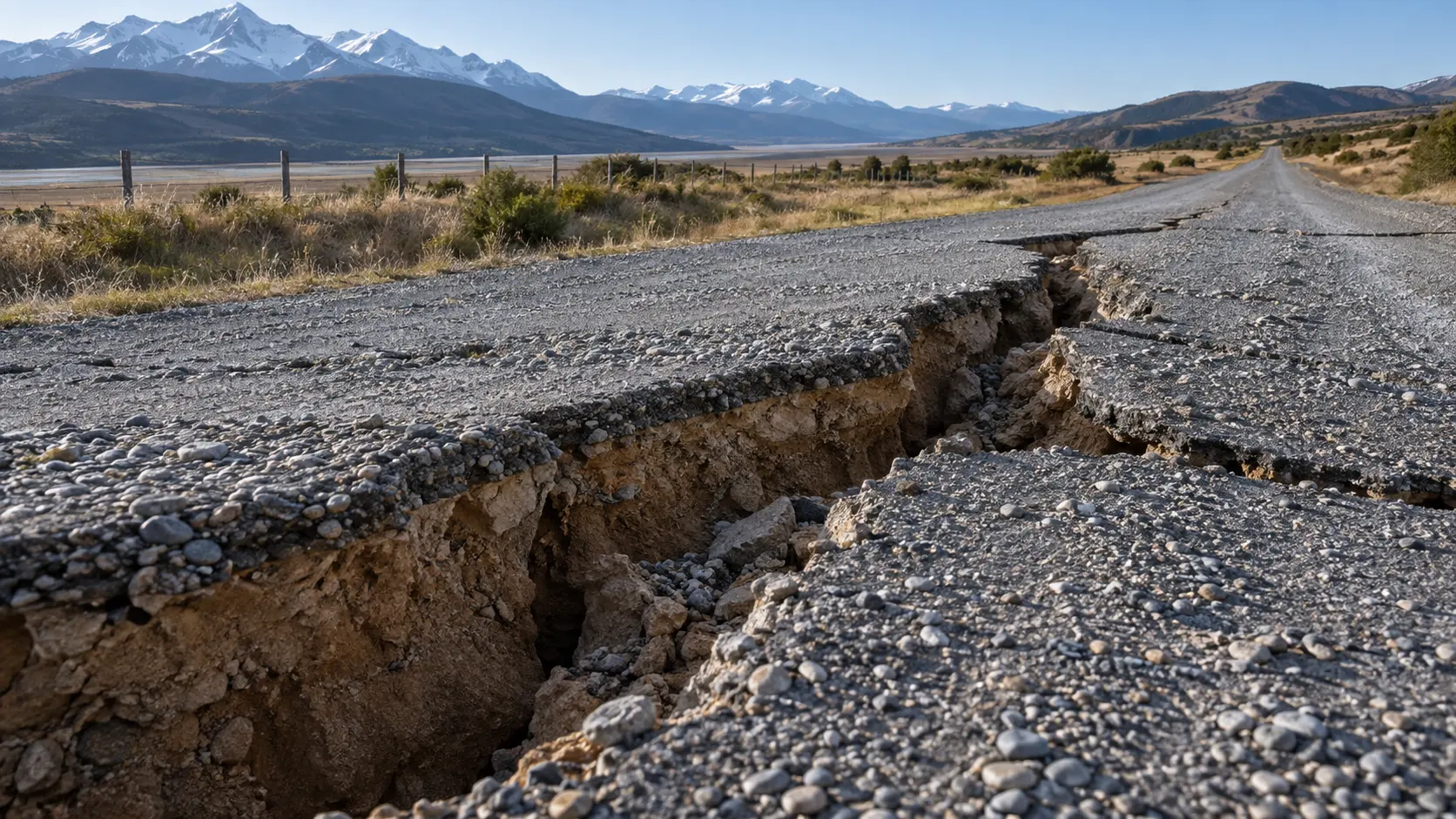
Q: What hazard occurs when a fault rupture reaches the ground surface?
A: Surface faulting.
Q: Can fires follow earthquakes when gas or electrical lines break?
A: Yes.
Q: What does an earthquake swarm contain?
A: Many earthquakes without one clearly dominant mainshock.
Landmark Earthquakes
Q: What 1906 earthquake devastated San Francisco?
A: The San Francisco earthquake.
Q: Which fault ruptured in the 1906 San Francisco earthquake?
A: The San Andreas Fault.
Q: What 1964 U.S. earthquake reached magnitude 9.2?
A: The Great Alaska earthquake.
Q: What is the largest instrumentally recorded earthquake?
A: The 1960 Valdivia earthquake in Chile.
Q: What magnitude was the 1960 Valdivia earthquake?
A: 9.5.
Q: Which 2004 earthquake triggered a deadly Indian Ocean tsunami?
A: The Sumatra-Andaman earthquake.
Q: Which country experienced the 2011 Tōhoku earthquake and tsunami?
A: Japan.
Q: What nuclear power plant was severely damaged after the 2011 tsunami?
A: Fukushima Daiichi.
Q: Which 1989 earthquake interrupted baseball's World Series?
A: The Loma Prieta earthquake.
Q: Which 1994 earthquake struck the Los Angeles area?
A: The Northridge earthquake.
Q: Which 2010 earthquake caused catastrophic damage in Haiti?
A: The Haiti earthquake.
Q: Which 1755 earthquake and tsunami devastated Lisbon?
A: The Lisbon earthquake.
Q: What U.S. region was shaken by a major earthquake sequence in 1811 and 1812?
A: New Madrid, Missouri.
Q: Which 1976 earthquake devastated Tangshan, China?
A: The Tangshan earthquake.
Q: Which 1995 earthquake caused severe damage in Kobe, Japan?
A: The Great Hanshin earthquake.
Engineering and Preparedness
Q: What three actions are recommended during strong shaking indoors?
A: Drop, cover, and hold on.
Q: Where should you shelter if a sturdy table is nearby?
A: Under the table.
Q: Should you run outside while a building is shaking?
A: No.
Q: Should you stand in a doorway during an earthquake?
A: No.
Q: What should drivers do during strong shaking?
A: Pull over safely and stay in the vehicle.
Q: What should coastal residents do after strong or long shaking?
A: Move to high ground.
Q: Why should heavy furniture be anchored to walls?
A: To keep it from toppling.
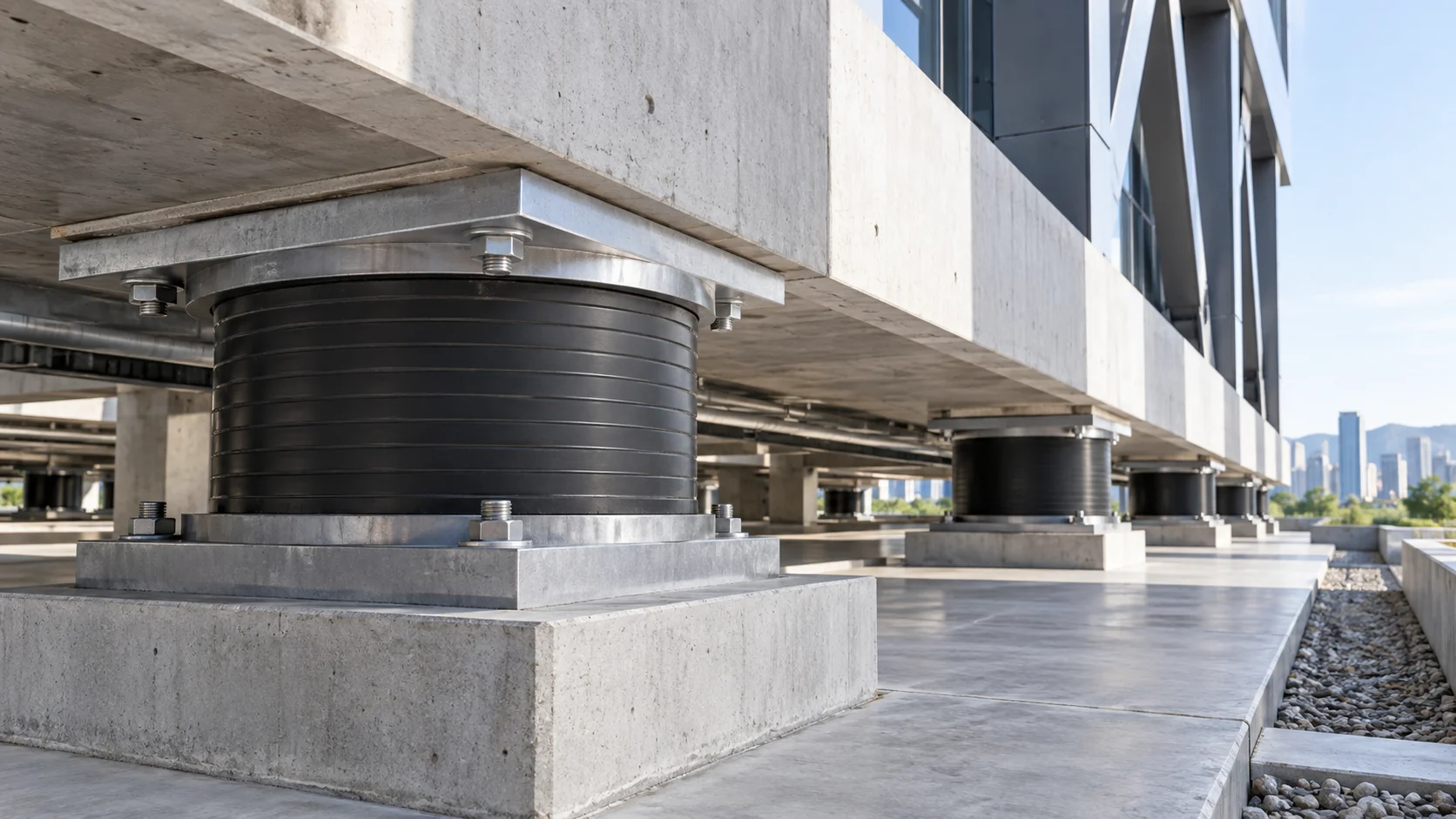
Q: What flexible building feature can reduce earthquake forces at the foundation?
A: Base isolation.
Q: What devices absorb motion inside some earthquake-resistant buildings?
A: Dampers.
Q: What construction practice strengthens an older building against shaking?
A: Seismic retrofitting.
Q: Why are unreinforced masonry buildings especially vulnerable?
A: Their brittle walls can collapse.
Q: What household utility may need shutting off if a leak is suspected?
A: Natural gas.
Q: Why should shoes be kept near the bed in earthquake country?
A: To protect feet from broken glass.
Q: What should an emergency kit include for drinking?
A: Water.
Q: Do earthquake early warnings predict earthquakes days ahead?
A: No.
Forecasting, Maps, and Earth Science
Q: Can scientists predict the exact time, place, and magnitude of a major earthquake?
A: No.
Q: What can scientists estimate over years or decades instead of exact predictions?
A: Earthquake probabilities.
Q: What U.S. agency monitors earthquakes and publishes hazard information?
A: The U.S. Geological Survey.
Q: What USGS program collects public shaking reports online?
A: Did You Feel It?
Q: What West Coast warning system can alert people after an earthquake begins?
A: ShakeAlert.
Q: Which faster waves allow earthquake early warning systems to work?
A: P waves.
Q: What map shows expected levels of future earthquake shaking?
A: A seismic hazard map.
Q: What map connects places that experienced equal shaking intensity?
A: An isoseismal map.
Q: What satellite-based technology measures crustal movement precisely?
A: GPS.
Q: What radar technique maps ground deformation from satellites?
A: InSAR.
Q: What law says earthquake frequency rises as magnitude decreases?
A: The Gutenberg-Richter law.
Q: What principle describes the typical decline of aftershocks over time?
A: Omori's law.
Q: What deep earthquakes occur within a descending tectonic slab?
A: Intraslab earthquakes.
Q: What term describes quiet movement along a fault without a major earthquake?
A: Fault creep.
Q: What does paleoseismology study?
A: Evidence of prehistoric earthquakes.
You Made It Through the Shaking
If all 120 answers stayed steady in your hands, your earthquake knowledge is on solid ground. Keep the momentum going with our famous people trivia and decades trivia.

Ellie Ewert is the founder and author of RandomTrivia.co, blending her passion for research with years of experience in content creation to deliver accurate, engaging, and well-sourced trivia. Dedicated to providing readers with trustworthy and entertaining facts, she applies meticulous fact-checking and SEO expertise to ensure every article meets the highest standards. Read more about our high standards in our Editorial Guidelines.