
Bundle up for a trivia trip where the mountains are enormous, the summer sun forgets bedtime, and moose occasionally hold up traffic.
These Alaska trivia questions explore Indigenous cultures, gold-rush history, glaciers, wildlife, wild cities, famous trails, local traditions, and life in America's biggest state.
Alaska on the Map
Q: What is the capital of Alaska?
A: Juneau.
Q: What is Alaska's largest city?
A: Anchorage.
Q: Which number state is Alaska?
A: The 49th.
Q: In what year did Alaska become a state?
A: 1959.
Q: What is Alaska's nickname?
A: The Last Frontier.
Q: Which country lies across the Bering Strait from Alaska?
A: Russia.
Q: Which Canadian territory borders Alaska to the east?
A: Yukon.
Q: Which Canadian province also shares a border with Alaska?
A: British Columbia.
Q: What ocean lies north of Alaska?
A: The Arctic Ocean.
Q: What ocean lies south of Alaska?
A: The Pacific Ocean.
Q: What sea separates Alaska and Russia?
A: The Bering Sea.
Q: What long chain of volcanic islands extends west from the Alaska Peninsula?
A: The Aleutian Islands.
Q: What is the largest island in Alaska?
A: Kodiak Island.
Q: What imaginary line crosses northern Alaska?
A: The Arctic Circle.
Q: By area, where does Alaska rank among U.S. states?
A: First.
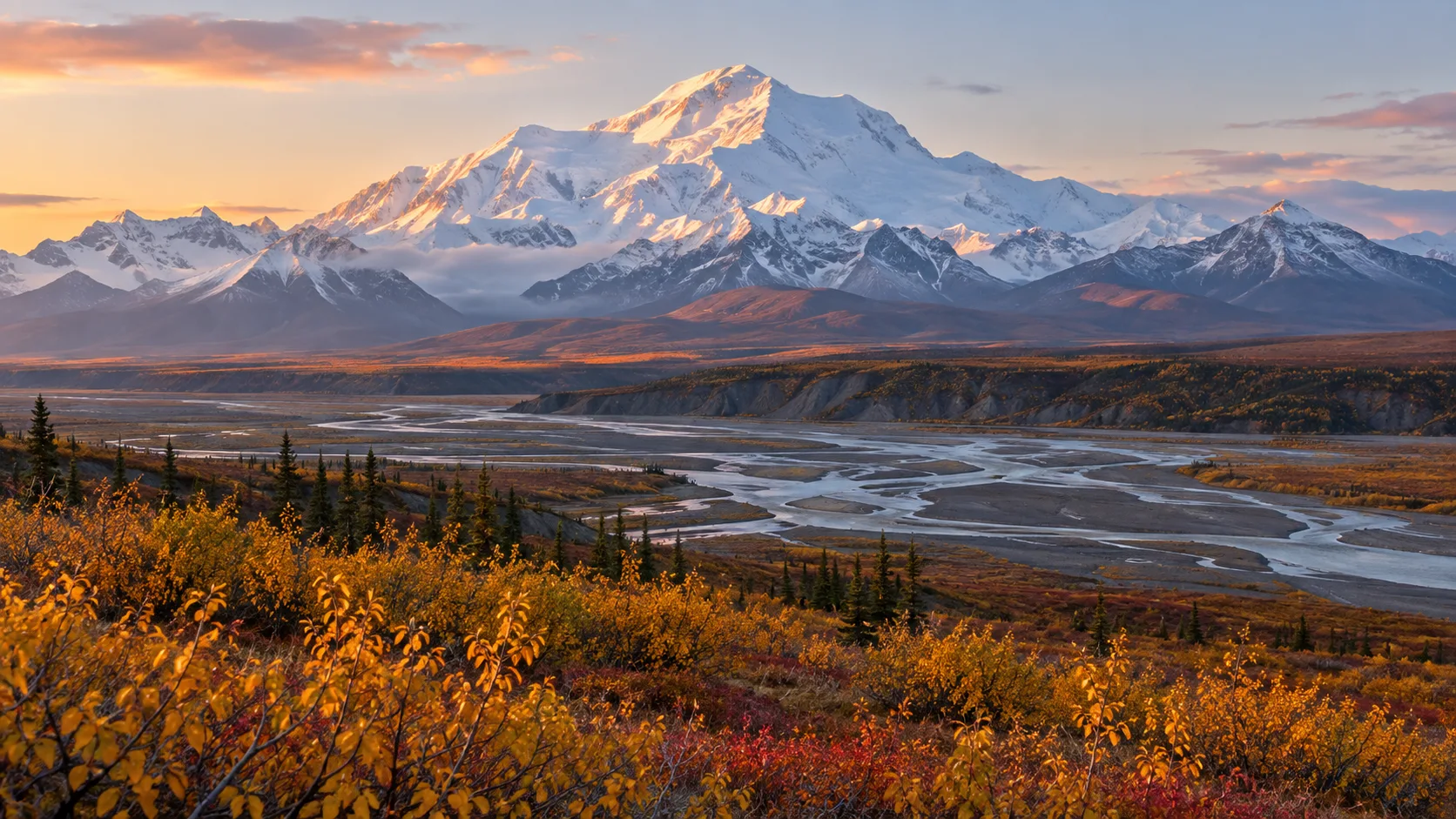
Mountains, Glaciers, and Northern Skies
Q: What is the highest mountain in North America?
A: Denali.
Q: How high is Denali?
A: 20,310 feet.
Q: Which national park surrounds Denali?
A: Denali National Park and Preserve.
Q: What is Alaska's longest river?
A: The Yukon River.
Q: What is Alaska's largest lake by surface area?
A: Iliamna Lake.
Q: What is the largest glacier entirely within Alaska?
A: Bering Glacier.
Q: Which glacier is easily reached from Juneau by road?
A: Mendenhall Glacier.
Q: What national park contains the enormous Malaspina Glacier?
A: Wrangell-St. Elias National Park and Preserve.
Q: Which Alaska national park is the largest in the United States?
A: Wrangell-St. Elias National Park and Preserve.
Q: What active volcano near Anchorage is visible across Cook Inlet?
A: Mount Redoubt.
Q: What 1912 eruption created the Valley of Ten Thousand Smokes?
A: Novarupta.
Q: Which national park protects the Valley of Ten Thousand Smokes?
A: Katmai National Park and Preserve.
Q: What colorful lights appear when charged solar particles interact with Earth's atmosphere?
A: The aurora borealis, or northern lights.
Q: What summer phenomenon brings nearly continuous daylight to far northern Alaska?
A: The midnight sun.
Q: What winter phenomenon leaves far northern communities without a sunrise for weeks?
A: Polar night.
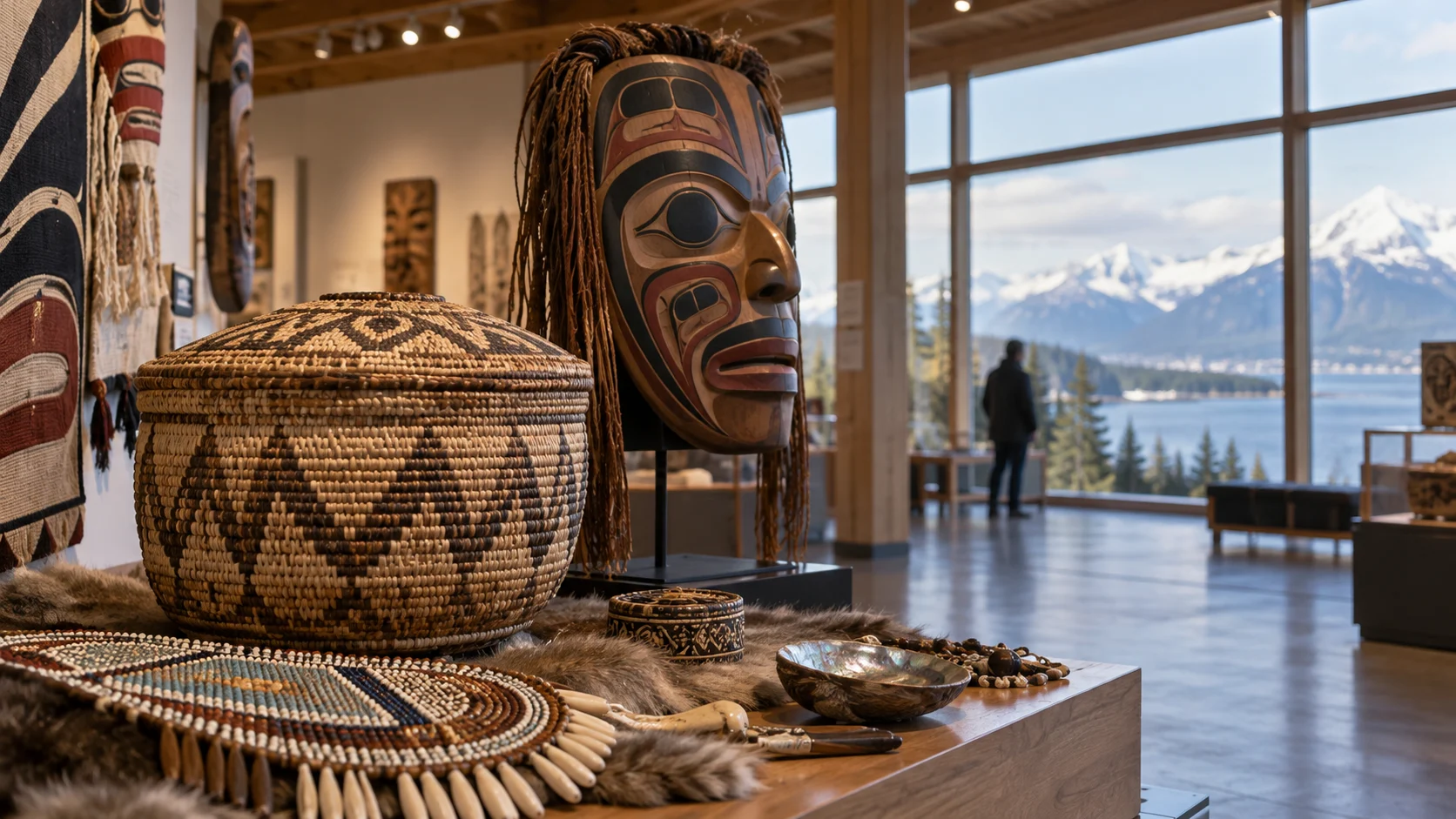
Alaska Native Peoples and Traditions
Q: What collective term refers to Alaska's Indigenous peoples?
A: Alaska Native peoples.
Q: Which Indigenous people have traditional homelands across northern Alaska?
A: The Iñupiat.
Q: Which Indigenous people traditionally inhabit the Yukon-Kuskokwim Delta?
A: The Yup'ik.
Q: Which Indigenous people are associated with the Aleutian Islands and call themselves Unangan?
A: The Aleut.
Q: Which Alaska Native people have traditional lands in Southeast Alaska and western Canada?
A: The Tlingit.
Q: Which Indigenous people traditionally inhabit the Copper River region?
A: The Ahtna.
Q: Which Alaska Native people have traditional lands around Cook Inlet?
A: The Dena'ina.
Q: What waterproof outer garment was traditionally made from animal gut by some Alaska Native peoples?
A: A gut parka.
Q: What narrow skin boat traditionally used by Arctic hunters is called a qayaq?
A: A kayak.
Q: What larger open skin boat was used to carry people and supplies?
A: An umiak.
Q: What carved posts tell clan histories in many Northwest Coast cultures?
A: Totem poles.
Q: What Tlingit and Haida social groups are traced through the mother's line?
A: Clans.
Q: What 1971 law settled Alaska Native land claims and created regional corporations?
A: The Alaska Native Claims Settlement Act.
Q: How many regional Native corporations were originally established by that act?
A: Twelve within Alaska.
Q: What statewide event in Anchorage celebrates Alaska Native arts, dance, and traditions?
A: The Alaska Federation of Natives Convention.
Russian America, Purchase, and Statehood
Q: Which European empire colonized Alaska before the United States?
A: The Russian Empire.
Q: Which Danish explorer sailing for Russia reached Alaska in 1741?
A: Vitus Bering.
Q: What fur-bearing marine mammal drove much of Russia's early interest in Alaska?
A: The sea otter.
Q: What company administered Russian America from the late 18th century?
A: The Russian-American Company.
Q: Which Alaska city served as the capital of Russian America?
A: Sitka.
Q: Which U.S. secretary of state negotiated the purchase of Alaska?
A: William H. Seward.
Q: In what year did the United States purchase Alaska from Russia?
A: 1867.
Q: How much did the United States pay for Alaska?
A: $7.2 million.
Q: What nickname mocked the Alaska Purchase as a bad deal?
A: Seward's Folly.
Q: What date is celebrated as Alaska Day?
A: October 18.
Q: What does Alaska Day commemorate?
A: The formal transfer of Alaska from Russia to the United States.
Q: What 1890s gold rush brought prospectors through Alaska toward Canada's Yukon?
A: The Klondike Gold Rush.
Q: Which Alaska town became a gateway to the Klondike via the Chilkoot Trail?
A: Skagway.
Q: In what year was the first major oil discovered at Prudhoe Bay?
A: 1968.
Q: Which U.S. president signed the Alaska Statehood Act?
A: Dwight D. Eisenhower.
Anchorage, Juneau, and Remote Communities
Q: Which city began as a construction camp for the Alaska Railroad?
A: Anchorage.
Q: What body of water borders Anchorage?
A: Cook Inlet.
Q: What long-distance trail begins ceremonially in Anchorage each March?
A: The Iditarod Trail Sled Dog Race.
Q: Which city is the only U.S. state capital inaccessible by road from the rest of the state?
A: Juneau.
Q: What mountain rises behind downtown Juneau and is reached by an aerial tramway?
A: Mount Roberts.
Q: Which Interior Alaska city is known for aurora viewing and extreme temperature swings?
A: Fairbanks.
Q: What university in Fairbanks houses the Museum of the North?
A: The University of Alaska Fairbanks.
Q: What city at the end of the Iditarod Trail is famous for a gold rush?
A: Nome.
Q: What is the northernmost U.S. city, formerly known as Barrow?
A: Utqiaġvik.
Q: Which island city is known for brown bears and a major fishing fleet?
A: Kodiak.
Q: Which Southeast Alaska town is famous for totem poles and cruise ships?
A: Ketchikan.
Q: What island community is known for the Sitka National Historical Park?
A: Sitka.
Q: Which small town is home to the Alaska SeaLife Center?
A: Seward.
Q: Which community near Prince William Sound was devastated by the 1964 earthquake and tsunami?
A: Valdez.
Q: What town sits at the base of the Alyeska ski area?
A: Girdwood.
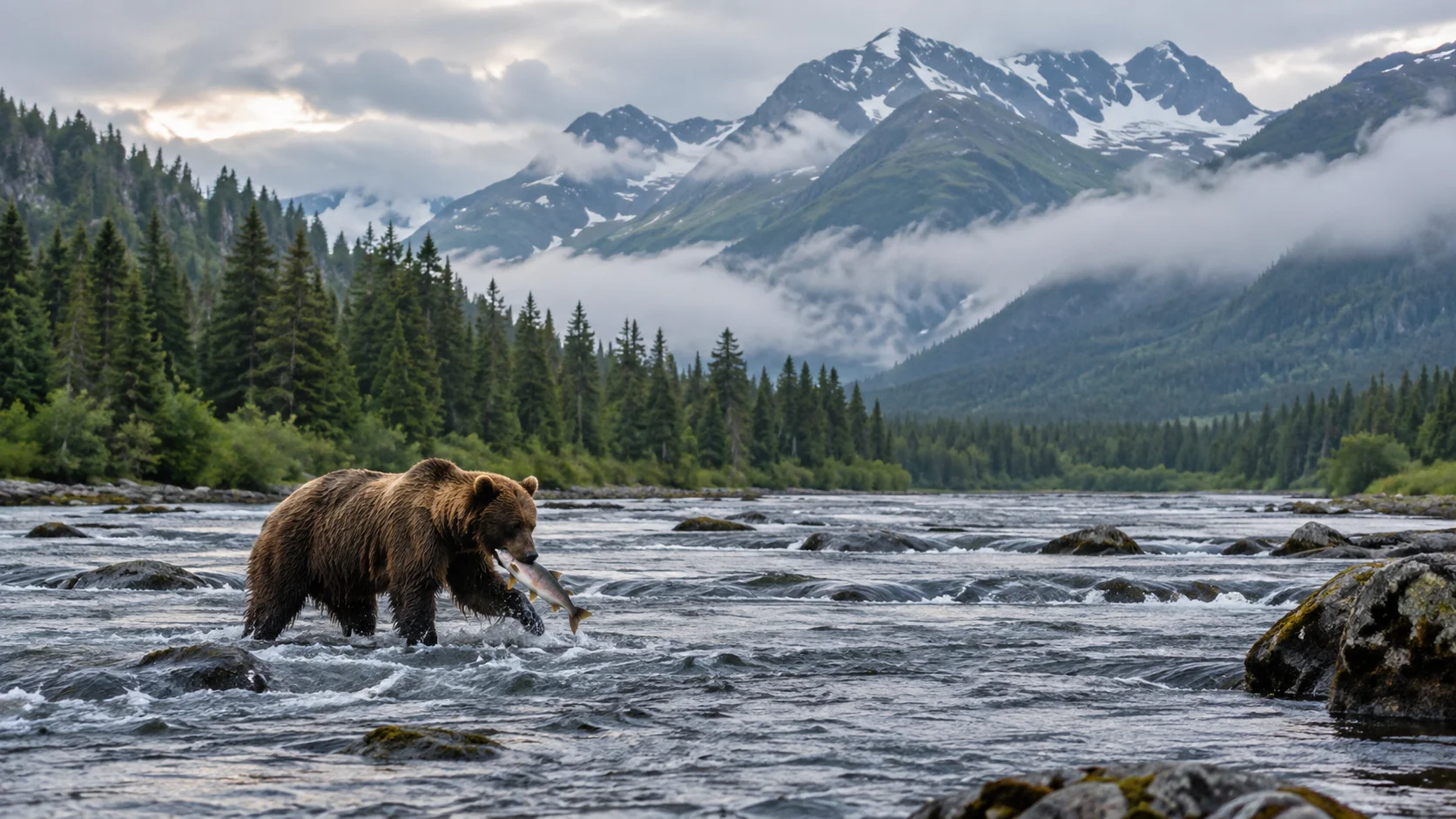
Bears, Whales, and Wild Neighbors
Q: What is Alaska's state land mammal?
A: The moose.
Q: What is Alaska's state bird?
A: The willow ptarmigan.
Q: What is Alaska's state fish?
A: The king salmon.
Q: Which bear species is abundant on Kodiak Island?
A: The Kodiak brown bear.
Q: Which bears gather at Brooks Falls to catch salmon?
A: Brown bears.
Q: Which bear species lives along Alaska's Arctic coast?
A: The polar bear.
Q: What member of the deer family has the largest antlers?
A: The moose.
Q: Which hoofed Arctic animal forms the Western Arctic Caribou Herd?
A: Caribou.
Q: What shaggy Ice Age survivor was reintroduced to Alaska in the 1930s?
A: The musk ox.
Q: Which white whale gathers in Cook Inlet?
A: The beluga whale.
Q: Which giant marine mammal migrates to Alaska to feed each summer?
A: The humpback whale.
Q: Which sea mammal uses rocks to open shellfish?
A: The sea otter.
Q: Which horned seabird nests on Alaska's coastal cliffs?
A: The horned puffin.
Q: What Arctic fox color phase stays dark through winter?
A: The blue phase.
Q: What enormous eagle with a white head is common along Alaska's coasts and rivers?
A: The bald eagle.
Trails, Oil, and Life in the North
Q: What pipeline carries oil from Prudhoe Bay to Valdez?
A: The Trans-Alaska Pipeline System.
Q: About how long is the Trans-Alaska Pipeline?
A: 800 miles.
Q: What highway reaches north from Fairbanks toward Prudhoe Bay?
A: The Dalton Highway.
Q: Which railroad connects Seward and Anchorage with Fairbanks?
A: The Alaska Railroad.
Q: What marine highway links coastal communities by ferry?
A: The Alaska Marine Highway System.
Q: What annual payment shares investment earnings from Alaska's oil wealth with residents?
A: The Permanent Fund Dividend.
Q: What is the name of Alaska's oil-wealth savings fund?
A: The Alaska Permanent Fund.
Q: Which seafood industry is especially important in Bristol Bay?
A: Salmon fishing.
Q: What kind of salmon is the focus of Bristol Bay's huge commercial run?
A: Sockeye salmon.
Q: What term describes permanently frozen ground?
A: Permafrost.
Q: What elevated storage structure keeps food away from bears?
A: A cache.
Q: What small aircraft is commonly used to reach remote Alaska communities?
A: A bush plane.
Q: What name is given to pilots who fly Alaska's remote routes?
A: Bush pilots.
Q: What highway built during World War II links Dawson Creek with Delta Junction?
A: The Alaska Highway.
Q: Which Alaska town marks the official northern end of the Alaska Highway?
A: Delta Junction.
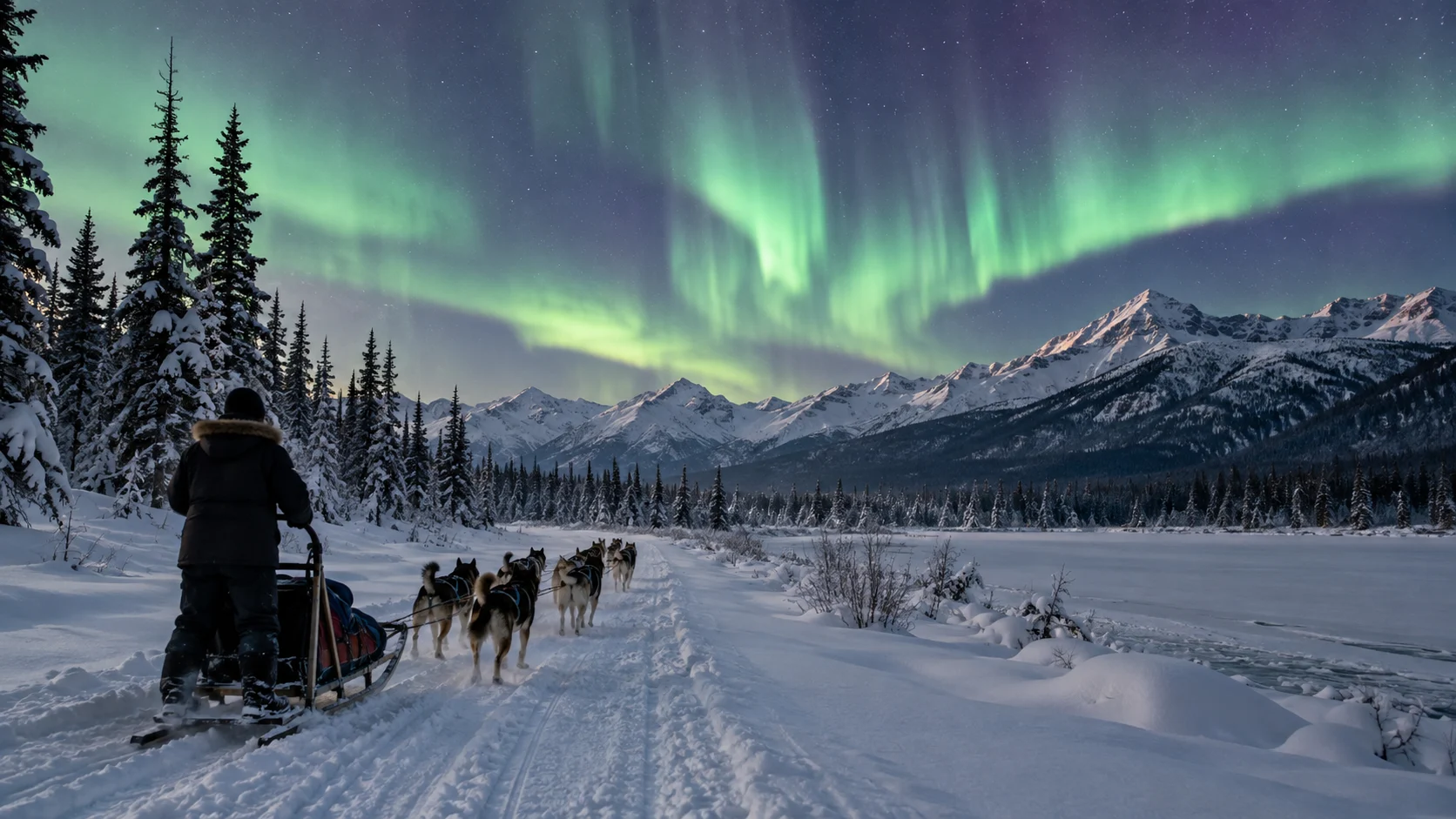
Dog Teams, Local Flavor, and Northern Fame
Q: What nearly 1,000-mile sled dog race runs from Anchorage to Nome?
A: The Iditarod.
Q: What do you call the driver of a dog sled team?
A: A musher.
Q: Which musher won the first official Iditarod in 1973?
A: Dick Wilmarth.
Q: Which dog became famous for leading the final leg of the 1925 serum run to Nome?
A: Balto.
Q: Which sled dog led the longest and most dangerous portion of that serum relay?
A: Togo.
Q: What annual Fairbanks competition features intricate sculptures made from ice?
A: The World Ice Art Championships.
Q: What summer fair in Palmer celebrates Alaska agriculture?
A: The Alaska State Fair.
Q: What unusually large vegetables are showcased at the Alaska State Fair?
A: Giant cabbages.
Q: What berry with orange or red drupelets is prized in western Alaska?
A: Salmonberry.
Q: What rich frozen dessert was traditionally made with whipped fat and berries?
A: Akutaq.
Q: What smoked fish is a classic Alaska snack?
A: Salmon.
Q: Which author set The Call of the Wild in the Klondike Gold Rush era?
A: Jack London.
Q: Which television series follows a fictional radio host in Cicely, Alaska?
A: Northern Exposure.
Q: Which singer-songwriter grew up in Homer, Alaska, and released “Who Will Save Your Soul”?
A: Jewel.
Q: Which Alaska-born athlete became an Olympic champion in cross-country skiing in 2018?
A: Kikkan Randall.
The Last Frontier, Conquered
If you crossed every glacier, gold trail, and dog-sled checkpoint, your score is officially frontier-tough. Travel somewhere warmer with our Greece trivia, or meet more trailblazers in famous people trivia.

Ellie Ewert is the founder and author of RandomTrivia.co, blending her passion for research with years of experience in content creation to deliver accurate, engaging, and well-sourced trivia. Dedicated to providing readers with trustworthy and entertaining facts, she applies meticulous fact-checking and SEO expertise to ensure every article meets the highest standards. Read more about our high standards in our Editorial Guidelines.