
From the fall of Rome to the dawn of the Renaissance, the medieval world is packed with dramatic battles, dazzling cathedrals, bold voyages, and everyday stories.
This collection moves from easy to challenging, covering rulers and realms, crusades and commerce, monks and manuscripts across Europe, Africa, and Asia.
Medieval Timeline & Geography
Q: What span do historians often use for the Middle Ages?
A: Roughly c. 500–1500 CE.
Q: What event is commonly used to mark the medieval beginning in the West?
A: The fall of the Western Roman Empire in 476.
Q: What event is often said to mark the end of the Middle Ages in Europe?
A: The fall of Constantinople in 1453 (sometimes 1492 or the printing press).
Q: What term once used for the early medieval period is now widely avoided?
A: “Dark Ages.”
Q: Which empire preserved Roman law and Greek learning in the East?
A: The Byzantine Empire.
Q: Which inland sea linked Europe, North Africa, and the Middle East in trade?
A: The Mediterranean.
Q: What seafaring peoples raided and settled across Europe from the late 8th century?
A: The Vikings.
Q: Which Frankish ruler was crowned emperor in Rome on Christmas Day, 800?
A: Charlemagne.
Q: What 843 agreement split Charlemagne’s empire among his grandsons?
A: The Treaty of Verdun.
Q: What Muslim-ruled region of the Iberian Peninsula endured for centuries?
A: Al-Andalus.
Q: What medieval Slavic state centered on Kyiv flourished from the 10th to 12th centuries?
A: Kievan Rus’.
Q: Which nomadic confederation created history’s largest land empire in the 13th century?
A: The Mongol Empire.
Q: Which Berber dynasty founded Marrakesh in the 11th century?
A: The Almoravids.
Q: Which West African empire is linked to Mansa Musa’s famous 1324 pilgrimage?
A: The Mali Empire.
Q: Which Southeast Asian empire built the temple complex of Angkor Wat?
A: The Khmer Empire.
Q: Which Chinese dynasty widely used paper money?
A: The Song dynasty.
Q: Which Japanese shogunate established samurai rule in 1192?
A: The Kamakura shogunate.
Q: Which South Indian dynasty built the Brihadisvara Temple at Thanjavur?
A: The Chola dynasty.
Q: Which southern African site with massive stone walls flourished c. 11th–15th centuries?
A: Great Zimbabwe.
Q: What trading association dominated Baltic and North Sea commerce from the 13th century?
A: The Hanseatic League.
Q: What climate pattern c. 950–1250 preceded later cooling and famines?
A: The Medieval Warm Period (Medieval Climate Anomaly).
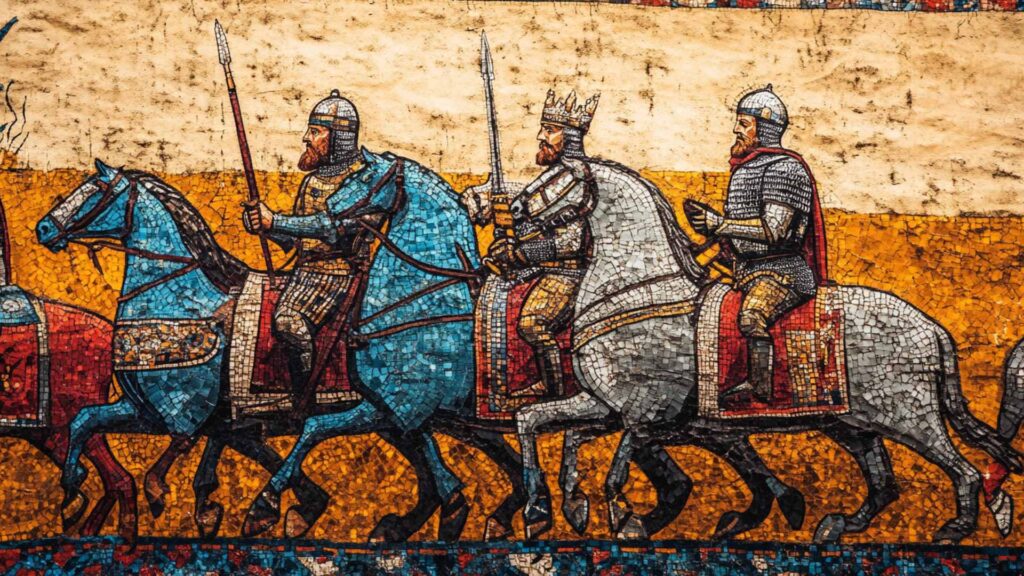
Rulers, Dynasties & States
Q: Who won the Battle of Hastings in 1066?
A: William the Conqueror.
Q: What 1215 document first limited an English king’s power?
A: Magna Carta.
Q: What dynasty begun by Hugh Capet ruled medieval France for centuries?
A: The Capetians.
Q: Which German king was crowned Holy Roman Emperor in 962?
A: Otto I.
Q: Which queen of Castile completed the Reconquista with Ferdinand in 1492?
A: Isabella I.
Q: Which Byzantine emperor codified Roman law into the Corpus Juris Civilis?
A: Justinian I.
Q: What emperor knelt in the snow at Canossa in 1077 during the Investiture Controversy?
A: Henry IV.
Q: Which English king famously clashed with Archbishop Thomas Becket?
A: Henry II.
Q: Which French king led the Seventh Crusade and was later canonized?
A: Louis IX (Saint Louis).
Q: Which sultan’s forces recaptured Jerusalem after 1187?
A: Salah ad-Din (Saladin).
Q: Which Mongol ruler founded the Yuan dynasty in China?
A: Kublai Khan.
Q: Who founded the Mali Empire after victory at Kirina, c. 1235?
A: Sundiata Keita.
Q: Which Rus’ prince defeated the Teutonic Knights at Lake Peipus (1242)?
A: Alexander Nevsky.
Q: Which Ottoman ruler captured Constantinople in 1453?
A: Mehmed II.
Q: Who is credited as the first sultan of the Delhi Sultanate in 1206?
A: Qutb al-Din Aibak.
Q: Which Scottish king secured independence after the wars with England?
A: Robert the Bruce.
Q: Which Hungarian king invited the Teutonic Order to Transylvania (1211)?
A: Andrew II.
Q: Which Bohemian ruler received royal recognition via the Golden Bull of Sicily (1212)?
A: Ottokar I.
Q: Which Lithuanian grand duke converted and became Polish king in 1386?
A: Jogaila (Władysław II Jagiełło).
Q: Which Norse explorer reached North America around the year 1000?
A: Leif Erikson.
Q: Which Ethiopian line restored in 1270 claimed descent from Solomon?
A: The Solomonic dynasty.
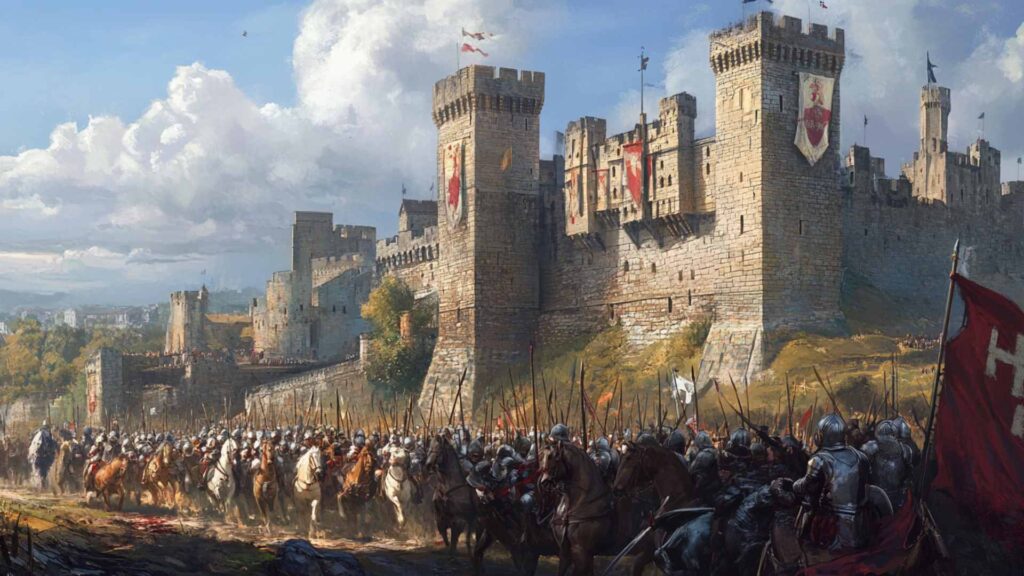
The Church, Faith & Heresy
Q: What monastic rule shaped Western monastic life from the 6th century?
A: The Rule of St. Benedict.
Q: What 1054 rupture split the Latin and Greek churches?
A: The Great Schism between Rome and Constantinople.
Q: What 10th-century movement revitalized monasticism from Burgundy?
A: The Cluniac Reform.
Q: Which mendicant order, founded by Francis of Assisi, embraced poverty?
A: The Franciscans.
Q: Which order founded by Dominic emphasized preaching and study?
A: The Dominicans.
Q: What church–state dispute centered on who could appoint bishops?
A: The Investiture Controversy.
Q: What small metal souvenirs did pilgrims collect at shrines?
A: Pilgrim badges.
Q: What institution prosecuted heresy in the Latin West?
A: The Inquisition.
Q: What dualist movement in Languedoc rejected church hierarchy?
A: Catharism.
Q: Whose followers in England became known as Lollards?
A: John Wycliffe’s.
Q: Which Bohemian reformer inspired the Hussites?
A: Jan Hus.
Q: What famous pilgrimage route ends at Santiago de Compostela?
A: The Camino de Santiago.
Q: What white-robed order spread farming and drained fens from the 12th century?
A: The Cistercians.
Q: What was scholasticism in the medieval universities?
A: Dialectical reasoning to reconcile faith and reason.
Q: Which theologian wrote the “Summa Theologiae”?
A: Thomas Aquinas.
Q: To which French city did the papacy move in 1309?
A: Avignon.
Q: What crisis (1378–1417) saw rival popes in Western Christendom?
A: The Western Schism.
Q: Which German abbess was a visionary writer and composer?
A: Hildegard of Bingen.
Q: Which jurist’s work systematized Sunni legal methodology (usul al-fiqh)?
A: Al-Shafi‘i.
Q: Which Sufi order, associated with Rumi, became famed for whirling rites?
A: The Mevlevi Order.
Q: Which 1438–39 council attempted reunion of Eastern and Western churches?
A: The Council of Florence.
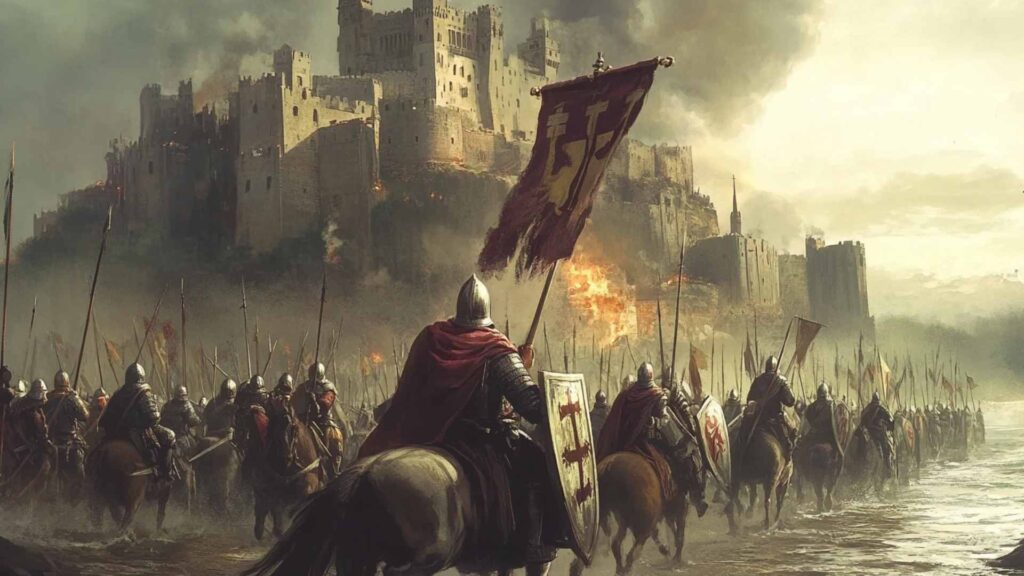
Crusades & Cross-Cultural Encounters
Q: Who called the First Crusade at the Council of Clermont (1095)?
A: Pope Urban II.
Q: Which city did crusaders capture in July 1099 after a brutal siege?
A: Jerusalem.
Q: Name one crusader state founded after the First Crusade.
A: The Kingdom of Jerusalem (also Edessa, Antioch, Tripoli).
Q: Which 1187 battle led to the fall of Jerusalem to Muslim forces?
A: The Battle of Hattin.
Q: Which English king fought in the Third Crusade against Saladin?
A: Richard I (the Lionheart).
Q: Which crusade notoriously sacked Constantinople in 1204?
A: The Fourth Crusade.
Q: What 1212 episode is often said to have involved unarmed youths?
A: The so-called Children’s Crusade (historicity debated).
Q: Which fortress became a byword for crusader strength in the Levant?
A: Krak des Chevaliers.
Q: Which port’s fall in 1291 ended major Latin presence in the Holy Land?
A: Acre.
Q: Which 1260 battle checked Mongol expansion in the Levant?
A: Ain Jalut.
Q: What military regime ruled Egypt and defeated crusaders in the 13th century?
A: The Mamluks.
Q: What centuries-long Iberian campaign pushed against Muslim states?
A: The Reconquista.
Q: Which 1212 battle in Iberia shattered Almohad power?
A: Las Navas de Tolosa.
Q: What series of campaigns targeted pagans in the Baltic region?
A: The Northern Crusades.
Q: Which Egyptian port tied Mediterranean merchants to Red Sea trade?
A: Alexandria.
Q: Which Venetian traveler described Yuan China for Europeans?
A: Marco Polo.
Q: Which Moroccan traveler chronicled much of the Islamic world in the 14th century?
A: Ibn Battuta.
Q: What 13th-century stability eased Eurasian trade routes?
A: The Pax Mongolica.
Q: Which pathogen is most associated with the Black Death pandemic?
A: Yersinia pestis.
Q: Which military order colonized and Christianized parts of the Baltic?
A: The Teutonic Order.
Q: Which Portuguese prince sponsored early 15th-century Atlantic exploration?
A: Prince Henry the Navigator.
Warfare, Knights & Orders
Q: What idealized code guided noble conduct in war and love?
A: Chivalry.
Q: What were the typical stages of knightly training?
A: Page → squire → knight.
Q: What English weapon proved devastating at Crécy and Agincourt?
A: The longbow.
Q: What heavy cavalry spear was used for charges?
A: The lance.
Q: What counterweight engine hurled stones over walls?
A: The trebuchet.
Q: What famed incendiary weapon burned even on water?
A: Greek fire.
Q: What armor shift occurred from the 13th to 14th centuries?
A: From mail to plate armor.
Q: What raiding strategy devastated enemy lands during the Hundred Years’ War?
A: The chevauchée.
Q: Which crusading order guarded pilgrims and developed banking networks?
A: The Knights Templar.
Q: Which order of St. John later ruled Rhodes and Malta?
A: The Knights Hospitaller.
Q: Which 1410 battle broke the Teutonic Order’s dominance?
A: Grunwald (Tannenberg).
Q: What infantry weapon and formation let Swiss repel knights?
A: The pike in close ranks.
Q: What early firearm appeared in 14th-century European armies?
A: The hand cannon (and bombards).
Q: Which 1340 naval battle gave England control of the Channel?
A: The Battle of Sluys.
Q: Which 1176 battle saw Lombard infantry defeat imperial cavalry?
A: Legnano.
Q: What dense spear formation did Scots use to blunt cavalry?
A: The schiltron.
Q: What mobile defensive tactic did the Hussites perfect?
A: Wagenburg (war-wagon) tactics.
Q: What system of symbols identified families on shields and banners?
A: Heraldry.
Q: What single-combat spectacle grew out of melee tournaments?
A: The joust.
Q: What steppe weapon gave mounted archers range and power?
A: The composite reflex bow.
Q: Which medieval treatise by Honoré Bonet discussed laws of war?
A: L’Arbre des batailles (“Tree of Battles”).

Castles, Cities & Architecture
Q: What early castle type used a mound with a wooden tower?
A: A motte-and-bailey.
Q: What is a fortified stone tower at a castle’s core called?
A: A keep (donjon).
Q: What castle layout uses multiple rings of defense?
A: Concentric design.
Q: Which English king built a “ring of stone” around Wales?
A: Edward I.
Q: Name his famous Welsh fortress with polygonal towers and banded walls.
A: Caernarfon Castle.
Q: Which crusader-era fortress in the Holy Land shows concentric planning?
A: Belvoir Castle (Kokhav HaYarden).
Q: What architectural style with round arches preceded Gothic?
A: Romanesque.
Q: What arch shape is a hallmark of Gothic architecture?
A: The pointed arch.
Q: What exterior supports channel vault thrust to the ground?
A: Flying buttresses.
Q: What colorful windows taught biblical scenes to townsfolk?
A: Stained glass.
Q: Which cathedral’s sculpture and glass epitomize High Gothic art?
A: Chartres Cathedral.
Q: Which Paris cathedral begun in 1163 used daring buttresses?
A: Notre-Dame de Paris.
Q: What Andalusian palace complex blends geometry, calligraphy, and gardens?
A: The Alhambra.
Q: What brick-built style marks Baltic merchant cities?
A: Brick Gothic (Backsteingotik).
Q: What charter gave medieval towns legal self-government?
A: A town (communal) charter.
Q: What famous 12th–13th-century trade fairs linked Italy and Flanders?
A: The Champagne Fairs.
Q: Which great Constantinopolitan church influenced medieval builders?
A: Hagia Sophia.
Q: What building method framed many medieval townhouses?
A: Timber framing (half-timbering).
Q: What London river crossing long hosted houses and shops?
A: London Bridge.
Q: Which Italian city pioneered powerful communes and civic palazzi?
A: Florence.
Q: What fortress begun in the 1070s became a symbol of royal power in London?
A: The Tower of London (White Tower).
Economy, Law & Everyday Life
Q: What system tied peasants’ labor to their lord’s estate?
A: Manorialism (with serfdom).
Q: What rotation pattern boosted yields in the High Middle Ages?
A: The three-field system.
Q: What heavy implement cut thick northern soils?
A: The wheeled heavy plow (carruca).
Q: What harness innovation let horses pull without choking?
A: The horse collar.
Q: Beyond watermills, what mills transformed work in windy regions?
A: Windmills.
Q: Which city often led the Hanseatic League’s merchant towns?
A: Lübeck.
Q: What Florentine gold coin became a pan-European standard?
A: The florin.
Q: What Venetian coin rivaled it in Mediterranean trade?
A: The ducat.
Q: What urban associations regulated training and product quality?
A: Guilds.
Q: What were the typical stages of a craft career?
A: Apprentice → journeyman → master.
Q: What 1381 uprising protested taxes and serfdom in England?
A: The Peasants’ Revolt.
Q: What 1358 French rural uprising is known as?
A: The Jacquerie.
Q: Which reforms under Henry II helped establish English common law?
A: Measures like the Assize of Clarendon (1166).
Q: Which representative body evolved to approve English taxation?
A: Parliament.
Q: What local tribunal enforced town market rules and measures?
A: The borough (or market) court.
Q: What low-alcohol drink was a daily staple for many Europeans?
A: Ale or beer.
Q: What English export fed Flemish looms and urban wealth?
A: Wool.
Q: What 14th-century pandemic killed millions in Europe?
A: The Black Death.
Q: What is the name for the severe food crisis of 1315–1317?
A: The Great Famine.
Q: What marriage practice cemented elite alliances?
A: Arranged marriages with dowries.
Q: What notched sticks tracked taxes and debts in England?
A: Exchequer tally sticks.
Learning, Science & the Arts
Q: What seven subjects formed medieval liberal arts?
A: Trivium (grammar, logic, rhetoric) and quadrivium (arithmetic, geometry, music, astronomy).
Q: What is often cited as Europe’s oldest university (1088)?
A: The University of Bologna.
Q: Which English university grew from 12th-century lectures and halls?
A: Oxford.
Q: Which Parisian thinker wrote Sic et Non?
A: Peter Abelard.
Q: Who authored The Guide for the Perplexed, blending faith and philosophy?
A: Maimonides.
Q: Which Andalusian philosopher’s commentaries shaped scholastic debate?
A: Averroes (Ibn Rushd).
Q: What 12th-century effort translated Arabic and Greek works into Latin in Spain?
A: The Toledo Translation Movement.
Q: What numerals replaced Roman numerals for calculation?
A: Hindu–Arabic numerals.
Q: What portable instrument helped determine celestial positions?
A: The astrolabe.
Q: What navigational tool from China spread west by the 13th century?
A: The magnetic compass.
Q: What innovation brought public timekeeping to town squares?
A: The mechanical clock.
Q: What visual aid appeared in Europe by the late 13th century?
A: Eyeglasses (spectacles).
Q: What material’s spread enabled cheaper books before printing?
A: Paper (European paper mills).
Q: Who introduced movable-type printing to Europe in the 1450s?
A: Johannes Gutenberg.
Q: Which Italian poet composed the Divine Comedy?
A: Dante Alighieri.
Q: Which English poet wrote The Canterbury Tales?
A: Geoffrey Chaucer.
Q: What Old French epic celebrates Charlemagne’s paladin?
A: The Song of Roland.
Q: What 14th-century musical style featured complex rhythms and notation?
A: Ars Nova.
Q: Which composer-poet is a leading figure of Ars Nova?
A: Guillaume de Machaut.
Q: What lavish Insular manuscript from c. 800 is famed for intricate art?
A: The Book of Kells.
Q: Which North African thinker wrote the 1377 Muqaddimah?
A: Ibn Khaldun.

Ellie Simons creates and edits Random Trivia. She researches trivia using primary and authoritative sources whenever possible and is currently reviewing the site's older trivia library for accuracy, clarity, and playability. Read more on the About page.
Explore more rounds in our History trivia collection.
About this quiz
Site editor: Ellie Simons. Read our Trivia Methodology to learn how questions are researched and updated. Page last updated: . Report an error.