
From gingerbread to gløgg, panettone to pigs in blankets, Christmas flavors span centuries and continents.
This trivia guide mixes cookie lore, baking science, regional specialties, and festive drinks.
Start with quick wins, then tackle trickier questions about origins, techniques, and lesser-known traditions.
Why Holiday Cookies & Christmas Foods Make Great Trivia
Christmas foods are loaded with story: medieval spices signaling trade routes, immigrant recipes reborn in new lands, and rituals tied to faith, winter, and family.
The season’s bakes and beverages are also highly visual, cutout cookies, glossy puddings, jewel-toned fruitcakes, which makes them easy to remember and fun to discuss.
Because many dishes travel across borders (think panettone or tamales), there’s always a cultural twist to explore.
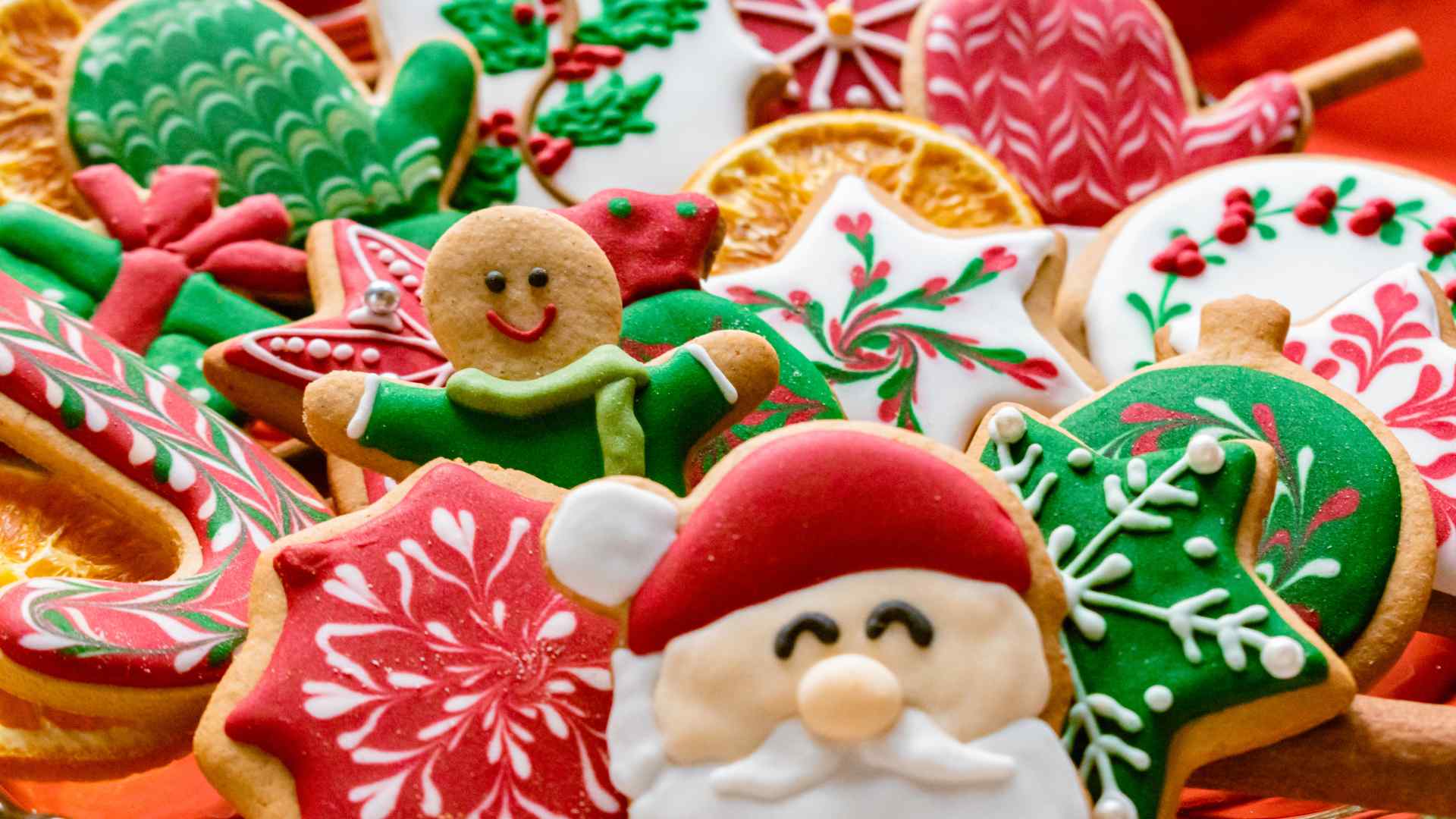
Classic Christmas Cookies Around the World
Q: What spiced cookie cut into shapes and decorated with icing is a Christmas classic in many countries?
A: Gingerbread cookies.
Q: Which Austrian sandwich cookie filled with jam and dusted with sugar shares its name with a famous torte?
A: Linzer cookies.
Q: What buttery, crescent-shaped Austrian cookie is traditionally flavored with vanilla and almonds?
A: Vanillekipferl.
Q: Which Dutch/Belgian spiced biscuits associated with Sinterklaas are stamped with wooden molds?
A: Speculaas (or speculoos).
Q: What German iced spice cookies—often with pepper—are called “little pebbles”?
A: Pfeffernüsse.
Q: Which Norwegian thin, lace-patterned wafer is rolled while warm into cones?
A: Krumkake.
Q: What Greek shortbread-like Christmas cookies are coated in a blizzard of powdered sugar?
A: Kourabiedes.
Q: Which honey-and-spice Greek cookies are soaked in syrup and topped with walnuts?
A: Melomakarona.
Q: What Alsatian Christmas cookie tradition encompasses dozens of varieties baked in December?
A: Bredele.
Q: Which German anise-flavored cookies are pressed with carved molds to raise intricate designs?
A: Springerle.
Q: What Polish/Central European filled cookies—often folded into diamonds with jam or cheese—appear at winter holidays?
A: Kolaczki.
Q: Which Scandinavian butter cookie, extruded or pressed into shapes, gets its name from “squirt/press”?
A: Spritz cookies (Spritzgebäck).
Ingredients & Techniques (Baking Science)
Q: Creaming butter and sugar does what essential thing for cookie texture?
A: Incorporates air, helping lift and tenderness.
Q: Chilling cookie dough before baking primarily reduces what?
A: Spread, by firming fat and hydrating flour.
Q: Which leavener needs an acid present: baking powder or baking soda?
A: Baking soda.
Q: Why do brown sugar–based cookies often seem chewier than white sugar ones?
A: Molasses in brown sugar adds moisture and hygroscopicity.
Q: What does resting a gingerbread dough overnight improve?
A: Spice bloom and gluten hydration for cleaner cuts.
Q: Which flour generally yields a more tender cookie: cake flour or bread flour?
A: Cake flour (lower protein).
Q: Why might you swap some sugar for honey or corn syrup in decorated cookies?
A: Invert sugars reduce crystallization and keep cookies softer.
Q: What simple trick helps even browning in home ovens?
A: Rotating pans halfway and baking one sheet at a time.
Q: Royal icing typically uses what protein source when avoiding raw egg whites?
A: Meringue powder (pasteurized dried whites).
Q: Dark vs. light molasses: which is more bitter and strong?
A: Dark (and blackstrap is strongest/bitter).
Q: Convection baking usually requires what change in temperature or time?
A: Reduce temperature by ~25°F (≈15°C) or bake a bit shorter.
Q: Why sift powdered sugar before making icing?
A: Prevents lumps for a smooth pipeable texture.

Gingerbread Lore & Architecture
Q: Which spice gives gingerbread its name?
A: Ginger.
Q: Gingerbread houses became popular in part after what Brothers Grimm tale?
A: “Hansel and Gretel.”
Q: Which German city is strongly associated with soft, nutty gingerbread called Lebkuchen?
A: Nuremberg.
Q: Which English monarch is often credited with popularizing decorated “gingerbread men”?
A: Elizabeth I (often said to have had cookies shaped like courtiers).
Q: In construction, what icing “glue” is standard for gingerbread houses?
A: Royal icing.
Q: Why are many sturdy house panels made with little to no chemical leavener?
A: To prevent puffing and warping; flat panels fit better.
Q: What edible medium, besides candy, is commonly used for windows?
A: Melted sugar or crushed hard candies.
Q: In the U.S., what grand annual display is crafted by White House pastry chefs each Christmas season?
A: A gingerbread model of the White House.
Q: Which American competition in Asheville, North Carolina, draws pros and hobbyists for elaborate gingerbread creations?
A: The National Gingerbread House Competition.
Q: What’s a practical reason to bake house panels longer at a lower heat?
A: Dehydrates for extra rigidity and longevity.
Q: Gingerbread cookies sometimes include black pepper. What does it add beyond heat?
A: Complexity that sharpens spice notes.
Q: What’s the usual order: build the house first, or pipe details first?
A: Often pipe details on flat panels first, then assemble.
Cakes, Breads & Sweet Loaves
Q: Which Milanese domed bread studded with fruit is a Christmas icon in Italy?
A: Panettone.
Q: What German fruit bread dusted with powdered sugar resembles a swaddled child?
A: Stollen (Christstollen).
Q: Which French “Yule log” sponge cake rolled with filling and frosted like bark is a centerpiece dessert?
A: Bûche de Noël.
Q: What dense British steamed dessert, flambéed with brandy, is aged with dried fruit and suet?
A: Christmas pudding (plum pudding).
Q: Which Portuguese/Spanish ring-shaped sweet bread for Epiphany contains a hidden charm or bean?
A: Bolo Rei / Roscón de Reyes.
Q: What chewy, almond-based Norwegian tower cake is built of concentric rings?
A: Kransekake.
Q: Which Italian nougat—often gifted at Christmas—comes in soft (morbido) or hard (duro) styles?
A: Torrone.
Q: What British bite-sized tart filled with spiced fruit mixture is traditional at Christmas?
A: Mince pie (now typically meatless).
Q: Which Caribbean black cake is a holiday fruitcake soaked with rum (often matured for weeks)?
A: Rum cake / black cake (regional variations).
Q: What Polish poppy seed roll, sliced into spirals on holiday tables, is called?
A: Makowiec.
Q: Which Scandinavian saffron buns shaped into “S” curls are baked for Saint Lucia Day?
A: Lussekatter.
Q: What Italian sweet bread from Verona, enriched like panettone but shorter and denser, is enjoyed at Christmas?
A: Pandoro.
Savory Traditions & Festive Feasts
Q: In the U.K., miniature sausages wrapped in bacon are called what?
A: Pigs in blankets.
Q: What bird was historically a European Christmas roast before turkey’s rise?
A: Goose.
Q: Which Italian-American Christmas Eve meal features seafood courses rather than meat?
A: Feast of the Seven Fishes (La Vigilia).
Q: What Quebec meat pie, often served at Réveillon, is called?
A: Tourtière.
Q: Which Scandinavian preserved fish (lye-cured) is associated with some Christmas tables?
A: Lutefisk.
Q: In Poland, the meatless Christmas Eve supper is called what?
A: Wigilia.
Q: What fish—often fried or served in aspic—has been a traditional centerpiece for some Central/Eastern European Christmas Eves?
A: Carp.
Q: Which Mexican holiday dish involves masa steamed in husks or leaves with savory or sweet fillings?
A: Tamales.
Q: What Venezuelan Christmas staple is a plantain-wrapped parcel with beef, pork, olives, and raisins?
A: Hallaca.
Q: “Julbord” refers to what kind of Scandinavian Christmas tradition?
A: A buffet-style feast with cold/hot dishes.
Q: Which British side dish made from shredded or halved brassicas appears on many Christmas plates (sometimes divisively)?
A: Brussels sprouts.
Q: A Spanish Christmas seafood stew or soup may feature which dried, rehydrated fish?
A: Bacalao (salt cod).
Drinks & Warm Sippers
Q: What creamy, spiced holiday drink is made with milk/cream, sugar, eggs, and nutmeg?
A: Eggnog.
Q: The Nordic term for mulled wine, often fortified with spirits and almonds/raisins, is what?
A: Gløgg (or glögg).
Q: What German word is used for hot mulled wine at Christmas markets?
A: Glühwein.
Q: Which colonial-era English drink of spiced, hot cider or ale is linked to caroling?
A: Wassail.
Q: The Puerto Rican coconut-and-spice cousin of eggnog is called what?
A: Coquito.
Q: Mexico’s warm fruit punch with tejocotes and canela is called what?
A: Ponche navideño.
Q: What thick Mexican chocolate drink made with masa harina is popular in the season?
A: Champurrado.
Q: Which Dutch/Belgian egg-based liqueur resembles a custardy nog?
A: Advocaat.
Q: Venezuela’s creamy, spiced holiday drink akin to eggnog is called what?
A: Ponche crema.
Q: What Swedish nonalcoholic cola-like drink dominates December shelves?
A: Julmust.
Q: Jamaica’s festive ruby-red drink made from hibiscus (sorrel) is typically spiced with what spirit?
A: Rum (often with ginger and spices).
Q: Chile’s Christmas-season drink made with aguardiente, milk, and coffee or spices is named what?
A: Cola de mono.
European Traditions (Regional Focus)
Q: Which country bakes Stollen and hosts famous Christmas markets in cities like Dresden and Nuremberg?
A: Germany.
Q: In Italy, which two sweet breads headline the season?
A: Panettone and pandoro.
Q: France’s log-shaped cake is called what, and often decorated to resemble bark?
A: Bûche de Noël.
Q: What Iberian almond confections—polvorones and mantecados—are staples at Christmas?
A: Crumbly shortbreads from Spain.
Q: The U.K.’s brandy-flamed dessert served with hard sauce is what?
A: Christmas pudding.
Q: In the Netherlands and Belgium, which spiced biscuits greet Saint Nicholas on December 5–6?
A: Speculaas (and pepernoten/kruidnoten).
Q: What Scandinavian tradition lights saffron buns on December 13?
A: Saint Lucia Day with lussekatter.
Q: In Greece, which two cookies share the season’s spotlight?
A: Kourabiedes and melomakarona.
Q: Which Czech/Slovak practice includes an array of small Christmas cookies called “vánoční cukroví”?
A: Baking dozens of varieties to share.
Q: In Portugal and Spain on Epiphany, what hidden-item bread is sliced?
A: Bolo Rei / Roscón de Reyes.
Q: What Swiss winter cookie flavored with cinnamon and glazed white is called “cinnamon stars”?
A: Zimtsterne.
Q: Which Italian nougat is widely gifted in various regional styles?
A: Torrone.
The Americas & Oceania Traditions
Q: Which Caribbean islands celebrate with rich black cake soaked in rum or wine?
A: Many, including Jamaica, Trinidad and Tobago, and others.
Q: Puerto Rico’s coconut-rich holiday drink is called?
A: Coquito.
Q: What Mexican staple for posadas includes tamales and a steaming ladle of what fruit punch?
A: Ponche navideño.
Q: In the U.S., leaving what snack for Santa is a common child-friendly tradition?
A: Cookies and milk.
Q: Canada’s Quebec region is known for which savory holiday pie?
A: Tourtière.
Q: What Venezuelan plantain-wrapped parcel fills many Christmas tables?
A: Hallaca.
Q: In Peru and parts of South America, which panettone-style bread is enjoyed widely at Christmas?
A: Panetón (regional spelling).
Q: What sweet, spiced Mexican drink made with masa and chocolate is popular in December?
A: Champurrado.
Q: In Trinidad and Tobago, which spiced, fermented sorrel drink appears at Christmas?
A: Sorrel (hibiscus) drink, often with spices and rum.
Q: Australia’s warm-weather Christmas often features which chilled, berry-topped dessert?
A: Pavlova (popular in Australia and New Zealand).
Q: In the U.S., a cookie-exchange party where guests swap dozens is commonly called what?
A: A cookie swap.
Q: In Chile, the creamy holiday drink akin to eggnog is called?
A: Cola de mono.
Asia & Africa Traditions
Q: Japan’s modern Christmas table frequently includes a fast-food main from what chain?
A: KFC (a popular custom since the 1970s marketing push).
Q: In the Philippines, which coconut-rice cakes sold outside churches mark Simbang Gabi?
A: Bibingka and puto bumbong.
Q: What Indian fruitcake tradition—often rich with cashews and rum—thrives in Goa and Kerala?
A: Christmas plum cake (local adaptations).
Q: In Lebanon and parts of the Levant, which anise or spice cookies are baked for the season?
A: Ka’ak (various styles).
Q: Ethiopia’s Christmas (Ganna) falls on what calendar date?
A: January 7 (Ethiopian Orthodox; foods include injera-based feasts).
Q: In Armenia, the traditional Christmas Eve meal is meatless and may include what grain-based soup?
A: Khash or variations; meatless dishes and pilafs are common (regional practice varies).
Q: Nigeria’s Christmas tables might feature what richly seasoned rice dish?
A: Jollof rice (with regional holiday spreads).
Q: South African Christmas braais feature what dessert studded with fruit and brandy sauce?
A: Malva pudding (popular at festive meals).
Q: In Sri Lanka, what boozy, spiced fruitcake is matured for weeks before Christmas?
A: Sri Lankan Christmas cake.
Q: Filipino noche buena often pairs hamón and queso de bola with what sweet bread?
A: Ensaymada (or pan de sal in some homes).
Q: In Hong Kong and parts of China, what Western-style dessert has become a common festive treat?
A: Yule log–style cakes from bakeries.
Q: In Israel and Jewish communities worldwide during the same season, which oil-fried pastry appears (though tied to Hanukkah, not Christmas)?
A: Sufganiyot (not a Christmas food but a winter holiday staple).
Cookie Shapes, Decor & Traditions
Q: What tool cuts uniform shapes from rolled cookie dough?
A: Cookie cutter.
Q: Which icing consistency is best for outlining shapes?
A: Stiff-to-medium royal icing.
Q: Flooding cookies uses icing thinned with what?
A: Water (to a flow consistency).
Q: What candy is often used to mimic stained glass in cookie windows?
A: Crushed hard candies.
Q: What’s the classic trio on a decorated tree cookie?
A: Green icing, sprinkles, and a yellow “star.”
Q: A simple way to imprint patterns without cutters uses what household tool?
A: A fork, glass, or stamp-like utensil.
Q: What edible metallic dust adds sheen to holiday cookies?
A: Luster dust (edible varieties).
Q: To hang cookies as ornaments, what must you add pre-bake?
A: A pierced hole near the top (reinforced).
Q: Which flavor extract is common for “peppermint bark”–style cookie toppings?
A: Peppermint extract.
Q: What’s a neat trick to get crisp edges on sugar cookies?
A: Chill cutouts before baking.
Q: Why might you add a little corn syrup to royal icing?
A: To add shine and a slightly softer bite.
Q: What’s a popular sprinkle shape specifically for Christmas?
A: Nonpareils, jimmies, or shaped sprinkles like trees/snowflakes.
Holiday Markets, Fairs & Rituals
Q: What German-style outdoor fairs sell glühwein and cookies in December?
A: Christmas markets (Weihnachtsmärkte).
Q: In Austria and southern Germany, what large, heart-shaped iced cookie is worn or gifted at markets?
A: Lebkuchenherz.
Q: Which Advent-season calendar involves opening daily windows—often with chocolates?
A: Advent calendar.
Q: What wreath-shaped bread or pastry marks the four Sundays before Christmas in some homes?
A: Advent wreath breads or sweet rolls (regional).
Q: Saint Nicholas Day occurs on what early-December date in much of Europe?
A: December 6 (eve celebrations on the 5th).
Q: What do many children in parts of Europe leave out for Saint Nicholas instead of stockings?
A: Shoes.
Q: In the U.K. and Ireland, stirring the Christmas pudding while making a wish is known as what?
A: Stir-up Sunday tradition.
Q: What is the traditional coin hidden in a British Christmas pudding?
A: A silver coin (now often symbolic or omitted for safety).
Q: In Spain and Latin America, which nine-day procession before Christmas includes food and song?
A: Las Posadas.
Q: What Scandinavian Christmas beverage and snack pairing is classic at markets?
A: Gløgg with pepperkaker/pepparkakor.
Q: In Italy, what sweet breakfast on Christmas morning often uses leftovers?
A: Toasted slices of panettone or pandoro.
Q: In Czech tradition, what simple cookie test involves cutting an apple to “read” a star of seeds for luck?
A: Apple-star omen at Christmas Eve (a folk custom alongside cookie platters).
Myths, Misconceptions & Debates
Q: True or false: “Plum pudding” must contain plums.
A: False—“plum” once meant dried fruit in general.
Q: Are mince pies traditionally savory today?
A: No—modern versions are sweet, though historically they included meat.
Q: Is gingerbread always hard and snappy?
A: No—styles range from soft cake-like to very crisp.
Q: Do all panettones use candied citrus and raisins?
A: No—modern variations include chocolate, pistachio, and more.
Q: Is eggnog universally drunk cold?
A: No—it can be served warm or cold.
Q: Are Christmas cookies purely a European tradition?
A: No—holiday cookies exist worldwide with local twists.
Q: Did the Romans invent the Yule log cake?
A: No—the cake is inspired by the medieval burning log custom, not ancient Rome.
Q: Is julmust an alcoholic drink?
A: No—it's a nonalcoholic soft drink.
Q: Are “kruidnoten” and “pepernoten” exactly the same?
A: Not exactly; terms are often used interchangeably, but they differ by recipe and texture.
Q: Is figgy pudding identical to Christmas pudding everywhere?
A: Not always—“figgy pudding” is one style referenced in carols.
Q: Do all cultures eat a big meat roast on December 25?
A: No—some observe meatless meals or entirely different focal dishes.
Q: Was the first gingerbread man indisputably invented by Elizabeth I?
A: The story is often told, but historians treat it cautiously.
Pop Culture, Media & Modern Twists
Q: What household tradition has kids set out a plate of cookies and a glass of milk on Christmas Eve?
A: Treats for Santa.
Q: What kind of party asks guests to bring multiple batches of one cookie to trade?
A: A cookie swap/exchange.
Q: A famous carol demands “bring us some” what pudding?
A: Figgy pudding.
Q: Which U.S. TV baking franchise airs holiday specials featuring festive bakes and cookies?
A: Holiday editions of shows like “The Great British Bake Off” (U.K.) and American holiday bake-offs.
Q: What annual U.S. display features an elaborate edible model of the presidential residence?
A: The White House gingerbread house.
Q: Which North Carolina hotel hosts a renowned national gingerbread house competition?
A: The Omni Grove Park Inn in Asheville.
Q: Many coffee chains roll out seasonal flavors. Name one classic winter latte or drink.
A: Gingerbread latte, peppermint mocha, or eggnog latte (varies by year/brand).
Q: Which confection, layered chocolate and crushed peppermint, often appears in tins and on cookie platters?
A: Peppermint bark.
Q: What social trend turns decorated cookies into a side hustle with custom orders and tutorials?
A: Cottage/home bakery decorating businesses.
Q: Which charity tradition in some cities sells holiday cookies to raise funds?
A: Cookie walks/sales organized by churches or community groups.
Q: What digital trend has people timing “12 Days of Cookies” recipe posts in December?
A: Social media baking countdowns.
Q: Which toy-tracking organization famously “tracks” Santa and sometimes notes cookies consumed en route?
A: NORAD Tracks Santa (playful online tradition).

Ellie Ewert is the founder and author of RandomTrivia.co, blending her passion for research with years of experience in content creation to deliver accurate, engaging, and well-sourced trivia. Dedicated to providing readers with trustworthy and entertaining facts, she applies meticulous fact-checking and SEO expertise to ensure every article meets the highest standards. Read more about our high standards in our Editorial Guidelines.