
Baking is where butter, flour, and very specific temperatures team up to test both patience and snack resistance.
These baking trivia questions focus on techniques, ingredients, equipment, and food science rather than simply naming desserts.
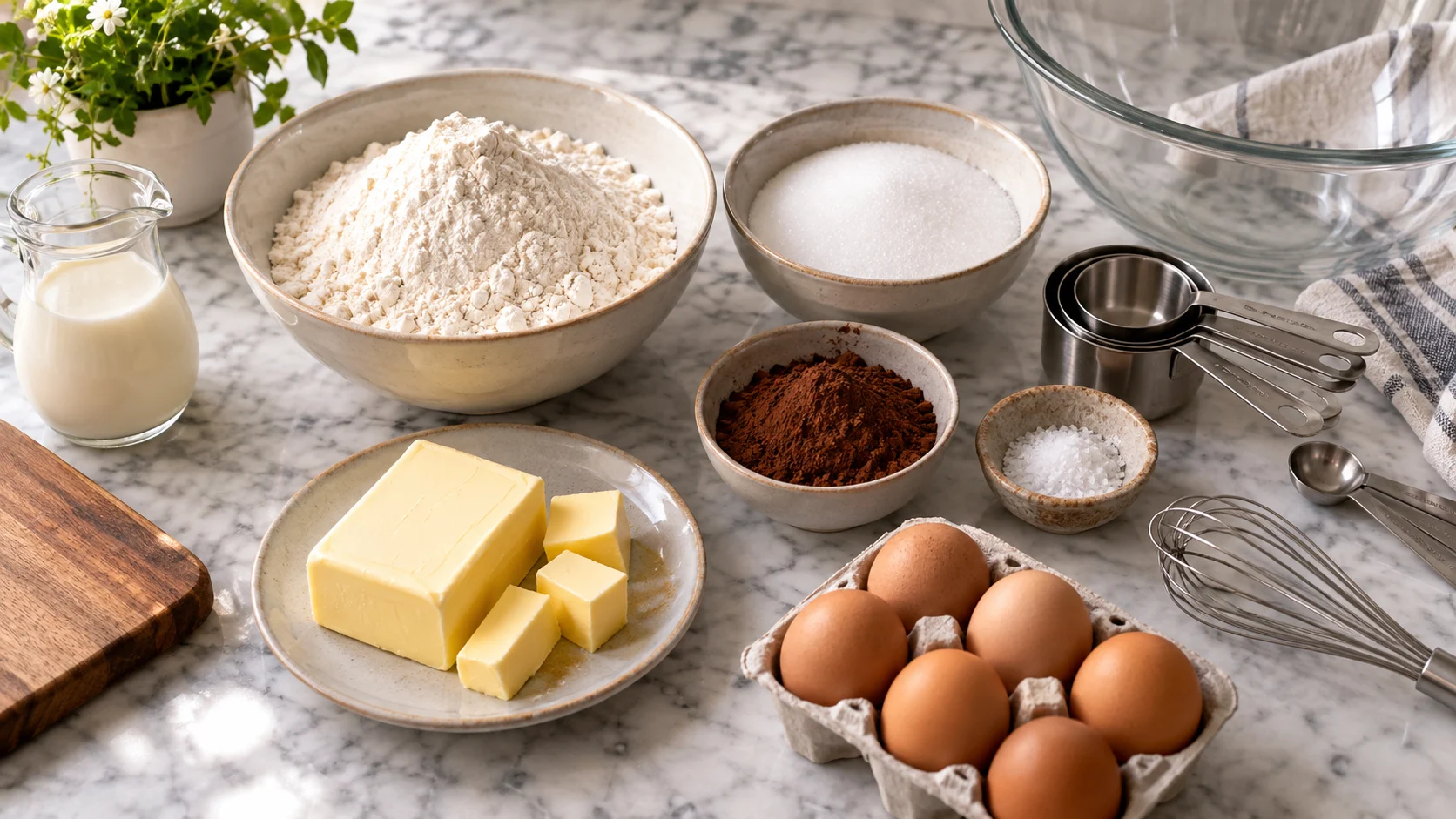
Flour, Sugar, Fat, and Other Baking Building Blocks
Start in the pantry with the ingredients that create structure, tenderness, sweetness, and flavor.
- Which two wheat proteins combine to form gluten when hydrated and mixed?
Answer: Gliadin and glutenin - Which flour generally has more protein, bread flour or cake flour?
Answer: Bread flour - Which flour is milled to have a very fine texture and low protein?
Answer: Cake flour - What does sugar attract and hold in baked goods?
Answer: Moisture - Which common fat is roughly 80 percent milk fat?
Answer: Butter - What does shortening contribute especially well to pie crust?
Answer: Tenderness and flakiness - Which ingredient strengthens structure through coagulating proteins?
Answer: Eggs - What part of an egg is rich in emulsifying lecithin?
Answer: The yolk - What does salt do besides add flavor?
Answer: Strengthens gluten and moderates yeast activity - Which cocoa has been treated with alkali to reduce acidity?
Answer: Dutch-process cocoa - What grain is rolled or steel-cut to make oatmeal bakes?
Answer: Oats - Which sugar contains molasses naturally or by addition?
Answer: Brown sugar - What liquid dairy ingredient adds acidity and tenderness?
Answer: Buttermilk - Which nut flour is central to many macarons?
Answer: Almond flour - What starch is often added to flour to make a homemade cake-flour substitute?
Answer: Cornstarch
Mixing Methods That Matter
The same ingredients can behave very differently depending on how they meet the bowl.
- What method beats solid fat and sugar together to trap air?
Answer: Creaming - What does folding do?
Answer: Combines mixtures gently while preserving air - Which tool is ideal for folding whipped whites into batter?
Answer: A flexible spatula - What method cuts cold fat into flour for biscuits and pastry?
Answer: Cutting in - What is the muffin method?
Answer: Mixing wet and dry ingredients separately, then combining briefly - Why should muffin batter usually remain slightly lumpy?
Answer: Overmixing can develop too much gluten - What is the reverse-creaming method?
Answer: Coating flour with fat before adding liquids - What does kneading develop in bread dough?
Answer: Gluten - What does whipping add to egg whites or cream?
Answer: Air - What is tempering eggs?
Answer: Gradually warming them with hot liquid to prevent curdling - What is the rubbing-in method?
Answer: Rubbing fat into flour with fingertips - What does sifting remove while aerating dry ingredients?
Answer: Lumps - Why scrape the bowl during mixing?
Answer: To combine unmixed ingredients evenly - What mixing stage follows soft peaks in whipped egg whites?
Answer: Stiff peaks - What happens if melted chocolate contacts a small amount of water unexpectedly?
Answer: It may seize
Leavening and Oven Science
This round follows the gases, heat, and reactions that make batter rise and crusts brown.
- Which gas makes yeast dough expand?
Answer: Carbon dioxide - What two components react in baking powder?
Answer: An acid and a base - What base is baking soda?
Answer: Sodium bicarbonate - What must baking soda meet to produce strong leavening action?
Answer: An acid and moisture - What does double-acting baking powder do?
Answer: Reacts once when mixed and again when heated - What is steam leavening?
Answer: Expansion caused by water turning to vapor - Which pastry relies heavily on steam trapped between butter layers?
Answer: Puff pastry - What is oven spring?
Answer: The rapid rise early in baking - What browning reaction occurs between amino acids and reducing sugars?
Answer: The Maillard reaction - What browning process involves heating sugar itself?
Answer: Caramelization - What happens to starch granules when heated with water?
Answer: They gelatinize - What happens to egg and flour proteins as they bake?
Answer: They coagulate and set structure - Why can opening an oven too early collapse a cake?
Answer: The structure may not be set - What does carryover cooking mean?
Answer: Food continues cooking after removal from heat - Why is an oven thermometer useful?
Answer: Oven settings may not match actual temperature
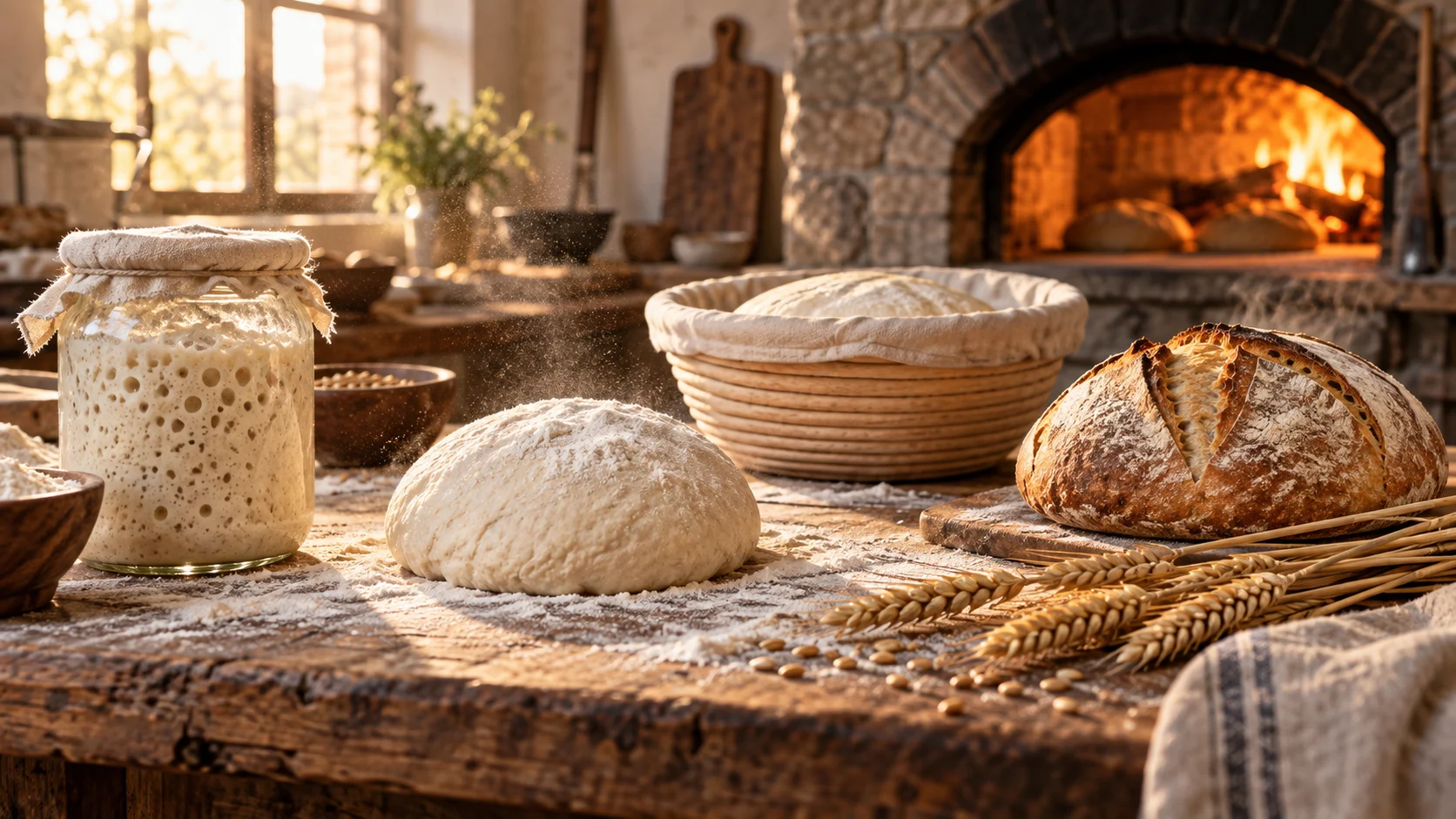
Bread Dough and Fermentation
Yeast, time, and gluten take center stage in loaves from sandwich bread to sourdough.
- What is proofing?
Answer: Allowing yeast dough to rise - What is bulk fermentation?
Answer: The first rise before dividing and shaping - What is the final rise after shaping called?
Answer: Final proof - What does scoring bread dough do?
Answer: Controls expansion and creates a pattern - What tool is traditionally used to score loaves?
Answer: A lame - What is sourdough starter?
Answer: A culture of wild yeast and lactic acid bacteria - What is feeding a starter?
Answer: Adding fresh flour and water - What does autolyse usually combine before kneading?
Answer: Flour and water - What windowpane test checks for?
Answer: Sufficient gluten development - What is a preferment?
Answer: A portion of dough fermented before final mixing - Which firm Italian preferment has relatively low hydration?
Answer: Biga - Which wet French-style preferment uses equal weights flour and water?
Answer: Poolish - What does degassing dough do?
Answer: Releases excess gas and redistributes yeast - Why is steam added to some bread ovens?
Answer: To delay crust setting and improve expansion - What indicates many lean breads are thoroughly baked besides color?
Answer: A hollow sound or an internal temperature near 200°F
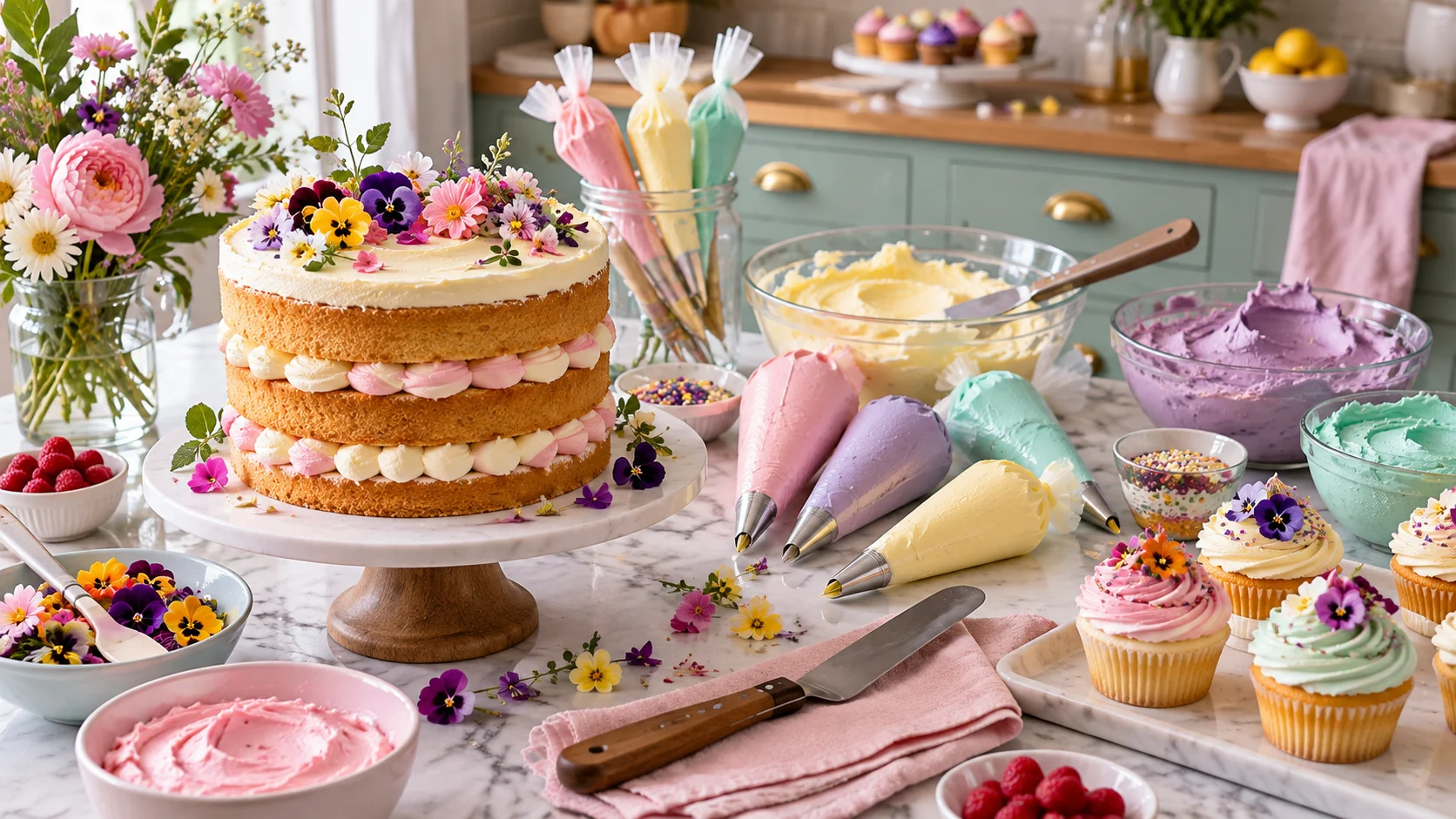
Cakes, Cupcakes, and Frostings
Now test the formulas and finishes behind tender crumbs and towering layers.
- What type of cake gets much of its rise from whipped egg whites?
Answer: Angel food cake - Which rich cake traditionally uses roughly equal weights of butter, sugar, eggs, and flour?
Answer: Pound cake - What makes chiffon cake distinct from many butter cakes?
Answer: Oil and whipped egg whites - What is a genoise?
Answer: A foam cake made with whole whipped eggs - Which cake style uses chemical leavening and creamed fat?
Answer: Butter cake - What is crumb coating?
Answer: Applying a thin frosting layer to trap loose crumbs - What frosting is made by cooking egg whites with hot sugar syrup?
Answer: Italian meringue buttercream - What frosting starts by heating egg whites and sugar together?
Answer: Swiss meringue buttercream - What simple frosting combines butter and confectioners' sugar?
Answer: American buttercream - What is ganache?
Answer: A mixture of chocolate and cream - What is fondant?
Answer: A smooth sugar-based covering or confection - Why are cake layers cooled before frosting?
Answer: Warm layers can melt frosting and crumble - What does leveling a cake mean?
Answer: Trimming the domed top flat - What is the toothpick test used to check?
Answer: Whether a cake's center is baked - Why can too much leavener make a cake collapse?
Answer: It rises faster than the structure can support
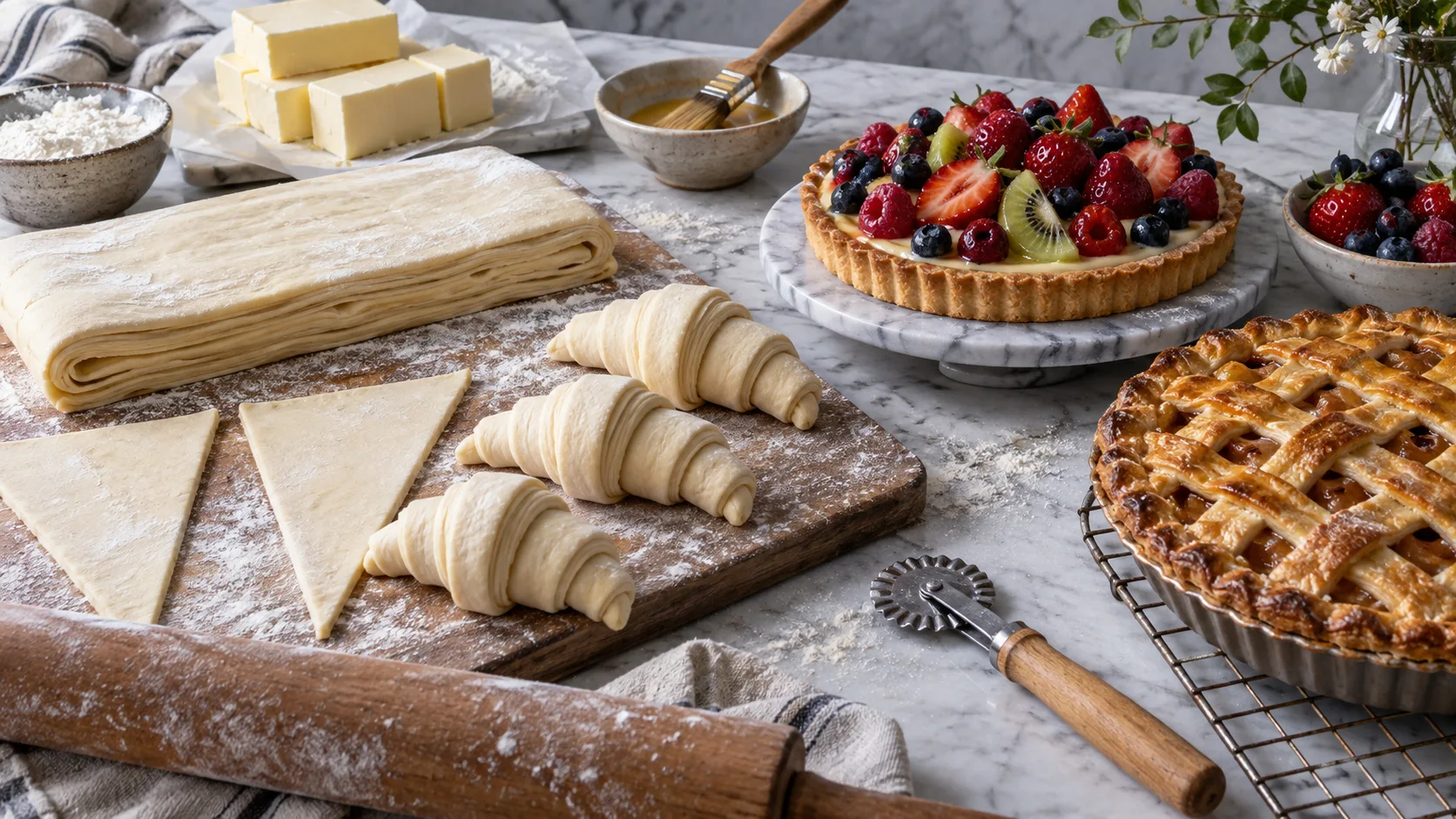
Pie, Tart, and Laminated Pastry Skills
Cold butter and confident rolling are the heroes of this pastry-packed round.
- What does blind baking mean?
Answer: Baking a crust before adding its final filling - What weights can keep an empty pie shell from puffing?
Answer: Pie weights or dried beans - What is docking?
Answer: Pricking dough to let steam escape - What creates flaky layers in pie dough?
Answer: Flattened pieces of cold fat separated by dough - Why is ice water used in pie crust?
Answer: To keep fat cold and limit gluten development - What is lamination?
Answer: Folding fat between repeated layers of dough - Which pastry is laminated with butter and contains yeast?
Answer: Croissant dough - Which laminated pastry contains no yeast?
Answer: Puff pastry - What is a détrempe?
Answer: The base dough used in laminated pastry - What is the butter block in lamination called in French?
Answer: Beurrage - What is frangipane?
Answer: An almond cream filling - What is pâte sucrée?
Answer: A sweet, crisp tart dough - What is pâte brisée?
Answer: A basic shortcrust pastry - What thickener is common in fruit pie filling?
Answer: Cornstarch - Why should a fruit pie often cool before slicing?
Answer: Its filling needs time to set
Cookies, Biscuits, and Small Bakes
Small does not mean simple when spread, snap, chew, and lift all depend on technique.
- What usually makes a drop cookie spread more: warm dough or chilled dough?
Answer: Warm dough - Why chill cutout-cookie dough?
Answer: To reduce spreading and preserve shapes - What creates the crackled surface on crinkle cookies?
Answer: Expansion beneath a coating of confectioners' sugar - Which cookie is made by piping almond meringue shells around a filling?
Answer: A French macaron - What is macaronage?
Answer: Folding macaron batter to the proper flow - What small cake is baked in a shell-shaped mold?
Answer: A madeleine - Which British bake is split and served with cream and jam?
Answer: A scone - What American quick bread is made by cutting cold fat into flour?
Answer: A biscuit - What makes biscotti especially crisp?
Answer: It is baked twice - Which cookie method rolls dough into a log before slicing?
Answer: Icebox or refrigerator cookies - What is a tuile?
Answer: A thin, crisp cookie often shaped while warm - Why space drop cookies apart?
Answer: They spread during baking - What causes many cookies to become crisp as they cool?
Answer: Sugar and fat set while moisture escapes - What tool gives evenly portioned drop cookies?
Answer: A cookie scoop - Why rotate baking sheets when an oven heats unevenly?
Answer: To promote even browning
Equipment, Measurement, and Baking Troubleshooting
Finish with the practical details that rescue recipes before the smoke alarm joins the conversation.
- Why is weighing flour more consistent than measuring by volume?
Answer: It avoids variation from packing - What unit does a digital kitchen scale measure most precisely for baking?
Answer: Grams - What does tare do on a scale?
Answer: Resets the displayed weight to zero - How should flour be measured by cups if a scale is unavailable?
Answer: Spoon it in and level it - What is a bench scraper used for?
Answer: Dividing dough and cleaning the work surface - What is a pastry blender used for?
Answer: Cutting fat into flour - What does a stand mixer's dough hook do?
Answer: Kneads dough - Which pan material generally browns faster, dark metal or shiny metal?
Answer: Dark metal - Why can glass bakeware need temperature adjustment?
Answer: It retains heat and can brown edges faster - What is parchment paper used for?
Answer: Preventing sticking and easing cleanup - Why should ingredients often be at room temperature for butter cakes?
Answer: They emulsify more smoothly - What may cause tunnels in muffins?
Answer: Overmixing - What often causes a sunken cake center?
Answer: Underbaking or excess leavener - Why does bread become gummy when sliced too hot?
Answer: The crumb has not finished setting - What first step should a baker take when a recipe fails?
Answer: Check measurements, temperature, timing, and ingredient substitutions
Keep the game going with food trivia, holiday cookies trivia, and chemistry trivia.
Sources and Further Reading
- King Arthur Baking Learn guides
- USDA FoodData Central
- U.S. Food and Drug Administration food ingredients overview
- Encyclopaedia Britannica: Baking
- American Society of Baking resources

Ellie Ewert is the founder and author of RandomTrivia.co, blending her passion for research with years of experience in content creation to deliver accurate, engaging, and well-sourced trivia. Dedicated to providing readers with trustworthy and entertaining facts, she applies meticulous fact-checking and SEO expertise to ensure every article meets the highest standards. Read more about our high standards in our Editorial Guidelines.