
Dive into 120 questions about strokes, turns, Olympic legends, open water, and the science of moving fast.
No goggles are required, although a dramatic poolside entrance is always welcome.
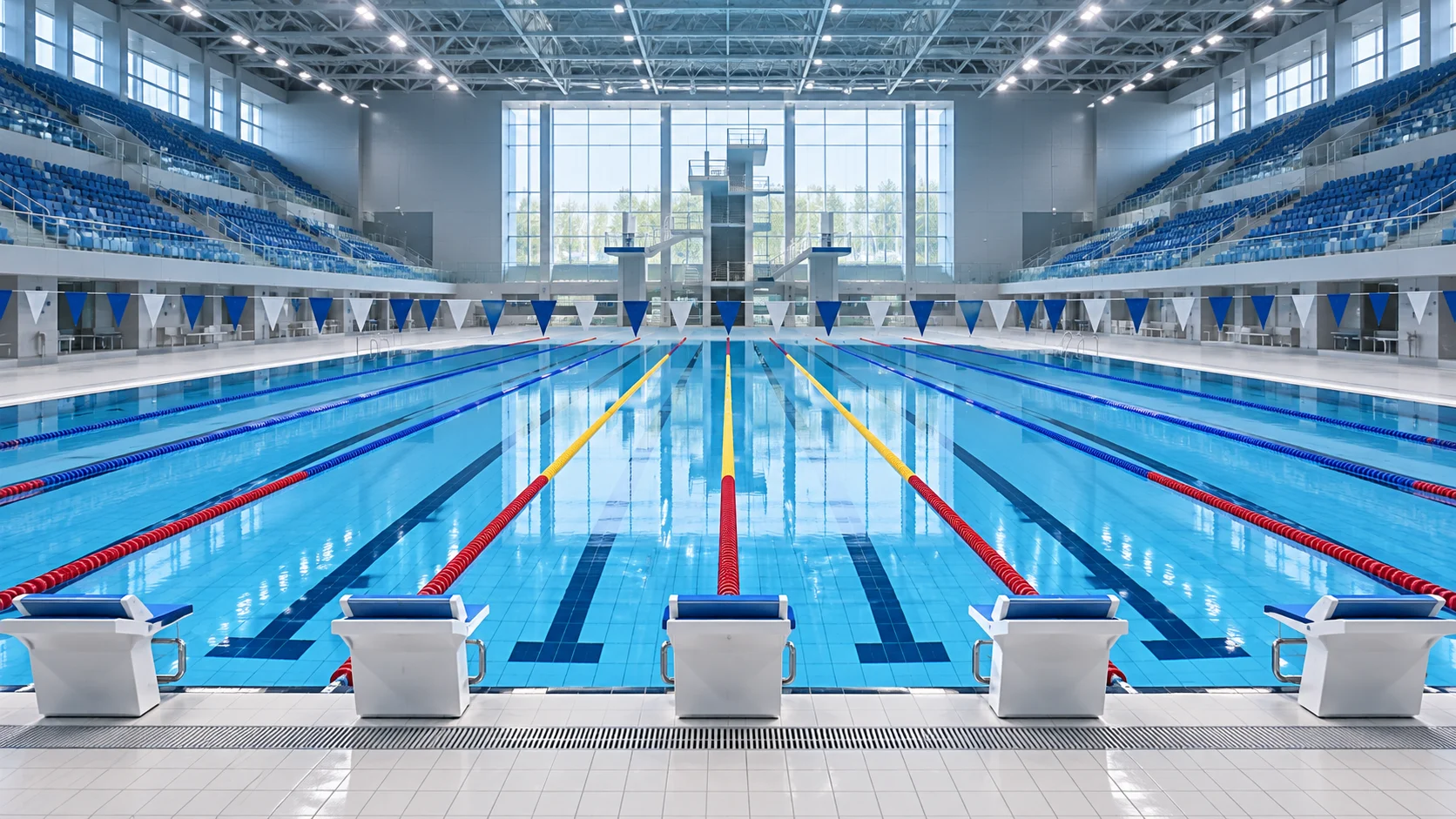
Swimming Basics
Q: What force pushes a swimmer upward in water?
A: Buoyancy.
Q: What force resists a swimmer's motion through water?
A: Drag.
Q: What streamlined body position reduces resistance after a start or turn?
A: Streamline.
Q: What is one complete cycle of arm movement called?
A: A stroke cycle.
Q: What term describes the number of stroke cycles taken per minute?
A: Stroke rate.
Q: What term describes the distance traveled with each stroke cycle?
A: Distance per stroke.
Q: What breathing pattern alternates sides in freestyle?
A: Bilateral breathing.
Q: Why do swimmers exhale underwater?
A: So they can inhale quickly when the mouth clears the surface.
Q: What fluttering leg action is used in freestyle and backstroke?
A: The flutter kick.
Q: What wave-like kick is used in butterfly?
A: The dolphin kick.
Q: What frog-like kick is used in breaststroke?
A: The breaststroke kick.
Q: What is swimming in place with the head above water called?
A: Treading water.
Q: What does it mean to scull with the hands?
A: Sweep them through the water to create support or propulsion.
Q: What floating position places the face and chest upward?
A: A back float.
Q: What skill allows a swimmer to roll forward through the water?
A: A somersault.
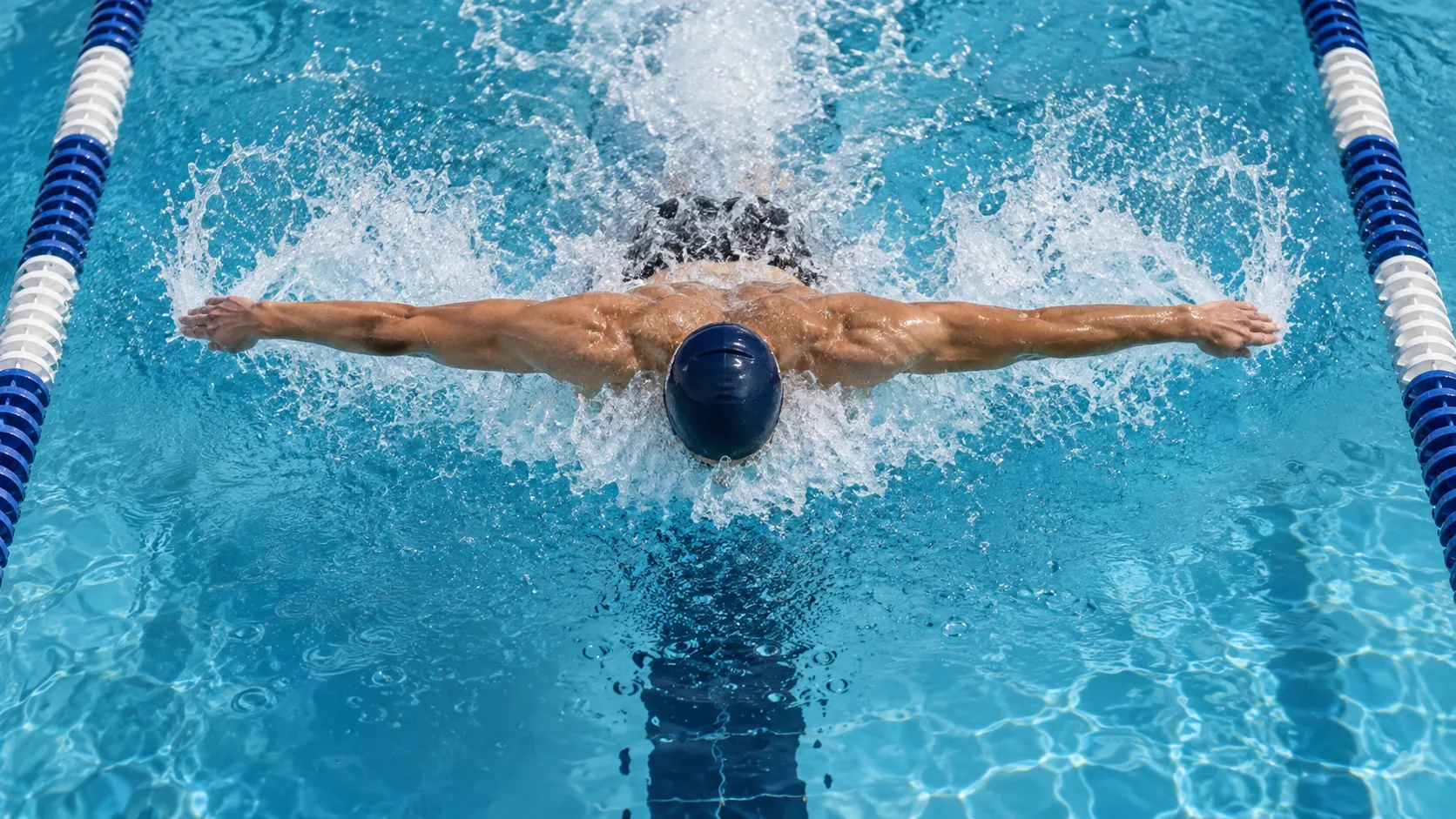
The Four Competitive Strokes
Q: Which stroke is normally chosen in freestyle races because it is fastest?
A: Front crawl.
Q: Which competitive stroke is swum on the back?
A: Backstroke.
Q: Which stroke moves both arms forward together over the water?
A: Butterfly.
Q: Which stroke uses simultaneous arm movements and a breaststroke kick?
A: Breaststroke.
Q: In freestyle, may a swimmer legally choose a stroke other than front crawl?
A: Yes.
Q: Which stroke begins in the water rather than from the starting platform?
A: Backstroke.
Q: In butterfly, must the arms recover together over the water?
A: Yes.
Q: In breaststroke, must the hands touch the wall simultaneously at turns and the finish?
A: Yes.
Q: In butterfly, how many hands must touch the wall together at a turn?
A: Two.
Q: Which stroke allows the swimmer to remain submerged for up to 15 meters after the start and each turn?
A: Freestyle, backstroke, and butterfly.
Q: Which stroke permits one underwater pullout after the start and each turn?
A: Breaststroke.
Q: What body rotation helps freestyle swimmers lengthen their reach?
A: Body roll.
Q: Which stroke uses alternating arms while the swimmer faces upward?
A: Backstroke.
Q: What part of the body should break the surface by 15 meters in applicable races?
A: The head.
Q: In an individual medley, which stroke comes first?
A: Butterfly.
Starts, Turns, and Finishes
Q: What signal tells swimmers to begin a race?
A: The starting signal.
Q: What is leaving before the starting signal called?
A: A false start.
Q: What raised platform is used for forward starts?
A: A starting block.
Q: What adjustable device helps backstrokers brace their feet at the start?
A: A backstroke ledge.
Q: What tucked forward rotation is commonly used at freestyle turns?
A: A flip turn.
Q: What is a wall turn without a somersault commonly called?
A: An open turn.
Q: What must a backstroker touch at the finish?
A: The wall while remaining on the back.
Q: Which two strokes require a simultaneous two-hand touch?
A: Breaststroke and butterfly.
Q: What is the powerful underwater phase after pushing off a wall called?
A: The breakout sequence.
Q: Why do swimmers tuck tightly during a flip turn?
A: To rotate faster.
Q: What should contact the wall during a freestyle turn?
A: Any part of the swimmer's body.
Q: What race-ending reach attempts to touch the wall before the final stroke completes?
A: A finish reach.
Q: What electronic panel records a swimmer's finish time when touched?
A: A touchpad.
Q: What officials watch turns and finishes for rule compliance?
A: Inspectors of turns.
Q: What colored lane-rope section warns swimmers that the wall is near?
A: The final 5-meter markings.
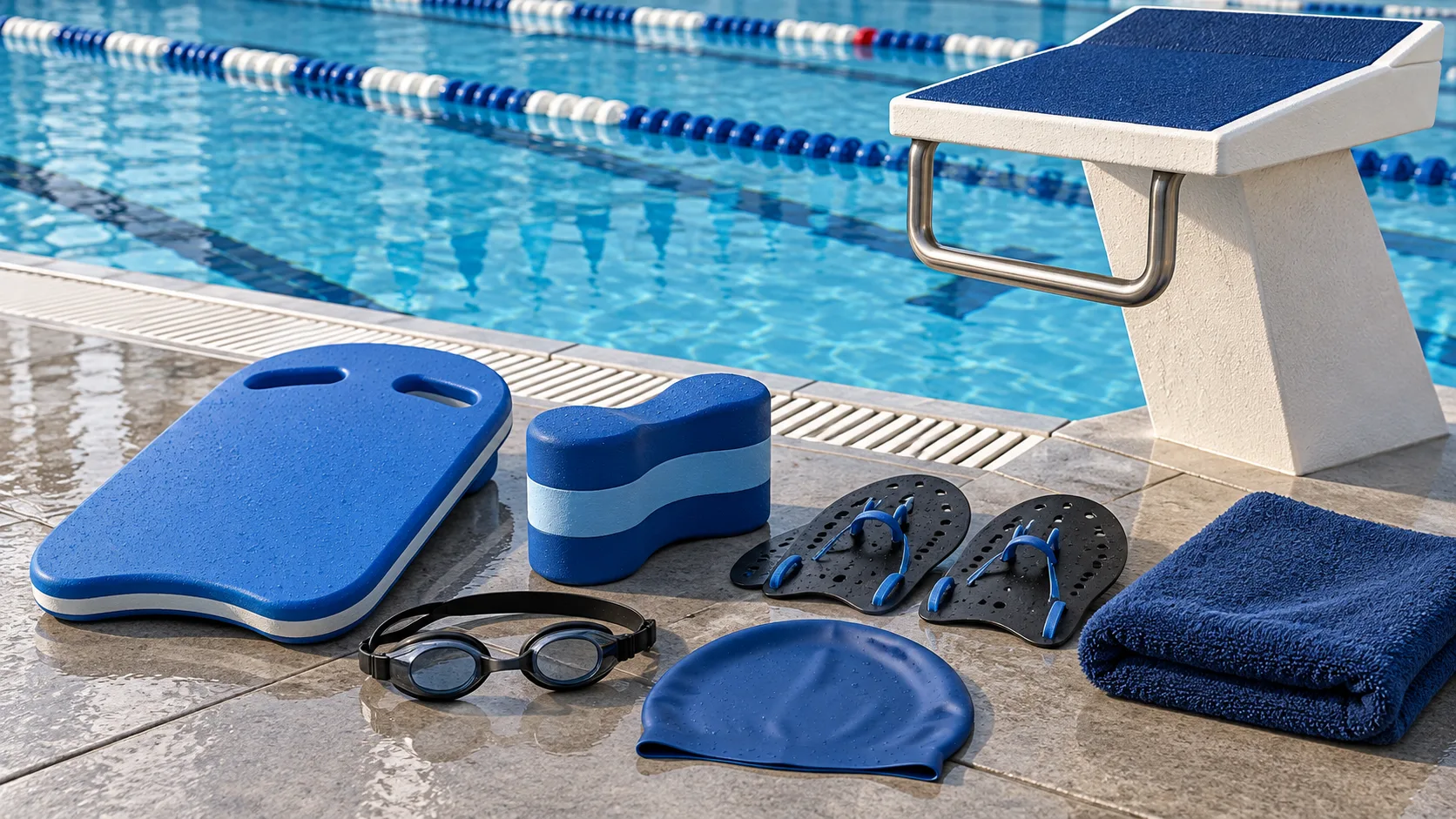
Pools, Lanes, and Gear
Q: How long is a long-course competition pool?
A: 50 meters.
Q: How long is a short-course meters pool?
A: 25 meters.
Q: What ropes separate swimmers and dampen waves between lanes?
A: Lane lines.
Q: What line of flags hangs 5 meters from each wall for backstrokers?
A: Backstroke flags.
Q: What dark marking on the pool bottom helps swimmers stay centered?
A: The lane line marking.
Q: What T-shaped marking signals that the wall is approaching?
A: The end-of-lane marker.
Q: What eyewear protects the eyes and improves underwater vision?
A: Goggles.
Q: What head covering reduces hair drag and keeps hair controlled?
A: A swim cap.
Q: What training aid supports the upper body while isolating the kick?
A: A kickboard.
Q: What foam aid held between the thighs isolates the arms?
A: A pull buoy.
Q: What hand-worn training tools increase resistance during pulling drills?
A: Swim paddles.
Q: What foot-worn training aids increase propulsion and ankle awareness?
A: Swim fins.
Q: What center-mounted breathing tube lets a swimmer keep the head still?
A: A swim snorkel.
Q: What clock do swimmers use to time repeats during practice?
A: A pace clock.
Q: What pool area is kept available for athletes preparing to race?
A: The warm-up pool or lanes.
Races, Relays, and Meet Language
Q: What race combines all four strokes by one swimmer?
A: The individual medley.
Q: What is the stroke order in an individual medley?
A: Butterfly, backstroke, breaststroke, freestyle.
Q: What is the stroke order in a medley relay?
A: Backstroke, breaststroke, butterfly, freestyle.
Q: How many swimmers compete on a standard relay team?
A: Four.
Q: What is each swimmer's portion of a relay called?
A: A leg.
Q: What is the final swimmer on a relay called?
A: The anchor.
Q: When may a relay swimmer's feet leave the platform?
A: After the incoming swimmer touches the wall.
Q: What do the numbers in a 4 x 100 relay describe?
A: Four swimmers covering 100 meters each.
Q: What preliminary race determines advancement or seeding?
A: A heat.
Q: What race decides the medal or final placing?
A: The final.
Q: What is a race between tied swimmers for advancement called?
A: A swim-off.
Q: What does PB mean on a results sheet?
A: Personal best.
Q: What does DQ mean in swimming results?
A: Disqualified.
Q: What does a negative split mean?
A: Swimming the second half faster than the first.
Q: What term describes maintaining a planned speed through a race?
A: Pacing.
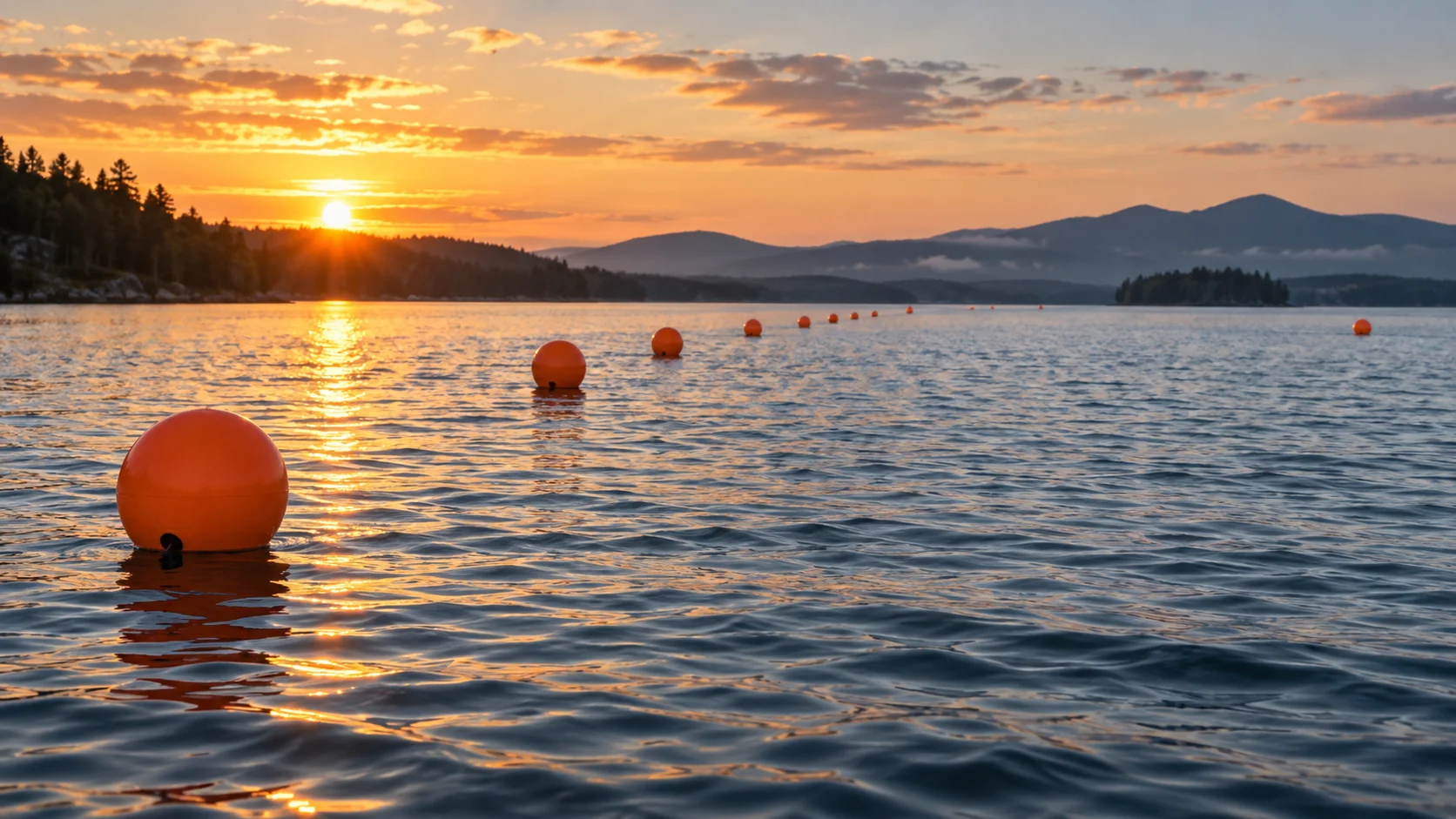
Open Water and Water Safety
Q: What Olympic open-water swimming distance is raced by men and women?
A: 10 kilometers.
Q: What is a designated circuit in an open-water race called?
A: The course.
Q: What floating markers guide open-water swimmers around the route?
A: Buoys.
Q: What technique lets an open-water swimmer briefly look forward while swimming?
A: Sighting.
Q: What close group of open-water swimmers is called a pack?
A: A cluster racing together.
Q: What energy-saving tactic follows closely behind another swimmer?
A: Drafting.
Q: What feeding tool lets marathon swimmers receive drinks without stopping?
A: A feeding pole.
Q: What bright item helps officials spot an open-water swimmer's head?
A: A swim cap.
Q: What should a swimmer do before entering unfamiliar open water?
A: Check conditions, rules, and hazards.
Q: Why is swimming with a buddy safer than swimming alone?
A: Help is nearby if trouble develops.
Q: What should a swimmer do if caught in a rip current?
A: Stay calm and swim parallel to shore when able.
Q: What flotation device is designed to keep a person buoyant in an emergency?
A: A life jacket.
Q: What does cold-water shock initially disrupt?
A: Breathing and movement control.
Q: Why should swimmers obey lifeguard flags and warnings?
A: They communicate current water hazards.
Q: What skill helps conserve energy while waiting for assistance?
A: Floating.
Olympic Swimming History
Q: At which modern Olympic Games did men's swimming debut?
A: Athens 1896.
Q: At which Games did women's Olympic swimming debut?
A: Stockholm 1912.
Q: Who won the first women's Olympic 100-meter freestyle title?
A: Fanny Durack.
Q: Which stroke was separated from breaststroke as its own Olympic event in 1956?
A: Butterfly.
Q: At which Olympics did the 50-meter freestyle debut?
A: Seoul 1988.
Q: At which Olympics did the 10-kilometer open-water event debut?
A: Beijing 2008.
Q: Which swimmer won seven gold medals at Munich 1972?
A: Mark Spitz.
Q: Which swimmer won eight gold medals at Beijing 2008?
A: Michael Phelps.
Q: Which Australian won three gold and two silver medals at Sydney 2000?
A: Ian Thorpe.
Q: Which American became the first Black woman to win an individual Olympic swimming gold in 2016?
A: Simone Manuel.
Q: Which swimmer won the first Olympic women's 1,500-meter freestyle in 2021?
A: Katie Ledecky.
Q: Which nation hosted the 1956 Olympics where butterfly debuted?
A: Australia.
Q: What mixed-gender swimming relay debuted at the Tokyo 2020 Olympics?
A: The mixed 4 x 100-meter medley relay.
Q: Which city hosted Olympic swimming in the Seine in 1900?
A: Paris.
Q: What international federation became known as World Aquatics in 2023?
A: FINA.
Champions and Famous Feats
Q: Who held the all-time Olympic record of 28 medals through September 21, 2026?
A: Michael Phelps.
Q: How many of Michael Phelps's Olympic medals were gold?
A: 23.
Q: Which American swimmer won five gold medals at the Tokyo 2020 Games?
A: Caeleb Dressel.
Q: Which swimmer became the first to win four straight Olympic 800-meter freestyle titles at Paris 2024?
A: Katie Ledecky.
Q: Which French swimmer won four individual gold medals at Paris 2024?
A: Léon Marchand.
Q: Which Australian sprinter won the women's 50- and 100-meter freestyle at Tokyo 2020?
A: Emma McKeon.
Q: Which swimmer was nicknamed the Baltimore Bullet?
A: Michael Phelps.
Q: Which Hawaiian swimmer became an Olympic champion and helped popularize surfing?
A: Duke Kahanamoku.
Q: Which Zimbabwean swimmer won the Olympic 200-meter backstroke in 2004 and 2008?
A: Kirsty Coventry.
Q: Which Australian swimmer was nicknamed Madame Butterfly?
A: Susie O'Neill.
Q: Which South African won the women's 100-meter breaststroke at Paris 2024?
A: Tatjana Smith.
Q: Which Tunisian teenager won the men's 400-meter freestyle at Tokyo 2020?
A: Ahmed Hafnaoui.
Q: Which Hungarian won three straight Olympic 200-meter backstroke titles from 1988 to 1996?
A: Krisztina Egerszegi.
Q: Which Japanese swimmer won both breaststroke events at Athens 2004 and Beijing 2008?
A: Kosuke Kitajima.
Q: Which Australian won the women's 100-meter freestyle at the 1956 Olympics?
A: Dawn Fraser.
You Made a Splash
If you raced through all 120, your trivia form is looking championship-ready. Keep competing with our sports trivia and Olympics trivia.

Ellie Ewert is the founder and author of RandomTrivia.co, blending her passion for research with years of experience in content creation to deliver accurate, engaging, and well-sourced trivia. Dedicated to providing readers with trustworthy and entertaining facts, she applies meticulous fact-checking and SEO expertise to ensure every article meets the highest standards. Read more about our high standards in our Editorial Guidelines.