
Your digestive system turns everyday bites into fuel, building blocks, and a surprisingly good trivia night.
Follow the journey from the first crunch to the microbiome with 120 questions that are easy to serve and satisfying to solve.
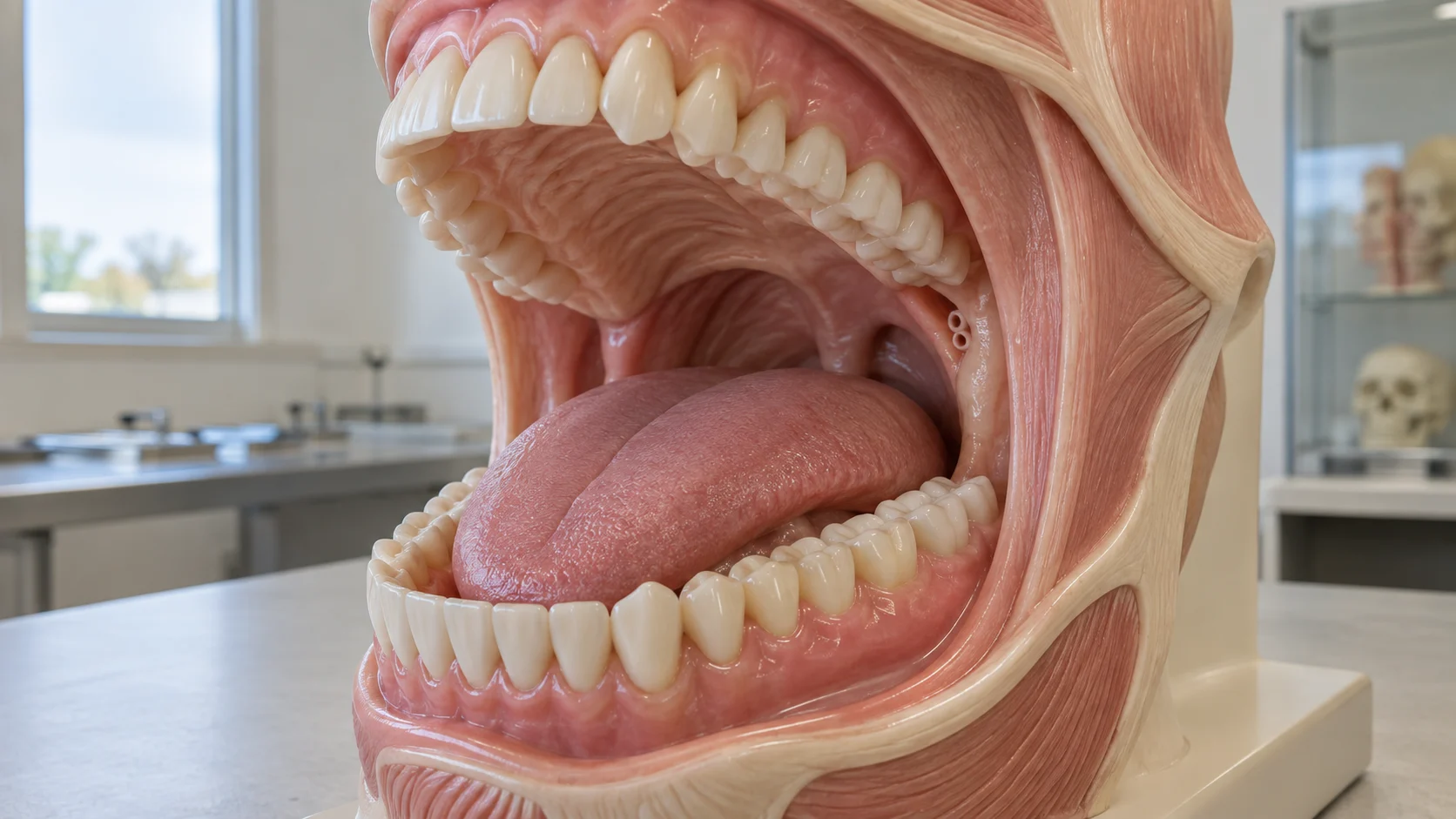
Mouth, Teeth, and Saliva
Q: What process begins when teeth break food into smaller pieces?
A: Mechanical digestion.
Q: What is the scientific term for chewing?
A: Mastication.
Q: How many permanent teeth does a typical adult have, including wisdom teeth?
A: 32.
Q: Which teeth are best shaped for cutting food?
A: Incisors.
Q: Which pointed teeth help tear food?
A: Canines.
Q: Which broad teeth do most of the grinding?
A: Molars.
Q: What hard substance covers the crown of a tooth?
A: Enamel.
Q: What tissue forms most of a tooth beneath the enamel?
A: Dentin.
Q: What soft center of a tooth contains nerves and blood vessels?
A: The pulp.
Q: What muscular organ moves food and helps with taste and speech?
A: The tongue.
Q: What liquid moistens food in the mouth?
A: Saliva.
Q: Which enzyme in saliva begins starch digestion?
A: Salivary amylase.
Q: What ball of chewed food is ready to swallow?
A: A bolus.
Q: What flap helps keep swallowed food out of the airway?
A: The epiglottis.
Q: What structures release saliva into the mouth?
A: Salivary glands.
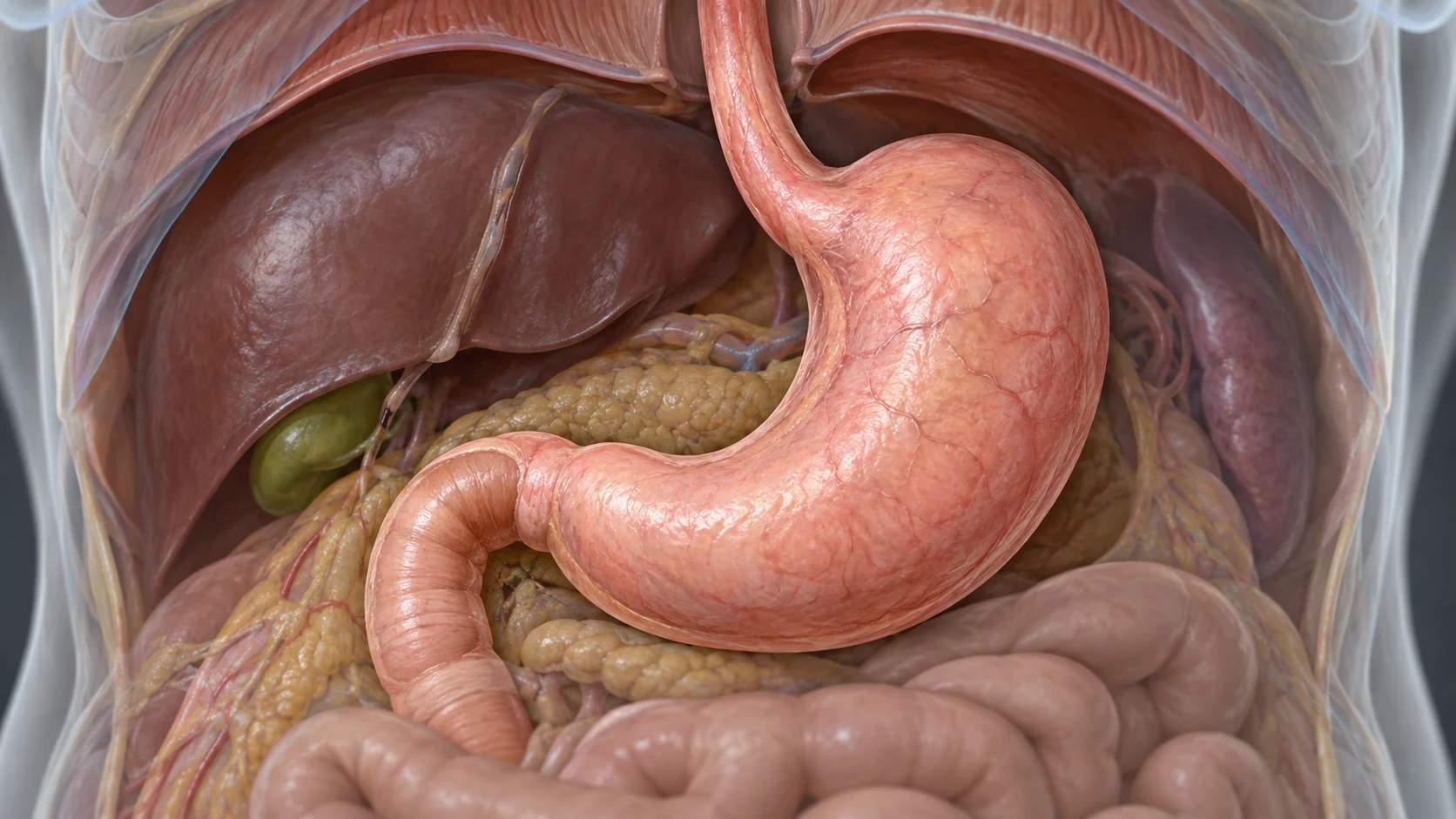
The Esophagus and Stomach
Q: What muscular tube carries food from throat to stomach?
A: The esophagus.
Q: What wave-like muscle contractions move food through the digestive tract?
A: Peristalsis.
Q: What sphincter helps prevent stomach contents from flowing into the esophagus?
A: The lower esophageal sphincter.
Q: Does gravity have to pull food down the esophagus?
A: No.
Q: What J-shaped organ stores and churns swallowed food?
A: The stomach.
Q: What acid gives the stomach its very low pH?
A: Hydrochloric acid.
Q: Which stomach enzyme begins much of protein digestion?
A: Pepsin.
Q: What inactive precursor is converted into pepsin?
A: Pepsinogen.
Q: Which stomach cells secrete hydrochloric acid?
A: Parietal cells.
Q: What protective substance helps shield the stomach lining from acid?
A: Mucus.
Q: What semiliquid mixture leaves the stomach for the small intestine?
A: Chyme.
Q: What muscular valve controls stomach emptying into the duodenum?
A: The pyloric sphincter.
Q: What stomach-produced protein is needed for vitamin B12 absorption?
A: Intrinsic factor.
Q: Which hormone helps stimulate stomach acid secretion?
A: Gastrin.
Q: Does the stomach absorb most nutrients?
A: No.
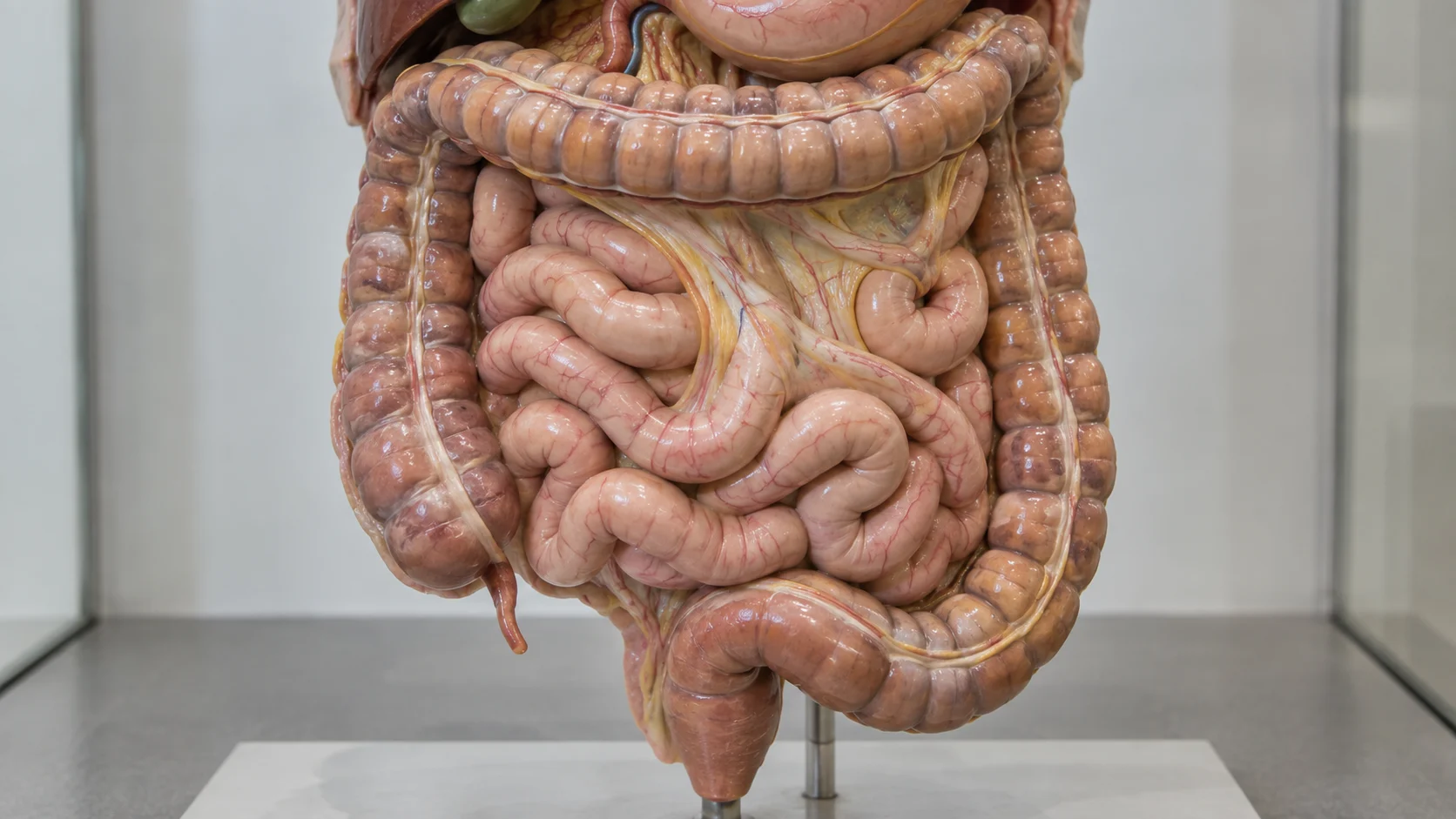
Small Intestine Superpowers
Q: What is the first section of the small intestine?
A: The duodenum.
Q: What is the middle section of the small intestine?
A: The jejunum.
Q: What is the final section of the small intestine?
A: The ileum.
Q: Where does most nutrient absorption occur?
A: The small intestine.
Q: What fingerlike projections increase the small intestine's surface area?
A: Villi.
Q: What tiny projections cover the cells of intestinal villi?
A: Microvilli.
Q: What collective name describes the dense microvilli on intestinal cells?
A: The brush border.
Q: What vessels inside villi absorb many digested fats?
A: Lacteals.
Q: What blood vessels inside villi collect many water-soluble nutrients?
A: Capillaries.
Q: Which structure marks the junction of the ileum and large intestine?
A: The ileocecal valve.
Q: What folds help increase the small intestine's absorptive area?
A: Circular folds.
Q: What hormone prompts the pancreas to release bicarbonate-rich fluid?
A: Secretin.
Q: What hormone promotes pancreatic enzyme release and gallbladder contraction?
A: Cholecystokinin.
Q: What alkaline chemical helps neutralize acidic chyme in the duodenum?
A: Bicarbonate.
Q: Is the small intestine shorter or longer than the large intestine?
A: Longer.
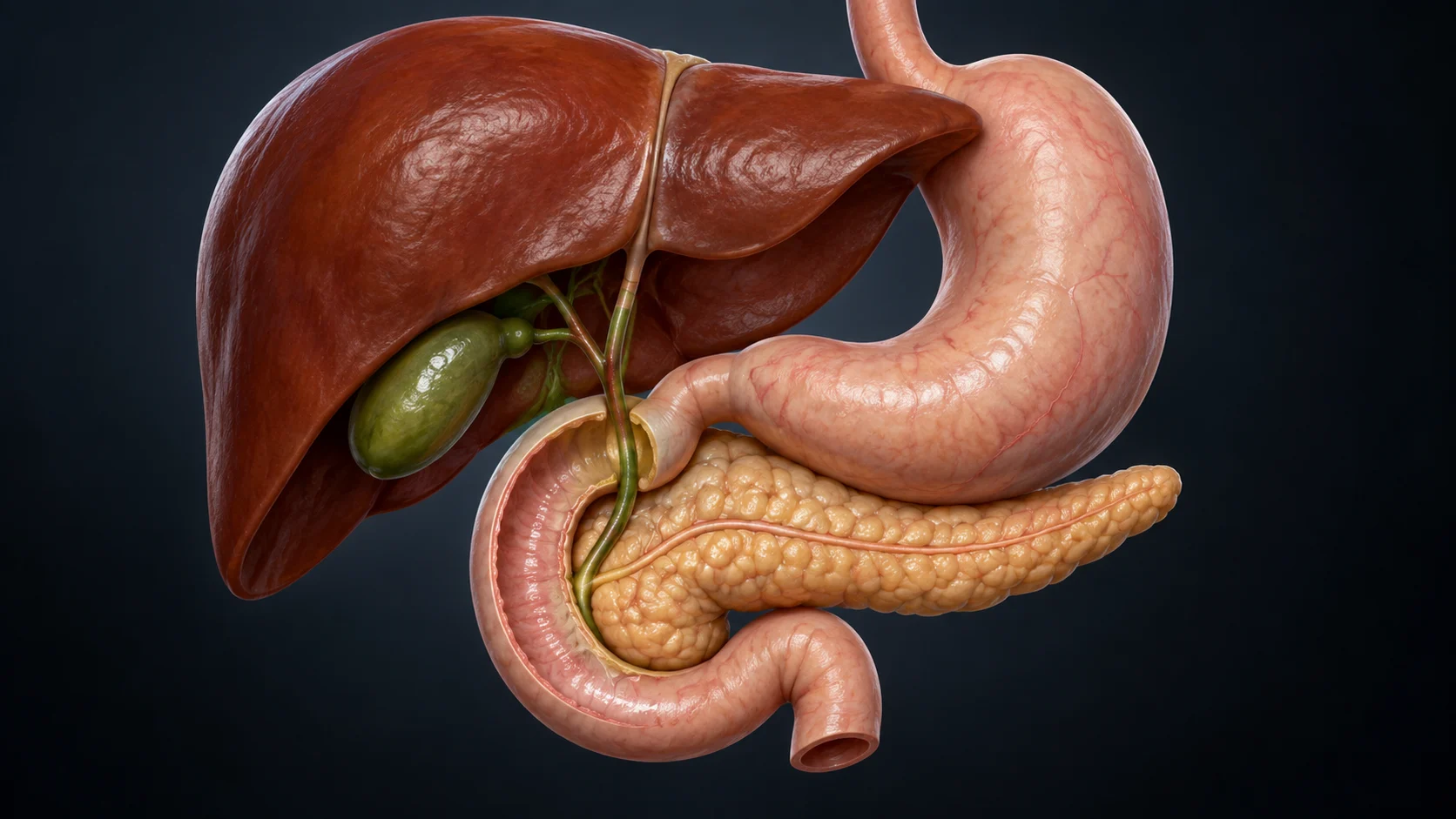
The Liver, Gallbladder, and Pancreas
Q: What large organ produces bile?
A: The liver.
Q: What small sac stores and concentrates bile?
A: The gallbladder.
Q: What is bile's main digestive job?
A: Emulsifying fats.
Q: Does bile contain digestive enzymes?
A: No.
Q: What gland releases digestive enzymes and bicarbonate into the small intestine?
A: The pancreas.
Q: What duct commonly carries bile toward the duodenum?
A: The common bile duct.
Q: What large vessel carries nutrient-rich blood from the intestines to the liver?
A: The hepatic portal vein.
Q: What carbohydrate does the liver store as a glucose reserve?
A: Glycogen.
Q: What organ converts ammonia into urea?
A: The liver.
Q: What pigment from red blood cell breakdown gives bile much of its color?
A: Bilirubin.
Q: Which pancreatic enzyme digests starch?
A: Pancreatic amylase.
Q: Which pancreatic enzyme digests triglycerides?
A: Pancreatic lipase.
Q: What inactive pancreatic protein-digesting enzyme becomes trypsin?
A: Trypsinogen.
Q: What hormone lowers blood glucose and is made by pancreatic beta cells?
A: Insulin.
Q: What hormone raises blood glucose and is made by pancreatic alpha cells?
A: Glucagon.
The Large Intestine
Q: What part of the large intestine receives material from the ileum?
A: The cecum.
Q: What narrow pouch projects from the cecum?
A: The appendix.
Q: What is the longest part of the large intestine?
A: The colon.
Q: What are the colon's four main sections?
A: Ascending, transverse, descending, and sigmoid.
Q: What final straight section stores stool before elimination?
A: The rectum.
Q: What opening ends the digestive tract?
A: The anus.
Q: What is a major job of the large intestine?
A: Absorbing water and electrolytes.
Q: What compacted waste leaves the digestive tract?
A: Feces.
Q: What rhythmic mass movements push contents through the colon?
A: Mass peristalsis.
Q: What pouchlike bulges give the colon its segmented appearance?
A: Haustra.
Q: What bands of longitudinal muscle run along the colon?
A: Teniae coli.
Q: What muscles control release through the anus?
A: Anal sphincters.
Q: Does the appendix contain lymphoid tissue?
A: Yes.
Q: Which colon section travels across the abdomen?
A: The transverse colon.
Q: What are proteins broken into for absorption?
A: Amino acids.
Nutrients and Enzymes
Q: What are most carbohydrates broken into for absorption?
A: Monosaccharides.
Q: What simple sugar is a major product of carbohydrate digestion?
A: Glucose.
Q: What are triglycerides broken into during digestion?
A: Fatty acids and monoglycerides.
Q: Which enzyme splits lactose?
A: Lactase.
Q: Which sugar is found naturally in milk?
A: Lactose.
Q: Which enzyme splits sucrose?
A: Sucrase.
Q: Which enzyme splits maltose?
A: Maltase.
Q: What enzyme class breaks proteins into smaller peptides?
A: Proteases.
Q: What enzyme class breaks fats apart?
A: Lipases.
Q: Which vitamins are classed as fat-soluble?
A: A, D, E, and K.
Q: Which vitamins are classed as water-soluble?
A: B vitamins and vitamin C.
Q: What indigestible plant material helps add bulk to stool?
A: Dietary fiber.
Q: What mineral is absorbed chiefly in the small intestine and helps build bones?
A: Calcium.
Q: What nutrient is absorbed in the ileum after binding intrinsic factor?
A: Vitamin B12.
Q: What is the community of microbes living in the digestive tract called?
A: The gut microbiota.
Gut Microbes and Defense
Q: Are all gut bacteria harmful?
A: No.
Q: Which short-chain fatty acid is a key fuel for colon cells?
A: Butyrate.
Q: What do many gut microbes ferment to produce short-chain fatty acids?
A: Dietary fiber.
Q: What immune tissue in the ileum forms clusters called Peyer's patches?
A: Gut-associated lymphoid tissue.
Q: What antibody is commonly secreted across the intestinal lining?
A: IgA.
Q: What single layer of cells forms much of the intestinal barrier?
A: The epithelium.
Q: What are the seal-like connections between neighboring intestinal cells?
A: Tight junctions.
Q: What mucus-producing intestinal cells are named for their cup shape?
A: Goblet cells.
Q: What rapid cell-renewal zones sit between intestinal villi?
A: Crypts.
Q: Which bacterium is strongly associated with many peptic ulcers?
A: Helicobacter pylori.
Q: Are viruses considered members of the bacterial microbiota?
A: No.
Q: What fungal genus can normally occur in the human gut in small amounts?
A: Candida.
Q: What nonbacterial single-celled microbes may live in the gut?
A: Archaea.
Q: What does a probiotic contain?
A: Live microorganisms intended to provide a benefit.
Q: What does a prebiotic feed?
A: Beneficial gut microorganisms.
Digestive Discoveries and Oddities
Q: What field studies the digestive system and its disorders?
A: Gastroenterology.
Q: What flexible viewing instrument lets doctors inspect parts of the digestive tract?
A: An endoscope.
Q: What procedure views the inside of the colon?
A: Colonoscopy.
Q: Which scientist helped show that stomach acid could kill many microbes?
A: William Beaumont.
Q: What unusual patient allowed Beaumont to observe digestion through a stomach opening?
A: Alexis St. Martin.
Q: How long is the adult small intestine approximately?
A: About 20 feet.
Q: Why is the large intestine called large?
A: Its diameter is greater.
Q: What everyday sound can moving gas and fluid make in the intestines?
A: A stomach growl.
Q: What scientific term describes intestinal rumbling sounds?
A: Borborygmi.
Q: What gas makes up much of swallowed air in the gut?
A: Nitrogen.
Q: What is swallowing called scientifically?
A: Deglutition.
Q: Which branch of the nervous system can coordinate digestion independently?
A: The enteric nervous system.
Q: What nickname is often given to the enteric nervous system?
A: The second brain.
Q: Does digestion continue while a person sleeps?
A: Yes.
Q: What body cavity membrane covers many digestive organs?
A: The peritoneum.
Digestion Accomplished
If you swallowed all 120 answers without a hiccup, your digestive know-how is in excellent shape. Keep that curiosity moving from mouth to microbiome.

Ellie Ewert is the founder and author of RandomTrivia.co, blending her passion for research with years of experience in content creation to deliver accurate, engaging, and well-sourced trivia. Dedicated to providing readers with trustworthy and entertaining facts, she applies meticulous fact-checking and SEO expertise to ensure every article meets the highest standards. Read more about our high standards in our Editorial Guidelines.