
Dive into coral reef trivia where tiny animals build underwater cities packed with color, competition, and clever partnerships.
These questions explore coral biology, reef residents, famous places, and the science behind protecting them.
Meet the Coral Builders
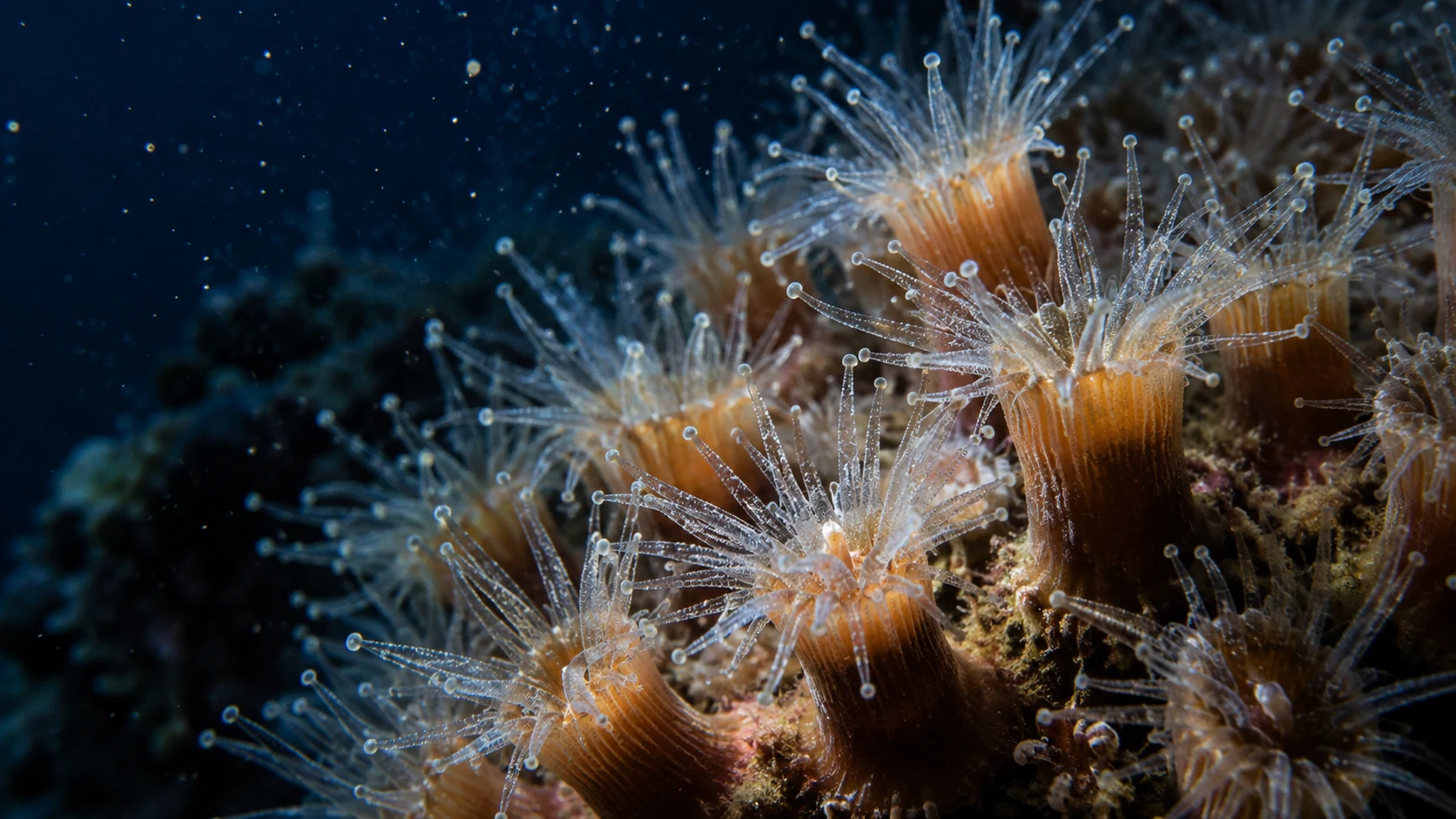
Q: Are corals plants, rocks, or animals?
A: Animals.
Q: What is one individual coral animal called?
A: A polyp.
Q: To what animal phylum do corals belong?
A: Cnidaria.
Q: What other stinging animals are close relatives of corals?
A: Jellyfish and sea anemones.
Q: What ring of body parts surrounds a coral polyp's mouth?
A: Tentacles.
Q: What microscopic stinging structures help coral polyps capture prey?
A: Nematocysts.
Q: What hard mineral do reef-building corals secrete?
A: Calcium carbonate.
Q: What common rock is largely made of calcium carbonate?
A: Limestone.
Q: What is a group of genetically identical connected polyps called?
A: A coral colony.
Q: What thin living tissue connects polyps in many coral colonies?
A: The coenosarc.
Q: Do all corals build hard skeletons?
A: No.
Q: What broad group includes flexible corals such as sea fans?
A: Soft corals.
Q: What do coral polyps use to move food toward the mouth?
A: Their tentacles.
Q: How many openings serve the digestive cavity of a coral polyp?
A: One.
Q: What do scientists who specialize in corals often study within marine biology?
A: Coral reef ecology.
Sunlight and Symbiosis
Q: What photosynthetic organisms live inside the tissues of most reef-building corals?
A: Symbiotic dinoflagellates commonly called zooxanthellae.
Q: What kind of relationship benefits both coral and its algal partners?
A: Mutualism.
Q: What process do coral's algal partners use to make food?
A: Photosynthesis.
Q: What gas from the coral can its algal partners use in photosynthesis?
A: Carbon dioxide.
Q: What gas produced by photosynthesis can benefit the coral?
A: Oxygen.
Q: Why do most tropical reef-building corals live in shallow water?
A: Their algal partners need sunlight.
Q: Why does clear water favor many reef-building corals?
A: More sunlight can reach their symbiotic algae.
Q: What gives many living corals much of their color?
A: Their symbiotic algae and coral pigments.
Q: Can corals also capture tiny animals for food?
A: Yes.
Q: What drifting animals are eaten by many coral polyps?
A: Zooplankton.
Q: When are many coral polyps extended to feed?
A: At night.
Q: What mucus-based method can corals use to collect food particles?
A: Mucus nets or strands.
Q: Are all corals dependent on photosynthetic symbionts?
A: No.
Q: Where can non-photosynthetic cold-water corals live?
A: In deep, dark ocean water.
Q: What does a coral provide its symbiotic algae besides carbon dioxide?
A: A protected place to live.
Building a Reef
Q: What three main reef types did Charles Darwin describe?
A: Fringing reefs, barrier reefs, and atolls.
Q: What type of reef grows directly along a shoreline?
A: A fringing reef.
Q: What type of reef is separated from land by a broad lagoon?
A: A barrier reef.
Q: What ring-shaped reef surrounds a central lagoon?
A: An atoll.
Q: What island process can transform a fringing reef into an atoll over time?
A: Volcanic island subsidence.
Q: What shallow body of water often lies between a barrier reef and land?
A: A lagoon.
Q: What is the reef crest?
A: The shallow, wave-battered highest part of a reef.
Q: What is the seaward-sloping part of a reef called?
A: The fore reef.
Q: What zone lies behind the reef crest toward shore?
A: The back reef.
Q: What process turns loose reef sediments into solid reef rock?
A: Cementation.
Q: What red or pink algae help cement many reefs together?
A: Crustose coralline algae.
Q: What do parrotfish produce after grinding coral rock and digesting algae?
A: Sand.
Q: Does a large reef grow from a single coral colony?
A: No.
Q: Why can ancient coral skeletons remain after the polyps die?
A: Their calcium carbonate skeletons persist.
Q: What slow process adds new skeleton atop older reef material?
A: Reef accretion.
Reefs Around the World
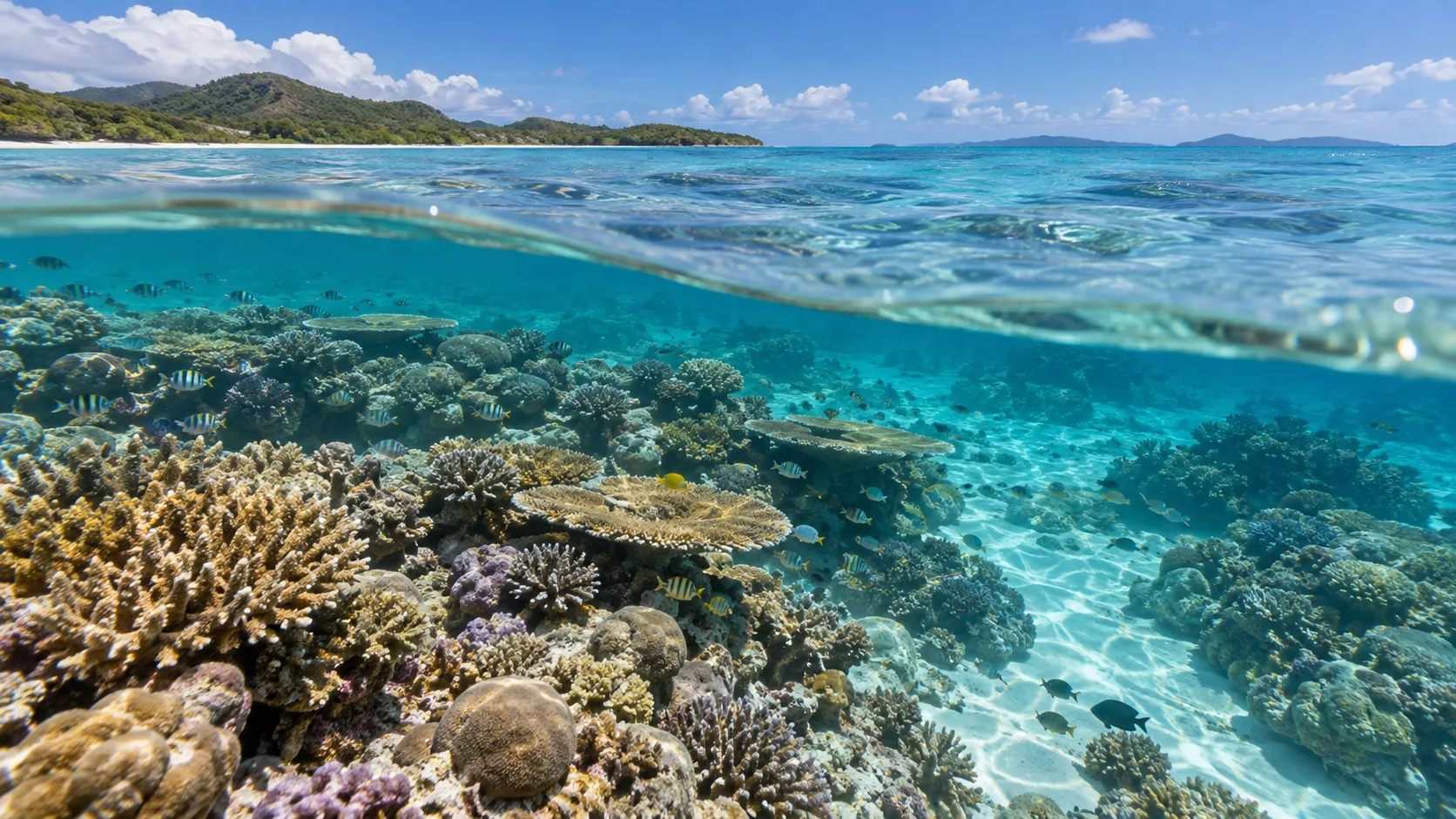
Q: What is the world's largest coral reef system?
A: The Great Barrier Reef.
Q: Off which Australian state does the Great Barrier Reef lie?
A: Queensland.
Q: In which sea is the Great Barrier Reef located?
A: The Coral Sea.
Q: What is the largest barrier reef in the Western Hemisphere?
A: The Mesoamerican Reef.
Q: Along the coasts of which four countries does the Mesoamerican Reef extend?
A: Mexico, Belize, Guatemala, and Honduras.
Q: What famous circular marine sinkhole lies within Belize's reef system?
A: The Great Blue Hole.
Q: What vast region of high marine diversity includes Indonesia, Malaysia, and the Philippines?
A: The Coral Triangle.
Q: Which U.S. state has an extensive coral reef tract?
A: Florida.
Q: What island chain contains the Florida Reef Tract?
A: The Florida Keys.
Q: What U.S. territory in the Caribbean is surrounded by coral reef habitats?
A: Puerto Rico.
Q: What remote northwestern Hawaiian area protects extensive coral reefs?
A: Papahānaumokuākea Marine National Monument.
Q: Which ocean contains the Maldives' many coral atolls?
A: The Indian Ocean.
Q: What Red Sea feature supports reefs despite very warm, salty conditions?
A: Clear, sunlit water.
Q: Are tropical coral reefs found only in the Pacific Ocean?
A: No.
Q: What latitude zone contains most shallow tropical coral reefs?
A: The tropics.
Life on the Reef
Q: What fish uses fused, beak-like teeth to scrape algae from reefs?
A: A parrotfish.
Q: What fish is famous for living among the stinging tentacles of anemones?
A: A clownfish.
Q: What small fish may clean parasites from larger reef fish?
A: A cleaner wrasse.
Q: What spiny reef animal grazes algae with a jaw structure called Aristotle's lantern?
A: A sea urchin.
Q: What many-armed predator can consume living coral tissue?
A: The crown-of-thorns sea star.
Q: What giant bivalve hosts photosynthetic algae in its tissues?
A: A giant clam.
Q: What nocturnal crustacean often hides in reef crevices by day?
A: A spiny lobster.
Q: What camouflaged ambush predator can resemble a rock on the reef?
A: A stonefish.
Q: What fish family includes seahorses and pipefish?
A: Syngnathidae.
Q: What reef fish can change sex from female to male in many species?
A: A wrasse.
Q: What night-hunting fish carries venomous spines and has invaded Atlantic reefs?
A: The lionfish.
Q: What marine reptile often grazes seagrass near coral reefs?
A: The green sea turtle.
Q: What shark is commonly seen resting on the seafloor around reefs?
A: The nurse shark.
Q: What intelligent mollusk can rapidly change color and texture?
A: An octopus.
Q: What reef fish uses a sharp spine on each side of its tail for defense?
A: A surgeonfish.
Coral Life Cycles
Q: What synchronized event releases coral eggs and sperm into the water?
A: Mass spawning.
Q: What free-swimming coral larva develops after fertilization?
A: A planula.
Q: What must a planula do before becoming a new polyp?
A: Settle on a suitable surface.
Q: What asexual process produces a new polyp from an existing one?
A: Budding.
Q: What asexual process occurs when a broken coral piece grows into a colony?
A: Fragmentation.
Q: What environmental cycle often helps synchronize mass coral spawning?
A: The lunar cycle.
Q: Can one coral colony contain both male and female reproductive cells?
A: Yes, in many species.
Q: What is a brooding coral?
A: A coral that fertilizes and develops larvae internally before releasing them.
Q: What is a broadcast-spawning coral?
A: A coral that releases eggs and sperm into the water.
Q: What is coral recruitment?
A: The addition of newly settled young corals to a reef.
Q: What determines a coral colony's branching, boulder, plate, or other growth form?
A: Its species and environment.
Q: Can colonies of the same coral species grow in different shapes?
A: Yes.
Q: Why do branching corals often recover poorly from powerful waves?
A: Their branches can break.
Q: What is a coral's living tissue laid over?
A: Its skeleton.
Q: Do coral colonies routinely live longer than individual polyps?
A: Yes.
Bleaching and Other Threats
Q: What happens to symbiotic algae during most coral bleaching?
A: They are expelled from the coral's tissues.
Q: What is the leading cause of mass coral bleaching?
A: Unusually warm ocean temperatures.
Q: Is a bleached coral necessarily dead?
A: No.
Q: Why does a bleached coral appear white?
A: Its pale skeleton shows through translucent tissue.
Q: What can happen if bleaching stress continues too long?
A: The coral can starve and die.
Q: What change in ocean chemistry is caused by absorbing extra carbon dioxide?
A: Ocean acidification.
Q: How can ocean acidification affect reef-building corals?
A: It can make skeleton building more difficult.
Q: How can sediment runoff harm corals?
A: It can smother them and block sunlight.
Q: What nutrient problem can fuel excessive algal growth on reefs?
A: Pollution from sewage or fertilizer runoff.
Q: How can overfishing of herbivores harm a reef?
A: Algae can overgrow corals.
Q: What physical damage can a ship anchor cause?
A: It can break or crush coral.
Q: What disease has caused major losses of hard corals in Florida and the Caribbean?
A: Stony coral tissue loss disease.
Q: How can stronger tropical storms damage reefs?
A: Waves can break colonies and overturn reef structure.
Q: Why are invasive lionfish a concern on Atlantic reefs?
A: They consume many native reef fish.
Q: Can cold water also trigger coral bleaching?
A: Yes.
Protecting and Restoring Reefs
Q: What protected ocean area can limit damaging activities on a reef?
A: A marine protected area.
Q: What does a mooring buoy help boats avoid doing?
A: Dropping anchors on coral.
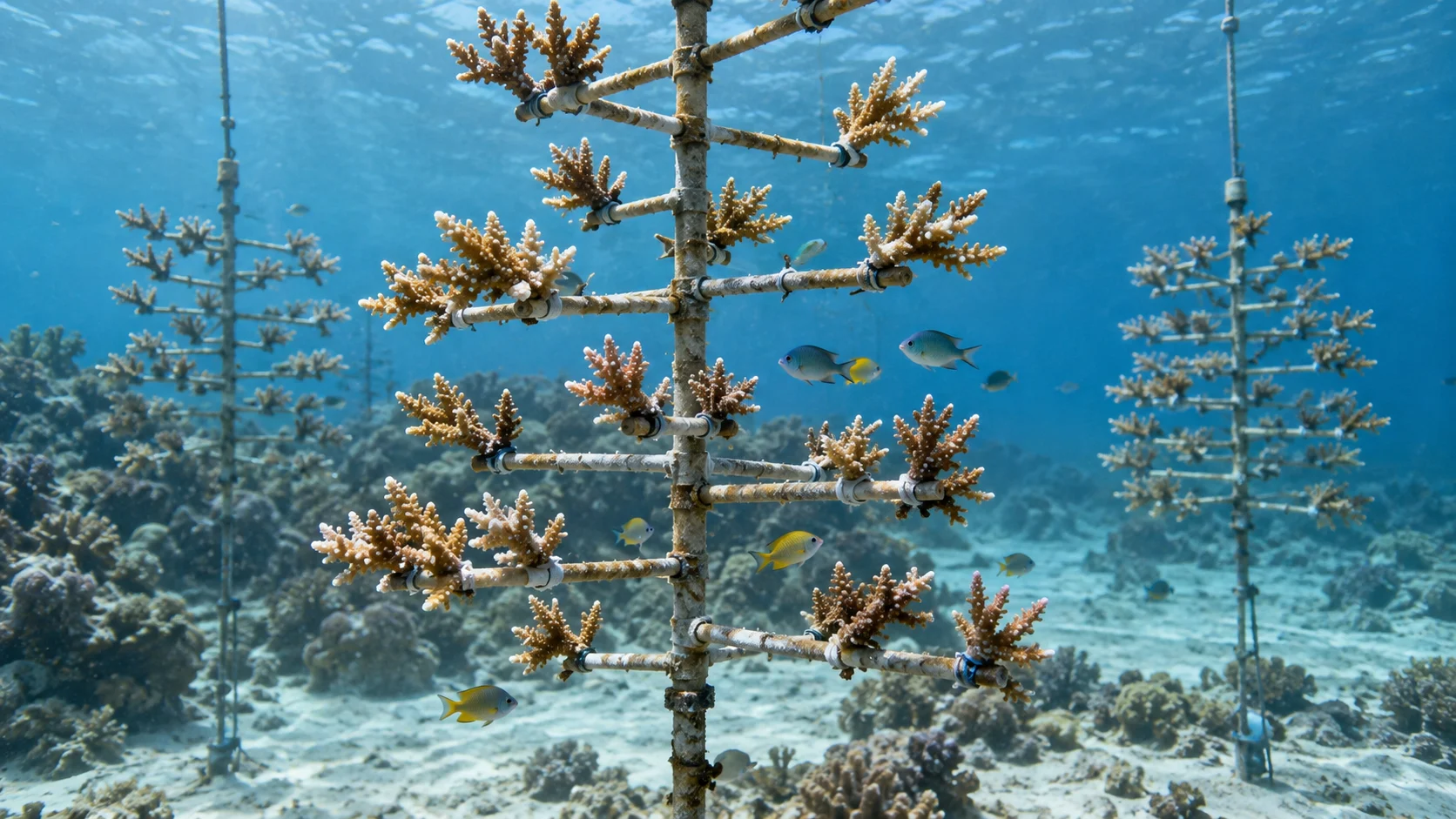
Q: What restoration site grows young corals for later outplanting?
A: A coral nursery.
Q: What restoration technique attaches nursery-grown coral to a reef?
A: Coral outplanting.
Q: What fast-growing coral form is often propagated from small fragments?
A: Branching coral.
Q: Why do scientists tag restored corals?
A: To track survival and growth.
Q: What NOAA program uses satellites to monitor heat stress on coral reefs?
A: Coral Reef Watch.
Q: What does a bleaching alert warn reef managers about?
A: Dangerous ocean heat stress.
Q: How does treating wastewater help reefs?
A: It reduces pollution and excess nutrients.
Q: How can planting vegetation near waterways help coral reefs?
A: It reduces erosion and sediment runoff.
Q: Why should snorkelers avoid standing on coral?
A: Touch and weight can injure living tissue.
Q: Why should reef wildlife never be collected as souvenirs?
A: Removing organisms damages the ecosystem and may be illegal.
Q: What global action gives reefs their best long-term chance against warming?
A: Reducing greenhouse gas emissions.
Q: What local action can make reefs more resilient to climate stress?
A: Reducing pollution and overfishing.
Q: Why are healthy reefs valuable to coastal communities?
A: They support fisheries, tourism, and shoreline protection.
You Made a Splash
If you surfaced with all 120 answers, your reef knowledge is looking brilliantly buoyant. Explore more big ideas with our decades trivia or meet remarkable humans in our famous people trivia.

Ellie Ewert is the founder and author of RandomTrivia.co, blending her passion for research with years of experience in content creation to deliver accurate, engaging, and well-sourced trivia. Dedicated to providing readers with trustworthy and entertaining facts, she applies meticulous fact-checking and SEO expertise to ensure every article meets the highest standards. Read more about our high standards in our Editorial Guidelines.